South Carolina Duck Harvest Numbers
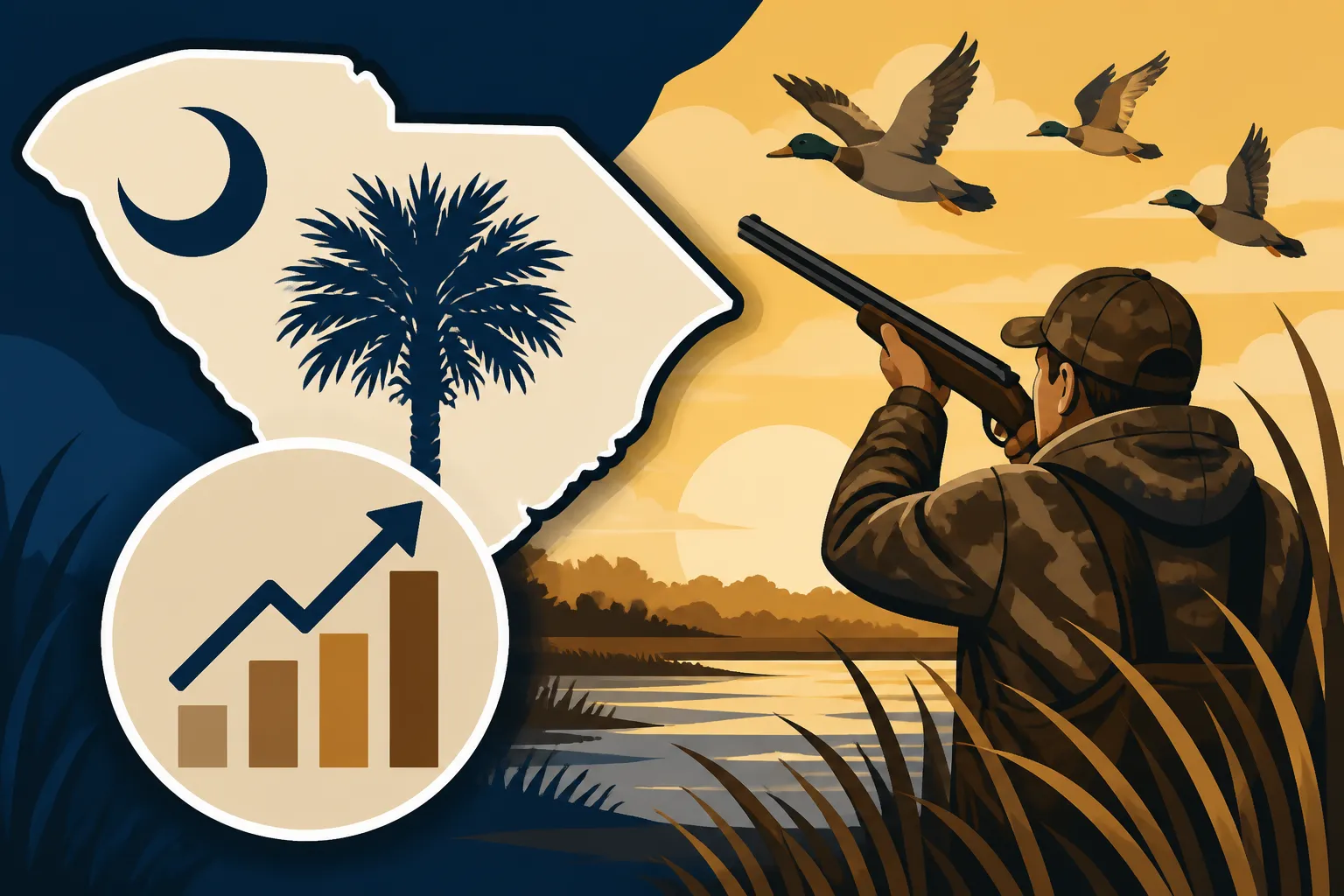
As a South Carolina duck hunter, it's easy to get caught up in the excitement of a new season – scouting new spots, tuning up calls, and dreaming of limits. But beneath the surface of all that anticipation lies a crucial question: how are the duck numbers really looking in our state? You might hear whispers at the boat ramp about a "good year" or a "slow season," but understanding the official duck harvest numbers can give you a much clearer picture of what's happening on the ground, or rather, in the flooded timber and tidal marshes. This guide aims to pull back the curtain on South Carolina's duck harvest data, explaining what these numbers mean for you, the hunter, and how they reflect the health and migratory patterns of our beloved waterfowl.
Understanding South Carolina's Duck Harvest Data
When we talk about duck harvest numbers, we're not just throwing around abstract statistics. For many of us, these figures are a direct reflection of our experiences afield. A strong harvest often translates to more birds in the air, more opportunities, and more successful hunts. Conversely, declining numbers can signal deeper issues, from habitat loss to shifting migration patterns, forcing us to adapt our strategies.
Why do these numbers truly matter to the everyday hunter? Beyond the simple bragging rights of a good season, understanding harvest data helps us appreciate the broader ecological context of our sport. It helps us see if conservation efforts are paying off, if weather patterns are truly influencing bird movement, and how our local conditions fit into the grander scheme of the Atlantic Flyway. It’s about being informed stewards of the resource, not just participants. Plus, knowing the trends can help you make more educated decisions about where and when to focus your hunting efforts. For instance, if you notice a particular species' harvest numbers are consistently strong in certain types of habitat, that gives you a valuable clue for your own scouting.
The collection of this harvest data is a massive undertaking, primarily a cooperative effort between federal agencies like the U.S. Fish and Wildlife Service and state wildlife departments, including our own South Carolina Department of Natural Resources (SCDNR). It involves various surveys, including the Migratory Bird Hunter Activity and Harvest Survey, where selected hunters are asked to report their daily hunting activity and success. This isn't just a casual tally; it's a scientifically designed effort to get a representative sample of hunter experiences. Additionally, federal banding programs contribute invaluable data, tracking bird movements and survival rates across the continent. When you check your birds at a voluntary check station, or report them through systems like the Migratory Bird Harvest Information Program (HIP), you're directly contributing to this vital dataset. Many dedicated hunters even use mapping and data analysis tools, like those offered by GoHunt, to help visualize these trends against their own harvest reports and scout for productive areas.
Of course, no data collection is perfect, and harvest numbers come with their own set of limitations. Not every duck killed is reported, and there can be discrepancies between what's voluntarily reported and the actual take. Some areas might be over-represented in surveys, while others, particularly those with fewer accessible public lands or less hunter participation, might be under-represented. It’s also crucial to remember that harvest numbers are a snapshot of hunter success, not necessarily a direct measure of the overall duck population. A low harvest in South Carolina might not mean fewer ducks on the continent; it could mean they simply didn't come our way that season due to weather, habitat elsewhere, or other factors. However, despite these limitations, these numbers are still the best tool we have to track trends, inform management decisions, and give us, the hunters, a better understanding of the resource we cherish.
Key Factors Influencing South Carolina's Duck Harvest
South Carolina's duck harvest isn't just a random fluctuation; it's a complex interplay of environmental factors, bird behavior, and human activity. Understanding these influences can help you anticipate better hunting conditions and interpret those harvest reports more accurately. It's like trying to predict the stock market, but with more feathers and less finance.
Migration Patterns and Weather
The phrase "weather to the north" is almost a mantra for serious duck hunters in South Carolina, and for good reason. Our state sits right on the South Carolina Waterfowl on the Atlantic Flyway, meaning our success often hinges on what's happening hundreds or even thousands of miles away.
Cold fronts pushing down from Canada and the Northeast are absolute game-changers. When freezing temperatures lock up water and cover food sources further north, ducks are forced to move south, often arriving in waves. A strong, sustained cold snap up the flyway can mean an influx of birds into our coastal marshes, flooded timber, and inland impoundments. Think of it like a giant, invisible hand pushing them our way. Conversely, a mild winter in states north of us, or across the duck breeding grounds, can mean birds linger longer, content with available open water and food, leading to fewer ducks making the full journey to our warmer climes. We've all seen those years where the geese and ducks just seem to hold tight in North Carolina or Virginia because it never got truly cold enough to push them further.
Beyond cold, other weather events play a role. Drought conditions can limit the amount of available shallow water habitat, concentrating birds in fewer areas or pushing them out of traditional spots. Heavy rains, especially those that lead to widespread flooding, can create abundant new sheet water habitat, spreading birds out and making them harder to find. Even major storms, like hurricanes, can temporarily displace birds or alter coastal habitats, with long-term effects on migration patterns. When you're sitting in a blind, shivering slightly even on a mild morning, wishing for a hard freeze, you're tapping into this deep understanding of how weather drives the hunt.
Habitat Availability and Quality
Even if the birds are pushed south by a fierce Canadian winter, they still need somewhere inviting to land and feed. This is where South Carolina's diverse habitats become critical, and their availability and quality directly impact our harvest numbers.
Our state boasts an incredible array of wetlands, from the brackish tidal marshes along the coast that are prime for Hunting Coastal Marsh Waterfowl, to the managed rice fields that once defined Lowcountry agriculture, now serving as vital wintering grounds. Further inland, the vast tracts of flooded timber along river bottoms and impounded beaver ponds offer sanctuary and sustenance. Each of these habitats caters to different species, and their health is paramount. Development pressures, especially along the coast and in river corridors, can reduce or fragment these crucial areas. Changes in agricultural practices, such as different crop rotations or drainage patterns, can also impact food availability for ducks that rely on waste grain in fields.
This is why conservation efforts are so vital. Organizations and state agencies work tirelessly to preserve and restore wetlands, manage water levels in impoundments, and plant waterfowl-friendly crops. Our Wildlife Management Areas (WMAs) are critical pieces of this puzzle, offering protected and managed habitats that act as magnets for migratory birds. Healthy, well-managed habitat ensures that when the ducks do arrive, they have plenty of reasons to stay, offering more opportunities for hunters. It's not enough to just have water; it needs to be the right kind of water with the right kind of food and cover.
Hunter Pressure and Participation
The number of hunters afield and their distribution can also significantly influence overall harvest numbers. More hunters generally mean a higher collective harvest, but it can also mean increased pressure on birds, making them warier and harder to decoy.
Think about it: a pristine, unpressured marsh might see birds feeding openly throughout the day. Introduce a dozen boats and hunters, and those same birds quickly become nocturnal, flying high, or simply moving on to quieter pastures. This is especially true on readily accessible public lands. While we don't have specific "opening weekend crowds" for duck hunting like for deer in Opening Weekend Crowds on the Coastal Zones, popular public waterfowl areas definitely see an influx of hunters, particularly on weekends and during prime migration periods. This increased pressure can cause ducks to "short-stop" their migration or settle into refuges where hunting isn't allowed.
Changes in hunter participation also play a role. An aging hunter population, combined with challenges in recruiting new hunters, could theoretically lead to fewer ducks harvested even if bird numbers remain stable. Conversely, a surge in new hunters, perhaps during a period of strong duck numbers, could drive up the harvest. Understanding how and where hunters are distributed across the landscape helps wildlife managers balance opportunity with conservation. For us, it means that sometimes the best hunting isn't always where the most birds are, but where the least people are. Sometimes the secret to success is simply walking a little further or looking for spots that others might overlook, away from the typical crowds.
Trends in South Carolina Duck Harvest Numbers
Delving into the trends of South Carolina's duck harvest numbers is like reading a long-term weather forecast for waterfowl – it gives us a sense of what to expect, what's been happening, and where things might be headed. While I can't give you year-by-year specifics or current season data, we can certainly look at the general patterns that emerge over time.
General Trends and Fluctuations
Over recent decades, South Carolina's duck harvest has experienced its share of ups and downs, reflecting the dynamic nature of waterfowl populations and the environment. We often see fluctuations in overall numbers, which are typically tied to larger continental breeding ground conditions. For instance, strong nesting success in the prairie potholes of the Dakotas and Canada, often driven by abundant rainfall, can lead to higher continental duck populations and, subsequently, potentially larger numbers of birds migrating down the Atlantic Flyway to South Carolina. Conversely, prolonged droughts in these key breeding areas can suppress duck production, leading to leaner years.
It’s not uncommon to see a species-specific trend emerging. For example, some years might favor dabbling ducks like mallards and green-winged teal due to ideal breeding conditions, while other years might see robust numbers of wood ducks, largely because a significant portion of our wood duck population is resident or migrates shorter distances within the Southeast. The key takeaway is that it's rarely a straight line; waterfowl numbers, and thus harvest, are inherently cyclical and responsive to environmental changes across a vast geographic range.
Regional Variations in Harvest
South Carolina is a geographically diverse state, and it should come as no surprise that duck harvest numbers vary significantly from region to region. The Lowcountry, with its expansive coastal marshes, old rice fields, and river bottomlands, often accounts for a substantial portion of the state's total duck harvest. Areas like the ACE Basin, known for its incredible waterfowl diversity and conservation efforts, consistently hold large numbers of birds, as documented in efforts to understand How Many Ducks Winter in the ACE Basin. Hunting the ACE Basin for Waterfowl often proves fruitful because of the sheer abundance of prime habitat.
Inland, along major river systems like the Pee Dee and Santee, flooded timber and smaller impoundments draw birds, though often in different concentrations and species mixes than the coast. Upstate, while not traditionally thought of as a duck hunting hotspot, still offers opportunities, particularly for wood ducks and resident geese, on smaller rivers and beaver ponds. Understanding South Carolina Waterfowl Zones and Seasons helps highlight these regional differences in opportunities and management strategies. The takeaway for hunters is that scouting specific regional habitats, and using tools like GoHunt to analyze regional harvest reports, can be more beneficial than relying on statewide averages alone. What works in a coastal rice field might be completely different from tactics employed on an inland swamp.
Impact of Regulations and Management
The South Carolina Department of Natural Resources (SCDNR), in cooperation with federal guidelines, plays a crucial role in managing our duck resources through various regulations. Changes to daily bag limits or season lengths directly impact how many birds hunters can potentially take. For example, understanding the South Carolina Duck Daily Bag Limit for each species is fundamental, and these limits are adjusted based on continental population estimates and flyway-wide harvest strategies. If a particular species' population is struggling, its bag limit might be reduced, or its season shortened, to ensure sustainability.
Beyond direct regulations, active management efforts are incredibly important. This includes habitat restoration projects on public lands, controlled burning, water level manipulation in impoundments, and planting specific crops to provide food sources. These efforts, particularly on Wildlife Management Areas (WMAs), create vital refuges and feeding grounds that concentrate birds, which can lead to higher local harvest numbers when hunters are allowed access. The goal of all these management strategies, whether regulatory or habitat-based, is to balance hunter opportunity with the long-term health and sustainability of our waterfowl populations. This proactive approach by state and federal agencies is what ensures we have ducks to chase season after season.
Species-Specific Harvest Insights
While overall duck harvest numbers give us a broad picture, digging into species-specific data reveals the nuances of South Carolina's waterfowl hunting landscape. Not all ducks are created equal in terms of their contribution to the total bag, nor do they respond to environmental factors in the same way.
Wood Ducks
It's almost a given that the wood duck will be a significant, if not dominant, part of most South Carolina duck hunters' bags. These stunning birds are relatively common residents across much of the state, often nesting here and migrating shorter distances than many other species. Their preference for wooded swamps, beaver ponds, and flooded timber means they thrive in many of South Carolina's natural landscapes.
For many hunters, the "squealer" of a wood duck flushing from a creek bottom or a shaded slough is the sound of success. Their abundance means that even in years when migratory birds are scarce, wood ducks often offer consistent opportunities. Tactics like Jump-Shooting South Carolina Creeks for Wood Ducks are popular and effective specifically because of the high density of wood ducks in these habitats. While continental migration patterns influence other species heavily, wood duck harvest in South Carolina is often more tied to local habitat conditions and weather. If your goal is to simply put ducks on the table, wood ducks are often your most reliable target in South Carolina.
Mallards and Green-Winged Teal
Mallards and green-winged teal are the poster children of duck hunting for many, and for good reason. These highly migratory dabblers represent the quintessential "northern" birds that hunters eagerly await each season. Their harvest numbers in South Carolina are heavily dependent on those strong cold fronts from the north. When these fronts push down the flyway, we see an influx of these birds into our flooded agricultural fields, managed impoundments, and coastal marshes.
Mallards, with their distinctive quack, often make up a significant portion of the migratory duck harvest, especially in areas with managed habitat and consistent food sources. Green-winged teal, while smaller, are incredibly fast and can arrive in large flocks, often being targeted in early season shoots or when cold weather pushes them south in numbers. The presence and harvest of these species are true indicators of a successful migration year. Understanding South Carolina Mallard and Wood Duck Numbers helps us appreciate their relative contribution and status. Many hunters will specifically monitor the weather and use tools like GoHunt to track migration reports up the flyway, trying to predict when these prized birds will arrive in force.
Other Ducks (Pintails, Wigeon, Gadwall, Divers)
While wood ducks, mallards, and green-winged teal often dominate the harvest reports, South Carolina hosts a wide variety of other duck species that contribute to the overall picture and add incredible diversity to the hunting experience. Elegant pintails, often among the first to arrive and the wariest, are prized trophies. Gadwall and wigeon are common dabblers, often found in mixed flocks in coastal marshes and freshwater impoundments. Their numbers can fluctuate, providing exciting opportunities in certain seasons.
And let's not forget the diving ducks! Although often less numerous in the harvest than dabblers, species like ring-necked ducks, buffleheads, and scaup are eagerly pursued by hunters in specific habitats. They prefer deeper, open water bodies, including larger rivers, coastal bays, and expansive impoundments. Targeting these birds often requires different setups, such as larger decoy spreads in open water, and a deeper understanding of their feeding habits. For those venturing into the tidal flats, understanding how to apply techniques like Reading a Tidal Marsh for a Morning Flight can be key to intercepting these fast-flying birds. While their individual harvest contributions might be smaller, these "other" ducks add richness and challenge to South Carolina's waterfowl season, making every hunt a unique experience.
Conclusion
Understanding South Carolina's duck harvest numbers is so much more than just a statistical exercise; it's about gaining a deeper appreciation for the rhythms of nature and the incredible journey our migratory waterfowl undertake. For the passionate hunter, these numbers are a living testament to the health of the Atlantic Flyway, the effectiveness of our conservation efforts, and the ever-changing tapestry of our local habitats.
By paying attention to these trends, whether through official reports or by using resources like GoHunt to track historical data, you're not just a hunter – you're an informed participant in a grander wildlife story. It empowers you to adapt your tactics, seek out new opportunities, and understand why some seasons are boom and others are bust. So, as you plan your next hunt, remember that every duck brought to hand contributes to this vital information, helping ensure that future generations of South Carolina hunters will continue to enjoy the thrill of a frosty morning in the marsh, waiting for wings over the decoys.
Disclaimer
This article is for general informational purposes only and does not constitute professional advice. Laws, prices and regulations vary by location and change over time. Consult a qualified professional for guidance on your specific situation.