Why the Upstate Holds the Most Bears
For many South Carolina hunters, the thought of black bears immediately brings to mind the Upstate. It's a common truth that if you're looking for bears in our state, the mountainous western region is your prime destination. This guide will explore the unique combination of habitat, geography, and human factors that makes the Upstate such a robust stronghold for South Carolina's black bear population.
Understanding South Carolina's Bear Population Dynamics
It’s easy to look at a state like ours, so diverse in its landscapes, and wonder why certain species thrive in one corner more than another. With black bears, the reasons are deeply rooted in history, geography, and successful conservation. The Upstate isn't just where bears are; it's where they've managed to truly flourish.
Historical Distribution and Recovery Efforts
Believe it or not, black bears weren't always confined primarily to the Upstate and a few coastal pockets. Historically, these magnificent animals roamed much of South Carolina's landscape, from the Appalachian foothills all the way to the Atlantic coast. However, as human settlements expanded, forests were cleared for agriculture and development, and unregulated hunting took its toll, bear populations dwindled significantly. They were pushed back into the most remote, rugged, and undisturbed areas of the state.
The Upstate, with its formidable mountains and dense, unbroken forest cover, became a natural sanctuary. While bears held on in some isolated coastal swamps, the mountain ranges offered the extensive habitat, diverse food sources, and crucial solitude that these animals needed to survive. Over time, thanks to dedicated conservation efforts and thoughtful management, the populations that clung to existence in the mountains began to rebound, becoming the thriving population we see today. It’s a real testament to nature's resilience and good stewardship. For a broader look at the state's bear numbers, check out our piece on South Carolina's Black Bear Population.
Unique Geography of the Upstate
When you drive into the Upstate, especially into areas like Oconee, Pickens, and Greenville counties, the landscape shifts dramatically. Gone are the flat pine forests and sprawling agricultural fields that characterize much of the Lowcountry and Midlands. Instead, you're greeted by the rolling, often steep, terrain of the Blue Ridge Mountains and its foothills. This isn't just pretty scenery; it's prime bear country.
The elevation changes, deep ravines, and extensive, mature hardwood forests provide an ideal environment. These vast, unbroken tracts of timber offer bears the expansive territory they require, far from the constant pressures of human activity. The ruggedness itself acts as a natural barrier, deterring widespread development and maintaining large areas of undisturbed habitat. This is particularly true in places like the Andrew Pickens Ranger District of the Sumter National Forest, which feels like a truly wild frontier. Compare this to the increasing development pressure in many other parts of the state, and it’s clear why the Upstate offers such a distinct advantage for these shy, wide-ranging animals.
Habitat Factors Driving Bear Abundance
The abundance of black bears in the Upstate isn't just about the absence of humans; it's fundamentally about the presence of everything a bear needs to thrive. The natural resources here are perfectly suited to their dietary and denning requirements, allowing for a robust and healthy population to grow and sustain itself.
Abundant Food Sources in the Mountains
Black bears are omnivores, and their diet changes with the seasons, but the Upstate provides a consistently rich larder for them. The dominant forest type in the mountains is typically mixed hardwoods, with a strong presence of various oak species (red oak, white oak, black oak), hickory, and beech. These trees produce crucial hard mast – acorns and hickory nuts – which are a primary food source, especially in the fall as bears prepare for winter. The diversity of these mast-producing trees means that even if one species has a poor year, others might pick up the slack, ensuring a more reliable food supply.
Beyond hard mast, the Upstate offers a smorgasbord of soft mast. Throughout spring and summer, bears feast on wild blueberries, blackberries, wild grapes, serviceberries, and other succulent fruits. They'll also forage for insects, grubs, and even small mammals. This natural grocery store, spread across thousands of acres, provides the caloric intake necessary for bears to grow, reproduce, and build up the fat reserves essential for denning. Hunters scouting for sign during the South Carolina's Zone 1 Upstate Deer Season or even during the dedicated bear season often use tools like GoHunt to analyze satellite imagery, helping them pinpoint ridges and coves dense with mast-producing trees where bears are likely to be active. Understanding these natural food cycles is key to Hunting Bears Over Natural Mast in the Mountains.
Secluded Denning and Breeding Habitat
Bears, especially pregnant sows and mothers with cubs, need undisturbed places to den and raise their young. The Upstate excels in providing this crucial security. The mountainous terrain is riddled with natural rock outcroppings, caves, and crevices that make perfect, secure dens. Additionally, the dense rhododendron thickets, laurel slicks, and vast expanses of older, hollowed-out timber provide ample opportunities for bears to create ground dens or utilize existing natural structures.
This type of secluded, secure habitat is vital for cub survival. Sows typically give birth in the den during winter and emerge with their cubs in the spring. The safety and isolation of these denning sites significantly increase the cubs' chances of survival from predators and human disturbance. With less development and more continuous forest cover than other regions, the Upstate offers the peace and quiet that allows bears to successfully reproduce and maintain their numbers. When planning for a hunt, considering a bear's need for security, whether it’s for denning or simply for general bedding, can be a game-changer. Our guide on South Carolina Bear Denning Behavior offers more insights into this critical aspect of their life cycle.
Human Impact and Management Strategies
While natural factors are paramount, the way humans interact with the landscape and manage wildlife also plays a significant role in why the Upstate remains the heart of South Carolina's bear country. It’s a delicate balance of space, population, and informed conservation efforts.
Lower Human Population Density and Development
One of the most straightforward reasons the Upstate supports more bears is simply less human interference. Compared to the burgeoning coastal regions, the sprawling suburbs of the Midlands, or the intensely farmed Pee Dee, much of the Upstate retains a more rural, wild character. This means fewer roads fragmenting habitat, less urban and suburban sprawl encroaching on bear territory, and generally lower human population density.
When bears have more space and encounter fewer people, they face less conflict. This translates to fewer nuisance complaints, fewer vehicle collisions, and less pressure on their populations. The vastness of public lands like the Sumter National Forest's Andrew Pickens Ranger District offers large, contiguous blocks of habitat where bears can live out their lives with minimal human disturbance. This allows them to roam freely across their home ranges without constantly encountering fences, houses, or busy highways, which is a major factor in why Where Upstate Mountain Bears Range is so concentrated.
Targeted Conservation and Hunting Zones
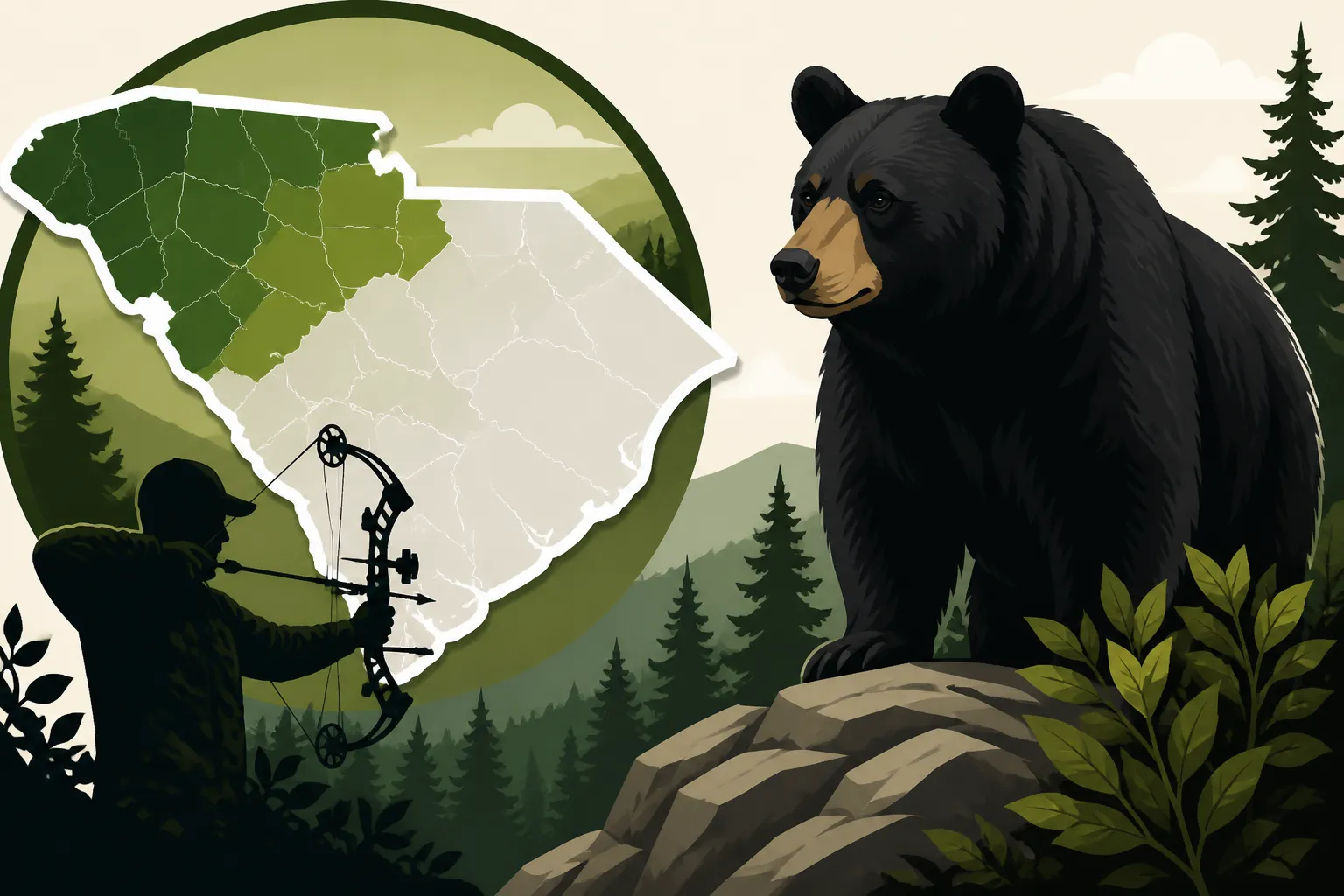
South Carolina's wildlife management framework acknowledges these distinct regional differences in bear populations. The state is divided into two primary bear hunting zones: Zone 1 (Upstate) and Zone 4 (Coastal). The very existence of this zonal distinction highlights the concentrated bear population in the mountains. Zone 1 has a dedicated, regulated bear season, reflecting a healthy, huntable population that can sustain limited harvest. For more details on these regulations, our guide on South Carolina's Two Bear Hunting Zones is an excellent resource.
Conservation efforts here focus on maintaining and enhancing forest health, which directly benefits bears. Programs to monitor bear populations, often utilizing data collected by hunters through platforms like GoHunt, ensure that hunting quotas are set sustainably. These management strategies, combined with the natural advantages of the region, allow the Upstate to remain a stronghold. The goal is always to balance human presence with healthy wildlife populations, ensuring that future generations can also appreciate the majesty of South Carolina's Black Bear Population in their natural mountain homes.
| Feature | Upstate Region (Zone 1) | Coastal Plain/Lowcountry (Zone 4) |
|---|---|---|
| Topography | Mountains, foothills, rugged terrain, high elevation | Flat, low-lying, swamps, pocosins, river bottoms |
| Dominant Forests | Mixed hardwoods, oak-hickory, conifer (pine) | Pine plantations, mixed pine-hardwood, cypress-tupelo |
| Primary Food | Abundant hard mast (acorns, hickory nuts), berries | Soft mast, agricultural crops, limited hard mast |
| Denning Sites | Rocky outcrops, dense thickets, hollow logs | Ground dens, dense thickets, brush piles |
| Human Density | Generally lower, more rural | Higher, increasing development, agriculture |
| Habitat Continuity | Large, unbroken tracts of forest | Fragmented by development, agriculture, roads |
| Bear Population | Highest density, robust | Smaller, localized, scattered pockets |
Disclaimer
This article is for general informational purposes only and does not constitute professional advice. Laws, prices and regulations vary by location and change over time. Consult a qualified professional for guidance on your specific situation.