Opening Weekend Crowds on the Coastal Zones
There’s nothing quite like the anticipation of opening morning, especially in South Carolina's coastal zones where the deer season kicks off earlier than almost anywhere else. But let's be honest, that excitement can quickly turn to frustration when you pull into a public land access point only to find a dozen other trucks already there. This guide is all about helping you understand why these areas get so busy, and more importantly, how you can still find success and solitude when the woods feel like Grand Central Station.
The Magnetic Pull of the Coastal Opening Weekend
It's no secret why hunters flock to South Carolina's coastal zones on opening weekend. The allure is powerful, a blend of early opportunity, traditional dates, and often, abundant deer sign. But what exactly drives these crowds, and how does it impact your hunt?
The Early Bird Gets the Worm… and the Crowd
The biggest draw for many hunters is the simple fact that the Lowcountry's Zone 4 deer season opens in August, weeks ahead of the other zones. This early opener means hunters, chomping at the bit after a long off-season, concentrate their efforts here. You can almost feel the collective urge to get back in the stand. This head start, coupled with the generous bag limits South Carolina offers, makes the coastal plain a prime destination. People travel from all over the state, and even from out of state, to be among the first in the woods. This desire to be first often leads to predictable bottlenecks at popular public access points, particularly in well-known areas within the Francis Marion National Forest or certain Wildlife Management Areas (WMAs). Everyone has that favorite creek bottom or pine ridge, and chances are, so do ten other hunters.
Traditional Hotspots and Easy Access
Certain areas have earned reputations over the years as deer magnets. Whether it's a specific block of timber known for big bucks, or a WMA with historical success rates, these spots naturally draw a crowd. Couple that with readily accessible roads and trails, and you're practically guaranteed company. Think about those main roads through a public tract, or the well-worn paths to a popular food plot. These are the first places people hit. The convenience factor is huge for many, especially those looking for a quick morning or evening hunt. Unfortunately, that convenience comes at the cost of solitude. The deer, especially the mature ones, quickly learn to avoid these highly pressured corridors, pushing them deeper into less accessible cover or making them entirely nocturnal. It can feel like you're hunting ghosts in areas where you know deer exist in good numbers.
Navigating the Sea of Orange: Strategies for Finding Solitude
So, how do you find those overlooked pockets of deer when it feels like every other hunter in the state is in the same patch of woods? It takes a bit more effort, some clever scouting, and a willingness to think outside the box.
Dive Deeper: Scouting and Unconventional Access
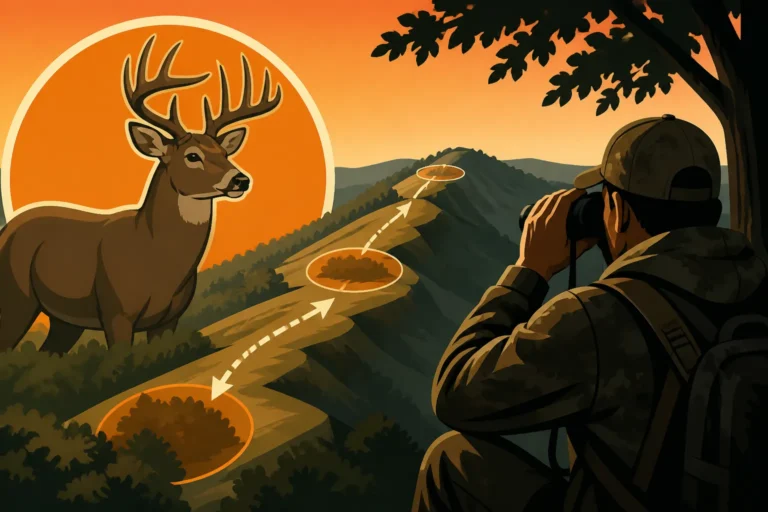
This is where your pre-season work really pays off. Don't just rely on driving the main roads; you need to put boots on the ground long before opening day. Look for overlooked access points that require a longer walk, or even a paddle, to reach. Sometimes, the best spots are just a quarter-mile further than most hunters are willing to go. These are often areas that show up on detailed mapping apps, where you can identify potential bottlenecks or natural funnels that other hunters might not see from the road.
Before the season, make it a point to go Scouting South Carolina Public Land Before Season. Pay attention to subtle topographical features, changes in timber type, or areas where thick cover meets a water source. These are the kinds of places deer will gravitate to when pressure mounts. Use tools like the Go Outdoors SC app or onX Layers for South Carolina Land Status to identify less obvious points of entry and boundaries. A deep dive into these maps can reveal forgotten logging roads, old clear-cuts, or natural barriers like swamps that deter casual hunters. While everyone else is piling into the usual spots, you could be slipping into a secluded bedding area or a quiet feeding ground that deer feel safe in. Think of it as finding a hidden path to a deer sanctuary that others overlook.
Embrace the Trek: Going Where Others Won't
If you want to find deer that haven't been pushed and prodded, you've got to be willing to do what most hunters aren't: walk. Seriously, consider how far you're truly willing to go from your vehicle. Many hunters will only walk a few hundred yards, maybe half a mile, from their truck. Go further. If you can push that to a mile or two, you’ll significantly reduce the competition and increase your chances of finding unpressured animals. This is especially true in large tracts of public land like the Francis Marion National Forest.
The Lowcountry terrain can be challenging, with thick palmetto patches, muddy bottoms, and dense undergrowth. But these are also the natural defenses that deter other hunters and create havens for deer. Focus on areas that require navigating a swamp or crossing a creek. These natural obstacles are excellent filters, quickly sifting out all but the most dedicated hunters. Use your GoHunt mapping system to pinpoint potential routes that are tough but doable, identifying higher ground within a swamp or a narrow section of a creek that could be waded. Remember, deer will naturally seek refuge in these less accessible spots once the hunting pressure ramps up on opening day. Sometimes, the biggest reward comes from the hardest journey. You might be surprised at how few people bother to go that extra distance, leaving vast stretches of prime habitat undisturbed.
Strategic Stand Placement Away From the Fray
When you know an area will be busy, your choice of stand location becomes even more critical. Avoid setting up directly on major trails or near known access points. Instead, look for secluded pockets that deer will use to escape the pressure. This could be a small thicket surrounded by open timber, a narrow strip of cover between a swamp and a field, or a point of high ground that overlooks a dense bedding area. These are places deer will funnel into when pushed.
Consider setting up on the downwind side of known bedding areas, especially those in deep cover. When other hunters start moving through the woods, they'll inevitably push deer out of these bedding spots. If you're positioned correctly, you might intercept a deer trying to slip away unnoticed. This also applies to understanding Wind and Thermals on an Upstate Ridge – though it's coastal, the principle of how air currents affect deer movement is crucial. Use your GoHunt app to find terrain features that naturally funnel deer, like a narrow pinch point where two swamps almost meet, or a small, overlooked saddle. These are the kinds of spots where a pressured deer, trying to move discreetly, will naturally pass through. It’s all about anticipating where deer will go when they’re trying to avoid people, not just where they might normally feed.
Making the Most of the Crowds: Using Pressure to Your Advantage
While crowds can be frustrating, they're not always a bad thing. Smart hunters know how to use the presence of others to their benefit, turning potential negatives into productive opportunities.
The Art of the Deer Drive (Small Scale)
Deer drives aren't just for big groups. Even a small team of two or three hunters can effectively move deer, especially in heavy cover. On opening weekend, with so many people in the woods, the entire landscape becomes a giant, uncoordinated deer drive. Your goal is to anticipate where those deer will go when pushed by others.
If you’re hunting public land, you'll see a lot of people just walking through, bumping deer. Instead of seeing this as a nuisance, consider it a potential advantage. Set up on the downwind side of thick bedding areas, especially those near property lines or natural boundaries like major roads or rivers. When other hunters stumble through, they'll inevitably push deer. You want to be on the escape route. Understanding Deer Drives With Three or Four Hunters can give you ideas for smaller, more controlled pushes on opening weekend, but even without direct coordination, you can still benefit. If you know a group of hunters is working a particular section, position yourself as a "blocker" on the most likely escape routes. This requires good communication, knowledge of the terrain, and a keen sense of how deer react to pressure.
Hunting Escape Routes and Funnels
Deer are masters of evading detection, and when the pressure is on, they will utilize specific escape routes and funnels. These are not always obvious trails. They can be subtle dips in the terrain, narrow strips of dense cover, or the edges of thick swamps. Your job is to identify these high-traffic escape routes and position yourself accordingly.
Look for areas where thickets narrow down, where open timber meets dense cover, or where a logging road cuts through an otherwise impenetrable section of woods. These are all natural funnels. Similarly, a powerline cut or a natural break in the canopy can serve as an escape corridor. Even a small creek can become a "highway" for deer trying to slip away quietly. A great place to start is scouting for Hunting a Funnel Between Two Swamps. Deer will often use these natural pinch points to move from one sanctuary to another, especially when they feel threatened. Using aerial maps, you can often identify these features from home with your GoHunt subscription, then confirm them with boots on the ground during your scouting trips.
The following table illustrates the typical characteristics and success rates of high-pressure vs. low-pressure areas on opening weekend in South Carolina's coastal zones:
| Characteristic | High-Pressure Areas (e.g., popular access points, easily accessible timber) | Low-Pressure Areas (e.g., deep swamps, areas requiring long walks/paddles) |
|---|---|---|
| Hunter Density | Very High | Low to Moderate |
| Deer Activity | Primarily nocturnal, pushed into thick cover | More natural diurnal movement, less wary |
| Sign of Deer | Abundant but often old (rub lines, scrapes from before pressure) | Fresh sign, active feeding/bedding areas |
| Success Rate (Antlered) | Low (unless hunting escape routes or during drives) | Moderate to High (for persistent hunters) |
| Success Rate (Antlerless) | Moderate (easier to push out of cover) | Moderate |
| Hunting Experience | Frustrating, frequent encounters with other hunters | Solitude, feeling of wilderness, greater challenge in access |
| Required Effort | Low (easy access, less walking) | High (extensive scouting, long walks, navigation skills) |
Beyond Day One: Post-Opening Weekend Opportunities
Don't let a crowded opening weekend completely deflate your hunting spirit. The good news is that the intense pressure often subsides quickly, opening up new opportunities in the days and weeks that follow.
The Mid-Week Lull and Shifting Deer Patterns
Many hunters, especially those traveling from afar, can only dedicate opening weekend to their pursuit. By Monday, or certainly by Tuesday, the majority of the crowds have dispersed, leaving the woods significantly quieter. This mid-week lull is a fantastic time to hit those previously pressured areas. The deer that were pushed deep into cover or went nocturnal will start to relax and resume more natural patterns.
This is your chance to revisit spots that were too crowded on Saturday. The deer might still be a bit skittish, but they'll be moving more freely. Pay close attention to recent weather changes; a cold front after a warm opening weekend can really get deer on their feet. Also, consider that deer patterns will have fundamentally shifted due to the initial pressure. They'll be using different trails, bedding in different spots, and feeding in more secluded areas. Your best bet is to scout these areas again, even lightly, to find fresh sign that indicates new movement patterns. This is prime time for Hunting the Rut in the Coastal Zones as well, as deer may be more active seeking does.
Utilizing Later Season Food Sources
As the season progresses, food sources will change, and deer will follow suit. While acorns might be hot on opening day, they won't last forever. Later in the season, other food sources like persimmons, muscadines, and various browse will become more attractive. If agricultural fields are nearby, deer will quickly key into things like standing soybeans or corn.
Scout for these changing food sources, particularly those deeper in the woods or further from access points. Deer, even after the initial rush of opening day, will prioritize food and safety. If you can find an unpressured food source tucked away in a thicket, you've likely found a productive spot. This is especially important for finding Late-Season Food Sources for South Carolina Whitetails. Remember that the coastal zones offer a wide variety of habitat, from pine plantations to hardwood bottoms, and each will offer different forage at different times. A successful hunt often boils down to being where the deer want to be, and that means following their stomachs. Don't be afraid to change up your tactics based on what the deer are telling you in the field.
Final Thoughts on Coastal Crowds
While the initial rush of opening weekend in South Carolina's coastal zones can be daunting, it's far from a reason to abandon your hunt. By understanding why the crowds gather, employing smart strategies to find solitude, and even learning to use the pressure to your advantage, you can still have a successful and rewarding experience. Put in the pre-season legwork, be willing to walk further, and adapt your tactics, and you’ll find those elusive deer, even when it feels like everyone else is in the woods with you. It’s a testament to the fact that even in popular hunting areas, there’s always an opportunity for the dedicated hunter.
Disclaimer
Hunting is an inherently dangerous activity. Always prioritize safety, follow all local and state regulations, and obtain proper licensing before heading into the field. The information provided in this guide is for informational purposes only and should not replace professional guidance or personal judgment. Be aware of your surroundings, know your target, and wear appropriate safety gear, especially blaze orange as required by South Carolina law.