Reporting a Sick Animal in South Carolina
It's never a pleasant experience to stumble upon a wild animal that's clearly not well. Whether it's limping, acting strangely, or just looks generally unwell, seeing a sick or injured creature in the wild can be concerning, not just for the animal's sake, but for the health of the entire ecosystem. This guide will walk you through exactly what to do when you encounter a sick animal in South Carolina, explaining why your report matters and how to make sure it reaches the right folks.
Why Reporting a Sick Animal Matters So Much
You might think, "It's just one animal, what difference can I make?" But trust me, every single report of a sick or injured animal is a crucial piece of a much larger puzzle that our wildlife agencies are constantly trying to put together. You, as a boots-on-the-ground observer, are often the first line of defense in identifying potential issues that could impact our cherished game populations and even our own health.
Protecting Wildlife Health and Preventing Disease Spread
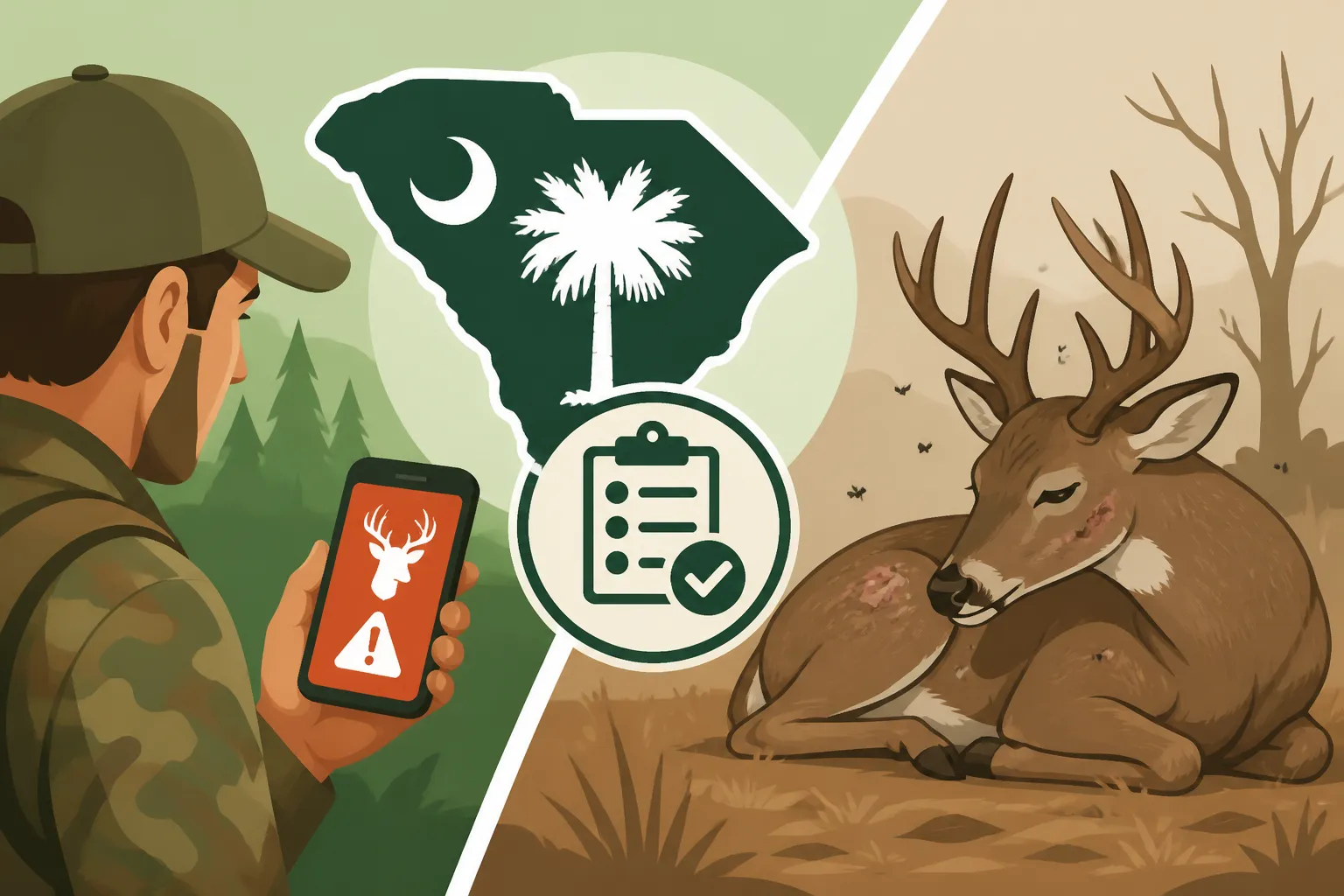
Imagine seeing a deer stumbling through the woods, clearly disoriented, maybe even with some strange lesions. Your first thought might be concern for that individual animal, and rightly so. But what that deer could be carrying might be much more significant. Diseases like Epizootic Hemorrhagic Disease (EHD) can wipe out local deer populations in a hurry, especially in hot, dry summers when deer congregate near scarce water sources. Your quick call helps wildlife biologists track these outbreaks, understand their spread, and potentially implement strategies to mitigate future impacts.
It's not just about immediate die-offs, either. Persistent, low-level diseases can weaken a population over time, making animals more susceptible to other environmental stressors or predators. By reporting, you're contributing to a broader understanding of wildlife health trends, which helps the state maintain healthy and robust populations for hunting and wildlife viewing alike. The South Carolina Department of Natural Resources (SCDNR) works tirelessly to prevent the spread of serious diseases like Chronic Wasting Disease (CWD), which hasn't been found in our state. Your observation helps them maintain this vigilance. For more on this, you might find Why South Carolina Stays CWD-Free an interesting read, as well as How South Carolina Monitors for CWD Every Year.
Identifying Potential Threats to Domestic Animals and Humans
While we often focus on the health of wild populations, it's also critical to remember that some wildlife diseases can jump the species barrier. These are known as zoonotic diseases, and they can affect our pets, livestock, and even us. Rabies is probably the most well-known example, often carried by foxes, raccoons, skunks, and bats. An animal acting erratically, perhaps unusually aggressive or unusually tame, could be rabid and poses a direct threat to anything it encounters.
Less dramatic but equally important are diseases that can affect pets, like distemper or parvovirus. While these typically spread among wildlife, a sick coyote or fox wandering into a suburban yard could expose an unvaccinated dog. Your report helps wildlife officials assess the risk to both wildlife and the broader community, sometimes even triggering public health advisories in specific areas. It’s all part of the larger picture of South Carolina Wildlife Disease Monitoring, where every piece of information helps protect everyone.
What to Do When You Encounter a Sick or Injured Animal
Encountering a sick or injured animal can trigger a natural instinct to help, but in the wild, that instinct sometimes needs to be tempered with caution and knowledge. Your safety, and the safety of others, must always be the top priority.
Safety First: Your Well-being is Paramount
Let me be absolutely clear: do not approach, touch, or attempt to rescue a sick or injured wild animal yourself. This isn't just about protecting yourself from a bite or scratch, though that's a very real concern. A scared or sick animal can be unpredictable and dangerous. Furthermore, if the animal is suffering from a contagious disease, you could unknowingly expose yourself or your pets to it. Even a seemingly docile animal can inflict serious injury if it feels cornered or threatened.
Observe the animal from a safe distance, ideally using binoculars if you have them. Note its behavior, location, and any visible injuries or symptoms without putting yourself at risk. This means keeping children and pets away from the area as well. This caution applies to all wildlife, whether it's a deer, a raccoon, or even what appears to be a harmless bird. Remember, wild animals are just that—wild. They're not like our domesticated friends and should be treated with respect and a healthy dose of distance. You wouldn't walk up to a South Carolina Diamondback Rattlesnake Encounters Afield, and you shouldn't walk up to a sick deer either.
Gathering Key Information for Your Report
Once you've ensured your safety, your next step is to gather as much pertinent information as possible. The more details you can provide, the more effectively the SCDNR or other authorities can respond. Think of yourself as a detective, noting down the crucial clues.
Here’s a checklist of what to look for and record:
- Exact Location: This is probably the most important piece of information. GPS coordinates are ideal. If you're on public land, mention the WMA, National Forest, or specific trail name and mile marker. If you're on private land, describe the nearest intersection, road, or prominent landmark. Before you call, quickly pull up your GoHunt app to pinpoint your exact coordinates. This will make your report much more effective, allowing responders to get right to the location.
- Species of Animal: Is it a deer, a fox, a turkey, a bear? Be as specific as possible.
- Number of Animals: Is it one animal, or are there multiple sick animals in the area? This can indicate a broader outbreak.
- Observed Symptoms/Behavior: This is where your keen eye comes in.
- Movement: Is it limping, stumbling, circling, unable to stand, acting disoriented?
- Appearance: Are there visible wounds, lesions, excessive drooling, nasal discharge, ruffled feathers, hair loss, emaciation?
- Behavioral changes: Is it unusually aggressive, abnormally tame, lethargic, unresponsive to your presence, or exhibiting any behavior uncharacteristic of its species? For example, a normally nocturnal animal like a fox or raccoon out in broad daylight behaving strangely is a red flag.
- Date and Time of Sighting: When exactly did you see the animal?
- Your Contact Information: Provide your name and phone number so authorities can follow up if they need more details.
If it's safe to do so from a distance, snapping a quick photo or video with your phone can be incredibly helpful. This visual evidence can often convey more information than words alone, helping biologists diagnose potential issues. While GoHunt is fantastic for scouting prime hunting spots or understanding land boundaries, it's also a great tool to accurately mark where you observed a distressed animal with a quick pin drop. Even if you’re out of cell service, many modern hunting apps like GoHunt allow you to drop a pin offline, which you can then relay once you regain signal. Being able to provide precise coordinates, perhaps pulled directly from your GoHunt mapping overlay, ensures that the SCDNR or local authorities can quickly locate the animal.
How to Officially Report a Sick or Injured Animal in South Carolina
Once you have your information, it's time to make that crucial call. Knowing who to contact and when can save valuable time and ensure the animal gets the attention it needs.
The Primary Reporting Channel: SCDNR
For most wild animal encounters, especially those involving potential disease or injuries in areas outside of immediate residential zones, the South Carolina Department of Natural Resources (SCDNR) is your go-to agency. They are the primary custodians of our state's wildlife and have the biologists, game wardens, and resources to assess and respond appropriately.
Here’s how you generally connect with them:
- SCDNR Website: The SCDNR website usually has a dedicated section for reporting wildlife concerns or specific contact numbers for different regions or types of incidents. Look for "Wildlife Health," "Reporting Sick Animals," or a general "Contact Us" section.
- General Wildlife Phone Line: The SCDNR typically operates a main switchboard or a specific wildlife reporting line during business hours. For after-hours or emergency situations, they may have an incident response line. (Remember, I can't give you specific current phone numbers, so always check the official SCDNR website directly for the most up-to-date contact information).
- Game Wardens/Law Enforcement: If you know a local game warden, you can reach out directly. These officers are on the front lines and often have excellent local knowledge. However, don't just randomly call any law enforcement number; stick to the SCDNR's official channels first unless it's a clear emergency. This is different from, say, Reporting a Poacher in South Carolina, where law enforcement is explicitly the target, but the principle of direct contact with the appropriate agency remains.
When you call, be ready to provide all the details you gathered: location, animal species, observed symptoms, and your contact information. They might ask additional questions to help them prioritize and understand the situation. Keep in mind that depending on the animal, its location, and the severity of its condition, the SCDNR's response might vary from dispatching personnel to simply logging the report for data tracking. Not every report will result in an immediate on-site response, but every bit of data is valuable.
When to Contact Local Animal Control or Law Enforcement
While the SCDNR handles most wild animal issues, there are specific scenarios where local animal control or even your local police department might be the more appropriate first contact. This usually applies when the animal poses an immediate public safety threat in a densely populated area or if it's clearly a domestic animal gone astray.
Consider contacting local authorities in these situations:
- Domestic Animals: If you see an injured dog or cat, even if it appears feral, local animal control or humane societies are usually the proper agencies. The SCDNR focuses primarily on truly wild, undomesticated species.
- Urban/Suburban Areas with Immediate Threat: A fox acting erratically in a neighborhood park, a deer hit by a car on a busy road, or a raccoon trying to enter a home could warrant a call to local animal control or the non-emergency police line. These situations often require a rapid response to protect residents or manage traffic, which local agencies are better equipped to handle quickly.
- Roadside Injuries: If you encounter a deer or other large animal that has been hit by a vehicle and is suffering on the side of a busy road, local law enforcement may need to be involved to ensure traffic safety while the animal is assessed. These events are unfortunately common in our state, and South Carolina Deer Vehicle Collisions are a reality.
- Public Health Concerns: If you suspect an animal might be rabid and it's in close proximity to people or pets, contacting local public health departments can also be an option, but often they will advise you to first contact local law enforcement or animal control who have the authority to manage the animal itself.
Here's a quick guide to help you decide:
| Situation | Primary Contact | Secondary Contact | Key Considerations |
|---|---|---|---|
| Wild animal, suspected disease/injury (remote area) | SCDNR | N/A | Long-term wildlife health, disease tracking. Provide exact location. |
| Wild animal, acting erratically (urban/suburban) | Local Animal Control | Local Police (non-emergency) | Immediate public safety, proximity to people/pets. Avoid direct contact. |
| Injured deer/large animal (busy road) | Local Law Enforcement | SCDNR | Traffic safety, humane dispatch if necessary. |
| Injured domestic animal (dog/cat) | Local Animal Control | Local Humane Society | Focus on rescue, potential owner identification, veterinary care. |
| Bird with unusual symptoms | SCDNR | Local Animal Control (if urban) | Avian disease monitoring, Avian Influenza in South Carolina Birds concerns. |
| Small mammal (fox, raccoon) with rabies-like symptoms | Local Animal Control/Police | SCDNR | High public health risk. Do NOT approach. |
Always use the non-emergency line for local police or animal control unless there's an immediate threat to human life. Emergency 911 should only be called if there's a direct and imminent danger.
Common Signs of Sickness in South Carolina Game Species
Knowing what to look for can help you provide a more accurate and useful report. While you don't need to be a wildlife biologist, recognizing some common signs of illness in our prevalent game species is incredibly helpful.
Deer: The Most Frequently Observed Game Animal
White-tailed deer are by far the most commonly observed big game animal in South Carolina, and unfortunately, they can fall victim to several diseases.
- Epizootic Hemorrhagic Disease (EHD): This is a very common viral disease in deer, especially in late summer and early fall. Deer often appear lethargic, weak, and may have a high fever, leading them to seek out water sources. You might find them dead near ponds or streams. Other signs include swelling of the head, neck, tongue, and eyelids, and lesions or ulcers on the mouth and tongue. Sometimes, their hooves may crack or slough off. We see EHD Die-Offs in South Carolina Deer periodically, and reports help track its severity.
- Chronic Wasting Disease (CWD): While South Carolina is thankfully CWD-free, understanding its symptoms is important for vigilance. CWD is a neurological disease that causes progressive degeneration of the brain. Affected deer become emaciated (hence "wasting"), exhibit abnormal behaviors like listlessness, excessive salivation, difficulty swallowing, and an altered gait. They may also lose their fear of humans.
- General Sickness/Injury: Beyond specific diseases, a deer that is limping severely, has obvious open wounds, is standing with its head down for prolonged periods, or seems completely unresponsive to its surroundings could be seriously ill or injured.
Turkeys and Other Upland Birds
Wild turkeys are another popular game species, and while they don't face the same viral threats as deer, they can still get sick.
- Avian Pox: This viral disease causes wart-like lesions on unfeathered parts of the bird, particularly around the eyes, beak, and legs. While often not fatal, severe cases can impair the bird's ability to see, eat, or move, making it vulnerable.
- Avian Influenza (Bird Flu): This is a serious concern, particularly for waterfowl, but it can affect turkeys and other upland birds. Symptoms can include respiratory distress (gasping, coughing), lethargy, ruffled feathers, swelling around the head, and nervous system issues like tremors or inability to walk. If you see multiple dead birds in an area, especially waterfowl, it's particularly important to report this immediately, as discussed in Avian Influenza in South Carolina Birds.
- General Unwellness: A turkey that is completely unresponsive, unable to fly (if it's capable of flight), or has very severe physical deformities or injuries should be reported.
Predators and Furbearers
Animals like foxes, raccoons, bobcats, and coyotes are critical parts of our ecosystem, and their health is also important. The biggest concern with these species is often rabies.
- Rabies: This viral disease affects the nervous system and is almost always fatal. It can be difficult to diagnose from observation alone, as symptoms vary, but look for:
- Uncharacteristic behavior: A nocturnal animal out during the day, acting unafraid of humans, or unusually aggressive or docile.
- Neurological signs: Stumbling, disorientation, paralysis, foaming at the mouth, seizures, or self-mutilation.
- Aggression: Unprovoked attacks on people, pets, or other animals.
If you see an animal exhibiting these signs, especially in an urban or suburban area, it's a serious situation that needs immediate reporting to local authorities.
- Mange: This parasitic skin disease, common in foxes and coyotes, causes severe hair loss, crusting of the skin, and intense itching. Affected animals often look emaciated and scruffy. While not usually directly fatal, it can lead to secondary infections and make the animal vulnerable to the elements. You might see Mange in South Carolina Coyotes and Foxes from time to time.
- Injuries: Any visible injury, like a broken leg or deep wound, in a predator or furbearer should be reported. These animals are often highly resilient, but severe injuries can compromise their ability to hunt or evade danger.
By being observant and knowing these common indicators of distress, you play a vital role in protecting South Carolina's diverse wildlife. Every report helps, so don't hesitate to make the call. For context on data collection, learning about Reading a South Carolina Harvest Report can show you how agencies use collected information. If you're wondering about options for injured game, look into South Carolina Wildlife Rehabilitation for Injured Game.
Disclaimer
This article is for general informational purposes only and does not constitute professional advice. Laws, prices and regulations vary by location and change over time. Consult a qualified professional for guidance on your specific situation.