Hunting Coastal Marsh Waterfowl
The tidal marshes of South Carolina offer some of the most unique and challenging waterfowl hunting experiences you can find, but they can be incredibly frustrating if you don't understand their rhythm. From unpredictable tides that expose vast mudflats to thick Spartina grass that can swallow a decoy spread, navigating these dynamic environments requires a special approach. This guide will walk you through everything you need to know to successfully hunt coastal marsh waterfowl, from understanding the species you'll encounter to mastering the tactics that put birds in your bag.
The Unique Challenges of South Carolina's Coastal Marshes
Hunting the saltmarsh is a world away from sitting in a field blind or hidden amongst flooded timber. The coastal ecosystem of South Carolina, particularly areas like the ACE Basin or Bulls Bay, presents a labyrinth of constantly changing conditions that demand respect and specialized knowledge. It's not just about finding ducks; it's about understanding the very ground you stand on—or, more accurately, the water you float in—and how it dictates everything from bird behavior to your hunting success.
The Dynamic Nature of Tidal Waterways
The most significant factor in coastal marsh waterfowl hunting is undeniably the tide. We're not talking about a subtle rise and fall; the Lowcountry tides can shift water levels by several feet in just a few hours, completely transforming the landscape. What was a navigable creek at high tide can become a muddy, impassable ditch minutes later, stranding hunters or making retrievals a nightmare. This constant flux impacts where ducks feed, where they roost, and their flight patterns. Ignoring the tide charts is a rookie mistake that can turn a promising hunt into a logistical disaster, leaving you high and dry (literally!) with decoys to pull across exposed mud. You need to know when the water will be up enough to access certain areas and when it will drop, revealing critical feeding grounds. Understanding these patterns is key to positioning yourself for success and making safe decisions on the water.
Navigating the Mud and Spartina Grass
Beyond the tide itself, the physical environment of a coastal marsh poses its own set of challenges. The bottom is often a thick, silty mud that can be deceivingly deep, making wading precarious, if not impossible, in many areas. Trying to retrieve a downed bird or set decoys can quickly turn into a grueling workout as you sink up to your knees, or even waist, in the soft, clinging muck. Then there's the dominant vegetation: Spartina grass. While it provides excellent cover for ducks and hunters alike, it grows incredibly dense and tall, making visibility limited and movement strenuous. Pushing a canoe or layout blind through a thick stand of Spartina can be exhausting, and it's easy to get disoriented in the endless expanse. This is where a good Waders for South Carolina Tidal Marsh Hunting guide becomes invaluable, ensuring you have the right footwear for the task.
Understanding Salinity and Food Sources
The salinity of the water plays a crucial role in determining what kind of vegetation and invertebrates are available for ducks to feed on. South Carolina's coastal plain features a gradient from saltwater marshes right along the ocean to brackish and even freshwater impoundments further inland, often influenced by river systems. Each of these zones supports different food sources. Saltwater marshes, for example, might offer specific types of marine invertebrates or seeds from salt-tolerant plants like glasswort, while brackish areas are known for wigeon grass, pondweeds, and a wider variety of aquatic insects. Ducks, being highly adaptable, will gravitate towards the areas offering the most abundant and nutritious food at any given time. Successful marsh hunters are constantly observing what birds are eating, perhaps even checking the crops of harvested birds, to fine-tune their hunting locations. Knowing what local ducks prefer in different seasons is vital for finding those hidden hotspots, especially during peak Duck Migration Timing Through South Carolina.
Prime Waterfowl Species and Their Behaviors in the Lowcountry
South Carolina's coastal marshes are a bustling hub for a variety of migratory waterfowl, drawing birds from the Atlantic Flyway down to warmer climes. Each species has its own preferences and behaviors, making understanding them crucial for hunters. From the familiar dabblers working the shallow edges to the hardy divers plying the deeper channels, the Lowcountry offers a diverse hunting experience.
Dabbling Ducks: Puddle Jumpers of the Marsh
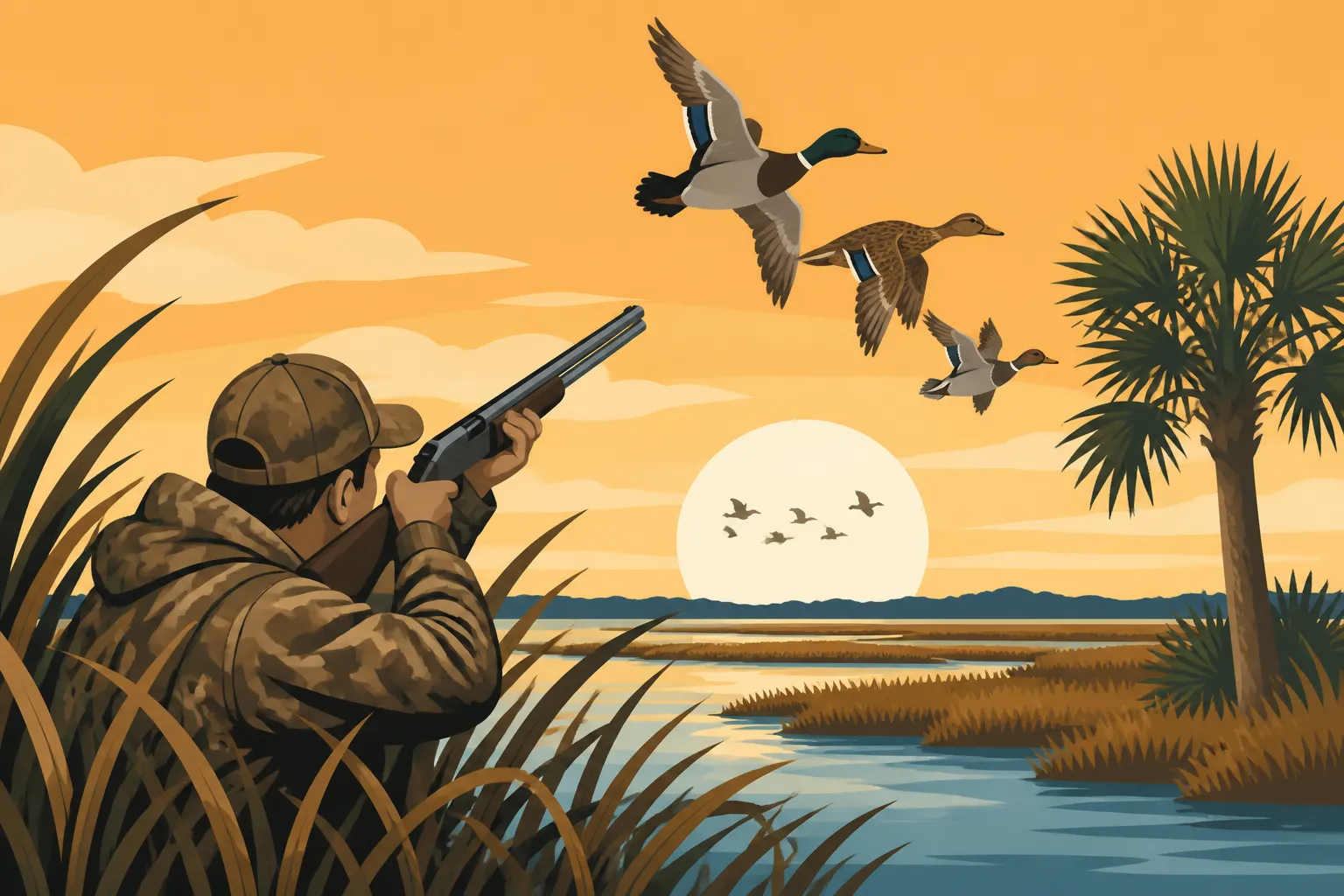
Dabbling ducks, also known as puddle ducks, are perhaps the most common waterfowl encountered in the coastal marshes. Species like mallards, American wigeon, green-winged teal, blue-winged teal, and gadwalls are all frequent visitors, often favoring the shallower, brackish water impoundments and the flooded edges of the saltmarsh where they can easily tip up to feed without diving completely. They're excellent at finding submerged vegetation, seeds, and invertebrates in just a few inches of water. These birds are often seen flying in smaller flocks, zipping around marsh islands, and are generally responsive to calling. Understanding their flight patterns—often low over the grass and hugging marsh edges—is vital for setting up decoys and blinds effectively. You might find them in areas like the ACE Basin, where the mix of fresh and saltwater provides an ideal buffet. For more on their numbers, check out statistics on South Carolina Mallard and Wood Duck Numbers.
Diving Ducks: Deep Water Specialists
While dabblers prefer the shallows, diving ducks like redheads, canvasbacks, scaup (bluebills), and buffleheads are built for deeper water. These birds typically feed by diving completely underwater to snatch up shellfish, aquatic plants, and other invertebrates from the bottom. In South Carolina's coastal marshes, you'll often find them in larger, open bodies of water, along deep tidal creeks, or in the more saline bays and sounds. They tend to raft up in bigger groups than dabblers and can be a bit harder to decoy, often requiring larger, more realistic spreads set in open water. Their flight is typically faster and higher, and they often circle a spread multiple times before committing, if they commit at all. Hunting divers requires a different approach, often involving boat blinds or layout blinds in open water, strategically placed to intercept their flight paths across larger bodies of water.
Other Migratory Birds and Resident Geese
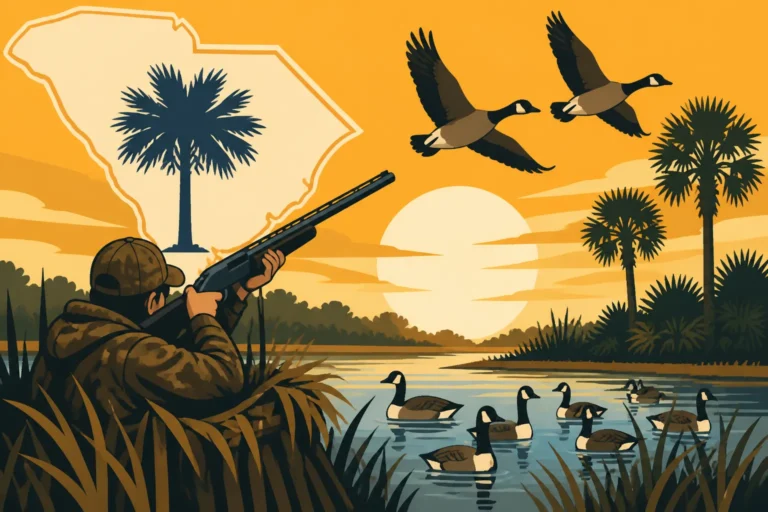
Beyond the traditional ducks, the South Carolina coast sees its share of other migratory waterfowl and resident populations. Wood ducks are plentiful, especially in brackish areas with adjacent wooded cover, and are a prime target for Jump-Shooting South Carolina Creeks for Wood Ducks. Their distinctive squeal and fast, weaving flight through timber are unmistakable. You might also encounter pintails, known for their elegant flight and long necks. While less common than ducks, resident Canada geese have established populations in many parts of the Lowcountry, particularly around agricultural fields bordering marsh systems. They often utilize marshes for roosting and loafing, providing additional opportunities for hunters. Keep in mind that many migratory shorebirds also inhabit these areas, so positive identification of your target species is paramount to ensure you're only targeting legal game birds and staying within the South Carolina Duck Daily Bag Limit.
Essential Gear for Navigating and Hunting Coastal Waters
Hunting coastal marsh waterfowl isn't like hunting a pond in the Upstate. The challenging environment demands specialized gear that can withstand saltwater, mud, and the rigors of tidal movement. From the vessels that get you to your spot to the layers that keep you comfortable, the right equipment is your best friend when battling the elements.
Boats, Blinds, and Decoy Spreads
First and foremost, you need a way to get around. A reliable boat is essential for navigating the complex creek systems of the coastal marsh. Shallow-draft vessels like jon boats, skiffs with mud motors, or even canoes and kayaks are popular choices, allowing access to areas where larger boats can't go. Whatever you choose, it needs to be robust enough to handle encounters with oyster rakes and shallow mud. For concealment, boat blinds are often custom-built to blend seamlessly with the Spartina grass, allowing you to hide in plain sight amidst the vast marsh. Alternatively, portable layout blinds are excellent for low-profile hunting on mudflats or marsh edges, especially when targeting open water divers. When it comes to decoys, having a diverse spread is key. Puddle duck decoys, often a mix of mallards, pintails, and teal, are usually deployed in smaller, tighter groups in the shallows. For divers, larger numbers of redheads, scaup, and canvasback decoys might be needed, spread out more loosely in open water to mimic resting rafts. Keep in mind, decoy anchors need to be heavy enough to hold in strong tidal currents, and plenty of decoy line is necessary for varying water depths. If you're hunting open water, consider investing in a quality push pole for quiet maneuvering through shallow flats. For those hunting specific environments, read more about Layout Blind Hunting Lowcountry Rice Fields.
Shotguns, Ammunition, and Waders
Your shotgun needs to be reliable and capable of handling repeated exposure to salty air and water. Many hunters prefer 12-gauge shotguns for their versatility and stopping power, but 20-gauge guns are also popular, especially for teal. Semi-automatics are favored for quick follow-up shots, but pumps are rugged and dependable. Regardless of the action, regular cleaning and maintenance are critical to prevent corrosion. When it comes to ammunition, Where Nontoxic Shot Is Required in South Carolina is a crucial consideration for waterfowl hunting. Steel shot is the most common and affordable non-toxic option, but bismuth and tungsten-based loads offer superior performance, especially at longer ranges. Bring a variety of shot sizes; larger shot (like 2s or BBs) for bigger ducks and geese, and smaller shot (like 4s or 6s) for teal or close-range shots. Finally, good waders are non-negotiable. Chest waders made from durable, puncture-resistant neoprene or breathable materials are essential for wading through mud, setting decoys, and retrieving birds. Make sure they fit well and allow for layering underneath. Many hunters also choose snake boots or snake gaiters to wear with their waders as an added precaution in this environment, as venomous snakes are common.
Navigation and Safety Equipment
The coastal marsh can be a disorienting place, with endless stretches of similar-looking grass and winding creeks. Reliable navigation is paramount. A handheld GPS unit or a robust smartphone app like GoHunt with offline mapping capabilities is a must-have for marking your blind location, tracking your path, and finding your way back to the launch in the dark or fog. Tidal charts and a compass are also essential backups. VHF radios are highly recommended for communication, especially if you're hunting with multiple boats or in remote areas without cell service. Safety equipment should include personal flotation devices (PFDs) for everyone in the boat, a first-aid kit, a whistle or air horn, a throwable flotation cushion, and a fire extinguisher. Furthermore, always carry extra fuel, a paddle or oars, basic tools for minor boat repairs, and plenty of water and snacks. The remote nature of many marsh hunting spots means self-sufficiency is key. Finally, be mindful of the South Carolina Waterfowl Zones and Seasons and ensure you have all required licenses and stamps, including your Federal Duck Stamp and HIP certification.
Effective Scouting and Decoy Strategies for Tidal Flow
Success in the South Carolina coastal marsh is less about luck and more about meticulous preparation and understanding the behavior of birds within the unique tidal environment. Scouting isn't just a pre-season activity; it's an ongoing process that informs every decision you make, from where to set up to how to arrange your decoys.
Reading the Tide Charts and Current
The tide is the heartbeat of the marsh, and ignoring it is an express ticket to a tough hunt or worse, a stranded boat. Before you even think about setting a decoy, you need to pore over the tide charts for your specific area. Pay close attention to the timing of high and low tides, and the predicted water depth changes. Ducks often feed most actively during certain stages of the tide, typically when falling water exposes mudflats or when rising water floods new feeding grounds. Understanding current strength is equally important. Strong tidal currents can sweep decoys away, pull your boat off position, and make retrieving downed birds incredibly difficult. Look for eddies or areas where the current slows down, as these can be natural holding spots for ducks. A good tidal flow map, often integrated into hunting apps or available through NOAA, is invaluable. Knowing when to be in your spot, and which tide will give you the best shot opportunity, is a game-changer. This deep understanding is crucial for Reading a Tidal Marsh for a Morning Flight, ensuring you're at the right place at the right time.
Locating Roosts and Feeding Areas
Ducks follow predictable patterns: they roost, they feed, and they fly between the two. Your scouting should focus on identifying these critical locations. Roosting areas are often large, open bodies of water, protected bays, or wide sections of tidal creeks where birds feel safe to spend the night. Feeding areas are typically shallower, richer in aquatic vegetation, seeds, or invertebrates, and exposed or flooded by the tide at opportune times. Spend time observing during non-hunting hours, using binoculars or a spotting scope from a distance, to see where birds are concentrating. Look for mudflats peppered with feeding sign, like dabbler bills poking into the muck or ripples from diving birds. Accessing these areas during low tide can reveal a treasure trove of information about what the birds are eating and where they prefer to stage. Tools like the GoHunt app can overlay aerial imagery with public land boundaries and tide information, helping you pinpoint potential hotspots from home. Don't be afraid to put boots on the ground (or mud, as it were) if you can safely access areas to confirm observations.
Decoy Spreads for Different Species and Situations
Decoy placement in the marsh is an art, heavily influenced by the tide, current, and the species you're targeting. For dabbling ducks in shallower, calmer areas, a "J-hook" or "U-shaped" spread can work well, leaving an open landing zone directly in front of your blind. Incorporate movement with jerk strings or spinning wing decoys if conditions allow, as motion is a huge draw for puddle ducks. When targeting divers in open water with stronger currents, you'll need larger, more robust spreads. A long "line" or "string" of diver decoys extending from your blind can funnel birds down a flight path. Consider creating a "confidence spread" with a mix of species, perhaps some resting geese or coots on the edge of your duck spread, to make the area look more inviting. Always set your decoys facing into the current or wind, as real ducks will naturally do. And remember to adjust your spread as the tide changes, ensuring your decoys look natural and aren't left high and dry on a mudflat. Strategic placement, coupled with understanding bird behavior, can make all the difference in drawing birds within range.
Mastering Hunting Techniques in the Marsh
Once you've done your scouting, picked your spot, and set your spread, it's time to execute. Hunting the coastal marsh demands adaptability, patience, and a keen understanding of how birds react to your setup in this unique environment. It's often a game of timing and subtle adjustments.
Jump-Shooting Creeks and Eddies
One of the most exciting and physically demanding ways to hunt waterfowl in the coastal marsh is jump-shooting. This technique involves slowly and stealthily navigating tidal creeks and hidden channels in a small boat, canoe, or even by wading, flushing ducks at close range and taking quick shots. Wood ducks, teal, and even some mallards are prime targets for jump-shooting. The key is to approach quietly, often using the current to drift or poling silently, and stay alert for ducks tucked into bends in the creek, under overhanging vegetation, or loafing in small eddies where the current is slower. It requires excellent marksmanship and quick reflexes, as the birds often erupt unexpectedly. When jump-shooting, always be aware of safe shooting lanes and potential hazards. This method is particularly effective for covering a lot of ground and can be a great option when birds aren't working a decoy spread. It’s a dynamic and engaging way to hunt, and many hunters find it highly rewarding.
Sitting the Tide: Blinds and Boat Placement
For more stationary hunting, "sitting the tide" is the quintessential marsh technique. This involves positioning your boat blind or ground blind strategically to intercept ducks as they move to and from feeding or roosting areas, often coinciding with specific tidal phases. Your blind must be well-camouflaged, blending seamlessly with the surrounding Spartina grass. Placement relative to the sun is also critical; try to set up so the sun is at your back, making it harder for incoming birds to spot you. Pay attention to typical flight lines—are birds hugging the main channel, or cutting over a particular marsh island? Your boat should be anchored securely, especially if the current is strong, and oriented so you have a clear shooting arc without exposing yourself too much. This might involve setting up at the mouth of a smaller creek or along a major thoroughfare where ducks are known to travel. You might find great success in the famous Hunting the ACE Basin for Waterfowl, where careful blind placement makes all the difference. Remember, the tide will change, so your blind needs to remain effective at various water levels; don't get caught with your blind too high or too low as the water moves.
Calling Strategies for Marsh Ducks
Effective calling in the marsh is about realism and knowing when to be aggressive and when to be subtle. Different duck species respond to different calls, and the open, often windy environment of the marsh can carry calls a long way, but also distort them. For dabblers like mallards, a variety of quacks, hen calls, and greeting calls can be very effective, especially if you see birds at a distance. Don't overcall; let the ducks work. For teal, a high-pitched whistle can be irresistible. Pintails and wigeon also have their distinct whistles that can draw them in. When birds are circling, a few soft quacks or a feeding chuckle can often provide the encouragement they need to drop their feet. In the wide-open marsh, sometimes a louder, more aggressive hail call is needed to get the attention of high-flying birds, followed by softer "come back" calls as they turn. Pay attention to how the birds are reacting; if they're flaring, ease up on the call. If they're responding positively, continue to work them until they're committed. Remember to practice your calls and understand the different nuances to become a true marsh calling maestro.
Disclaimer
Hunting is an inherently dangerous activity. This guide provides general information and recommendations. Always prioritize safety, adhere to all local, state, and federal hunting regulations, and obtain proper licensing. Be aware of your surroundings, understand your equipment, and consider taking a hunter education course. The author and publisher are not responsible for any accidents, injuries, or legal issues that may arise from the use of this information.