Running Dogs on South Carolina Feral Hogs
Feral hogs are perhaps one of the most frustrating, destructive, and elusive game animals a hunter can pursue in South Carolina. They multiply at an alarming rate, decimate agricultural fields, tear up pristine hardwood bottoms, and generally make a nuisance of themselves, often outsmarting conventional hunting methods. If you've ever spent countless hours in a stand, only to see signs of hog activity but never the hogs themselves, you know the frustration. This comprehensive guide will delve deep into one of the most effective, albeit specialized, methods of controlling these destructive creatures: running hogs with dogs, a long-standing tradition in the South Carolina lowcountry and beyond.
Understanding the Feral Hog Problem in South Carolina
Before we even talk about dogs, it's crucial to grasp the sheer scale of the feral hog issue here in South Carolina. These aren't just a fun animal to chase; they are an ecological disaster and an agricultural nightmare. Hunters often feel a moral obligation to help mitigate their impact, and rightly so.
The Destructive Nature of Hogs
Feral hogs are an invasive species, and their impact on South Carolina's ecosystems and economy is nothing short of catastrophic. They're constantly rooting up the ground, turning over soil in a relentless search for food. This rooting behavior destroys native plant communities, disrupts sensitive wetland habitats, and even damages established timber stands. Imagine a pristine bottomland hardwood forest, rich with mast trees, suddenly looking like a rototiller went through it – that's the handiwork of a sounder of feral hogs. This destruction directly impacts other wildlife, too. Ground-nesting birds, like wild turkeys and bobwhite quail, have their nests raided, and the food sources for deer and other small game are severely depleted.
From an agricultural perspective, the damage is even more immediate and costly. Farmers in the state report millions of dollars in crop losses annually. Fields of corn, soybeans, peanuts, and even specialty crops can be completely annihilated overnight. These animals will devastate a newly planted field or raid a mature crop just before harvest, leaving a trail of destruction that crushes a farmer's livelihood. It’s a relentless battle, and the sheer number of hogs makes it feel like an uphill climb for many landowners.
Why Conventional Methods Fall Short
If you've ever tried to hunt feral hogs with traditional methods, you've likely experienced how incredibly smart and elusive these animals can be. They learn quickly from pressure. Try still-hunting a group of hogs, and they'll quickly become nocturnal, moving only under the cover of darkness. They develop intricate patterns of movement, often covering vast distances between bedding areas and feeding grounds, making them incredibly difficult to pattern from a static treestand. They're masters of using thick cover to their advantage, disappearing into impenetrable swamps or dense pine thickets at the first hint of danger.
Trapping is another popular method, and it can be highly effective for removing large numbers of hogs from a specific area, especially when implemented strategically, as detailed in guides like Trapping South Carolina Feral Hogs. However, even the most sophisticated traps require constant monitoring and can be compromised by a smart lead sow. Night hunting, particularly with thermal optics, has gained popularity, offering a distinct advantage when hogs are active after dark. Articles like Night Hunting Hogs With Lights on Private Land often highlight its effectiveness. Yet, these methods, while valuable, often require specific conditions, significant investment in equipment, or simply can't penetrate the densest cover where hogs love to hide. This is where the sheer determination and scenting ability of a well-trained hog dog pack really shines, offering a dynamic solution to a tenacious problem.
The Art of Running Hogs with Dogs
Running dogs on feral hogs is a dynamic, high-energy hunt that is as much about the dogs' skill and instinct as it is about the hunter's knowledge of hog behavior and the terrain. It's a completely different experience from sitting in a deer stand, requiring constant movement and quick decision-making.
Bay Dogs Versus Catch Dogs
Successful hog dogging typically relies on a synergistic team of two types of dogs: bay dogs and catch dogs. Each plays a critical, distinct role, and a good hog hunting outfit will have a mix of both.
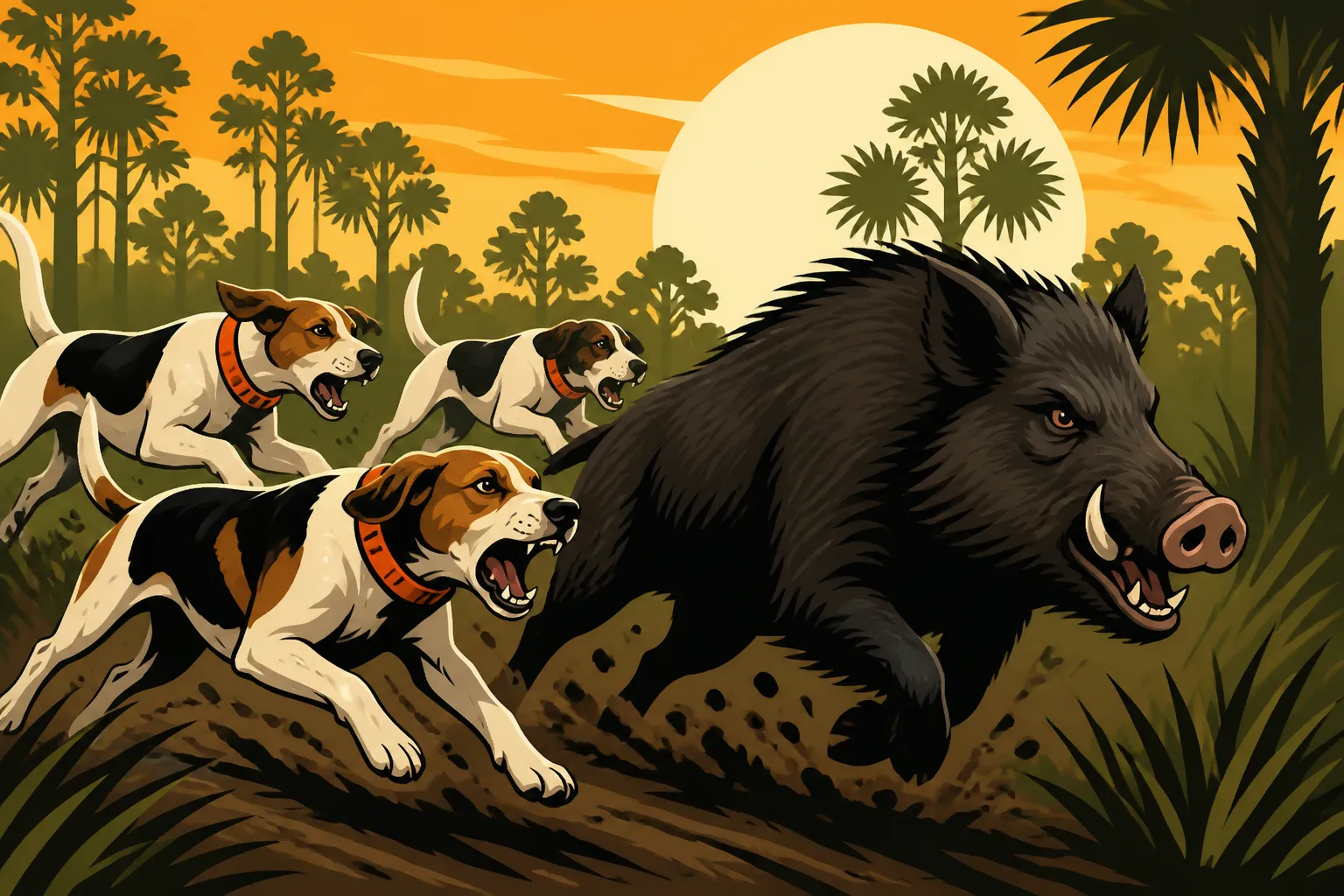
Bay Dogs: These are the vocalists of the pack, the ones responsible for finding a hog, surrounding it, and "baying" it – holding it at bay by barking and circling, preventing it from escaping. They never actually grab the hog. Their job is to keep the hog focused on them, giving the hunters time to close the distance. Ideal bay dogs are fast, agile, tenacious, and intelligent enough to avoid getting too close to the hog's tusks. They need to have a strong "cold nose" to pick up old scent trails and a booming, consistent bark to let you know where they've treed or cornered a hog. Breeds often favored for baying include curs, Catahoulas, and even some hound mixes known for their grit and vocalizations. Their ability to push a hog through thick cover and then hold it steady is paramount. Without good bay dogs, you'd never locate a hog in the impenetrable places they call home.
Catch Dogs: These are the heavy hitters, the muscle of the operation. Once the bay dogs have a hog cornered and baying, the catch dogs are released to move in and physically secure the hog, typically by grabbing an ear or the back of the neck. Their purpose is to hold the hog still and incapacitated, allowing the hunter to safely approach and dispatch the animal. Catch dogs need to be incredibly strong, fearless, and possess a powerful bite. Breeds like American Bulldogs, pit bull mixes, and various "hog dog" crossbreeds are often chosen for their robust build and determination. While their job is to physically engage, they also need to be controllable and release on command once the hog is secured. The coordination between bay dogs, which keep the hog distracted, and catch dogs, which move in for the hold, is a beautiful, albeit intense, dance. It reduces the risk to individual dogs by spreading the hog's attention and allows for a more controlled situation for the hunter.
The Hunt Dynamics
A typical hog dog hunt in South Carolina is a dynamic and physically demanding endeavor. It begins with "turning out" the bay dogs in an area known for hog activity – perhaps a field edge showing fresh rooting, or a dense swamp where hogs are known to bed down. Hunters often use vehicles, ATVs, or simply walk through likely areas, looking for fresh sign while the dogs cast for scent. As the dogs pick up a scent, their demeanor changes, and the chase is on. Their barks will shift from a searching whine to an excited chop, signaling they're on a hot trail.
Once the bay dogs have located and cornered a hog, the real work begins. The cacophony of barking will intensify, indicating they've got an animal at bay. Hunters, often guided by GPS tracking collars (which we'll discuss shortly), will then make a sometimes arduous trek through thick woods, briar patches, and often muddy swamp bottoms to reach the baying dogs. This can be an extremely physical undertaking, especially in the humid South Carolina climate and unforgiving terrain, where you might find yourself Dragging a Deer Out of a Swamp, only it’s a living, fighting hog.
Upon reaching the bay, hunters assess the situation. Is it one hog or several? What's its size? If it's a desirable hog, the catch dogs are then released, or sometimes they're already part of the initial pack if conditions are right. They move in, secure the hog, and the hunter then dispatches it quickly and humanely. The entire process, from finding the hog to the final dispatch, is a flurry of coordinated effort between hunter and dog, showcasing the raw instinct and specialized training that makes this method so effective against such a formidable foe.
Essential Gear and Equipment for Hog Dogging
Hog dogging isn't just about the dogs; it's a gear-intensive pursuit that requires specific equipment to ensure the safety and success of both the hunters and their invaluable hounds. Skimping on the right tools can lead to lost dogs, injured hunters, or an inhumane outcome for the hog.
Dog Collars and Tracking Technology
In the dense, sprawling landscapes of South Carolina, where a hog can lead a pack of dogs miles into the deepest swamp or across multiple property lines, reliable dog tracking technology is absolutely non-negotiable. This isn't a luxury; it's a necessity for responsible dog owners and hunters.
GPS Tracking Collars: These are the lifeblood of hog dogging. Modern GPS collars allow you to track each dog's precise location, speed, and direction in real-time on a handheld device or even your smartphone. Brands like Garmin and Alpha are dominant in this space, offering robust, waterproof units designed to withstand the rigors of the field. Many systems can track multiple dogs simultaneously, showing their positions relative to you and each other. This is crucial for navigating to a bay, understanding the flow of the hunt, and, most importantly, retrieving your dogs safely after the action. The ability to see exactly where your dogs are, even when they're out of sight and earshot, is a game-changer for safety and efficiency. A quick glance at your screen can tell you if a dog is "baying" (stationary and barking), "on track" (moving fast on a fresh scent), or "treed" (cornered an animal). This technology also allows hunters to map their routes, mark successful bay locations, and even learn the movement patterns of the hogs and their dogs over time.
E-Collars (Electronic Collars): While GPS collars tell you where your dog is, e-collars allow you to communicate with them from a distance. These are primarily used for training and immediate command reinforcement, not for punishment. A properly used e-collar can be invaluable for breaking off a dog from a non-target animal, calling them back from danger, or reinforcing commands like "come" or "leave it." Many modern GPS tracking systems, such as certain Garmin Alpha models, integrate e-collar functionality directly into the tracking unit, streamlining your gear. When dogs are working autonomously, often out of vocal range, an e-collar can provide that critical link for control, especially when you need to avoid South Carolina Deer Season Overlap With Small Game and keep your dogs focused solely on hogs. It's a tool for ensuring the dogs work safely and within the parameters you set for the hunt.
Protective Vests for Dogs: Hogs, especially mature boars with their razor-sharp tusks, can inflict severe, often fatal, injuries on dogs. A quality protective vest is essential. These vests are typically made from durable, puncture-resistant materials like Kevlar or multiple layers of thick cordura, designed to protect the dog's chest and vital organs. They usually feature bright colors or reflective strips, which also help with visibility in dense cover and low light. While no vest offers 100% protection, they dramatically increase a dog's chances of surviving a close encounter with an aggressive hog. Many experienced hog hunters will tell you that a dog vest isn't an option; it's a requirement.
Hunter's Kit
Just like your dogs need protection and tools, so do you. Hog dogging is physically demanding and often takes you into some of the most remote and challenging terrain South Carolina has to offer. Being prepared is key.
Protective Clothing and Footwear: This is not a casual stroll in the woods. You'll be crashing through briar patches, wading through swamps, and pushing through thick undergrowth. Durable, briar-proof pants or chaps are a must. A long-sleeved shirt will protect against scratches and insect bites. For footwear, Snake Boots for South Carolina Swamp Ground are highly recommended. Not only do they offer protection against venomous snakes, which are prevalent in many hog habitats, but they also provide excellent ankle support and waterproof capabilities for slogging through wet conditions. Lightweight, breathable clothing that can stand up to the humidity is also crucial, as emphasized in guides like Warm-Weather Clothing for South Carolina Hunters.
Knives and Dispatch Tools: When the dogs have a hog secured, you need to be able to dispatch it quickly and humanely. A stout, fixed-blade knife with a blade length of 6-8 inches is the primary tool for this. It needs to be sharp and strong. Some hunters also carry a short-barreled pistol or a .22 caliber handgun for dispatching hogs in a highly controlled manner, especially if the situation is too chaotic for a knife or if the hog is too large or dangerous to approach closely. This is a point of personal preference and experience.
First-Aid Kits (Human and Canine): Injuries can happen fast, both to dogs and humans. A comprehensive first-aid kit for yourself, including bandages, antiseptic wipes, pain relievers, and any personal medications, is essential. Equally, if not more important, is a separate, well-stocked canine first-aid kit. This should include items specific for dog injuries: wraps, hydrogen peroxide, antiseptic spray, clotting powder, a canine tourniquet, and strong medical tape. Knowing how to quickly address cuts, punctures, or other injuries your dogs might sustain from a hog is critical. Remember, you're often far from civilization, making immediate care paramount, as highlighted in topics like First Aid Kits for Remote Swamp Ground.
Navigation and Communication: While GPS dog collars provide critical tracking, having a backup navigation system for yourself is smart. A dedicated GPS unit or a smartphone with reliable offline mapping capabilities (like the GoHunt app or onX Hunt) can be invaluable. Cell service can be spotty in many of South Carolina's wilder areas, so don't rely solely on it. A portable charger for your devices is also a good idea. Consider carrying a whistle to communicate with your dogs or other hunters, especially if you get separated.
Training Your Hounds for South Carolina Hogs
Training a hog dog isn't like teaching a retriever to fetch ducks; it's about channeling natural instincts and building a bond of trust and teamwork. It takes patience, consistency, and a deep understanding of canine behavior, especially when dealing with such a formidable quarry.
Starting Young: Puppy Foundations
The journey to a reliable hog dog begins long before a puppy ever sees a live hog. It starts with foundational training that builds obedience, confidence, and a strong prey drive, all while ensuring the dog is well-socialized.
Obedience and Socialization: Just like any working dog, a hog dog needs a solid foundation in basic obedience. Commands like "come," "stay," "heel," and "leave it" are not just polite manners; they are critical safety commands in the field. A dog that won't come when called is a liability, especially when hogs are involved or when you're hunting near roads or other hazards. Training should be positive and consistent, building a strong relationship between handler and dog. Early socialization is also crucial. A hog dog needs to be confident and comfortable around other dogs, people, and various environments. They'll be working in a pack, so they must learn to get along and operate cohesively without fighting or distractions. Exposure to different sights and sounds, from vehicles to loud noises, helps create a calm and adaptable dog.
Scent Work and Drive Development: While some dogs have a natural knack for scent, early training can enhance and focus this instinct. Scent games, where you hide treats or toys and encourage the puppy to find them using their nose, are a great start. You can also introduce specific hog scents – perhaps a piece of hide or dried hog blood – in controlled environments. The goal is to make finding the scent a rewarding experience, building their drive and teaching them to discriminate between target scents and distractions. For a bay dog, this is especially important, as they need to be able to track a "cold" (older) scent trail for considerable distances. Developing a strong, healthy prey drive is also vital. This isn't about aggression, but about a dog's innate desire to pursue and engage with quarry. You want an enthusiastic dog that loves to chase, but also one that is manageable and respects your commands.
Introducing Hogs in a Controlled Environment: This is the critical step where theory meets practice. You absolutely do not want to throw an untrained puppy into a wild hog encounter. Start with young, smaller hogs in a controlled, fenced area, like a hog pen or a training facility. The initial introductions should be short and positive, focusing on building the dog's confidence and allowing them to understand the hog's behavior from a safe distance. For bay dogs, this is where they learn to bark and circle without getting too close. For potential catch dogs, it's about developing the confidence to engage. Always have an experienced handler present and ensure the safety of both the dogs and the hog. Gradually increase the size and experience of the hogs as your dog gains confidence and skill. This controlled exposure is key to building a fearless, yet smart, hog dog.
Advanced Training and Conditioning
Once the basics are mastered, advanced training focuses on refining skills, building endurance, and teaching dogs to work effectively as part of a team in real-world scenarios.
Live Encounters and Pack Dynamics: Moving from a controlled pen to actual hunting situations requires careful management. Start with smaller, less dangerous hogs in areas where you have good control and can quickly intervene. This is where dogs learn to navigate real terrain, deal with unpredictable hog movements, and work alongside other experienced dogs. They learn to interpret the barks and body language of their pack mates. Observing pack dynamics is fascinating: you'll see how seasoned dogs teach younger ones, and how they coordinate their efforts to surround and hold a hog. This is also where you refine your own handling skills, learning to read your dogs, anticipate their movements, and provide timely support. Over time, your dogs will develop a cohesive "language" and strategy unique to your pack.
Physical Fitness and Conditioning: Hog dogging is an endurance sport for dogs. They run for miles, often through thick cover and difficult terrain, in challenging weather conditions. A dog that is not in peak physical condition is at higher risk of injury and will quickly tire, becoming less effective. Regular exercise is paramount: long runs, swimming, and even agility training help build stamina, muscle strength, and flexibility. Pay close attention to their paw pads, keeping them tough and conditioned for rough ground. Just like human athletes, dogs need proper nutrition, hydration, and rest. During hunting season, gradually increase their workload to build up their endurance. A fit dog is a safer, more effective dog, capable of sustained effort throughout a long day of chasing hogs across the South Carolina landscape.
Safety First: Protecting Hunters and Hounds
Hog dogging is an exhilarating pursuit, but it's also inherently dangerous. You're dealing with wild animals that can be aggressive and inflict serious harm, and you're doing it in some of the most unforgiving terrain imaginable. Prioritizing safety for both your human and canine companions is paramount.
Mitigating Risks from Hogs
Feral hogs are not to be underestimated. Mature boars, in particular, possess razor-sharp tusks and incredible power, making them truly dangerous adversaries. Understanding and respecting their capabilities is the first step in staying safe.
Understanding Hog Behavior and Tusk Injuries: Hogs, especially when cornered or injured, will fight viciously to defend themselves. They will charge, slash with their tusks, and attempt to gut or injure anything that threatens them. Male hogs have upper and lower tusks that constantly sharpen against each other, creating incredibly sharp, curved blades. A quick slash to a dog's flank or a hunter's leg can cause deep, gaping wounds. It's crucial to approach a bayed hog with extreme caution. Never assume a hog is defeated or immobile until it is fully dispatched. Observe its body language: a hog that is still on its feet, head down, and champing its jaws is still a threat. The dogs' job is to keep the hog distracted and contained, but it's your responsibility to ensure a safe approach and a humane, swift dispatch. This is why well-trained catch dogs are so vital; they reduce the hog's mobility and ability to lash out.
Safe Approaches and Dog Protection: When you've located a bay, don't rush in blindly. Assess the situation from a distance. How many hogs are there? What's the terrain like? How are the dogs positioned? Your dogs are working hard to hold the hog, but they are also vulnerable. This is why protective vests are so important for them. As a hunter, always keep an escape route in mind and never put yourself between the hog and its potential escape path. If using a knife for dispatch, ensure the catch dogs have a firm hold and the hog is as incapacitated as possible before you move in. Consider having a second hunter cover you with a firearm if the situation calls for it. The goal is to minimize the time the hog is active and dangerous to your dogs and yourself. It’s a moment of intense focus and quick, decisive action.
Navigating South Carolina Terrain Hazards
South Carolina's natural beauty comes with its own set of challenges, especially when you're deep in the woods chasing hogs. The environment itself can be as dangerous as the quarry.
Snakes and Other Wildlife: South Carolina is home to several venomous snakes, including rattlesnakes, cottonmouths, copperheads, and coral snakes. Hog habitats – dense undergrowth, swamp edges, and areas with fallen logs – are often prime snake territory. Always be aware of where you're stepping and reaching. As mentioned, Snake Boots for South Carolina Swamp Ground are a wise investment. Your dogs are also at risk. If a dog gets bitten, immediate action is crucial. While not venomous, alligators are also present in many lowcountry swamps and can pose a threat, particularly to dogs near water. Be aware of their presence and avoid letting your dogs get too close to known alligator habitats. Additionally, you may encounter other wildlife like black bears in the upstate, particularly if you are in the mountain regions, where specific seasons for hunting exist, such as Hunting Zone 1 Still-Gun Bear Season.
Heat, Humidity, and Dehydration: South Carolina's climate, especially during the longer parts of the year when hog hunting is most common, can be brutal. High heat and humidity lead to rapid dehydration for both humans and dogs. Always carry plenty of water – more than you think you'll need – and make sure your dogs have access to it throughout the hunt. Monitor your dogs for signs of overheating: excessive panting, lethargy, or stumbling. If a dog shows these signs, get them to water and cool them down immediately. Hunters should also stay hydrated, wear appropriate, breathable clothing, and take breaks when needed. Heat exhaustion and stroke are real threats in the dense, humid lowcountry and even in the foothills.
Dense Cover and Water Hazards: Hog dogging often takes you into the thickest, most impenetrable parts of the South Carolina wilderness. We're talking about dense briar patches, tangled vine thickets, and deep, muddy swamps. This kind of cover can disorient a hunter, hide dangerous terrain features, and slow down your movement to a crawl. Use your GPS tracking to stay oriented and always know your way back. Be cautious when crossing streams, ditches, or open water; current can be stronger than it looks, and footing can be treacherous. Remember, feral hogs often seek refuge in these challenging environments precisely because they offer protection from hunters. Always plan your route, communicate with your hunting partners, and be prepared for a physically demanding and potentially dangerous trek.
Legalities and Ethics of Hog Dogging in South Carolina
Like all hunting, running dogs on feral hogs in South Carolina is governed by specific regulations and a strong set of ethical principles. Understanding and adhering to these rules is not just about staying out of trouble; it's about responsible hunting and preserving the future of this unique pursuit.
South Carolina's Year-Round Hog Rule on Private Land
One of the most significant aspects of hog hunting in South Carolina is the state's liberal regulations regarding feral swine. Due to their destructive nature and invasive status, feral hogs are classified as an unprotected, non-game species.
Private Land Freedom: On private land, the rules for hunting feral hogs are exceptionally permissive. South Carolina Code of Laws, Section 50-11-20 states that "it is lawful to hunt, shoot, or trap wild hogs at any time during the year." This means there is no closed season, no bag limit, and no time-of-day restrictions for hunting hogs on private land with the landowner's permission. This is a crucial distinction and enables year-round efforts to control their populations, as detailed in South Carolina's Year-Round Hog Rule on Private Land. For hog doggers, this freedom allows them to pursue hogs whenever and wherever they can gain access to private property, without being constrained by traditional hunting seasons or specific daylight hours. You can run dogs at night, in the middle of summer, or on a Sunday – as long as you have the explicit permission of the landowner.
Public Land Restrictions and Permits: While private land offers considerable flexibility, hunting hogs on public lands, such as Wildlife Management Areas (WMAs) or National Forests, comes with much stricter regulations. On these lands, feral hogs are typically considered game animals and can only be hunted during specific established hunting seasons for deer, bear, or small game, and often only by legal means for those seasons. Running dogs for hogs on WMA lands is generally not permitted outside of specific, highly controlled managed hunts, and certainly not year-round without special authorization. It is absolutely critical to consult the South Carolina Department of Natural Resources (SCDNR) regulations specific to the WMA or National Forest you intend to hunt. Ignoring these rules can lead to significant fines, loss of hunting privileges, and even confiscation of equipment and dogs. Always assume public land has restrictive rules unless explicitly stated otherwise by the SCDNR. For example, some National Forests may only allow dog hunting for deer or bear during specific windows, not for hogs specifically.
Ethical Considerations and Best Practices
Beyond the written law, a strong ethical code guides responsible hog dogging. This practice often garners scrutiny from those unfamiliar with it, making adherence to ethical standards even more important.
Humane Dispatch: The primary ethical concern in hog dogging is ensuring a quick, clean, and humane dispatch of the animal once it's caught. Prolonging an animal's suffering is unacceptable. This means having the right tools (sharp knife or appropriate firearm) and the skill to use them effectively and quickly. Once dogs have secured a hog, the hunter should move in immediately to end the struggle. The goal is not to torture the animal but to remove a destructive pest as efficiently as possible. Experienced hog doggers take great pride in their ability to dispatch hogs humanely and with minimal stress to the animal.
Responsible Dog Handling: Your dogs are your partners, and their well-being is paramount. This includes proper training to ensure they are controllable and safe, physical conditioning to prevent injuries and exhaustion, and immediate veterinary care if injuries do occur. Never put your dogs in a situation where they are overwhelmingly outnumbered or outmatched by a hog, especially if they are inexperienced. After the hunt, dogs need proper care, including hydration, food, and inspection for injuries. Responsible dog handling also extends to public perception: keeping your dogs under control and respecting property lines is essential. Using GPS trackers, like those compatible with the GoHunt app, helps prevent dogs from chasing onto neighboring properties where they might disturb livestock or unapproved hunting activities. It's a testament to good sportsmanship and respects other land users.
Respect for Landowners and Wildlife: When hunting on private land, explicit permission is always required. Building and maintaining a good relationship with landowners is crucial for continued access. This means respecting their property, leaving no trash, closing gates, and adhering to any specific requests they may have. It also means being mindful of other wildlife. While hogs are the target, you want to avoid disturbing deer, turkeys, or other game animals, especially during their sensitive seasons. For instance, being aware of The No-Harvest Window Before April 10 for turkeys helps ensure your dogging efforts aren't unintentionally harassing other species during crucial times. The practice of hog dogging should ultimately contribute to healthy ecosystems by controlling an invasive species, not detract from them through carelessness or disregard for other wildlife.
Disclaimer
Hunting is an inherently dangerous activity. This article is for informational purposes only and does not endorse or encourage unsafe practices. Always consult the latest South Carolina Department of Natural Resources (SCDNR) regulations, obtain all necessary licenses and permits, prioritize safety for yourself and your dogs, and seek proper training before engaging in any hunting activities.