When South Carolina Gobblers Go Quiet in May
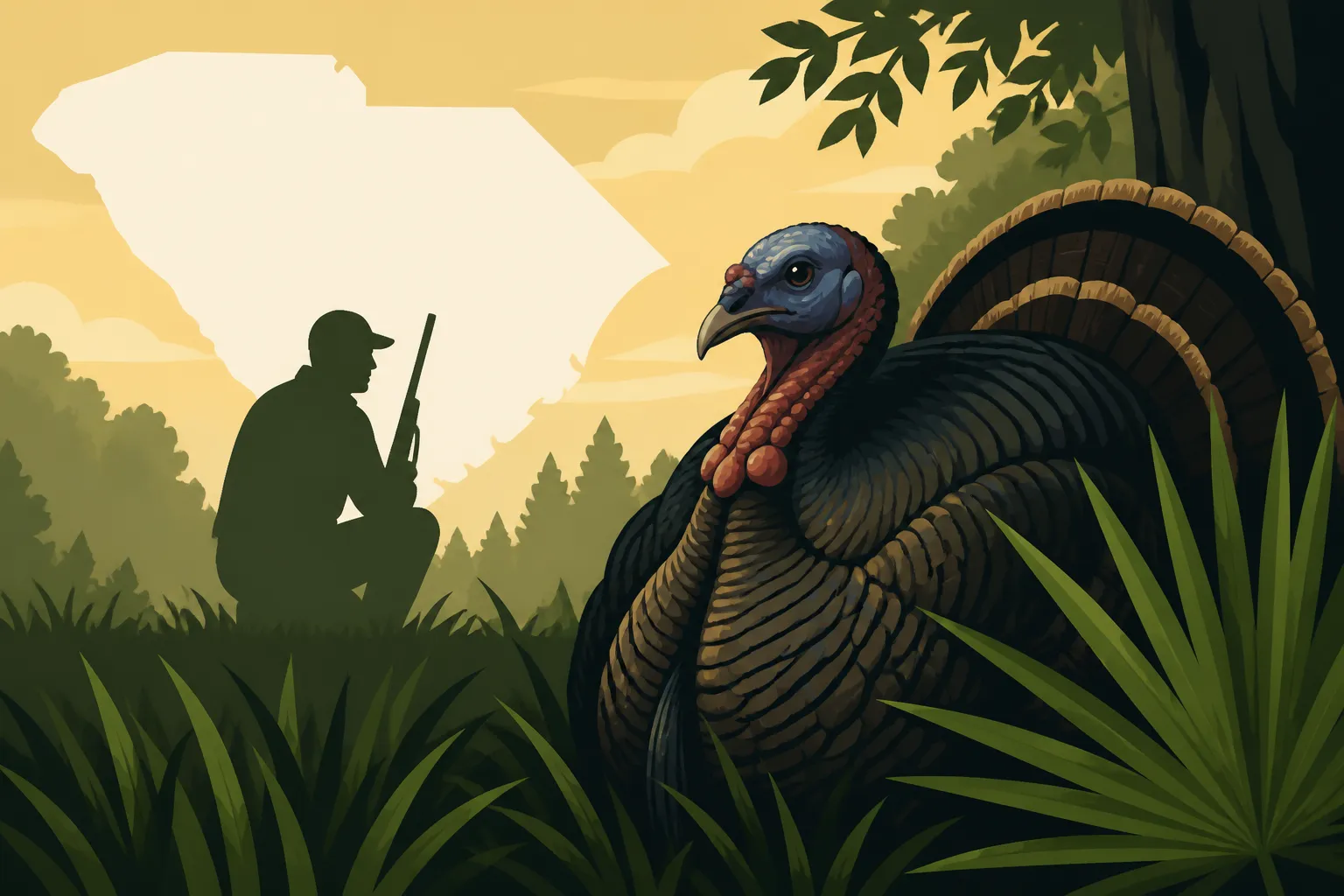
You've been hitting the woods since early April, enjoying those crisp mornings filled with the thunderous calls of lovesick gobblers. But now it's May, the humidity is cranking up, and suddenly, the once-vocal birds seem to have clammed up. The frustration is real when you feel like you've gone from a turkey calling maestro to talking to an empty forest. This guide will walk you through why South Carolina gobblers often go quiet in May and, more importantly, how you can adjust your tactics to still find success in the late season.
Understanding the Late-Season Shift in Gobbler Behavior
The wild turkey's spring breeding cycle is a fascinating, often frustrating, dance that changes dramatically as the season progresses. What worked beautifully on opening day might be utterly useless by the time May rolls around.
Post-Breeding Fatigue and Hen Attention
By May, the peak of breeding activity is typically winding down across much of South Carolina. Hens have likely been bred, are nesting, or are even sitting on clutches of eggs. What does this mean for the gobblers? Well, their primary motivation – finding and breeding hens – significantly decreases. They're no longer as desperate to advertise their presence to every hen in the county. Imagine being on a dating app for two months straight, then suddenly finding your perfect match and settling down. You're probably not checking the app as often, right?
The gobblers become less vocal because the hens aren't actively seeking them out in the same way. Hens that are nesting become largely silent and still, no longer wandering the woods making alluring yelps and clucks. A gobbler’s main job is done, or at least winding down, and their testosterone levels, while still high, aren't driving them to gobble at every rustle of leaves or distant crow call. They might still gobble occasionally, especially at first light or fly-down, but the robust, consistent calling from early April becomes a rare treat. This is a natural, biological shift that every turkey hunter eventually grapples with as the season matures.
Increased Hunting Pressure and Education
Let's be honest, South Carolina's turkey season is long and popular. From the mountain ridges of the Andrew Pickens Ranger District to the swamps of the Francis Marion National Forest, these birds have heard it all by May. They've been called to, missed, shot at, and seen countless hunters. This sustained pressure makes them incredibly wary.
A gobbler that might have charged in on a few yelps in early April is now likely to hang up far out of range, silent and suspicious. They’ve learned that a sudden burst of hen sounds might not lead to a receptive female but rather a camouflaged hunter with a shotgun. This education, unfortunately, makes our job much harder. Even on private lands, consistent hunting pressure takes its toll on the gobblers' willingness to respond. They become "call shy," "hunter wise," or simply too cautious to give away their position with a booming gobble. The woods might seem empty, but often, those quiet gobblers are still there, just much smarter and more careful about revealing themselves. This is where hunters really need to shift their thinking from aggressive calling to more subtle, strategic approaches if they want to fill their tags within the South Carolina Spring Turkey Season Rules.
Environmental Factors Silencing the Spring Woods
Beyond the biological rhythms of the birds themselves, external environmental factors play a huge role in why South Carolina gobblers seem to vanish vocally in May.
Rising Temperatures and Humidity
South Carolina weather in May can be a stark contrast to the cooler, crisper mornings of early spring. Days become consistently warmer, often hitting the 80s, and the humidity starts to climb. Turkeys, like most wildlife, are influenced by weather patterns. High heat can make them less active overall, especially during the middle of the day. Instead of strutting and gobbling in open fields, they'll often retreat to the shade of dense timber or creek bottoms to stay cool.
The rising humidity can also impact how sound travels, though perhaps less significantly than the birds' willingness to gobble. More importantly, it simply contributes to a general lethargy. Just as we feel less inclined to be loud and boisterous in oppressive heat, so do the turkeys. Early mornings and late evenings might still offer a window of opportunity for some vocalization, but those mid-morning, all-day gobbling fiestas of April quickly become a distant memory. Being prepared for these warmer conditions, both in terms of your own comfort and understanding how it affects turkey movement, is key.
Abundant Natural Food Sources and Lush Green-Up
By May, the landscape in South Carolina is fully alive and green. New growth is everywhere, insects are abundant, and various natural food sources, like tender grasses, seeds, and soft mast, are readily available. This means turkeys don't have to travel far or expend much energy to find a meal. In early spring, when food sources might be scarcer, gobblers and hens alike might roam more widely, increasing their chances of encountering each other and thus, the gobblers' need to vocalize.
With a smorgasbord of food at their feet, turkeys can focus on foraging and simply existing. They're not as driven to cover ground, reducing the opportunities for you to intercept them. Furthermore, the lush green-up provides much denser cover. Turkeys can move through the woods with greater concealment, making it harder for hunters to spot them visually or for their sounds to carry as far. This combination of easy food and thick cover means that even if a gobbler does let out a quiet cluck or a soft gobble, you might be less likely to hear it, and he’s less likely to need to come looking for you. This is why some hunters might shift their focus to scouting for areas with consistent food sources rather than relying purely on calls.
Adapting Your Tactics for Late-Season Success
When South Carolina gobblers go quiet in May, it’s not time to hang up the vest; it’s time to change your approach. The aggressive calling and running-and-gunning that might have worked during Hunting the Statewide Turkey Opener in April needs a serious rethink.
Go Silent, Go Slow: Still-Hunting and Ambushing
Forget trying to strike a gobbler from a mile away with loud shock calls. In May, your ears are still your best friend, but your eyes and stealth become paramount. The name of the game is quiet observation and intercepting birds that are moving naturally. Consider still-hunting, which involves moving very slowly and deliberately through areas you suspect hold birds. Take a few steps, then stop for several minutes, scanning the woods in every direction. Look for movement, listen for soft clucks, wing beats, or even the subtle scratch of a turkey foraging in the leaves.
Focus on known travel corridors, like old logging roads, creek bottoms, or field edges. Setting up an ambush point near these areas, especially at dawn or dusk, can be highly effective. If you know Where South Carolina Gobblers Roost, get there early and set up quietly before fly-down, expecting the birds to move to feeding areas. Don't call much, if at all. The goal is to let the turkey come to you, undisturbed by aggressive vocalizations. Patience is more critical than ever during this period. You might only get one chance, so make sure your setup is perfect and your movements are minimal. Using a mapping application like GoHunt can be incredibly useful here, allowing you to mark potential roosts, travel corridors, and feeding areas, improving your still-hunting and ambush locations.
Decoys and Minimal Calling: Subtle Allure
While aggressive calling can backfire, subtle calling combined with a well-placed decoy can still entice a quiet gobbler. Think less "fireworks show" and more "irresistible temptation." Use soft tree yelps and purrs right off the roost. Once on the ground, switch to quiet clucks, soft yelps, and perhaps some contented purrs. You're trying to sound like a hen that's just going about her day, totally unconcerned.
A single hen decoy, or a jake/hen combination, can be incredibly effective. Gobblers might be hesitant to respond to calls, but they are often still willing to investigate a visual. Place your decoys where they are visible from a distance but also offer a clear shot. Make sure they are facing you, so any approaching gobbler is also facing you, offering a good shot angle. In areas with high hunting pressure, gobblers might be more inclined to check out a lonely hen than to risk approaching an unseen caller. Remember, Decoy Placement for Pressured South Carolina Birds is crucial. A subtle setup can draw in a bird that's otherwise completely silent.
Focus on Travel Corridors and Roost Areas
Knowing where turkeys are likely to move is paramount when they aren't gobbling their heads off. Instead of trying to pull them across vast distances with calls, focus on intercepting them along their natural routes. This means scouting for travel corridors: pinch points between two swamps, logging roads that connect different habitat types, or creek beds that birds follow. These are the places where turkeys are most likely to show up, even without being called in.
As mentioned before, roost areas are golden. Getting in before dawn and setting up within eyesight or earshot of a known roost can give you a precious few minutes of opportunity. Sometimes, a silent gobbler will fly down, stretch, and then just start walking to a feeding area. If you're there, he's yours. Use locator calls sparingly, and only to confirm a bird's general location. These aren't shock calls meant to make a bird gobble, but rather to get them to give a soft cluck or a limb gobble that confirms presence. Try a crow call, an owl hooter, or even a hawk shriek to elicit a "courtesy gobble" without sounding like a hen. Once you've located a bird, try to get ahead of him and set up, then offer minimal, soft hen sounds, perhaps just a few clucks or purrs.
| Early Season (April) | Late Season (May) |
|---|---|
| Gobbling Activity | Frequent, often aggressive, response to calls |
| Hen Behavior | Actively seeking gobblers, vocal |
| Hunter Pressure | Lower, birds less wary |
| Weather | Cooler, crisper mornings |
| Food Sources | Emerging, some scarcity |
| Primary Tactic | Aggressive calling, run-and-gun, shock calling |
| Calling Style | Loud yelps, cutting, confident |
| Decoy Use | Aggressive jake/hen spreads can work |
| Focus Area | Open fields, ridge tops, broad areas |
Long Waits and Patience are Paramount
Hunting quiet gobblers demands a new level of patience. You might sit for hours without hearing a sound, only for a ghost of a gobbler to appear silently. Long sits in likely areas – a clear-cut edge, a logging road junction, a funnel between two swamps – can pay off big. Instead of constantly moving and calling, find a good spot with good visibility and wait. Turkeys are creatures of habit, and if you're in an area they frequent, eventually, one might show up. This is where your mental game really comes into play. It's easy to get discouraged when the woods are silent, but remember, the birds are still there. They’re just not announcing their presence with a booming gobble. Sometimes, the quietest hunter is the most successful hunter in May. This is particularly true if you are Hunting Lowcountry Swamp Deer (or turkeys) where thick vegetation makes long shots or consistent calling difficult.
Scouting for Silent Gobblers and Their Habits
Just because gobblers aren't talking doesn't mean they aren't leaving clues. Effective late-season turkey hunting often starts with diligent scouting, especially without the benefit of consistent gobbling to guide you.
Pre-Dawn Listening and Roosting
Even the quietest gobblers often give a few soft gobbles on the roost just before fly-down, or a "goodnight gobble" as they pitch up to roost for the evening. These are crucial moments to capitalize on. Get into the woods well before daylight, set up in a strategic listening spot, and just listen. Use those subtle locator calls like an owl hooter or a crow call only if absolutely necessary to pinpoint a silent gobble. The goal isn't to make him gobble repeatedly, but just to get him to give you one or two responses so you can confirm his location.
Once you’ve got a bead on a bird's roost, you can plan your next morning hunt. Try to set up close but not too close, giving him room to fly down naturally without feeling pressured. Sometimes, the best strategy for Roost Hunting South Carolina Gobblers is to just observe their fly-down location and trajectory, then move quickly to set up an ambush along their expected path to a feeding area. Even a faint gobble at 5:30 AM can give you all the information you need to make a move.
Reading Sign: Tracks, Droppings, and Dusting Bowls
When gobblers are quiet, their physical presence becomes your most important indicator. Turkeys leave behind plenty of sign if you know what to look for. Fresh tracks in soft dirt along logging roads, creek beds, or field edges are a dead giveaway. Look for the distinct three-toed print, and try to discern size and direction of travel. Big, heavy tracks usually mean a gobbler.
Droppings are another excellent clue. Gobbler droppings are typically J-shaped or elongated, while hen droppings are usually more coiled or blob-like. Fresh droppings, especially those with visible insect parts or seed fragments, indicate recent activity. Pay attention to their concentration; a lot of fresh droppings in one area suggests a preferred feeding or strutting location.
Dusting bowls – shallow depressions in dry dirt where turkeys dust themselves to remove parasites – are also key. These are like turkey bathtubs. If you find several fresh dusting bowls in an area, you know turkeys are regularly spending time there. Look for loose dirt, feathers, and fresh tracks around them. These spots often indicate a safe, comfortable area where turkeys feel secure. Using a tool like GoHunt to mark these signposts on your map can help you build a picture of turkey movement patterns. Knowing these areas allows you to make an educated guess about where a silent gobbler might be heading, even if he doesn't utter a single sound. For example, if you're Hunting the Rut in the Coastal Zones for deer, you'll still be looking for similar subtle signs, but for turkeys, the focus is different.
Glassing Distant Fields and Openings
Sometimes, the best way to find a quiet gobbler is to spot him before he knows you're there. Use binoculars or a spotting scope to scan distant fields, clear-cuts, or powerline openings, particularly at dawn and dusk. Gobblers, even silent ones, will often venture into these open areas to feed or strut. A lone gobbler strutting silently in a field might be the only indication he's in the area.
This tactic works exceptionally well on days when birds are not responsive to calls. Set up in a concealed location with a good vantage point and just observe. Watch for any movement, a flash of red head, or the distinct shape of a fanned tail. Once you spot a bird, you can then plan a cautious approach, aiming to get ahead of him or to set up an ambush he might naturally walk into. This requires patience and good optics, but it can be incredibly rewarding when you finally put the pieces together. Remember that many turkeys in the Lowcountry will utilize Turkey Tactics for Lowcountry Field Edges as they move in and out of the timber.
Final Thoughts on Late-Season Turkeys
Hunting South Carolina gobblers in May is undeniably tougher than in April. The birds are smarter, quieter, and the conditions are often more challenging. But that doesn't mean success is impossible. It simply means you need to evolve your hunting strategy, moving away from aggressive calling to a more nuanced, patient, and observant approach. Embrace the challenge, learn to read the subtle clues the woods offer, and you might just find that quiet, late-season gobbler that pushes your skills to a new level. Don't forget, with a South Carolina's Statewide Turkey Bag Limit that allows for taking two birds in most zones, that second tag often requires these late-season tactics!
Disclaimer
Please remember that hunting regulations, seasons, and licensing requirements can change. Always consult the official South Carolina Department of Natural Resources (SCDNR) website or their most current hunting guide before planning any hunt. This article is intended for informational purposes only and does not constitute legal advice. Adhere to all local, state, and federal hunting laws and practice ethical, safe hunting at all times.