South Carolina Deer Season Overlap With Small Game
It's a common dilemma for hunters in South Carolina: you've got precious little time to get out in the woods, and you want to make every moment count. Many of us are looking to fill the freezer, not just chase that trophy buck. This guide is all about helping you understand and leverage the significant overlaps between South Carolina's deer season and various small game seasons, allowing you to diversify your harvest and maximize your time afield.
The Strategic Advantage of Overlapping Seasons
Let's face it, life gets busy. Between work, family, and everything else, finding dedicated chunks of time for hunting can be a real challenge. That's why understanding how different hunting seasons align in South Carolina isn't just a matter of regulation; it's a strategic advantage for the modern hunter. Being able to pursue multiple species on the same outing means you're making the most of every sunup and sundown you spend in the field. It’s about more opportunities, more action, and ultimately, more success and enjoyment.
Maximizing Time Afield
Imagine this: you've hauled your stand deep into the Sumter National Forest, settled in before daylight, and as the sun climbs, you realize deer movement is slow. Perhaps it’s a warm front, or the acorns haven't dropped quite yet. Instead of packing it in early, feeling disappointed, you can shift gears. Many small game seasons, especially for squirrels and rabbits, run concurrently with much of the deer season, particularly during the early archery and primitive weapons phases, and even into the heart of general gun season. This overlap is a golden ticket for hunters who can adapt. For example, if you're out during South Carolina's Zone 4 Coastal Deer Season in late August, you’ll find squirrel season already open in most areas. This flexibility means that if your primary target isn't cooperating, you still have a viable option for a productive hunt. You're not just waiting; you're actively hunting, which makes the whole experience more fulfilling.
Diverse Hunting Opportunities
The beauty of these overlapping seasons isn't just about filling time; it's about expanding your hunting horizons. A slow deer morning can transform into an exciting squirrel stalk through a hardwood bottom, or a rabbit chase in thick cover. This diversity keeps you engaged, hones different skill sets, and increases your chances of taking home some table fare. For hunters looking to truly immerse themselves in the South Carolina wild, being able to pivot from silently still-hunting for a whitetail to actively pursuing a bushytail can be incredibly rewarding. It means you’re always engaged, always learning, and always appreciating the abundance our state offers. This mixed-bag approach can also be a fantastic way to introduce new hunters to the sport, as the action on small game can keep interest high even when deer are elusive.
Key Small Game Species Overlapping Deer Season
South Carolina offers a fantastic array of small game species, and many of their seasons are thoughtfully set to open while deer season is still in full swing. This means you don't have to choose between a deer hunt or a small game hunt; you can often blend them into one cohesive trip. Knowing which species are available when, and where to find them, is crucial for planning a successful multi-species outing.
Squirrels: The Ubiquitous Bushytails
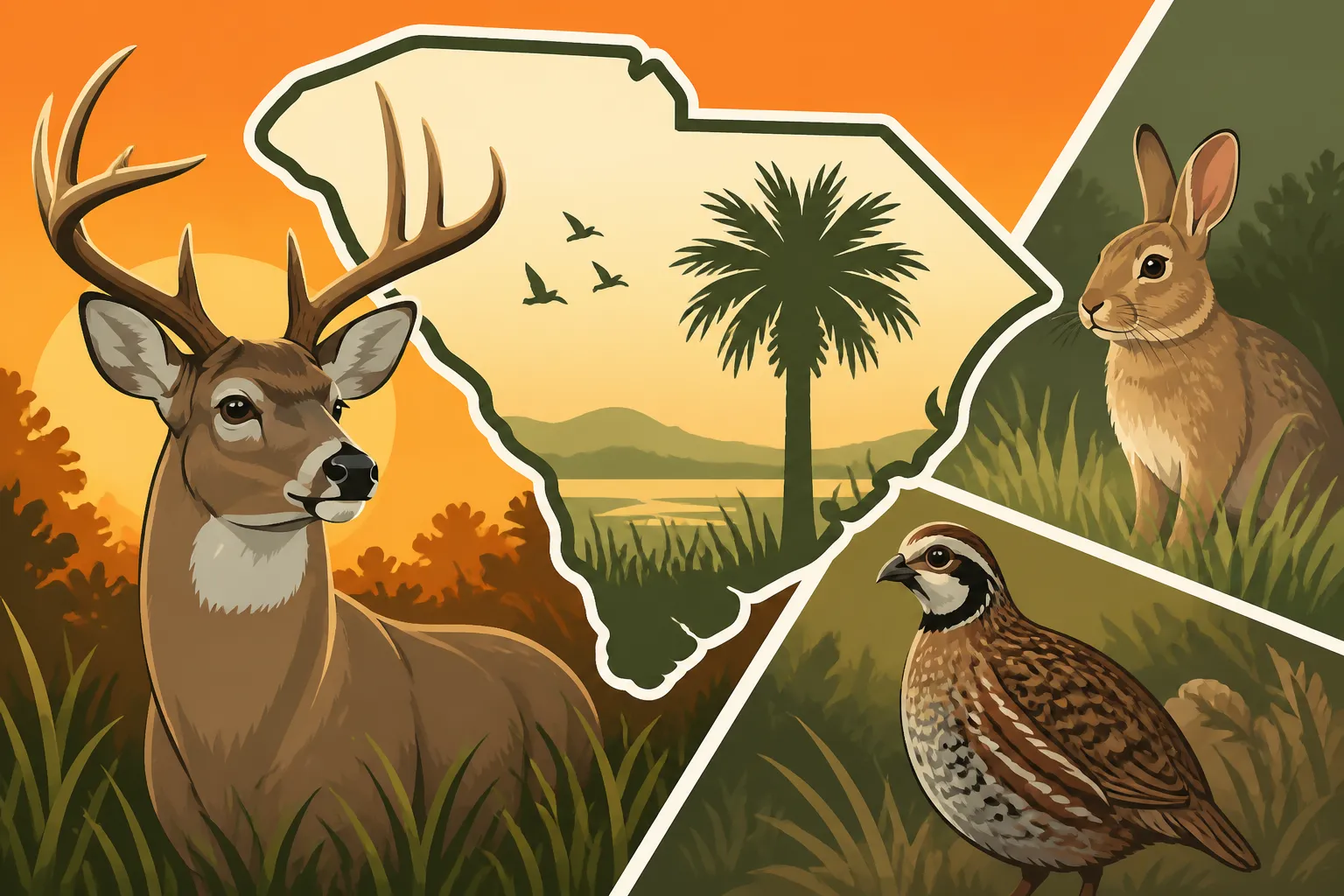
Without a doubt, squirrels are the most common small game species that overlap significantly with deer season across South Carolina. Both grey squirrels and the larger fox squirrels are abundant in areas frequented by deer, especially in mature hardwoods, bottomland timber, and mixed pine-hardwood forests. Their season typically opens in early fall, often right alongside, or very close to, the deer archery opener in many zones. This means that if you’re set up in a treestand during Bowhunting South Carolina's Long Archery Season in early September, and deer activity is low, you can often hear and see squirrels actively foraging.
Think about hunting a vast tract of national forest land. You might be focused on Still-Hunting Sumter Forest Ridges for a whitetail, slowly making your way through the timber. But if that ridge is also dotted with oaks dropping acorns, it's prime squirrel habitat. You might switch from a quiet deer stalk to a more active squirrel hunt, enjoying the challenge of spotting them before they spot you. I've spent countless hours in the woods, waiting for a buck, only to have a family of squirrels put on an aerial show in the canopy above me. Carrying a .22 pistol or a small .410 shotgun while deer hunting (where legal and safe) allows you to take advantage of these opportunities. A great resource for deeper dives into specific squirrel habitats is Squirrel Hunting South Carolina Bottomland Hardwoods, which can give you excellent pointers for finding both deer and squirrels in the same areas.
Rabbits: Thicket Dwellers
Rabbit season also opens during a considerable portion of deer season in South Carolina, generally starting in the fall. Cottontails and swamp rabbits thrive in thick cover – briar patches, honeysuckle tangles, fencerows, and the dense edges of clear-cuts. While a deer hunter might typically avoid these impenetrable areas, they are goldmines for rabbits. If you're deer hunting a larger timber tract and notice an adjacent overgrown field or a particularly brushy creek bottom, that's prime rabbit country.
During a slow deer day, especially in the late morning or early afternoon when deer might be bedded down, you could focus your attention on these rabbit havens. A small gauge shotgun becomes your best friend here. While you might not be actively "deer hunting" at that exact moment, you're still hunting, still enjoying the outdoors, and potentially bringing home some delicious rabbit stew. Hunters who explore tips in articles like Rabbit Hunting South Carolina Fencerows will find excellent overlap in prime small game areas that are often adjacent to prime deer habitat. It's all about scouting for these diverse cover types and having the right mindset to switch gears.
Other Considerations: Quail, Raccoons, and More
While less common for direct "simultaneous" hunting with deer, other small game species offer additional options during the broader deer season. Quail season typically starts later in the fall and extends into winter, offering opportunities in managed pine forests and field edges. Although the habitats might not perfectly align for a combined sit-and-wait deer hunt, they can make for a great afternoon hunt after a morning deer stand.
Furbearers like raccoons and opossums also have lengthy seasons that overlap with deer. While most hunters target these animals with dogs at night, or with traps, there's always the chance encounter. It's less about actively pursuing them alongside deer and more about understanding the broader hunting calendar. Always make sure to check the latest South Carolina Department of Natural Resources (SCDNR) regulations, which are easily accessible through resources like the Go Outdoors SC app, to confirm season dates and specific rules for each species in your chosen game zone. Remember, every moment you spend in the woods observing the ecosystem is valuable, even if it's not directly in pursuit of your primary target.
Practical Strategies for the Mixed-Bag Hunter
Successfully blending deer and small game hunting isn't just about knowing when seasons overlap; it's about having a practical strategy. This means thinking about your gear, your scouting, and your willingness to adapt to what the woods present. It requires a bit more preparation and versatility, but the rewards—more action and more meat for the table—are well worth the effort.
Gear Considerations for Versatility
The biggest hurdle for many hunters considering a mixed-bag approach is gear. Do you carry a deer rifle and a small game shotgun? That can be cumbersome. One practical solution for rifle hunters is to use a firearm chambered in a cartridge suitable for both deer and smaller game, like a .223 or .243, always ensuring it's legal for deer in your area. For shotgun hunters targeting deer with slugs or buckshot, a quick barrel swap to a birdshot-loaded barrel can be ideal if you're on private land or specific WMAs.
Another option is to carry a compact .22 pistol or a collapsible .410 shotgun along with your primary deer weapon (where legal and safe). This allows you to harvest a squirrel or rabbit without disturbing your deer hunt too much. When choosing your gear, think lightweight and versatile. I personally prefer a good pair of binoculars that can pull double duty, whether I'm glassing for a deer or spotting a squirrel in the top of a oak. For early season, breathable layers are key, and articles like Warm-Weather Clothing for South Carolina Hunters offer great advice on staying comfortable for those long, humid sits.
Scouting and Location, Location, Location
Successful mixed-bag hunting hinges on finding locations that are prime for both deer and small game. This usually means diverse habitats. Look for areas where mature hardwoods (for acorns and squirrels) meet thick underbrush (for rabbits) and are adjacent to deer travel corridors or bedding areas. Creek bottoms, areas with varied timber age classes, and the edges of agricultural fields often fit this bill perfectly.
Before you even step foot in the woods, spend time scouting. Use aerial maps and topo maps to identify these transition zones. Tools like GoHunt can be invaluable here, allowing you to layer different habitat types and identify potential hotspots. Look for signs of both: deer tracks and rubs, squirrel cuttings under oak trees, or rabbit droppings in dense briars. During your scouting, pay attention to late-season food sources for South Carolina Whitetails and how those areas also attract small game. If you're hunting public land, consulting resources like Scouting South Carolina Public Land Before Season will give you excellent ideas for identifying promising areas before the season even starts. The more diverse a habitat piece, the higher your chances of finding multiple species.
Adjusting Tactics in the Field
The art of mixed-bag hunting truly shines when you can fluidly adjust your tactics. You might start your morning in a treestand overlooking a deer trail, patiently waiting. If deer movement is nonexistent for the first few hours, don't despair. Instead of giving up, you can quietly slip down and transition into a still-hunt for squirrels through the adjacent timber, or slowly work a fencerow for rabbits.
It's about having a flexible mindset. If a legal squirrel presents itself while you're still-hunting for deer, and the shot won't compromise your primary objective (e.g., you're not going to blow out a hot deer area), take it! Similarly, if you're out specifically for small game but bump a deer, you're still in a position to react. The key is to be prepared for both scenarios and to read the woods. Sometimes, the movement of small game can even give you clues about larger game. A sudden flurry of squirrels scattering might indicate a predator, or even a deer, moving through the area. Adaptability is your greatest asset in this dynamic environment.
Navigating Regulations and Ethical Considerations
While the thought of harvesting both deer and small game on the same trip is exciting, it's absolutely critical to understand and adhere to all South Carolina hunting regulations. Safety and ethics are paramount, and being a responsible hunter means knowing the rules for every species you intend to pursue. Ignorance of the law is never an excuse, and violating regulations can lead to serious penalties and tarnish the reputation of all hunters.
License and Tag Requirements
This might seem obvious, but it bears repeating: you must possess the appropriate licenses and tags for each species you intend to hunt. For deer, this means having your base hunting license and a valid big game permit, along with any necessary deer tags. For small game, you'll need your base hunting license. If you're hunting migratory birds like doves or woodcock during an overlapping period (though less common with deer), you'd also need a migratory bird permit and a Federal Duck Stamp, if applicable. A comprehensive look at all the requirements can be found in South Carolina Hunting Licenses and What They Cost.
It’s easy to get caught up in the excitement, but always double-check your permits before heading out. Keep your licenses readily accessible, either in physical form or digitally on your phone via the Go Outdoors SC app. Remember, South Carolina has specific requirements for South Carolina Deer Reporting Requirements after a harvest, and these apply even if you've also harvested small game. Don't let a simple oversight ruin an otherwise successful day in the field.
Blaze Orange and Safety
Safety is non-negotiable, especially when you're in the woods during a time when multiple seasons are open, and different weapon types might be in use. During certain periods of South Carolina's gun deer season, specific blaze orange requirements are in effect. Even if you're primarily pursuing small game with a shotgun, if you're in an area where gun deer season is open, you generally need to meet those blaze orange criteria. This is clearly laid out in resources like South Carolina Blaze Orange Requirements.
Always err on the side of caution. Wear sufficient blaze orange or blaze pink, even if you think the requirement might not strictly apply to your specific small game pursuit at that moment. This visibility is for your protection. Additionally, always identify your target positively, be aware of your surroundings, and know what's beyond your target before taking a shot. When carrying multiple weapons, ensure they are handled safely, unloaded when moving, and pointed in a safe direction.
Understanding Zone-Specific Rules and Weapon Restrictions
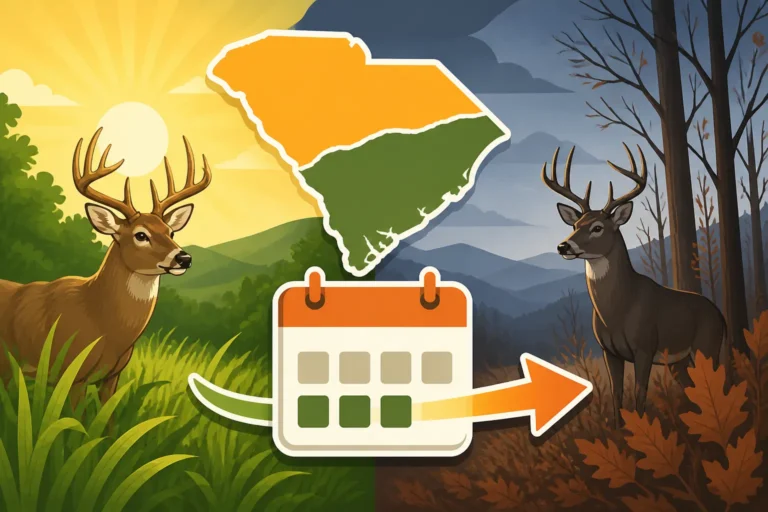
South Carolina's deer season structure varies significantly by game zone, and these zone distinctions can also impact small game seasons or general hunting rules. For example, How South Carolina's Four Zones Split the Calendar means that deer season opens much earlier in the coastal zones (Zone 4) than in the Upstate (Zone 1). Small game seasons generally run more uniformly across the state, but there can be subtle differences.
Furthermore, if you're hunting on Wildlife Management Areas (WMAs), there may be additional weapon restrictions or specific hunt dates for certain species. Some WMAs might be archery-only for deer, but allow shotguns for small game. Always consult the WMA-specific regulations for the area you plan to hunt. A great way to do this is through the Go Outdoors SC website or app, which often has detailed maps and rules for each WMA. By understanding these nuances, you can avoid common pitfalls and ensure your mixed-bag hunt is both legal and enjoyable.
| Game Zone | Common Deer Season Start (Archery/Primitive) | Overlapping Small Game Seasons | Key Overlapping Small Game Species |
|---|---|---|---|
| Zone 1 | Early-Mid September | October through February | Squirrel, Rabbit |
| Zone 2 | Mid-August | September through February | Squirrel, Rabbit |
| Zone 3 | Mid-August | September through February | Squirrel, Rabbit |
| Zone 4 | Mid-August | September through February | Squirrel, Rabbit |
Note: This table provides general overlap periods. Always consult current SCDNR regulations for exact dates and specific WMA rules.
The Ethical Hunter's Mindset
Beyond just following the rules, embracing a mixed-bag approach requires an ethical mindset. This means being prepared for whatever animal you might encounter. If you're carrying a rifle primarily for deer but plan to shoot squirrels, ensure your rifle and ammunition are suitable for a clean, ethical kill on a squirrel, and that you have a safe backdrop. Don't take marginal shots. Respect the animals you hunt, regardless of their size.
It also means being considerate of other hunters. If you're actively calling squirrels, be mindful of any nearby deer hunters who might be trying to remain quiet. A quick conversation with fellow hunters you encounter can help ensure everyone has a safe and enjoyable experience. The goal is to enhance your time in the woods, not compromise the experience for yourself or others. By prioritizing safety, legality, and ethics, you can truly make the most of South Carolina's rich and diverse hunting opportunities.
Disclaimer
Please note that hunting regulations, season dates, and license requirements are subject to change. Always consult the most current South Carolina Department of Natural Resources (SCDNR) regulations before planning any hunting trip. This article is intended for informational purposes only and does not constitute legal advice.