Hunting Deer After a Cold Front
There's nothing quite like the crisp, biting air that follows a good cold front in South Carolina. For us deer hunters, that sudden drop in temperature can feel like a game-changer, promising increased deer activity and a real shot at filling a tag. But let's be honest, sometimes those post-front hunts don't quite live up to the hype, leaving us scratching our heads and wondering why the deer aren't moving as expected. This comprehensive guide is all about unraveling the mysteries of deer behavior after a South Carolina cold front, equipping you with the knowledge and tactics to capitalize on those prime conditions, no matter which corner of the state you're hunting.
Decoding Deer Movement After a Cold Front in South Carolina
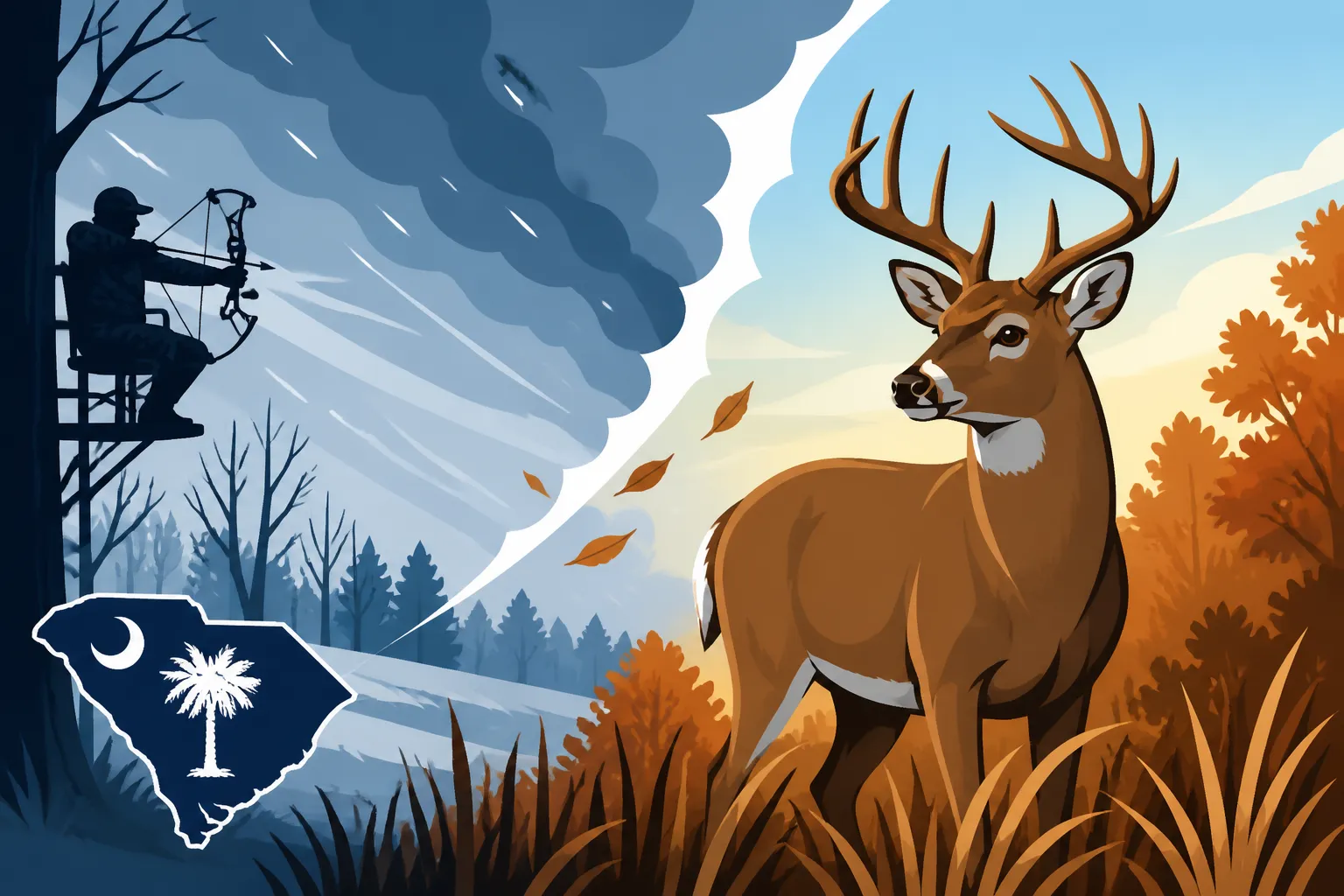
A cold front sweeping through South Carolina isn't just a weather event; it's a profound shift in the deer woods. Understanding how this change impacts whitetail behavior is the first step to putting yourself in the right place at the right time. It's not just about "cold means movement"; it's about the why and how of that movement.
The Post-Front Feeding Frenzy
One of the most immediate and noticeable effects of a cold front is an uptick in deer feeding activity. Think about it: a sudden drop in temperature means deer need more energy to maintain their body heat, especially if the cold spell is prolonged. This often triggers what many hunters refer to as a "feeding frenzy." Deer will be actively seeking out calories to replenish their energy reserves. This isn't just a slight increase; sometimes it's a dramatic shift from sluggish, warm-weather patterns. You might notice deer starting their afternoon movements earlier, sometimes an hour or more before sunset, and staying out longer into the morning.
In South Carolina, this means a focused effort on high-calorie food sources. If it's early season, mature persimmons might be getting hammered. As we get into later fall, freshly dropped white oak acorns will become the absolute priority. Agricultural fields, whether it's standing soybeans in the Lowcountry or cut corn in the Midlands, will also see increased traffic. Don't overlook the simple fact that a hungry deer is a moving deer, and after a cold front, they are definitely hungry.
Shifting Bedding and Travel Corridors
The desire for warmth and efficiency also dictates where deer choose to bed and how they travel between bedding and food. In warmer weather, deer might bed in open areas to catch a breeze or avoid bugs. After a cold front, especially one that brings truly chilly temperatures, their bedding choices become much more strategic. They'll often seek out sheltered thickets, dense pine plantations, or the leeward side of ridges to escape the wind. South-facing slopes, which catch more of the sun's warmth, become prime bedding areas, particularly in the Upstate.
This shift in bedding naturally alters their travel corridors. The old trails you scouted in warmer weather might still be used, but deer are incredibly efficient. They'll adjust their routes to take the path of least resistance from their new, cozy beds to the most attractive food sources. This means looking for fresh sign along thermal edges, in dense cover adjacent to feeding areas, or even through what might seem like impenetrable thickets if it offers a direct, sheltered route. Understanding these subtle changes in travel corridors is crucial, as often the biggest bucks will stick to the tightest cover. You might find a well-used trail winding through a forgotten patch of briars on a Sumter Forest ridge, or a hidden path between two swamps in the Lowcountry. For more on navigating these terrain changes, check out our guide on Reading a Ridge for Upstate Deer or even Hunting a Funnel Between Two Swamps.
Impact on the Rut and Breeding Behavior
While a cold front can undeniably stir up deer activity, it's important to differentiate its effect on routine movement versus actual rutting behavior. A cold front doesn't start the rut, but it can certainly amplify it if the rut is already in full swing or just beginning. If the does are coming into estrus and the bucks are already feeling frisky, a cold snap can kick their activity into overdrive. Expect to see more aggressive seeking, chasing, and even fighting as bucks become less inhibited by comfortable temperatures. They'll be on their feet longer, covering more ground in search of receptive does.
However, if the rut is still weeks away, don't expect a cold front to magically flip a switch. Deer will still be moving, but their primary motivation will be feeding, not breeding. Bucks will be focused on packing on calories, and while they might spar a bit or check scrapes, intense breeding behavior won't be triggered by temperature alone. It's about knowing where your particular game zone stands in the rut cycle. The timing of the rut can vary significantly across the state, so it's worth understanding the specifics of Hunting the Rut in the Coastal Zones versus Hunting the Rut in the Upstate Zone.
Pinpointing Prime Post-Front Food Sources
When a cold front hits, deer become hyper-focused on food. Your success often hinges on identifying what those critical food sources are and whether they're still viable.
Acorns and Hard Mast Prioritization
In the fall, there's no denying it: acorns are king, especially after a cold front. Deer will abandon other food sources for a fresh drop of white oak acorns, which are less bitter and higher in carbohydrates than red oak varieties. The key here is freshness. Don't just hunt any oak flat; you need to scout for current activity. Look for areas with a clean ground cover of leaves and pine straw, then search for freshly disturbed earth or piles of acorn caps, which indicate recent feeding. Squirrel activity can also be a dead giveaway—if squirrels are everywhere, deer likely aren't far behind.
Different oak species drop their mast at various times, and some years are simply better than others. If you're dealing with a year where the mast crop is sparse, as discussed in Hunting After a Poor Acorn Year, deer behavior will be even more concentrated on whatever mast is available. Learning to identify acorn species and knowing when they typically drop in your area is invaluable. Observing cuttings under an oak can tell you if deer are currently feeding there, and the GoHunt app can be a fantastic tool for pinpointing potential oak stands and even recent satellite imagery to spot feeding areas before you set foot on the ground.
Agricultural Fields and Browse
Beyond acorns, agricultural fields become magnets for deer after a cold front. Standing crops like corn, soybeans, or peanuts offer a massive caloric payout, and deer will often move into these fields well before dark to get their fill. Even harvested fields can provide valuable waste grain. Winter food plots, especially those planted with clover, brassicas, or oats, will also be heavily utilized. These plots are designed to be palatable and nutritious during colder months, making them irresistible to hungry deer.
In areas without extensive agriculture, natural browse found in recent clear-cuts or pine plantations becomes incredibly important. Young, regenerating growth provides a buffet of tender shoots and leaves. Deer will often browse these areas heavily, especially if they offer thick cover for security. You might find excellent sign along the edges of a Hunting a Clear-Cut Regrowth Edge or tucked within the dense growth of a new pine planting. Understanding which crops are available in farm country, such as when you're Hunting a Standing Cornfield in Farm Country, can completely change your strategy.
Water Sources and Mineral Licks
While food is the primary driver, don't forget about water. Colder, drier air following a cold front can increase a deer's thirst. While they'll often get moisture from their food, consistent water sources can become crucial ambush points, especially if they're located conveniently between bedding and feeding areas. Small creeks, isolated farm ponds, or seepages can be excellent spots.
Mineral licks, natural or man-made, might also see increased activity. Deer often crave minerals, and while it's not a primary caloric source, it’s part of their overall dietary needs. If a mineral lick is situated along a primary travel route between a bedding area and a post-front food source, it could be a valuable stop for a thirsty buck.
| Factor | Pre-Cold Front (Warm/Stable) | Post-Cold Front (Cool/Stable) |
|---|---|---|
| Deer Activity | Often sporadic, crepuscular, nocturnal | Increased, more daytime movement |
| Primary Motivation | Security, comfort, light browsing | Intense feeding, seeking warmth |
| Feeding Time | Late evening, early morning, night | Earlier afternoon, later morning |
| Bedding Areas | Open, airy, shaded | Dense cover, south-facing slopes, leeward sides |
| Food Preference | Varied browse, sparse mast | High-calorie mast, agricultural crops |
| Rut Activity | As per calendar, less visible | Amplified if rut is active, more visible |
| Vulnerability | Moderate, difficult to pattern | High, more predictable movement |
Adapting Your Hunting Strategy for Cold Front Success
A cold front demands a tactical shift. What worked last week in 70-degree weather might not cut it when temperatures drop. It’s about being dynamic and playing the new hand nature has dealt you.
Aggressive Stand Placement and Timing
This is where you need to be bold. If you've been sitting on an old, familiar stand with mediocre results, it's time to move. After a cold front, deer movement becomes more predictable and concentrated. This is your cue to get aggressive with stand placement. Don't be afraid to hang a stand closer to a known bedding area or directly over a freshly discovered, heavily used food source. This means getting in early, often before first light, and being prepared for an all-day sit if the rut is active. The coldest part of the day, particularly mid-morning, can be surprisingly productive as deer move from feeding to bedding. If you’re considering a new setup, our guide on Hanging a Stand on a Sumter Forest Ridge offers great tips, or perhaps a mobile ground blind setup as outlined in Using a Ground Blind on South Carolina Public Land could be your ticket to success on short notice.
Mobility is your friend. Scouting with tools like the GoHunt app can give you real-time insights into terrain, potential food sources, and even wind direction, allowing you to adapt quickly. Their robust mapping features help identify bedding cover adjacent to feeding areas. Don't be tied to a permanent stand if the deer aren't there. Be ready to move and reposition based on fresh sign and changing conditions.
Utilizing Calling and Decoys
A crisp, cold front can make bucks more responsive to calling. If you're in an area where the rut is heating up, rattling and grunting can be incredibly effective. Bucks are often on edge, looking for rivals or receptive does. A well-timed rattling sequence can bring a curious buck in, especially in the thick pine cover often found in South Carolina, where visibility is limited. Consider the appropriate volume for your calling; you might need to adjust your Rattling Volume in Thick Pine Cover or your Grunt Calls in Mature South Carolina Timber based on the density of the woods.
Decoys can also play a pivotal role. A standing buck or doe decoy placed strategically can draw in a curious or challenging buck that might otherwise pass out of range. Just make sure your decoy placement makes sense for the wind and the likely approach of a real deer.
Stealth and Scent Control
Colder air often means denser air, and that can carry scent further. Deer are also often more alert after a cold front, perhaps due to the increased activity. This makes meticulous scent control absolutely critical. Shower with scent-eliminating soap, wear clean clothes, and use scent sprays. Pay close attention to wind direction and thermals, especially when hunting in hilly Upstate terrain or along low-lying swamp edges. The GoHunt app, with its sophisticated wind and thermal predictions, can be an invaluable tool for planning your approach and stand entry/exit routes. For more detailed advice on navigating these environmental factors, refer to our guide on Wind and Thermals on an Upstate Ridge. Your goal is to be a ghost in the woods, minimizing all human intrusion.
Dressing for the Chill
Comfort is key to staying focused and still on stand for long periods. After a cold front, temperatures can plummet, especially at dawn and dusk. Layering is paramount. Start with a good moisture-wicking base layer, add insulating mid-layers like fleece or wool, and top it off with a windproof, waterproof outer shell. Don't forget a warm hat, gloves, and insulated boots. Cold feet or hands will quickly send you back to the truck. While our article on Warm-Weather Sitting Strategy in South Carolina focuses on warmer hunts, the principles of layering for comfort apply in reverse here; adapting your clothing to add warmth is crucial for enduring those long, chilly sits.
Zone-Specific Adjustments for South Carolina Cold Fronts
South Carolina is diverse, and a cold front doesn't impact every game zone the same way. Your tactics need to reflect the specific habitat and deer behavior in your area.
Upstate Mountain Tactics Zone 1
In the rugged terrain of Zone 1, encompassing the mountainous Upstate, cold fronts bring significant thermal shifts. Deer will prioritize south-facing slopes for bedding, seeking out areas that catch the most sunlight to stay warm. Focus your efforts on these sunny slopes, especially those with dense cover nearby. Hard mast, particularly acorns from white oaks and other species, will be a major draw. Scouting for fresh acorn drops and cuttings along ridgelines and creek bottoms is crucial.
Consider how deer move along these elevation changes. They'll often traverse ridgelines or use saddles to cross from one drainage to another. Understanding how wind and thermals interact with the topography is paramount. An evening stand might be best positioned on a bench or saddle below a south-facing bedding area, catching deer as they head down to feed. Mornings could involve setting up closer to those prime mast-producing flats. For those tackling these challenging landscapes, our guide on Hunting the Blue Ridge Escarpment Ridgelines provides excellent insights into navigating the Upstate's unique features after a cold front.
Coastal Plain and Lowcountry Strategies Zones 3 & 4
The Lowcountry, with its vast swamps, pine plantations, and agricultural fields, presents a different challenge. After a cold front, deer will still gravitate towards food, but the sheer amount of cover means you need to be precise. Field edges adjacent to thick cover, especially those with planted winter greens or leftover crops, become primary targets. Also, focus on the edges of large swamps or river bottoms, as these areas offer both food and thermal cover. Deer might browse heavily in recent timber cuts or along the edges of dense maritime forests.
Don't discount the vastness of areas like the ACE Basin or Francis Marion National Forest. Deer in these environments will be driven by hunger, and they'll move through the thickest cover to get to preferred food sources. Look for pinch points or funnels that connect bedding areas within the swamps to higher ground with food. An evening hunt might involve setting up on a Hunting a Green Field Planted for Deer or a natural opening. You can find more specific Lowcountry strategies in our guide on Hunting the ACE Basin for Deer or even Hunting Lowcountry Swamp Deer. GoHunt's detailed maps can highlight these subtle elevation changes and identify potential travel corridors through the dense coastal vegetation.
Midlands and Pee Dee Farm Country Zone 2
In the fertile Midlands and Pee Dee regions, agriculture dominates the landscape, and deer behavior after a cold front will revolve around these abundant food sources. Deer will absolutely hammer standing cornfields, soybean fields, or winter wheat plots. Your strategy here should involve scouting these fields for fresh activity and setting up on key entry and exit points. Look for pinch points where timber or thick cover bottlenecks into a field.
River bottoms and small woodlots surrounded by agriculture also become critical. These pockets of cover provide bedding close to abundant food. After a cold front, deer will spend more time in the fields, making them vulnerable. A well-placed stand overlooking a Hunting a Standing Cornfield in Farm Country or along a travel corridor leading to one could be incredibly effective. Exploring the nuances of Hunting Pee Dee River Bottoms will also serve you well, as these areas often hold a dense population of deer that become very active post-front. The key is knowing which fields are active and positioning yourself for success.
Disclaimer
Hunting is an inherently dangerous activity. Always prioritize safety, follow all local and state regulations, and obtain appropriate licenses and permits. Be aware of your surroundings and hunt ethically and responsibly. The information provided in this guide is for informational purposes only and should not replace professional guidance or personal judgment.