Red Dots on a Turkey Shotgun
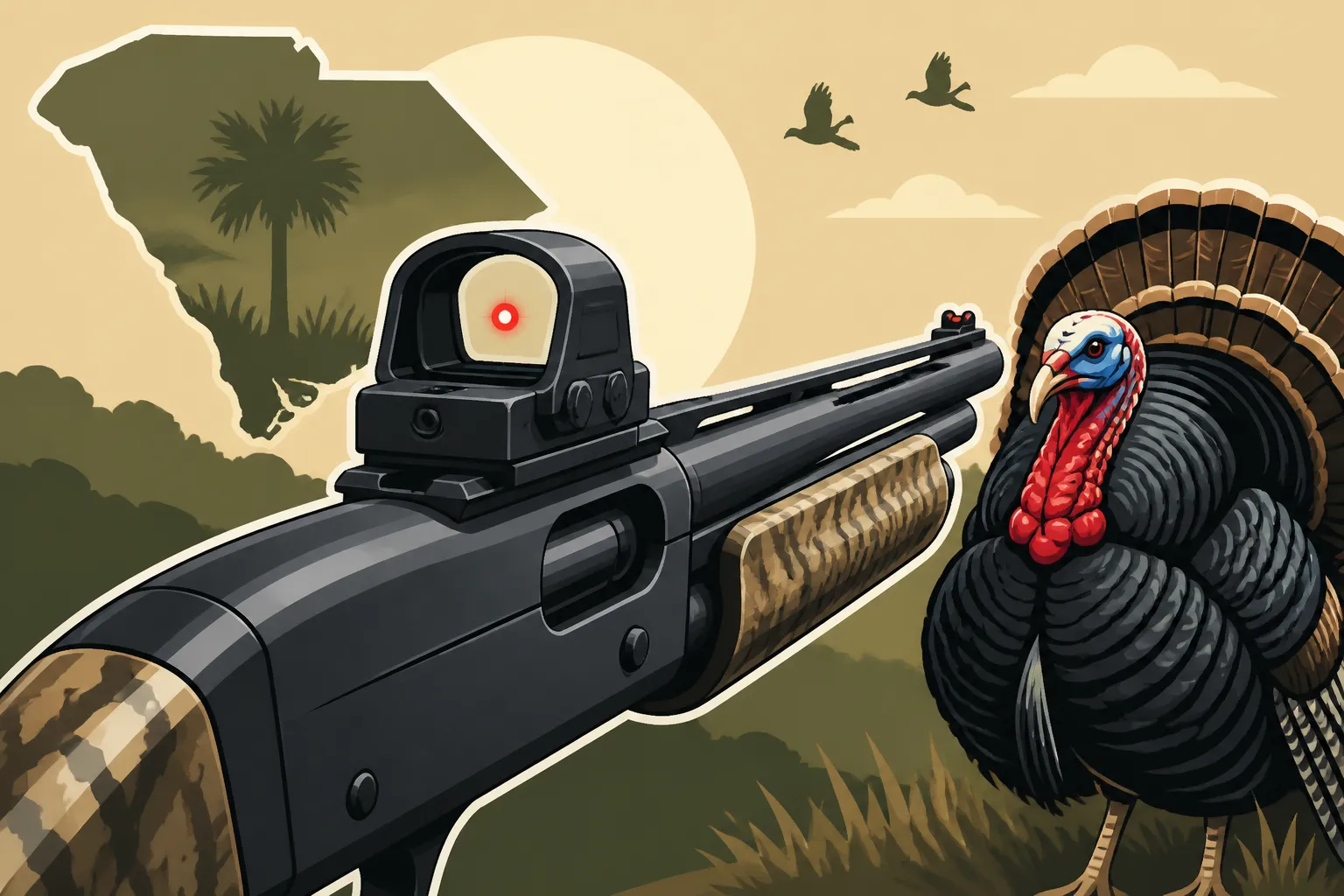
There's nothing quite like the heart-stopping moment a big gobbler steps into range, but sometimes those quick, critical shots can be tricky, especially in South Carolina's dense woods or low-light conditions. Traditional bead sights often leave hunters frustrated, struggling for a clear sight picture when a bird appears out of nowhere. This guide is all about exploring how red dot sights on your turkey shotgun can dramatically improve your aiming speed and precision, helping you seal the deal when that moment of truth arrives.
Why a Red Dot Sight for Turkey Hunting Makes Sense
For years, turkey hunters have relied on the simple bead sight on their shotgun barrels, and many still do with great success. But let's be honest, those little beads can be finicky. The limitations often become painfully clear when you're in a less-than-ideal shooting position, or when a wary gobbler offers only a fleeting opportunity in challenging light. A red dot sight, however, offers a solution to many of these age-old frustrations, providing a more intuitive and rapid aiming experience that can make all the difference in the field. It’s about leveraging technology to adapt to the unpredictable nature of turkey hunting.
The Frustration of Traditional Sights
Think about it: you've called in a beautiful longbeard, he's drumming and strutting, but he stops behind a cluster of palmettos. You're trying to get a shot, but you're kneeling, twisted, and your cheek weld isn't perfect. That single bead sight can become a blur, or worse, you might think you're on target when your eye isn't perfectly aligned down the barrel. This optical illusion, known as parallax, means your point of aim isn't necessarily your point of impact, especially if your head isn't consistently placed.
Low light conditions, common during those prime early morning minutes, only exacerbate the problem. A black bead on a dark barrel against a dark background can completely disappear. You strain your eyes, trying to find that tiny aiming point, and by the time you do, that gobbler might have taken another step, presenting a less-than-ideal shot or simply vanishing into the timber. It’s a frustrating scenario many of us have faced, missing opportunities because our aiming system wasn't up to the task.
Even in good light, the traditional bead requires a perfect alignment of your eye, the bead, and the target. This takes precious milliseconds, and sometimes, those milliseconds are all you get. When a gobbler is moving, or you're trying to shift your body for a better angle without spooking the bird, achieving that perfect alignment can feel like an impossible task. It’s not just about hitting the target; it’s about hitting it precisely in the vital zone with enough pattern density, and a bead sight can make that feel like guesswork.
Speed and Precision in the Turkey Woods
This is where a red dot really shines. Instead of aligning three points (eye, bead, target), you're only aligning two: the red dot and the target. The red dot projects a brightly illuminated aiming point onto a lens, which you then superimpose on your target. Because red dots are "parallax-free" within a reasonable hunting distance (typically 50-100 yards), the dot's position on the lens doesn't matter as much as with a traditional sight; wherever that dot is, that's where your shot will go. This means you can quickly acquire the target, even if your head position isn't perfectly consistent.
The speed of target acquisition is a game-changer. Imagine a gobbler unexpectedly pops his head up from behind a rise at 30 yards. With a red dot, you simply bring the shotgun to your shoulder, place the bright red dot on the bird's head and neck, and squeeze the trigger. There's no fumbling, no searching for a tiny bead. This rapid response time is critical for those fleeting opportunities or when a gobbler is trying to slip away. It provides a huge advantage, especially when you're hunting aggressive birds or in thick cover like the Francis Marion National Forest, where shots can be tight and fast.
Furthermore, the precision afforded by a red dot is unmatched by a bead. You're no longer guessing where the center of your pattern will hit; you've got a distinct, glowing point to aim with. This precision translates directly to better pattern placement on the gobbler's vitals, increasing your chances of a clean, ethical harvest. Whether it's a calm bird at 40 yards or a surprise close-range encounter, the red dot ensures you have a clear, precise aiming point every single time, giving you the confidence to make the shot count.
Overcoming Awkward Shot Angles
Turkey hunting often puts us in some contorted positions. You might be kneeling behind a fallen log, leaning against a tree that's not quite straight, or even laying prone to get a shot under some low-hanging branches. In these scenarios, achieving a proper cheek weld and sight picture with a traditional bead can be incredibly difficult, if not impossible. Your head is lifted, your eye is off-axis, and that bead sight becomes unreliable.
A red dot sight liberates you from the need for a perfect, consistent cheek weld. As mentioned, because most red dots are parallax-free within typical turkey hunting distances, as long as you can see the dot, you can place it accurately on your target. This means if you're kneeling, twisted, or in any awkward position that prevents textbook form, you can still confidently aim and shoot. This adaptability is invaluable when hunting pressured birds that may not come in exactly where you expect, or when you're forced to make a shot from a compromised position to avoid spooking the entire flock.
Consider hunting the thick river bottoms of the Pee Dee region or the tight pines of the Sandhills. Gobblers often appear from unexpected angles, and you might only have a narrow window to get a shot off. A red dot allows you to focus on the target and get the dot on it, rather than wrestling with your body position to align traditional sights. It significantly reduces the margin for error that comes with less-than-perfect form, which is a common reality in the dynamic world of turkey hunting.
Choosing the Right Red Dot for Your Turkey Shotgun
Stepping into the world of red dots can feel a bit overwhelming with all the options out there. It’s not just about slapping any old sight onto your shotgun. For turkey hunting, you need something robust, reliable, and perfectly suited to the specific demands of chasing gobblers through South Carolina’s diverse landscapes. Considering factors like dot size, durability, and how it attaches to your specific firearm will ensure you invest in a red dot that truly enhances your hunting experience.
Dot Size and Reticle Options
One of the first decisions you'll make is about dot size, measured in MOA (Minutes of Angle). This refers to how much area the dot covers at a given distance. For turkey hunting, you generally want a larger dot. A 2 MOA dot, while excellent for precision rifle shooting at long distances, might get lost on a gobbler's head at 30 yards in thick cover. Most turkey hunters find a 5 MOA or even an 8 MOA dot to be ideal.
| Dot Size (MOA) | Apparent Size at 25 Yards | Apparent Size at 50 Yards | Best Use Case for Turkey |
|---|---|---|---|
| 2 MOA | 0.5 inches | 1 inch | Long-range precision, less ideal for turkeys |
| 5 MOA | 1.25 inches | 2.5 inches | Good balance of speed and precision for turkeys |
| 8 MOA | 2 inches | 4 inches | Fast acquisition, excellent for close-range turkeys |
A larger dot is easier and faster to pick up with your eye, especially when a gobbler bursts out from behind a tree. It gives you a highly visible aiming point that you can quickly place on the bird's head and neck. Some red dots even offer multiple reticle options, such as a large dot surrounded by a circle. This can be fantastic for turkey hunting, as the large circle can help you quickly frame the target, while the central dot provides a precise aiming point for that critical headshot. Consider what feels most natural and fastest for your eyes.
Don't forget about brightness settings. A good red dot will have multiple intensity levels, allowing you to dial it down for low-light conditions (so the dot doesn't "bloom" and obscure the target) and crank it up for bright, sunny South Carolina afternoons. This adaptability is key for hunting in varied conditions, from the deep shadows of an Upstate pine thicket to the glaring light of a coastal field edge. A quality red dot, perhaps from a brand like GoHunt, will offer a wide range of adjustment to suit any light scenario.
Durability and Weather Resistance
South Carolina weather can be brutal on hunting gear. From humid August deer archery hunts to rainy spring turkey mornings, your equipment needs to withstand moisture, bumps, and general abuse. A red dot sight for turkey hunting is no exception. You need a sight that is built like a tank – able to take a fall, endure a torrential downpour, and still hold its zero. Look for sights that are described as "fogproof," "waterproof," and "shockproof."
The housing material is a big indicator of durability. Many quality red dots are made from aircraft-grade aluminum, which is both lightweight and incredibly tough. Pay attention to the seals and coatings. A truly waterproof red dot will be nitrogen purged to prevent internal fogging and will have O-ring seals to keep moisture out. You'll be crawling through briars, leaning your shotgun against damp trees, and possibly dropping it in the mud; your red dot needs to survive it all.
Don't skimp on this aspect. A cheap red dot might save you a few bucks upfront, but it could fail when you need it most, leaving you with a missed opportunity and a ruined hunt. Investing in a reputable brand known for rugged optics is always a wise choice, ensuring your sight will perform reliably season after season, no matter what the South Carolina outdoors throws at it. Reliability in the field, especially when you're miles from the truck, is priceless.
Mounting Systems and Compatibility
Before you even pick out a red dot, you need to know how it will attach to your specific shotgun. Shotguns aren't always set up for optics, so you might need an aftermarket mounting solution. The most common options include Picatinny or Weaver rails, direct mounts, and saddle mounts. Some shotguns, like certain models of Remington 870 or Mossberg 500, might have pre-drilled and tapped receivers for a rail, making installation straightforward.
If your shotgun isn't pre-drilled, a saddle mount is often the easiest solution. These mounts clamp onto the receiver, providing a stable platform for a Picatinny rail without requiring any gunsmithing. They are relatively easy to install and remove, allowing you to switch back to traditional sights if desired. Just ensure the saddle mount is specific to your shotgun model for a secure fit. For those seeking a super low-profile setup, some red dots can be directly mounted to certain shotgun receivers, but this usually requires custom drilling and tapping by a gunsmith.
Always double-check compatibility before purchasing. Nothing is more frustrating than buying a great red dot only to find out it won't mount securely to your turkey gun. Research your shotgun model and the available mounting options. Some red dot manufacturers, including GoHunt, offer proprietary mounting plates or recommend specific third-party solutions for popular turkey shotgun models, making it easier to find a robust and secure setup. The goal is a rock-solid connection that won't shift under recoil or during a rough hunt.
Setup and Sighting-In Your Turkey Red Dot
Getting a red dot on your shotgun is only half the battle. The real work begins with proper mounting and, most importantly, patterning. Unlike a rifle, where you "zero" a single bullet, a shotgun needs to be "patterned" to ensure that the dense core of your shot charge hits precisely where your red dot is aiming. This process is absolutely critical for ethical turkey hunting and cannot be skipped.
Proper Mounting Techniques
First things first: safety. Always make sure your shotgun is unloaded and the action is open before you start installing anything. Mounting a red dot sight correctly is crucial for accuracy and reliability. Any looseness will lead to inconsistent shots and frustration in the field. Begin by cleaning the mounting surface on your shotgun's receiver or rail with a degreaser. This ensures a solid, non-slip contact.
Next, place your mounting base (whether it's a Picatinny rail, saddle mount, or direct mount plate) onto the receiver. Use the appropriate screws and apply a small amount of blue thread locker to each screw. This is a non-negotiable step. Without thread locker, the recoil of a heavy turkey load will loosen your screws over time, causing your point of impact to shift. Tighten the screws evenly and firmly, following the manufacturer's torque specifications. Don't overtighten, as this can strip threads or damage the receiver.
Once the base is secure, attach the red dot sight to the base. Again, apply thread locker to the sight's mounting screws and tighten them evenly. Ensure the sight is level with the shotgun's bore. While a red dot is more forgiving of head position, a level mount still contributes to consistency and proper presentation. After everything is tightened, give the sight and mount a good wiggle to ensure there's no play. It should feel like a solid extension of your shotgun. Hanging a Stand on a Sumter Forest Ridge also emphasizes the importance of secure mounting, though for a different piece of gear.
Patterning Your Shotgun with a Red Dot
This is the most critical step for any turkey hunter using any sight, but especially with a red dot. You don't just "zero" a turkey gun; you "pattern" it. This means shooting various turkey loads at a target to see how dense and consistent your shot pattern is at different distances. Your goal is to ensure the core of that pattern, the densest concentration of pellets, hits directly behind your red dot. This process helps you understand your shotgun's capabilities with a specific load and choke combination.
Start by setting up a large sheet of paper or a dedicated turkey target at 20 yards. Aim your red dot precisely at the head of the turkey on the target. Take a shot. Now, observe where the pattern hits relative to your aiming point. You'll likely need to adjust the windage (left/right) and elevation (up/down) on your red dot sight to bring the center of the pattern into alignment with the dot. Make small adjustments, typically clicking in the direction you want the pattern to move. Fire another shot and repeat until the core of your pattern is centered around the red dot.
Once you're satisfied at 20 yards, move your target out to 30 and then 40 yards. Patterning at these distances is crucial for understanding your effective range. Evaluate the density of your pattern – are there enough pellets in the head and neck area for a clean kill? You might find that one brand of Turkey Loads Worth the Price or type of choke performs much better than others. It's a time-consuming process, but absolutely essential. Remember, every shotgun, choke, and load combination is unique, so Patterning a Turkey Gun at 40 Yards is an exercise you simply can't skip.
Range Considerations and POA/POI Adjustments
Understanding your shotgun's effective range is paramount for ethical hunting. After patterning, you'll have a clear idea of how far your specific setup can consistently put enough pellets into a gobbler's vitals. For most modern turkey setups using dense loads and tight chokes, this is often in the 40-50 yard range, but it can vary. Your red dot should be sighted in for your maximum ethical range. If you pattern it for 40 yards, then you know that a gobbler at 30 yards will also be perfectly covered, perhaps with an even denser pattern.
When making your point of aim (POA) and point of impact (POI) adjustments, always prioritize putting the densest part of your pattern exactly where the red dot sits. Don't just settle for "close enough." A fraction of an inch off at 40 yards can mean the difference between a clean kill and a wounded bird. The precision of the red dot allows for extremely fine-tuned adjustments, so take your time at the range to get it perfect. Shoot from a steady rest, just like you would with a rifle, to eliminate human error from the patterning process.
Also, be aware of how changes in ammunition or choke might affect your POI. If you switch from one brand of turkey load to another, or decide to try a different choke tube, you must re-pattern your shotgun with the red dot. Even slight variations can drastically alter where your pattern hits. This due diligence ensures that when you're Calling a South Carolina Gobbler Off the Roost and he steps out at 35 yards, you know exactly where your shot will land.
Field Use and Advantages in South Carolina Turkey Hunting
Once your red dot is properly mounted and patterned, you'll quickly realize its incredible advantages in the turkey woods. From the moment you step into the pre-dawn darkness to the intense final seconds of a close encounter, a red dot sight streamlines your aiming process, boosts your confidence, and ultimately, helps you make more successful and ethical shots. It's about taking the guesswork out of aiming in dynamic, real-world hunting scenarios.
Low-Light and Heavy Cover Performance
Early morning in a South Carolina swamp or deep pine timber can be incredibly dim, even after legal shooting light. A traditional bead sight can disappear against a dark background, making target acquisition a frustrating and slow process. This is precisely where the illuminated reticle of a red dot sight becomes an indispensable tool. That bright, crisp red dot stands out against any background, allowing you to quickly and clearly pick up your aiming point, even in the deepest shadows.
Imagine a gobbler responding to your calls and appearing ghost-like at the edge of a thick palmetto patch just as the sun is barely kissing the treetops. With a red dot, you can quickly find your aiming point on his head and neck without straining your eyes or fumbling for a bead. The dot's adjustable brightness allows you to tailor it to the ambient light, ensuring it's always visible without being so bright that it creates a "halo" effect, obscuring your target. This advantage extends to hunting in thick cover, where shadows are prevalent and a clean line of sight might be fleeting. Whether you're hunting in the Lowcountry or the Upstate, Hunting the Statewide Turkey Opener in April demands gear that performs in varied conditions.
Furthermore, shooting through sparse brush or branches with a red dot is more intuitive. Your focus is on the target and the dot, not on trying to align a bead through a maze of twigs. While you still need to be mindful of obstructions that could deflect your shot pattern, the red dot minimizes the visual clutter of traditional sights, allowing you to concentrate on the crucial aiming point. This can be particularly useful when a gobbler is partially obscured, offering only a small, clear window for a shot.
Maintaining Situational Awareness
One of the often-overlooked benefits of a red dot sight is how it enhances your situational awareness. Unlike a magnified scope, which narrows your field of view, a red dot offers a wide, open sight picture. You're looking through the optic, not into it, with both eyes naturally open. This means you maintain a full, unobstructed view of your surroundings while simultaneously having a precise aiming point ready for action.
When a gobbler is working its way in, or even when multiple birds are present, maintaining situational awareness is crucial. You need to see if other birds are approaching, if a hen is leading the gobbler, or if a coyote is sneaking in from the flank. With both eyes open, you can track the gobbler's movement, assess its behavior, and watch for other game, all while keeping that bright red dot ready to go. This capability is especially beneficial when practicing Run-and-Gun Turkey Tactics on Public Land, where quick reactions and understanding the surrounding environment are paramount.
This open sight picture helps reduce tunnel vision, which can sometimes happen with traditional sights as hunters intensely focus on the small bead. A red dot allows for a more natural aiming posture, keeping your head up and your eyes scanning, reducing neck strain and improving overall comfort during those long, patient waits. It truly integrates the aiming system into your natural field of view, making the entire experience more fluid and responsive.
Advantages for Youth and New Hunters
Introducing new hunters, especially youth, to turkey hunting can be incredibly rewarding, but it also comes with unique challenges. Learning proper shotgun mounting, sight alignment, and consistent cheek weld can be difficult, leading to frustration and missed shots. A red dot sight can significantly simplify the aiming process for these developing hunters, making their early experiences more successful and enjoyable.
By eliminating the need to align a front bead with a rear sight (or simply the front bead in a single-bead setup), the red dot reduces the complexity of aiming. Young hunters can focus on simply placing the bright dot on the gobbler's head and neck. This more intuitive system allows them to build confidence faster, experience success, and develop a love for the sport without being bogged down by the intricacies of traditional sighting techniques. It helps them learn about range, pattern density, and ethical shot placement, rather than struggling with basic aiming.
Moreover, the versatility of a red dot allows for faster target acquisition, which can be less intimidating for new hunters facing a quick-moving bird or a limited shooting window. This ease of use not only promotes quicker learning but also helps instill good shooting habits from the start. A reliable red dot from a company like GoHunt can be a fantastic tool to equip a new generation of South Carolina hunters, setting them up for success in the turkey woods. Just remember to pair it with proper instruction on gun safety and shot placement, which are always the most important lessons.
Disclaimer
This article is for general informational purposes only and does not constitute professional advice. Laws, prices and regulations vary by location and change over time. Consult a qualified professional for guidance on your specific situation.