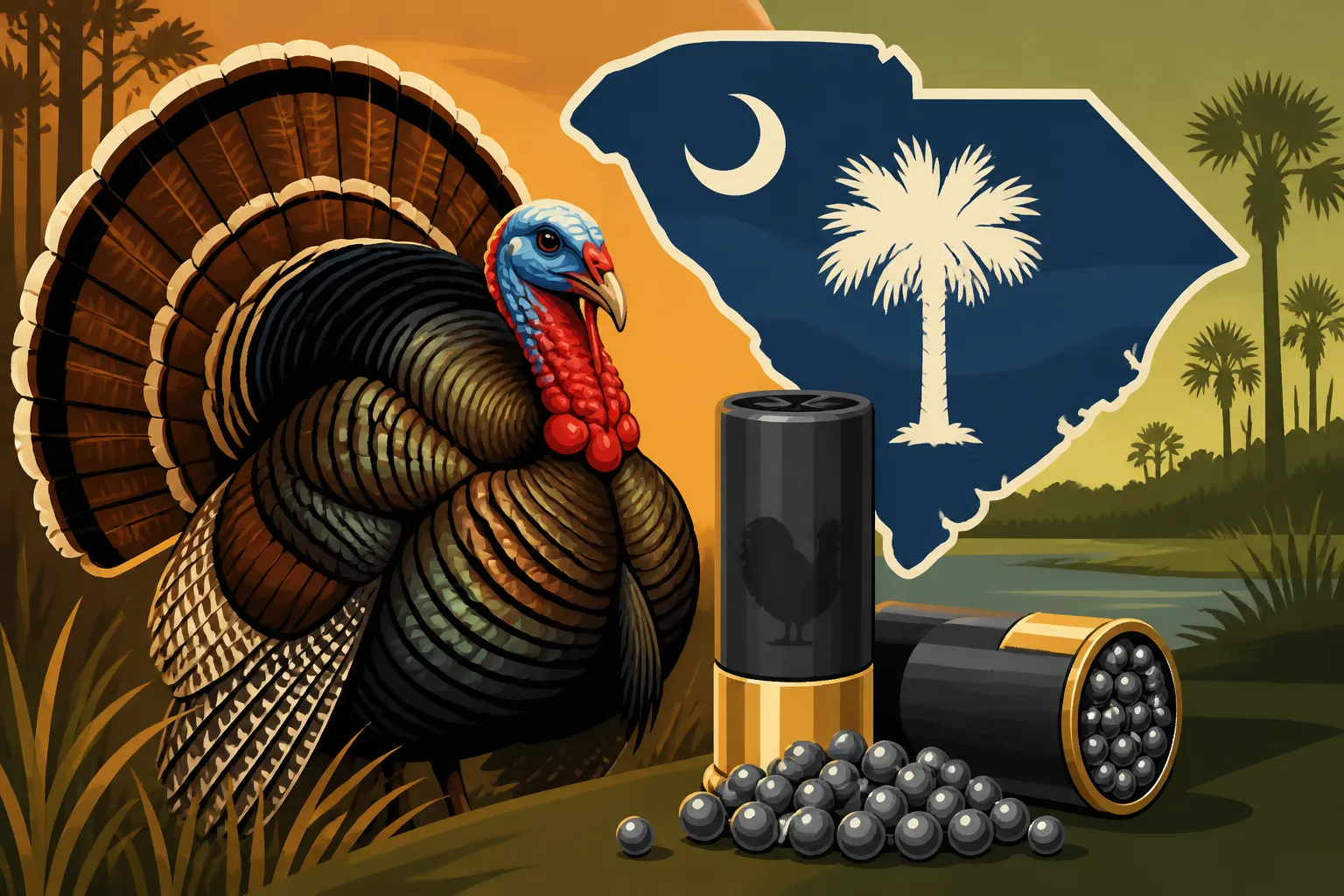
Tungsten Turkey Loads Worth the Price
Every spring, that familiar internal debate starts for turkey hunters across South Carolina: do I stick with my trusty lead loads, or do I bite the bullet (pun intended!) and invest in those expensive tungsten turkey loads? It's a question that can really weigh on you, especially when you're dreaming of that gobbler at 40, 50, or even 60 yards, wondering if your current setup has the punch to do the job cleanly and ethically. We all want to make the most of our limited tags and opportunities, and nobody wants to send a bird off wounded. This guide is going to dig deep into whether those high-dollar tungsten shells truly deliver the performance to justify their price tag, especially for our unique South Carolina turkey hunting scenarios.
The Traditional Challenge: When Lead Loads Fall Short
For decades, lead has been the backbone of turkey hunting ammunition, and for good reason. It's affordable, widely available, and in the right hands, absolutely lethal at responsible ranges. Many of us grew up patterning our shotguns with lead, learning its limitations, and honing our skills to ensure clean kills. But let's be honest, there are times when even the best lead load, through a meticulously matched choke, just leaves you wanting more.
Understanding Lead's Performance Envelope
Lead shot is effective, no doubt about it. When a gobbler steps into that sweet spot, say 25-35 yards, and you've got a good pattern, that bird is going down. The issue often arises when distances stretch, or when you encounter thick brush that can deflect lighter pellets. Lead, being a softer metal, can deform as it travels down the barrel and when it hits obstacles, leading to less consistent patterns and reduced energy transfer on target. This means that past a certain distance, the pattern density might drop significantly, and the individual pellets might not carry enough energy to penetrate the skull and spine reliably. We've all heard stories, or maybe even experienced it ourselves, of a beautiful longbeard walking off after a shot that "felt good," leaving us to second-guess everything.
It's not just about raw distance, either. Think about hunting those sneaky birds that hang up just outside what you consider your absolute maximum effective range with lead. You know he's there, gobbling his head off, but he just won't commit those last few steps. With a traditional lead load, you're faced with a tough choice: take a risky shot that might wound, or let a hard-won opportunity walk away. That frustration is real, and it’s often what pushes hunters to consider alternatives. You spend all that time scouting, perfecting your calls, and creeping through the woods, only to be limited by your ammunition. It's enough to make you pull your hair out!
Ethical Considerations and Maximizing Tags
In South Carolina, our spring turkey season offers a specific bag limit, and we want to make every opportunity count. South Carolina's Statewide Turkey Bag Limit is something we all keep in mind. Wounding a bird and losing it is not only heartbreaking but also wastes one of those precious tags. This ethical consideration plays a huge role in ammunition choice. A clean, humane kill is paramount. If a particular ammunition can significantly increase the odds of that outcome, regardless of the precise yardage (within reason, of course), it becomes a very compelling argument.
Consider a scenario where you've finally called in a wary gobbler in the Pee Dee River bottoms. He's strutting at 45 yards, head bright red, but there's a thin screen of saplings between you. With lead, you might hesitate, wondering if enough pellets will make it through clean and with sufficient energy. This is where the confidence factor of a different type of load begins to shine. It's about knowing you've given yourself the best possible chance for a quick, ethical harvest, minimizing suffering and ensuring your hard work pays off. Many hunters, after researching their options on platforms like GoHunt, decide that the added confidence in tungsten is worth the investment.
The Tungsten Advantage: Density, Penetration, and Pattern Power
So, what exactly makes tungsten loads different, and why do they command a higher price point? It all comes down to the properties of the material itself. Tungsten is significantly denser and harder than lead, and these characteristics translate directly into superior ballistic performance.
The Science Behind Tungsten's Superiority
Imagine a small, dense rock versus a larger, softer clay ball. If you throw them with the same force, which one will fly straighter, retain its speed longer, and hit harder? The dense rock, of course. Tungsten shot works on the same principle. Because tungsten alloys are so much denser than lead (sometimes 1.5 to 2 times denser, depending on the specific alloy), a smaller tungsten pellet can weigh the same as a larger lead pellet. This has several profound advantages:
- Increased Pellet Count for a Given Weight: Since tungsten pellets are smaller for the same weight, a standard shell can hold more pellets. More pellets mean a denser pattern.
- Retained Energy and Penetration: Density also means that tungsten pellets resist air drag better. They maintain their velocity and energy more effectively downrange. When they hit the target, they have much more kinetic energy, leading to significantly deeper penetration. This is crucial for breaking bones and delivering devastating shock to vital organs, especially on tough old gobblers.
- Superior Pattern Consistency: Tungsten's hardness means the pellets deform less during acceleration in the shotgun barrel and when traveling downrange. This results in much tighter, more consistent patterns with fewer flyers, even at extended distances. You get a uniform cone of destruction, rather than a thin, patchy spread.
Think about patterning your shotgun. With lead, you might be impressed with a 10-inch circle at 30 yards. With a good tungsten load and choke combination, you might see that same density, or even better, at 40 or 50 yards. That's a game-changer when you're dealing with a bird that's just out of reach. It effectively extends your ethical killing range, not by encouraging irresponsible long shots, but by ensuring that within a reasonable, responsible range, you have absolute confidence in your shot.
Real-World Performance on South Carolina Turkeys
What does this mean for hunting longbeards in the swamps of the Lowcountry or the ridges of the Upstate? It means greater confidence in your setup. If you've patterned your gun with tungsten, you know its capabilities. A bird at 45 yards might have been a "maybe" with lead; with tungsten, it becomes a "yes, if I make the shot." This isn't about being reckless; it's about being prepared and having the equipment to execute an ethical kill at ranges that were previously pushing the limits of most lead setups.
Imagine you're hunting a public WMA and a gobbler is hung up just over a small creek bottom, 50 yards away. With lead, that's often a pass. With tungsten, knowing your pattern and its retained energy, you have a much stronger chance of making a clean kill, provided you've done your part. This kind of performance can make the difference between tagging out and going home empty-handed after a hard day of calling. For hunters who value every opportunity and prioritize ethical harvest, this performance enhancement is a powerful draw. South Carolina Spring Turkey Season Rules emphasize ethical hunting, and tungsten loads contribute to that goal by providing a wider margin of error within responsible shooting distances.
Is the Price Tag Justified? A Cost-Benefit Analysis
This is where the rubber meets the road. Tungsten loads are, without a doubt, more expensive than lead. A box of tungsten shells can cost as much as, or even more than, a decent hunting knife or a few bags of decoys. So, is that hefty price tag truly "worth the price" for a South Carolina turkey hunter?
Weighing the Investment Against Opportunity
Let's break down the cost. Yes, you might pay significantly more per shell for tungsten. But how many turkey shells do you actually shoot in a season? For most hunters, it's a handful, maybe a dozen if you do a lot of patterning. Compare this to the investment in your shotgun, your turkey vest, your calls, your boots, fuel for scouting, and the cost of your South Carolina Resident Hunting License Options or nonresident license. When you look at the total investment in a turkey season, the cost of a few premium tungsten shells might represent a smaller percentage than you initially thought.
Consider the alternative: you save money on cheaper shells, but you miss a bird due to an inadequate pattern or lack of penetration, or worse, wound a bird that gets away. The mental anguish, the lost opportunity, and the ethical implications can far outweigh the few extra dollars saved on ammunition. For many, that peace of mind, knowing they've done everything possible to ensure a clean kill, is invaluable.
| Feature | Lead Shot | Tungsten Shot |
|---|---|---|
| Density | Lower (approx. 11 g/cm³) | Higher (15-18 g/cm³ for popular alloys) |
| Hardness | Softer, prone to deformation | Much harder, minimal deformation |
| Pattern Density | Good at closer ranges (20-35 yards) | Excellent, dense patterns at longer ranges |
| Penetration | Good at closer ranges | Superior, deeper penetration at all ranges |
| Effective Range | Typically 30-40 yards (ethical maximum) | Often 40-60 yards (ethical maximum) |
| Cost per Shell | Low to moderate | High |
| Environmental | Potential for lead toxicity | Non-toxic (often allowed where lead is banned) |
This table clearly illustrates the performance gap. While lead certainly has its place, the advantages of tungsten are hard to ignore, especially when you're talking about the critical few moments of a turkey hunt.
When Tungsten Makes the Most Sense
Tungsten isn't a magical bullet, and it's not always necessary. If you're consistently getting birds within 30 yards and your lead loads are performing perfectly, you might not feel the need to switch. However, there are specific scenarios where tungsten really shines:
- Longer Ethical Shots: If your hunting style or terrain often puts birds in the 40-60 yard range, tungsten provides the confidence and capability for clean kills. This is not about extending your personal comfortable shooting range irresponsibly, but about ensuring that if a shot presents itself at these distances, your ammunition is up to the task.
- Wary, Pressure Birds: South Carolina public lands can see considerable pressure. If you're hunting areas where gobblers are particularly skittish and prone to hanging up, that extra 10-15 yards of effective range can make all the difference. Hunting Pressure on South Carolina Public Land is a real factor, and having an edge can be crucial.
- Peace of Mind: For many, the ability to focus solely on the shot, knowing their ammunition is optimized for performance, is worth the cost alone. It takes away one variable of doubt in a high-stakes moment.
- Limited Opportunities: If you only get out a few times a season, or if a particular gobbler has been giving you fits for weeks, investing in the best possible ammunition ensures you're ready when that one chance finally arrives.
Ultimately, the "worth" of tungsten turkey loads is a personal decision. But for a hunter who values ethical kills, wants to maximize their limited opportunities, and is willing to invest a small percentage more into their overall season cost for a significant performance boost, the answer is often a resounding "yes."
Maximizing Tungsten Load Performance in South Carolina
Simply buying expensive tungsten shells isn't a magic bullet. To truly get your money's worth and ensure ethical performance, you need to match your ammunition with your equipment and practice.
The Critical Role of Choke Tubes
Even the densest tungsten shot needs the right choke tube to perform its best. Many modern choke tubes are designed specifically to handle the hardness and density of tungsten, optimizing patterns. A choke that performs incredibly well with lead might not be the ideal choice for tungsten, and vice-versa. You might be surprised at how much difference a slight change in constriction or porting can make. Before you buy, you might want to check resources like GoHunt for reviews of different choke tubes that pair well with tungsten loads.
- Experimentation is Key: Don't just assume your existing choke will work perfectly. You'll need to pattern your shotgun with your chosen tungsten load and various choke tubes to find the combination that gives you the densest, most consistent pattern at your realistic hunting distances.
- Match Choke to Load: Some chokes are designed with tighter constrictions for lead, which might actually over-constrict tungsten, leading to blown patterns. Others are specifically engineered for tungsten's properties. Look for chokes designed for "Hevi-Shot," "TSS," or "Tungsten Super Shot" to ensure compatibility. This crucial step is often overlooked. Turkey Shotguns and Chokes delves deeper into finding the right match for your firearm.
Patterning Your Shotgun: It's Non-Negotiable
This step is absolutely paramount, especially when you're making an investment in premium ammunition. You must pattern your shotgun with the exact tungsten load you plan to hunt with, at the distances you expect to shoot.
- Use Large Paper Targets: Don't skimp on targets. Use large paper sheets (at least 30"x30" or bigger) to get a full picture of your pattern.
- Shoot at Varying Ranges: Pattern at 20, 30, 40, 50, and even 60 yards to understand how your pattern holds up. Identify your maximum ethical range – the distance where you still have enough pellets in the kill zone (head and neck) to guarantee a clean kill. Patterning a Turkey Gun at 40 Yards is a good starting point, but don't stop there.
- Record Everything: Note the load, choke, distance, temperature, and specific results. This data will be invaluable as you refine your setup. You can even use apps recommended by platforms like GoHunt to track and analyze your patterns.
Knowing your exact pattern density and spread at various distances gives you the confidence to make quick, ethical decisions in the field. Without this patterning, you're just guessing, and that defeats the whole purpose of investing in high-performance ammunition.
Understanding Your Ethical Range and Field Practice
Tungsten extends your effective range, but it doesn't extend your ethical range beyond your personal skill set. If you can't consistently put a tight pattern into a gobbler's head and neck at 60 yards on paper, you shouldn't be attempting that shot in the field, even with tungsten.
- Realistic Distances: While tungsten can kill at longer distances, always strive for the closest, most ethical shot possible. The goal is to drop the bird instantly, not to see how far you can stretch it.
- Practice Your Setup: Spend time practicing calling and setting up to bring birds closer. Use Turkey Decoys That Work on Pressured Birds effectively, and understand Turkey Calls Worth Carrying in South Carolina to improve your overall hunting strategy. Tungsten is an enhancement, not a replacement for good hunting skills.
- Field Scenarios: Practice should mimic field conditions as much as possible. Shoot from a kneeling position, from a sitting position with a call in your hand, or even from a ground blind. This helps build muscle memory and confidence under pressure. Using a scouting tool like GoHunt can help you locate prime turkey habitat, making every shot count even more.
By combining the superior ballistic performance of tungsten loads with careful choke selection, diligent patterning, and responsible hunting practices, you can maximize your chances of a successful and ethical harvest in South Carolina's turkey woods.
Disclaimer
This article is for general informational purposes only and does not constitute professional advice. Laws, prices and regulations vary by location and change over time. Consult a qualified professional for guidance on your specific situation.