Treestand Safety Gear for Wet Ground
There's nothing quite like the excitement of a morning hunt, especially when those South Carolina woods are alive after a night of rain. But that dampness, while refreshing, introduces a whole new layer of risk to treestand hunting. It's a frustration many of us know all too well – that feeling of slick bark under your boots, or that tiny slip as you're pulling your stand into position. This guide is all about equipping you with the knowledge and the right gear to ensure you stay safe, even when the ground beneath you, and the trees you climb, are soaking wet.
The Treacherous Nature of Wet South Carolina Woods
South Carolina's climate is notoriously humid, and we get our fair share of rain, whether it's a pop-up afternoon shower in August or a steady, all-day drizzle in the late season. While that moisture can kick deer movement into high gear, it also transforms familiar treestand setups into potential hazards. You're not just dealing with the initial rain; you're often contending with lingering dampness, dew, and even sweat in our perpetually warm, muggy conditions.
Slippery Bark and Hidden Hazards
Imagine stepping out into the woods after a good overnight rain. The air is cool, perhaps a little misty, and everything gleams with moisture. That sounds peaceful, but it's also a warning sign. Tree bark, especially varieties like the smooth-barked pines or the slicker sections of mature oaks, becomes incredibly treacherous when wet. What was a grippy surface a day before now feels like stepping on ice. Your boots, designed for traction, can suddenly lose their purchase, whether you're scaling climbing sticks or moving on the stand platform itself.
Beyond the immediate tree, the ground underfoot becomes a whole different beast. Wet leaves plaster themselves to the earth, creating a slippery carpet that hides roots, fallen limbs, and unexpected holes. Mud can build up on your boot soles, further reducing traction when you eventually reach the tree. In the Lowcountry Swamp Deer country, this is an almost constant battle, but even in the Sumter Forest Ridges of the Upstate, a heavy dew or recent shower can turn a simple walk to the stand into a careful balancing act. It's not just the big, obvious puddles; it's the pervasive dampness that makes everything less stable.
The Compounding Factor of Humidity and Sweat
Even on days without recent rain, South Carolina's intense humidity can leave everything feeling damp and clammy. This isn't just uncomfortable; it contributes to slick surfaces. Sweat, especially during the early archery season, can drip down your face and hands, making your grip on climbing sticks or stand components less secure. You might not think of a warm, sunny morning as "wet ground" conditions, but when you're exerting yourself, climbing a tree, and the humidity is 90%, your hands and the metal of your stand can become surprisingly slick.
This internal dampness combined with external humidity creates an environment where a minor slip can quickly escalate. We all know how much effort it takes to hang a stand properly, especially in challenging terrain. The last thing you want is to be halfway up, fighting off mosquitos and sweat, only to have a hand slip on a damp rung because the air itself is thick with moisture. It reinforces why you need to approach every single ascent and descent with a healthy respect for gravity and a solid safety plan in place.
Essential Treestand Safety Gear for Damp Conditions
When dealing with wet conditions, your safety gear isn't just a recommendation; it's an absolute necessity. You need equipment that is reliable, easy to use, and designed to perform when things get slick and challenging. Don't ever cut corners here, because the price of a fall is far too high.
The Unsung Hero: Full-Body Harnesses
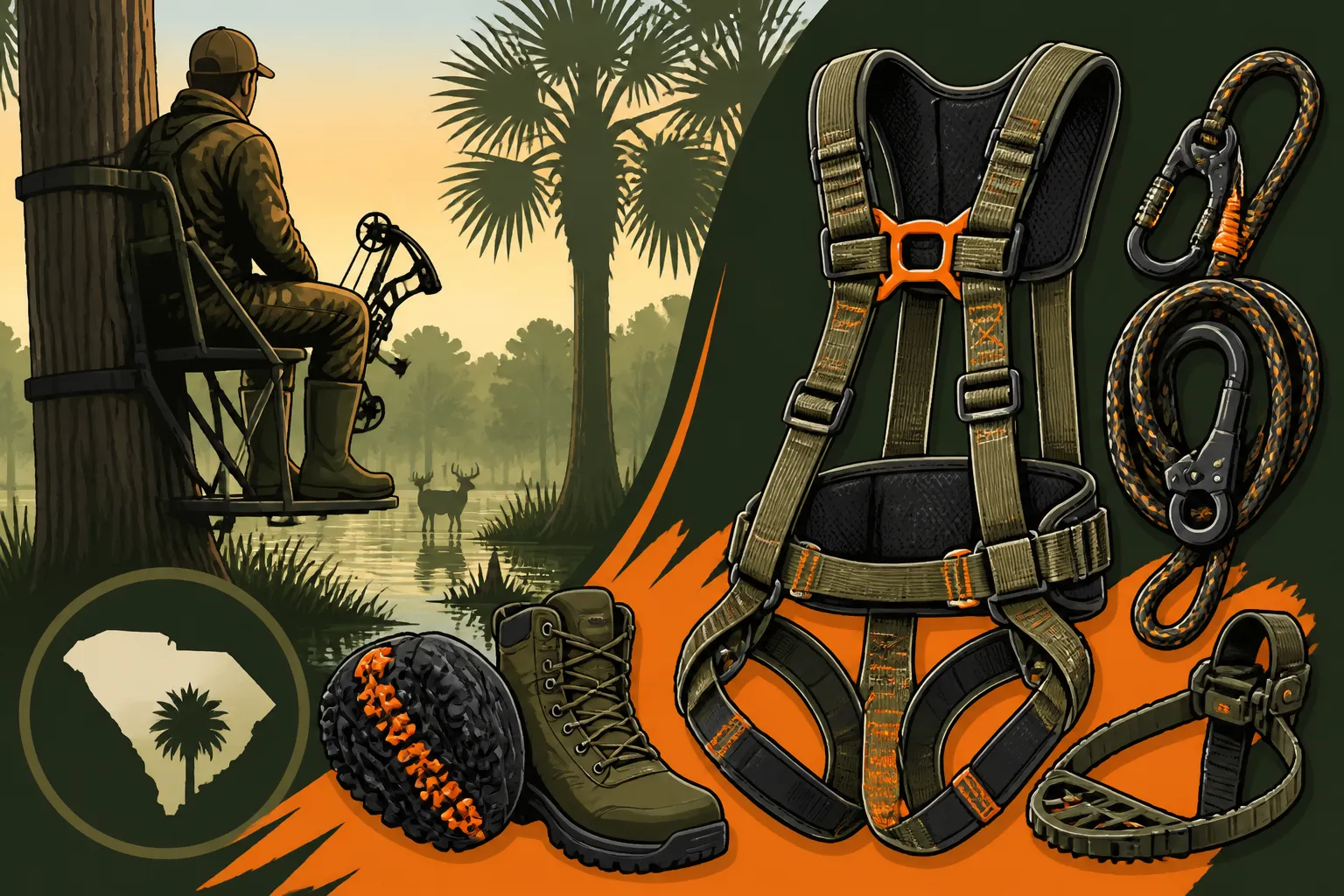
Let's be blunt: if you're hunting from a treestand, you should be wearing a full-body harness. Period. This isn't just for a minor wobble; it's your primary defense against a catastrophic fall. In wet conditions, it becomes even more critical. Imagine a scenario where you're adjusting your climbing sticks in a light drizzle, and your foot slides. Without a harness, you're going down. With one, you're safely suspended, allowing you to regain your footing or carefully descend.
Modern full-body harnesses are designed to be comfortable and allow for a full range of motion. They shouldn't restrict your draw or your ability to move silently. The key is to put it on before you leave the ground. Many hunters make the mistake of carrying it up and putting it on in the stand, which completely defeats the purpose during the most dangerous phase: the climb. Ensure all straps are snug but not tight, and that buckles are securely fastened. Check for any fraying or damage, especially if it's been stored in a damp environment. Even the best gear needs to be inspected.
Lifelines and Tree Straps: Your Constant Connection
A full-body harness is only half the equation; it needs something to connect to. This is where the lifeline and tree strap come in. A continuous lifeline is an absolute game-changer, especially in wet conditions. It’s a rope that runs from the base of the tree all the way up to your stand platform. As you ascend, your harness tethers to this rope with a Prusik knot or similar sliding system, meaning you are always connected to the tree from the moment your feet leave the ground until you're safely on your stand, and vice versa when descending.
Think about it: climbing up in the pre-dawn gloom, with dew-soaked bark, your hands might slip. If you're using a standard tree strap that you only attach once you're on the platform, you're exposed during the entire climb. With a continuous lifeline, even if you lose your grip or footing, you simply "sit" into your harness, safely tethered to the tree. This peace of mind, especially on slick mornings, is invaluable. When selecting a tree strap for your stand, make sure it's rated for the load and is securely fastened around a healthy, living tree. Regularly inspect the rope and strap for wear, especially where it rubs against the tree.
Redundant Safety: Lineman's Belts and Prusik Knots
For hanging or removing your stand, a lineman's belt (sometimes called a lineman's climbing belt) adds another critical layer of safety. This belt allows you to strap yourself to the tree while keeping both hands free to work. It's incredibly useful for steadying yourself when trying to get those climbing sticks to bite into damp bark or securing your stand in place. When you're trying to Hang a Stand on a Sumter Forest Ridge in less-than-ideal conditions, having that extra point of contact is a lifesaver.
Prusik knots, often used in conjunction with continuous lifelines, are fantastic for their simplicity and reliability. They cinch tight under load but can be slid freely when unloaded. Understanding how to tie and trust a Prusik knot is a fundamental skill for any treestand hunter. It's a small piece of rope that gives you immense control and safety during your ascent and descent, particularly when every surface feels like it's conspiring to make you slip. Ensure your Prusik is tied correctly and that the rope it's attached to is in good condition.
Pre-Hunt Checks and Setup Strategies in Wet Environments
Having the right gear is only part of the equation. You also need to adopt a proactive mindset, rigorously inspecting your equipment and adjusting your setup strategies to account for the added challenges of wet conditions. This means more than just a quick glance; it requires a deliberate, methodical approach.
Inspection is Non-Negotiable: Before and After Each Hunt
Before you ever head out for a hunt, especially if your stand has been exposed to the elements for a while, a thorough inspection is paramount. Don't assume everything is fine just because it was okay last week. Water, humidity, and temperature fluctuations can all take their toll.
Here's a quick checklist to run through:
| Component | Pre-Hunt Check | Wet Weather Specific |
|---|---|---|
| Full-Body Harness | Check for tears, cuts, frayed stitching, loose buckles. Ensure all adjustment straps work smoothly. | Pay close attention to stitching in high-stress areas (leg loops, shoulder straps) as prolonged dampness can weaken threads. Ensure buckles aren't rusted shut or sticky from moisture. |
| Lifeline/Tree Strap | Look for cuts, abrasions, UV damage, or excessive fraying on ropes and straps. Check carabiners for proper function. | Note any mildew or rot, especially if stored wet. Ropes can absorb water, affecting their feel and flexibility; confirm knots (like Prusik) still slide smoothly but grip securely. |
| Climbing Sticks/Ladder | Inspect welds, pins, connection points for rust, bends, or cracks. Ensure sections fit together tightly. | Check for excessive rust on metal components, which can compromise integrity over time. Ensure stepping surfaces are clear of mud/debris from previous hunts, which would be slicker when wet. |
| Treestand Platform | Look for loose bolts, bent tubing, cracked welds, or damaged mesh/grating. Check seat and armrests for stability. | Metal components are prone to rust and corrosion in our humid climate. Test platform stability vigorously; wet ground means the stand may not settle as firmly. Ensure any draining holes in the platform are clear to prevent water pooling. |
| Lineman's Belt | Inspect webbing, buckles, and Prusik knot for damage, fraying, or improper tying. | Similar to the lifeline, check for mildew or rope integrity issues. Ensure the Prusik knot still functions reliably with damp hands. |
| Boots | Check sole for wear, deep tread. Ensure laces are secure. | Ensure adequate tread for slippery surfaces. Mud build-up on the soles can be a major issue; make sure they are cleaned before ascending. |
| Tree Condition | Evaluate tree for health, stability, dead limbs. | Avoid trees with excessive moss or slick lichen on the bark, as these become incredibly slippery when wet. Ensure no dead limbs are directly above your climbing path, as wind and rain can loosen them. |
After a hunt, especially if it was wet, take the time to wipe down your gear, inspect it for any new damage, and allow it to air dry thoroughly before storing. This prevents rust, mildew, and premature wear, ensuring your gear is ready for the next adventure.
Choosing the Right Tree, Rain or Shine
Tree selection is always important, but it becomes even more critical when anticipating wet conditions. A tree that looks perfect on a dry day might be a poor choice after a downpour. When scouting and setting up your stand, consider the type of bark. Smooth-barked trees, like some younger pines or maples, can become incredibly slick. Trees with rougher, deeply furrowed bark (think mature oaks or some hickories) offer better purchase, even when wet.
Always choose a healthy, living tree. Dead or dying trees are inherently unstable and can rot, especially at the base, making them unsafe anchors for your stand. Look up for dead limbs that could break off in strong winds or simply fall from accumulated moisture weight. Also, assess the surroundings. Is there anything below you that would worsen a fall, like jagged rocks or a steep drop-off? While you can't always pick a "soft" landing, you can avoid obvious dangers. Using an app like GoHunt to scout aerial photos and identify potential stand locations ahead of time can help you focus on suitable trees. Reading Aerial Photos for Upstate Deer can reveal a lot about tree types and ground conditions from afar.
Secure Installation on Slippery Surfaces
The actual process of installing your stand or climbing sticks needs extra care when surfaces are damp. Don't rush it. Each step, each connection point, must be solid.
When putting up climbing sticks, make sure each section is fully engaged and locked. Drive the straps as tightly as possible, ensuring the stick's teeth or gripping points dig firmly into the bark. If the bark is especially slick, you might need to use a little more force or choose a spot where the bark is rougher. Take your time climbing, testing each step before committing your full weight.
If you're using a climbing stand, ensure both cables bite securely into the tree, and that the platform and seat sections are level and properly adjusted before you begin to ascend. A loose cable on a slick tree is an accident waiting to happen. During ascent, use shorter, more deliberate movements. If you feel any instability, stop, descend carefully, and re-evaluate. Remember, you can always come back another day if conditions are too risky. There's no deer worth risking a serious injury for.
GoHunt and Staying Prepared Beyond the Stand
Safety in the treestand isn't just about the gear on your body and the stand on the tree; it's also about comprehensive preparedness and knowing your surroundings. Technology and good planning can significantly enhance your overall safety, especially when you're deep in our South Carolina woods.
Mapping and Emergency Preparedness
In the event of an accident, knowing your precise location is paramount. This is where modern mapping applications become invaluable. Services like GoHunt provide detailed topographical maps, satellite imagery, and GPS tracking that can pinpoint your exact coordinates, even in remote areas where cell service might be spotty. Before heading into the field, especially on public land like Francis Marion National Forest Hunting or Sumter National Forest Hunting, mark your stand locations, trail entries, and any potential hazards.
If you were to fall, or if someone in your hunting party did, being able to relay accurate GPS coordinates to emergency services or fellow hunters could be the difference-maker. Always carry a fully charged phone, and consider a portable power bank. Better yet, carry a dedicated GPS unit or a satellite communication device like a SPOT or inReach if you hunt alone or in very remote areas. These devices allow you to send SOS messages with your location, even without cell service. Ensure your hunting buddies or family know your general hunting area and expected return time. This layered approach to communication and location tracking complements your physical safety gear, providing a crucial safety net.
Packing for Wet Weather Contingencies
Even with the best gear and the most careful setup, South Carolina weather can be unpredictable. A clear morning can quickly turn into a Lowcountry downpour. Being prepared for these sudden changes is another aspect of safety. Pack a small, lightweight dry bag with essential items that must stay dry. This could include a spare pair of gloves (wet hands get cold quickly and lose dexterity), a small first-aid kit, a headlamp with fresh batteries (especially if you're delayed and walking out in the dark), and a whistle for signaling.
If you are going to be out in cold, wet conditions, having a dry change of base layers can prevent hypothermia, which is a real risk even in our generally mild winters if you get soaked and then sit still. Consider wearing Snake Boots for South Carolina Swamp Ground, as wet conditions often mean increased snake activity. Keeping a compact rain suit in your pack, like one you'd use for Rain Gear for Lowcountry Downpours, means you can stay dry even if the skies open up, maintaining comfort and focus. A good pack, like one described in Packs for a Sumter Forest Day Hunt, can accommodate all these essentials without being cumbersome. Remember, comfort contributes to safety; shivering and miserable makes you prone to mistakes.
Maintaining Your Treestand Safety Gear
Just like any other piece of critical equipment, your treestand safety gear requires regular care and maintenance to ensure it performs when you need it most. Neglecting your harness, ropes, or stand components can lead to equipment failure, which can have dire consequences.
Proper Storage and Cleaning
After each hunting season, or even after a particularly wet or muddy hunt, take the time to properly clean and store your safety gear. For harnesses and lifelines, follow the manufacturer's instructions, which usually involve hand-washing with mild soap and water, then air drying completely out of direct sunlight. Never use harsh chemicals or a machine dryer, as this can degrade the synthetic materials and stitching. Ensure everything is bone dry before storing to prevent mildew, which can significantly weaken webbing and rope over time.
For metal components of your stand and climbing sticks, wipe off any mud or debris. If rust is starting to form, a light cleaning with a wire brush and a protective coating of a silicone spray or rust preventative can extend their lifespan. Pay special attention to hinges, pins, and cables. Store your stand in a dry place, ideally indoors, to protect it from extreme weather fluctuations. If you have multiple stands out in the woods, consider removing them annually for a more thorough inspection and cleaning.
Annual Inspection and Replacement Schedules
Even with meticulous care, gear doesn't last forever. Sunlight (UV exposure), repeated stress, and general wear and tear will degrade materials over time. Develop a habit of conducting an annual, thorough inspection of all your treestand safety gear. Look for:
- Fraying or cuts: On webbing, ropes, and straps.
- Corrosion or rust: On metal buckles, carabiners, pins, and stand frames.
- Stretched or deformed components: Any part that looks out of shape or has lost its elasticity.
- Loose stitching: Especially on harness straps and load-bearing seams.
If you find any compromise in the integrity of a component, replace it immediately. Some manufacturers provide recommended replacement schedules for harnesses and ropes (often every 3-5 years, regardless of apparent wear), so check your specific gear's guidelines. It's a small investment to make for your life and well-being. Think of it like rotating your tires – you do it before there's a problem, not after a blowout. For instance, if you're using a Safety Harnesses and Lifelines system, you'll want to be especially diligent with its inspection.
User Manuals and Manufacturer Guidelines
It sounds basic, but always keep the user manuals for your treestand, harness, and any other safety accessories. These documents contain critical information about proper use, installation, weight limits, and maintenance. Many online resources and videos can also demonstrate correct installation and use, which is particularly helpful if you're trying a new piece of gear or need a refresher. Never guess when it comes to safety. Understanding how your specific Treestand Setups in Francis Marion National Forest or Climbing Sticks for Rough Bark are designed to be used will make you a safer, more confident hunter, no matter how wet the South Carolina woods get.
Disclaimer
This article is for general informational purposes only and does not constitute professional advice. Laws, prices and regulations vary by location and change over time. Consult a qualified professional for guidance on your specific situation.