Hunting the Statewide Turkey Opener in April
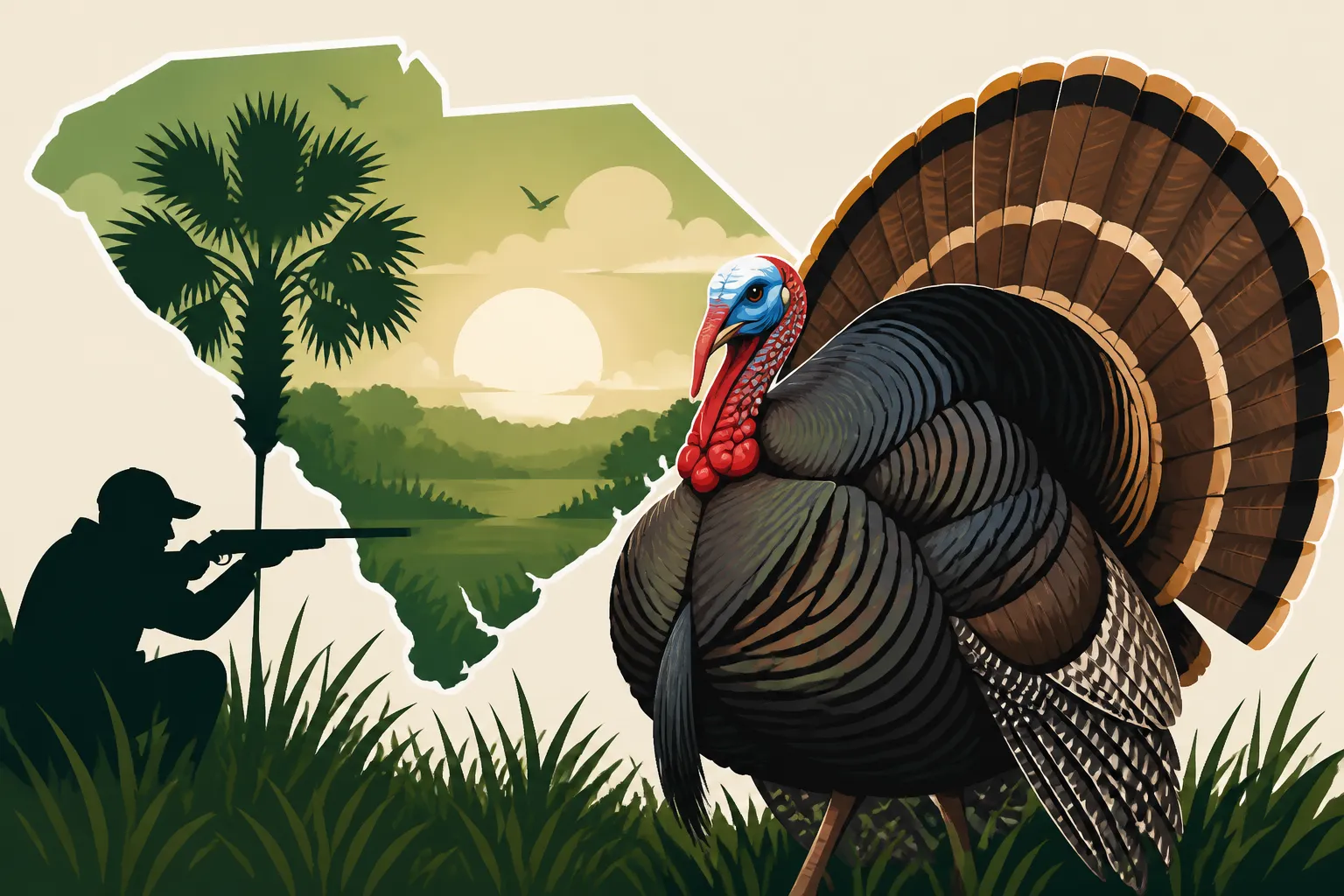
That first Saturday in April, when the South Carolina statewide turkey season finally opens, can feel like a fever dream for us turkey hunters. You’ve waited all year, pouring over maps, listening to gobblers sound off, dreaming of that thunderous morning serenade, only to find yourself sharing the woods with what feels like half the state. It’s a real challenge, blending the excitement of opening day with the reality of increased pressure. This guide is all about helping you navigate those initial, often crowded, days of the South Carolina spring turkey season, giving you the best chance to tag a longbeard when it counts most.
Understanding the Statewide Turkey Opener
The anticipation for the statewide turkey opener in South Carolina is palpable. For many, it's the culmination of months of scouting and yearning for those crisp spring mornings. But with that excitement comes the undeniable reality of more hunters in the woods, especially on public lands.
The Allure and the Crowds
There’s nothing quite like the sound of a gobbler hammering on the roost as the first hint of light streaks across the sky. It’s a primal call that resonates deep within every turkey hunter. That’s why the statewide opener in April is such a magnet. Everyone wants to be out there for that first big morning. And honestly, who can blame them? After a long winter, the opportunity to chase these wary birds is something truly special. But this shared passion also means shared space, and sometimes, that can lead to frustration. You might have a prime spot picked out, only to find another hunter's truck parked closer than you'd like. It’s a common scenario, and it’s why understanding how to adapt to crowded conditions is just as important as knowing how to call a bird. The allure of that first gobble is strong, and it draws us all, making smart strategies for dealing with the crowds absolutely essential.
The initial few days of the season often see the highest concentration of hunters, particularly on readily accessible public land or smaller private tracts that are leased or shared. You’ll hear more calls, more footsteps, and sometimes, even other shots. This isn't to discourage you, but to prepare you for what might be a different experience than hunting later in the season when the crowds thin out. It can be disheartening to work a bird only to have another hunter slip in, or to have your setup busted by someone unknowingly walking your way. But it’s part of the opening day experience here in South Carolina, and savvy hunters learn to factor this into their plans. Knowing that others will be out there helps you strategize and often pushes you to go that extra mile to find less pressured birds.
Key Dates and Regulations
Understanding the specific dates and regulations for hunting turkeys in South Carolina is crucial for a successful and legal hunt. The statewide turkey season typically opens on April 1st for all game zones, running through May 5th. However, it's always best to double-check the current year's regulations with the South Carolina Department of Natural Resources (SCDNR) as dates and rules can change. You can find all the details you need on the South Carolina Spring Turkey Season Rules page. One critical aspect to remember is that you'll need a valid South Carolina hunting license and a big game permit. If you're planning to hunt on Wildlife Management Areas (WMAs), a WMA permit is also required. You can learn more about these requirements on the South Carolina Resident Hunting License Options page.
A significant change in recent years, starting in 2025, is the statewide ban on harvesting jakes. This is a crucial regulation to be aware of, as it impacts how you identify and select your birds. The goal behind this is to help boost the struggling turkey population by allowing more juvenile birds to mature and contribute to breeding efforts. The South Carolina's Statewide Turkey Bag Limit is typically two gobblers per season, but always verify this each year. Additionally, there are specific rules regarding legal hunting hours, typically from 30 minutes before sunrise until noon on private lands. WMA regulations can sometimes differ, so be sure to consult the South Carolina WMA Turkey Rules for any public land you plan to hunt. Always carry proof of your license and permits, and be prepared to report your harvest promptly using the Game Check system.
Essential Scouting for Success
When that statewide turkey opener rolls around, the birds aren’t just going to walk into your lap. You've got to put in the legwork, especially if you're trying to outsmart those other hunters and the wary gobblers they're pursuing. Scouting is your absolute secret weapon for opening day success.
Pre-Season Reconnaissance
You can’t just show up on opening day and expect to find turkeys, especially not unpressured ones. Pre-season reconnaissance is paramount. This means getting out in the woods in the weeks leading up to April 1st, well before any shooting starts. Your primary goal is to locate active turkey areas, focusing on places that offer security, food, and water. Don't just drive the forest roads; get out and walk. Look for tracks in soft soil, dusting bowls, and droppings. A great tool for this is a mapping app like GoHunt, which can help you identify potential roosting areas, open fields, and thick cover. Pay close attention to terrain features like creek bottoms, ridge lines, and thickets that might act as travel corridors.
During your scouting trips, use locator calls like owl hoots or crow calls early in the morning or late in the evening to try and pinpoint roosted birds. This is incredibly valuable information. If you can consistently get a bird to gobble from a specific ridge or swamp edge, you’ve hit the jackpot. Another thing to consider is the subtle sign you might not immediately notice. Are there scratch marks under oak trees where turkeys have been foraging for acorns? Are there distinct paths worn through the underbrush? These are all clues that turkeys are frequenting the area. Also, consider areas that might be less accessible to other hunters. Is there a long walk involved? A creek crossing? These natural barriers can often lead to less pressured birds, making your effort worthwhile come opening day.
Locating Roosts and Travel Routes
Pinpointing where turkeys roost and understanding their preferred travel routes are the holy grail of early season turkey hunting. Turkeys are creatures of habit, especially in the mornings, and knowing where they start their day gives you a massive advantage. Focus your evening and early morning scouting efforts on finding those roost trees. Turkeys often favor tall, sturdy trees with good visibility, especially those near water sources or along ridgelines. Pines are common roost trees, but large hardwoods can also be used. Once you've heard a bird gobble from the roost, try to triangulate its position without getting too close and disturbing it. Use a good mapping app to mark the exact location.
Once a bird pitches down from the roost, it almost always has a plan. They'll often head directly to a strutting zone, an open field, or a feeding area. Your goal is to identify these likely travel routes and setup points. Look for natural funnels, like a narrow strip of woods between two fields, or a saddle on a ridge. These are prime ambush locations. By scouting these areas diligently, you can anticipate their movements and set up accordingly. This often involves finding a good tree to sit against for concealment, as discussed in Setting Up Against a Big Oak. Remember, opening day often means birds that might be a little more vocal on the roost but also a lot warier once they hit the ground, especially if they’ve been pressured. Knowing their escape routes and backup plans is just as important as knowing where they'll start.
Effective Tactics for Opening Day
Opening day requires a blend of aggression and patience. The birds are fresh, often vocal, but they're also wise to the game, and with more hunters afield, things can get tricky fast.
Roost Hunting Strategies
The classic opening day strategy is to try and Calling a South Carolina Gobbler Off the Roost. This means getting to your chosen spot well before first light, often an hour or more before sunrise. The goal is to be set up, quiet, and camouflaged, ready for that first gobble. Position yourself as close as you dare to the roost tree, but always stay out of their sightline. Ideally, you want to be within 100-150 yards, allowing you to use soft tree calls or clucks to gauge their interest without overdoing it. A subtle fly-down cackle as they pitch off the limb can sometimes entice them your way.
The real trick is knowing when to call and when to stay silent. On opening day, with multiple hunters often in the same general area, overcalling can be a huge mistake. Less is often more. Let the bird gobble naturally, and respond sparingly, just enough to keep him interested. If he gobbles hard at everything, he might be more likely to come in. If he’s only gobbling weakly, he might be listening for a hen to come to him. Once he pitches down, the game changes. You need to be ready for him to come in quiet, or to circle wide. Patience is key at this stage. You’ve put in the work to get close to the roost, now you need to let the scenario play out, anticipating his next move.
Run-and-Gun Approaches
While roost hunting is great if you're on a hot bird, sometimes opening day calls for a more dynamic approach, especially if your initial spot is a bust or you’re dealing with other hunters. The "run-and-gun" method is perfect for covering more ground and finding those less pressured, or simply more cooperative, birds. This involves moving deliberately through timber, stopping periodically to call and listen for a response. Don’t just march through the woods; instead, move from strategic point to strategic point, like a ridge saddle, a creek crossing, or the edge of a clearcut, setting up briefly to call. You can learn more about this approach by reading Run-and-Gun Turkey Tactics on Public Land.
When you're run-and-gunning, you're not trying to call a bird from a mile away. You're trying to locate a gobbler that might be strutting quietly, or one that's been bumped off his primary strutting area. Use loud, excited calls to provoke a shock gobble, then quickly move into position if you get a response. This method demands confidence in your calling and a good understanding of terrain. Be mindful of your surroundings, always expecting a bird to appear from an unexpected direction. This can be particularly effective later in the morning after the initial roost activity has died down, and other hunters might have gone home. It allows you to find those "leftover" birds that are still looking for company.
Decoy Setups for Pressured Birds
Decoys can be a game-changer on opening day, but you need to use them strategically, especially when birds might be feeling the pressure. For early season in South Carolina, a single hen decoy, or a hen and jake combination, often works best. The goal is to present a realistic, inviting visual that draws the gobbler into shotgun range. Place your decoy setup where it’s highly visible from the direction you expect the turkey to approach, ideally about 15-20 yards from your hidden position. Make sure your backdrop is solid, so the approaching gobbler focuses on the decoy, not on you. Check out Decoy Placement for Pressured South Carolina Birds for more in-depth advice on this.
On pressured public land, you might consider going with a more subtle decoy setup. Sometimes, just a lone feeding hen is enough to seal the deal, signaling safety and availability without being too aggressive. Avoid overly aggressive jake or full-strut gobbler decoys if you suspect other hunters have been hammering the area, as mature gobblers might become shy of competition. Be aware of your surroundings; while decoys can bring birds in, they can also draw the attention of other hunters, so always be mindful of safety and ensure you're in a clear line of sight of your target. The key is realism and subtle invitation, rather than an aggressive challenge, to draw in those opening day longbeards.
Dealing with Hunting Pressure and Competition
Let's face it: opening day means more company in the woods. It's not always ideal, but it's the reality of a popular spring season in South Carolina. Learning to deal with this pressure is as crucial as mastering your calls.
Finding Secluded Spots
When the woods are buzzing with other hunters, finding a secluded spot becomes a top priority. This often means going where others aren't willing to go. Look at your maps and identify areas that require a longer walk, a creek crossing, or navigating particularly thick brush. These are the places where many hunters will shy away, leaving the birds (and often the quiet) to you. A good mapping app like GoHunt is invaluable here for identifying potential bottlenecks, impenetrable thickets, and remote corners of a WMA. Sometimes, it's not about finding entirely new ground, but finding a slightly harder-to-reach section of an otherwise popular area.
Don't be afraid to put in the miles. While everyone else is setting up 100 yards off the road, a 30-minute hike into a less accessible bottomland or up a steep ridge can put you on unpressured birds. Also, consider the time of day. While mornings are prime, many hunters leave by mid-morning. The afternoon, though often quieter for gobbling, can provide excellent opportunities to slip into spots that were previously occupied. Remember, turkeys aren't confined to easy-access areas. They'll use deep cover and remote sections to escape pressure, so push beyond the obvious spots.
Adapting to Quiet Gobblers
Opening day gobblers can sometimes be incredibly vocal on the roost, but once their feet hit the ground, they can clam up completely, especially if they’ve been worked by multiple hunters. This can be incredibly frustrating. You hear them hammering from the limb, pitch down, and then… silence. This is when you need to adapt. Instead of relying solely on auditory cues, start focusing on visual hunting and subtle movements. If a bird goes quiet, he hasn’t necessarily left; he might be strutting silently, listening intently, or just wary.
This is where your scouting pays off. If you know their typical strutting zones or feeding areas, move slowly and deliberately towards those locations, calling sparingly with soft tree yelps, clucks, and purrs. The goal is to sound like a contented hen, subtly inviting, not aggressively demanding. Fan out a few soft calls every 10-15 minutes, then listen for faint responses or the rustle of leaves. Sometimes, a visual is what it takes – that flash of red, white, and blue. Being patient, staying still, and letting the woods speak to you can often lead to a quiet gobbler suddenly appearing out of the timber.
Gear Considerations for Early Season
Having the right gear for the South Carolina turkey opener can make a huge difference, especially with the state’s often unpredictable early spring weather.
Shotguns and Ammunition
When it comes to shotguns for South Carolina turkeys, reliability and effective range are paramount. Most hunters opt for a 12-gauge, though 20-gauges have become incredibly popular, especially with modern tungsten super shot (TSS) ammunition. A good turkey shotgun will have a tight choke – typically an extra-full or even a super-full choke – to ensure a dense pattern at longer ranges. Patterning your shotgun with your chosen ammunition before the season is non-negotiable. You need to know exactly how your gun performs at 20, 30, and 40 yards.
For ammunition, TSS loads have revolutionized turkey hunting, offering incredible density and range, making them a top choice for many. Traditional lead loads, like copper-plated bismuth or heavy-shot, are still effective and widely used. Regardless of your choice, make sure you have enough shells to pattern your gun and then some for the season. Also, consider the specific rules for public lands; some WMAs might have restrictions on certain shot types or gauges, so always check the South Carolina WMA Turkey Rules before heading out. The key is to have a combination that gives you confidence in placing lethal shots out to ethical turkey ranges.
Calls and Decoys
Your calling arsenal is crucial for opening day. You'll want a variety of calls to mimic different turkey vocalizations and to adapt to different scenarios. A good slate or pot call is versatile for both soft clucks and louder yelps, especially in the humid South Carolina air. A mouth call (diaphragm call) is invaluable because it allows for hands-free calling when a gobbler is close, letting you keep your gun mounted. And don’t forget a good box call for those loud, attention-grabbing yelps that can reach out across a wide field or dense timber. Practice, practice, practice with all of them, so your calls sound natural and enticing.
For decoys, less is often more on opening day, especially on pressured ground. A single hen decoy, or a pair of a hen and a jake, can be highly effective. The jake decoy can sometimes draw in an aggressive gobbler looking to assert dominance. The goal is realism. Choose lightweight, portable decoys that are easy to set up and take down, as you might be moving frequently with a Run-and-Gun Turkey Tactics on Public Land approach. Remember to position your decoys carefully, typically 15-20 yards from your hidden position, facing away from you, to draw the gobbler into that perfect shot angle. Always be mindful of safety, especially when using realistic decoys in areas with other hunters.
| Gear Category | Recommended Item | Key Considerations for SC Opener |
|---|---|---|
| Firearm | 12 or 20 Gauge Shotgun | Reliable, patterned with chosen ammo, appropriate choke (extra-full/super-full). |
| Ammunition | TSS, Copper-plated Bismuth, or Lead | Dense patterns, ethical range, check WMA restrictions. |
| Calls | Pot Call, Mouth Call, Box Call | Versatility for various vocalizations, hands-free options, practice realism. |
| Decoys | Single Hen or Hen/Jake Combo | Realism, lightweight, portable, strategic placement for shot angles. |
| Clothing | Full Camouflage, Layers | Blend in, breathable, moisture-wicking, snake boots (if in swampy areas). |
| Optics | Binoculars (8x or 10x) | Scouting, identifying movement, confirming gobblers vs. jakes. |
| Navigation | GoHunt, GPS, Compass | Locating roosts, travel routes, finding secluded spots, staying found. |
| Safety | Hunter Orange (when walking out), First Aid Kit | Visibility when not actively hunting, emergency preparedness. |
| Comfort | Seat Pad/Vest, Water, Snacks, Bug Spray | Long sits, hydration, nourishment, dealing with early season insects. |
After the Shot: Reporting and Care
Harvesting a wild turkey in South Carolina is a fantastic accomplishment, but your responsibilities don't end when the bird hits the ground. Proper reporting and meat care are crucial.
Game Check Requirements
South Carolina has specific requirements for reporting your turkey harvest, and it’s a critical step that every hunter must follow. After you’ve successfully harvested a gobbler, you are required to report it through the SCDNR Game Check system. This must be done on the same day of the harvest, and before the bird is processed, transported across state lines, or transferred to another person. You can find detailed instructions on South Carolina Turkey Reporting Through Game Check. This system collects vital data that helps wildlife biologists manage the turkey population effectively, ensuring future hunting opportunities.
The Game Check system is typically accessed online through the Go Outdoors SC website or via a dedicated mobile app. You'll need your hunting license number and details about the bird, such as the county of harvest and whether it was an adult gobbler. Failing to report your harvest is a violation and can result in penalties, so always make sure you're compliant. It’s a small, quick step that plays a big role in conservation, so make it a habit every time you tag a bird.
Post-Harvest Care in Warm Weather
Early April in South Carolina can bring unexpectedly warm temperatures, and proper post-harvest care is essential to ensure your hard-earned wild turkey meat is of the highest quality. As soon as you retrieve your bird, the first priority is to cool it down. Field dressing the bird promptly by removing the entrails will help reduce spoilage, especially if you have a long walk back to your vehicle. Some hunters also opt to breast out the bird in the field, further reducing the bulk and allowing for quicker cooling.
Once you’re back at your vehicle, get the bird on ice as quickly as possible. A large cooler packed with ice is indispensable. If you're transporting the whole bird, place ice inside the body cavity and around the exterior. If you’ve breasted it out, place the meat directly on ice in zip-top bags to prevent it from getting waterlogged. The faster you can get that core temperature down, the better the meat quality will be. Avoid leaving a freshly harvested turkey in the sun or in a warm vehicle for any extended period. Take pride not only in the harvest but also in preparing that delicious wild game for your table.
Disclaimer
Please note: Hunting regulations and seasons can change. Always consult the official South Carolina Department of Natural Resources (SCDNR) website or their current year's hunting guide for the most up-to-date and accurate information before planning any hunt.