Hanging a Stand on a Sumter Forest Ridge
The dense forests of Sumter National Forest, with their rolling topography and mature timber, can be incredibly intimidating for any deer hunter. Trying to pick out the perfect spot to hang a treestand on one of those sprawling ridges, hoping to intersect a traveling buck, feels like finding a needle in a haystack. But with the right approach and a keen eye for detail, you can transform a confusing landscape into a strategic hunting advantage. This guide will walk you through the precise steps and considerations for effectively hanging a stand on a Sumter Forest ridge, helping you maximize your chances of success.
Unlocking Sumter's Ridges: Pre-Season Scouting for Stand Placement
The success of any treestand hunt begins long before you ever hoist your stand up a tree. On a Sumter Forest ridge, where deer patterns can be subtle and cover is abundant, thorough pre-season scouting is not just helpful—it's absolutely essential. You're not just looking for any ridge; you're looking for the right ridge, the one that deer are consistently using.
Identifying Productive Ridges and Topography
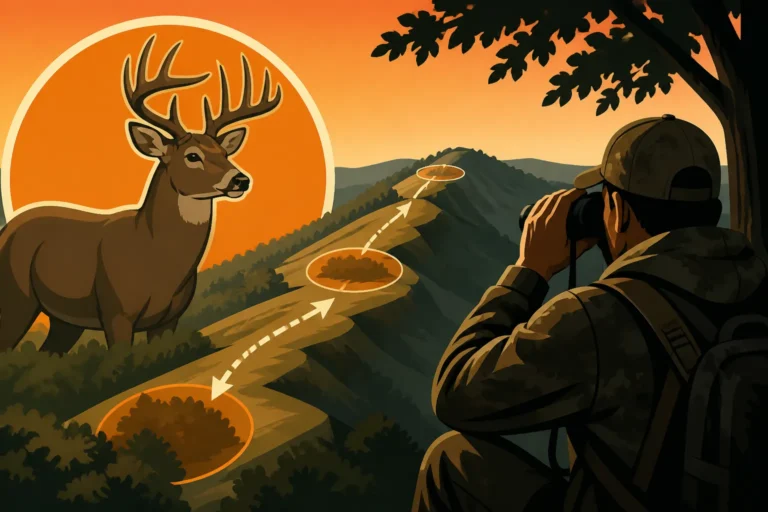
Sumter National Forest is known for its diverse terrain, and the ridges here are no exception. They can range from subtle rises to dramatic, steep inclines. The key is to find ridges that offer deer a combination of security cover, travel efficiency, and access to food and water. Start by poring over topographical maps, or better yet, a reliable mapping app like GoHunt. Look for saddles, pinch points, or prominent fingers extending off a main ridge. These are natural funnels where deer movement is often concentrated. A saddle, for instance, connecting two larger ridges, acts as a natural highway, channeling deer through a predictable narrow corridor. Similarly, a finger ridge that drops down into a creek bottom can be an excellent travel route for deer moving between bedding areas on the ridge and water or feeding areas below.
When you hit the woods, confirm what your maps suggested. Walk these ridge lines, paying attention to how the topography changes. Is one side steeper and rockier, offering better thermal cover? Does another side gently slope into a creek, providing easier access to water? Observe the prevailing wind patterns relative to these features. A productive ridge isn't just a high spot; it's a strategic pathway that deer utilize for safety and efficiency. Learning to identify these subtle nuances is a skill that comes with time afield, but with tools like GoHunt, you can start to "read" the terrain even before your boots hit the ground, identifying potential hotspots for Reading a Ridge for Upstate Deer.
Reading Deer Sign and Travel Corridors
Once you've identified a promising ridge, it's time to become a detective. Deer sign tells a story, and on a Sumter Forest ridge, that story often revolves around movement. Look for rub lines, which indicate a buck's travel path and often his preferred route during the rut. Scrapes, especially large, active ones, are clear indicators of a buck's presence and his communication with does. However, don't just focus on the obvious. Pay close attention to subtle deer trails—worn paths through the undergrowth. These are critical travel corridors. Are they leading to a specific food source, like a white oak flat at the base of the ridge, or perhaps connecting two bedding areas? During your Scouting South Carolina Public Land Before Season, try to discern if these trails are main thoroughfares or merely secondary paths.
The best stand locations often sit overlooking these main travel routes, especially where they intersect or narrow. Imagine a trail running along the top of a ridge, then dipping down into a small saddle before climbing the next rise. This saddle is a prime ambush point. You want to place your stand where you can intercept deer moving naturally, not where you're forcing them. Consider how deer will approach and depart these areas. Are they skirting thickets, crossing old logging roads, or paralleling a creek? The more you understand their movements, the better you can position yourself. Don't forget to look for historical sign too—old rubs or scrapes can indicate areas of consistent deer activity year after year, offering clues about where to expect action even if current sign is sparse.
The Role of Food and Water Sources
While ridges are primarily travel corridors and bedding areas, their proximity to food and water sources significantly influences deer movement. In Sumter National Forest, this often means hard mast like acorns or soft mast like persimmons, as well as the numerous creeks and drainages. A ridge that parallels a creek or has a small spring branch trickling off its side will see more deer traffic, especially during dry spells. Deer need to drink, and they'll often travel along ridge lines to access these vital water sources.
Similarly, an oak flat or a patch of wild grapes nestled below or along a ridge can be a magnetic food source. Your stand placement should allow you to intercept deer moving from their bedding areas on the ridge down to these feeding grounds in the morning or evening. Conversely, if a ridge offers abundant natural browse, deer might be feeding directly on the ridge itself. You need to identify what food sources are available and when they're most attractive to deer. This might mean scouting for acorns in late summer and early fall, or looking for specific browse species that deer prefer in different seasons. A great setup often takes advantage of deer moving between two of these critical resources: a bedding area on the ridge and a water source or food plot nearby.
Strategic Stand Hanging: Safety and Stealth in Sumter Forest
Once you've done your homework and identified a promising location on a Sumter Forest ridge, the real work begins: hanging your treestand. This isn't just about getting it up there; it's about doing it safely, effectively, and with minimal disturbance to the deer you're hoping to hunt.
Choosing the Right Tree and Stand Type
Selecting the right tree is just as important as selecting the right ridge. You need a tree that offers good concealment, a stable platform for your stand, and allows for effective shooting lanes. For the types of mature timber often found in Sumter National Forest, large, straight pines or oaks are common choices. Look for trees that are healthy, without dead limbs or signs of rot, and are large enough to safely support your weight and the stand. Consider trees that are slightly larger in diameter at stand height, as this can offer more stability and better concealment behind the trunk.
The type of stand you choose also plays a critical role. Climbing stands are popular for their mobility and ease of setup, especially if you plan to move your stand frequently. However, they require a relatively straight, limb-free trunk. Hang-on stands offer more versatility in tree choice, allowing you to set up in limby trees or those with an irregular trunk, but they require climbing sticks or sections of a ladder. For hunting on public land like Sumter, portability is often paramount. Many hunters opt for lightweight hang-on stands coupled with lightweight climbing sticks for maximum flexibility. Regardless of your choice, make sure it's a stand you're comfortable and proficient with. When scouting, especially with a tool like GoHunt that lets you mark potential spots, always mark a backup tree or two in case your primary choice doesn't pan out during the actual setup. This foresight can save you a lot of time and frustration.
Prioritizing Safety During Installation
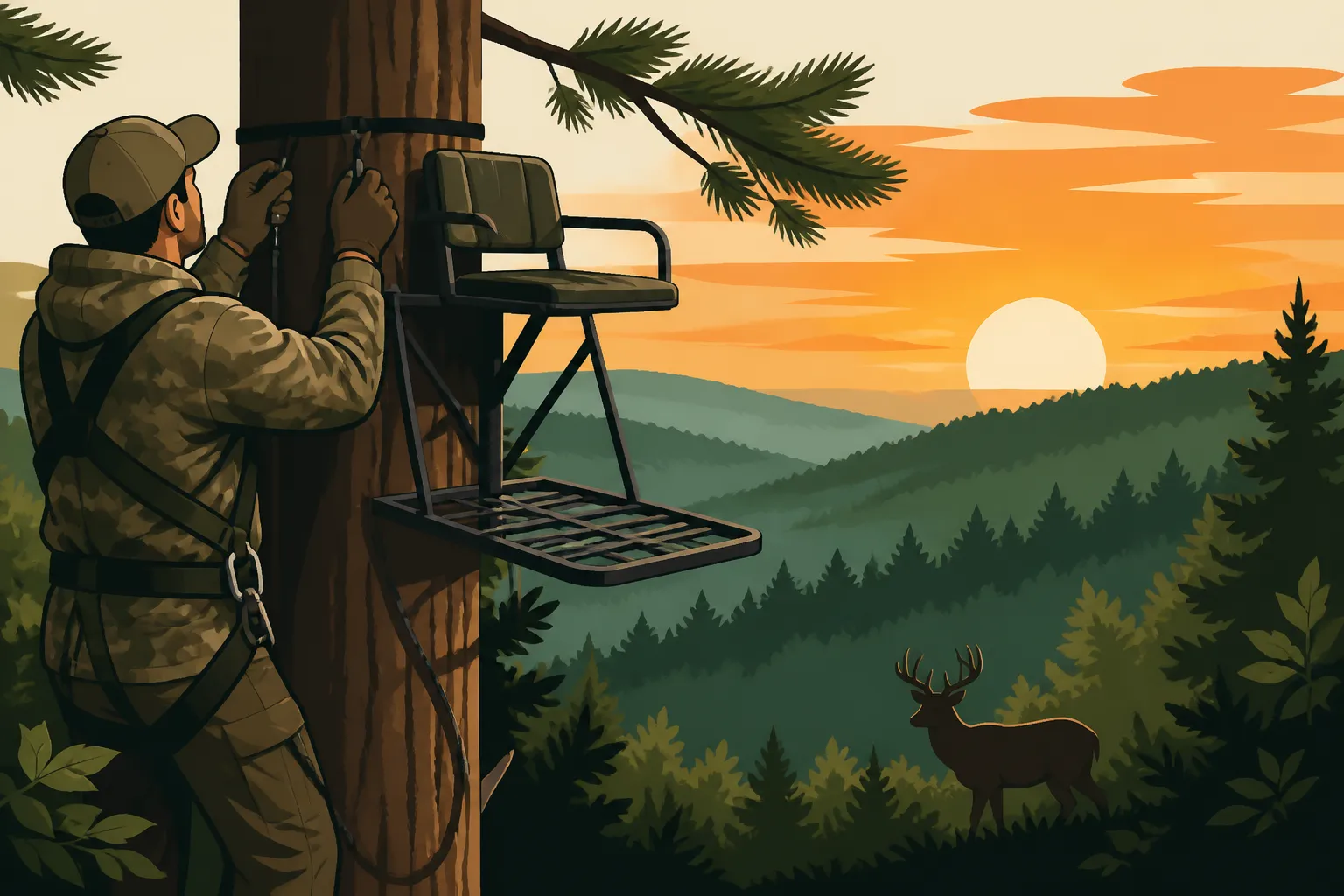
This cannot be stressed enough: safety first, always. Hanging a treestand, especially in uneven terrain like a ridge, carries inherent risks. Never, ever attempt to hang a stand without a full-body safety harness. You should be attached to the tree from the moment your feet leave the ground until you're safely back down. This means using a lineman's belt during installation to secure yourself while you work with both hands. Before you even start climbing, clear any debris from the base of the tree to ensure a safe landing area should anything go wrong.
When ascending with climbing sticks, ensure each stick is securely fastened to the tree and tested for stability before putting your full weight on it. When raising the stand itself, use a haul rope. Never try to carry the stand up with you. Tie it securely to your rope and hoist it up after you've reached your desired height. Take your time, don't rush, and if you're feeling fatigued, come down and take a break. It's better to take longer to set up safely than to risk a serious injury. Many hunting incidents occur during stand installation or removal. If you're new to this, practice setting up your stand in your backyard first. Familiarity with your equipment will greatly increase your safety and efficiency in the woods. Always inspect your stand and straps for wear and tear before each season. For more detailed information, check out our guide on Treestand Safety Gear for Wet Ground and Safety Harnesses and Lifelines.
Minimizing Your Impact and Scent Signature
Deer in Sumter National Forest are often pressured, especially on public land. Every step you take, every branch you break, and every bit of human scent you leave behind can alert deer to your presence. The goal when hanging a stand is to be as stealthy and unobtrusive as possible. Plan your entry and exit routes to the stand carefully. If possible, use existing deer trails or old logging roads for part of the approach, but diverge before reaching your stand site to avoid over-pressuring the immediate area. Try to minimize the amount of cutting you do for shooting lanes during the installation. Do just enough to get a clear shot, as excessive cutting creates obvious human disturbance and can change the natural appearance of the area.
Wear clean clothing that has been washed in scent-eliminating detergent, and use rubber boots to minimize ground scent. Handle your stand and climbing sticks with gloves to reduce human odor transfer. If you're using a power drill for any reason (though most public land stands are hand-tightened), be mindful of the noise. Try to hang your stand during the middle of the day, when deer activity is typically lower, and several weeks before the season opens if possible. This gives the area time to "cool down" and for any residual scent to dissipate. The less impact you make during setup, the more likely deer are to return to their normal patterns around your chosen ridge.
Hunting from the Ridge: Maximizing Your Setup's Effectiveness
A perfectly hung stand is only as good as the strategy you employ once you're in it. Hunting from a ridge in Sumter National Forest requires a deep understanding of natural elements like wind and thermals, as well as a disciplined approach to entry, exit, and shot placement.
Understanding Wind, Thermals, and Entry/Exit Routes
Wind and thermals are arguably the most critical factors when hunting deer, especially from an elevated position on a ridge. On flat ground, wind is usually predictable, but on a ridge, thermals come into play, especially at dawn and dusk. As the sun rises and warms the ground, thermals will typically start to rise, carrying your scent up the ridge. Conversely, as the sun sets and the air cools, thermals will typically drop, carrying your scent down the ridge into the low-lying areas. This means a stand location that's perfect in the evening might be a disaster in the morning, or vice-versa.
Always check the wind direction using a wind checker. Don't just rely on the forecast; feel the air currents. Plan your entry route to and from your stand so that the wind is never blowing your scent into the area where you expect deer to approach. This might mean taking a longer, roundabout path to get to your stand without crossing a key travel corridor. Similarly, your exit should be planned to avoid spooking any deer that might be feeding or bedding nearby. Sometimes, waiting a little longer after dark for the woods to settle can save a hunt for the next morning. Mastering Wind and Thermals on an Upstate Ridge is a game-changer for ridge hunting.
| Time of Day | Thermal Movement | Ideal Stand Placement Relative to Deer Travel |
|---|---|---|
| Morning | Rising (up the ridge) | Lower on the ridge, catching deer moving up from bottoms, scent blowing up and away. |
| Mid-day | Variable, less pronounced | Higher on the ridge, depending on wind direction, for cruising bucks. |
| Evening | Falling (down the ridge) | Higher on the ridge, catching deer moving down to feed, scent blowing down and away. |
Optimizing Shooting Lanes and Concealment
When you hung your stand, you likely cleared some shooting lanes. Now it's time to refine them. From your elevated position, identify all possible shot angles and ranges. Use a rangefinder to mark distances to key landmarks like prominent trees, fallen logs, or bends in a trail. This prevents "buck fever" guessing when the moment of truth arrives. You want enough clear space to ethically take a shot, but not so much that you're exposed. Think about angles—a deer quartering away offers an ideal shot opportunity, while a direct frontal shot is often discouraged.
Concealment is equally important. Even with camouflage, an exposed silhouette against the sky can be easily spotted by wary deer. Try to choose a tree that has some natural cover, like a cluster of branches above and around your stand. Break up your outline by placing your stand in front of some thicker foliage or a dual-trunk tree. Don't forget to consider the sun's position. You want the sun at your back, if possible, especially during morning or evening hunts, to keep deer from silhouetting you and to give you a clearer view. You can also utilize natural features to your advantage; for example, if you're hunting along a distinct ridge edge, the drop-off can hide your outline from deer approaching from below.
Adapting to Changing Conditions
Sumter National Forest weather can be fickle. What starts as a crisp morning can quickly turn into a warm, humid afternoon, or a sudden cold front can blow through. Successful ridge hunting means being ready to adapt. A change in weather often means a change in deer behavior. A cold front, for instance, often invigorates deer, increasing their movement. A sudden rain shower might push deer to bed down temporarily but often leads to increased activity once the rain stops.
Keep an eye on the long-term forecast and understand how weather patterns influence deer. If a heavy acorn crop suddenly drops in a different area, deer might temporarily shift their primary feeding patterns. While your ridge stand might still be a travel corridor, you might need to adjust your expectations or even your stand location. This is where tools like GoHunt, with its weather overlays and ability to quickly scout new areas, can be incredibly valuable. Be prepared to move your stand if conditions dictate. Sometimes the best stand location for early season is not the best for the rut, or for Hunting After a Poor Acorn Year. Flexibility and an understanding of deer behavior are your greatest assets when hunting these challenging, yet rewarding, Sumter Forest ridges.
Disclaimer
Hunting is an inherently dangerous activity. Always prioritize safety, understand and follow all South Carolina Department of Natural Resources (SCDNR) regulations, and ensure you have the proper licenses and permits before heading afield. The information provided in this guide is for informational purposes only and should not replace professional safety training or expert advice.