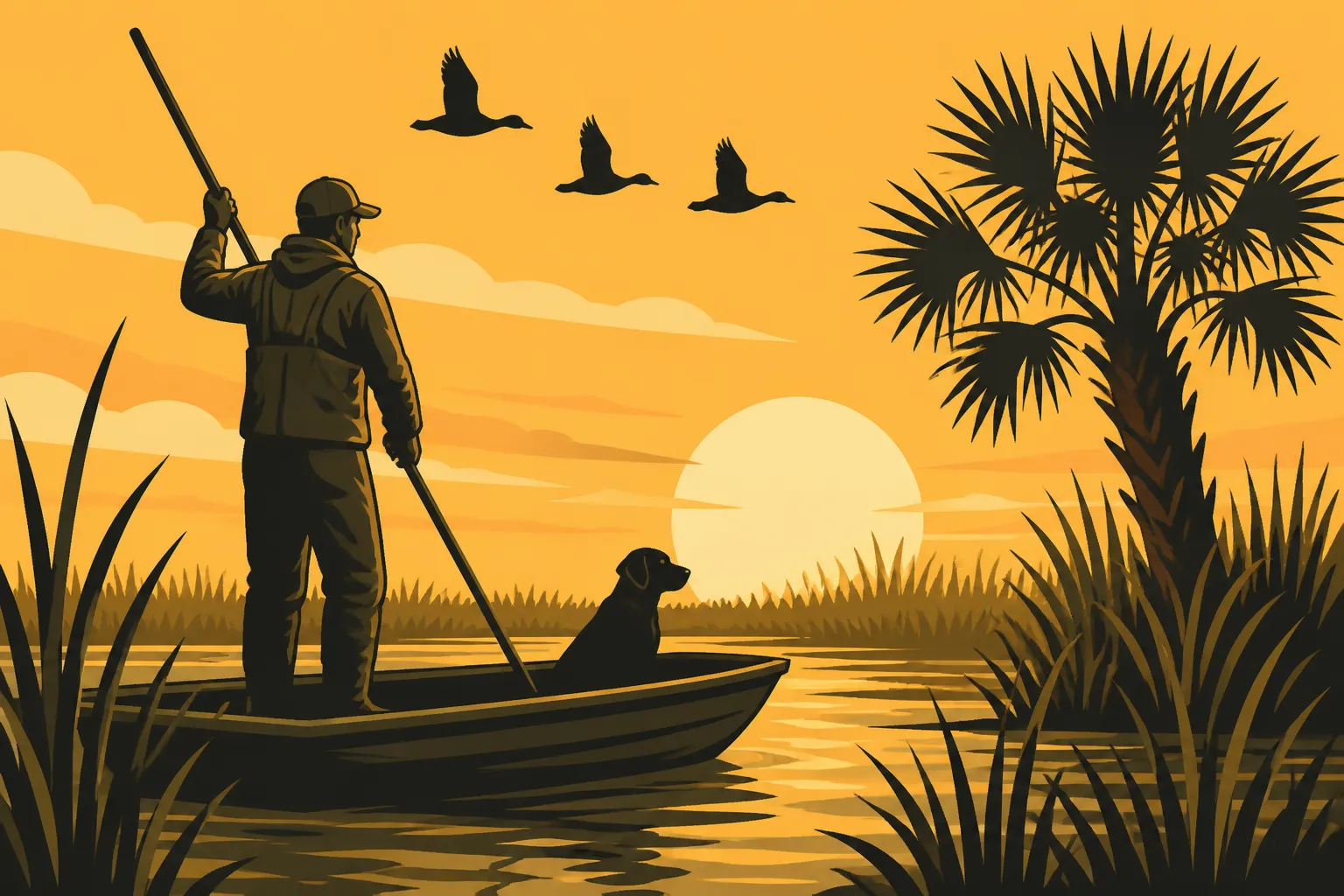
Marsh Boats and Push Poles
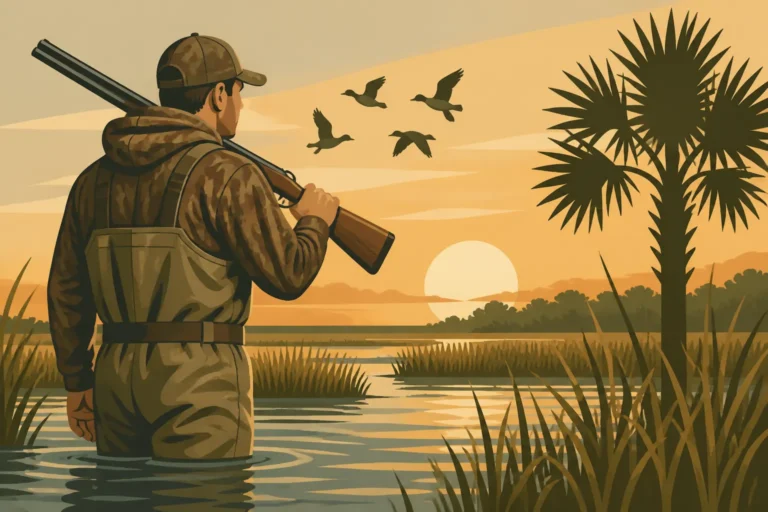
There's nothing quite like the feeling of watching a flock of teal bank hard and commit to your spread, but getting to those honey holes in South Carolina's vast, shallow waterfowl country can be a real headache. Forget about roaring in with a big outboard or slogging through waist-deep mud—those methods either spook every bird for miles or leave you exhausted and stuck. This guide is all about equipping you with the knowledge to navigate those tricky, vegetation-choked waters silently and efficiently using marsh boats and push poles, opening up a world of unpressured hunting opportunities.
The Challenge of South Carolina's Waterfowl Habitat
South Carolina's coast and river systems are a waterfowl hunter's paradise, but they certainly don't make it easy to access. From the sprawling saltmarsh estuaries to the flooded timber and cypress swamps further inland, the terrain is often a frustrating mix of shallow water, thick vegetation, and soft mud. It's a landscape that demands specialized tools and tactics, and trying to force a conventional boat into these areas is a recipe for frustration and failure.
Navigating Shallow Water and Thick Vegetation
Imagine trying to motor through a labyrinth of spartina grass in a traditional V-hull boat. You wouldn't get far before the prop is fouled, or worse, you're high and dry on a mud flat as the tide drops. This is the reality of hunting many of South Carolina's prime waterfowl spots. We're talking about vast expanses of water that might only be a few inches deep at high tide, interspersed with deeper channels that are often obscured by reeds, cypress knees, or submerged logs. The bottom can vary wildly too, from firm sand to incredibly soft, suction-cup mud that will swallow your waders in a heartbeat.
Conventional boats with deep V-hulls or even standard jon boats simply draw too much water and get tangled too easily. Outboard motors, while powerful, are notoriously loud and their props are vulnerable to damage from oyster rakes, stumps, and dense aquatic vegetation. Even trying to wade through some of these areas is often impossible; the mud is too deep, the currents too strong, or the distance too great. It's these specific challenges that make marsh boats and push poles not just convenient, but absolutely essential for successful and enjoyable waterfowl hunting here in the Lowcountry and beyond.
Accessing Remote and Unpressured Areas
One of the biggest advantages of employing a marsh boat and push pole system is the ability to sneak into those forgotten corners where other hunters simply can't, or won't, go. Think about the pressure on public lands, especially during Opening Weekend Crowds on the Coastal Zones. Ducks and geese quickly learn to avoid easily accessible areas, becoming wary and changing their patterns. The birds will often congregate in vast, shallow impoundments, hidden pockets within the Francis Marion National Forest Hunting or secluded tidal creeks that are just too difficult for most hunters to reach.
By using a marsh boat and a push pole, you can silently glide through these skinny waters, around bends in creeks, and into shallow ponds that might only be navigable at certain tides. This quiet approach not only avoids spooking birds on your way in but also allows you to set up in areas where ducks are more likely to be relaxed and receptive to your calls and decoys. It's about getting off the beaten path, away from the skybusters and the noisy airboats, and finding those truly wild experiences that make Waterfowl Hunting South Carolina's Coast so rewarding. These remote areas often hold undisturbed feed and provide critical loafing zones, making them magnets for birds looking to escape pressure.
Marsh Boats: Your Low-Profile Watercraft Solution
When you're serious about hunting South Carolina's shallow-water fowl, a marsh boat isn't just a luxury; it's a necessity. These specialized vessels are designed from the keel up to handle the unique challenges of the state's diverse aquatic habitats, offering unparalleled access and stealth compared to more conventional boats.
Types of Marsh Boats and Their Features
Marsh boats come in various forms, each designed with specific conditions in mind, but all share a common goal: shallow-water capability and a low profile.
- Modified Jon Boats: Many hunters start with a standard aluminum jon boat and modify it for marsh use. This often involves adding a false floor to raise the deck, extensive camouflage painting, and sometimes even a specialized "mud motor" to power through shallow, muddy conditions. While they are more robust and can carry more gear, they can still be a bit noisy and may draw more water than purpose-built marsh craft. They are a good all-around option for diverse water, from larger creeks to flooded fields.
- Specialized Shallow-Water Skiffs: These boats are often custom-built or designed with extremely shallow drafts, sometimes only a few inches when unladen. They typically feature wide, flat bottoms for stability and are often made from lightweight materials like fiberglass or composite. Many have poling platforms, making it easier for the guide or hunter to stand and push the boat with precision, especially useful when navigating intricate channels or stalking birds.
- Layout Boats: Primarily used for open-water situations or very large, shallow impoundments, layout boats are designed for hunters to lie down almost completely submerged, offering incredible concealment. While less versatile for navigating dense vegetation, they excel where ducks are flying high over large bodies of water. You might see these in the expansive rice fields or certain areas of the Hunting the ACE Basin for Waterfowl.
- Pirogues, Canoes, and Kayaks: These traditional, narrow vessels are incredibly effective for silent, shallow-water travel. Pirogues, in particular, are favored in Louisiana and the Lowcountry for their stability, low draft, and ease of propulsion with a push pole. Canoes and kayaks offer similar advantages, being lightweight and maneuverable. They are ideal for solo or two-person hunts where stealth is paramount, allowing you to slip into tight pockets of flooded timber or along overgrown creek banks without making a ripple. Their inherent quietness is a massive advantage when ducks are wary.
The key features uniting these boats are their shallow draft, allowing them to glide over mere inches of water, and their low profile, which helps them blend into the natural surroundings. Many hunters take great care to camouflage their boats, adding natural vegetation or using specialized camo paint schemes, a tactic we detail further in Layout Blind Hunting Lowcountry Rice Fields. These design choices directly combat the frustrations of getting hung up or being spotted by sharp-eyed waterfowl.
Choosing the Right Size and Material
The perfect marsh boat for you will depend heavily on your specific hunting style, the number of hunters you typically go with, and the predominant type of habitat you frequent.
When considering size, think about how many people and how much gear you need to transport. A solo hunter might prefer a lightweight pirogue or kayak for maximum stealth and maneuverability, especially if they anticipate needing to portage over small land obstacles. A small, specialized skiff might be better for two hunters plus a dog and a dozen decoys. Remember, the larger the boat, the heavier it typically is, which impacts how easily it can be pushed, dragged, or launched. You'll also want to consider how much gear you routinely bring, from shotguns and shells to thermos and dog blinds. If you're using a planning tool, a resource like GoHunt might offer gear checklists or boat comparison tools that help you visualize your setup.
Materials also play a significant role:
- Aluminum: Durable, relatively lightweight, and often more affordable. However, aluminum can be noisy, especially if you drop something inside, and it can get hot in the South Carolina sun. It's a workhorse material, good for taking a beating from stumps and oyster shells.
- Fiberglass: Generally quieter than aluminum and can be molded into more intricate, hydrodynamically efficient shapes. It tends to be heavier and more prone to damage from impacts, requiring more careful handling.
- Rotomolded Plastic (e.g., polyethylene): Extremely tough and resistant to impact, often lighter than fiberglass. These boats are generally very quiet and maintenance-free, making them excellent choices for rough, shallow environments. Canoes and kayaks are often made from this material.
- Wood: Traditional pirogues are often made of cypress or marine plywood. They are beautiful, quiet, and can be incredibly lightweight, but require more maintenance.
For South Carolina's diverse habitats, a boat that can take some abuse, remains relatively quiet, and offers a stable platform is usually preferred. Many hunters prioritize a low freeboard to minimize their silhouette above the water, making it easier to hide when the birds are working. For detailed specifications and user reviews on various boat types, checking out resources that GoHunt curates could provide valuable insights into what other hunters are using successfully in similar conditions.
Push Poles: The Essential Partner for Shallow-Water Propulsion
A marsh boat is only half the equation when you're delving into South Carolina's skinny water. The other, equally vital piece of the puzzle is the push pole. This unassuming tool is the key to silent, precise navigation through the dense vegetation and soft mud that would render any outboard useless and a paddle inefficient.
Why a Push Pole Beats a Paddle or Outboard
When you picture navigating a South Carolina marsh, forget the roar of an engine or the splash of a paddle. The push pole offers advantages that simply can't be matched in these unique environments:
- Silent Propulsion: This is arguably the biggest benefit. An outboard motor, even a small one, creates noise that travels far across open water and through dense cover, alerting wary ducks and sending them soaring long before you're in range. Paddles, while quieter than motors, still create splashing sounds and the rhythmic dipping often associated with human presence. A push pole, used correctly, allows you to glide through the water with almost no audible signature, making your approach undetectable to birds feeding or loafing nearby. This stealth is critical for getting close enough for a good shot.
- Precise Control and Maneuverability: Ever tried to steer a boat with a paddle through a tight, winding creek choked with cypress knees and submerged grass? It's a wrestling match. An outboard would be instantly fouled. A push pole, however, gives you incredible control. You can precisely direct your boat, pivot around obstacles, and stop on a dime by simply planting the pole. This level of control is essential for navigating the intricate network of marsh channels and flooded timber found in places like Hunting Flooded Timber for Mallards or along the edges of the ACE Basin.
- Avoiding Prop Damage and Fouling: The shallow, often debris-filled waters of South Carolina's marshes are a death trap for outboard props. Submerged stumps, oyster beds, and thick mats of hydrilla or coontail can quickly damage or completely foul an propeller, leaving you stranded. A push pole eliminates this risk entirely. You're physically pushing off the bottom, so there's no prop to snag or damage. This peace of mind allows you to explore areas you'd never dare enter with a motor.
- Leverage in Soft Bottoms: In areas with thick, soft mud, a paddle simply doesn't provide enough purchase to move a loaded boat effectively. You'll just churn mud. A push pole, with its specialized tip, can be driven down to a firmer bottom layer, giving you the leverage needed to push your boat forward, even when the mud is trying its best to suck you down. It transforms what would be an impossible slog into a manageable journey.
Push Pole Materials, Length, and Tips
Choosing the right push pole is just as important as choosing the right boat. It needs to be strong, durable, and suited to the specific bottom conditions you'll encounter.
-
Materials:
- Fiberglass: A popular and good all-around choice. Fiberglass poles are strong, offer a good balance of weight and durability, and are generally more affordable than carbon fiber. They have a slight flex, which can be forgiving.
- Aluminum: Very durable and robust, but also the heaviest option. An aluminum pole can be a good choice if you frequently encounter very hard bottoms and need maximum stiffness, but the weight can become tiresome on longer pushes.
- Carbon Fiber: The lightest and stiffest option, making it the top choice for serious poling enthusiasts who demand minimal fatigue and maximum efficiency. Carbon fiber poles are also the most expensive but are a dream to use in challenging conditions. When looking at higher-end gear like carbon fiber poles, a platform like GoHunt could be helpful for comparing different brands and their specific weights or features.
-
Length: The ideal push pole length depends on your height and the size of your boat. As a general rule, you want a pole long enough that you can comfortably push off the bottom while standing or sitting without having to overreach or stoop excessively. Most push poles range from 10 to 16 feet. A common recommendation is to have a pole that is about twice the length of your boat for optimal leverage and reach, especially if you plan to stand on a poling platform. Too short, and you'll struggle to get good leverage; too long, and it becomes unwieldy in tight quarters.
-
Tips: The end of your push pole—the "foot"—is crucial for effective propulsion:
- Duck Foot/Forked Tip: This is the most common and versatile tip, designed to splay out and provide excellent purchase in soft mud or mucky bottoms. It prevents the pole from sinking too deep and getting stuck. This is what you'll want for most of South Carolina's coastal marsh hunting.
- Pointed Tip: Less common for general marsh use, a pointed tip is better for very firm, rocky, or hard sand bottoms where a duck foot might slip. It can also be useful for clearing light vegetation.
- Combination Tips: Some poles come with interchangeable tips or a design that tries to blend both features, offering versatility for varied terrain.
Beyond propulsion, a push pole serves multiple other functions. It can be used to quickly anchor your boat in shallow water by simply sticking it firmly into the bottom. It's also an invaluable safety device, allowing you to probe the water depth ahead, test the bottom for firmness, and even help you upright a capsized boat or retrieve items from the water. Always treat your push pole as an extension of your body in the marsh.
Strategies for Effective Use in South Carolina Marshes
Having the right gear is one thing, but knowing how to use it effectively in South Carolina's challenging marsh environments is another. Success often comes down to careful planning, keen observation, and practicing specific techniques to maximize your stealth and efficiency.
Scouting and Entry/Exit Planning
Effective marsh hunting starts long before you ever launch your boat. Pre-season scouting is paramount, especially if you're exploring new areas or public lands. You need to understand the lay of the land, or rather, the lay of the water. This means identifying primary channels, knowing where the shallow mud flats are, and pinpointing key bird loafing and feeding areas. A tool like GoHunt's mapping features can be invaluable here, allowing you to analyze aerial photos and topo maps to identify potential routes and hidden pockets. You can mark points of interest, plan your exact path, and even anticipate where ducks might be holding based on habitat features.
Understanding the tides is absolutely critical for Hunting Coastal Marsh Waterfowl. A route that's perfectly navigable at high tide might be impassable at low tide, leaving you stranded or forcing a long, noisy, and exhausting drag. Check tide charts religiously and plan your entry and exit routes accordingly. If you're targeting a morning flight, consider how the tide will change during your hunt and whether your exit path will still be viable. Similarly, in non-tidal areas like flooded timber or impoundments, understanding water levels and potential current flows from recent rains is important. Reading a Tidal Marsh for a Morning Flight delves deeper into these tidal nuances.
Always plan your entry and exit points to minimize disturbance. This often means poling in before first light, or timing your departure with a favorable tide when birds are less active. Identify natural cover along your route that can help conceal your approach and provide natural blinds once you're in position.
Concealment and Decoy Spreads from Your Boat
Once you've silently poled your way to your chosen spot, the next challenge is to disappear. Your marsh boat itself can be an excellent blind if properly camouflaged. Many hunters build temporary blinds out of natural vegetation found on-site—think spartina grass, reeds, or palmetto fronds—and secure them to the boat. Specialized boat blinds that fold down when not in use and pop up for concealment are also popular. The goal is to break up the boat's outline and make it blend seamlessly with the surrounding environment. Remember, ducks have incredible eyesight, and any unnatural shape or color will stand out.
Consider the angle of the sun and wind direction when positioning your boat. You want the sun at your back, if possible, to keep it out of the birds' eyes, and the wind should ideally be in your face to give the incoming ducks something to cup their wings into as they approach your decoys.
When it comes to Decoy Spreads for ACE Basin Divers or dabblers, your marsh boat can integrate directly into your setup. You can position the boat at the edge of your spread, using it as a central hiding point. For deeper water or larger spreads, you might deploy decoys on long lines or individual weights, making sure to spread them out naturally. In very shallow water, where ducks might feed actively, a smaller, more realistic spread can be highly effective. Think about how the decoys will look from above and how they will appear to land in your shooting hole. Using a marsh boat allows you to retrieve downed birds without disrupting your blind or leaving a heavy scent trail, and to adjust your spread as conditions change or new flocks arrive.
Safety Considerations and Best Practices
Hunting South Carolina's marshes can be incredibly rewarding, but it also comes with inherent risks. Safety should always be your top priority.
- Wear a PFD: Always, without exception, wear a U.S. Coast Guard-approved Personal Flotation Device (PFD). Accidents can happen quickly in cold water, strong currents, or unexpected falls. Even in shallow water, a fall can lead to injury, and a PFD can save your life.
- Know the Tides and Weather: As mentioned, tides can change rapidly, particularly in coastal estuaries. Being caught by a falling tide can leave you stranded miles from your launch point. Always check local forecasts for wind, rain, and potential storms. Strong winds can make poling incredibly difficult and create dangerous chop on open water. Reading a Tidal Creek for Deer Movement provides some insights into how water movement impacts wildlife, which can also inform your safety plan.
- Tell Someone Your Plan: Before heading out, inform a trusted friend or family member of your exact hunting location, your planned route, and your estimated return time. This is critical in case of an emergency.
- Carry Essential Gear: Beyond your hunting equipment, always pack a dry bag with essentials: a fully charged cell phone (though service can be spotty in remote areas), a marine radio or satellite messenger for emergencies, a first-aid kit, extra water, non-perishable snacks, a whistle, and a bright light or headlamp for pre-dawn or post-dusk navigation. An extra rope or anchor is also a good idea.
- Understand Your Limits: Don't attempt to navigate water that is too rough, too deep, or too far for your experience level or your boat's capabilities. If conditions deteriorate, err on the side of caution and head for shore.
- Practice Capsizing Drills: It might sound counter-intuitive, but knowing how to right your boat and re-enter it in shallow water, especially in your hunting gear, can be invaluable. This practice makes you more confident and prepared for real-world emergencies.
- Mind Your Step: Marsh bottoms can be uneven, slippery, and contain sharp objects like oyster shells or broken glass. Invest in good quality Waders for South Carolina Tidal Marsh Hunting and be aware of where you step if you need to leave the boat.
By adhering to these safety practices, you can ensure your marsh hunting adventures in South Carolina are not only successful but also safe and enjoyable. Platforms like GoHunt might also host articles or forums where experienced hunters share local safety tips and best practices for specific areas.
Choosing Your Marsh Access System
To help visualize the options, here's a comparison of common marsh boat types that pair well with a push pole, considering South Carolina's unique environment:
| Boat Type | Key Advantages | Best Use Cases in South Carolina | Considerations |
|---|---|---|---|
| Pirogue/Canoe | Extremely lightweight, silent, easy to pole/paddle, very shallow draft, excellent stealth | Tight cypress swamps, small tidal creeks, flooded timber, solo hunts, stalking | Limited capacity, less stable than wider boats, can be tippy for beginners |
| Specialized Shallow-Water Skiff | Very shallow draft, stable, often built for poling, durable, can be customized for blinds | Larger tidal marsh flats, open impoundments, accessing moderate distances in shallow water | More expensive, heavier than pirogues, often requires a trailer to launch |
| Modified Jon Boat | Durable, versatile, good capacity for decoys/gear, can handle some choppy water, can use a mud motor | Larger rivers, impoundments with varied depths, areas with potential submerged obstacles | Heavier, typically noisier (aluminum), may draw more water than specialized skiffs |
| Kayak | Lightweight, very maneuverable, silent, relatively inexpensive, good for solo expeditions | Extremely tight creeks, navigating through dense vegetation, scouting | Limited gear capacity, can be challenging for multiple trips, less stable than pirogues for poling while standing |
Choosing the right combination of boat and push pole comes down to understanding your local hunting grounds, your personal fitness level, and the specific type of waterfowl hunting you want to do.
Disclaimer
This article is for general informational purposes only and does not constitute professional advice. Laws, prices and regulations vary by location and change over time. Consult a qualified professional for guidance on your specific situation.