Hunting Flooded Timber for Mallards
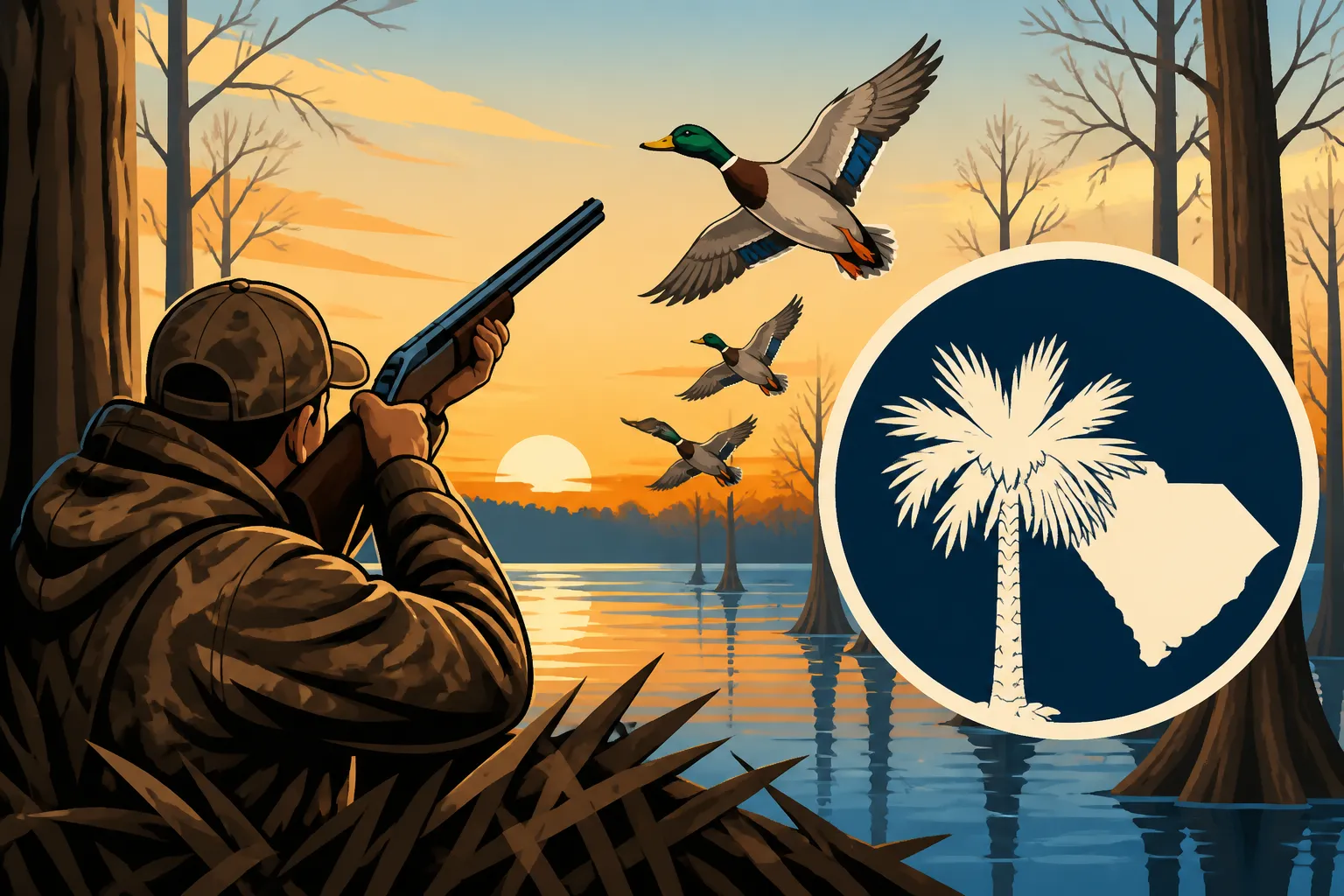
Hunting flooded timber for mallards in South Carolina can feel like trying to find a needle in a haystack, especially when you're faced with vast, seemingly endless swamps and bottomland. It's a unique challenge that separates dedicated waterfowlers from the casual observer, requiring intimate knowledge of duck behavior, water levels, and the subtle cues that signal prime feeding and roosting areas. This guide will walk you through everything you need to know to successfully target mallards in South Carolina's flooded timber, transforming those daunting swamps into your most productive hunting grounds.
Understanding Flooded Timber Habitats
South Carolina's diverse landscape offers unique opportunities for waterfowl hunting, and few are as rewarding and challenging as pursuing mallards in flooded timber. This isn't just any wet woods; it's a specific ecosystem mallards seek out for food, cover, and refuge.
Why Mallards Flock to Flooded Timber
Mallards, with their keen eyesight and wary nature, are drawn to flooded timber for several key reasons. First and foremost is the abundance of natural food sources. Unlike open water or marsh impoundments, flooded hardwoods provide a smorgasbord of acorns from various oak species like willow oak, pin oak, and Nuttall oak. These nutrient-rich mast crops are a primary food source for wintering ducks, offering energy and fat reserves essential for survival and migration. When timber floods, these acorns become easily accessible to dabbling ducks, creating an irresistible buffet. Furthermore, the submerged vegetation, seeds from various grasses, and aquatic invertebrates also contribute to the mallard's diet, making these areas highly attractive.
Beyond food, flooded timber offers unparalleled cover and a sense of security. The dense canopy and maze of tree trunks provide excellent concealment from predators, both aerial and terrestrial. Hunters often observe mallards dropping into these areas with a quick, steep dive, knowing the overhead cover offers protection. These secluded pockets of flooded woods serve as vital roosting areas where ducks can rest undisturbed during the day, especially after feeding in more open fields or marshes. The presence of these sanctuary zones is crucial for holding ducks in an area throughout the season, as they need safe places to relax and recover between feeding forays.
Identifying Productive Timber Types
Not all flooded timber is created equal for mallard hunting. Savvy hunters learn to distinguish the most productive areas, often focusing on specific tree species and water depth. Bottomland hardwood forests, particularly those dominated by various oak species, are prime real estate. Look for areas with a high density of red oaks, as their acorns are typically larger and more preferred by mallards. Stands of cypress and tupelo gums, while beautiful, don't offer the same mast production but can provide excellent cover and transition zones to oak flats. Understanding South Carolina's Four Zones Split the Calendar can give you an idea of when to expect peak migration and the flooding of these areas.
The ideal water depth is another critical factor. Mallards are dabbling ducks, meaning they feed by tipping up, rather than diving. Therefore, they prefer water depths of 6 to 18 inches, allowing them to reach submerged acorns and other forage without fully submerging. Areas that are too deep won't hold ducks for feeding, though they might still use them for roosting. Conversely, areas that are too shallow might not offer enough water for easy movement or provide sufficient concealment. Pay close attention to subtle topographical changes that might create these ideal depths, such as old creek beds, depressions, or the edges of slightly higher ground within the flooded forest.
Scouting for Mallards in Flooded Timber
Successful flooded timber hunting isn't about luck; it's about meticulous scouting. You can't just show up on opening day and expect birds to be everywhere. You need to put in the time and effort to understand where the ducks are, what they're eating, and how they're using the habitat. This is where patience and observation truly pay off.
Pre-Season Reconnaissance
Before hunting season even begins, you can gain a significant advantage through thorough pre-season scouting. Start by studying aerial maps, which can be invaluable for identifying potential flooded timber areas. Look for low-lying hardwood bottoms adjacent to rivers, creeks, or agricultural fields. Tools like GoHunt can provide detailed satellite imagery, showing canopy cover, water patterns, and access points. Pinpoint areas with a high concentration of oak trees – a good indicator of potential mast crops. While you can't always predict water levels months in advance, knowing the lay of the land will give you a head start.
Once you have a few promising spots identified on a map, it's time for boots on the ground, or rather, waders in the water. Walk these areas (if water levels permit) to scout for acorn production. Are there plenty of acorns on the forest floor? Are they fresh, or have they been eaten by other critters? Look for signs of past duck activity like old droppings or scattered feathers, which can indicate historical use. Pay attention to how the water drains and pools, as this will dictate where the best hunting opportunities will arise when the rains come. Remember, the goal is to identify areas that will hold shallow, acorn-rich water once the timber floods.
In-Season Aerial and Ground Scouting
As the season approaches and water levels begin to rise, your scouting tactics need to become more dynamic. If legal and accessible, aerial scouting (even from an elevated vantage point like a tall road embankment overlooking a large bottomland) can reveal widespread duck concentrations. You might also want to look into South Carolina Duck Zone Rules to ensure you're compliant with all regulations before heading out. Listen for the distinct chatter of mallards or the sound of many wings beating at dawn and dusk. This auditory cue is often the first indication of ducks moving into an area.
Ground scouting becomes crucial once the timber is flooded. This is often best done from a canoe, kayak, or small jon boat to minimize disturbance. Stealthily paddle through potential areas, looking for fresh signs of activity. Mallard droppings are a dead giveaway, often found on logs, stumps, or along mud lines. Look for "dabble marks" – areas where ducks have tipped up to feed, leaving muddy water or disturbed bottom. You might even find small paths or "duck trails" through emergent vegetation where birds have repeatedly swum. The presence of Mallards and Wood Ducks in the ACE Basin can often be identified through similar methods, as both species utilize timbered areas. Don't be afraid to sit and listen for a while; ducks are often most active at first and last light.
Reading the Subtle Signs
Reading the subtle signs left by ducks is an art that develops with experience. Beyond droppings and dabble marks, look for feathers floating on the water or caught on branches. A fresh pile of iridescent green head feathers near a stump could indicate a recent feeding spree. Pay attention to the water itself; clear water becoming cloudy in a specific area is a strong sign of recent feeding activity. Another subtle clue is how far ducks are willing to fly into the timber. If they're landing deep within the woods, it often means they feel very secure and are likely using that area as a primary roost.
Even the type of acorns can tell you something. Freshly cracked acorn shells indicate current feeding. If you find only old, waterlogged shells, the food source might be depleted, or the ducks have moved on. Observing the surrounding habitat is also key. Are there open fields nearby that ducks might be flying to at night to feed? Understanding their full daily cycle will help you predict their movements into and out of the flooded timber. This deep understanding of duck patterns will lead to more consistent success, reducing the frustration of hitting empty water.
Decoy Spreads and Calling Tactics
Once you've found a promising piece of flooded timber, the next step is to convince those wary mallards to commit to your spread. This involves a combination of realistic decoy placement and skillful calling, designed to mimic a natural, inviting scene.
Realistic Decoy Setups
In flooded timber, less is often more when it comes to decoys. You're not trying to replicate a huge open-water raft of ducks. Instead, aim for a natural-looking spread that suggests a small group of contented mallards feeding and resting. A spread of 6-12 mallard decoys, mixed with a few black ducks or pintails, is usually sufficient. Place them in small, loose groups, leaving a clear "landing strip" or pocket in the center, directly in front of your blind. This landing zone should be within effective shooting range. Consider adding one or two motion decoys, like a jerk string or a spinning-wing decoy (if legal in your area), to create ripples and visual attraction. The movement is key in the still, shadowed water of flooded timber.
Think about the wind direction. Ducks almost always land into the wind. Position your landing zone downwind of your blind, allowing the ducks to approach head-on, giving you the best shot angle as they cup their wings to land. Anchor your decoys securely but with enough line to allow for natural movement in any slight current or breeze. Don't forget to blend your decoy lines as much as possible, as clear lines can look unnatural. Sometimes a single hen mallard decoy placed perfectly can be more effective than a dozen poorly positioned ones.
Mastering the Mallard Call
Calling mallards in flooded timber is different from calling them in open fields. The sound carries differently, and the ducks are often already committed to flying into the timber. Start with soft, contented feeding clucks and soft quacks. The goal is to reassure ducks that are already thinking about coming in, not to try and flag down birds from miles away. When you hear birds approaching, switch to a greeting call or a short series of quacks, then go quiet, letting the decoys and the natural environment do the work. Overcalling can easily spook birds in such an intimate setting.
If ducks circle but don't commit, a comeback call – a longer, more insistent series of quacks – can sometimes turn them. But use it sparingly. Often, silence and patience are your best calls. Listen to the ducks; they'll tell you what they want. If they respond positively to a certain call, stick with it. If they flare, you might be calling too aggressively or too loudly. Practicing your calls before the season is essential. Many hunters spend hours perfecting various calls, but remember that soft, realistic calling is usually more effective than loud, flashy sequences in the timber.
Hiding in Plain Sight
Concealment is paramount when hunting mallards in flooded timber. Ducks dropping into these areas are already on high alert, scanning every shadow for danger. Your blind needs to disappear into the surroundings. Natural blinds are often the most effective. Use fallen logs, stumps, or clusters of trees to break up your outline. Weave natural vegetation, like palmetto fronds, cypress branches, or cane, into your blind to make it indistinguishable from the background. You'll want to review Ground Blind Rules on South Carolina WMAs if you plan to use portable blinds on public land.
When setting up, always ensure you have a clear shooting lane through the trees, both for yourself and any hunting partners. This often means carefully trimming a few branches, but be mindful not to alter the natural look of the area too much. Wear camouflage that matches the timber environment – shades of brown, green, and grey work well. Face coverings and gloves are non-negotiable to eliminate shiny skin. Remember, ducks will be looking down into the timber, so any unnatural shape or movement will immediately send them flaring. A good tip is to have your hunting partners help you set up and then walk away to see if they can easily spot you – if they can, the ducks will too.
Setting Up for Success and Safety
Flooded timber hunting, while incredibly rewarding, comes with its own set of challenges, particularly concerning gear and safety. Being well-prepared is not just about comfort; it's about staying safe in a potentially unforgiving environment.
Essential Gear Checklist
A successful flooded timber hunt begins with the right gear. First on the list are quality chest waders. You'll be standing or walking in water for extended periods, so durable, leak-proof waders are non-negotiable. Look for models with insulated boots if you're hunting in colder conditions. Your shotgun should be reliable and chambered for non-toxic shot, as Where Nontoxic Shot Is Required in South Carolina means lead shot is prohibited for waterfowl. Make sure to pattern your gun with your chosen load before the season, as shot string performance can vary.
Beyond the basics, a good dry bag is essential for protecting your calls, spare gloves, snacks, and any electronics. A robust game strap or a specialized duck sled can make retrieving downed birds much easier, especially if you're deep in the timber. A good pair of waterproof binoculars can aid in scouting and identifying ducks on the water before they land. Don't forget a headlamp for navigating in the pre-dawn darkness or post-sunset twilight. If you're bringing a dog, ensure they have a protective vest, especially for cold water retrieves. Hunters might also benefit from understanding the South Carolina Duck and Goose Bag Limits before they head out, ensuring they stay within legal parameters.
Navigating the Swamp
Getting to your spot in flooded timber can be half the battle. If you're not walking, you'll need a suitable watercraft. A small jon boat, canoe, or kayak are popular choices. Jon boats offer stability and can carry more gear, but their maneuverability can be limited in very dense timber. Canoes and kayaks are quieter and more agile, allowing access to tighter spots, but they offer less cargo capacity. Whichever you choose, ensure it's stable and suitable for the type of water and obstacles you'll encounter.
Navigation in flooded timber, especially before sunrise or after sunset, requires vigilance. A reliable GPS unit or a mapping app on your phone (like GoHunt, which works well even without cell service if maps are pre-downloaded) is critical. Marking your entry point and your blind location is a must. The flooded timber can quickly become disorienting, with every tree looking the same in low light. Always go slowly, listening for unseen obstacles like submerged logs or stumps. Consider bringing a push pole in addition to oars or a small trolling motor, as it provides quiet propulsion and allows you to feel for obstructions beneath the surface.
Safety First in the Timber
Safety should always be your top priority. Hunting in flooded timber presents unique hazards. Hypothermia is a real threat, especially on cold, wet days. Dress in layers, including waterproof outer shells, and carry extra dry clothing in your dry bag. If you fall in, having a change of clothes could be a lifesaver. Always inform someone of your hunting plans, including your location and expected return time. Hunting with a partner is highly recommended, as an extra set of hands can be invaluable in an emergency.
Be aware of your surroundings beyond just ducks. Watch out for snakes, which may be seeking refuge on higher ground or fallen logs. If you're in an area with potential for large animals like feral hogs, be prepared. Always wear your PFD (personal flotation device) when in a boat, and ensure it's easily accessible even when wading. When crossing deeper sections, take your time and test the depth with your push pole or a sturdy stick. Never take unnecessary risks; a duck isn't worth an injury or worse. South Carolina Waterfowl Migration Timing can mean shifting weather conditions, so always be prepared for changing temperatures and elements.
| Aspect | Flooded Timber Hunting (Mallards) | Open Water/Marsh Hunting (Divers) |
|---|---|---|
| Primary Target | Mallards, Wood Ducks | Divers (Scaup, Ring-necks, Canvasbacks), Geese |
| Habitat | Shallow, flooded hardwood forests, cypress/tupelo sloughs | Large lakes, bays, coastal marshes, impoundments |
| Key Food Source | Acorns, submerged seeds, invertebrates | Submerged aquatic vegetation, shellfish, small fish |
| Water Depth | 6-18 inches (dabbling depth) | Several feet (diving depth) |
| Decoy Spread | Small, loose groups (6-12), natural landing zone, subtle motion | Large, dense rafts (2-5 dozen+), long lines, high motion |
| Calling Style | Soft, contented clucks, reassuring quacks, limited aggressive calls | Louder, more aggressive hailing, comeback, and feed calls |
| Concealment | Natural blinds using trees, logs, vegetation; full camo | Layout blinds, boat blinds, brush blinds on edges |
| Navigation | Canoe, kayak, small jon boat, push pole, GPS | Larger boats (Go-Devils, mud motors), familiarity with channels |
| Primary Hazard | Hypothermia, getting lost, submerged obstacles | Rough water, strong currents, cold, vast open areas |
Disclaimer
Hunting is an inherently dangerous activity. Always prioritize safety, follow all local and state regulations, and obtain proper licensing and hunter education. This guide provides general information and should not replace professional instruction or official hunting regulations. Wildlife laws and seasons can change, so always check the latest South Carolina Department of Natural Resources (SCDNR) guidelines before heading afield.