Rain Gear for Lowcountry Downpours
There's nothing quite like the sudden chill that sets in when a typical South Carolina downpour catches you unprepared in the deer stand or miles deep in a WMA. One minute you're enjoying the mild, humid air, and the next, it feels like someone dumped a bucket over your head, and then another, and another. Getting soaked to the bone isn't just uncomfortable; it can cut your hunt short, compromise your safety, and frankly, make you absolutely miserable. This guide is all about understanding the unique challenges of our Lowcountry deluges and equipping yourself with the right rain gear to stay dry, comfortable, and out there longer.
The Unique Challenge of Lowcountry Downpours
Hunting in South Carolina means accepting that rain isn't just a possibility; it's practically a certainty at some point during the season. But Lowcountry downpours, especially, are a breed of their own, posing specific challenges that require more than just a flimsy poncho. The combination of intense rainfall, high humidity, and often warm temperatures makes choosing the right rain gear a critical decision.
When the Sky Opens Up: Sudden and Intense
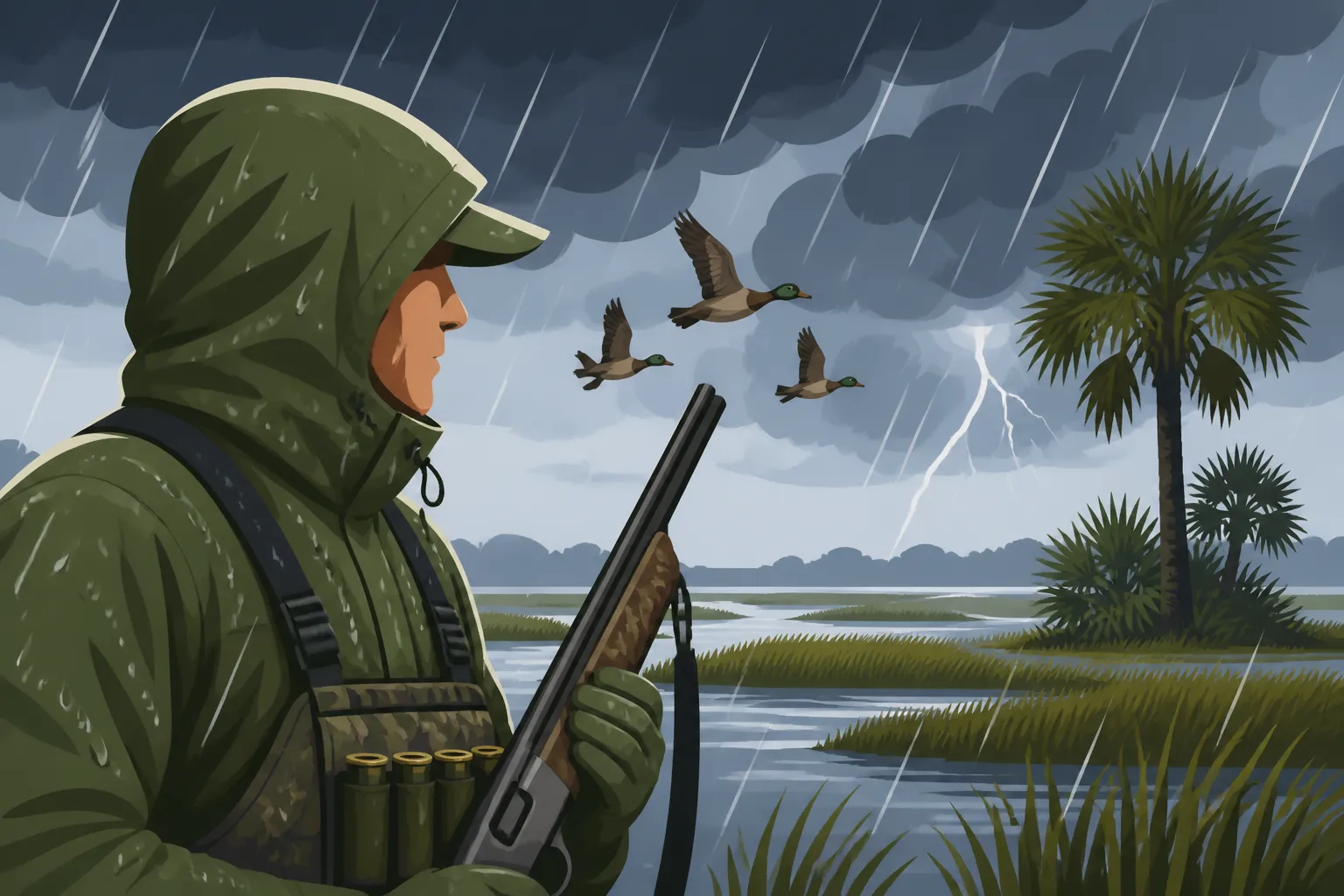
If you've spent any time afield in the South Carolina Lowcountry, you know exactly what I'm talking about. One moment, the sun might be peeking through the clouds, and the next, the heavens open up with an almost unbelievable intensity. These aren't always gentle drizzles; they're often torrential downpours that can drop an inch or more of rain in a very short amount of time. creeks swell, low-lying areas turn into temporary ponds, and visibility plummets. It’s an immediate, all-encompassing soaking if you're not protected. This suddenness means your rain gear needs to be accessible, easy to deploy, and, above all, truly waterproof, not just water-resistant. You can't always see these storms coming hours in advance on the radar, especially if you're in a cellular dead zone. Being caught off guard is a common experience, but being unprepared doesn't have to be.
The Humidity Factor: Trapping Heat and Moisture
What really separates Lowcountry rain from, say, a cool, steady rain out west, is the relentless humidity. Even when it's raining, the air often remains thick with moisture, and temperatures can still be quite warm, especially during the early archery season or even into primitive weapons season. This creates a challenging paradox: you need to stay dry from the outside, but you also need your gear to breathe so you don't get soaked from the inside by your own sweat. There’s nothing worse than having rain gear that keeps the external water out but makes you feel like you’re inside a sauna suit. That clammy, sticky feeling can quickly lead to hypothermia in cooler temperatures or simply extreme discomfort in warmer weather, leaving you just as wet as if you hadn't worn rain gear at all. Proper ventilation and breathable membranes are paramount here, otherwise, your comfort and ability to focus on the hunt will be severely compromised. Warm-Weather Clothing for South Carolina Hunters is a topic we've covered before, and rain gear is an extension of that same principle.
Navigating Saturated Terrain: Beyond Just Staying Dry
The sheer volume of water in a Lowcountry downpour doesn't just fall from the sky; it saturates everything around you. Swamps become deeper, low areas flood, and even logging roads can turn into muddy rivers. This means your rain protection can't stop at your waist. You need to consider waterproof boots – truly waterproof – and potentially even gaiters or rain pants that extend well over your boots to prevent water from wicking up your legs. Recovering a deer from a lowcountry swamp after a heavy rain can be a particularly challenging endeavor, and good rain gear is essential. We've all had those experiences where our feet are sloshing around, and that's usually the quickest way to end a hunt. The ground itself, rich with clay and organic matter, turns into a slick, unforgiving mess. You need gear that can withstand contact with wet brush, muddy banks, and submerged obstacles without puncturing or soaking through.
Essential Features of Performance Rain Gear
When you're trying to decide what rain gear to invest in, it's easy to get overwhelmed by all the technical jargon. But for South Carolina hunting, especially in the Lowcountry, a few key features stand head and shoulders above the rest. Understanding these will help you pick gear that actually performs when the weather turns nasty.
Decoding Waterproof Ratings and Technologies
This is where the rubber meets the road. Many companies will claim "water-resistant" for their products, and that's simply not enough for a South Carolina gully washer. You need waterproof. The difference is crucial: water-resistant fabric will eventually wet out and soak through under sustained pressure or heavy rain, while truly waterproof materials are designed to prevent water penetration entirely. Look for garments with a DWR (Durable Water Repellent) finish on the exterior, which causes water to bead up and roll off. More importantly, check for sealed seams, usually indicated by taped seams on the inside. A seam is a thousand tiny holes, and if they're not sealed, water will find its way in. Technologies like Gore-Tex, Pertex Shield, or proprietary membranes from various hunting brands are designed to be truly waterproof. When researching gear, I often consult resources like GoHunt to see independent reviews and technical explanations of these different membranes, which can clarify how well they hold up to heavy, sustained downpours rather than just light sprinkles. Don't cheap out here; a truly waterproof membrane is the foundation of staying dry.
Breathability: The Key to Comfort in Humid Climates
As we touched on earlier, staying dry from the inside is just as important as staying dry from the outside, especially in South Carolina's notorious humidity. Waterproof fabrics often get a bad rap for being "sweaty" or "clammy," but modern breathable membranes have come a long way. These membranes have microscopic pores that are too small for liquid water droplets to pass through, but large enough for water vapor (your sweat) to escape. This allows perspiration to evaporate and move away from your body, preventing that dreaded sticky, damp feeling. Without good breathability, you'll still end up wet from your own sweat, which can lead to chafing, discomfort, and even a dangerous drop in core temperature if the air cools down. Look for features like pit zips or mesh-lined pockets that can be opened for additional ventilation when you're moving. A good breathable rain jacket will feel noticeably less stifling during a long walk to your stand or while pushing through thick brush.
Durability, Quietness, and Packability
Beyond just keeping water out, your hunting rain gear needs to meet some other specific criteria.
First, durability is paramount. You'll be pushing through briars, rubbing against tree bark, and navigating dense undergrowth in places like Francis Marion National Forest. Flimsy rain gear will tear, compromising its waterproof integrity. Look for ripstop fabrics or heavier denier materials in high-wear areas.
Second, quietness cannot be overlooked. A crinkly, noisy rain jacket will spook game faster than a brass band. Many modern hunting rain suits are made with softer, brushed fabrics that are specifically designed to be quiet, even when wet. Test it out in the store, if possible, or read reviews that specifically address noise levels.
Finally, packability is a practical consideration. You might not need your rain gear all day, but when a storm rolls in, you need it now. Lightweight, compressible options that stuff easily into your pack are ideal. You want something that doesn't add excessive bulk or weight, allowing you to carry it comfortably until it's needed. For quick, unexpected showers, a simple packable shell might be all you need, but for longer, more intense hunting trips, a dedicated suit that sacrifices a little packability for superior protection and features is often worth the trade-off.
| Rain Gear Type | Waterproofness | Breathability | Durability | Quietness | Packability | Ideal Use Case |
|---|---|---|---|---|---|---|
| Emergency Poncho | Low-Med | Very Low | Very Low | Low | Excellent | Unforeseen light showers, short walks to the vehicle |
| Packable Shell | Medium | Medium | Medium | Medium-High | Excellent | Sporadic rain, active hunting, layering over insulation |
| Dedicated Rain Suit | High | High | High | High | Low-Medium | Prolonged heavy rain, sedentary stand hunting, cold weather |
| Rubberized Gear | Very High | Very Low | Medium-High | Low-Medium | Very Low | Extremely wet conditions, less active scenarios, retrieving game |
Choosing the Right Rain Gear System for Your Hunt
With so many options out there, from ultralight shells to heavy-duty suits, it can be tricky to figure out what's truly best for your South Carolina hunting style. The "best" system really depends on the intensity of the rain you expect, how much you'll be moving, and the ambient temperature.
Lightweight, Packable Emergency Options
For those times when you just need something to throw on quickly or to get you through an unexpected, moderate shower, lightweight, packable emergency options are invaluable. Think of these as your "just in case" insurance. These often come in the form of thin, nylon-based jackets and pants, sometimes with a waterproof coating. They're usually very affordable, compress down to almost nothing, and can be stashed in a small corner of your backpack without you even noticing the weight. While they might not hold up to an all-day torrential downpour, they're perfect for a sudden afternoon shower that rolls in during early archery season, or if you're just making a quick run to check a trail camera.
The main drawback, however, is often their breathability and durability. They can feel a bit like wearing a plastic bag, especially on a warm, humid South Carolina day, meaning you might still get wet from sweat. They're also more prone to tearing if you're bushwhacking through dense cover. Brands like Frogg Toggs are popular in this category for their price point and surprisingly effective waterproofness, though their durability can be a concern for hardcore hunters. The key here is to manage expectations: these are for emergencies and temporary relief, not for sustained comfort in extreme conditions. They can be a lifesaver, though, when you realize you're stuck in a Hunting a Funnel Between Two Swamps and the sky just opened up.
Dedicated Hunting Rain Suits: The Serious Hunter's Choice
If you're planning to hunt through serious rain, or if you simply refuse to let bad weather dictate your time in the woods, a dedicated hunting rain suit is the way to go. These systems are typically a jacket and pant combination, constructed with advanced waterproof-breathable membranes and robust fabrics. They are designed specifically with hunters in mind, meaning they often feature quiet materials, ample pocket space, articulated knees and elbows for movement, and thoughtful design elements like adjustable cuffs and hoods that won't impede your vision or hearing.
Investing in a high-quality rain suit means you can sit comfortably in a treestand through hours of steady rain, still-hunt silently through wet woods, or track a deer without worrying about getting soaked. These suits are built for durability, ensuring they can withstand repeated abuse from thorns, branches, and muddy encounters. While they are a more significant investment, the comfort, protection, and confidence they provide are well worth it. When I'm planning for a long day in the woods, especially during the fall when tropical depressions can bring days of rain, this is the gear I grab. Look for suits that offer a comfortable fit over your existing Lightweight Layering for Warm-Weather Sits or heavier insulation, depending on the season.
Specialty Waders and Waterproof Overlays
For hunters whose pursuits regularly involve significant water, like Hunting Coastal Marsh Waterfowl or Hunting Lowcountry Swamp Deer, specialty waterproof gear goes beyond the typical rain suit. Waders, for instance, are essential for crossing sloughs, navigating flooded timber, or setting up in marshy areas. While primarily designed for waterfowl, breathable waders can be incredibly useful for deer hunters in the Lowcountry who spend a lot of time in saturated environments. They provide continuous waterproof protection from your feet all the way up to your chest or waist, allowing you to wade through water that would overwhelm standard rain pants and boots.
Beyond full waders, consider waterproof overlays or bibs that provide extra protection for your lower body. These are essentially tougher, thicker rain pants or bibs designed to take a beating and keep you dry even when you're kneeling in mud or pushing through thigh-high wet vegetation. Many of these are made from heavy-duty rubberized materials, sacrificing some breathability for absolute waterproofness and unparalleled durability in rough conditions. They might not be your primary rain jacket, but for those specific, super-wet situations endemic to the South Carolina Lowcountry, they are indispensable. Think of it as specialized armor for the wettest hunting environments.
Mastering Layering Under Your Rain Gear
Rain gear is your outer shell, your primary defense against external moisture, but it's only one part of a complete system. What you wear underneath that shell is just as critical for staying comfortable and regulating your body temperature, especially in South Carolina's varied and often humid conditions. Layering is an art, and mastering it will make your rain hunts far more enjoyable and effective.
The Foundation: Moisture-Wicking Base Layers
Your base layer is the first thing against your skin, and its job is to manage moisture. In South Carolina, this usually means sweat. When you're hiking into your stand, climbing, or even just sitting patiently in the humidity, your body will inevitably produce sweat. If that sweat stays trapped against your skin, it will cool rapidly when you stop moving, leading to a clammy, uncomfortable feeling and potentially chilling you to the bone, even if it's not particularly cold out. Cotton is the absolute enemy here; once wet, it stays wet and loses all insulating properties.
Instead, opt for synthetic fabrics like polyester or merino wool. Both excel at wicking moisture away from your skin, moving it to outer layers where it can evaporate. For warm-weather rain hunts, a lightweight, short-sleeved or long-sleeved base layer (depending on sun exposure and bug protection needs) is usually sufficient. In cooler periods, a mid-weight base layer will provide additional insulation while still managing moisture effectively. A good base layer ensures that even if your rain gear gets overwhelmed, or if you sweat profusely, you'll still have a fighting chance at staying reasonably dry and warm from the inside out.
Strategic Mid-Layers for Warmth and Ventilation
The mid-layer is your insulating layer, but in South Carolina, it often serves a dual purpose of providing warmth or simply structure for airflow. Depending on the time of year and the actual temperature during the rain, you might need anything from a thin fleece to a substantial puffy jacket. The key is adaptability. For early season downpours when it's still quite warm, you might skip a traditional insulating mid-layer altogether, relying solely on your base layer and rain shell, perhaps with an open pit-zip on the jacket for ventilation.
However, if a cold front rolls in with the rain, or if you're hunting later in the season, a mid-layer becomes essential. Again, avoid cotton. Fleece, synthetic puffies, or wool sweaters are excellent choices because they retain their insulating properties even if they get damp. The beauty of layering is that you can add or subtract these layers as conditions change. If the rain breaks and the sun comes out, or if you're doing an intense push, you can shed a mid-layer to prevent overheating and sweating excessively. This dynamic approach to layering ensures you're always dressed appropriately, whether you're breaking a sweat or hunkering down in a chilly deluge.
Protecting Your Optics and Electronics
While not strictly "layering," thinking about how your rain gear interacts with your vital hunting tools is crucial. South Carolina's humidity and heavy rain are brutal on electronics. Your rangefinder, GPS unit (or phone with mapping apps), binoculars, and even your rifle scope can fog up, collect water, or even short out if not adequately protected. Most rain jackets will have large, zippered pockets, and many hunters utilize these for smaller items. But a truly waterproof dry bag or a heavy-duty Ziploc bag for your phone and other sensitive electronics is a non-negotiable.
For binoculars, a quality binocular harness with an integrated rain cover is a game-changer. It keeps your optics readily accessible but shielded from direct rainfall. For your rifle scope, a scope cover is a must. Don't rely on the flimsy caps that come with the scope; invest in a snug-fitting, elastic cover that will stay on and keep water out of the lenses. Nothing is more frustrating than having a deer step out and finding your primary sighting mechanism obscured by fog or raindrops. Proactive protection of these tools means your hunt won't be derailed by equipment failure.
Extending the Life and Performance of Your Gear
Investing in good rain gear is just the first step. To ensure it continues to perform season after season, especially against the rigors of South Carolina hunting, you need to properly care for it. Neglecting your rain gear can quickly lead to its demise, leaving you soaked and frustrated when you need it most.
Cleaning, Drying, and DWR Reapplication
After a long day of hunting in the rain, especially through muddy Lowcountry areas, your rain gear will inevitably be dirty. Mud, sweat, bug spray, and even blood can clog the pores of breathable membranes and degrade the DWR finish. It's crucial to clean your rain gear regularly. Most modern waterproof-breathable garments can be machine washed, but always check the manufacturer's label for specific instructions. Use a technical wash designed for waterproof fabrics (never use standard detergents with fabric softeners, as they can ruin the DWR and clog membranes). Wash in cold water on a gentle cycle, then hang to air dry completely. Cleaning a Rifle After a Humid Sit shares similar principles of careful, specific care.
Over time, even with proper cleaning, the DWR (Durable Water Repellent) finish will wear off. You'll notice this when water no longer beads up and rolls off the fabric but instead "wets out," creating dark, saturated patches. When this happens, it's time to reapply DWR. There are many spray-on or wash-in DWR treatments available (GoHunt's gear reviews sometimes discuss the efficacy of different DWR products). Follow the product instructions carefully, and often a tumble dry on low heat is recommended to activate the new DWR finish. Regular reapplication ensures water continues to bead off, helping your garment breathe better and keeping you drier.
Smart Storage and Field Repair Essentials
How you store your rain gear between hunts and seasons can significantly impact its lifespan. Never store wet or damp rain gear. Always ensure it's completely dry before folding or hanging it. Storing damp gear can lead to mildew, which not only smells terrible but can also damage the fabric and compromise the waterproof membrane. Store it in a cool, dry place, ideally hanging it loosely rather than stuffing it into a compressed bag, which can create creases that wear down the waterproof coating. Avoid exposing it to prolonged direct sunlight, which can degrade the fabric.
Even the most durable rain gear can suffer a snag or a tear in the field, especially when navigating dense South Carolina cover. Having a small, lightweight field repair kit can be a hunt-saver. This kit should include waterproof repair patches (like Tenacious Tape or similar), which can quickly seal a small hole or tear, preventing water from getting in. A small tube of seam sealer can also be invaluable for addressing any failing seams. These quick fixes can keep you comfortable and hunting until you can perform a more permanent repair at home. It’s always better to be prepared with a patch than to spend the rest of your hunt soaked.
Pre-Season Checks and Proactive Maintenance
Before the hunting season kicks off, or even before a planned trip where rain is expected, make it a habit to perform a thorough check of your rain gear. Pull it out of storage, inspect all the seams, zippers, and the exterior fabric. Look for any small tears, abrasions, or areas where the DWR might be completely gone. If you notice any issues, address them proactively. Repair small holes, reapply DWR, and ensure zippers are functioning smoothly. Test the hood drawstrings and cuff closures.
This proactive maintenance helps you avoid those frustrating moments in the field when you discover your "waterproof" jacket isn't so waterproof anymore. It also allows you to make informed decisions about whether your existing gear is still up to the task or if it's time to consider an upgrade. Catching these problems before you're caught in a deluge will save you a lot of misery and ensure you're ready for whatever Mother Nature throws your way in the Lowcountry.
Real-World Tactics for Hunting in the Rain
Once you've got your high-performance rain gear dialed in, it's time to think about how to actually hunt effectively when the skies open up. Rain can make hunting challenging, but it also presents unique opportunities. With the right gear and mindset, you can turn a dreary day into a successful one.
Staying Effective in a Downpour
Hunting in a South Carolina downpour requires a different approach. First, sound becomes muffled. The steady patter of rain on leaves and ground can mask your movements, allowing you to move more stealthily than on a crisp, dry day. This is a huge advantage for still-hunting or stalking. However, it also means you might not hear approaching game as easily. Pay extra attention to visual cues.
Second, visibility changes. Rain can make distant objects blurry and obscure your vision, especially in dense timber. Focus on shorter ranges and target clear lanes. Animals often feel safer moving in the rain, as human activity tends to decrease. Deer, especially, will often move to feed during or immediately after a rain, taking advantage of the reduced pressure and the refreshed, succulent browse. Look for edges of fields, food plots like a Hunting a Green Field Planted for Deer, or thick cover where deer might feel secure moving. Your scent cone will also be knocked down by the rain, reducing how far your scent carries, but also making it less predictable.
Finally, manage your gear. Ensure your optics are covered until the moment you need them. Keep your rifle or bow as dry as possible; a waterproof gun sock or bow cover is a good idea when moving. If you're in a treestand, try to position yourself to minimize direct rain exposure or use a treestand umbrella. Stay patient, stay positive, and remember that you're out there when many other hunters have retreated indoors.
Post-Rain Opportunities and Considerations
Often, the best hunting isn't during the heaviest rain, but immediately after it. As soon as the rain eases or stops, deer and other game often become very active. The air is cleansed, temperatures might have dropped slightly, and the woods are quieter. Deer will emerge from their bedding areas to feed, often hitting fresh browse or food sources that were previously saturated. This is a prime time to be in your stand or still-hunting through fresh sign.
Look for areas where deer would feel comfortable emerging into after a storm, such as protected field edges or dense cover adjacent to food sources. Reading South Carolina Mud for Fresh Deer Movement becomes incredibly easy, as fresh tracks are clearly visible in the softened earth. Be mindful of rising water levels, especially if you're hunting near river bottoms or swamps. You might need to adjust your entry and exit routes or even move to higher ground. The mud can also make tracking a shot animal more challenging, as blood trails might be washed out. If you've got a fresh trail, follow it meticulously and trust your dog if you're using one.
Safety First: Lightning, Cold, and Water Hazards
While proper rain gear makes hunting in wet weather tolerable, safety must always be your top priority. Lightning is a real and deadly threat in South Carolina thunderstorms. If you hear thunder, you are within striking distance. Get out of your treestand immediately and seek shelter in a sturdy building or your vehicle. Avoid lone trees, open fields, and water bodies. No deer is worth your life.
Second, even in South Carolina, hypothermia is a risk. Getting wet, especially if it's windy, can rapidly drop your core body temperature. Even if the air feels mild, prolonged exposure in wet clothing can be dangerous. The right layering system under your rain gear is key to preventing this. If you start shivering uncontrollably, feel confused, or experience numbness, get to warmth immediately. Pack extra dry clothes in a waterproof bag in your vehicle, especially on those colder, rainy days.
Finally, water hazards are magnified. Swollen creeks, flooded roads, and treacherous footing in swamps can be dangerous. Be cautious when crossing water or navigating unfamiliar terrain. Always let someone know where you're going and when you expect to return. Being prepared for rain is about more than just staying dry; it's about staying safe and ensuring you can return to hunt another day. Snake Boots for South Carolina Swamp Ground are always a good idea in these wet conditions, as snakes are often displaced by rising water.
Disclaimer
This article is for general informational purposes only and does not constitute professional advice. Laws, prices and regulations vary by location and change over time. Consult a qualified professional for guidance on your specific situation.