Layout Blind Hunting a Cut Cornfield
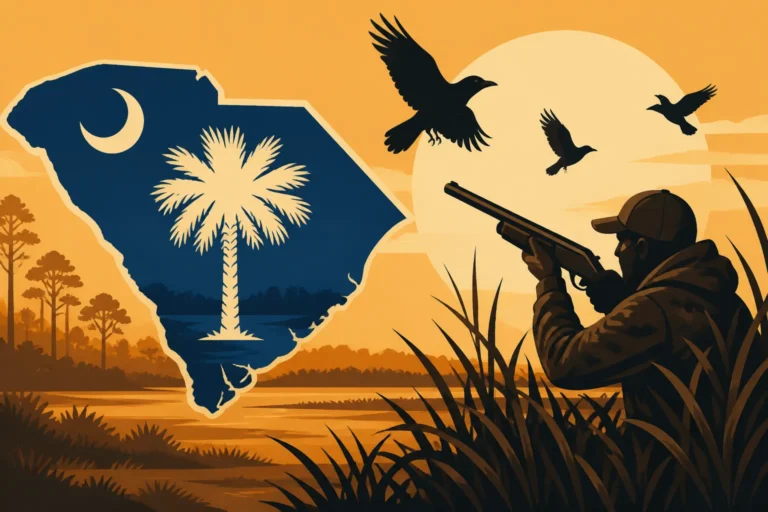
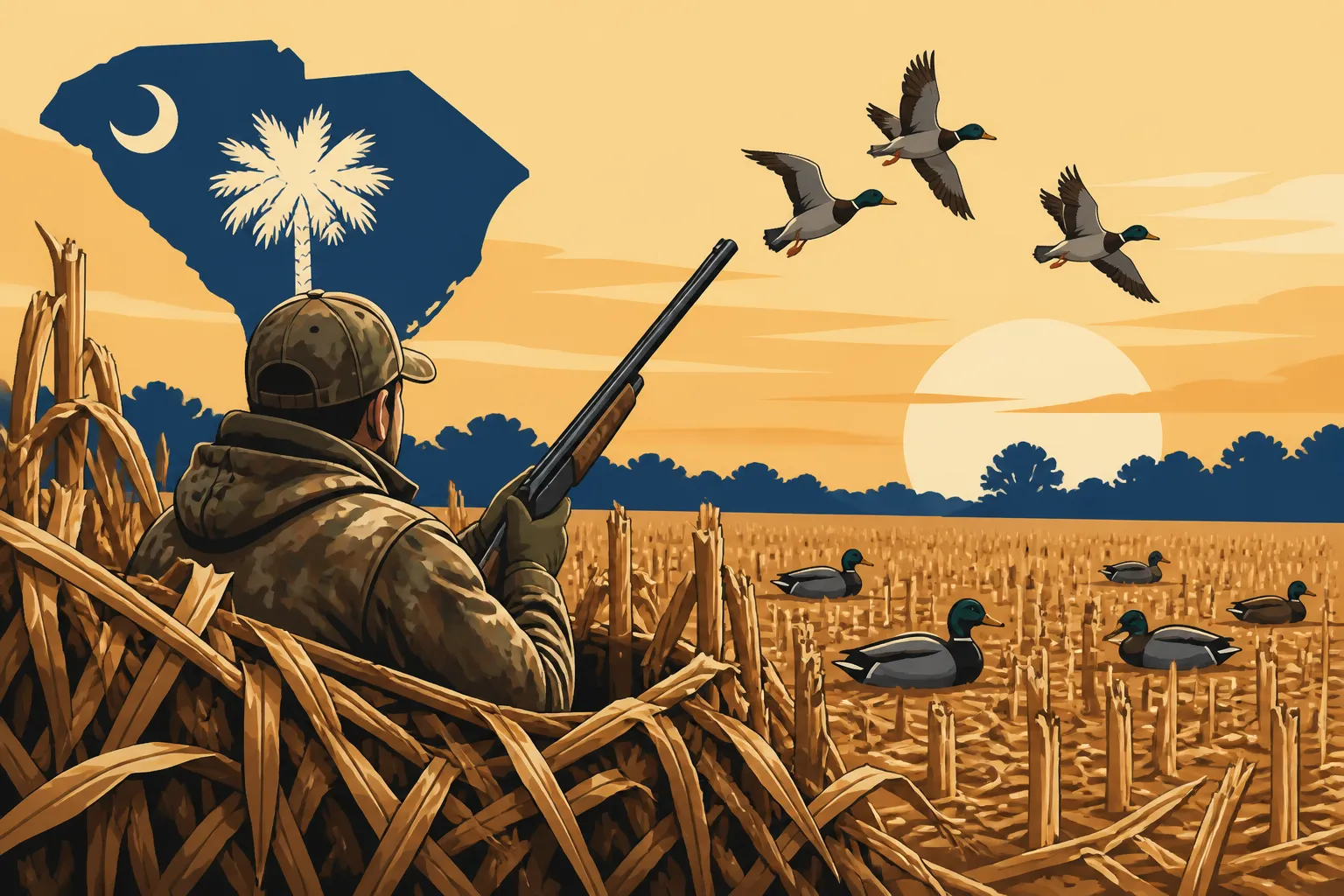
There’s nothing quite as frustrating as watching a massive flock of geese or a small squadron of mallards circle your field setup, only to flare off at the last minute because something just didn't look right. It’s a common heartache for waterfowl hunters, especially in wide-open agricultural landscapes. This guide will walk you through the art and science of hunting cut cornfields with a layout blind, helping you disappear into the stubble and coax those wary birds into range here in South Carolina.
Why Cut Cornfields Are Waterfowl Magnets
Cut cornfields are an absolute goldmine for waterfowl, especially once the combines have run their course and left behind a smorgasbord of leftover grain. In South Carolina, these fields often represent a crucial food source for migrating and resident ducks and geese, acting as a high-energy buffet that keeps them fueled for their journeys or for surviving the colder months.
Understanding Waterfowl Feeding Habits in Ag Fields
Ducks and geese are opportunistic eaters, and a recently harvested cornfield is like an open invitation to a feast. For ducks, especially mallards, pintails, and widgeon, the scattered kernels provide a rich source of carbohydrates. They’ll dabble and tip-up in any standing water, but in dry fields, they'll often just walk and pick. Geese, on the other hand, particularly Canada geese, are notorious grazers. They’ll meticulously pick through stubble, gleaning every last kernel or sprout they can find. The sheer volume of waste grain left behind after a harvest can sustain thousands of birds, making these fields irresistible. When you're considering your next hunt, understanding these feeding patterns is crucial. You might be focused on traditional duck hunting in flooded timber or coastal marshes, but don't overlook the incredible opportunities presented by dry land. For instance, sometimes the best waterfowl action isn't on the water at all, but rather in a field frequented by large groups of Canada geese, especially during the colder months when other food sources become scarce.
Identifying Prime Cut Cornfield Locations
Finding the right cut cornfield isn't just about spotting one from the road; it’s about doing your homework. Birds will key in on fields that offer not only food but also security and relatively easy access.
- Scouting is King: This cannot be overstated. You need to spend time driving around, glassing fields at dawn and dusk. Look for large concentrations of birds. If you see hundreds of geese or ducks piling into a field day after day, that’s your spot. Pay attention to their flight paths – where are they coming from, and where are they going? Are they flying over a particular treeline or ditch? That intel helps you understand their daily routine. A tool like GoHunt can be invaluable for pinpointing potential spots, especially if you're trying to identify private versus public land access. While you might be more accustomed to scouting for deer in the woods, the principle for waterfowl is much the same: find the food, find the birds.
- Access and Pressure: Even the best field can be a bust if it’s too pressured. Birds are smart. If hunters are constantly blasting away from the same edges, they’ll learn to avoid it. Try to find fields that offer less obvious access points, or those on larger properties where birds feel safer. Always secure permission from landowners if it's private property – a little politeness goes a long way. Consider nearby water sources. While you are hunting a dry field, ducks and geese often loaf on nearby ponds, rivers, or lakes. The Pee Dee River Bottomland Public Access areas often have adjacent agricultural fields that can hold birds.
Choosing and Deploying Your Layout Blind
The layout blind is your most critical piece of gear for hunting cut cornfields. It allows you to become part of the landscape, disappearing into the stubble and giving wary birds no reason to suspect danger.
Selecting the Right Layout Blind for South Carolina Conditions
Not all layout blinds are created equal, and what works perfectly in a snowy Nebraska cornfield might not be ideal for a damp, warmer South Carolina morning.
- Size and Profile: You want a blind that offers a low profile. The goal is to melt into the field, not sit like a camel’s hump. Brands like Avery, Final Approach, and Rogers Sporting Goods offer excellent low-profile options. Consider how much gear you need to store inside; some blinds are roomier than others. If you're hunting smaller, more isolated fields, a compact, lighter blind is often better for portability.
- Durability and Weatherproofing: South Carolina weather can be unpredictable. You might start a hunt in cool, dry conditions only for a sudden rain shower to roll in. Look for blinds made from rugged, waterproof materials. A comfortable, padded backrest is also a godsend when you're lying flat for hours, especially when you're used to a more upright position like a treestand.
- Camouflage Patterns: While many blinds come in generic cornfield patterns, consider adding local natural vegetation for better blending. Your blind should be a canvas for local flora, not a finished product straight out of the box. Think about the dominant stubble color in your area – is it light straw, darker soil, or a mix?
Brushing In for Ultimate Concealment
Simply laying a blind in a field is like putting a sheet over a boulder – it still looks like a boulder. The real magic happens when you “brush in” your blind, making it an invisible part of the field.
- Gathering Local Materials: This is the most important step. As you approach your chosen field, collect an abundance of whatever local vegetation matches the surroundings – cornstalks, grass, weeds, even small branches. The more, the better. You can never have too much brushing material.
- Layering for Depth: Start by stuffing the stubble straps and pockets on your blind with the heaviest, longest pieces of cornstalks or thick weeds. Pay particular attention to the edges and the top of the blind, where shadows might give it away. Work from the bottom up, creating layers that mimic natural field debris. Think of it like a bird's eye view; you want continuous texture and color. Use shorter, finer pieces of grass or leaves to break up the hard lines of the blind, especially around the headrest area.
- Considering All Angles: Don't just brush in your blind from your perspective. Walk 20-30 yards away and look at it from all directions, especially from the direction the birds are likely to approach. If it’s sunny, look for unnatural shadows. If the wind is blowing, ensure your brushing materials aren't standing straight up like a flag, but instead lay down naturally with the wind. Even taking a few minutes to check from different angles can be the difference between birds cupping their wings and pitching in, or flaring away at 80 yards. The experience you gain by practicing these techniques will serve you well, just as learning the intricacies of Working a Dove Field on Opening Day sharpens your shotgun skills.
Decoy Spreads and Calling Strategies for Cornfields
Once you’re hidden, the next step is convincing the birds that your spot is the safest, most appealing place to land. This involves strategic decoy placement and skillful calling.
Effective Decoy Spreads for Ducks and Geese in Corn
Decoys are your silent callers, communicating safety and a good meal to passing birds. Your spread should look natural, active, and inviting.
- The Power of Numbers: Generally, more decoys are better for field hunting, especially for geese. Large numbers suggest a well-established, safe feeding area. For ducks, a few dozen can be sufficient, but for geese, think 5-6 dozen as a starting point, scaling up to 100+ if you have them.
- Species Specific Spreads:
- Geese: Canada geese are social. A classic "U" or "J" spread works well, leaving a landing zone directly in front of your blinds. Place some decoys in tight family groups, and others as singles or pairs, scattered as if they're actively feeding. Vary your feeders, sentries, and full-body decoys. Motion decoys, like flags or wind-activated full-bodies, can add crucial realism. When considering Early Goose Season Tactics in South Carolina, remember that these field strategies are often the most effective.
- Ducks: While ducks will land among geese, a separate "pod" of duck decoys, usually mallards, can be very effective. Place them a bit closer to your blinds, often slightly downwind from your goose spread, mimicking a smaller group of ducks that have joined the feeding party. Again, leave an open landing zone. Floating decoys aren't going to work here, but field decoys or silhouette decoys are perfect.
- Strategic Gaps and Landing Zones: Always create a clear landing zone. Ducks and geese like to land into the wind, so position your blinds downwind of your primary landing zone. This open area should be clean, free of decoys, and directly in front of your shooting lane. Birds will naturally cup their wings and commit to this safe space.
- Using Motion Decoys: A well-placed "flapping wing" motion decoy or even a simple flag can draw attention from incredible distances. For geese, a goose flag waved intermittently can make your spread come alive. For ducks, battery-operated spinning-wing decoys (like Mojos) are highly effective, though some hunters find wary birds become accustomed to them. Use them sparingly or strategically, especially on highly pressured birds.
Here's a quick look at some common field decoy spreads:
| Spread Type | Description | Target Species | Advantages | Considerations |
|---|---|---|---|---|
| U-Spread / J-Spread | Decoys arranged in a U or J shape, with the open end facing into the wind, creating a landing zone. | Geese, Ducks | Classic, effective, creates clear landing path. | Requires more decoys for large U, needs good wind assessment. |
| Family Clusters | Small, tight groups of 3-5 decoys scattered naturally, mimicking feeding families. | Geese, Ducks | Highly realistic, good for smaller spreads. | Less guidance for landing than a large U-shape. |
| Loafing Zone | A sparse group of decoys away from the main feeding area, suggesting resting birds. | Geese | Adds realism, shows birds are comfortable. | Best used with a larger feeding spread, not standalone. |
| X-Spread | Two lines of decoys crossing at an angle, creating four potential landing zones in the center. | Geese, Ducks | Versatile for variable winds, offers multiple lanes. | Can look less natural if not spaced well. |
| Puddle Pod | A tight cluster of duck decoys, sometimes with a spinning-wing decoy, offset from the main goose spread. | Ducks (Puddle Ducks) | Specifically targets ducks, looks like a small pond. | Requires separate duck decoys, best placed slightly downwind. |
Mastering Calling in Open Field Settings
Calling in a cut cornfield is different from calling in a blind in a cypress swamp. Your sounds carry further, and birds have a wide-open view to judge the source.
- Goose Calling: For Canada geese, a mix of greeting calls, clucks, and moans is essential. Start with a confident greeting to get their attention, then transition to feeding clucks and moans as they get closer. Keep your calling dynamic – vary volume and intensity. Don’t overcall; let the decoys do some of the work. If you're hunting smaller species like specklebelly geese, a specific speck call is crucial. Remember, just like in Rattling and Grunting in South Carolina for deer, timing and realism are everything.
- Duck Calling: Mallard calling is the bread and butter of duck hunting. Use a series of enthusiastic greeting calls to grab attention, followed by contented feeding chuckles as they work closer. A quiet, reassuring hail call can sometimes seal the deal as birds begin their descent. Be subtle as they get into range, sometimes a soft feed call is all you need to keep them committed. Don't be afraid to experiment with other duck calls if you see different species working the field – pintail whistles or wigeon calls can be deadly.
- Reading the Birds: The key to successful calling is reading the birds' reactions. If they're cupping their wings and committed, ease off the call. If they start to drift or appear hesitant, a soft, encouraging call might pull them back in. If they swing wide, hit them with a strong hail call to get their attention again. Learn to discern whether they are looking for a place to land or if they are simply flying by.
Overcoming Challenges and Maximizing Success
Hunting cut cornfields can be incredibly rewarding, but it comes with its own set of challenges. Knowing how to adapt will significantly improve your odds.
Dealing with Weather and Pressure
Weather plays a huge role in waterfowl behavior, and hunting pressure can quickly educate birds.
- Wind is Your Friend (and Foe): Wind is crucial. Birds land into the wind, so position your blinds and decoys accordingly. A strong, steady wind can push birds lower and make them commit more readily. However, shifty winds can make decoy placement tricky. Always be prepared to adjust your spread if the wind shifts significantly during your hunt. On a calm day, birds often circle endlessly, picking apart your spread, making your brushing in even more vital.
- The Impact of Pressure: South Carolina public lands, even agricultural areas on WMAs, can see significant pressure, especially on opening day. When birds get pressured, they become incredibly wary. They'll fly higher, circle wider, and look for any sign of danger.
- Hunt Mid-Week: If possible, hunt on weekdays when pressure is typically lower.
- Go Deep: Sometimes, walking an extra half-mile into a field that others overlook can put you on birds that haven't been pressured as much. This is a common tactic for Finding Ground Others Walk Past in any hunting scenario.
- Adjust Decoy Spreads: For pressured birds, a smaller, ultra-realistic spread of full-body decoys might be more effective than a massive spread of silhouettes. Emphasize realism and perfect concealment.
- Minimal Calling: Overcalling pressured birds will often send them packing. Less is sometimes more. Use soft, subtle calls, and let your realistic spread do most of the talking.
- Rain and Fog: Rain can be a blessing, keeping birds flying low and often making them less observant. However, it can make for a miserable hunt if you're not prepared with good waterproof gear. Fog can completely shut down a hunt, or create opportunities if it lifts at the right time, leaving birds disoriented and looking for a landing spot. Always have good quality Rain Gear for Lowcountry Downpours when heading into the field.
Safety and Etiquette in Field Hunting
Hunting in open fields, especially with multiple hunters, requires strict adherence to safety and etiquette.
- Blaze Orange (Where Applicable): While not always required for waterfowl hunting, if you're walking in and out of fields during deer season or if hunting small game concurrently, it's wise to wear blaze orange. However, once you're in your layout blind and brushed in, the orange needs to be removed or covered, as waterfowl can see it. Always know South Carolina's Blaze Orange Requirements for specific hunting scenarios.
- Communication is Key: If hunting with a group, establish clear shooting zones and communicate constantly. Everyone should know who is taking which bird and when. The last thing you want is someone popping up unexpectedly or shooting across another hunter's line of fire.
- Pick Your Shots: In an open field, it’s tempting to shoot at birds a long way off. Resist this urge. Wait until birds are committed and within ethical range. This reduces cripples and improves your success rate. For ducks, 30-40 yards is often ideal. For geese, a bit further is acceptable, but still within reason. Knowing your effective range with your shotgun and Where Nontoxic Shot Is Required in South Carolina is paramount.
- Respect the Landowner: Always leave the field cleaner than you found it. Pick up all spent shells, decoy bags, and any other trash. If you were granted permission, consider offering the landowner some birds or a small gift as a thank you. Building a good relationship can secure access for years to come.
Disclaimer
Hunting is an inherently dangerous activity. Always prioritize safety, understand and adhere to all South Carolina Department of Natural Resources (SCDNR) regulations, and obtain proper licenses and permits before heading into the field. The information provided here is for educational purposes and should not replace professional guidance or official regulations.