Finding Ground Others Walk Past
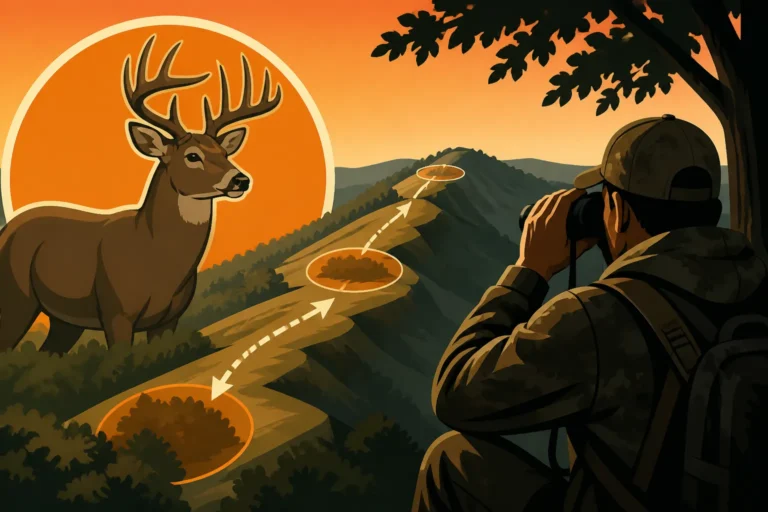
Many of us know the frustration of rolling up to a public land parking lot on opening day, only to see a dozen other trucks already there. It feels like every good spot is already taken, and the deer are long gone, pushed deep into cover. But what if I told you that in South Carolina, there's always ground others walk past, holding overlooked opportunities for savvy hunters? This guide will dive deep into how you can identify, scout, and successfully hunt those hidden pockets that most hunters simply overlook.
Deconstructing Hunter Pressure and Behavior
It’s a tale as old as time: hunters, by and large, are creatures of habit. We tend to stick to what’s easy, familiar, and comfortable. While there’s nothing wrong with efficiency, this very human trait creates predictable patterns that deer learn to exploit – and that you can learn to capitalize on. Understanding where most hunters go, and more importantly, where they don't, is the first step to finding your own untouched honey holes.
The Allure of Easy Access
Let's face it, after a long week of work, the idea of a strenuous trek through rugged terrain isn't always appealing. Most hunters gravitate towards easily accessible areas: established roads, designated parking lots, and well-worn trails. Anything within a quarter-mile of a vehicle access point, or even a half-mile along a clear-cut edge, often sees heavy pressure. Think about the common scenario on a sprawling property like Francis Marion National Forest or a popular Wildlife Management Area (WMA). The edge of a logging road, a utility right-of-way, or a path leading directly from a parking spot often becomes a deer highway, but one that’s quickly abandoned once the season starts and human presence increases.
These easily reached spots might initially seem promising due to their inherent "edge habitat" – where different cover types meet, offering diverse food and cover. However, the constant presence of human scent, the sound of vehicles, and even just the visual disturbance of hunters moving through quickly push wary whitetails elsewhere. Mature deer, especially the older bucks we all dream of, are masters of adaptation. They learn these patterns at an incredible speed, often becoming nocturnal in these pressured zones or simply relocating to safer ground. This phenomenon of Hunting Pressure on South Carolina Public Land is real, and it shapes deer behavior significantly.
It’s not just about the number of hunters, but their predictability. If hunters consistently enter an area from the same points, walk the same trails, and set up in similar locations, deer will adjust. They learn to avoid those areas during daylight hours, waiting until the woods are quiet to venture out. This creates a challenging environment for hunters who stick to the beaten path, but it simultaneously highlights the opportunity for those willing to venture just a little bit further, or approach from an unexpected direction.
Understanding the "No-Go" Zones
Here's the secret sauce: hunters often have self-imposed "no-go" zones. These are the areas that look too thick, too wet, too steep, too remote, or simply too unpleasant to traverse. This aversion to discomfort is precisely where your opportunity lies. Most folks aren't willing to push through a nasty briar thicket, wade a knee-deep slough, or scramble up a rocky, overgrown hillside. The very difficulty of the terrain becomes your ally.
Consider some classic South Carolina examples: the dense, seemingly impenetrable river cane thickets that line sections of the Pee Dee River, the mucky, mosquito-infested cypress swamps of the Lowcountry, or the steepest, most rugged faces of the Blue Ridge Escarpment in the Upstate. These places are challenging, physically demanding, and frankly, a bit daunting to enter. But because they are uncomfortable for humans, they provide unparalleled security cover for deer. These difficult-to-access pockets can hold surprisingly good food sources – like overlooked mast crops or lush browse – that aren't picked over because human disturbance is minimal. The harder it is for you to get there, the less likely other hunters are going there, and the more likely you are to find unpressured deer.
The psychological barrier plays a huge role here. Hunting, for many, is a cherished escape, a chance to relax and connect with nature. Pushing into these truly tough spots doesn't always fit that idyllic picture. It requires a different mindset, one that embraces the grind and the discomfort in pursuit of a unique experience and, hopefully, an unpressured animal. This willingness to go where others won't is what sets successful hunters of overlooked ground apart. These are the places where deer can truly feel safe, and during hunting season, safety is their number one priority.
| Terrain Feature | Hunter Accessibility | Deer Security Cover | Hunting Opportunity |
|---|---|---|---|
| Near Paved Road | High – Easy Walk-in | Low – High Pressure | Low – Skittish Deer |
| Established Trail | Moderate – Easy Walk-in | Moderate – Moderate Pressure | Moderate – Nocturnal Deer |
| Dense Thicket | Low – Hard Push-through | High – Low Pressure | High – Daylight Deer |
| Cypress Swamp | Very Low – Wet, Difficult | Very High – Minimal Pressure | Very High – Bedding, Feeding |
| Steep Ridgeline | Low – Strenuous Climb | High – Minimal Pressure | High – Escape Routes, Beds |
| Remote Food Plot | Moderate – Long Walk | Moderate – Less Pressure | Good – Unpressured Feeders |
Leveraging Digital Maps and Aerial Intelligence
Before you even consider stepping foot in the woods, your digital mapping tools are your most powerful allies in finding ground others walk past. Gone are the days of solely relying on paper maps; modern applications provide an incredible level of detail that can reveal hidden features invisible from the ground. This virtual reconnaissance is crucial for narrowing down your search and maximizing your time afield.
Beyond the Dirt Roads: Interpreting Aerial Imagery
Start your digital journey by pouring over aerial imagery. Services like onX Hunt, Google Earth, or the comprehensive mapping offered by GoHunt can reveal details that are absolute game-changers. Begin by identifying all the obvious access points: roads, parking areas, major trails, and clear-cuts. These are your baseline, representing where most hunters will likely enter and focus their efforts.
Now, shift your focus to what isn't immediately obvious. Look for subtle changes in timber type – perhaps a finger of mature hardwoods extending into a vast pine plantation, a small island of high ground in an otherwise continuous swamp, or a dense block of clear-cut regrowth surrounded by mature, open timber. These subtle variations often serve as critical thermal cover, bedding areas, or overlooked food sources that hold deer seeking refuge from pressure. The key is to find anything that breaks the uniform landscape, creating unique micro-habitats that deer will instinctively gravitate towards.
Pay extremely close attention to transition lines. These are the natural seams where different cover types meet, where elevations shift, or where agricultural fields butt up against dense woods. These transitions are natural travel corridors for deer, and even small, isolated pockets within them can hold deer that feel secure just a short distance from human activity. Look for hard edges where timber meets open fields, or where a dense swamp slowly transitions to higher ground. The beauty of GoHunt's satellite imagery is its clarity, allowing you to meticulously scan for these minute details that other hunters might overlook. For example, a narrow strip of hardwoods running between two distinct swamp sections could be a prime travel route.
The goal is to identify anomalies. Anything that looks different, stands out from the pattern, or suggests a unique micro-environment can be a hidden gem. A small, hidden pond nestled deep in the woods, a patch of mature oaks tucked away in a remote corner of a WMA, or a brushy hedgerow running through an otherwise open expanse of planted pines – these are the subtle features that scream "deer sanctuary." These are often the places that require a slightly longer walk, a tougher push through cover, or a less conventional approach, which is why they are often overlooked.
Topographical Insights for Hidden Havens
Once you've identified potential areas of interest from aerial views, overlay a topographical map. Whether you're using a dedicated GPS unit or the advanced features of an app like GoHunt, understanding contour lines is invaluable for finding those overlooked terrain features that naturally funnel deer away from pressure. In many areas, especially the Upstate, forget focusing solely on flat ground; the real magic happens where the elevation changes.
Concentrate on features like saddles between ridges, subtle draws, and benches on hillsides. These aren't just random bumps in the landscape; they are natural travel routes and preferred bedding areas. A wise old buck might utilize a Hunting a Ridge-Top Saddle for Rutting Bucks to skirt a main ridge, staying out of sight and scent of hunters below, while still efficiently moving between feeding and bedding areas. These features provide cover, easy travel, and often a commanding view of the surrounding terrain, allowing deer to detect threats from multiple directions.
In the flatter Lowcountry terrain, true elevation changes might be less dramatic, but even a foot or two of rise can mean the difference between wet and dry ground. This is critically important during periods of high water or after heavy rains. Look for "high spots" within vast swamps or along broad creek bottoms – these slightly elevated islands are often preferred bedding areas and crucial escape routes when the water rises. A small, forgotten hummock in a vast cypress forest could be a deer's favorite hideout, a place they instinctively know is less likely to be disturbed.
Always consider how wind and thermals will interact with these topographical features. A leeward (downwind) side of a ridge or a sheltered draw might be a preferred bedding spot because it offers thermal protection from cold winds and a good vantage point for scent checking the area below. Conversely, deer might use the windward side of a ridge to travel, using the prevailing breeze to detect danger. This kind of detailed analysis, far from the nearest road, helps you pinpoint exactly Where Francis Marion Bucks Bed and how to approach them without blowing your cover. Understanding these subtle interactions is what turns a good map into a powerful hunting strategy.
The Art of Reconnaissance: Boots on the Ground
After meticulously dissecting maps and aerial imagery, the next critical step is to validate your theories with boots on the ground. This isn't just a casual walk in the woods; it's a dedicated mission of reconnaissance, designed to confirm deer activity in those hidden, overlooked pockets you’ve identified. This physical scouting is where your digital detective work truly pays off.
Pre-Season Scouting Beyond the Obvious
Once your digital recon is complete, it’s time to hit the woods. But here’s the crucial part: don't just wander aimlessly. Target those "no-go" zones you identified on your map. Push into the thickest stuff, wade the edges of swamps, and climb those steep, brushy slopes. Your primary goal isn't necessarily to see deer, but to find their sign in places where others clearly aren't looking. This might mean getting scratched up, muddy, and soaked, but the reward is often worth the effort.
Look for subtle, overlooked indicators of deer activity. These might include old rubs from previous seasons that show consistent buck use, faint and barely visible trails leading into dense, otherwise impenetrable cover, scattered droppings in out-of-the-way pockets, or even just heavily browsed vegetation in a hidden thicket. These clues, especially when found in remote, unpressured areas, tell you that deer are consistently using this spot, and perhaps more importantly, that human disturbance is minimal. The less obvious the sign, the more likely it is that you're the first hunter to truly explore that specific area.
A highly effective strategy is to focus on finding bedding areas first. These are almost universally thick, nasty spots, often with good visibility downwind, allowing deer to smell danger approaching. If you find a promising bedding area tucked deep into a cypress head or a dense pine replant, then you can work backward, looking for the trails leading from it to food sources, water, or other security cover. This "reverse-scouting" method helps you understand the deer's core daily routine in an unpressured environment, giving you a significant advantage. This foundational work is part of effective Scouting South Carolina Public Land Before Season.
Don't be afraid to take a few "sacrifice" scouting trips. These aren't for hunting; they are purely for learning. Go in, make some noise if necessary (within reason), and get a true feel for the lay of the land, especially if you're trying to figure out Hunting a Funnel Between Two Swamps. You'll learn more in one uncomfortable, thorough scouting trip through truly overlooked ground than you will in several comfortable, but unproductive, hunting sits in heavily pressured areas. The physical effort now will pay dividends when the season opens.
Reading Subtle Sign and Deer Movement
In these overlooked, low-pressure areas, deer sign might not be as abundant or as visually obvious as on a well-used field edge or along a frequently walked trail. You need to transform into a meticulous detective, searching for faint trails that are almost indistinguishable from game trails, older rubs on small saplings, or perhaps even sparse, older droppings. This type of subtle, consistent sign is often a much stronger indicator of long-term deer residency and low human pressure than a freshly pounded trail that every hunter in the county has walked.
Pay close attention to the age of the sign you encounter. While fresh tracks in mud, recent droppings, or a newly opened scrape line are undoubtedly exciting, older, consistent sign in a remote and difficult-to-access spot tells a powerful story. It indicates that deer have been routinely using this area over an extended period, suggesting they feel safe and undisturbed. Learn to discern the difference between a buck that's just passed through and one that's consistently calling a hidden thicket home. Reading South Carolina Mud for Fresh Deer Movement can tell you a lot about recent activity, but old rubs confirm consistent usage.
Consider the specific type of cover you're exploring. In a dense, overgrown swamp, deer paths will often be barely visible, more like tunnels pushed through the thick vegetation than clearly defined trails. In thick pine regeneration, look for where they've subtly pushed through the saplings, creating faint pathways only detectable to a discerning eye. Every piece of terrain leaves a different kind of signature, and understanding how deer move within that specific cover type is crucial. For instance, in an old-growth bottomland, deer might stick to the highest ground, while in a thick clear-cut, they might tunnel through the dense understory.
Finally, always ask yourself why the deer are using this particular spot. Is it serving as a thermal sanctuary from the summer heat or winter cold? Is there a hidden food source here, perhaps acorns from an obscure stand of oaks, or a patch of green browse that other hunters entirely miss? Is it functioning as a secure escape route from a nearby, more heavily pressured area? Understanding their motivations helps you to predict their future movements and identify where to set up. Knowing that deer are using a spot because it offers unmatched security is a powerful insight into finding success on ground others walk past.
Hunting Tactics for Hidden Hotspots
Finding these overlooked pockets is only half the battle; successfully hunting them requires a specialized approach. These areas demand unconventional thinking, meticulous planning, and a willingness to embrace tactics that deviate from traditional methods. Forget the easy walk-ins and common stand locations; here, stealth, adaptability, and deep understanding of deer behavior are your most valuable assets.
Unconventional Entry and Exit Strategies
Getting to these remote, unpressured spots without alerting the deer to your presence is paramount. This often means abandoning main trails, logging roads, and even the "smart" shortcuts that other hunters might discover. Instead of walking down a well-used logging road, consider walking parallel to it, just inside the timber, using the natural cover to conceal your movement and scent. Or, better yet, go entirely cross-country, picking your way directly to your spot, minimizing your footprint. This might mean a longer, tougher walk, but it keeps you out of the predictable travel lanes that educated deer avoid.
Think creatively about water access, especially in South Carolina's abundant Lowcountry. A small canoe, kayak, or even simply a good pair of chest waders can open up vast tracts of untouched swamp or marsh that are otherwise impenetrable. Approaching a stand location by water leaves almost no scent cone on land, and it allows you to get deep into areas that most hunters wouldn't even consider. While Recovering a Deer From a Lowcountry Swamp can be a challenge, getting there by water can be a game-changer for avoiding human scent and sight, giving you a truly unique advantage.
Always plan your approach and exit around the prevailing winds and thermals. This isn't just a suggestion; it's a requirement for hunting unpressured deer effectively. Always approach your stand from downwind, especially if you suspect deer are bedding close by in the thick cover you’ve found. In the mornings, thermals typically fall down hillsides and into low areas, making it safer to approach from above on a ridge. Conversely, in the evenings, thermals generally rise, allowing for a safer approach from below. Using an app like GoHunt can help you track real-time wind and thermal patterns, ensuring your entry and exit are as covert as possible.
Silence is not just golden; it's absolutely critical when you're slipping into an unpressured sanctuary. Slow down, take your time, and minimize every possible noise. This might mean leaving noisy items like rattling antlers or heavy packs at home if you're trying to slip into a thick bedding area for an afternoon sit. If using a portable stand, opt for quiet equipment like rubber-coated Climbing Sticks for Rough Bark instead of noisy metal ones, and take extra care to secure everything to prevent clanking. The goal is to be a ghost in the woods, leaving no trace of your presence until it's too late for the deer. Remember, the deeper you go, the more sensitive the deer are likely to be to any disturbance. Knowing How Far to Walk From a Forest Road to truly get away from pressure is often measured in uncomfortable miles.
Strategic Stand Placement and Adaptation
In these low-pressure, overlooked areas, deer might be slightly less wary of immediate human presence, but they are still incredibly sharp animals. Your stand placement needs to be exceptionally precise, focusing on subtle advantages. Rather than setting up right on the edge of an obvious trail, consider setting up within thick cover, looking out onto a subtle opening, a barely-there funnel, or a dense bedding area you discovered during scouting. Concealment is paramount; you want to blend seamlessly into the environment.
Focus relentlessly on pinch points, even the most minute ones. This could be a narrow strip of dry ground meandering between two swampy areas, a small saddle on a barely perceptible rise within a flat landscape, or a natural bottleneck created by an impenetrable thicket on one side and an open timber stand on the other. These features naturally funnel deer movement, drastically increasing your odds of an encounter. Even a small change in elevation or vegetation can create a "choke point" where deer instinctively travel, offering you a high-percentage shot opportunity. This is where Treestand Setups in Francis Marion National Forest need to be subtle and perfectly blended.
Don't be afraid to hunt from the ground if the cover allows. In many of these thick, remote spots, setting up a tree stand can be overly intrusive, or the trees simply aren't suitable. A well-brushed-in ground blind, or simply sitting against a large oak or cypress with ample back cover, can be incredibly effective in areas where deer are not expecting human presence. This approach allows for ultimate flexibility, minimal intrusion, and can be remarkably comfortable, especially on longer sits. Mastering Using a Ground Blind on South Carolina Public Land will expand your hunting options significantly, particularly in areas with limited treestand opportunities.
Finally, be prepared to adapt on the fly. If your initial spot isn't producing, don't be stubborn. Use the comprehensive knowledge you gained from your extensive scouting to move to another overlooked micro-habitat. The beauty of these truly remote and unpressured areas is that if one spot is a bust, there's often another hidden gem just a short, hard walk away. Perhaps a subtle shift in wind, an unexpected change in food availability, or even just a missed detail in your initial setup could warrant a move. Flexibility, persistent effort, and a keen eye for subtle sign are the ultimate keys to consistent success when hunting ground others walk past.
Disclaimer
Please remember that hunting regulations and land access rules can change frequently. Always consult the latest South Carolina Department of Natural Resources (SCDNR) regulations before heading afield, and ensure you have all necessary licenses and permits. Stay safe and respect the land.