Early Goose Season Tactics in South Carolina
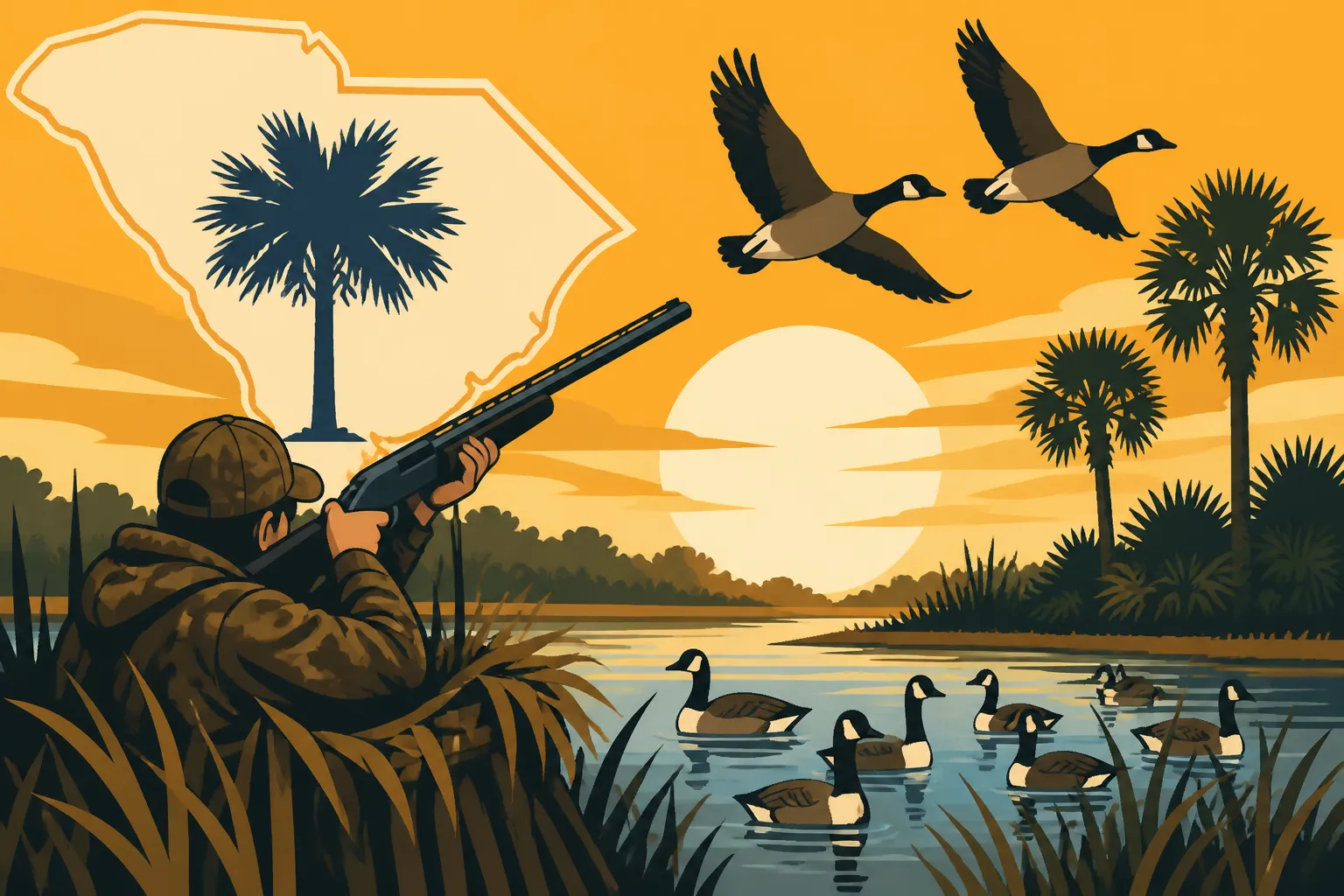
That September chill in the morning air, even if it’s just a whisper of cooler weather, always gets a waterfowler’s blood pumping. But let’s be honest, early goose season in South Carolina can feel like a completely different ballgame than the later, colder months. You're often battling heat, wary birds that haven’t seen much pressure, and figuring out their unique patterns. This guide is all about tackling those specific challenges, giving you the real-world tactics to find success when targeting South Carolina's resident Canada geese during the early season.
Understanding South Carolina's Early Goose Season Dynamics
When that early season opener rolls around, usually in September, many hunters are still focused on deer or preparing for the main duck season. But if you know how to play your cards right, the early goose season can offer some fantastic action. It's not about huge migrations just yet; it's about those local birds that call South Carolina home year-round. They have a different rhythm, different hangouts, and require a slightly different approach.
Key Dates and Regulations for Early Geese
The South Carolina Department of Natural Resources (SCDNR) sets specific dates for the early resident Canada goose season each year, usually a short window in September, typically before the main waterfowl seasons kick off. It’s absolutely critical to double-check the current year’s regulations on the SCDNR website or in the annual hunting guide, as these dates, bag limits, and even shooting hours can sometimes shift. Generally, during this early window, you'll find a more generous daily bag limit compared to the regular season, often around 15 birds. This larger limit reflects the SCDNR's efforts to manage the growing resident goose populations, which can sometimes become a nuisance in agricultural areas or suburban parks. Remember, you'll still need your state hunting license, a migratory bird permit, and a federal duck stamp, even for resident geese. Make sure you're properly enrolled in the Harvest Information Program (HIP) as well; it's a small but vital step for all migratory bird hunters in the state. For a deeper dive into the overall structure, check out our guide on South Carolina Waterfowl Zones and Seasons.
Another thing to remember is the legal shooting hours. While duck season often has specific start and end times, early goose season typically follows the standard migratory bird hours, which usually means half an hour before sunrise to sunset. Always keep a reliable timepiece with you and know your sunrise/sunset times for your specific location. Trying to squeeze in those extra minutes before or after legal shooting time isn't worth the potential penalties or, more importantly, the ethical implications.
Resident Canada Goose Behavior in Early Fall
Unlike the large flocks of migratory Canada geese that pass through later in the year, resident geese are, well, residents. They’ve hatched and grown up here, and they know the landscape intimately. Their behavior in early fall is largely dictated by food availability, safety, and established routines. You won't see them making epic flights from the Canadian provinces; instead, they’ll be moving between local feeding grounds, water sources, and roosting spots.
Their flight patterns are often predictable. They’ll roost overnight on larger bodies of water – think lakes, reservoirs like Lake Marion or Lake Moultrie, wide rivers, or even large farm ponds – then fly out at first light to feed. In the mid-morning, they might move to a loafing area, which could be another pond, a wide-open field, or a quiet stretch of a riverbank, where they'll preen and digest. In the late afternoon, they often make another feeding trip before heading back to their roost. Identifying these patterns is key. These birds are less pressured and haven't yet learned the caution that comes with months of hunting season. They're often feeding heavily, trying to put on fat reserves before winter, even if it's still warm out. Their diets at this time of year consist largely of waste grain from harvested fields, tender young grasses in pastures, and sometimes even aquatic vegetation. If you want to refine your understanding of what birds are where, exploring resources like South Carolina Duck Zone Boundaries can give you insights into broader waterfowl movements.
Scouting and Location Selection for Early Season Geese
Success in early goose season, perhaps more than any other waterfowl hunt, hinges almost entirely on diligent scouting. These resident birds are creatures of habit, and if you can pinpoint their daily routine, you’re halfway to filling your limit.
Identifying Prime Feeding and Loafing Areas
Start your scouting by looking for freshly cut agricultural fields. In early September, many corn and soybean fields will have just been harvested, leaving behind a bounty of waste grain that geese absolutely adore. Wheat stubble fields, if they're still around, are also major attractors. Drive the back roads, use binoculars, and don't be afraid to pull over and watch. Look for droppings, feathers, and those tell-tale tracks in the mud or dust. Even better, get out and walk the edges of fields to see where they've been feeding. Sometimes, if a field has been recently cut and there’s a good rain, you might even see geese "puddling" in shallow depressions, feeding on newly sprouted tender shoots. Pastures, especially those with short, grazed grass, are also prime feeding locations. Golf courses, while often inaccessible for hunting, can show you exactly what kind of manicured green space these birds prefer to feed and loaf on.
Beyond feeding, you need to identify their loafing areas. These are typically undisturbed, open spots where they can relax but still feel safe, with good visibility. Large, open ponds, calm sections of rivers, or even just big, flat fields where they can spread out are common loafing spots. Sometimes these are adjacent to feeding fields, making for easy transitions. Other times, they might be a short flight away. The ideal scenario is finding a field where they are actively feeding, with a water source nearby for loafing and drinking. Platforms like GoHunt can be incredibly useful for digital scouting, allowing you to view satellite imagery to spot potential fields, ponds, and flight lines before you even leave your couch. You can mark potential spots and plan your physical scouting routes more efficiently. Knowing how to interpret these aerial views is critical for Scouting South Carolina Public Land Before Season, even if you're targeting private fields.
Utilizing Public and Private Land Access
Access is often the biggest hurdle for goose hunting. Many of the prime feeding fields are on private agricultural land. This means you're going to need to do some legwork. Start by knocking on doors. Introduce yourself, explain your intentions, and be respectful of their property. Offer to share some of your harvest. Building a relationship with landowners is key, and being polite and professional can open a lot of doors. Farmers are often eager to have hunters help manage goose populations, especially if they’re causing crop damage. Don't be discouraged if you get a few "no"s; just move on to the next farm. Local stores, feed mills, or even community social media groups might offer leads on landowners looking for hunters.
Public land can be more challenging for early goose season, as many Wildlife Management Areas (WMAs) might not have the specific agricultural setups that resident geese prefer, or they may be regulated differently. Some WMAs do have larger impoundments or managed fields, but competition can be stiff. It’s vital to check the specific WMA regulations, as some may have quota hunts or different bag limits for goose season. Hunting some of the larger public waters, like parts of the Santee Cooper lakes or other major reservoirs, could offer opportunities if geese are using those as roosts, but field hunting will likely require private land. Consider areas near large rivers like the Pee Dee or Savannah, as geese will often use sandbars or wide bends for loafing. If you're focusing on coastal regions, our guide on Hunting Coastal Marsh Waterfowl might offer some transferable scouting techniques for open water and marsh areas.
Decoy Spreads and Calling Strategies for Resident Geese
Once you've found a consistent pattern and secured access, the next step is setting up a spread that looks natural and a calling rhythm that sounds inviting. Resident geese, while not as highly pressured as late-season migrants, can still be wary, especially if they've seen some hunting pressure in previous years.
Effective Decoy Spreads for Early Season
For resident Canada geese in early season, you generally don't need a massive spread of hundreds of decoys. These birds often fly in smaller family groups or small flocks. A spread of 2-4 dozen good-quality decoys can be very effective. The key is realism and creating a "landing zone." Think about what real geese do in a field: they’re not uniformly spread out like chess pieces. They're often in family clusters, some feeding, some looking around.
- Decoy Types: Full-body decoys offer the most realism, especially in clear, still air. Shells or silhouettes can also work well, especially for bulking up a spread, but mix them with full bodies if you have them. Floaters are essential if you're hunting a water body where geese are loafing or watering.
- Placement: Arrange your decoys in loose family groups of 3-6 birds. Leave a clear, open landing zone upwind of your blind, perhaps 15-25 yards out. Geese will almost always land into the wind. If you can, place a few "sentry" decoys with their heads up, looking around, slightly separated from the main feeding flock. This adds to the realism.
- Motion: Motion can be a game-changer, especially on calm days. A simple goose flag can be incredibly effective at grabbing distant birds' attention. Flapping wing decoys or even a few full-body decoys on a motion stake can add lifelike movement. Remember, early season often means less wind, so creating your own movement is paramount. For more advanced decoy strategies that can be adapted, check out our piece on Decoy Spreads for ACE Basin Divers, which covers various placement techniques.
Calling Techniques for Early Season Geese
The calling approach for early season resident geese is often much softer and more conservative than what you'd use for aggressive, high-flying migrants in December. These birds aren't necessarily looking for a massive party; they're often just looking for a safe place to feed or relax with their buddies.
- Less is More: Start with soft clucks and moans. These are contentment calls that tell approaching geese, "Everything's fine down here, come on in."
- Greeting Calls: If birds are distant and looking, a short, sharp series of greeting calls can get their attention, but don't overdo it. Once they commit, go back to softer clucks and moans.
- Reading the Birds: Pay close attention to how the geese react. If they're coming in steady, sometimes it's best to stop calling altogether and let the decoys do the work. If they start to waver or drift, a few soft calls can bring them back. If they're cupped and committed, no need to call. Conversely, if they're flaring aggressively, you might be calling too loudly or too much.
- Variety: Have a few different calls at hand – a short-reed call for more controlled sounds, and perhaps a flute call for deeper, resonant honks if needed. The goal is to sound like a small, contented flock.
Concealment and Shot Selection for a Clean Harvest
Even though early season geese might be less pressured, they are still sharp-eyed birds. Your concealment must be top-notch, and your shooting skills need to be on point to ensure quick, ethical harvests.
Blinds and Camouflage for Early Season Success
Good concealment is non-negotiable. Geese have incredible eyesight, and they'll spot anything out of place.
- Layout Blinds: These are fantastic for hunting in open stubble fields. They keep you low to the ground and allow you to pop up quickly for a shot. Ensure your layout blind is brushed in thoroughly with natural vegetation from the field you're hunting. Use corn stalks, soybean stubble, or whatever is available to completely break up its outline.
- Natural Cover: If you have access to a fence row, a ditch, or a patch of taller weeds, you can build a natural blind. Again, ensure it completely conceals you, and that you have a good shooting lane.
- Camouflage: Match your camo pattern to the environment. If you're in a cut cornfield, use cornfield patterns. If you're in a green pasture, use patterns with more greens and browns. Don't forget your face mask and gloves; a flash of skin is a huge give-away. Early season often means warm weather, so consider breathable, lightweight camo that won't make you overheat while waiting in the blind. For more on staying comfortable, look at tips for Warm-Weather Sitting Strategy in South Carolina.
- Sun and Shadows: Position your blind with the sun at your back, if possible. This makes it harder for geese to see into your blind and can give you an advantage. Be mindful of any shadows you might cast as the sun moves.
Shot Placement and Choke Selection for Geese
Ethical hunting demands clean kills, and that means proper shot selection and knowing your firearm and ammunition.
- Non-Toxic Shot: It’s crucial to remember that non-toxic shot is legally required for all waterfowl hunting in South Carolina. This means no lead shot. Steel shot is the most common and affordable option, but bismuth and tungsten-based loads offer denser patterns and more knockdown power, albeit at a higher cost. For more details on this, check out Where Nontoxic Shot Is Required in South Carolina.
- Choke Selection: For geese, a modified or improved modified choke is a good all-around choice. This provides a dense enough pattern for geese at typical decoy ranges (25-40 yards) without being too tight for close-in shots. If you expect longer shots, a full choke might be considered, but ensure you pattern your gun with your chosen load to see how it performs.
- Shot Size: Steel shot in sizes BB, 1, or 2 are commonly used for geese. If using bismuth or tungsten, you can often go a size or two smaller (e.g., 2 or 3) due to the increased density.
- Shot Placement: Aim for the head and neck, or the forward third of the body (the chest and wing butt area). This is where the vital organs are. Avoid taking shots at the rear of the bird, as this often leads to wounded birds and difficult retrieves. Wait for birds to be within ethical shooting range, typically 40 yards or less with steel shot, and allow them to commit to the decoys before you call the shot. Don't rush. One clean shot is better than three panicked misses.
| Decoy Spread Aspect | Early Season Resident Geese | Late Season Migratory Geese |
|---|---|---|
| Number of Decoys | 2-4 dozen (realistic family groups) | 5-20 dozen (large, aggressive feeding flocks) |
| Decoy Types | Mix of full bodies, shells, floaters (if water present); emphasis on realism | Full bodies, shells, silks; quantity often prioritized |
| Arrangement | Loose family clusters, clear landing zone upwind, some sentries | Large, spread-out feeding pattern, 'J' or 'U' shape for landing |
| Motion | Crucial due to typically low wind; flags, flappers, motion stakes | Still beneficial, but large numbers can compensate for less motion on windy days |
| Calling Aggressiveness | Soft clucks, moans, contented sounds, minimal greeting calls | Louder, more aggressive calling, flagging, larger greeting calls |
| Bird Pressure | Generally less wary, but can be educated if hunted consistently | Highly wary, sensitive to unnatural movements and sounds |
Disclaimer
Hunting regulations and conditions can change rapidly. Always consult the latest South Carolina Department of Natural Resources (SCDNR) regulations before heading into the field. This guide is for informational purposes only and does not supersede official state regulations. Be sure to hunt ethically, safely, and responsibly.