Tracking a Deer Through South Carolina Pine Straw
There's nothing quite like the immediate rush after the shot, that heart-pounding mix of excitement and anticipation. But that thrill can quickly turn to a sinking feeling when you realize your deer, which seemingly ran a short distance, has vanished into the thick South Carolina pines. Tracking a deer through dense pine straw isn't just a challenge; it's a test of patience, skill, and sometimes, sheer stubbornness. This guide is here to walk you through the frustrating realities of blood trailing in the Palmetto State's unique terrain and equip you with the knowledge to bring your deer home.
The Unique Challenges of Pine Straw Tracking
South Carolina's diverse landscapes offer incredible hunting opportunities, but they also present some very specific tracking hurdles. And when you're hunting in areas dominated by longleaf or loblolly pines, you quickly realize that pine straw isn't just ground cover – it's a master of camouflage.
Why Pine Straw Makes Tracking So Difficult
Imagine trying to find a needle in a haystack, except the needle is a few drops of blood, and the haystack is a sprawling, crunchy carpet of pine needles. That's essentially what you're up against.
Firstly, pine straw is incredibly absorbent. A healthy lung hit will often leave a vibrant, frothy trail, but a liver or muscle shot might only produce sparse, dark drops that quickly soak into the dry needles, becoming almost invisible within minutes. The needles themselves also have a natural reddish-brown hue that can make even fresh blood blend in, especially as it oxidizes and darkens. You might be staring right at it and never know.
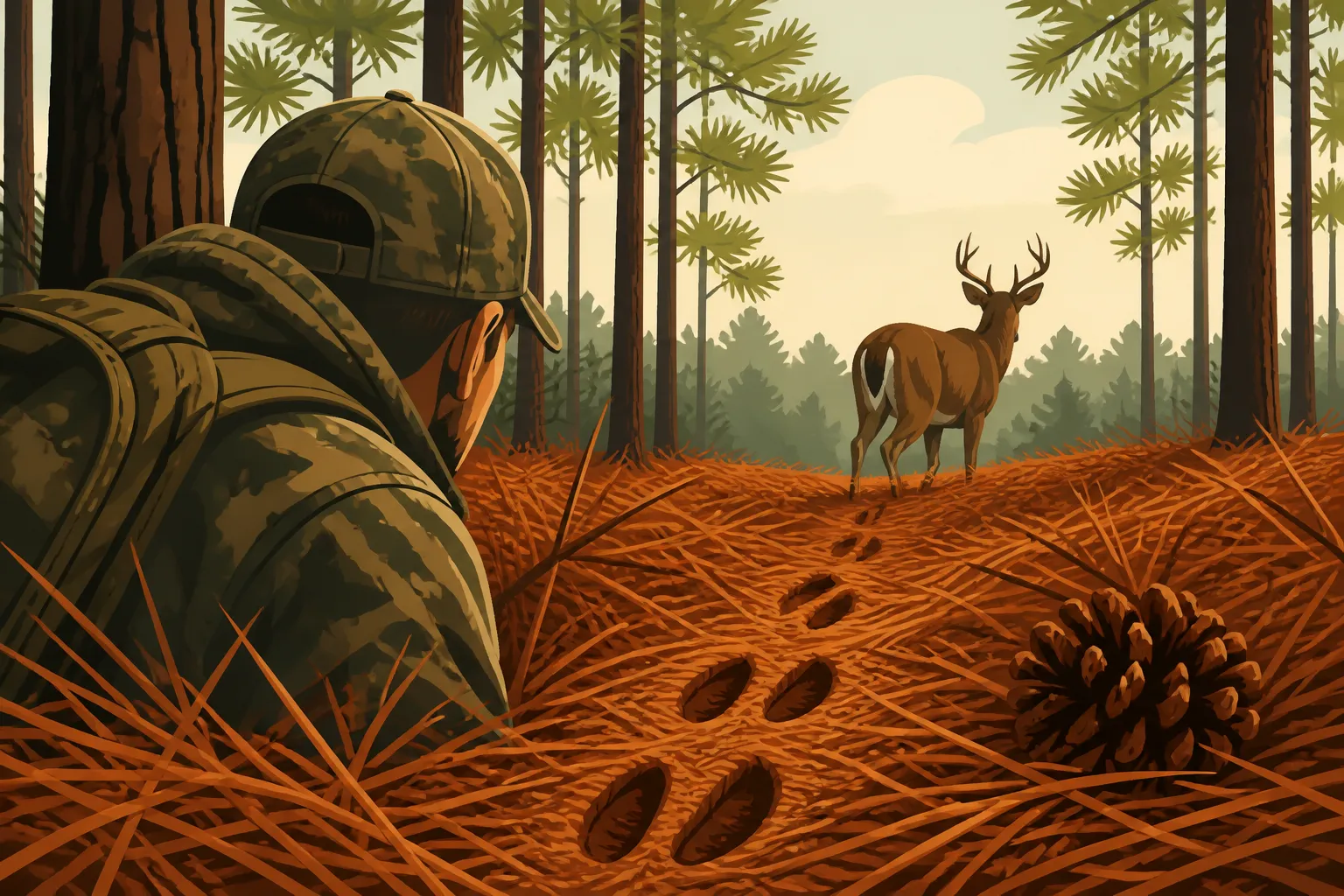
Secondly, pine straw hides tracks like nothing else. Where a dirt path or muddy creek bank would show a clear hoof print, pine straw simply shifts and settles back into place, leaving barely a scuff. You might find a subtle indentation if the deer really dug in, but don't expect crisp outlines. What you're often looking for are disturbed patterns, areas where the needles have been pushed aside or kicked up, creating an ever-so-slight change in texture or color.
Finally, the sheer volume of pine straw can create optical illusions and false trails. A gust of wind, a squirrel scrambling through, or even your own boots can shift the needles in a way that looks like deer sign. It takes a keen eye and a lot of focus to differentiate genuine disturbance from natural occurrences. The crunch underfoot also makes it incredibly difficult to hear a downed deer or even discern which direction they might have gone after the shot.
Environmental Factors Magnifying the Difficulty
It's not just the pine straw itself; South Carolina's climate and ecosystems often conspire to make a tough track even harder.
Warm weather is perhaps the biggest culprit. Early archery season in August and September can see daytime temperatures well into the 90s, with humidity to match. Blood dries and clots rapidly in these conditions, sometimes within minutes, making it incredibly difficult to pick up on the trail. Even worse, warm weather means scavenger activity. Coyotes, vultures, and even feral hogs can quickly find and feast on a downed deer, especially if you leave it overnight. This not only means lost venison but also makes your tracking effort completely in vain. Warm-Weather Sitting Strategy in South Carolina can give you some insights into managing these conditions.
Humidity, while sometimes keeping blood from drying too fast, can also cause it to spread thinly and become less visible, almost like a stain rather than a distinct drop. Combine this with the ever-present gnats, mosquitos, and biting flies that thrive in the heat and humidity, and your focus on the trail can be severely tested.
Beyond the pine straw, many South Carolina pine forests have a dense understory of palmettos, briars, and other thick brush. A deer running through this cover can leave a completely different trail than one running through open timber. The blood might be smeared on leaves or broken branches at deer height, rather than on the ground. This requires looking up, down, and all around, adding another layer of complexity to an already challenging task.
Essential Gear for a Successful Track
Before you even step into the woods, having the right tools can make all the difference between a successful recovery and a frustrating loss. Don't underestimate the power of preparation.
Lighting and Vision Aids
When the sun starts to dip, or if your track takes you into dense, shadowed areas, good lighting becomes non-negotiable.
A powerful headlamp is your most valuable asset. Look for one with multiple brightness settings and, ideally, a red light option. The red light helps preserve your night vision, which is crucial for spotting subtle signs, and also won't spook any critters you might encounter. A focused beam allows you to zero in on specific spots, while a wider flood setting is great for scanning larger areas. Always carry spare batteries or a portable power bank; you don't want your light dying when you're deep in the woods on a hot trail.
Beyond your headlamp, consider bringing a separate lantern or a more powerful handheld floodlight, especially if you anticipate a long track or a grid search. These can illuminate a broader section of the ground, making it easier for multiple people to work or to verify faint signs.
Binoculars aren't just for spotting deer in the distance; they can be incredibly helpful on a blood trail. Use them to scan 10-20 yards ahead, looking for disturbed pine straw, a change in vegetation, or even a glimpse of the deer itself. The magnification can sometimes highlight subtle blood smears on leaves or bark that you might miss with the naked eye.
Finally, in this digital age, consider a robust mapping app on your phone. Platforms like GoHunt can be invaluable. Use it to mark your "last blood" spots, trace your own path, and even create a search grid if you lose the trail. This prevents you from getting turned around, helps you systematically cover ground, and allows you to return to known points easily. Scouting With the Go Outdoors SC App outlines how these digital tools can be game-changers for any hunter.
Marking and Measuring Tools
Once you find a sign, it's crucial to mark it. This isn't just about celebrating a discovery; it's about building a breadcrumb trail that keeps you oriented and allows you to reassess if you get stuck.
Fluorescent ribbon, typically blaze orange or pink, is perfect for this. Tie a piece of ribbon every time you find blood or significant sign. This creates a visible line that you can follow backward if you lose the trail or need to bring someone else in. It also ensures you don't double back over already searched ground. Don't be shy with it; the more you mark, the better.
A small measuring tape can be useful for track analysis. If you find a partial hoof print, you can measure its length and width. This might not seem like much, but if you have multiple deer in the area, or if you're trying to determine if a set of tracks matches the deer you shot, every bit of information helps. Looking at stride length can also tell you if the deer was walking, trotting, or bounding.
A compass or a dedicated GPS unit (or a reliable app like GoHunt on your phone) is essential for maintaining direction. When you're intensely focused on the ground, it's incredibly easy to lose your sense of direction, especially in thick woods with no clear landmarks. Knowing your general direction of travel and marking your starting point and every significant turn will keep you from getting lost and help you navigate back to your vehicle.
Scent and Disturbance Detection
Sometimes, your most powerful tools are your natural senses and the help of others.
Don't underestimate your nose. If a deer is gut-shot, you might eventually pick up the distinct, pungent odor of stomach contents. Similarly, a bedded, injured deer might have a musky scent. After a long track, your senses become heightened, and sometimes a subtle smell can lead you to your quarry.
Always consider bringing a partner if possible. Two sets of eyes are almost always better than one. One person can focus solely on the blood trail, while the other can look ahead for disturbed vegetation or the deer itself. This method helps prevent you from continually putting your head down and missing wider signs.
Finally, if the track is particularly tough, or if you're dealing with a marginal hit, a trained tracking dog can be a lifesaver. South Carolina has several licensed blood-trailing services. If you've exhausted your own efforts, or if you're concerned about losing a valuable animal, don't hesitate to call one. They have an incredible success rate and can often find deer that human trackers would never locate.
Step-by-Step Tracking Strategy
Tracking a wounded deer is often a mix of science, intuition, and an unwavering commitment. Approaching it systematically will significantly increase your chances of success.
Initial Assessment and Patience is Key
The moments immediately after the shot are critical, but so is showing restraint. Your first instinct might be to sprint after the deer, but resist this urge.
The "Sit for an Hour" rule is a golden one, especially for anything other than a confirmed heart/lung shot. If you suspect a gut shot, or if the shot felt marginal, or you're unsure of the exact hit, sitting tight for at least an hour, or even two or three, can be the best decision you make. This allows the deer to bed down and expire peacefully. If you push a gut-shot deer too soon, it will often get up and run for miles, making recovery nearly impossible. Warm-Weather Sitting Strategy in South Carolina has more tips for these early season conditions.
While you're waiting, recreate the shot in your mind. Where was the deer standing? What direction was it facing? Which way did it run? Did you hear a "thwack," a "slap," or a dull thump? Any hair at the impact site? What color was it? This mental reconstruction helps you anticipate the deer's likely travel path and the type of blood trail you might find. Use your GoHunt app to mark your stand location and the estimated shot location.
Once you've given it time, approach the shot site cautiously. Your primary goal is to find the first blood, and once you do, mark it immediately with your fluorescent ribbon. This first sign is often the most important, as it confirms your hit and gives you a starting point.
Following the Trail Systematically
When the trail starts, the real work begins. It's a slow, meticulous process, often measured in inches rather than yards.
The "Stringing the Trail" method is highly effective, especially in pine straw. As you find each new drop or sign of blood, mark it with a piece of ribbon. This creates a visible line that shows your progress and helps you stay on track. If you go 10-15 yards without finding sign, go back to your last marked spot and begin a wider search in a circular or grid pattern.
Reading the sign isn't just about blood. In pine straw, you're often looking for a combination of clues:
- Disturbed Pine Straw: Kicked-up needles, areas where the ground has been visibly scuffed or churned.
- Broken Twigs/Brush: Look at the height of the breaks – high breaks might indicate a deer stumbling or pushing through thick cover.
- Hair: Often found at the initial impact site or where the deer brushed against something. The color and length can indicate where on the body it was hit.
- Bone Fragments: A sure sign of a solid hit, but also indicates potential broken bones, which can affect how far the deer travels.
- Stomach Contents: A clear indication of a gut shot, meaning you need to back out and give the deer much more time.
- Footprints: While rare in pine straw, look for any clear impressions, especially near mud puddles, creek banks, or patches of bare earth. Reading South Carolina Mud for Fresh Deer Movement offers insights into interpreting these.
Always try to look ahead of your current position. Instead of focusing solely on the spot directly under your nose, scan 10-20 yards out. Sometimes, you can spot a faint blood smear on a distant leaf or a patch of disturbed ground that leads you directly to the next sign, preventing you from getting lost on the immediate trail.
Knowing when to call it quits for the night is a tough but crucial decision. If darkness falls, or if you're completely stumped after hours of searching, it's often better to back out and return at first light. Marking your last blood and using your GoHunt app to pinpoint your exit will ensure you can pick up precisely where you left off. Attempting to track a cold trail in the dark without ample lighting or experience can easily lead to getting lost or pushing the deer further. Blood Trailing After Dark in South Carolina provides specific advice for those challenging nighttime scenarios.
Advanced Techniques for Tough Tracks
Sometimes, the standard methods aren't enough, and you need to employ more robust strategies.
The "Sweeper" method is excellent when you have multiple people and the blood trail has completely vanished. Line up your tracking party shoulder-to-shoulder, about 5-10 yards apart, and slowly walk in a line through the suspected area. Each person is responsible for their strip of ground, looking for any sign – blood, disturbed ground, or the deer itself. This systematic approach ensures thorough coverage.
Understanding how deer react to different hits is vital.
- Heart/Lung: Often characterized by bright, frothy blood. Deer typically don't go far, often piling up within 50-100 yards. They might run hard then crash.
- Liver: Darker, thicker blood, sometimes with clots. Deer usually travel 100-300 yards and then bed down. They might act "sick" or walk slowly. Patience is critical here.
- Gut: Foul-smelling, greenish-brown stomach contents mixed with blood. Deer will often hump up, walk slowly, and bed down. This is where the long wait (6-10+ hours) is absolutely necessary.
- Muscle/Leg: Sporadic, often pinkish blood. Deer might travel a long distance, often favoring one side. They may recover, but you still need to pursue them ethically.
- High Shoulder/Spine: Instant drop, often followed by a struggle if not completely severed.
Recognizing bedding areas and water sources is also crucial. A wounded deer will often seek thick cover to bed down in or head toward water to cool off or hide. Look for dense thickets, swamp edges, and creek bottoms. Hunting Lowcountry Swamp Deer describes some of these difficult terrains where a wounded deer might seek refuge.
Finally, don't be afraid to consult with experienced trackers. Many hunting clubs or local hunters have a wealth of knowledge. Sometimes, a fresh perspective or an experienced eye can spot something you've missed. Platforms like GoHunt might also connect you with local experts or tracking services in your area.
What to Do When You Find the Deer (Or Don't)
The culmination of a long, arduous track is either the immense relief of finding your deer or the heartbreaking disappointment of not. Both outcomes require thoughtful action.
Recovery and Processing
When you finally spot your deer, approach cautiously. A wounded deer, even one that appears to be down, can still be dangerous or suddenly bolt. Use a stick or poke it from a safe distance to confirm it's expired before getting too close.
Once confirmed, the clock starts ticking, especially in South Carolina's heat. Field dressing immediately is essential for preserving the meat. Getting the guts out quickly helps cool the carcass and prevents spoilage. Field Dressing a Deer in Warm Weather offers detailed guidance on this critical step in warm climates.
Getting the deer out of the woods can be as challenging as tracking it. Pine straw can be incredibly slippery when wet, and dense undergrowth makes dragging difficult. A deer cart can be a lifesaver on flat ground, but in thick swamps or hilly terrain, you might be looking at a lot of sweat and effort. If you're in a lowcountry swamp, be prepared for a real workout. Dragging a Deer Out of a Swamp and Recovering a Deer From a Lowcountry Swamp provide strategies for these tough extractions.
Once you have your deer, don't forget your legal obligations. South Carolina requires you to report your deer harvest through the Game Check system. This is crucial data for wildlife management and ensures you comply with regulations. Reporting a Deer Through South Carolina Game Check will walk you through the process. Remember, the goal is not just to harvest but to do so responsibly. The Deer Meat Yield From a South Carolina Buck makes all this effort worthwhile.
Learning from a Lost Deer
It's a tough pill to swallow, but sometimes, despite your best efforts, a deer is lost. This is an unfortunate reality of hunting. While it's disheartening, it's also an opportunity for growth.
Take time to analyze what went wrong. Was it shot placement? Did you push the deer too soon? Did you miss subtle signs on the trail? Be honest with yourself and learn from the experience. Perhaps you need more target practice, or maybe you need to adjust your approach to patience after the shot.
Improve your setup. Did your headlamp fail? Was your ribbon insufficient? Could better optics have helped? Continually evaluating your gear and techniques will make you a more effective and ethical hunter.
The emotional toll of losing a deer can be significant. It’s natural to feel regret or frustration. Remember that every hunter experiences this at some point. The best way to honor the animal is to learn from the experience and strive to be better next time. The pursuit of ethical hunting means doing everything in your power to recover an animal, and sometimes, that means accepting the limitations of the woods and your own skills.
South Carolina Deer Tracking Considerations
| Factor | Challenge in Pine Straw | Solution/Strategy |
|---|---|---|
| Blood Visibility | Absorbs quickly, blends with needle color, dries fast. | Bright headlamp, scan broadly, look for subtle changes, mark every drop. |
| Track Sign | Hoof prints rarely visible, needles shift easily. | Focus on disturbed pine straw, broken twigs, scuff marks, hair, digestive matter. |
| Warm Weather | Accelerates blood clotting, increases spoilage/scavengers. | Wait longer (1-3+ hours), field dress immediately, consider a tracking dog. |
| Humidity | Can spread blood thinly, make it harder to see. | Meticulous slow search, multiple trackers, use binoculars to scan. |
| Undergrowth | Hides deer, obscures ground signs, smears blood on leaves. | Look at all levels (ground, waist, chest), follow paths of least resistance deer might take. |
| Navigation | Easy to get disoriented with head down, no landmarks. | Use GPS/mapping app (like GoHunt), mark your path with ribbon, know your general direction. |
| Patience | Adrenaline rush, desire to find quickly. | Stick to the "sit for an hour" rule, especially for marginal hits; it's always worth the wait. |
Disclaimer
The information provided in this guide is for informational purposes only and is not a substitute for adhering to all South Carolina Department of Natural Resources (SCDNR) hunting regulations and laws. Always consult the official SCDNR hunting guide for the most current rules and requirements before heading afield. Hunting involves inherent risks, and safety should always be your top priority.