Working a Dove Field on Opening Day
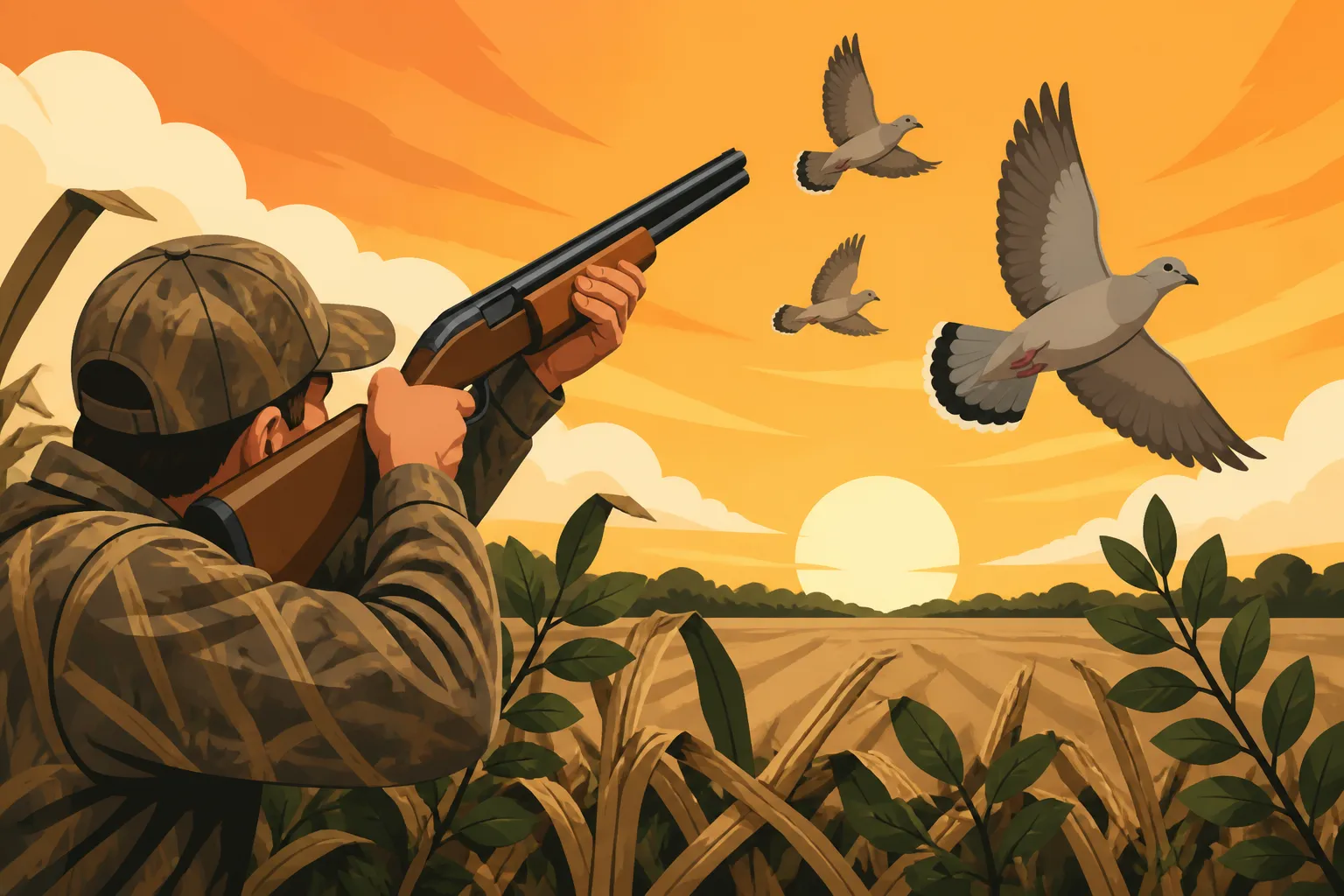
There's nothing quite like the excitement of opening day for dove season in South Carolina. The air crackles with anticipation, the buzz of conversation fills the field, and you can practically taste the upcoming camaraderie. Yet, despite all this energy, it can be incredibly frustrating to sit in a prime-looking spot only to watch doves consistently veer towards another hunter, leaving you with an empty bag and a lot of spent shells. This guide dives deep into how to effectively work a dove field on opening day, ensuring you understand the birds, the field, and your fellow hunters to maximize your success and truly enjoy the experience.
Pre-Season Scouting and Preparation is Crucial
You wouldn't head into deer season without some scouting, and dove hunting, especially on opening day, is no different. The more you know about the field and the birds' habits before the season starts, the better your chances of putting birds in the cooler. It's not just about showing up; it's about showing up smart.
Locating Active Fields and Flight Paths
Before you even think about setting up, you need to know where the doves are likely to be. Doves are creatures of habit, and their flight paths are often dictated by two primary factors: food and water. If you're hunting a public field, scouting ahead of time is absolutely essential. Drive around the area a few days before the opener, ideally in the early morning or late afternoon when doves are most active. Look for concentrations of birds sitting on power lines, telephone wires, or the bare branches of trees at field edges. These are their staging areas, where they'll often gather before dropping into a feeding area or heading to water.
Pay close attention to how they enter and exit the field. Do they consistently fly in from a specific wood line? Are they using a particular low spot in the terrain as a funnel? Note these observations. For public access, the South Carolina Department of Natural Resources (SCDNR) often manages specific dove fields. You might find information about these through the Go Outdoors SC App, which can be a game-changer for identifying potential hot spots and understanding property lines. Private land offers a bit more predictability if you have access, as you can often observe the same patterns year after year, especially if the field is managed for doves. However, even on private land, changing crop rotations or new water sources can shift dove patterns, so fresh scouting is never wasted effort.
Evaluating Food Sources and Water
Doves are primarily seed-eaters, and their diet heavily influences where they'll feed. Common dove field crops in South Carolina include sunflowers, milo (grain sorghum), millet, and wheat. A well-prepared dove field will have these crops cut or disked to expose the seeds on the ground, making it easy for the doves to forage. When scouting, assess the maturity and abundance of these food sources. Is the crop ready? Has it been harvested or mowed in a way that creates accessible food? If the seeds are still in the head and standing tall, doves might visit, but they'll spend less time feeding there and more time flying to fields where food is readily available on the ground.
Beyond the primary food source, consider secondary attractants. Are there wild pokeberries, ragweed, or other natural food sources nearby? Sometimes doves will fly across a primary field to get to a less obvious, but equally attractive, natural food plot. Water is the other non-negotiable for doves. They need to drink multiple times a day, especially in the warm South Carolina climate of early September. Look for ponds, creeks, or even large puddles adjacent to or within a reasonable flight path of the field. Doves will often fly a direct line from their feeding area to their water source, providing excellent pass-shooting opportunities. If you can identify these flight corridors between food and water, you’re already ahead of the game. Sometimes, just Pass-Shooting Doves Over a Water Hole can be more productive than sitting in the main field itself.
Understanding Dove Behavior on Opening Day
Doves are not ducks, and they aren't turkeys. Their behavior, especially under pressure, is unique. To effectively work a field, you need to anticipate their movements and reactions to the sudden influx of hunters and shotgun fire.
Morning Versus Afternoon Flights
Most dove fields open for hunting around noon on opening day in South Carolina, meaning the prime morning feeding and watering flights are usually missed. However, if hunting hours permit earlier, the initial morning push can be fantastic. Doves will leave their roosts and head straight for feeding areas, often in predictable, low-flying groups. This can offer fast-paced shooting as birds are eager to get to their breakfast.
The real show, though, typically begins in the afternoon, often picking up around 3:00 PM and continuing until sundown. This is when doves, having fed and watered throughout the day, start their more deliberate flights, moving between food, water, and loafing areas before heading to roost. On opening day, the sheer volume of shots can drastically alter these patterns. Initially, doves might fly lower and more predictably. But as the afternoon wears on and the field heats up with activity, birds will often start flying higher, circling more cautiously, and using the edges of the field to avoid direct human presence. They become more elusive, forcing hunters to adjust their shooting distances and tactics. Understanding this shift is key; what worked at 1 PM might not work at 5 PM.
Responding to Pressure and Shotgun Fire
Opening day in South Carolina, especially on popular public lands, is rarely a quiet affair. Expect a lot of hunters and a lot of shooting. This intense pressure fundamentally changes how doves behave. The initial flights might be bold, but within an hour or two, birds become much warier. They learn quickly. Doves that might have committed to a decoy spread earlier will suddenly flare at 60 yards. Instead of flying straight over the middle of the field, they'll skirt the edges, use tree lines for cover, or climb to incredible altitudes, well out of shotgun range.
This is where observation becomes critical. Don't just sit and wait for birds to come to you; watch how they react to other hunters. Are they consistently flaring off a particular corner? Are they always coming in low on one specific side? These observations can inform a subtle repositioning. Sometimes, just moving 20 or 30 yards can put you in a new flight path that previously wasn't active. It's also why patience is a virtue. There will be lulls, especially after intense barrages of gunfire. During these lulls, doves might attempt to sneak back into the field. Being alert and ready for these opportunistic flights can make all the difference. Remember, the goal isn't just to shoot doves, but to anticipate their movements under stress. For this reason, selecting the right ammunition and Shot Size for Quail and Dove is important, as you might need a little extra reach for those high-flying, pressured birds.
Strategic Field Positioning and Setup
Once you've scouted the field and have a grasp of dove behavior under pressure, your next step is picking the perfect spot. This is more art than science, but there are definitely strategies that increase your odds.
Identifying Key Entry and Exit Points
Doves, like most game birds, tend to use predictable routes, especially when moving between different areas like roosts, feeding grounds, and water sources. On a dove field, these routes often become superhighways on opening day. Focus on identifying natural funnels or pinch points. These could be gaps in tree lines, low saddles in the terrain, or even just a consistent flight path doves use to clear a patch of woods or a rise. Birds will naturally take the path of least resistance. If you see doves consistently flying over a specific fence gap or a low point where two treelines meet, that's where you want to be.
Consider the prevailing wind, if any. Doves, like airplanes, typically take off and land into the wind. If there's a gentle breeze, positioning yourself so that doves are likely to approach into the wind (and thus, often lower and slower) can offer better shooting opportunities. Furthermore, think about where the bulk of other hunters are setting up. If everyone is clustered on one side, doves will naturally try to avoid that concentrated pressure, often opting for quieter entry or exit points on the periphery. This is where your pre-season scouting pays off. If you observed a quiet, lesser-used flight path during your scouting trips, that might be your honey hole, allowing you to avoid the crowds that might appear when Opening Weekend Crowds on the Coastal Zones are at their peak.
Leveraging Natural Cover
Doves have excellent eyesight, and a hunter standing in the open is an instant deterrent. Effective concealment is paramount. While a portable Dove Stools and Field Gear kit is essential, don't just sit on it in the middle of a cut field. Look for natural cover that breaks up your outline. This could be a lone cedar tree at a field edge, a patch of tall weeds, a discarded roll of hay, or a small brush pile. The goal isn't to be completely invisible, but to blend in so doves don't immediately recognize you as a threat.
If natural cover is scarce, consider bringing a small ground blind or some burlap to create a makeshift hide. Even just positioning yourself with a dark background, like a thick stand of pines, can make a difference compared to sitting against a bright, open sky. Remember to position yourself so you have a clear field of view and shooting lanes, but still remain obscured. Often, the best spot isn't in the thickest cover, but adjacent to it, allowing you to intercept birds as they come close to the safety of the trees. Also, think about your silhouette against the sky. Sitting with your back to the sun or against a dark backdrop will make you much harder to spot than if you're outlined against a bright sky.
Decoy Spreads and Calling Techniques
Many new dove hunters don't bother with decoys or calls, thinking doves are "dumb." While they might not be as wary as a mature gobbler, doves are definitely influenced by these tools, especially on pressured opening day fields.
Effective Decoy Placement
Doves are social birds, and they are attracted to the sight of other doves. Decoys, therefore, can be incredibly effective. Forget throwing out a few pigeon decoys in a random pile; strategy is key. The most common and effective type of decoy is a spinning wing dove decoy. Brands like Mojo Outdoors make excellent spinning wing models that mimic a landing dove, creating a visual beacon. Place one or two of these on a pole, elevated slightly above the crop stubble, preferably where doves can see them from a distance. The movement is what truly sells the illusion.
In addition to spinning wings, use static dove decoys. These can be clipped to fence wires, placed on bare tree branches at the field edge, or scattered sparsely on the ground in small groups of 3-5. The ground decoys should look like doves feeding. Create a "landing strip" in front of your position by placing decoys in a V-shape or J-hook pattern, with the opening of the pattern facing into the prevailing wind (where doves will approach). This provides a natural-looking place for incoming birds to commit to. Don't overdo it; a realistic spread of 6-12 decoys, with one or two spinning wings, is often more effective than an excessive number of poorly placed decoys. For those high-flying birds, having your spinning wing decoy elevated higher can also make a significant difference. Tools like the GoHunt app can even help visualize potential decoy setups if you're trying to work a new piece of ground and understand its topography.
Subtle Calling for Success
Unlike turkey calling, dove calling is usually subtle and used to get attention, not necessarily to pull birds in close. The most common dove call mimics the "coo-coo-coo" of a mourning dove. This call serves a couple of purposes: it reassures distant birds that other doves are in the area, and it can sometimes pull a hesitant flock off a wide turn and into your flight path.
Don't call incessantly. Use the call sparingly, perhaps once every 5-10 minutes if you haven't seen birds, or to try and turn a distant flock. A few soft coos are usually sufficient. As birds get closer, you might try a soft, single coo. If they start to turn away, a slightly more urgent series of coos can sometimes convince them to commit. However, avoid calling if birds are already locked onto your decoys and coming in. At that point, any movement or sound might spook them. The goal is to provide just enough auditory reassurance to complement your visual decoy spread, making your setup appear as natural and inviting as possible. Understanding South Carolina Mourning Dove Migration Timing can also help in timing your calls, as fresher, less pressured birds might respond differently than those that have been hunted for weeks.
Etiquette and Safety in a Crowded Field
Opening day dove hunts can feel a bit like organized chaos. With many hunters sharing a single field, good etiquette and strict adherence to safety rules aren't just polite; they're absolutely essential.
Sharing the Field Responsibly
One of the biggest challenges on opening day is dealing with other hunters. Public dove fields, especially, can get crowded. The first rule of thumb is respect. Don't crowd another hunter's spot. If someone is already set up in a location you had your eye on, find another spot. A good rule of thumb is to maintain at least 50-75 yards between hunting parties, if field size allows. This not only gives everyone enough space to shoot safely but also prevents you from "sky-busting" birds that are headed towards another hunter, a common frustration in crowded fields.
Communication is also key. If you're setting up near another group, a friendly wave or a quick chat can go a long way. Let them know where you'll be, and they'll likely extend the same courtesy. If you shoot a bird that falls near another hunter, always ask permission before retrieving it, and be mindful of their shooting lanes. Retrieving a bird near someone else’s setup without a word is an easy way to cause tension. Remember, everyone is out there to have a good time. A little courtesy ensures everyone can do just that.
Safe Shooting Lanes and Practices
Safety is paramount, especially when you have multiple shotguns firing. The golden rule is always to know your safe shooting zone. Never swing your gun on a bird and point it in the direction of another hunter or a parked vehicle. Before you even shoulder your shotgun, identify where other hunters are located and visualize your safe firing lanes. Most dove fields have treelines, roads, or other natural boundaries. Understand what's beyond those boundaries—houses, roads, other people?
Wear appropriate safety gear. Eye protection is non-negotiable; stray shot pellets can cause serious eye injuries. Hearing protection is also a must on a busy dove field. The sheer volume of shotgun blasts can lead to permanent hearing damage over time. Be mindful of low-flying birds near other hunters. While it might be tempting to take every shot, a bird flying low and directly over another hunter's head is not a safe shot. Let it pass. It's better to miss a bird than to endanger someone. If you're hunting with a dog, keep it under control and within your immediate area to prevent it from running into another hunter's line of fire. These rules apply universally, whether you're dove hunting or engaged in any form of South Carolina hunting.
Post-Shot Procedures and Retrieval
Successfully hitting a dove is only half the battle. Efficiently retrieving it and properly managing your bag is crucial for a productive and responsible hunt.
Marking Birds and Efficient Retrieval
Doves are small birds, and they can be incredibly difficult to find in dense cover, even in a cut field. After you shoot a bird, immediately "mark" its fall. Pick out a prominent landmark near where it landed—a specific tree, a fence post, a patch of different colored weeds. Keep your eyes on that spot until you walk to it. If you take your eyes off the spot, even for a moment, it’s amazing how quickly a bird can disappear. This is especially true in areas with thick stubble or any form of standing vegetation.
If you're hunting with a partner, both of you should mark the bird. Two sets of eyes are always better than one. A good retrieving dog is invaluable for dove hunting. A well-trained Labrador or Springer Spaniel can drastically reduce the number of lost birds, turning what could be a frustrating search into a quick and efficient retrieval. If you don't have a dog, take your time and conduct a thorough search. Walk a grid pattern around your mark. It's unethical to leave downed game in the field. Every bird you shoot, you should make every reasonable effort to find. Remember, it's not just about the shot, it's about the entire harvest process.
Managing Your Bag Limit and Game Care
South Carolina has a daily bag limit for mourning doves, and it's essential to keep track of every bird you shoot. On a fast-paced opening day, it's easy to lose count, especially if you're in a hot spot. Consider using a clicker counter, a simple tally system, or even just assigning one of your spent shell hulls to each bird in a specific pocket. Once you hit your limit, unload your gun, and stop shooting. Respecting bag limits is a fundamental part of ethical hunting and crucial for conservation. South Carolina Small Game Season Rules clearly outline these limits.
As soon as you retrieve a bird, put it in a game bag or cooler. Doves, particularly in the early September heat of South Carolina, will spoil quickly if left exposed to the sun. Many hunters use a small soft-sided cooler with a few ice packs. This not only keeps the birds fresh but also keeps them cool for transport. Some even field dress their doves immediately, removing the breast meat to cool even faster. Proper game care ensures that the birds you harvest will be delicious on the dinner table. There’s nothing quite like grilled dove breasts after a successful hunt, and taking the time to care for your game properly is an important part of the entire experience.
| Aspect | Morning Strategy (if allowed) | Afternoon Strategy (typical opener) |
|---|---|---|
| Dove Behavior | Leaving roost, direct flights to feed/water. Less pressured, often lower. | Moving between food, water, loafing areas. Quickly pressured, higher, warier flights. |
| Best Locations | Roosting area fringes, direct flight lines to primary food. | Field edges, pinch points, high traffic lanes between food/water. |
| Decoy Use | Active spinning wings and a few ground feeders to attract immediate attention. | Slightly elevated spinning wings for visibility, small ground spreads to invite commitment. |
| Calling | Soft, infrequent coos to reassure birds breaking from roost. | Subtle calls to turn distant flocks or confirm presence; avoid over-calling. |
| Hunter Pressure | Generally less, but can be intense if many hunters arrive early. | High, leading to cautious birds. Focus on finding less-pressured flight paths. |
| Shot Placement | Often closer shots, may allow for more forgiving lead. | Birds often higher and faster; require more lead and consistent form. |
| Game Care | Always important, but less immediate concern due to cooler morning temperatures. | Critical due to rising temperatures; get birds on ice quickly to prevent spoilage. |
| Recommended Gear | Lightweight layers, eye/ear protection, shotgun, shells, game bag. | Same as morning, plus potentially more bug spray, ample water, and larger cooler with ice. |
Disclaimer
Hunting is an activity that carries inherent risks. Always prioritize safety, adhere to all local, state, and federal hunting regulations, and ensure you have the proper licenses and permits before heading into the field. This guide is for informational purposes only and should not replace proper hunter education or professional guidance. Always verify current regulations with the South Carolina Department of Natural Resources (SCDNR).