Climber Stands on Straight Trunks
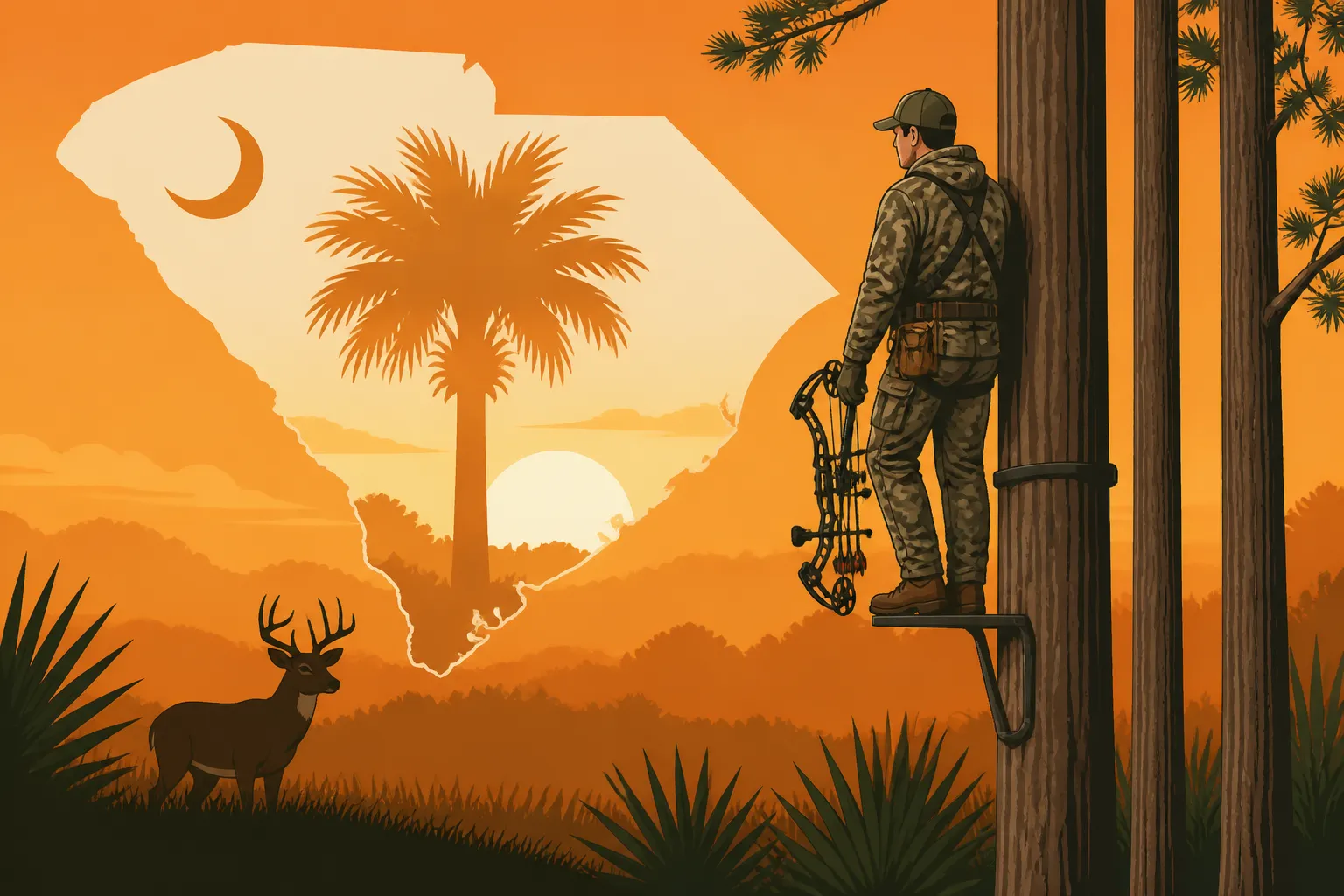
It's a familiar scenario for any deer hunter in South Carolina: you've put in the legwork, pinpointed a promising travel corridor or a prime food source, and now it’s time to set up your stand. You arrive with your trusty climber, ready to quietly ascend, only to find every tree in your sweet spot is either too gnarly, too small, or covered in limbs. This guide is all about navigating the often-tricky world of using climber stands on straight trunks in South Carolina's unique and varied landscapes, from the coastal pines to the upstate hardwoods, ensuring you can deploy your stand safely and effectively for a successful hunt.
The Allure and Challenges of Climber Stands in South Carolina
Climber stands offer an incredible amount of flexibility and mobility, which is a huge advantage for hunters in South Carolina. Our deer seasons can start in sweltering August and run all the way into January, spanning vastly different conditions and deer patterns. This means being able to pick up and move your stand with minimal fuss is often critical to staying on the deer. However, this flexibility comes with a trade-off: climber stands are notoriously picky about the trees they can be used on.
Why Climbers Reign Supreme for Mobile Hunters
For many South Carolina hunters, especially those hitting public lands like the Francis Marion National Forest or sections of the Sumter National Forest, a climber stand is an indispensable tool. You're not tied to a single spot, which is a game-changer when deer patterns shift with pressure, weather, or changing food sources. Imagine you've Scouting South Carolina Public Land Before Season and found a fresh scrape line one week, but a cold front rolls through, and the deer suddenly shift to a thicker bedding area you hadn't anticipated. With a climber, you can quickly adapt.
Unlike fixed-position stands that require pre-set sticks or ladders, a climber is self-contained. You carry it in, you climb, you hunt, you climb down, and you carry it out. This stealth and efficiency are crucial when you're trying to reach those untouched pockets of public land that other hunters might overlook. Plus, for those of us who prefer to keep our investments with us, knowing your stand isn't left out in the elements or vulnerable to theft overnight provides real peace of mind. It’s a tool that empowers you to truly be a run-and-gun hunter, whether chasing late-season deer in the Lowcountry or working a ridge for a rutting buck in the Upstate.
The Realities of South Carolina Tree Selection
Now, here's where the rubber meets the road. South Carolina's diverse forests present a mixed bag for climber stand users. We have vast stands of loblolly and longleaf pines, which often boast beautifully straight, limb-free trunks that are ideal for climbing. These are the trees we dream of when we think "climber stand." But then you venture into bottomland hardwoods, swamp edges, or even some of the older pine stands, and suddenly every tree seems to conspire against you.
The frustration is real. You might find a perfect-looking oak with a trunk that's too irregular, or a hickory covered in stubborn knots. Then there are the trees with low-hanging limbs that make the initial setup impossible, or those that taper too dramatically, making a safe ascent difficult. Knowing what you're looking for, and what to avoid, is the first step to overcoming these challenges. It’s not just about finding a tree, it’s about finding the right tree. This requires a keen eye and a solid understanding of our native timber.
Identifying the "Perfect" Trunk: What to Look for in SC Forests
Finding that ideal tree for your climber stand can feel like searching for a needle in a haystack sometimes, especially when you're focused on the prime hunting spot, not just the timber. But with a bit of practice and knowledge of South Carolina's common tree species, you can quickly assess a trunk's suitability.
Ideal Tree Characteristics for Climber Stands
When you're eyeing a tree for your climber, you're essentially looking for a few key traits that ensure both safety and ease of use. First and foremost, the trunk needs to be relatively straight. I'm talking about a good 20-30 feet of straightness from the base upwards, without any major bends or severe crooks. A slight curve is usually manageable, but anything too pronounced will make your stand bind or, worse, feel unstable as you climb.
Next, consider the taper. An ideal tree will have a consistent, gradual taper as it ascends. If the trunk suddenly narrows significantly, your stand might not bite correctly or could slip. If it expands, the stand could get stuck. You're looking for that Goldilocks zone – not too wide, not too narrow, and consistently changing. Limbs are another huge factor; you need a clear path up to your desired hunting height. Low-hanging branches are obvious no-gos, but even small stubs can impede your progress or damage your stand. Finally, bark texture is crucial. Smooth bark, like on younger pines, is generally easier to climb but requires careful attention to the stand's "bite" to ensure it's gripping securely. Rougher bark, like on some oaks or older pines, offers more grip but can be harder on your stand's cables and sometimes requires more effort to move the stand sections up the trunk. You might even find yourself debating whether to use a Ground Blind on South Carolina Public Land if the perfect tree just isn't there.
Common South Carolina Trees and Their Climber Suitability
Let's talk about the trees you'll most often encounter while hunting here in South Carolina and how they stack up for climber stands.
Pine Trees (Loblolly, Longleaf, Slash):
- Pros: Often the gold standard for climber stands. Many pines grow incredibly straight with consistent taper and self-prune their lower limbs, leaving smooth, climbable trunks. Common in plantations and throughout the coastal plain.
- Cons: Younger pines can be too small in diameter. Older, larger pines can sometimes have flaky bark that makes the stand slip if not set properly. Their smoothness sometimes means less friction, so always double-check your cables are biting.
Oak Trees (White, Red, Water, Willow):
- Pros: Mature oak trees often have ample diameter for larger climbers, and their rough bark provides excellent grip. You'll find these in diverse habitats, often providing great food sources.
- Cons: Many oaks are far from straight. They tend to have significant limbs, gnarly knots, and irregular trunks that make climbing nearly impossible. Finding a suitable oak can be a real challenge. Their branches often start lower, hindering ascent.
Other Hardwoods (Hickory, Poplar, Sweetgum, Maple):
- Pros: Some species, like younger poplars, can be quite straight with a manageable taper. Hickory bark offers good grip.
- Cons: Sweetgums often have thorny protrusions and irregular shapes. Maples can have low, spreading branches. Hickories, while grippy, can have deeply furrowed bark that can make smooth climbing difficult and even damage cables over time.
When scouting, use resources like GoHunt or your local knowledge to identify key timber types. If you're hunting in an area predominantly filled with mixed hardwoods, you might need to adjust your expectations or consider other stand options. However, for those pine plantations or areas with mature, straight pines, a climber is a dream come true. Checking the diameter of the tree you intend to climb is also important; most climbers have a minimum and maximum diameter they can safely accommodate. This is vital, as a tree too small won't allow the cables to secure properly, and one too large won't fit the stand.
| Tree Species (Common in SC) | Straightness Potential | Bark Texture (Climb) | Limb Profile | Overall Climber Suitability |
|---|---|---|---|---|
| Loblolly Pine | High | Smooth to slightly rough | Self-pruning, high | Excellent |
| Longleaf Pine | High | Scaly, sometimes rough | Self-pruning, high | Excellent |
| White Oak | Moderate | Rough, furrowed | Often low | Variable (seek straight ones) |
| Red Oak | Moderate | Rough, sometimes flaky | Often low | Variable (seek straight ones) |
| Sweetgum | Low | Smooth to slightly rough | Often thorny, low | Poor (due to thorns/shape) |
| Poplar (Tulip) | High | Smooth | High | Good |
| Hickory | Moderate | Deeply furrowed, rough | Moderate | Fair to Good (can be tricky) |
Mastering the Climb: Safe and Effective Techniques for Diverse Trees
Even if you've found the perfect straight trunk, the climb itself requires technique and a steadfast commitment to safety. South Carolina's weather can add another layer of complexity, with humid conditions sometimes making bark slick or gear harder to manage.
The Art of a Smooth and Safe Ascent
First things first: always, always wear a full-body harness and be tethered to the tree from the moment your feet leave the ground until they touch back down. This is non-negotiable. I can't stress this enough. Incidents happen fast, and a fall from any height can be devastating. Many climbers now come with a safety line that allows you to remain connected throughout the entire climb, often with a Prusik knot that slides as you go. Invest in one, and use it. It could save your life. For more on this, check out Treestand Safety Gear for Wet Ground.
When you begin your climb, ensure both sections of your climber are securely attached to the tree and that the cables are biting into the bark. If you're on a smoother pine, you might need to lean into the tree slightly to get that initial grip. The technique is a rhythmic shuffle: push the bottom section (where your feet are) up first, then pull the top section (where you sit/stand) up. Small, controlled movements are key. Don't try to make huge strides; it's less efficient and more tiring. Keep your weight centered and your body close to the tree. If you feel any slipping, stop, reassess your grip, and adjust your stand's cables if possible. A good tip is to carry a piece of old inner tube or a bungee cord to secure the bottom section to the top section during transport. This keeps them from clanking and makes it easier to carry with a Packs Built for a Sumter Forest Day Hunt.
Pre-Scouting for Climber-Friendly Spots
The best way to ensure you find a suitable tree is to do your homework long before opening day. This isn't just about finding deer sign; it's about finding deer sign near a climbable tree. When you're Scouting South Carolina Public Land Before Season, don't just look for tracks and rubs. Actively look for straight, healthy trees in key areas.
Think about using apps like GoHunt that allow you to layer satellite imagery with property lines. Zoom in and identify areas that appear to have consistent, straight timber. Pine plantations, for example, often show up as dark, uniform blocks on aerial photos, indicating good potential for climber trees.
Even within mixed hardwood forests, you can often spot individual straight oaks or poplars. Make a mental note, or better yet, drop a pin on your GoHunt map. This proactive approach saves you immense frustration on hunting day when you're trying to be quiet and efficient. You don't want to be dragging your climber half a mile because the first three spots had nothing but crooked, limby messes. Knowing where those good trees are ahead of time is a huge tactical advantage.
Stand Maintenance and Scouting for South Carolina's Conditions
Keeping your climber stand in top shape is crucial, especially with the humid, often damp conditions we experience in South Carolina. Proper care ensures longevity and, more importantly, safety.
Keeping Your Stand Ready for the Season
Regular inspection and maintenance are vital for any piece of hunting gear, but especially for something that holds you 20 feet off the ground. Before each season, and even periodically during the season, give your climber a thorough once-over. Check all cables for fraying, kinks, or wear points. Look at the pins, bolts, and welds for any signs of fatigue or damage. Make sure all moving parts operate smoothly and that the seat and backrest are in good condition. The last thing you want is a critical component failing when you're out in a remote part of the Hunting the ACE Basin or deep in Sumter National Forest.
Humidity can cause rust, so ensure any exposed metal parts are cleaned and lightly oiled if needed. If your stand has fabric components, check for mildew or rot, which can compromise strength. When storing your stand, keep it in a dry place to prevent corrosion and degradation. A well-maintained stand isn't just safer; it operates more quietly, which is paramount when you're trying to sneak into a stand unnoticed. You don't want squeaks and groans announcing your presence to every deer within a hundred yards.
Adapting to Local Conditions and Hunter Pressure
South Carolina's hunting landscape is incredibly diverse. From the vast pine forests of the Sandhills to the dense, often swampy river bottoms, the type of tree available for a climber stand can vary wildly. This means your scouting efforts need to be adaptable. In areas with high hunter pressure, like many public WMAs, finding a secluded, climbable tree that hasn't been "discovered" yet might require you to walk a little further or look a little harder. Many hunters will gravitate to the obvious straight pines near access roads, so digging deeper into the woods can pay off.
Consider the terrain too. Hunting Lowcountry Swamp Deer might mean dealing with waterlogged ground at the base of trees, which affects your stability when setting up. In the Upstate, Wind and Thermals on an Upstate Ridge can influence where deer move and therefore where you want to be, which might not always perfectly align with the straightest tree. Being able to quickly identify the few "good" trees in a less-than-ideal area is a skill developed over time. Don't be afraid to carry your climber a bit further to get to that prime spot, and always have a backup plan. Sometimes, the best strategy is to find a thick patch and consider a ground blind if suitable trees are scarce.
Ultimately, using a climber stand in South Carolina is about marrying the flexibility of the stand with a deep understanding of our unique forest environments. With careful scouting, proper technique, and diligent maintenance, you'll be quietly ascending those straight trunks and enjoying successful hunts for years to come.
Disclaimer
This article is for general informational purposes only and does not constitute professional advice. Laws, prices and regulations vary by location and change over time. Consult a qualified professional for guidance on your specific situation.