Best Rifle Caliber for South Carolina Deer
Choosing the right rifle caliber for deer hunting in South Carolina can feel like navigating a maze, especially with our diverse landscapes, from the thick coastal swamps to the rolling Upstate mountains. It's a question many hunters grapple with, trying to balance stopping power, accuracy, and recoil for that ethical, clean shot. This comprehensive guide aims to cut through the confusion, helping you understand which rifle calibers truly excel in the unique hunting environments found right here in the Palmetto State.
Understanding South Carolina's Diverse Terrain and Its Impact on Caliber Choice
South Carolina offers such a beautiful variety of hunting grounds, but this diversity also means that what works perfectly in one area might be less ideal in another. It's not just about hitting a deer; it's about making sure your chosen caliber performs optimally within the specific constraints of your hunting spot. The dense cover, varying shot distances, and even the type of foliage can all play a significant role in how effective your rifle and its ammunition will be.
Lowcountry Swamps and Thick Cover
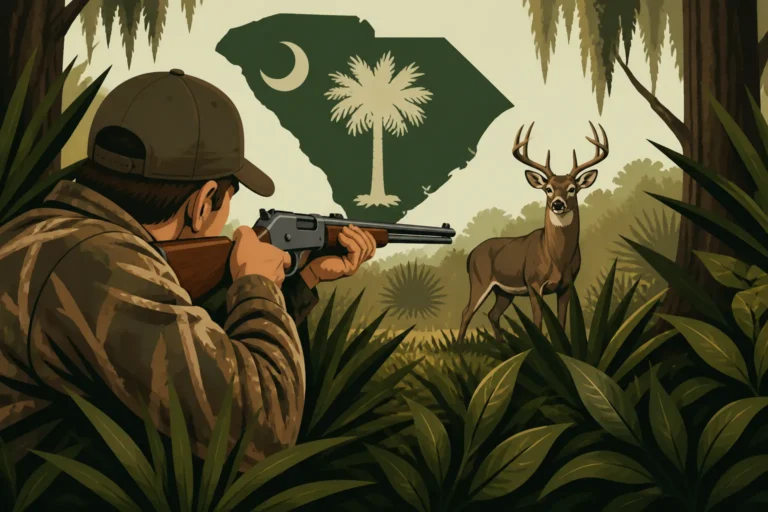
Imagine yourself deep in a Lowcountry swamp, surrounded by cypress knees, palmetto thickets, and dense undergrowth. Visibility might be limited to 50 yards, or even less, and shots often come quick and close. In these environments, you're not usually looking for a flat-shooting cartridge designed for 300-yard precision. Instead, you need something that delivers a solid punch at shorter distances and, frankly, something that can penetrate a bit of light brush if necessary (though a clear shot is always paramount). The idea of "brush busting" is often romanticized, but a heavier, slower bullet can sometimes deflect less than a light, fast one if it just grazes a twig. Your primary goal here is to put a deer down quickly and cleanly before it can disappear into the impenetrable swamp.
The challenge here isn't range, but rapid target acquisition and delivering enough energy in a confined space. A missed opportunity, or worse, a wounded deer that vanishes into the mucky depths, is a hunter's worst nightmare. Many hunters favor calibers with good terminal performance at close range, ensuring the deer drops within sight, making recovery much easier. You really don't want to be tracking a deer through knee-deep water and briars if you can avoid it.
Upstate Ridges and Longer Shots
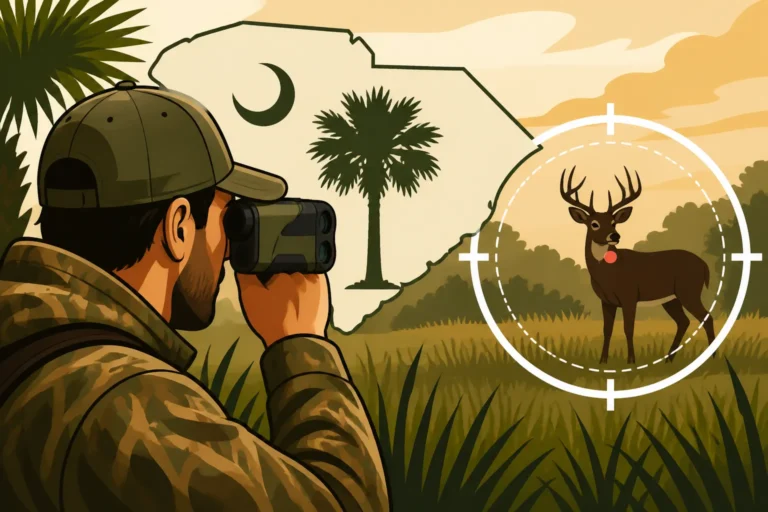
Now, picture yourself high on an Upstate ridge in the Sumter National Forest, perhaps glassing a clear-cut or a distant food plot. Here, shot opportunities might stretch out to 150, 200, or even 250 yards. The terrain is more open, with hardwoods and pine stands allowing for longer lines of sight. In this scenario, a flat-shooting cartridge with good ballistic coefficients becomes much more appealing. You need a bullet that can maintain its velocity and energy over greater distances without significant drop, ensuring accuracy and lethal impact. Tools like GoHunt can be incredibly useful here, allowing you to study topo maps and identify those longer shooting lanes before you even step foot in the woods.
When hunting these more open areas, understanding your rifle's capabilities at various ranges is crucial. Knowing your bullet's drop at 100, 200, and 300 yards is non-negotiable. Many hunters spend considerable time at the range, practicing shots at varied distances, because that moment of truth on an Upstate ridge demands confidence in your equipment and your ability. A good rangefinder is an indispensable tool in these settings, helping you confirm distances and make precise adjustments.
Midlands Farmland and Mixed Terrain
The Midlands often presents a blend of these two extremes: open agricultural fields bordering thick woodlots, pine plantations, and creek bottoms. You might set up overlooking a vast soybean field with the potential for a 200-yard shot, but then later find yourself still-hunting a dense creek bottom where a deer might burst out at 40 yards. This mixed bag demands a caliber that offers a good balance of versatility. You need something that can perform adequately at both moderate distances across a field and deliver sufficient energy up close in thick cover.
Hunters in the Midlands often prioritize calibers that are reliable and accurate, capable of handling a variety of shot presentations. It’s not uncommon to carry a rifle that’s zeroed for 150-200 yards, knowing it will still perform well if a buck steps out closer. The flexibility to adapt to different scenarios within the same hunt is key. Scouting with aerial photos and using mapping apps, perhaps like those found on GoHunt, can help you identify these transition areas where deer move between cover and open food sources, influencing where you might set up and, consequently, the potential shot distance.
Popular Rifle Calibers for South Carolina Deer: A Deep Dive
South Carolina hunters have a wide array of excellent rifle calibers at their disposal, each with its own loyal following and specific strengths. While personal preference and comfort with a particular firearm always play a huge role, understanding the general characteristics of these popular choices can help narrow down your decision.
The All-Around Workhorses: .30-06, .308, .270
These three calibers are the titans of deer hunting, not just in South Carolina, but across North America. They earned their reputation for a reason: they are incredibly versatile, capable of taking down deer (and often larger game) cleanly and ethically in a wide range of conditions.
The .30-06 Springfield is perhaps the most iconic, with a century of proven performance. It's known for its flexibility in bullet weights, from 150-grain speedsters to heavier 180-grain slugs, making it adaptable to both open fields and thicker timber. In South Carolina, a .30-06 with a 150-grain bullet is plenty for any whitetail you'll encounter, offering excellent energy transfer without being overly punishing on the shoulder. Many hunters appreciate its ability to perform well regardless of whether they're hunting South Carolina's Zone 4 Coastal Deer Season or higher elevations.
The .308 Winchester often gets compared directly to the .30-06, and for good reason. It offers very similar performance in a shorter cartridge, which allows for lighter, more compact rifles. For South Carolina hunters who value mobility, especially when still-hunting through dense woods or negotiating swamp edges, a lighter .308 can be a real asset. It typically handles 150- to 165-grain bullets beautifully, providing ample energy for whitetails without excessive recoil. This caliber is a fantastic choice for hunters who find themselves in varied terrain, needing both accuracy for potential longer shots and quick handling for closer encounters.
The .270 Winchester is another legendary caliber, renowned for its flat trajectory and excellent accuracy, particularly with 130- to 150-grain bullets. If you anticipate more open-country shots, perhaps across a clear-cut or a large agricultural field, the .270 shines. Its flatter shooting nature means less holdover at extended ranges, simplifying shot placement. While it might not carry the same heavy-for-caliber bullet options as the .30-06 or .308, its speed and precision make it a superb choice for South Carolina whitetails, especially when you're glassing from a distance. The debate of .308 Versus .270 for Whitetails often comes down to personal preference for bullet weight versus flatter trajectory.
Lighter Recoil, Capable Performers: 6.5 Creedmoor, .243 Winchester
For hunters sensitive to recoil, or those looking for an excellent entry-level caliber that's still highly effective, these options are truly fantastic. They prove that you don't need a magnum to take deer cleanly.
The 6.5 Creedmoor has exploded in popularity over the last decade, and for good reason. It offers outstanding accuracy, a flat trajectory, and surprisingly good terminal performance on deer-sized game, all with very manageable recoil. Its aerodynamically efficient bullets (typically 120-140 grains) retain energy well, making it a stellar choice for hunters who might face longer shots, like those on 6.5 Creedmoor for Upstate Ridges. Many seasoned hunters and newcomers alike appreciate how easy it is to shoot accurately, which directly translates to more ethical shot placement. It’s also often considered a great choice for younger hunters or those who want to spend more time at the range without developing a flinch.
The .243 Winchester is a classic light-recoil deer cartridge. Often starting hunters out with this caliber, it's capable of taking whitetails cleanly with proper bullet placement. Using 90- to 100-grain bullets designed for deer, the .243 is fast and accurate. It’s an ideal choice for hunting areas where shots are typically under 200 yards and you prioritize minimal recoil. For many South Carolina hunters, the question of Is a .243 Enough for South Carolina Whitetails? is a resounding yes, provided they understand its limitations and prioritize shot placement. It's a joy to shoot and can make for a very confident hunter.
Classic Thumpers: .30-30 Winchester, .45-70 Government
These calibers harken back to a different era of hunting, but they remain highly effective and incredibly fun to hunt with, especially in certain South Carolina environments.
The .30-30 Winchester is synonymous with lever-action rifles and hunting in thick woods. While its effective range is generally limited to about 150-175 yards due to its rainbow-like trajectory, within that range, it delivers a solid punch. For still-hunting dense Lowcountry pine thickets or bottomland hardwoods where shots are almost always close, a .30-30 is an excellent choice. It’s quick to shoulder, fast to cycle for a follow-up, and its blunt-nosed bullets are surprisingly effective. Many South Carolina hunters have a deep affection for the classic lever gun in .30-30 in Thick Lowcountry Cover, appreciating its heritage and effectiveness in its niche.
The .45-70 Government is another powerful, big-bore classic. While less common for deer today compared to its heyday, modern loads have made it a formidable deer (and bear) cartridge. It’s a heavy-hitting, close-range thumper that delivers massive energy, making it an excellent choice for extremely thick cover where you want to put a deer down hard and fast. Like the .30-30, it’s often found in lever-action rifles. It’s certainly more than enough for South Carolina whitetails, but its heavy recoil and limited range mean it's a specialized tool for specific scenarios.
| Caliber | Common Bullet Weights (gr) | Pros for SC Deer Hunting | Cons for SC Deer Hunting | Best for SC Zones/Scenarios |
|---|---|---|---|---|
| .30-06 Springfield | 150-180 | Highly versatile for various terrains, ample power for any SC whitetail, wide bullet selection, proven track record. Excellent energy retention for medium to longer shots. | Can have moderate recoil for some shooters, especially lighter rifles. Overkill for very close-range shots in dense cover if lighter calibers are preferred. | All zones, especially mixed terrain like Midlands, or Upstate ridges with potential for longer shots. |
| .308 Winchester | 150-165 | Excellent balance of power, accuracy, and manageable recoil. Compact cartridge allows for lighter, more maneuverable rifles, ideal for dense woods and mobility. | Slightly less reach than .30-06 or .270 for extreme long range (though still very capable). Less bullet weight flexibility than .30-06. | All zones, particularly good for Lowcountry thickets and active hunting styles. |
| .270 Winchester | 130-150 | Known for its flat trajectory and high velocity, making it superb for longer shots across fields or open areas. Good accuracy potential. | Lighter bullet options might be perceived as less "brush busting" (though no caliber truly excels at this). Recoil can be sharp for some. | Upstate ridges, Midlands open fields, any scenario requiring longer, precise shots. |
| 6.5 Creedmoor | 120-140 | Outstanding accuracy and very manageable recoil, making it easy to shoot precisely. Good ballistic coefficients mean excellent performance at moderate to longer ranges with less drop. Modern and popular. | Limited bullet weight selection compared to .30-06/.308. Some traditionalists might question its "power" (though proven effective). | Upstate ridges, open Midlands fields, good for new hunters or those sensitive to recoil. |
| .243 Winchester | 90-100 | Very low recoil, making it ideal for new hunters, youth, or recoil-sensitive individuals. Highly accurate and pleasant to shoot. Plenty powerful for deer with good shot placement. | Less forgiving of poor shot placement than larger calibers. Energy can drop off significantly past 200 yards, limiting its effective range. | All zones, primarily for shots under 200 yards, especially where recoil is a concern. |
| .30-30 Winchester | 150-170 | Classic lever-action caliber, quick handling in thick cover. Excellent for close-range deer hunting, provides good terminal performance within its effective range. | Limited effective range (typically <175 yards) due to pronounced bullet drop. Not ideal for open-country hunting with longer shots. | Dense Lowcountry swamps, thick Midlands timber, still-hunting in tight spaces. |
| .45-70 Government | 300-405+ | Delivers immense energy at close range, excellent for short-range power in thick cover. A classic, traditional caliber with a powerful punch. | Heavy recoil with modern loads. Very limited effective range due to significant bullet drop. Specialized use case. | Extremely thick Lowcountry cover, very close-range still-hunting where maximum stopping power is desired. |
Balancing Power, Recoil, and Ethics
When it comes to deer hunting, the moral responsibility we carry is immense. We want to ensure a quick, humane kill, and that means choosing a caliber that you can shoot accurately, that delivers sufficient energy, and that you're confident handling. It's a delicate balance, and what works for one hunter might not be the best choice for another.
Ethical Kill Power and Bullet Placement
The term "ethical kill power" isn't just about raw energy; it's about delivering enough kinetic energy to disrupt vital organs, causing rapid blood loss and incapacitation. Every caliber listed above is capable of taking a South Carolina whitetail ethically, assuming proper bullet construction and, most critically, precise shot placement. A perfectly placed shot from a .243 is far more ethical than a poorly placed shot from a .30-06. The key isn't just power, but applied power.
When hunting, especially in our warm climate, a quick kill is paramount. A deer that runs hundreds of yards after the shot increases the difficulty of recovery, particularly through dense South Carolina pine straw or a thick swamp. This is where quality ammunition plays a huge role. Choose bullets designed for controlled expansion at deer velocities, ensuring they don't simply punch through without expanding, or explode on impact without penetrating deep enough. Consider brands that prioritize consistency and terminal performance.
Managing Recoil for Follow-Up Shots
Recoil is often overlooked by newer hunters, but it’s a critical factor. A rifle that's uncomfortable to shoot accurately at the range will be even harder to shoot accurately in the field when adrenaline is pumping. Excessive recoil can lead to a flinch, causing you to pull shots and miss. Even if you make the first shot count, managing recoil is important for those rare but crucial follow-up shots. Sometimes, a deer will drop and then try to get back up, or you might be presented with multiple deer if hunting during South Carolina's Deer Season Structure Explained.
If you find yourself anticipating the kick, consider a caliber with less recoil like a .243 or 6.5 Creedmoor. Alternatively, a heavier rifle in a larger caliber can help absorb some of the recoil, as can muzzle brakes or recoil pads. The goal is to be comfortable and confident with your rifle, so that when the moment arrives, you can focus entirely on the target and not on the impending jolt.
Shot Distance and Bullet Drop
Knowing your rifle and bullet's capabilities at various distances is non-negotiable. South Carolina offers a mix of short-range and potentially longer-range scenarios. For instance, in a dense section of the Francis Marion National Forest, you might only see deer at 50 yards. But in a wide-open cutover, that shot could be 150 or 200 yards. Without knowing your bullet's drop, you risk a wound or a miss.
Spend time at the shooting range, zeroing your rifle and practicing at multiple distances. Understand how your chosen ammunition performs. Tools like ballistic calculators, sometimes integrated into hunting apps like GoHunt, can provide precise data for your specific load, taking into account factors like elevation and temperature, though always confirm with live fire. Always be aware of your limitations and resist the temptation to take a shot beyond your effective range.
Special Considerations for South Carolina Hunters
Beyond the pure ballistics, there are a few unique aspects of hunting in South Carolina that can influence your caliber choice and overall hunting strategy. Our specific regulations, weather patterns, and public land characteristics all play a role.
South Carolina's Legal Framework for Firearms
It's absolutely essential to be familiar with South Carolina's hunting regulations regarding firearms. While the state is generally quite liberal, there are specific rules you need to adhere to. For instance, there are South Carolina Minimum Rifle Caliber Rules to ensure ethical hunting practices. Generally, centerfire rifles chambered for cartridges .22 caliber or larger are legal for deer, as long as they fire an expanding projectile. However, always double-check the latest regulations from the SCDNR.
Also, be mindful of specific Wildlife Management Area (WMA) rules. Some WMAs might have different regulations regarding firearms, or certain hunt types might restrict you to shotguns or muzzleloaders only. Never assume, and always consult the WMA specific regulations before heading afield. A quick check of the "Go Outdoors SC" app or the SCDNR website before your hunt is always a good idea to ensure you're in compliance. This ensures you avoid any unforeseen issues and can focus on the hunt itself.
Warm Weather and Tracking
South Carolina's deer seasons often start in warm weather, especially in the coastal zones. This means that a quick, clean kill isn't just about ethics; it's about meat care. A deer that runs a long distance in 80-degree weather can spoil quickly, even if it eventually expires. Therefore, maximizing your chances of a deer dropping within sight, or at least running a very short distance, is a significant factor.
This emphasizes the importance of a caliber that delivers good terminal performance and, once again, precise shot placement. The faster a deer expires, the sooner you can begin the field dressing process and get that meat cooled down. While any of the aforementioned calibers can achieve this, knowing your limits and practicing your shots becomes even more crucial under these conditions. Being proficient with your chosen caliber is your best defense against a long, difficult track through warm, humid conditions. You don't want to be Tracking a Deer Through South Carolina Pine Straw for hours when the mercury is high.
Public Land Considerations
Hunting public land, whether it's the Sumter National Forest, Francis Marion National Forest, or one of our many WMAs, adds another layer of consideration. You're likely to encounter other hunters, and sometimes, the prime spots can see significant Hunting Pressure on South Carolina Public Land. This means you might not always have the luxury of perfectly clear, long-range shots. Often, shots are taken opportunistically in thicker cover, or you might be hunting more actively.
On public land, maneuverability can be key. A shorter, lighter rifle in a caliber like .308 or 6.5 Creedmoor can be easier to carry through dense woods and quicker to bring to bear when a deer appears suddenly. While longer-range calibers are certainly viable, remember that most shots on public land in South Carolina tend to be at more moderate distances due to terrain and cover. Always prioritize safety, be aware of your surroundings, and know your backstop on every shot, especially when other hunters might be nearby.
Ultimately, the best rifle caliber for South Carolina deer hunting is the one you shoot most accurately and confidently. Whether you choose a classic like the .30-06, a modern favorite like the 6.5 Creedmoor, or a brush gun like the .30-30, consistent practice and an understanding of your hunting environment will always be your greatest assets.
Disclaimer
This article is for general informational purposes only and does not constitute professional advice. Laws, prices and regulations vary by location and change over time. Consult a qualified professional for guidance on your specific situation.