Hunting the ACE Basin
The ACE Basin in South Carolina is a truly special place, a sprawling mosaic of tidal marshes, cypress-tupelo swamps, pristine maritime forests, and historic rice fields. For hunters, it offers an incredible, albeit often challenging, array of opportunities, but understanding its unique ecosystem and navigation complexities is key to a successful outing. This guide will walk you through what makes the ACE Basin such a sought-after hunting destination, how to access its public lands, strategies for targeting game like deer and waterfowl, essential gear, and how to plan a responsible and rewarding trip to this iconic Lowcountry landscape.
Understanding the ACE Basin: South Carolina's Coastal Treasure
The Ashepoo, Combahee, and Edisto (ACE) rivers converge to form one of the largest undeveloped estuaries on the East Coast. This vast area, encompassing over 350,000 acres, is a national treasure, celebrated for its ecological significance and stunning natural beauty. It’s a place where history whispers through ancient live oaks draped in Spanish moss, and where wildlife thrives in a rich tapestry of habitats.
A Symphony of Rivers, Marshes, and Forest
Imagine standing on the edge of a tidal creek as the sun rises, casting a golden glow over endless Spartina grass, the air thick with the calls of marsh birds. That's the ACE Basin. It's a dynamic environment, constantly shaped by the ebb and flow of the tides, saltwater mingling with freshwater. You've got expansive saltmarshes, brackish impoundments—old rice fields carefully managed for waterfowl—dense bottomland hardwood forests, and upland pine stands. This incredible diversity of habitat is precisely what makes it such a magnet for a wide range of game species. The very nature of this landscape, with its interweaving water and land, means that access and hunting strategies are deeply tied to understanding its unique rhythms. It's not like hunting a pine plantation upstate; the water here dictates everything.
Why Hunters are Drawn to this Unique Landscape
Hunters are drawn to the ACE Basin for many reasons, but primarily for the sheer abundance and diversity of wildlife it supports. For waterfowl hunters, it's nothing short of a paradise, situated right on the Atlantic Flyway. Thousands upon thousands of ducks and geese winter in these productive waters, offering incredible opportunities. But it's not just about the birds. The ACE Basin is also home to a healthy population of white-tailed deer, feral hogs, and a variety of small game. The challenge of navigating its intricate waterways, the solitude of its vast wild spaces, and the chance to connect with a deeply historic landscape are powerful draws. It's an experience that tests your woodsmanship and your patience, rewarding those who truly learn to read the land and its waters. Plus, the chance to chase a trophy buck that's lived its life in a thick, wet swamp is an allure all its own.
Navigating Public Access and Permit Requirements
Hunting the ACE Basin isn't as simple as just showing up; it requires careful planning and an understanding of the specific public access points and permitting systems in place. Much of the land within the ACE Basin is under some form of conservation protection, managed by state or federal agencies, which means rules and regulations are paramount.
Wildlife Management Areas (WMAs) Within the ACE Basin
The South Carolina Department of Natural Resources (SCDNR) manages several Wildlife Management Areas (WMAs) within the broader ACE Basin region. These WMAs offer excellent public hunting opportunities, but they come with their own set of rules and seasons. For example, popular WMAs like Bear Island, Donnelley, and Webb are often quota hunt areas, meaning you have to apply and be drawn to participate in deer or turkey hunts. This system helps manage hunting pressure and ensures a quality experience. You can find specific rules, season dates, and application procedures for each WMA on the SCDNR website. It's crucial to check these details well in advance, as application deadlines are strict, and changes can occur year-to-year. Some areas might have specific limitations on firearms, vehicle access, or even how you can retrieve game. Always remember to carry your WMA permit, in addition to your South Carolina Hunting Licenses and What They Cost.
Special Regulations for National Wildlife Refuges
Portions of the ACE Basin fall within the ACE Basin National Wildlife Refuge (NWR), managed by the U.S. Fish and Wildlife Service. While these refuges prioritize wildlife conservation, they often offer limited public hunting opportunities as part of their management plans. These hunts are typically highly regulated, often involving specific draw systems, bag limits, and gear restrictions that can differ from state WMA rules. For instance, the ACE Basin NWR itself might offer specific quota hunts for deer or waterfowl on certain units. Access often requires a special refuge permit in addition to your state licenses, and detailed rules are usually found on the refuge's official website. It's vital to meticulously review these regulations, as violations on federal lands can carry significant penalties. Understanding the nuances between state WMAs and federal refuges is a critical step in planning your hunt.
Understanding Quota Hunts and the Application Process
Many of the prime hunting opportunities in the ACE Basin, especially for deer and turkey, operate under a quota hunt system. This is designed to control hunter numbers and maintain a high-quality hunting experience while minimizing pressure on the game populations. Applying for these hunts usually involves a lottery system through the Go Outdoors SC platform. You'll need to create an account, select your desired hunts, and submit your application by a specified deadline. Success rates can vary wildly depending on the popularity of the WMA and the specific hunt, so don't get discouraged if you're not drawn the first time. Many hunters apply for multiple hunts to increase their odds. Keep in mind that points systems or preference might be in play for some hunts, rewarding those who apply year after year. It's a bit like a lottery, but the payoff can be an incredible hunting experience in an untouched wild setting.
Strategies for Hunting Deer in the ACE Basin
Deer hunting in the ACE Basin is a unique challenge, far different from chasing whitetails in the Upstate mountains or open farm country. Here, the deer are often smaller-bodied, but incredibly savvy, masters of their swampy, thick domain. Success hinges on understanding their patterns in this watery world.
Reading the Tides and Topography for Whitetails
The very first thing you need to grasp about deer hunting in the Lowcountry, and especially the ACE Basin, is the impact of the tide. High tides can inundate vast areas of marsh and low-lying woods, forcing deer onto higher ground. These "islands" or slightly elevated ridges become natural funnels and bedding areas. Savvy hunters will study tide charts meticulously, looking for times when the water pushes deer into predictable pinch points. Conversely, low tide opens up access to areas that might be submerged, allowing deer to browse on newly exposed vegetation or access deeper cover. Beyond the tides, the topography, however subtle, plays a huge role. Look for the slightest elevation changes, old rice field dikes, or natural hummocks within the swamp—these are deer highways. A good mapping app like onX Hunt can be invaluable here, allowing you to identify these subtle elevation changes and potential travel corridors from your couch. Reading a Tidal Creek for Deer Movement is a skill honed over many hunts, but it's essential here.
Stand Placement and Still-Hunting in Coastal Cover
Because the cover is often incredibly thick in the ACE Basin, deer don't always move great distances during daylight hours. They might only step a few yards out of a palmetto thicket or a briar patch to browse. This makes stand placement critical. Instead of looking for wide-open lanes, you're often looking for those narrow breaks in the cover, a single well-used trail between two islands of high ground, or a crossing point over a ditch. A portable treestand or a ground blind brushed in heavily might be your best bet, allowing you to get into those tight spots where deer feel secure. For the more adventurous, still-hunting can be incredibly effective, but it requires immense patience and stealth. You're not covering miles; you're moving a few yards at a time, glassing intently into the dense vegetation, listening for the snap of a twig or the rustle of leaves. The key is to move with the wind and understand that your shot opportunities will likely be close and fast. For specific challenges, read about Hunting Lowcountry Swamp Deer.
Adapting to Lowcountry Deer Behavior
Lowcountry deer, especially those in the ACE Basin, exhibit behaviors influenced by their environment. They are often less reliant on vast food plots and more on natural browse, acorns (when available), and the succulent vegetation found along water edges. Their rutting patterns can also be a bit more drawn out or later than what you might find further inland, often peaking in late October and November in these coastal zones. Hunting the Rut in the Coastal Zones offers more detail. Furthermore, the constant presence of water means they are excellent swimmers and will use water to escape pressure. If you jump a deer near a creek, don't be surprised if it plunges in and swims to the other side. This unique adaptation means you might need to think about stand placement that covers water crossings or points where they emerge from a swim. Their smaller size doesn't make them any less challenging; in fact, their ability to disappear into the dense cover makes them formidable quarry.
Waterfowl Hunting: A Coastal Tradition
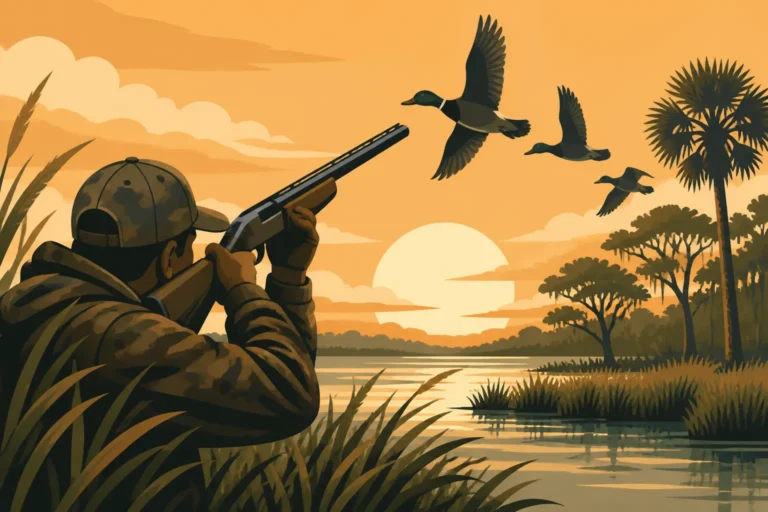
The ACE Basin is synonymous with waterfowl hunting. For generations, hunters have navigated its tidal creeks and impoundments, drawn by the incredible numbers of ducks and geese that winter here. It's a challenging but deeply rewarding pursuit, steeped in tradition.
Decoy Spreads and Blind Considerations for Tidal Waters
Hunting waterfowl in the ACE Basin's tidal environment requires a different approach than hunting a flooded timber hole or a dry field. The movement of the water is everything. When setting decoys, you need to consider how the tide will affect their presentation throughout your hunt. Spreads need to be anchored securely and often stretched out along natural current lines or in pockets of calmer water where ducks naturally loaf. For puddle ducks like mallards, wood ducks, and teal, focusing on the edges of flooded vegetation, especially in brackish impoundments or small creeks, can be effective. For divers and sea ducks (though less common directly in the basin, some might pass through), larger spreads placed in open water or along major channels are key.
Blind selection is also tide-dependent. Layout blinds can work in certain cut fields or shallow impoundments, but often, permanent blinds or natural vegetation blinds built into the marsh edge are more practical. Sometimes, a simple marsh boat or kayak, well-camouflaged, acts as your blind, allowing you to move with the tides and find the birds. Consider reading Layout Blind Hunting Lowcountry Rice Fields for more on specific setups.
Calling in Ducks on the Salt Marsh and Impoundments
The ducks in the ACE Basin see a fair amount of pressure, especially on public lands. This means your calling needs to be realistic and often subtle. Aggressive, loud calling can sometimes flare wary birds. For mallards and pintails, soft quacks, contented feeding chuckles, and subtle whistles can be more effective than piercing hail calls. Teal respond well to rapid, high-pitched quacks. Learning to identify the calls of various species and mimicking them accurately will significantly increase your success.
The environment itself impacts sound; the vast, open marshes can carry sound far, but dense vegetation can muffle it. Adapt your calling volume and style to the conditions, paying attention to how the birds are reacting. Sometimes, a quiet setup with a realistic decoy spread will outperform an overly aggressive calling sequence, especially on bluebird days. Always scout ahead to see what ducks are using the area and adjust your calling strategy accordingly.
Timing Your Hunt with the Tides and Migrations
As with deer, the tides are a critical factor for waterfowl. Ducks often use high tides to rest in flooded cover or feed in newly submerged areas, and low tides to expose mudflats for dabbling. Planning your hunt around specific tide phases can dramatically improve your chances. Beyond daily tides, understanding the general waterfowl migration timing through South Carolina is important. Early season might see more resident wood ducks and teal, while the peak of winter brings in the majority of northern migrants like mallards, pintails, and wigeon. Cold fronts up north often push new birds down the Atlantic Flyway into the ACE Basin. Keep an eye on weather patterns and migration reports, using resources like GoHunt, to gauge when new flights of birds might arrive. Being in the right place at the right time, with the right tide, is the waterfowl hunter's mantra in the ACE Basin. South Carolina Waterfowl Zones and Seasons provides excellent context for legal dates.
Pursuing Other Game: Hogs, Small Game, and More
While deer and waterfowl often get the spotlight, the ACE Basin offers opportunities for other game species, from the ubiquitous feral hog to the more traditional squirrel and rabbit.
Managing Feral Hogs in the Coastal Environment
Feral hogs are an undeniable presence across South Carolina, and the ACE Basin's rich, wet environment is prime hog habitat. They cause significant ecological damage, rooting up delicate marsh vegetation and impacting native wildlife. Fortunately for hunters, there are generous regulations for hunting these destructive animals. On private land, South Carolina's Year-Round Hog Rule on Private Land means you can pursue them day or night, often without limits. On public WMAs within the ACE Basin, hog hunting is typically allowed during scheduled deer or small game seasons, sometimes with specific equipment restrictions.
Hunting hogs in the ACE Basin often means targeting thick cover, river bottoms, and agricultural edges adjacent to swamps. They can be incredibly elusive, moving under the cover of dense vegetation. Still-hunting the edges of swamps, setting up over fresh rooting areas, or even using thermal optics at night (where legal) can be effective. They're a challenging quarry, but also a valuable source of wild game meat, and every hog taken helps mitigate their environmental impact. Consider Running Dogs on South Carolina Feral Hogs if you're on private land with the right setup.
Squirrel and Rabbit Hunting in the Bottomlands
For those who enjoy a more relaxed pace, or want to introduce new hunters to the field, the bottomland hardwoods and thickets of the ACE Basin offer excellent squirrel and rabbit hunting. Gray squirrels are abundant in the oak and hickory stands, especially during good mast years. Hunting them means early mornings, quiet walks, and keeping a keen eye on the treetops. A .22 rifle or a small-gauge shotgun are perfect tools. Squirrel Hunting South Carolina Bottomland Hardwoods provides deeper insight into this classic pursuit.
Rabbits, particularly cottontails, thrive in the briar patches, fencerows, and brushy edges that crisscross the area. A good beagle or a group of walkers can make for an exciting hunt. These small game hunts are fantastic ways to spend a crisp fall or winter day, and they also offer delicious table fare. Just remember to check the specific WMA regulations for small game seasons, as they might differ from statewide private land seasons.
Predator Hunting Opportunities
The ACE Basin, with its dense cover and abundant prey base, is also home to various predators, including coyotes, bobcats, and foxes. While bobcats and foxes have specific trapping seasons, coyotes are considered an invasive species in South Carolina and can be hunted year-round on private land, often with no bag limits. On public lands, coyote hunting is usually permissible during established deer or small game seasons, typically with the same weapon restrictions.
Calling coyotes can be a thrilling pursuit, especially in the vastness of the ACE Basin. Setting up near open fields, power lines, or logging roads that border dense cover can be effective. The challenge of outsmarting these intelligent canines, while also contributing to wildlife management efforts, can add another layer of excitement to your ACE Basin hunting experience. Just ensure you are fully aware of all regulations, especially regarding night hunting or the use of specific technologies. Coyote Calling in South Carolina Farm Country offers great strategies.
Essential Gear and Safety for ACE Basin Adventures
Hunting in the ACE Basin is an immersive experience, but it also demands specific gear and a strong emphasis on safety due to the challenging terrain and environment. Being prepared is not just about comfort; it's about staying safe and effective.
Waders, Boats, and Staying Dry in Wet Environments
This is the Lowcountry, and water is everywhere. High-quality chest waders are arguably the most important piece of gear for waterfowl hunters, and often for deer hunters too, especially when crossing creeks or retrieving game from flooded areas. Look for durable, breathable options that can withstand thorns and rough use. Beyond waders, some form of watercraft is often essential. A small jon boat, a kayak, or a canoe can provide access to otherwise unreachable areas, help retrieve downed game, and transport decoys. When selecting a boat, consider stability, stealth, and ease of launching in muddy, shallow conditions. Make sure it's equipped with all necessary safety gear: PFDs for everyone, oars or paddles, and a safety whistle. Waders for Tidal Marsh Hunting are a must-have.
Mitigating Bugs, Snakes, and Other Critters
The ACE Basin is teeming with life, and some of it can be a nuisance or even a danger. Mosquitoes, biting flies, and ticks are prevalent, especially during the warmer months. Effective insect repellent with DEET or picaridin is non-negotiable. Thermacell devices can offer a bubble of protection in a ground blind or treestand.
More concerning are the snakes. Water moccasins (cottonmouths), rattlesnakes, and copperheads are common. Snake Boots for South Carolina Swamp Ground are highly recommended, or at the very least, sturdy leather boots that come up over your calves. Always watch where you step, where you place your hands, and be cautious when traversing thick cover. It's also wise to carry a basic first-aid kit that includes supplies for snake bites, though professional medical attention should always be sought immediately if a bite occurs. Learning to identify venomous snakes is crucial for your safety.
Navigation, Communication, and Emergency Preparedness
Getting lost in the vast, winding marshes and dense swamps of the ACE Basin is a very real possibility, especially when moving in low light or fog. A reliable GPS unit or a smartphone with a robust hunting app like onX Hunt is absolutely essential. Download offline maps before you go, as cell service can be spotty or non-existent in remote areas. Mark your vehicle, your stand location, and any key waypoints.
Beyond navigation, communication is key. Always let someone know where you're going and when you expect to return. Consider carrying a personal locator beacon (PLB) or satellite messenger for emergencies, especially if hunting alone in remote areas. A whistle, a strong headlamp with extra batteries, a knife, fire-starting materials, and a small emergency blanket are also vital components of any ACE Basin hunting pack. Remember, help can be a long way off, and self-sufficiency is paramount.
Responsible Hunting and Conservation in the ACE Basin
Hunting in the ACE Basin comes with a profound responsibility: to uphold ethical practices, respect the environment, and contribute to the conservation of this incredible resource. Our actions as hunters directly impact the future of these wild places.
Adhering to Regulations and Ethical Practices
The specific regulations for hunting deer, turkey, waterfowl, and other species in the ACE Basin's WMAs and refuges are designed to protect wildlife populations and ensure sustainable hunting. It is our duty to know and follow these rules to the letter. This includes understanding South Carolina Statewide Antlered Bag Limit and South Carolina Statewide Antlerless Bag Limit, legal shooting hours, weapon restrictions, and checking requirements for harvested game. Ignorance of the law is never an excuse.
Beyond the letter of the law, ethical hunting practices are paramount. This means making clean, humane shots, actively recovering all wounded game, and always respecting property boundaries. It also means treating fellow hunters, landowners, and conservation officers with courtesy and respect. We are ambassadors for our sport, and our behavior reflects on all hunters.
Minimizing Your Footprint and Impact
The ACE Basin is a fragile ecosystem. Hunters have a responsibility to minimize their environmental footprint. This means packing out everything you pack in, and perhaps even picking up some litter left by others. Avoid damaging vegetation unnecessarily, stick to established trails or waterways where possible, and be mindful of your impact on sensitive habitats like tidal marshes and pristine forests.
When using ATVs or other vehicles, always adhere to designated trails and rules; tearing up delicate marsh or forest floor can have long-lasting negative effects. If you're building a temporary blind, use natural materials sparingly and ensure it's removed or naturally disperses at the end of the season. Leave no trace, so that those who follow can enjoy the same pristine beauty and abundant wildlife. This includes being mindful of Hunting Pressure on South Carolina Public Land and trying to disperse your impact.
The Role of Scouting and Adaptability
Successful hunting in the ACE Basin relies heavily on thorough scouting and the ability to adapt to changing conditions. The dynamic nature of the tides, weather, and wildlife movements means that what worked yesterday might not work today. Spend time before your hunt exploring the area, looking for fresh sign, identifying pinch points, and understanding deer or waterfowl travel patterns. Digital tools like GoHunt and onX Hunt can be incredibly helpful for virtual scouting, allowing you to study satellite imagery and topographic maps to identify promising areas.
Once in the field, be prepared to adjust your plans. If the wind shifts, move. If the tides are different than expected, change your approach. If the birds aren't working your decoys, try a different call or adjust your spread. Hunters who are rigid in their tactics will often be frustrated in the ACE Basin. Those who embrace adaptability, learn from their experiences, and continuously read the signs of the wild will find the most consistent success. A well-placed trail camera (where allowed) can provide invaluable intel on Where to Hang a Camera on a Logging Road.
Planning Your ACE Basin Hunting Expedition
A successful ACE Basin hunt isn't just about what you do in the field; it starts long before, with diligent research and thoughtful preparation. The more you plan, the more you can focus on the hunt itself.
Researching Weather, Tides, and Local Conditions
Before you even load your truck, you need to immerse yourself in the local conditions. Check long-range weather forecasts, paying particular attention to wind direction and temperature swings, which can greatly affect game movement and your comfort. Crucially, study the tide charts for your specific hunting location within the ACE Basin. Tidal swings can be significant, and knowing high and low tide times is essential for planning access, stand placement, and game recovery. Many hunters get caught off guard by a rapidly incoming tide, stranding them or cutting off their retrieve route.
Additionally, research local reports on mast crops (acorns, persimmons), water levels, and any recent game sightings. This information, often available through online forums, local outfitters, or SCDNR resources, can give you a vital edge. It pays to understand the local nuances, as conditions can change rapidly in this dynamic coastal environment.
Utilizing Digital Tools for Mapping and Planning
Modern technology has revolutionized how we scout and plan our hunts, and nowhere is this more evident than in a complex area like the ACE Basin. GPS devices and smartphone apps are invaluable. Apps like onX Hunt allow you to view satellite imagery, property boundaries (critical for avoiding trespass), and topographical maps. You can mark your stand locations, potential game trails, water crossings, and access points. Many of these apps also allow you to download maps for offline use, which is a lifesaver when you lose cell service deep in the swamp.
Beyond mapping, weather apps with detailed hourly forecasts and tide charts integrated into your planning process are crucial. Some platforms, like GoHunt, offer species-specific insights and draw odds for quota hunts, helping you make informed decisions about where and when to apply. Embrace these tools, but always have a backup plan—a paper map and compass—just in case technology fails. For finding public lands, Scouting With the Go Outdoors SC App is a great starting point.
Respecting Private Lands and Local Communities
While this guide focuses on public land hunting, much of the ACE Basin is comprised of private timberlands, plantations, and family holdings. It's imperative to know where public land ends and private property begins. A mapping app is essential for this, but also look for clear boundary markers, signs, and paint blazes. Trespassing, even accidentally, can lead to serious legal trouble and damage the reputation of all hunters. Always assume land is private unless clearly marked as public.
When interacting with local communities, whether it's at a gas station, a small-town diner, or a tackle shop, do so with respect. These communities are often steeped in hunting and fishing traditions, and a friendly demeanor goes a long way. Support local businesses, be courteous, and leave a positive impression. After all, we're guests in their backyard, and fostering good relationships helps ensure future access and continued support for our hunting heritage. South Carolina Deer Camp Traditions often thrive in these welcoming communities.
Disclaimer
This article is for general informational purposes only and does not constitute professional advice. Laws, prices and regulations vary by location and change over time. Consult a qualified professional for guidance on your specific situation.