Safety Harnesses and Lifelines
We've all been there, standing thirty feet up in a treestand, feeling the slight sway of the tree in the breeze, and a whisper of doubt crosses our minds. Or maybe we just climbed up, too eager for first light, and realize we forgot something crucial. Hunting from a treestand in South Carolina, whether it's over a lowcountry rice field or an upstate ridge, is incredibly effective, but it comes with a silent, ever-present danger: falls. This guide isn't about scaring you; it's about equipping you with the knowledge and confidence to make safety harnesses and lifelines an integral, automatic part of every single hunt, ensuring you come home safely every time.
Why Safety Harnesses and Lifelines are Non-Negotiable in South Carolina
Hunting from elevated positions is a time-honored and incredibly effective tactic for targeting deer across South Carolina, but it also carries the highest risk of serious injury in our sport. It's easy to get complacent, especially when you've climbed into a stand a hundred times without incident. But that one time, that one moment of distraction or misstep, can change everything.
The Unseen Danger: Treestand Fall Statistics
It's a stark truth in the hunting community: most serious accidents don't involve firearms or archery equipment. They involve gravity. Treestand falls consistently rank as the leading cause of severe injury and even fatalities among hunters. We often focus so much on firearm safety, and rightly so, but the statistics scream about the silent threat lurking just a few feet off the ground. It only takes one slip, one rotten step, one broken strap, or one moment of dizziness to send you plummeting. The ground comes up fast, and even a fall from a seemingly "low" height of 10-15 feet can result in devastating spinal cord injuries, broken bones, or worse. South Carolina's unique environment, with its high humidity, dew-laden mornings, and variable weather, can make treestand steps incredibly slick, increasing this risk significantly. You might think it won't happen to you, but the numbers show it happens to many experienced hunters every year.
South Carolina's Unique Hunting Challenges
Our diverse South Carolina landscapes present specific challenges that make treestand safety even more critical. Imagine climbing into a stand in the lowcountry, where the air is thick with humidity, your boots are likely damp from walking through dewy grass or even a shallow creek, and you're fighting off mosquitoes in the pre-dawn dark. A slight layer of moisture on metal steps or damp wood can drastically reduce traction. Or consider setting up in the upstate, where you might be navigating rocky terrain around the base of the tree, making a ladder stand feel less stable than on flat ground. Treestand Setups in Francis Marion National Forest can involve climbing tall pines where you're exposed to wind, and older trees might have bark that's less forgiving.
Furthermore, our incredibly long deer season, spanning from the heat of August through the damp chill of January in some zones, means hunters are out in a huge range of weather conditions. Extreme heat can lead to dehydration and lightheadedness, while cold, numb fingers can make handling gear difficult. These environmental factors aren't just minor inconveniences; they directly impact your ability to climb and descend safely, making a reliable safety harness and lifeline absolutely essential for every trip up a tree.
The Mental Shift: From "If" to "When"
The biggest hurdle for many hunters isn't the cost of the gear or the perceived hassle of using it; it's the mental hurdle. We often operate under the assumption of "if" something goes wrong. We think, "If I'm careful, I won't fall." This mindset is dangerous. A more realistic and protective mindset is to shift to "when." It's not if you'll ever have an issue or a close call from an elevated stand, but when a potential mishap occurs, are you absolutely prepared? No one plans to fall. No one intends to be reckless. But accidents are, by definition, unintended.
That moment of losing your balance, that sudden cramp, that faulty step – it happens in an instant. A safety harness and lifeline aren't just for preventing a fall; they're there for when the unthinkable happens and saves you from catastrophic injury. It's about taking personal responsibility for your safety and for the peace of mind of your loved ones who expect you to come home safely. Embrace the "when" mentality, and you'll find that incorporating safety gear becomes as automatic as checking your rifle's chamber or nocking an arrow.
Understanding the Components: Harness, Lifeline, and Tree Strap
To truly embrace treestand safety, it's crucial to understand the individual pieces of gear that work together to keep you secure. These aren't just ropes and straps; they are engineered systems designed to protect you from the force of gravity. Familiarity with each component and its proper function is key to confident and safe hunting.
The Full-Body Harness: Your Lifesaving Shell
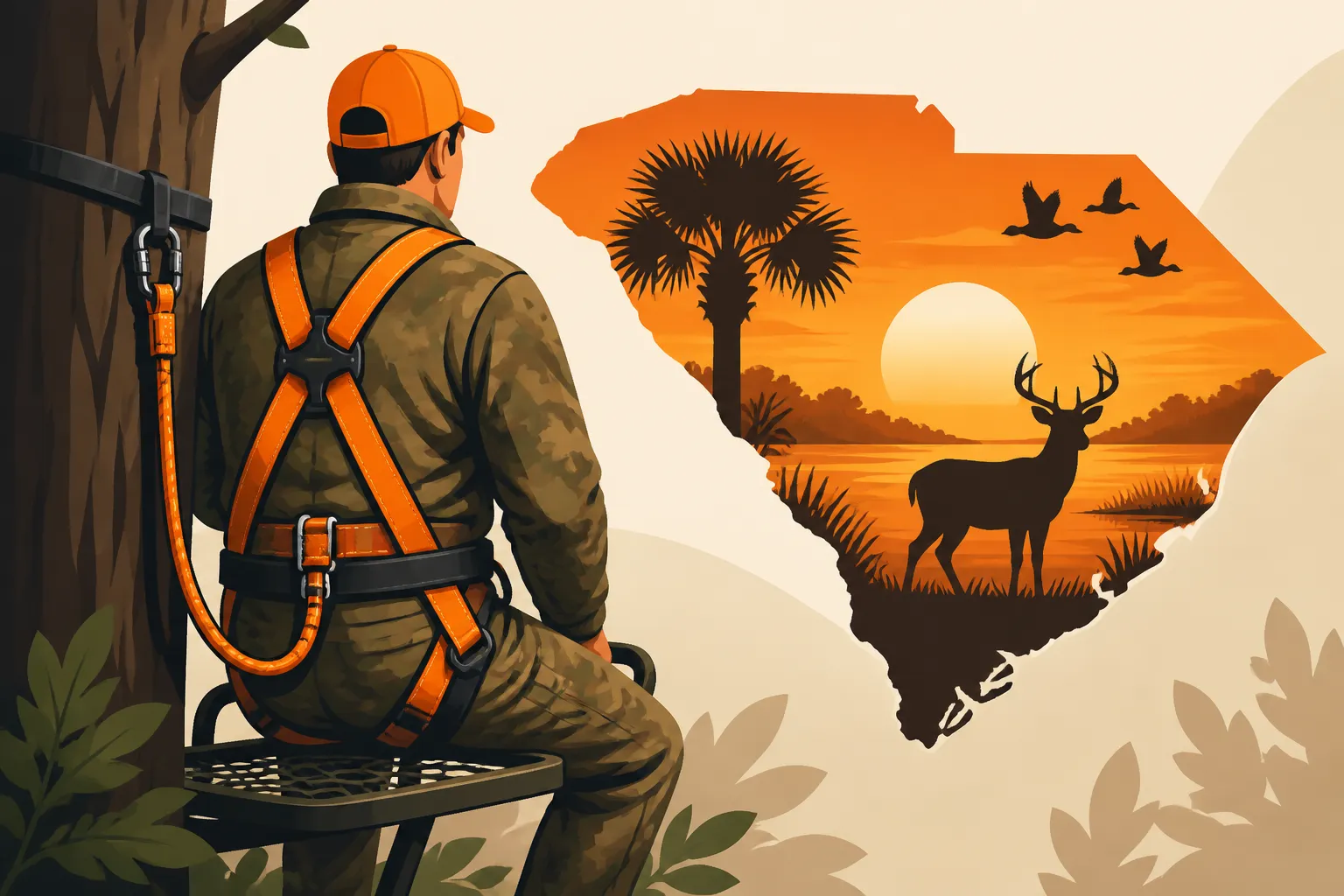
A modern full-body harness is far more advanced and comfortable than the old-school safety belts that only cinched around your waist and could cause serious internal injury in a fall. Today's full-body harnesses distribute the force of a fall across your entire body, using padded shoulder straps, comfortable leg straps, and a chest strap that keeps everything aligned. The critical piece is the short tether, usually extending from the back or upper shoulders, which is what you connect to your lifeline.
The importance of proper fit cannot be overstated. Your harness should be snug but not so tight that it restricts movement or breathing, especially when layered for colder weather. Many reputable brands, including gear you might scout on a platform like GoHunt, offer harnesses with comfortable, adjustable designs that can be tweaked for various body types and clothing levels throughout our South Carolina Deer Season Structure Explained. Before each hunt, take a moment to put your harness on, adjust all the straps, and ensure there are no twists or tangles. It should feel like a second skin, ready to engage at a moment's notice.
The Lifeline: Your Vertical Safety Net
The lifeline is essentially a long, specialized rope, typically made of static rope, that extends from the base of your tree up to an anchor point above your treestand. Its primary purpose is to allow you to stay continuously connected to the tree from the moment your feet leave the ground until they are back on terra firma. The magic of the lifeline lies in its attached prussic knot. This small, friction-hitched loop of cordage slides freely up and down the main lifeline when you push it, but cinches tight and grabs the lifeline firmly if downward pressure is applied (like in a fall).
To install a lifeline, you'll secure one end to the tree at the base, then throw the rope over a strong limb or use a specialized tool to get it over a sturdy section of the trunk above your stand. The other end then comes back down and connects to the base, forming a continuous loop, or is secured tightly to the tree. The prussic knot, with your harness tether attached to it, becomes your mobile anchor point. As you climb, you simply slide the prussic knot up with you, keeping it roughly at chest height. If you were to slip at any point while ascending or descending, the prussic knot would instantly grab, arresting your fall safely. It's truly your personal safety ladder, letting you stay connected whether you're climbing up to your spot while Hanging a Stand on a Sumter Forest Ridge or quietly descending after an unsuccessful hunt.
The Tree Strap: Securing Your Anchor Point
Often overlooked but absolutely vital, the tree strap is what secures the top of your lifeline to the tree. This sturdy strap, typically made of heavy-duty webbing, wraps around the tree trunk at the appropriate height above your stand and often has a metal ring or carabiner to which the lifeline is then attached. The key here is twofold: selecting the right tree and ensuring the strap is properly secured.
Always choose a live, healthy tree for your stand and lifeline. Avoid dead, decaying, or weak trees that might not withstand the force of a fall. The tree strap should be positioned high enough above your stand that if you were to fall, you wouldn't swing into the stand platform or hit the tree trunk violently. It acts as the ultimate anchor for your entire system. Throughout the season, especially in South Carolina's varied weather, always inspect your tree strap. Look for any signs of fraying, cuts, sun damage (UV rays can degrade webbing over time), or even rodent chewing. If you leave your stand and lifeline out for extended periods, these inspections become even more critical. A compromised tree strap renders your entire lifeline system useless.
Proper Usage: Before, During, and After the Hunt
Having the right gear is only half the battle; knowing how to use it correctly and consistently is what truly prevents accidents. Integrating safety into every step of your treestand hunting process, from the moment you consider heading afield to the time you're safely back on the ground, is crucial.
Pre-Hunt Checklist and Inspection
Safety starts long before you even leave your truck. Establishing a rigorous pre-hunt checklist and inspection routine for your safety gear is paramount. Before you don your harness, give it a thorough once-over. Are there any cuts, fraying, or signs of wear on the webbing? Do all the buckles and adjustment points function smoothly and securely? Are there any twists in the straps that could cause discomfort or improper function under stress? Many online resources, including gear guides you can find through GoHunt, emphasize this detailed inspection.
Next, turn your attention to your lifeline and tree strap. If you leave them out on the tree all season, South Carolina's sun, rain, and humidity can take a toll. Check the rope for any nicks, excessive fraying, or soft spots that could indicate internal damage. Look for signs of rodent activity – squirrels and mice love to chew on ropes. Inspect the tree strap for similar wear, especially where it wraps around the tree. Test the prussic knot to ensure it slides freely when intended but grips firmly when weighted. Any sign of significant wear or damage means it's time to replace the component, no questions asked. Your life is not worth the cost of a new strap or rope.
Ascending and Descending Safely: Staying Connected from the Ground Up
This is arguably the most critical phase of any treestand hunt, as most falls occur during the climb or descent. The golden rule is simple: stay connected to the tree from the moment your feet leave the ground until they are back on solid earth.
Here’s the step-by-step process:
- At Ground Level: Attach your harness tether to the prussic knot on your lifeline. Ensure the prussic knot is pushed down to your waist level or lower.
- Start Climbing: Take your first step up the ladder, stick, or climbing aid. As you move up, slide the prussic knot up the lifeline with one hand, keeping it at chest height.
- Continuous Connection: Climb one step, slide the prussic. Climb another step, slide the prussic. This ensures that at any given moment, the distance you could fall is minimal, usually no more than a foot or two before the prussic knot engages. This prevents you from ever being "unhooked" or having a long, dangerous fall.
- Reaching the Platform: Once you reach your stand platform, continue to slide the prussic knot up above your head. This positions your tether's anchor point high, so if you slip while stepping onto the platform itself, or while adjusting your position, your fall is arrested immediately and you won't strike the stand.
- Descending: The process is simply reversed. Keep the prussic knot at chest height, slowly lowering it as you descend each step. Do not unhook until both feet are firmly on the ground.
This method eliminates the deadliest moments of a treestand hunt. Even if you're Using a Ground Blind on South Carolina Public Land for some hunts, for any elevated setup, this consistent practice is non-negotiable.
In-Stand Safety: Moving with Confidence
Once you're settled into your treestand, the safety harness and lifeline continue to protect you. Don't be tempted to unhook your tether just because you're "stable." The majority of falls from stands occur when hunters are making a shot, repositioning, or getting comfortable.
Your tether should remain connected to your lifeline, with the prussic knot positioned to allow for minimal slack. If you need to shift your weight, turn for a shot, or make any adjustments, the prussic knot will slide along the lifeline, keeping you securely tethered. This allows you to move with confidence, knowing that if you were to lose your balance or a critical stand component were to fail, you wouldn't fall more than a foot or two. This is particularly important during the long waits of a Warm-Weather Sitting Strategy in South Carolina, where heat and fatigue could lead to a momentary lapse in attention. For hunters who install their stands using lineman's ropes, you're already familiar with staying connected while working. Apply that same discipline once the stand is set and you're ready to hunt.
Common Mistakes and How to Avoid Them
Even with the best gear and intentions, certain habits and oversights can jeopardize your safety. Recognizing these common pitfalls and actively working to avoid them is paramount to a truly safe treestand hunting experience.
The "I'll Just Be a Minute" Trap: Complacency Kills
This is, without a doubt, the most insidious and dangerous mistake many hunters make. It's the thought process that goes something like this: "I just need to trim this one branch," "I'm only going up for a quick scout before dark," "It's only ten feet off the ground, I'll be fine," or "I forgot my harness, but I'll only be up for an hour." These seemingly small, momentary decisions to bypass safety protocols are precisely when accidents happen. Gravity doesn't care if you're only going to be there for a minute; it works just as effectively.
Validate this feeling: we've all felt the urge to rush, or the pang of regret when realizing we left a crucial piece of gear behind. But resisting that urge, and making the safety harness and lifeline an absolute, non-negotiable part of every single climb, is the only way to ensure your safety. Even a fall from ten feet can lead to life-altering injuries. Remind yourself that "just for a minute" can become "for the rest of my life" in the blink of an eye. This discipline is especially vital when you're hunting during South Carolina Public Land Hunting Hours and need to climb in the dark or descend after legal light, when visibility is poor.
Improper Installation and Use of the Lifeline
Having a lifeline is great, but if it's not installed or used correctly, its effectiveness is severely compromised. Here are a few common mistakes:
- Not Tight Enough: A lifeline that has too much slack or isn't properly anchored at the bottom can lead to a longer, more impactful fall before the prussic knot engages. Ensure your lifeline is reasonably taut from the ground up.
- Wrong Tree Selection: Attaching your tree strap and lifeline to a dead, diseased, or weak tree is incredibly dangerous. Always inspect the tree for health and stability. If a tree is swaying excessively or shows signs of rot, move on. This is part of the important Scouting South Carolina Public Land Before Season process – choose good trees.
- Prussic Knot Too Low: If you only slide your prussic knot up to your waist or hips once you're on the stand, you could still fall several feet and hit the stand platform, steps, or the tree trunk before the harness catches you. Keep that prussic knot at chest height as you climb, and position it above your head when you're settled on the stand. This minimizes any potential fall distance.
- Forgetting a Lineman's Rope During Stand Installation: While not strictly part of the lifeline system, forgetting to use a lineman's rope when installing your stand is a major safety oversight. A lineman's rope allows you to stay tethered to the tree with both hands free, crucial for safely securing climbing sticks and the stand itself. Good resources from GoHunt often highlight the importance of this additional safety tool during setup, complementing your lifeline use. Consider reviewing the Treestand Rules on South Carolina Public Land which often touch on these aspects.
Lack of a Personal Recovery Plan
Okay, so you've done everything right, and your harness and lifeline do their job – they catch you. Now what? You're hanging, likely shaken, and potentially injured. This scenario, known as suspension trauma (or orthostatic intolerance), is another silent killer. Hanging motionless in a harness can restrict blood flow, leading to serious medical issues or even death if you hang for too long.
Every hunter who uses a treestand needs a personal recovery plan. This involves:
- Suspension Relief Strap: Many harnesses come with, or you can buy separately, a small strap that deploys to create a loop for your feet. Standing in this loop helps relieve pressure and keeps blood flowing, buying you precious time.
- Self-Rescue Device: Consider carrying a small, compact self-rescue device, essentially a small rope with a descending mechanism that allows you to slowly and safely lower yourself to the ground. Practice using it beforehand!
- Communication: Always carry a fully charged cell phone. Even better, especially if you hunt in remote areas of Sumter National Forest Hunting or Francis Marion National Forest Hunting, consider a satellite communication device. And crucially, always tell someone exactly where you're hunting and when you expect to return.
- Small Knife: A sharp, small knife can be invaluable for cutting away clothing or cordage that might be restricting circulation.
The goal isn't just to catch a fall but to have a plan for what comes next. Don't let a successful fall arrest turn into a tragedy due to lack of a recovery plan. This often overlooked aspect of treestand safety is as important as the harness itself. If the worst happens, having a First Aid Kits for Remote Swamp Ground is also critical.
Ignoring Wear and Tear
South Carolina's climate, with its intense summer sun, frequent rains, and persistent humidity, is brutal on outdoor gear. Synthetic materials like webbing and ropes are particularly vulnerable to UV degradation, which slowly weakens the fibers over time. Moisture can lead to mold and mildew, which can also compromise material integrity.
Regular, thorough inspection of all your safety components is not just a recommendation; it's a life-saving habit. If you leave your stands and lifelines out for the entire season, or even year-round, these inspections should be even more frequent and meticulous. Look for faded colors, stiff or brittle webbing, fraying, cuts, stretched areas, or signs of rodent chewing. Any metal components should be checked for rust, cracks, or deformation.
If you find any questionable wear or damage, replace the component immediately. Do not try to "get one more season" out of a frayed strap or a sun-baked rope. The cost of replacement gear is negligible compared to the cost of a hospital stay, rehabilitation, or worse. Make it a routine to inspect your gear before every hunt, and give it a detailed inspection at the beginning and end of each hunting season. The continued integrity of your gear is directly tied to your continued safety in the woods. When packing your Choosing a Daypack for a Coastal Hunt, these checks should be top of mind.
| Component | What to Inspect For | When to Inspect | Replacement Indicator |
|---|---|---|---|
| Full-Body Harness | Fraying, cuts, stiff webbing, working buckles | Before every hunt, annually | Visible damage, compromised buckles, excessive fading |
| Lifeline (Rope) | Fraying, nicks, cuts, rodent chew, soft spots | Before every hunt, annually | Any visible damage, unusual softness/stiffness |
| Tree Strap | Fraying, cuts, UV damage, rust on metal | Before every hunt, annually | Visible damage, rust, material degradation |
| Prussic Knot | Fraying, stiffness, proper friction | Before every hunt | Doesn't grip lifeline, excessive wear |
| Tether | Fraying, cuts, secure attachment to harness | Before every hunt | Any visible damage, compromised stitching |
| Suspension Relief Strap | Tears, working deployment mechanism | Before every hunt, periodically | Tears, mechanism doesn't work, material degradation |
Disclaimer
This article is for general informational purposes only and does not constitute professional advice. Laws, prices and regulations vary by location and change over time. Consult a qualified professional for guidance on your specific situation.