Turkey Shotguns and Chokes
There's nothing quite like the sound of a gobbler hammering at first light, setting your heart to pounding a rhythm against your ribs. We've all been there, though—the season starts, you head out with your trusty shotgun, and then a bird presents, you touch off the shot, and… nothing. Or worse, a wounded bird that gets away. It’s a gut-wrenching feeling, and often, it’s not because you’re a bad shot, but because your shotgun and choke combination isn’t quite dialed in for turkey hunting. This guide is here to unravel the mysteries of turkey shotguns and chokes, helping you build a setup that delivers consistent, ethical performance in the South Carolina turkey woods.
Understanding the Shotgun: More Than Just a Barrel
Your shotgun is the foundation of your turkey hunting rig, and selecting the right one involves more than just picking a pretty finish. The gauge, barrel length, and overall balance play a huge role in how effectively you can carry, aim, and shoot in the often-challenging terrain of our state. From the thick pine plantations of the Midlands to the dense swamp edges of the Lowcountry, your shotgun needs to be an extension of you, ready to perform when that moment of truth arrives.
Gauge Matters: Finding Your Sweet Spot
When it comes to turkey shotguns, the gauge is often the first thing hunters consider, and for good reason. It dictates the size of the hull and, critically, the amount of shot you can send downrange. While innovations in ammunition technology have blurred the lines a bit, understanding the traditional strengths of each gauge is vital.
The 12-gauge has long been the undisputed king of the turkey woods, and it's easy to see why. Its larger hull capacity means it can hold a substantial payload of shot, which translates directly to more pellets in your pattern. More pellets mean a higher probability of hitting a gobbler's small, vulnerable head and neck area, even at extended ranges. When you're dealing with a wary old tom that just won't come those last five yards, having that extra density can be the difference between tagging out and going home empty-handed. However, this power comes at a cost: recoil. A heavy 12-gauge turkey load, especially those packed with high-density shot, can kick like a mule, making practice less enjoyable and potentially affecting follow-up shots if needed. For many, a good recoil pad and proper shooting form can mitigate this, but it's certainly a factor to consider.
Enter the 20-gauge, which has exploded in popularity in recent years, largely thanks to advancements in ammunition, particularly with modern high-density loads like tungsten super shot (TSS). No longer relegated to being "the kid's gun" or purely for smaller framed hunters, the 20-gauge, when paired with the right choke and ammo, can deliver patterns that rival or even surpass traditional 12-gauge lead loads. The primary advantage here is reduced weight and significantly less recoil. This makes the shotgun easier to carry over long distances through swamps or up steep ridges, and much more comfortable to pattern at the range. For hunters who spend a lot of time on their feet, or those sensitive to recoil, the 20-gauge offers a highly effective, enjoyable alternative. Don't underestimate its capabilities; many seasoned South Carolina hunters are making the switch and finding great success.
Then we have the .410, a truly specialized tool for the experienced turkey hunter. Historically considered too light for turkeys, the advent of ultra-dense TSS has completely changed the game for the .410. With #9 TSS, a .410 can throw a devastating pattern at ethical turkey ranges (usually within 30-35 yards). Its incredible lightness and minimal recoil make it a joy to carry, and it's particularly popular for hunters who enjoy an extra challenge or those who prioritize mobility above all else. However, it requires absolute precision in shot placement and a deep understanding of its limitations. It's not a forgiving gauge, and for most hunters, especially those just getting into turkey hunting in South Carolina, the 12 or 20-gauge offers a more practical and versatile choice.
Barrel Length and Balance for the Turkey Woods
When you're trying to slip through dense palmettos in the Lowcountry or navigate tight oak thickets in the Upstate, a long, cumbersome barrel can be a real hindrance. That's why barrel length is a critical, yet often overlooked, aspect of a good turkey shotgun.
Most dedicated turkey shotguns feature shorter barrels, typically ranging from 20 to 24 inches. This isn't just a stylistic choice; it's a functional one. A shorter barrel dramatically improves maneuverability in confined spaces. Imagine trying to pivot quickly in a ground blind or swing on a gobbler that steps out unexpectedly close in heavy cover – a shorter barrel makes that movement faster, smoother, and quieter. You're less likely to snag your barrel on brush or bump it against a tree, which can send a wary bird high-tailing it out of your area. In the tight quarters where many South Carolina gobblers are killed, this agility is priceless. It also makes the gun lighter and easier to shoulder and hold steady when a bird is strutting and drumming, keeping you locked on target.
While longer barrels (26-30 inches) are fantastic for waterfowl or upland birds where a smooth swing and longer sight radius are beneficial, they simply aren't optimized for turkey hunting. A longer barrel can feel unwieldy when you're trying to keep a low profile or maneuver through dense undergrowth to get into position. It might affect your ability to get a clean shot without spooking a bird as you adjust your aiming point. You're trying to hit a very small target—the head and neck of a turkey—often from a static, kneeling, or sitting position, not swing on a fast-moving target. The small gains in velocity that a longer barrel might offer are negligible for the ranges we're talking about in turkey hunting and are far outweighed by the benefits of enhanced handling.
The balance of the shotgun also ties into barrel length. A well-balanced turkey gun feels natural in your hands, not muzzle-heavy or butt-heavy. This allows for quicker target acquisition and more stable aiming. When you're holding a shotgun up, waiting for a gobbler to clear the last bit of brush, fatigue can set in quickly if the gun isn't balanced. A lighter, shorter barrel often contributes to better overall balance, making those long, tense waits much more manageable. Think about those moments when a bird is hung up, gobbling and strutting just out of range. Having a gun that's easy to hold steady, without wobbling or straining your arms, gives you the confidence to wait for the perfect shot opportunity. You want to be comfortable and rock-solid when that bird finally steps into your kill zone. Run-and-Gun Turkey Tactics on Public Land often demands a lightweight, maneuverable setup, and your barrel length is key to that agility.
The Heart of the Pattern: Choke Tubes Explained
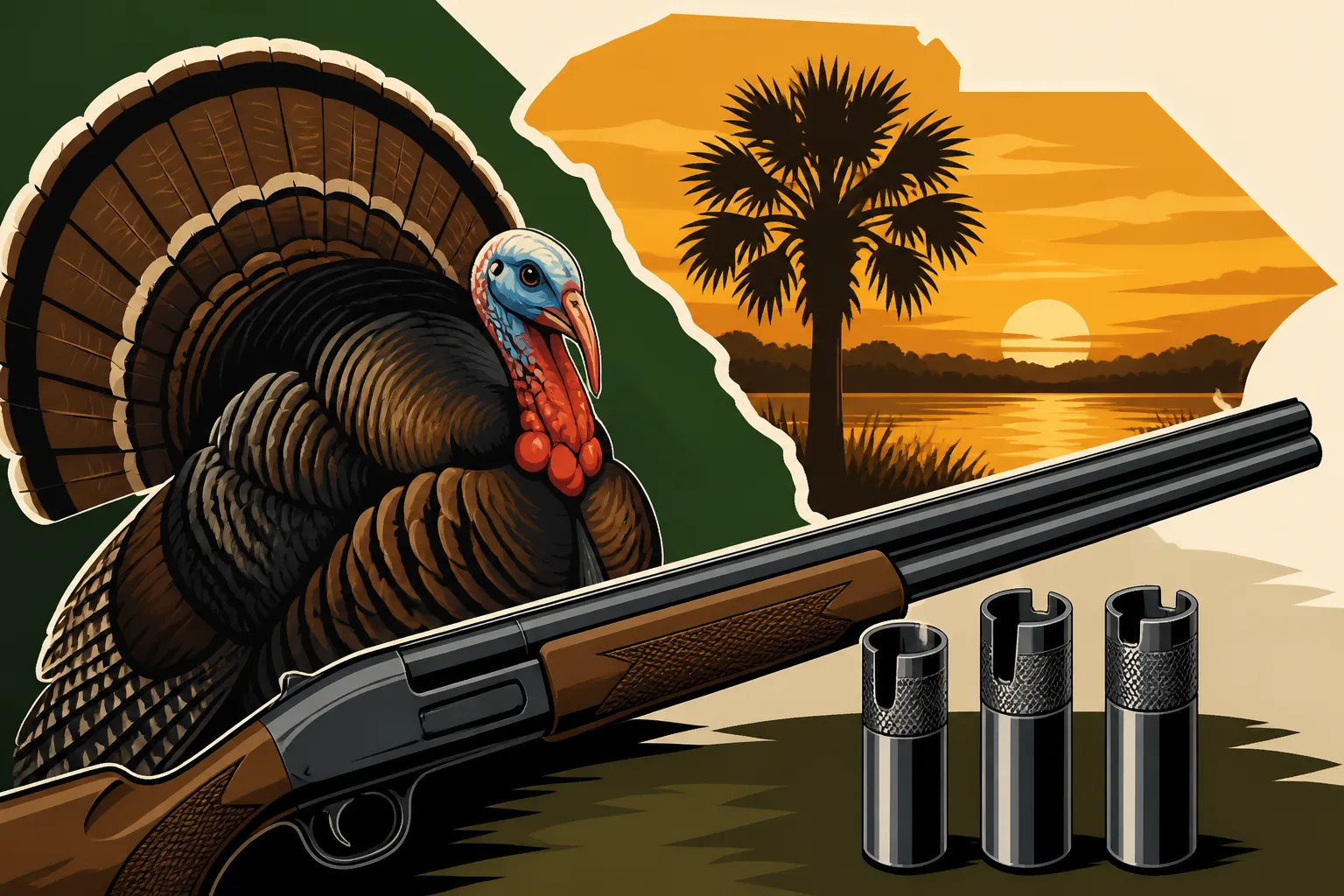
If your shotgun is the engine, the choke tube is the finely tuned carburetor, dictating how that engine performs with a specific fuel. This small, often overlooked piece of metal screws into the end of your barrel, and its impact on your turkey hunting success cannot be overstated. It's the primary component responsible for constricting your shot charge, ensuring that enough pellets hit the vital zone for a clean, ethical kill.
From Factory to Aftermarket: What's the Difference?
Understanding what a choke tube does is foundational: it constricts the bore of your shotgun barrel, forcing the shot charge into a tighter column as it exits. Without a choke, your pellets would spread out almost immediately, making a clean kill on a turkey beyond very close range virtually impossible. The goal is to deliver a dense, consistent pattern of pellets into the head and neck of a gobbler.
Most shotguns come with a set of interchangeable factory choke tubes, usually ranging from cylinder (no constriction) to full. For hunting smaller game like doves or rabbits, a modified or improved cylinder choke might be perfect. However, for turkeys, you generally need a much tighter pattern than what a standard full choke typically provides with modern turkey loads. This is where specialized aftermarket turkey chokes come into play. These chokes are designed with much greater constriction, often labeled "extra full," "super full," "gobbler getter," or by specific names unique to the manufacturer. Brands like Carlson's, Indian Creek, and Jebs are well-known for producing chokes specifically engineered for turkey hunting.
The difference isn't just in the name or the amount of constriction, but often in the internal geometry and manufacturing precision. Aftermarket turkey chokes are often designed with longer taper sections and specific porting, which can help reduce gas blow-by, strip plastic wad petals more cleanly, and reduce pellet deformation. This careful engineering is aimed at delivering the most uniform and dense pattern possible with today's high-performance turkey loads. While a factory full choke might get you by with certain loads at very close ranges, investing in a quality aftermarket turkey choke is one of the most significant upgrades you can make to your setup for increased effective range and pattern consistency. Think of it as tailoring a suit; a factory choke is off-the-rack, while an aftermarket turkey choke is custom-fitted for maximum performance.
Understanding Constriction and Pellet Deformation
The relationship between constriction and pattern density is direct: more constriction generally means a tighter pattern. However, there's a point of diminishing returns, and too much constriction can actually hurt your pattern rather than help it. This is due to a phenomenon called pellet deformation.
As the shot charge travels down the barrel and hits the constricted section of the choke, the pellets, especially those on the outer edges of the charge, can be crushed or deformed. When a pellet is deformed, it becomes less aerodynamic and will fly erratically, veering away from the main shot column. This leads to "fliers" and a less uniform, less dense pattern downrange. Imagine a perfectly spherical billiard ball versus a slightly dented one – the dented ball won't roll true. The same principle applies to shot pellets. A choke that's too tight for a particular shot type or load can lead to a "blown pattern," where the center might be dense, but the overall uniformity and pellet count in the vital zone suffer. This is a common frustration for turkey hunters: you buy the "tightest" choke, only to find your patterns are inconsistent.
The key is finding the optimal balance for your specific shotgun, choke, and ammunition combination. Modern, high-density shot, like tungsten, is much harder and less prone to deformation than traditional lead shot. This allows it to tolerate tighter constrictions without significant pattern degradation, which is why it performs so well through specialized turkey chokes. Some chokes are also designed with internal porting, which are small holes cut into the choke tube itself. These ports are intended to vent gas, reducing muzzle jump and recoil. While they don't directly affect pattern constriction, a more stable shot can lead to better shooter performance. The exact amount of constriction (measured in thousandths of an inch) that works best will vary from gun to gun and load to load. This is precisely why patterning your shotgun is not just recommended, but absolutely essential. You can't just guess; you need to see what your gun does on paper. Turkey Shotguns and Chokes is a deep dive, but the takeaway is that perfect harmony between gun, choke, and ammo is key.
Ammunition Choices: The Ultimate Patterning Partner
No matter how good your shotgun and choke combination is, it's ultimately the ammunition that delivers the lethal blow to a gobbler. The type of shot, its size, the total payload, and velocity all work in concert to create the pattern density and penetration needed for an ethical harvest. The evolution of turkey ammunition has been remarkable, offering hunters more effective options than ever before.
Lead, Tungsten, and Bismuth: Decoding Your Options
For generations, lead shot was the only real option for turkey hunters. It's affordable, widely available, and effective within reasonable ranges. Traditional lead loads in sizes #4, #5, or #6 can certainly take turkeys, and many old-timers still rely on them. However, lead has its limitations. It's relatively soft, meaning it deforms more easily under the stresses of firing and choke constriction, which can lead to less uniform patterns. Its density also means that for sufficient energy and penetration, you often need larger shot sizes, which reduces the total pellet count in a given payload. For shots past 35-40 yards, lead can start to lose its effectiveness, making pattern density and penetration less reliable. It's still a viable option for hunters on a budget or those who strictly limit their shot distances, but modern alternatives have largely surpassed it in performance.
The biggest game-changer in turkey hunting ammunition has been the widespread availability of tungsten super shot (TSS). This material is incredibly dense – significantly denser than lead (often 18 grams/cc vs. lead's 11 g/cc). This extreme density allows manufacturers to use much smaller shot sizes, typically #7, #9, or even smaller, while retaining tremendous energy and penetration. Imagine fitting more lethal pellets into the same shell volume – that's the magic of TSS. A single #9 TSS pellet can carry more energy than a #5 lead pellet at typical turkey ranges. This means you get exponentially more pellets in your pattern, leading to incredibly dense and devastating patterns at extended ranges (50+ yards are achievable with the right setup). While TSS is considerably more expensive than lead, many hunters view it as a worthwhile investment for increased confidence, extended range, and ethical kills. It effectively shrinks the turkey's vital zone because you're putting so many more pellets into it.
Bismuth shot offers a fantastic lead-free alternative that performs somewhere between lead and tungsten. It's denser than steel shot and less prone to deformation than lead, making it an excellent choice for areas where lead shot is restricted or for hunters who prefer to use a non-toxic option. Bismuth loads typically perform very well through a wide range of chokes and can deliver excellent patterns out to 40-45 yards. While not quite as dense as TSS, it's still a superior performer to traditional lead and often comes at a more approachable price point than TSS. It's a great choice for those looking for improved performance over lead without the premium price tag of tungsten. When planning your hunting trips, remember that South Carolina WMA Turkey Rules might have specific ammunition requirements, so always double-check.
Shot Size, Payload, and Velocity
Beyond the material, the specific characteristics of your chosen ammunition—shot size, payload, and velocity—are crucial for patterning success. These elements directly influence how many pellets hit the target and with what force.
Shot size is critical because it's a direct trade-off between individual pellet energy/penetration and total pellet count. Larger shot (like #4 or #5 lead) hits harder and penetrates deeper, but you get fewer pellets in the shell. Smaller shot (like #7 or #9 TSS) gives you a vastly increased pellet count, creating a denser pattern, and with high-density materials, still provides plenty of penetration. For turkeys, the goal is to pepper the head and neck with enough pellets to incapacitate the bird instantly. Most hunters find that #5 or #6 lead, or #7 or #9 TSS, offer the best balance for this vital zone. Too large, and you might not get enough hits; too small (in lead), and you might lack the energy for penetration. The sweet spot aims for 8-10 pellets in the brain/spine area for a clean kill.
Payload refers to the total weight of shot in the shell, usually measured in ounces (e.g., 1 ¾ oz, 2 oz). More shot generally means more pellets, which can lead to denser patterns. However, extremely heavy payloads can also contribute to increased pellet deformation as the massive shot charge crushes together in the barrel and choke. It also means more recoil. Finding a payload that patterns well in your gun is key. A slightly lighter payload with premium shot can often outperform a heavy payload of lesser-quality shot.
Velocity, or how fast the shot leaves the barrel, is often marketed heavily by ammunition manufacturers. Higher velocity sounds better, right? It means more energy at the muzzle and potentially flatter trajectories. However, for turkey hunting at typical ranges (under 50 yards), extreme velocity isn't always the primary driver of success. Too much velocity, particularly with softer lead shot, can actually increase pellet deformation as the pellets are subjected to greater forces during ignition and passage through the choke. This can lead to blown patterns, where the pattern isn't uniform. The goal is enough velocity to deliver lethal energy downrange, but not so much that it compromises pattern integrity. It's about finding that balanced load that gives you a dense, uniform pattern with enough oomph to drop a gobbler cold. Remember, South Carolina Spring Turkey Season Rules dictate when you can chase these birds, so make sure your gear is ready long before opening day.
Patterning Your Turkey Rig: The Non-Negotiable Step
You’ve got your shotgun, you’ve picked out a choke, and you’ve bought some promising looking ammunition. Now comes the most critical step that far too many hunters either skip or rush: patterning your turkey rig. This isn't just a suggestion; it's a non-negotiable requirement for ethical and effective turkey hunting. Without knowing exactly where your gun shoots and how densely it patterns with your chosen load, you're essentially guessing in the woods, and that’s a recipe for disappointment and potentially wounded game.
Setting Up Your Range and Targets
Before you even step into the woods with your newly optimized shotgun, you need a safe place to pattern it. This is where tools like GoHunt can be invaluable. While many private ranges exist, if you're looking for public land options, GoHunt can help you identify appropriate WMAs or designated shooting ranges in your area. Always confirm that shooting is permitted and understand any specific rules for that location. You’ll want a sturdy rest or sandbags to eliminate human error as much as possible, allowing you to focus on what the gun and ammo are doing. Bring ear protection—turkey loads are loud!—and eye protection.
For targets, forget tiny paper plates. You need large sheets of paper, at least 2×2 feet, with a clear turkey head and neck outline drawn or printed in the center. This allows you to evaluate not only the point of impact but also the density of the pattern across a broader area, simulating the real target. Set up targets at realistic turkey hunting distances. Start at 20 yards to get a baseline, then move to 30, and finally 40 yards. If you plan to shoot further, you might even include a 50-yard target, but be honest with yourself about your effective ethical range. Remember, for most South Carolina situations, a 40-yard shot is already stretching it for many hunters and setups. Always ensure you have a safe and substantial backstop behind your targets, as even tiny shot pellets can travel a considerable distance.
Take your time with each shot. Breathe, aim carefully, and really concentrate. The goal here is precision, not speed. Fire one shot per target, then walk downrange to inspect it. Don’t rush back to the bench; take a moment to analyze what you're seeing. This process takes patience, but it’s an investment in your hunting success. Even if you're hunting smaller parcels of land, knowing your equipment inside and out will give you immense confidence. Using a platform like GoHunt to scout Hunting Small Private Tracts in South Carolina can help you visualize distances and plan your setup positions, reinforcing the need for accurate patterning at various ranges.
Interpreting Your Patterns and Making Adjustments
Once you've fired a few shots, it's time to become an amateur ballistics expert. Your first step is to identify the center of your pattern and compare it to your aim point (the turkey's head/neck). Is your gun shooting high, low, left, or right? It’s common for shotguns to not shoot exactly where you aim, even with a bead sight. If you're using a red dot or scope, this is where you’d begin making adjustments to bring the pattern to your point of aim. The goal is to have the densest part of your pattern centered on the turkey's head and neck.
Next, count the number of pellets that landed in the vital zone (typically the head and neck outline). A good rule of thumb is to aim for at least 8-10 pellets in the brain/spine area for a quick, humane kill. Also, observe the uniformity of the pattern. Are there any large gaps (holes) where a pellet could sneak through without hitting a vital area? Is the pattern evenly distributed, or is it clumpy? An ideal pattern is dense, uniform, and centered.
If your patterns aren't looking good, don't despair—this is why we pattern! Here's a troubleshooting checklist:
- Point of Impact Off-Center: If using optics, adjust your scope or red dot. If using beads, you might need to adjust your hold or consider adding an optic. Some barrels also just shoot high or low for an individual shooter.
- Sparse or Gappy Pattern: This is usually a sign that your choke and load combination isn't working together. Try a different choke tube (a slightly tighter or looser one, depending on your current results). Sometimes, a very tight choke can "blow" the pattern.
- Insufficient Pellet Count: Experiment with different ammunition brands, shot sizes, or shot types (lead vs. bismuth vs. TSS). A #9 TSS load, for instance, will put significantly more pellets on target than a #5 lead load from the same gauge.
- Fliers: Pellets that are wildly outside the main pattern might indicate excessive pellet deformation. Again, trying a different choke or a harder shot material can help.
Keep meticulous notes of each shot: choke used, ammunition brand, shot size, and the results on paper. This record will save you time and money in the long run. Continue to pattern until you achieve a consistent, dense pattern that you’re confident in at your maximum ethical range. Once your gun is patterned, GoHunt can still be your friend in the field, helping you navigate your hunting grounds and mark key locations where you've seen turkeys or want to set up your ambush. Remember to test your setup after any major changes, like switching ammunition brands or even just after a season of use. Turkey Calls Worth Carrying in South Carolina and a well-patterned gun make for a formidable combination.
Accessories and Enhancements for Turkey Success
Beyond the core shotgun, choke, and ammunition, there are several accessories that can significantly enhance your turkey hunting experience and improve your chances of success. These aren't just gadgets; many provide real advantages in precision, comfort, and stealth in the South Carolina woods.
Optics for Precision Shots
While many traditional turkey hunters still rely on the simple bead sight on their shotgun, modern optics offer undeniable advantages, especially when trying to place a precise shot on a turkey’s small head and neck. Red dot sights and low-magnification scopes have become incredibly popular for turkey hunting, and for good reason.
Red dot sights provide a single, clear aiming point that is easy to see in various light conditions, from the dim glow of pre-dawn to the bright midday sun. They allow for very fast target acquisition, which can be crucial when a gobbler suddenly appears and you need to get on target quickly. Because you can keep both eyes open, your situational awareness isn't compromised, and there's no front sight to align with a rear sight—you just put the dot on the target and squeeze. For many, a red dot sight makes a dramatic improvement in accuracy and confidence, especially as eyesight naturally changes over the years. They are lightweight, generally rugged, and have excellent battery life, making them ideal for the rigors of turkey hunting. When mounted correctly, they hold their zero exceptionally well, meaning once you pattern your gun with the red dot, you can trust it to shoot true. If you're considering this upgrade, check out Red Dots on a Turkey Shotgun for more in-depth advice.
Low-magnification scopes (typically 1-4x or 1.5-5x) offer a slightly different set of advantages. While they might be a little slower for snap shooting than a red dot, they excel in providing a clearer, magnified view of the turkey's head and neck, allowing for even more precise aiming, particularly at longer ranges or in situations where the bird is partially obscured. The magnification helps to differentiate between the vital areas and the less vulnerable parts of the bird. This can be particularly beneficial for hunters who feel their eyesight isn't what it used to be or for those hunting in open fields where shots might stretch a bit further. Just like with red dots, proper mounting and zeroing are paramount. You want clear glass, reliable turrets for adjustment, and rugged construction that can withstand being bumped and jostled in the woods. Both red dots and scopes alleviate the need to align traditional beads, which can be a challenge in low light or when nerves are high.
Slings, Camo, and Comfort
Beyond aiming aids, several other pieces of gear contribute to a more effective and enjoyable hunt. A good sling is often overlooked but becomes invaluable when you're traversing miles of South Carolina public land or even just carrying your gun from the truck to your blind. A comfortable, wide sling evenly distributes the weight of your shotgun, reducing fatigue in your shoulder and arms. Look for one with non-slip backing to keep the gun securely on your shoulder, even when you're navigating uneven terrain. This frees up your hands for calling, carrying decoys, or simply pushing through thick brush.
Camouflage, while not directly related to your shotgun's performance, is essential for breaking up your outline and blending into the diverse South Carolina turkey habitat. Choose patterns that match your hunting environment, whether it's the mottled greens and browns of early spring woods or the more muted tones of later season foliage. Beyond your clothing, consider camouflaging your shotgun itself. Many dedicated turkey guns come with a matte, non-reflective finish or a camouflage dip. If yours doesn't, a simple camo wrap or tape can help reduce glare and make your gun less noticeable to a wary gobbler. Turkey Vests With a Kickstand Seat often feature integrated camo and storage, making them a great complement to your rig.
Finally, don't underestimate the power of comfort. Turkey hunting often involves long periods of sitting still, often in awkward positions. A good recoil pad on your shotgun is an absolute must, especially with heavy turkey loads. Many aftermarket pads can be added or swapped out for factory ones to significantly reduce felt recoil, making practice more pleasant and ensuring you don't flinch during the shot. Other comfort items, like a stable seat for your blind or a comfortable cushion for sitting against a tree like a big oak, indirectly contribute to your shooting performance by allowing you to remain still and focused for longer periods. Everything that helps you stay comfortable and confident helps you make a better shot when the moment of truth arrives.
Disclaimer
This article is for general informational purposes only and does not constitute professional advice. Laws, prices and regulations vary by location and change over time. Consult a qualified professional for guidance on your specific situation.