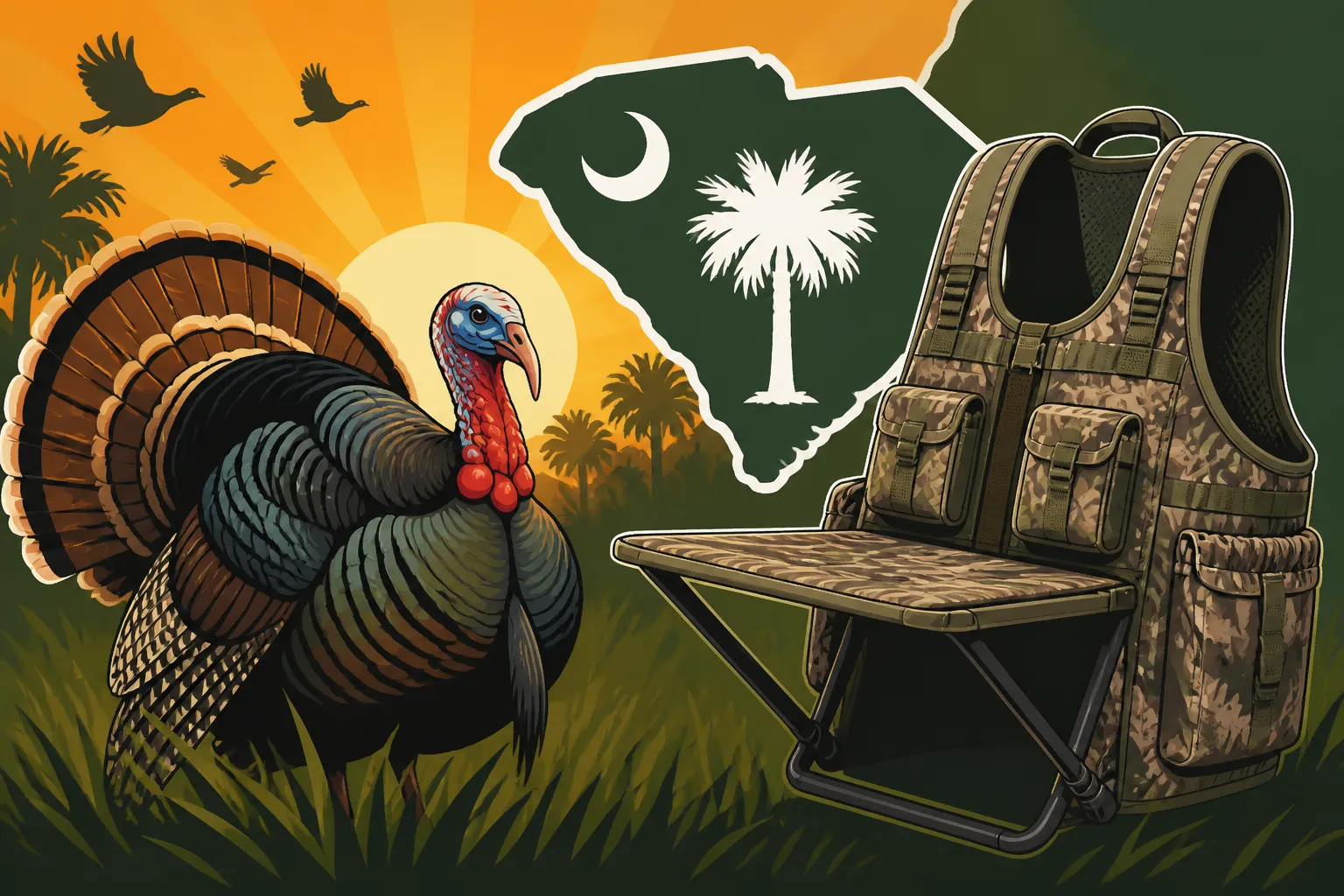
Turkey Vests With a Kickstand Seat
South Carolina turkey hunting often throws a wrench in your plans: you might be working a gobbler hard, he's talking back, but he's just not quite ready to commit to your exact setup. This often leaves you needing to make a quick move, set up against an uncomfortable tree, or sit awkwardly on uneven ground, which can lead to fidgeting, discomfort, and ultimately, blowing your chance. This guide will delve into the world of turkey vests equipped with a kickstand seat, exploring why this innovative piece of gear is a game-changer for South Carolina hunters seeking ultimate comfort, mobility, and silent efficiency in the field.
Why a Kickstand Vest is a Game Changer for South Carolina Turkey Hunting
Anyone who has spent a spring morning chasing gobblers knows the struggle: you've hiked a mile into a promising area, found a bird hot on the roost, and now he's on the ground, strutting, but just out of range or behind a natural barrier. You need to get set up, and fast, but the ideal tree is too thin, the ground is damp, or there's an unseen root digging into your back. This is precisely where a turkey vest with a built-in kickstand seat shines, transforming an uncomfortable, compromising position into a stable, quiet, and comfortable command center.
Unmatched Comfort for Extended Waits
Let's be honest, turkey hunting often involves long periods of sitting still, listening, and calling, punctuated by moments of intense action. Whether you're waiting for that hung-up tom to cross a field edge or calling a bird in thick timber, being comfortable is paramount. Sitting on the ground, even with a thin pad, can quickly become a literal pain in the backside. The dampness seeps through, roots poke, and your legs cramp.
A kickstand turkey vest elevates you slightly off the ground, often providing a much thicker, more supportive seat cushion than a typical vest or separate pad. This increased comfort reduces fidgeting, allowing you to remain motionless for longer periods, which is crucial when a gobbler is trying to pinpoint your exact location. Imagine the relief of having a stable, cushioned seat beneath you as you sit for an hour, patiently working a bird that's gobbling consistently but won't budge. This comfort allows you to focus entirely on the hunt, on your calls, and on the sounds of the woods, rather than on the nagging discomfort in your lower back.
Instant Stability and Silent, Rapid Deployment
One of the most frustrating scenarios is when a gobbler suddenly appears, catching you off guard. Your heart races, and you need to get still, hidden, and ready for a shot in mere seconds. Fumbling with a separate cushion, trying to lean against a small sapling, or kneeling awkwardly can easily betray your presence. This is where the kickstand mechanism truly excels.
With a kickstand vest, the seat is integrated directly into the frame. When you need to set up, you simply drop the legs, lean back, and you're in position. This action is designed to be quiet and fluid, minimizing any rustling or creaking that could alert a wary bird. The sturdy frame of the kickstand provides instant stability, allowing you to settle in quickly without wobbling or shifting. This quick deployment is especially valuable when you're making a "run-and-gun" move, where you might only have moments to get into a spot before making your next call. The ability to instantly set up a solid base for your calling and shooting position can be the difference between a successful harvest and watching a gobbler walk away.
Adapting to South Carolina's Diverse Terrains
South Carolina's turkey habitat is incredibly varied, presenting unique challenges for hunters. From the rolling hills and dense hardwood ridges of the Upstate to the thick pine plantations and boggy swamp edges of the Lowcountry, finding an ideal, comfortable setup spot isn't always easy.
In the Upstate, you might find yourself on a steep hillside or a rocky ridge where flat ground is a luxury. A kickstand vest allows you to create a level, stable sitting position even on uneven terrain, preventing you from sliding down a slope or having a precarious perch. For hunters working the lowcountry, navigating damp ground, palmetto thickets, and muddy banks is a common occurrence. The elevated seat keeps you off the wet ground, protecting your gear and keeping you drier and warmer, which is a big plus on those chilly early spring mornings or after a rain shower. When hunting in mature timber, like areas of the Francis Marion National Forest, you often find yourself with plenty of large trees to lean against, but the understory can be thick with vines and small saplings. The kickstand helps you get above some of this low-lying cover, offering a slightly better vantage point for spotting an incoming bird without sacrificing concealment.
Essential Features to Look for in a Quality Kickstand Turkey Vest
When you're investing in a piece of gear that will be with you for countless hours in the field, you want it to perform. A turkey vest with a kickstand isn't just about a seat; it's a mobile command center, and certain features make all the difference in functionality, comfort, and durability, especially when you consider the unique demands of South Carolina's hunting environment.
Optimized Storage and Organization
Turkey hunting demands a lot of gear. Calls – slate, pot, box, diaphragm – need to be readily accessible but protected. Strikers, sandpaper, and conditioning pads need their own spots. You'll likely carry a rangefinder, binoculars, a small first-aid kit, a headlamp, snacks, and most importantly, water. A truly effective kickstand vest will offer:
- Dedicated Call Pockets: Look for specific, often rigid, pockets designed for pot calls to prevent them from rattling or getting damaged. Slots for multiple diaphragm calls keep them organized. A secure pouch for a box call is a must.
- Easy-Access Storage: Pockets that can be opened and closed silently, preferably with magnetic closures or quiet zippers, are invaluable. You don't want to be fumbling or making noise when a gobbler is close. Some vests, like those you might explore through a platform like GoHunt, are designed with specific hunter feedback in mind, ensuring logical placement for every item.
- Hydration Options: Whether it’s a dedicated bladder sleeve or strategically placed bottle pockets, staying hydrated is crucial during long, warm South Carolina spring mornings. Ensure it’s easy to access without excessive movement.
- Large Storage Compartments: Beyond calls, you'll need space for a rain jacket, extra gloves, a small decoy, or even a harvested bird. A main compartment with good capacity and compression straps is a huge plus.
The Kickstand Seat Mechanism: Stability and Silence
This is the star of the show, and not all kickstands are created equal. You want a system that is:
- Sturdy and Durable: The frame should be made of lightweight yet strong material, often aluminum or carbon fiber. It needs to support your weight reliably on varied terrain without bending or collapsing.
- Quiet Operation: Any squeaks, creaks, or loud clunks when deploying or retracting the legs will instantly alert nearby game. Test this thoroughly before taking it to the woods.
- Adjustable Height: Some vests offer adjustable leg heights, which can be incredibly useful for leveling yourself on uneven ground or adjusting your sight picture based on the cover.
- Comfortable Seat Cushion: Beyond just getting off the ground, the seat itself needs to be substantial. Look for thick, high-density foam that will maintain its support over hours of sitting.
Durability and Materials for South Carolina Conditions
South Carolina's environment can be tough on gear. From humid, dew-soaked mornings to dusty logging roads and abrasive pine bark, your vest needs to withstand a lot.
- Rugged Fabric: Look for durable, abrasion-resistant fabrics like Cordura or heavy-duty nylon. These materials are less likely to tear when pushing through briars or rubbing against rough trees.
- Weather Resistance: While not necessarily waterproof, the fabric should be quick-drying and shed light moisture. Our spring turkey season often starts with cool, damp mornings that quickly turn warm and sunny.
- Quietness: Fabric choice also impacts stealth. Avoid overly stiff or crinkly materials that can make noise with every movement.
- Stitching and Zippers: Reinforced stitching on stress points and robust, smooth-operating zippers or magnetic closures are indicators of quality and longevity.
Ergonomics and Fit for All-Day Comfort
You'll be wearing this vest for hours, often walking considerable distances over varied terrain. It needs to feel like an extension of you, not a burden.
- Adjustable Straps: Padded shoulder straps that are highly adjustable are critical for distributing weight evenly and accommodating different body types and clothing layers. Chest and waist straps help stabilize the load.
- Breathable Back Panel: Especially in warmer spring weather, a breathable mesh back panel can prevent excessive sweating and improve comfort during long walks.
- Balanced Load: When trying on a vest, load it up with your typical gear. Does it feel balanced? Does it shift awkwardly when you move? A well-designed vest will keep your gear close to your body and minimize swaying. The right fit ensures you can move stealthily, whether you're still-hunting through a bottomland hardwood or maneuvering for a better calling position.
Mastering Your Kickstand Vest in the South Carolina Woods
Having a kickstand turkey vest is one thing; using it to its full potential in the dynamic environment of a South Carolina turkey hunt is another. It's not just a seat; it's a strategic tool that can enhance your calling, concealment, and shot placement if you know how to wield it.
Quick Deployment and Silent Setup
The moment a gobbler responds to your call, the clock starts ticking. You need to transition from moving to stationary, camouflaged, and ready for a shot with minimal fuss or noise. Practicing your setup at home, even in your backyard, can make a huge difference in the woods.
When you hear that gobble and decide to set up, actively scout your immediate surroundings. Look for a tree that breaks up your silhouette effectively – a large oak or pine is ideal. Now, deploy your kickstand. Many vests have a simple, quick-release mechanism. Focus on lowering the legs quietly, letting them settle without a clang. Lean back, get your gun up, and make sure your primary call is within easy reach. This might sound trivial, but a smooth, silent setup prevents last-second fumbling that could betray your position. In an intense moment, like when a longbeard is coming in silent, your ability to drop into a stable shooting platform without a sound can be the key to success. This quick action allows you to focus on Calling a South Carolina Gobbler Off the Roost without worrying about an uncomfortable or noisy setup.
Maximizing Your Concealment and Shot Opportunity
A kickstand vest subtly changes your height and angle. Use this to your advantage. While the primary benefit is comfort and stability, it can also aid in concealment and provide a better shooting lane.
- Breaking Up Your Silhouette: Always position yourself against the widest part of a tree, or better yet, a cluster of trees. The kickstand seat will slightly elevate you, so ensure that the top of your head is still below the crown of the tree or well-hidden by foliage. This creates a solid backdrop, making it much harder for a gobbler to pick out your outline. Think about it like a deer stand: a good backdrop is essential.
- Seeing Over Low Cover: That slight elevation can sometimes be just enough to see over a small rise, a patch of palmettos, or low-lying brush that would otherwise obscure your view of an incoming bird. This is particularly useful in areas with dense undergrowth.
- Clearing Your Shot Lane: Before you commit to a spot, visualize your potential shot lanes. Can you swing your shotgun smoothly? Are there any branches or saplings that might deflect your shot? The stability of the kickstand means you can sit still, adjust your gun very slowly, and maintain a steady aim for longer. Remember that in thick South Carolina timber, shots are often close, so you need to be ready.
Maintaining Mobility Between Setups
While kickstand vests are incredible for sitting, South Carolina turkey hunting often involves covering ground, especially on public lands where birds might roam more widely or require a little more coaxing. This "run-and-gun" approach means your vest can't be so heavy or cumbersome that it hinders movement.
When selecting a vest, even one with a kickstand, consider its overall weight and how it distributes your gear. A well-designed vest will keep the load balanced and close to your body, preventing it from swinging or bouncing as you walk. When moving from one setup to the next, quickly retract the kickstand legs. Practice this motion so it's second nature. You want to be able to pick up and move swiftly if a gobbler gobbles from a different direction or if your current setup isn't producing. Many hunters find that a good vest, especially those thoughtfully designed by companies like GoHunt, feels integrated, allowing for agile movement through thickets or across fields. The goal is to move efficiently so you can quickly get into a new position for a silent setup or another calling sequence, supporting aggressive tactics like Run-and-Gun Turkey Tactics on Public Land.
Integrating with Your Full Gear System
Your turkey vest is the heart of your hunting kit. Every other piece of gear should ideally integrate seamlessly with it.
- Call Accessibility: Your most-used calls should be in easily reachable pockets. Can you operate your slate call, pot call, or diaphragm calls without significant movement or fumbling? Are your strikers protected but also ready? This is where a vest shines over a simple backpack.
- Decoy Management: If you carry a small turkey decoy, does the vest have an external pocket or strap system to secure it without interfering with your movement or other gear? You want to avoid any rustling or flapping that could give away your position.
- Firearm Readiness: Your shotgun should be comfortably carried, but also quick to shoulder and aim. The vest should not impede your mount or your ability to swing. When you're using a Turkey Shotgun and Chokes setup, you need to know it will clear your vest and give you a clean shot.
- Layering Considerations: South Carolina weather can change rapidly. Your vest should accommodate additional layers like a rain jacket or a vest for colder mornings. Consider using Lightweight Layering for Warm-Weather Sits underneath your vest for maximum comfort. Also, think about insect repellent – applying Bug Protection for Early Archery Season (which applies to early turkey season too!) before you sit down is smart, but ensure your vest has a spot for it if you need to reapply.
Care and Maintenance for Long-Lasting Performance
A quality turkey vest with a kickstand seat is an investment, and like any valuable piece of hunting gear, it requires proper care and maintenance to ensure it performs season after season. South Carolina's climate, with its humidity, heat, and varied terrain, can be particularly hard on fabrics, metals, and moving parts. Taking a little time after each hunt and during the off-season will protect your investment and keep your vest ready for action.
Post-Hunt Cleaning and Inspection
It's tempting to just toss your vest in the truck after a successful (or even unsuccessful) hunt, but a quick post-hunt ritual goes a long way.
- Empty All Pockets: Remove calls, strikers, spent shells, trash, and any snacks. Crumbs or forgotten food can attract pests or create mold. This is also a good time to ensure all your calls are clean and dry, especially slate and pot calls that might absorb moisture.
- Shake Out Debris: Turn the vest inside out and shake out any leaves, pine needles, dirt, or sand that have accumulated in pockets or seams. If you were hunting in a muddy area, gently brush off dried mud from the fabric and kickstand legs.
- Wipe Down the Frame: The kickstand frame can accumulate dirt, mud, or even sap. A damp cloth can easily wipe this away. Check for any signs of rust or corrosion, especially if the vest got wet. If you notice any, address it immediately with a light oil or rust remover.
- Inspect for Damage: Give the entire vest a thorough visual inspection. Look for frayed stitching, small tears in the fabric, sticky zippers, or bent kickstand legs. Catching small issues early can prevent them from becoming major problems later. For instance, a small tear can be patched before it becomes a large rip.
Proper Storage for the Off-Season
How you store your vest when not in use is almost as important as how you use it. South Carolina's humidity can be an enemy to fabrics and metals.
- Thorough Drying: Before storing, ensure the vest is completely dry. Hang it in a well-ventilated area, out of direct sunlight, for a few days if needed. Storing a damp vest is an open invitation for mildew, which not only smells terrible but can also degrade the fabric and stitching.
- Clean and Deodorize: If the vest has developed an odor from sweat or prolonged use, consider hand washing it with a mild, scent-free detergent and cold water. Always follow the manufacturer's cleaning instructions. Avoid harsh chemicals or machine washing unless explicitly stated, as it can damage the kickstand frame or delicate call pockets.
- Pest Protection: Store your vest in a breathable garment bag or a sealed container to protect it from dust, insects, and rodents. Many hunters use scent-free storage containers to ensure their gear doesn't pick up unwanted odors before next season. Keeping your vest clean and properly stored also contributes to the overall health of the South Carolina Turkey Population Trends by reducing potential disease vectors.
- Temperature Control: Store the vest in a cool, dry place. Extreme temperatures, both hot and cold, can degrade fabrics and plastic components over time. Your closet, a climate-controlled storage unit, or a spare room are ideal.
Addressing Wear and Tear and Minor Repairs
Even the most durable vests will eventually show signs of wear. Knowing how to perform minor repairs can extend its life significantly.
- Stitching and Seams: Keep a heavy-duty needle and thread on hand for quick repairs to loose stitching or small tears. Often, a bit of reinforcement can prevent a seam from unraveling completely.
- Zippers and Buckles: If a zipper starts to stick, a little silicone spray or graphite can often get it moving smoothly again. Replace broken buckles promptly; many outdoor gear shops carry universal replacement buckles.
- Kickstand Functionality: Periodically check the joints and pivots of your kickstand frame. If they become stiff, a small amount of lubricant can restore smooth operation. If a leg gets bent, assess if it can be safely straightened without compromising the integrity of the metal. If not, contact the manufacturer for replacement parts if available.
By taking these proactive steps, your kickstand turkey vest will not only serve you well for the upcoming season but will be a reliable companion for many more South Carolina turkey hunts to come.
| Feature Area | Key Considerations for South Carolina Hunters |
|---|---|
| Kickstand Frame | Lightweight, durable aluminum or carbon fiber; quiet deployment; stable on uneven/damp ground; rust-resistant |
| Seat Cushion | Thick, high-density foam for long sits; quick-drying fabric; comfortable against rough bark |
| Storage & Pockets | Numerous, organized, quiet access for calls (slate, pot, box, diaphragm); water bladder sleeve; large main compartment |
| Material & Durability | Abrasion-resistant, quiet, quick-drying fabric; reinforced stitching; robust zippers/closures |
| Fit & Ergonomics | Highly adjustable, padded straps for weight distribution; breathable back panel for warm weather; balanced load |
| Concealment | Low-profile design; effective camouflage pattern; aids in breaking up silhouette against diverse foliage |
Disclaimer
This article is for general informational purposes only and does not constitute professional advice. Laws, prices and regulations vary by location and change over time. Consult a qualified professional for guidance on your specific situation.