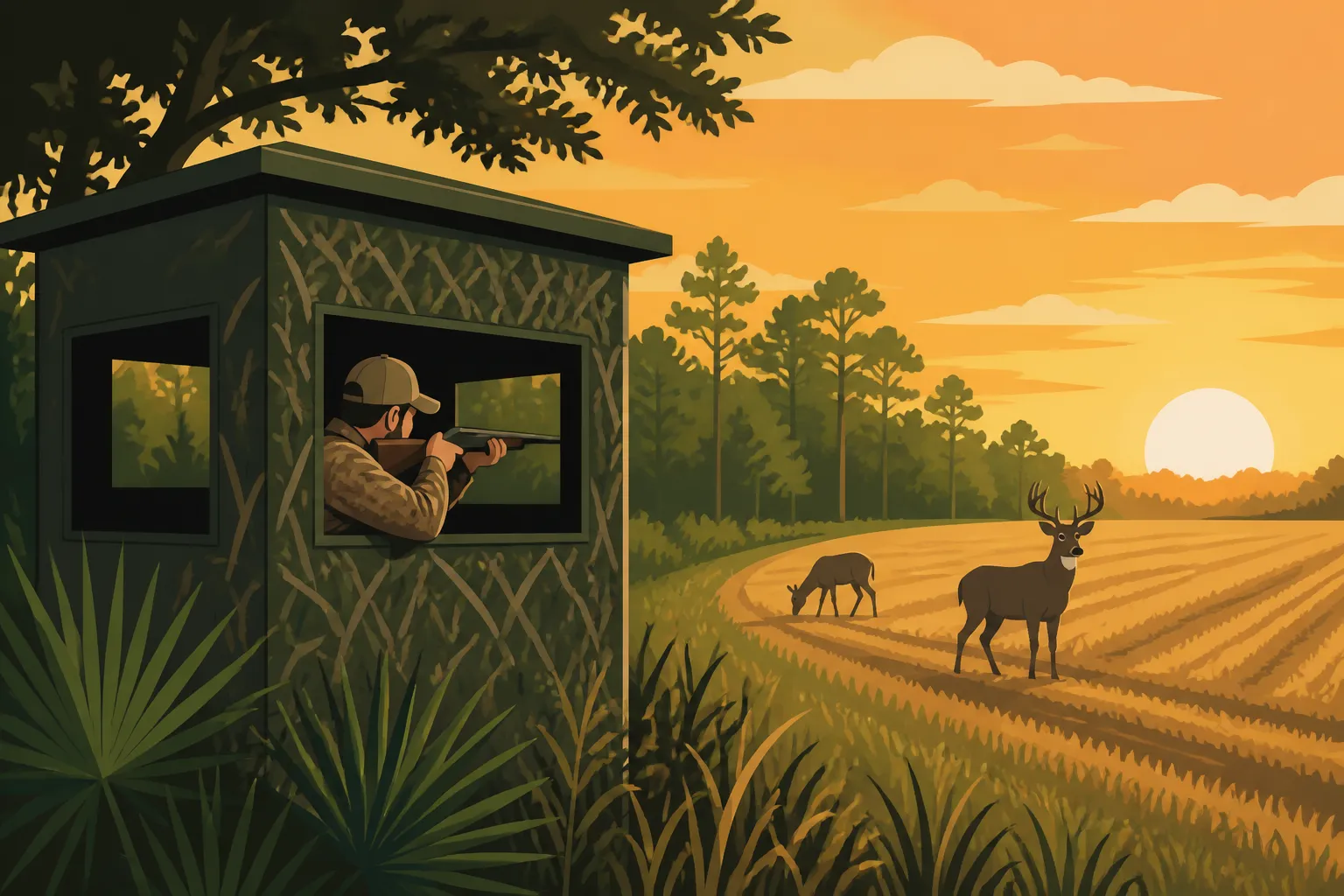
Ground Blinds on South Carolina Field Edges
There’s nothing quite like the anticipation of hunting a South Carolina field edge, watching for that deer to step out into the open at dawn or dusk. But let’s be real: sometimes those perfect field edges offer absolutely zero natural cover, leaving you feeling exposed and wondering how you’ll ever get close without spooking everything in sight. This guide is all about mastering the art of using ground blinds on these exact field edges, making sure you stay hidden, comfortable, and ready when that big buck finally makes his move.
Why Ground Blinds Shine on South Carolina Field Edges
Hunting field edges here in South Carolina presents a unique set of challenges and opportunities. On one hand, you’ve got these prime feeding and travel corridors, but on the other, finding adequate cover can feel like a losing battle. That’s where a good ground blind really comes into its own.
Overcoming Lack of Natural Cover
Let’s face it, not every gorgeous green field or cut bean field in South Carolina is bordered by a dense thicket or a perfect stand of mature oaks. Often, you're looking at a pretty sparse line of pines, a low fencerow, or even just wide-open pasture leading to the woods. Trying to hang a treestand in these situations can be frustrating. You either end up sky-lined, silhouetted against the open sky, or so far back in the woods that you’re losing visibility of the prime feeding area.
A ground blind completely changes that dynamic. It's essentially portable, instant cover that you can deploy exactly where you need it most. Imagine you’ve scouted a beautiful agricultural field in Orangeburg County where deer are consistently entering and exiting from a narrow finger of woods. But that finger of woods only has a few scrawny pines – nowhere near thick enough for a good treestand. Instead of forcing it, you can set up a ground blind right at the edge of that woods, looking over the field. You've created your own concealment, allowing you to be present in a spot that would otherwise be unhuntable from above.
This flexibility is a game-changer, especially on larger tracts of private land where field edges might stretch for hundreds of yards with limited natural breaks. You can pick that exact spot where two trails converge, or where a drain meets the field, and know you can get in there effectively.
Comfort and Accessibility
Hunting from a treestand, while incredibly effective, isn’t always the most comfortable experience, especially when you’re facing a long sit or dealing with the unpredictable South Carolina weather. And for some hunters, treestands just aren’t an option at all due to mobility issues or simply a preference for solid ground. Ground blinds address both of these concerns head-on.
Think about those chilly December mornings in the Upstate, or a drizzly, overcast day in October down in the Lowcountry. Inside a well-constructed ground blind, you’re shielded from the wind, rain, and even the biting cold. You can wear warmer layers without the bulk becoming an issue for climbing, and you can stretch out a bit, maybe even bring a small, comfortable chair. This increased comfort often translates directly into longer, more focused sits, which in turn boosts your chances of success. It's tough to stay perfectly still and vigilant when you're shivering or getting soaked.
Moreover, ground blinds offer unparalleled accessibility. If you're hunting with a youth, introducing a new hunter, or managing a physical limitation, a ground blind allows you to hunt safely and comfortably from the ground. It’s a fantastic way to share the outdoors with loved ones who might not be able to navigate a treestand, making the experience enjoyable for everyone involved. Plus, getting gear in and out, or even packing a lunch and a thermos, is just so much easier when you're not dealing with heights and harnesses.
Managing Wind and Scent
One of the eternal struggles of deer hunting is scent control. Deer have an incredible sense of smell, and a slight shift in wind can blow your cover instantly, sending them scattering. While no blind can completely eliminate your scent, a properly deployed and brushed-in ground blind can significantly help in managing it, particularly on those tricky field edges.
When you're tucked inside a blind, your scent signature is somewhat contained and directed. It's not as openly dispersed as it would be from a treestand, where the wind can pick it up and carry it freely in all directions. If you combine your blind with diligent scent control practices – showering with unscented soap, washing clothes in scent-free detergent, and using good quality scent sprays – you create a much smaller, more controlled footprint. The blind itself acts as a barrier, forcing air currents to go around it, rather than directly through you.
However, it’s still critical to pay close attention to wind direction when placing your blind. You want your primary shooting lanes to be downwind or crosswind of your anticipated deer travel. A blind can offer some protection from swirling winds that might catch you exposed in a treestand, but it’s not a magic bullet. Think of it as an extra layer of defense, giving you a better chance to stay hidden even when the air currents are a little unpredictable. On an early morning hunt where thermals are pulling scent downhill, a blind positioned strategically along the base of a field edge could keep your scent from drifting into the open field where deer are likely to appear.
Choosing the Right Ground Blind for South Carolina
Selecting the perfect ground blind isn't just about grabbing the first one you see. South Carolina's diverse terrain and weather demand some careful consideration to ensure your blind is effective and durable. There are a few things to keep in mind as you browse the options.
Key Features to Look For
When you're looking at ground blinds, start by thinking about durability and weather resistance. Our South Carolina weather can be brutal, from scorching summer heat that fades fabrics to torrential downpours and strong winds. You want a blind made from rugged, UV-resistant fabric that can stand up to these conditions, especially if you plan to leave it out for extended periods. Look for reinforced stitching and sturdy poles or hub mechanisms that won't buckle under stress.
Next, consider the window configurations. Modern blinds offer a variety of options, from simple shoot-through mesh to silent sliding or zippered windows. Silent operation is absolutely paramount – a noisy zipper or velcro strap can ruin a hunt in an instant. Test the windows in the store if you can, or read reviews specifically mentioning quiet functionality. You'll also want enough window versatility to cover different shooting lanes and angles, whether you're using a gun or a bow. Some blinds now offer 270 or even 360-degree viewing, which is fantastic for scanning those wide-open field edges. Checking out sites like GoHunt can provide detailed product comparisons and user reviews on these features.
Finally, think about size. Are you hunting solo, with a buddy, or taking a child along? A blind that’s too small will feel cramped and make silent movement difficult. One that’s too large might be overkill and harder to conceal. For a single hunter, a compact blind is great, but for two adults or an adult and a youth, a larger hub-style blind will offer much more comfort and space to operate. Ensure there's enough room to draw a bow comfortably if you're an archery hunter.
Camouflage Patterns and Visibility
The right camouflage pattern is crucial for blending into South Carolina’s varied landscapes. Our state features everything from dense, dark Lowcountry swamps and pine plantations to open agricultural fields and Upstate hardwoods. While a "universal" pattern can work, consider what specific environment your blind will spend most of its time in.
For open field edges, a pattern that mimics tall grasses, corn stubble, or even bare dirt can be highly effective. If your field abuts a hardwood forest, a pattern with more browns, grays, and tree bark elements might be better. For pine stands, green and tan patterns work well. The goal is to break up the blind's outline and make it disappear into the background. Some brands offer reversible blinds or accessory kits that allow you to change the outer layer to match different conditions.
Equally important is the blind’s interior. A truly effective blind will have a dark interior, often black. This prevents you from being silhouetted against the lighter exterior of the blind when you open a window or move around. If your blind has a lighter interior, even a small amount of light can create a visible outline of you inside, instantly alerting wary deer. A black interior creates a deep shadow, allowing you to move subtly and peek out without being seen. When you're researching models on GoHunt, pay attention to interior color descriptions and user photos.
Portability and Setup Speed
For many South Carolina hunters, especially those who frequent public lands like the Sumter National Forest or various WMAs, portability and quick setup are non-negotiable. You might need to pack your blind in a mile or more to a remote field edge, or you might want the flexibility to move it to a different spot based on changing wind or deer movement.
Hub-style blinds are incredibly popular for their balance of quick setup and stability. They typically pop open and collapse down in minutes, making them ideal for mobile hunting. Look for models that come with a comfortable carrying bag, and consider the packed size and weight. A blind that's easy to carry on your back, perhaps even attaching to a larger hunting pack, gives you so much more freedom. Packs for a Sumter Forest Day Hunt might be a good read if you're thinking about carrying your gear a long way.
On the other hand, if you're primarily hunting private land and plan to leave your blind set up for the entire season, portability might be less of a concern. In that case, you might prioritize a larger, more robust blind that offers maximum comfort and weather protection, even if it takes a bit longer to set up initially. The key is to match the blind’s characteristics to your specific hunting style and the terrain you’ll be covering. A fast setup means less time fumbling in the dark and more time sitting quietly, waiting for legal shooting light.
Strategic Placement and Brushing In
You can have the best ground blind money can buy, but if it’s not placed correctly and thoroughly brushed in, it’s just a brightly colored tent in the woods. Strategic placement and proper concealment are absolutely critical for success on South Carolina’s field edges.
Reading the Field Edge and Wind
Before you even think about setting up your blind, you need to become a detective. Walk the field edge, look for deer trails, rub lines, and scrapes. Where are they entering and exiting the field? Is there a particular corner they prefer, or a ditch they follow? Pay attention to pinch points, funnels, or any natural cover that guides deer movement along the edge. Deer are creatures of habit, and understanding their travel patterns is step one. Reading Aerial Photos for Upstate Deer can help with this advanced scouting, even before you step foot on the ground.
Once you’ve identified potential hot spots, it’s time to consider the wind and thermals. This is arguably the most important factor for ground blind placement. Unlike a treestand, you're not getting as much elevation to disperse your scent. You must position your blind so that the prevailing wind carries your scent away from where you expect deer to approach and travel. For morning hunts, consider thermals that often drop down into low-lying areas. For evening hunts, thermals typically rise. A crosswind is often a safer bet than a direct headwind or tailwind, as it gives you a larger margin of error if the wind shifts slightly.
Never compromise on wind direction for a "better" view. A deer's nose is infinitely more powerful than your eyes, and if they smell you, the hunt is over before it even begins. Imagine you've found a perfect entry point where a thick hedgerow meets a cornfield in the Pee Dee region. If the evening wind consistently blows from the field towards that hedgerow, you need to set your blind well downwind of that entry point, perhaps further along the field edge, or even a bit into the woods, to catch deer as they come out without being smelled.
Maximizing Concealment with Natural Cover
The best ground blind placement isn't in the middle of a barren field. It's against or within existing natural cover. This is where your blind truly becomes an extension of the landscape, not an obvious foreign object. Look for thick fencerows, clusters of cedars, dense privet hedges, fallen logs, or a thick line of pines or hardwoods. By tucking your blind right up against this existing vegetation, you immediately break up its artificial, geometric outline.
Once your blind is in position, the real work begins: brushing it in. This means using local, natural vegetation to further disguise your blind. Don't be shy here! Cut branches from nearby trees (pines, cedars, oaks), tall grasses, cornstalks, or whatever is prevalent in the area. Secure these branches to the blind's loops or framework, paying close attention to the top and corners. The goal is to make the blind look like a natural clump of brush or debris. You want to eliminate those hard, straight lines that scream "man-made."
When you're brushing in, think about the deer's perspective. What will they see as they approach from the field? Try to get down on your hands and knees at varying distances and angles to see how well it blends in. A few extra minutes of brushing in can make all the difference between a deer walking right past you oblivious and one stomping and snorting as it picks out your blind. Setting Up on a Lowcountry Field Edge details the importance of this step.
Creating Effective Shooting Lanes
While you want to be completely concealed, you also need clear shooting lanes. This is a delicate balance. The key is to trim only what is absolutely necessary to make a clean, ethical shot. Over-trimming can expose your blind and defeat the purpose of brushing in.
Before you trim, sit inside your blind with your weapon and identify your primary shooting lanes. Where do you expect the deer to appear? At what distances? For gun hunters, you might need wider lanes, while bowhunters require very precise, often smaller, gaps. Mark these lanes, then step outside and trim just enough to clear your shot, being mindful of any branches that might deflect an arrow or bullet.
Consider your shot angles. If a deer walks directly in front of your blind at 20 yards, can you make that shot comfortably? What about at 40 yards, or if they stay further out in the field? Practice aiming from inside your blind before the season starts, especially if it’s a new setup. For archery, pay close attention to branches above and below your window opening that could interfere with your arrow’s flight. Remember, you want to remain hidden until the shot, so having a clean lane ready is crucial.
Advanced Ground Blind Tactics for South Carolina
Once you’ve got your ground blind chosen, placed, and brushed in, the work isn't over. There are several advanced tactics and considerations that can significantly increase your success rate and ensure a comfortable, productive hunt on South Carolina’s field edges.
Scent Control and Entry/Exit Strategies
We've talked about scent, but it bears repeating: strict scent control is paramount when hunting from a ground blind, especially since you're on ground level. Think of your blind as the last line of defense, but don't rely on it entirely. Your regimen should start well before you even leave the house. Wash your hunting clothes in scent-free detergent, store them in airtight containers, and shower with unscented soap. Use a quality scent-eliminating spray on yourself and your gear before heading out.
Even with a well-brushed blind, your entry and exit routes can make or break a hunt. You need to plan these paths meticulously to avoid alerting deer. Always approach and leave your blind with the wind in your favor, or at least a crosswind that carries your scent away from the primary feeding and travel areas. Use natural terrain features like creek beds, ditches, logging roads, or thick tree lines to shield your movement and contain your scent.
For example, if your blind is on the east side of a field, and deer typically approach from the north, you'd want to use a path that brings you in from the south or east, never cutting across their anticipated approach from the north. Walk slowly and quietly, avoiding snapping twigs or rustling leaves. Consider using rubber boots to minimize ground scent. The less impact you have on the immediate area around your blind, the more comfortable and unaware the deer will be. This attention to detail on entry and exit is often the difference between seeing game and wondering why nothing showed up.
Decoy Usage and Calling from a Blind
Ground blinds provide an excellent platform for employing decoys and calling, as they allow for movement and concealment that a treestand sometimes struggles to offer. The blind hides your silhouette and any subtle movements you make while working a call or adjusting a decoy.
For deer hunting, a strategically placed deer decoy can be incredibly effective, especially during the rut. A standing or bedded doe decoy, or even a smaller buck decoy, can draw in curious bucks from the field edge. Place the decoy approximately 15-25 yards from your blind, angled slightly away from your shooting lane. This encourages an approaching deer to circle the decoy, often presenting a broadside shot. The blind allows you to set up and adjust the decoy without being seen, and to make subtle grunts or bleats to further entice a deer into range. Rattling and Grunting in South Carolina can be highly effective from a blind setup.
If you’re hunting turkeys, ground blinds are almost a requirement for many setups, particularly in open fields. A few hen decoys, perhaps with a jake or gobbler decoy, can lure in wary Toms. The blind lets you call, shift your position, and even draw your bow or shoulder your shotgun without the sharp eyes of a gobbler detecting your movement. It’s particularly useful for run-and-gun scenarios where you need to set up quickly in a field and blend into the environment fast.
Long-Term Setup and Management
For private land hunters or those with access to consistent spots on public land (where regulations allow), setting up your ground blind well in advance can dramatically increase its effectiveness. Deer are naturally wary of new objects in their environment. If you can place your blind a few weeks or even a month before the season opens, deer will have time to get accustomed to its presence. It becomes just another part of the landscape, and their initial wariness will subside.
This pre-season setup also gives you ample time for thorough brushing in, allowing the cut vegetation to blend in naturally and settle. You can revisit the blind, add more brush, and check your shooting lanes to make sure everything is perfect. Using trail cameras near your blind setup can give you valuable feedback on how deer are reacting to it and what times they are frequenting the area. Where to Hang a Camera on a Logging Road gives great tips that apply here too.
Regular maintenance is also key. Check your blind for rips, tears, or damage from weather or animals. Refresh the brushing in as leaves fall or natural vegetation dies back. If you're leaving it out for the whole season, make sure it’s properly anchored to withstand strong winds. Using high-quality stakes and tie-downs is crucial to prevent your investment from blowing away in a storm. For more tips on blending your setup with the environment, GoHunt often features articles on long-term blind strategies and habitat integration.
Table: Ideal Ground Blind Placement Scenarios on South Carolina Field Edges
| Field Edge Type | Best Placement Strategy | Ideal Wind Direction | Notes |
|---|---|---|---|
| Open Crop Field | Against existing fencerow, ditch, or isolated tree/bush clump. | Crosswind | Requires heavy brushing-in; focus on deer entry/exit points. |
| Pine Plantation Edge | Tucked into the first line of pines, blending with natural growth. | Crosswind/Out from pines | Use pine branches for brushing; watch for deer traveling parallel. |
| Hardwood Bottom Edge | Positioned at the base of large oaks, using fallen logs/limbs. | Out from hardwoods | Blend with leaf litter; effective for acorn drop areas. |
| Swamp Edge | Against thick palmetto or dense undergrowth. | Out from swamp | Use palmetto fronds/swamp growth for brushing; bring snake boots. |
| Pasture/Hay Field | Along a drainage ditch, thick weeds, or a property line. | Crosswind/Out from pasture | Minimal natural cover requires max brushing. |
| Food Plot | On the edge of the plot, facing away from prevailing wind. | Away from plot | Set up well in advance; minimize disturbance around plot. |
Remember, while ground blinds offer excellent concealment and comfort, they are part of a larger strategy. Always adhere to South Carolina's hunting regulations, including South Carolina Blaze Orange Requirements which may apply depending on your hunting method and location. Always prioritize safety, ethics, and respect for the land and its wildlife. Good luck out there, and may your field edge sits be fruitful!
Disclaimer
This article is for general informational purposes only and does not constitute professional advice. Laws, prices and regulations vary by location and change over time. Consult a qualified professional for guidance on your specific situation.