Best Shotgun Gauge for South Carolina Quail
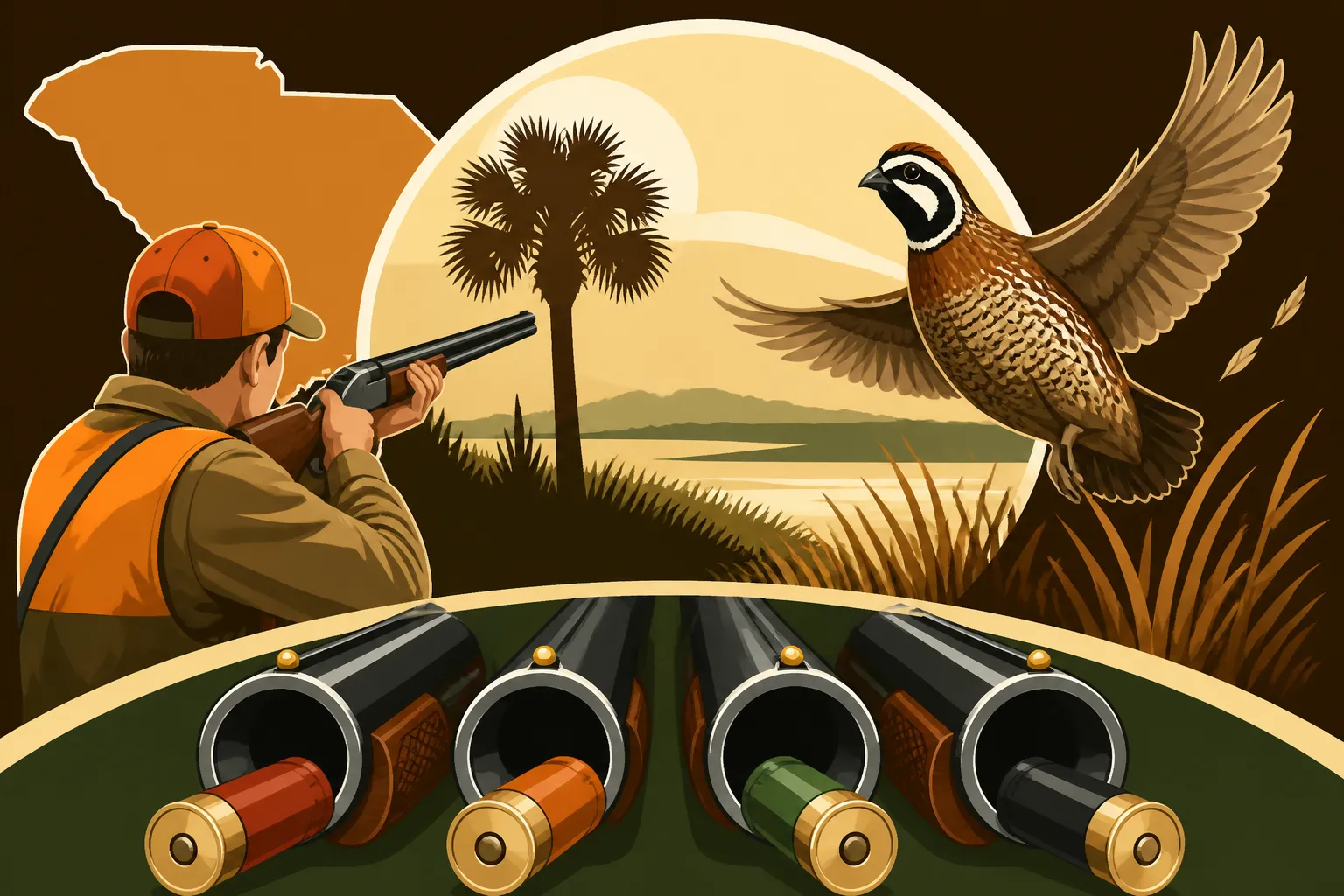
Choosing the right shotgun gauge for quail hunting in South Carolina can feel like a real puzzle. You want something effective, comfortable, and suited to the unique challenges of our Lowcountry broom sedge or Upstate pine stands, but with so many options, it's easy to second-guess yourself. This guide will help you understand the nuances of various gauges and equip you with the knowledge to pick the perfect shotgun for chasing bobwhites across our beautiful state.
Understanding South Carolina Quail Hunting
Before we dive into the specifics of shotguns, let's set the scene for what quail hunting in South Carolina truly looks like. It’s not always the fast-paced, high-volume shooting you might see in some other places, but it's deeply rewarding. Our quail hunting often involves covering a lot of ground, whether you're walking vast managed plantations or slipping through smaller, wilder tracts.
The Reality of Wild Quail Numbers
Let's be real: wild bobwhite quail numbers in South Carolina, and across much of the Southeast, aren't what they once were. Generations ago, coveys were abundant, and hunters could expect to flush multiple groups in an afternoon. Today, finding wild coveys takes effort, good habitat, and often, exceptional bird dogs. This reality shapes our approach to gear, favoring effectiveness and precision over sheer firepower. When you do find a covey, those few shots are precious, and you want to make them count. It's not about emptying your gun; it's about connecting with the target cleanly and efficiently. Many hunters are passionately working to bring these numbers back, understanding that How Managed Pine Could Restore South Carolina Quail is a critical piece of the puzzle.
Hunting Styles: Plantations Versus Public Land
The type of land you hunt on significantly influences your experience and, by extension, your gear choices. South Carolina is home to some incredible private quail plantations, often managed intensively for optimal bobwhite habitat. On these lands, you might be following a brace of highly trained pointers or setters, with shots typically presenting over a solid point, often at a controlled flush. The terrain is usually open and well-maintained, making for easier walking and generally more predictable shots.
Conversely, hunting quail on public lands, or smaller, less-managed private tracts, can be a much more rugged affair. You might be busting brush, navigating thicker cover, and dealing with more unpredictable flushes. The shots can be wilder, faster, and often obscured by vegetation. You might be walking much more, sometimes without the benefit of a fully trained pointer, relying instead on a flushing dog or your own keen eyes. This means carrying a shotgun that's comfortable for miles of walking is paramount. For more on the rules, check out South Carolina Small Game Season Rules.
The Shot Distances You'll Encounter
Quail hunting is inherently a close-range game. When a covey bursts from cover, the initial shots are usually within 15 to 25 yards, sometimes even closer. These are often quartering-away shots as the birds scatter, or quick crossing shots as they try to put distance between themselves and the dog. While you might take a longer follow-up shot at a straggler, the vast majority of your opportunities will be in that tight, explosive window. This close-range reality means you don't need a heavy-hitting magnum load designed for distant waterfowl. Instead, you need a scattergun that can put a dense, even pattern of small shot on a fast-moving target at relatively close quarters.
Exploring Shotgun Gauge Options for Quail
Now, let's talk about the hardware. While just about any shotgun can kill a quail, some gauges are certainly more suited to the task than others, offering a better balance of pattern density, recoil, and overall handling for those quick, close-range flushes.
The Classic 12-Gauge and its Place
The 12-gauge is, without a doubt, the most popular shotgun gauge in America, and for good reason. It’s versatile, powerful, and ammunition is readily available. For quail, however, it's often considered "more gun than you need." The primary advantages of a 12-gauge are its ability to throw a large charge of shot, creating a dense pattern, and its adaptability to various game birds and hunting situations. When quail hunting, many hunters will opt for lighter 12-gauge loads, often 2 ¾-inch shells with 1 oz or 1 ⅛ oz of shot, which reduces felt recoil compared to heavier target or duck loads.
While a 12-gauge might feel a bit heavy and deliver more recoil than ideal for quick, repeated swings on quail, it's perfectly capable. If you already own a 12-gauge and don't want to invest in another gun, it will certainly do the job. Just be mindful of your load choice and practice those fast, instinctive shots. It's about placement, not necessarily overpowering the bird. Some hunters even find the wider pattern of a 12-gauge forgiving on those jumpy covey rises.
The Nimble 20-Gauge: A Modern Favorite
If there's a current king for upland bird hunting, especially quail, it's arguably the 20-gauge. This gauge strikes an excellent balance between sufficient payload and manageable recoil, all in a lighter, faster-swinging package. A typical 20-gauge quail load will carry ¾ oz to ⅞ oz of shot, which is more than enough to cleanly take a bobwhite at close range. The reduced recoil means less flinching and faster follow-up shots, which can be crucial when a covey explodes and multiple birds offer fleeting opportunities.
Many modern 20-gauge shotguns are built on smaller, lighter frames than their 12-gauge counterparts, making them a joy to carry through thickets and across open fields all day long. This lighter weight reduces fatigue, allowing you to stay sharp mentally and physically. For many, the 20-gauge is the "Goldilocks" option: not too big, not too small, but just right for the close-quarters action of quail hunting. It's an excellent choice for new hunters and seasoned veterans alike. For a broader look at shotguns, check out Shotguns for South Carolina Dove and Quail.
The Understated 28-Gauge: A Smooth Shooter
The 28-gauge might be less common than the 12 or 20, but it holds a special place in the hearts of upland purists. It's often described as shooting "above its weight class" because, despite its small payload (typically ¾ oz of shot), it consistently delivers incredibly dense, effective patterns. The secret lies in its bore diameter and the physics of how shot travels through it; the shot column is longer and narrower, leading to less deformation and more consistent patterns.
Recoil from a 28-gauge is famously mild, making it incredibly comfortable to shoot, even for extended periods. This translates to less fatigue and greater confidence in the field. The guns themselves are typically very light and elegant, offering superb handling and a natural, fluid swing. The main drawbacks are usually a higher cost for both the guns and the ammunition, and sometimes more limited availability of shells compared to 12 or 20-gauge. However, if you can find one and afford the shells, a 28-gauge is an absolute delight for quail hunting, offering a level of enjoyment that's hard to beat.
The Zippy .410 Bore: For the Experienced
The .410 bore is the smallest commonly available shotgun gauge, and it’s a polarizing choice for quail hunting. It typically throws ½ oz or 11/16 oz of shot, a significantly smaller payload than any other gauge. This means its patterns are inherently sparser, and the margin for error is much, much smaller. You need to be an exceptionally good shot to consistently and ethically harvest quail with a .410.
However, for those who master it, the .410 offers an incredible challenge and a unique sense of accomplishment. It’s ultra-light, has virtually no recoil, and can be incredibly fast to handle. It's often favored by experienced hunters looking for a greater challenge, or by younger, smaller hunters who are very comfortable with their shooting fundamentals. If you're considering a .410, be honest about your skill level. It's a fantastic gauge for busting clays and honing your skills, but for hunting live birds, especially for beginners, it can lead to frustration and potentially wounded game if your shot placement isn't absolutely spot-on.
Here's a quick comparison of the common gauges for quail:
| Gauge | Common Shot Load (oz) | Recoil (Relative) | Weight/Handling (Relative) | Pattern Density (Relative) | Best Suited For |
|---|---|---|---|---|---|
| 12 | 1 – 1 1/8 | High | Moderate to Heavy | Very Good | Versatile, heavier gun owners, wider pattern preference |
| 20 | 3/4 – 7/8 | Moderate | Light to Moderate | Excellent | All-around best choice, balanced performance |
| 28 | 3/4 | Low | Light | Excellent | Upland purists, reduced recoil, precise patterns |
| .410 | 1/2 – 11/16 | Very Low | Very Light | Fair (Requires skill) | Experienced shots, challenge, very young hunters |
Factors to Consider When Choosing Your Gauge
Beyond the raw specifications, several practical considerations should guide your decision. What feels good in your hands, how you react to the shot, and even the availability of ammunition can all play a role.
Recoil Tolerance and Comfort
This is a huge factor that many hunters underestimate. Recoil is the backward thrust generated by a fired gun. While a 12-gauge shooting light target loads might not kick like a mule, it will still deliver more felt recoil than a 20-gauge or 28-gauge. If you’re prone to flinching, or if you simply want a more comfortable shooting experience for a long day in the field, opting for a lighter-recoiling gauge is a smart move. Less recoil means you can concentrate better on your swing and follow-through, leading to more accurate shots and less fatigue throughout the hunt. It's not about being tough; it's about being effective. GoHunt often features reviews of shotguns, and many hunters prioritize low recoil for upland models.
Shotgun Weight and Portability
Imagine carrying your shotgun for several miles, busting through briars, climbing over fallen logs, and holding it ready for quick shots. A heavy gun quickly becomes a burden. A lighter shotgun, typical of 20-gauge, 28-gauge, or .410 models, makes a significant difference in your endurance and enjoyment. A lighter gun also tends to swing faster, which is invaluable when a covey explodes unexpectedly. This isn't to say a 12-gauge can't be carried, but often the smaller gauges are built on more compact frames, shaving off those precious pounds that add up over a long day. If you're walking vast expanses, like those found when Hunting Longleaf Pine Savanna for Deer (though that's for deer, the principle of walking applies!), a lighter gun is always a plus.
Ammunition Availability and Cost
While you can almost always find 12-gauge and 20-gauge shells in any sporting goods store, 28-gauge and especially .410 shells can be harder to come by, and often more expensive per box. If you hunt frequently, or if you plan to shoot a lot of clays to practice, the cost and availability of ammunition can add up. It's always a good idea to check local stores or online retailers for shell prices and stock before committing to a less common gauge. You don't want to find yourself ready for opening day only to discover your preferred shells are out of stock everywhere. GoHunt users often share tips on where to find specific ammo, which can be a real lifesaver.
Hunter Skill Level and Experience
Let's be honest with ourselves: not everyone is a world-class wing shooter. For new hunters, or those still developing their skills, a gauge that offers a more forgiving pattern and less recoil can be a huge advantage. This is where the 20-gauge truly shines. Its balanced characteristics allow for good patterns without punishing recoil, making it easier to learn and build confidence.
The .410, on the other hand, is generally recommended for experienced shooters who have mastered their wing shooting fundamentals. Its tighter pattern demands precision, and missing with a .410 often means a clean miss or, worse, a wounded bird. If you're just starting out, or if you find yourself struggling with consistent hits, a 20-gauge will likely lead to a much more satisfying and ethical hunting experience.
Beyond the Gauge: Other Gear and Tactics
Choosing the right gauge is just one part of the equation. To truly be successful and comfortable when chasing quail in South Carolina, you need to consider the whole setup, from chokes to footwear.
Choke Selection for Fast Flushes
For quail, an open choke is your friend. Think Cylinder, Skeet, or Improved Cylinder. These chokes provide a wider pattern that spreads quickly, increasing your chances of hitting a fast-flying bird at close range. Given that most quail shots are within 25 yards, a tight pattern from a Modified or Full choke is usually counterproductive, resulting in blown-up birds or clean misses if you're even slightly off. Many hunters will run an Improved Cylinder in their lead barrel (for the initial covey flush) and perhaps a Light Modified or Modified in the second barrel (for follow-up shots on longer-flying singles). Understanding Choke Choice for Fast Covey Flushes is key to success.
Shot Size and Shell Selection
For bobwhite quail, smaller shot sizes are generally preferred. #7.5 or #8 shot are the most common and effective choices. These smaller pellets create a dense pattern, delivering enough energy to cleanly kill a quail without causing excessive meat damage. Some hunters will even use #9 shot, especially for early season birds or very close-range work, further increasing pattern density. Avoid larger shot sizes like #6 or #4; they offer too few pellets for a dense pattern on small birds and can severely damage the meat. Your shell should be a standard field load, often 2 ¾-inch for 12 or 20-gauge, with a shot charge in the ¾ oz to 1 ⅛ oz range, depending on your gauge. For details on various loads, check out Shot Size for Quail and Dove.
Importance of a Good Bird Dog
Let’s be honest: quail hunting without a good bird dog is like trying to find a needle in a haystack blindfolded. These hunts are almost entirely dependent on canine companions, whether they're pointers, setters, or flushers. A well-trained dog will locate birds, hold a point, and retrieve fallen game, dramatically increasing your success rate and minimizing lost birds. Finding a dog you can trust, one that ranges appropriately for the cover you're hunting, is paramount. Many hunters consider their dog their most important piece of "gear." For tips on working with your hunting partner, consider Bird Dog Gear for South Carolina Cover.
The Right Apparel for the Cover
South Carolina's quail habitat can be dense and thorny, especially on wilder tracts. You'll be walking through broom sedge, briars, pine thickets, and sometimes wet low-lying areas. Proper attire is critical for comfort and protection.
- Brush Pants or Chaps: Invest in good quality brush pants or chaps made of tough, briar-resistant material. These will save your legs from countless scratches and punctures.
- Snake Boots: Especially in warmer months or in swampy areas, snake boots are a non-negotiable safety item. Copperheads and rattlesnakes are present throughout South Carolina, and good boots offer peace of mind. Check out our detailed guide on Snake Boots for Coastal Plain Walking.
- Lightweight, Layered Clothing: Quail season often starts in October when temperatures can still be quite warm, and extends into February when it can be quite chilly. Dress in layers that can be shed or added as the day progresses and temperatures fluctuate. A good upland vest with plenty of game bag space and shell loops is also incredibly useful. You'll also want to consider Upland Vests With Water Capacity.
- Blaze Orange: For safety, especially when hunting with other people or dogs, wearing blaze orange is highly recommended, even if not strictly required in all small game situations. A vest or hat will make you visible to your hunting partners.
Ultimately, the best shotgun gauge for South Carolina quail hunting is the one you shoot most confidently and comfortably. While the 20-gauge and 28-gauge are arguably the most suitable for their balance of power, portability, and mild recoil, a light 12-gauge or a skillfully handled .410 can also get the job done. Focus on good patterning, ethical shots, and most importantly, enjoying the unique challenge and camaraderie that comes with chasing bobwhites in the beautiful South Carolina woods.
Disclaimer
This article is for general informational purposes only and does not constitute professional advice. Laws, prices and regulations vary by location and change over time. Consult a qualified professional for guidance on your specific situation.