South Carolina Deer Record Book
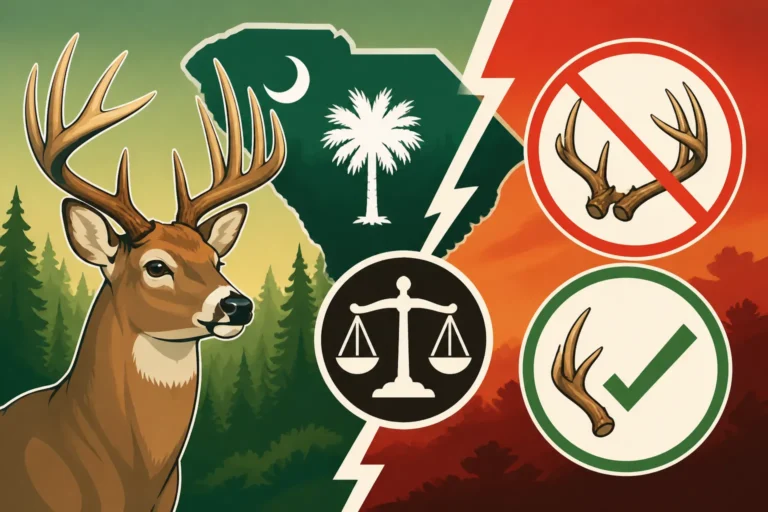
There’s nothing quite like the feeling of watching a magnificent South Carolina whitetail step into a clearing, its antlers catching the morning sun. While many of us hunt for the freezer, for the challenge, or for the sheer joy of being in our incredible Lowcountry swamps or Upstate mountains, there's a certain fascination with those truly exceptional deer that push the boundaries of antler size. This guide will take you through everything you need to know about the South Carolina Deer Record Book, from how deer are scored to what it takes to get an entry, celebrating the incredible animals that roam our state.
Understanding the South Carolina Deer Record Book
For many hunters, the South Carolina Deer Record Book isn't just about bragging rights; it's a testament to good deer management, healthy habitats, and the dedication of hunters who spend countless hours in the field. It represents a living history of some of the most impressive whitetails taken across our diverse landscapes, from the coastal plain to the foothills.
More Than Just Antlers: The Spirit of the Record Book
When we talk about "record book bucks," it's easy to get caught up in the numbers and the inches, but the spirit of the record book goes much deeper. Each entry tells a story – a story of patience, scouting, and often, a bit of luck. It's about recognizing the truly exceptional animals that represent the genetic potential and nutritional health of a given area. Think about the countless hours spent walking timber, checking trail cameras, or Scouting South Carolina Public Land Before Season. Every one of these big bucks started as a fawn, grew through lean times and good, and developed into something remarkable. The record book helps us appreciate the full lifecycle of these animals and the conditions that allow them to thrive.
It’s also a way for hunters to connect with the heritage of the sport. Looking through the historical entries, you can see how deer populations have shifted, how different parts of the state produce different kinds of racks, and even how hunting methods have evolved. It’s a snapshot in time, preserved for future generations to admire and aspire to. It solidifies the understanding that careful harvest, paired with quality habitat, truly yields impressive results.
The Importance of a Standardized Scoring System
Imagine trying to compare the size of a deer's antlers without a common language. One hunter might say "huge spread," another "tall tines," and you'd have no objective way to determine which was truly bigger. That's where a standardized scoring system comes in. The South Carolina Deer Record Book primarily utilizes the Boone and Crockett Club's scoring system for typical and non-typical whitetail antlers. This system provides a consistent, objective method for measuring the various dimensions of a rack—things like main beam length, spread, circumference, and tine length.
This standardization is crucial. It allows for fair comparisons between deer taken in different counties, different years, and by different hunters. It removes subjectivity and ensures that every deer entered into the book is measured by the same rigorous criteria. This consistency not only brings credibility to the record book itself but also helps wildlife biologists track trends in antler quality and deer health across the state. It allows us to truly understand the South Carolina Deer Population Estimate and the factors influencing it. A company like GoHunt, for example, provides tools that help hunters analyze their own harvests and understand how their deer might stack up, often referencing these standardized metrics.
How the Record Book Reflects Deer Management Success
The number and quality of entries in the South Carolina Deer Record Book can actually tell us a lot about the success of our state's deer management efforts. A healthy deer herd, with a balanced age structure and access to good nutrition, is more likely to produce bucks with impressive antlers. When you see a steady stream of mature bucks making it into the record book, it suggests that hunters are allowing younger bucks to walk, and that the local habitat is providing the necessary resources for growth.
Consider how the South Carolina Deer Season Structure Explained allows for varying seasons and bag limits across the state's four game zones. These regulations are designed to help manage herd health. In areas where hunters practice quality deer management principles, even on smaller private tracts, the potential for producing a record book buck increases significantly. The record book serves as a tangible, albeit anecdotal, indicator that what we're doing on a broader scale, from habitat conservation to responsible harvesting, is having a positive impact on the overall quality of our whitetail resource. It’s a powerful validation for those who advocate for sound wildlife practices.
The Scoring Process for South Carolina Whitetails
So, you've taken a deer that looks like it might qualify. What now? The scoring process can seem a bit intimidating at first, with all the measurements and terminology, but it’s quite systematic once you understand the basics.
Boone and Crockett vs. Pope and Young: What's the Difference?
When discussing antler scoring, you'll most often hear two names: Boone and Crockett and Pope and Young. While both organizations use essentially the same set of rules and measurements, there's one critical difference: the method of harvest.
- Boone and Crockett Club: This organization scores animals taken by any legal means, whether it's rifle, shotgun, muzzleloader, or archery. If you harvest a magnificent buck during South Carolina's firearms season, its score would fall under the Boone and Crockett system.
- Pope and Young Club: This organization is specifically for animals harvested ethically with archery equipment. So, if you manage to arrow a trophy buck during When South Carolina's Archery Season Opens, its score would be submitted to the Pope and Young Club.
For the South Carolina Deer Record Book, both types of entries are typically recognized and celebrated, often with separate categories to distinguish between firearm and archery kills. Understanding which category your buck falls into is the first step in the scoring journey. Both systems emphasize fair chase, ensuring that the animal was taken ethically and legally.
The Nitty-Gritty of Measuring: Gross vs. Net Scores
Antler scoring involves a series of precise measurements that are then added and subtracted to arrive at a final score. This is where terms like "gross score" and "net score" come into play, and they can sometimes be a source of confusion.
- Gross Score: This is the total sum of all positive measurements of the antlers. It includes the length of the main beams, the length of each typical tine, and the circumference measurements taken at various points along the main beams. Any abnormal points or deductions for asymmetry are not taken out in the gross score. This score represents the true amount of bone the deer carried.
- Net Score: This is what most record books use for official ranking. To get the net score, deductions are made from the gross score. These deductions come from two main areas:
- Symmetry Deductions: If a tine on one side doesn't have a matching, symmetrical tine on the other side of the same length, the difference in length is deducted. This is particularly relevant for "typical" racks, where symmetry is highly valued.
- Abnormal Point Deductions: Any points that are not typical (i.e., they don't grow off the main beam in a conventional manner, or they are drop tines, kickers, etc.) are measured and then deducted from the gross score. These are usually referred to as "non-typical" characteristics.
For "typical" entries, the goal is often a high net score, which signifies great symmetry. For "non-typical" entries, the abnormal points are actually added to the typical frame score, so those gnarly, character-rich racks can achieve impressive non-typical scores. Most hunters in South Carolina are interested in their buck's net score, as that's what determines its place in the official record book. This intricate process ensures that every angle and curve of a trophy buck is accounted for.
Here’s a simplified breakdown of the common measurements:
| Measurement Category | Description | Typical Rack Focus | Non-Typical Rack Focus |
|---|---|---|---|
| Main Beam Length | Measured along the outside curve of each main beam from base to tip. | Crucial for overall score | Contributes to frame score |
| Tine Length | Measured from the nearest point on the main beam to the tip of each tine. | Key for symmetry and score | Contributes to frame score |
| Circumference | Measured at four specific points along each main beam. | Adds significantly to score | Adds significantly to score |
| Inside Spread | Widest measurement between the main beams, perpendicular to the skull. | Contributes to score | Contributes to score |
| Abnormal Points | Any points not growing conventionally or symmetrically (e.g., kickers, drop tines). | Deducted for net score | Added to frame score for total |
| Symmetry Differences | Differences in length between corresponding typical tines on each side. | Deducted for net score | Minimal impact, often ignored |
Finding an Official Measurer in South Carolina
Once your buck's antlers have had at least a 60-day drying period (this is crucial to allow for any shrinkage and stabilize the bone), it's time to find an official measurer. You can't just measure it yourself if you want it in the official record book; it requires a certified individual. The South Carolina Department of Natural Resources (SCDNR) usually maintains a list of official measurers for the state's record book program. These individuals have been trained and certified in the Boone and Crockett scoring method, ensuring accuracy and consistency.
You can often find contact information for these measurers through the SCDNR website or by calling their wildlife division. When you contact a measurer, they'll typically schedule an appointment to assess your antlers. It's a good idea to bring your hunting license and any relevant harvest documentation, especially if it's a buck taken on public land or a WMA where specific South Carolina Deer Reporting Requirements apply. They'll meticulously go through each step of the scoring process, explaining it as they go. It’s a fascinating experience to watch an expert break down every curve and point, bringing the animal’s impressive rack into quantifiable terms. Even if you use a mapping tool like GoHunt to scout areas known for big deer, the official measurement is the final step to formal recognition.
Qualifying for the South Carolina Deer Record Book
So, what does it actually take to get your deer into this prestigious book? It's more than just size; it also involves ethical considerations and proper documentation.
Minimum Scores and Categories
The South Carolina Deer Record Book has specific minimum scores for entry, which can vary slightly depending on the category (e.g., typical vs. non-typical, gun vs. archery). These minimums are set to ensure that only truly exceptional deer are included, maintaining the integrity and prestige of the record book.
While specific numbers can fluctuate, generally you’re looking at scores that align with national Boone and Crockett or Pope and Young minimums. For typical whitetails, a net score in the 125-140 range (often 125 for archery, higher for gun) might be a general ballpark for state-level recognition, with non-typical categories requiring a slightly higher overall score. However, these are approximations, and the official numbers should always be checked directly with the SCDNR record book guidelines. Each category celebrates a distinct type of trophy, whether it's the classic, symmetrical rack or the impressive, character-rich non-typical. Some counties, like those often cited as the Best South Carolina Counties for Big Bucks, tend to produce more entries due to genetics and habitat.
Ethical Harvest Requirements
Just having a large rack isn't enough; the buck must have been harvested legally and ethically according to South Carolina hunting regulations. This means:
- Valid Licenses and Permits: The hunter must have possessed all required licenses and permits at the time of the harvest, including a valid hunting license and big game permits.
- Legal Weapon and Method: The deer must have been taken with a legal weapon during the appropriate season for that weapon. For example, a crossbow kill during archery-only season needs to adhere to Crossbow Rules During South Carolina Archery Season.
- Fair Chase Principles: The harvest must adhere to fair chase principles. This means no artificial enhancements that give an unfair advantage, no hunting within illegal distances of roads or dwellings, and no illegal baiting where prohibited. The spirit of the hunt, the challenge, and the respect for the animal are paramount.
- Proper Reporting: All harvested deer in South Carolina must be reported through the Game Check system. This is not only a legal requirement but also helps the SCDNR gather crucial data for managing the state's deer herd, which in turn influences programs that help grow those big bucks.
An official measurer will often confirm these details before submitting an entry. Integrity in the harvest is just as important as the inches on the antler. It ensures that the legacy of the animal and the hunter are both respected.
What Happens After You Qualify
If your buck meets the minimum score and all ethical harvest requirements, your official measurer will submit the score sheet and necessary documentation to the South Carolina Deer Record Book program. This usually involves a small entry fee to cover administrative costs.
Once accepted, your buck will be officially recorded in the state's record book. You'll likely receive a certificate acknowledging your achievement, and your name and the details of your harvest will be added to the public record. Many record books also host banquets or ceremonies where hunters are recognized for their entries, providing a wonderful opportunity to celebrate with fellow sportsmen and share the story of your hunt. Being recognized in the South Carolina Deer Record Book is a significant accomplishment and a source of pride for any hunter, solidifying your place in the state's hunting heritage. This also contributes to the rich history of South Carolina Deer Harvest Records, providing valuable data for future generations.
Beyond the Rack: The Legacy of South Carolina's Big Bucks
While the antlers are the physical representation of a trophy, the true legacy of South Carolina's big bucks extends far beyond inches and points. It’s about the stories, the land, and the future of hunting in our state.
Record Book Entries and Hunting Pressure on Public Land
It's a common misconception that all big bucks come from heavily managed private land. While private land with food plots and strict age management certainly produces its share of monsters, incredible bucks are harvested on public lands every year in South Carolina. However, finding these mature deer on public ground often requires extra effort and different tactics, especially given Hunting Pressure on South Carolina Public Land.
Areas like the Francis Marion National Forest or sections of the Sumter National Forest can hold truly impressive animals, but hunters often have to go deeper, scout harder, and employ smart strategies. Understanding wind and thermals, locating overlooked pockets of cover, or targeting areas during the rut like when Hunting the Rut in the Coastal Zones or Hunting the Rut in the Upstate Zone can increase your odds significantly. The entries from public land hunters in the record book are particularly inspiring because they demonstrate that with enough dedication, anyone can find success on shared resources. It proves that despite higher pressure, a hunter with keen skills, perhaps honed by using tools like GoHunt to analyze terrain and access, can still achieve remarkable results.
The Role of Habitat and Nutrition in Antler Growth
You can have the best genetics in the world, but without proper nutrition and quality habitat, a buck simply won't reach its full antler potential. Antler growth is directly tied to a buck's overall health and the nutrients available in its diet. A buck's body will prioritize its own survival and bodily functions before putting energy into growing large antlers.
That's why areas with diverse forage, rich soils, and good browse—like the fertile river bottoms or agricultural lands in the Midlands—tend to produce more South Carolina Boone and Crockett Whitetails. These areas provide consistent access to protein, minerals, and carbohydrates necessary for robust antler development. Similarly, good habitat management practices on both private and public lands, such as prescribed burns, selective timber harvesting, and establishing diverse native forage, all contribute to a healthier deer herd and, by extension, better antler quality. Understanding the South Carolina Buck Age Structure also helps in recognizing the critical role of allowing bucks to reach maturity where they can express their full genetic potential.
Inspiring Future Generations of South Carolina Hunters
The South Carolina Deer Record Book does more than just list big deer; it inspires. For many young hunters, seeing images or reading stories of these incredible animals ignites a passion and sets a goal. It teaches them about the potential that exists within our state's wild places and encourages them to learn about deer biology, habitat, and ethical hunting practices.
By showcasing these impressive animals, the record book helps educate hunters on the benefits of sound deer management. It highlights the importance of letting young bucks walk to allow them to mature and reach their full potential. This fosters a deeper respect for the resource and encourages responsible stewardship, ensuring that future generations will also have the opportunity to pursue and appreciate the magnificent whitetails of South Carolina. It’s about passing on not just a passion for the hunt, but a commitment to conservation that will sustain our deer herds for years to come.
Disclaimer
This article is for general informational purposes only and does not constitute professional advice. Laws, prices and regulations vary by location and change over time. Consult a qualified professional for guidance on your specific situation.