When the South Carolina Rut Peaks by Zone
Trying to pin down the exact "rut" in South Carolina can feel like trying to catch smoke, especially when you're comparing notes with a buddy hunting a couple of counties over. It's frustrating to hear about deer chasing does in August when you're still seeing bachelor groups in October, or vice versa. This guide is here to untangle the complexities of deer rut timing across South Carolina's diverse landscape, offering insights into why it varies so much by zone and how you can use this knowledge to your advantage.
Understanding the South Carolina Rut: It's Not a One-Size-Fits-All Event
If you've hunted South Carolina deer for any length of time, you've probably noticed that the rut, or breeding season, doesn't seem to happen at the same time everywhere. Unlike some northern states where the rut is a fairly predictable, compact window, our state's whitetail breeding can feel like a drawn-out, scattered affair. This isn't just a figment of your imagination; it's a well-documented biological reality.
The primary reason for this extended and varied rut timing across South Carolina stems from historical deer stocking efforts. Decades ago, as deer populations were recovering from overhunting, deer from various regions—including different parts of South Carolina and even other states—were relocated to bolster local herds. These deer brought their genetic predispositions for breeding timing with them. Over time, these varied genetics have led to distinct rutting patterns in different parts of the state. So, while deer in the mountains might be genetically programmed to rut in late October, their cousins in the Lowcountry might be geared towards an earlier, mid-September peak. It's a fascinating biological puzzle, but it certainly adds a layer of complexity for us hunters trying to predict those magical days of heightened deer activity. This genetic diversity, coupled with local environmental factors like food availability and weather, means that you really need to understand the specifics of your hunting zone to effectively target the rut.
What Does "Peak Rut" Really Mean?
When we talk about the "peak rut," it's easy to picture a single day or weekend where every buck is running wild, chasing every doe in sight. The reality is a little more nuanced. The rut is a process, not an event, and it unfolds in distinct phases. The "peak" typically refers to the period of maximum breeding activity, when the majority of does come into estrus and bucks are most actively seeking and pursuing them. This is when you'll see the most buck movement during daylight hours, the most scrapes and rubs popping up, and the most aggressive behavior from mature bucks.
However, even within this peak window, it’s not always a frenzy. You’ll have the initial pre-rut, where bucks are making rubs and scrapes, establishing dominance, and beginning to cruise for does. Then comes the chase phase, which is often what most hunters associate with the "peak rut." Finally, there's the post-rut, where exhausted bucks are still looking for any remaining receptive does. Understanding these phases is crucial because your tactics need to adapt. A week before the peak, a scrape line might be your best bet, but during the chase, cruising timber or sitting on known travel corridors becomes more effective. It also means that even if you miss the absolute height of breeding, there are still excellent opportunities to encounter active bucks in the weeks leading up to and following the true peak.
Factors Influencing Rut Timing Beyond Genetics
While genetics are a huge player in South Carolina's varied rut timing, they're not the only factor. Local environmental conditions can certainly influence the intensity and visible activity of the rut, even if they don't shift the actual breeding dates significantly. For instance, a sudden cold snap can really kick deer activity into high gear, making it seem like the rut has "started" when in reality, it just made bucks move more aggressively. Conversely, a prolonged period of unseasonably warm weather can suppress daylight movement, making it feel like the rut is delayed or absent.
Food availability also plays a role. If acorns are abundant in one area, deer might be more concentrated, making rutting activity seem more intense. If food sources are scattered or scarce, deer might have to cover more ground, potentially spreading out the visible rutting behavior. Hunting After a Poor Acorn Year can really change how deer move and where you'll find them. Heavy hunting pressure can also push deer into nocturnal patterns, making it harder for hunters to observe the rut's full glory. Hunters using tools like GoHunt often pay close attention to historical weather patterns and forage maps for specific areas, helping them anticipate how these environmental factors might interact with the inherent genetic rut timing to influence daily deer movement.
Rut Peaks by South Carolina Game Zone
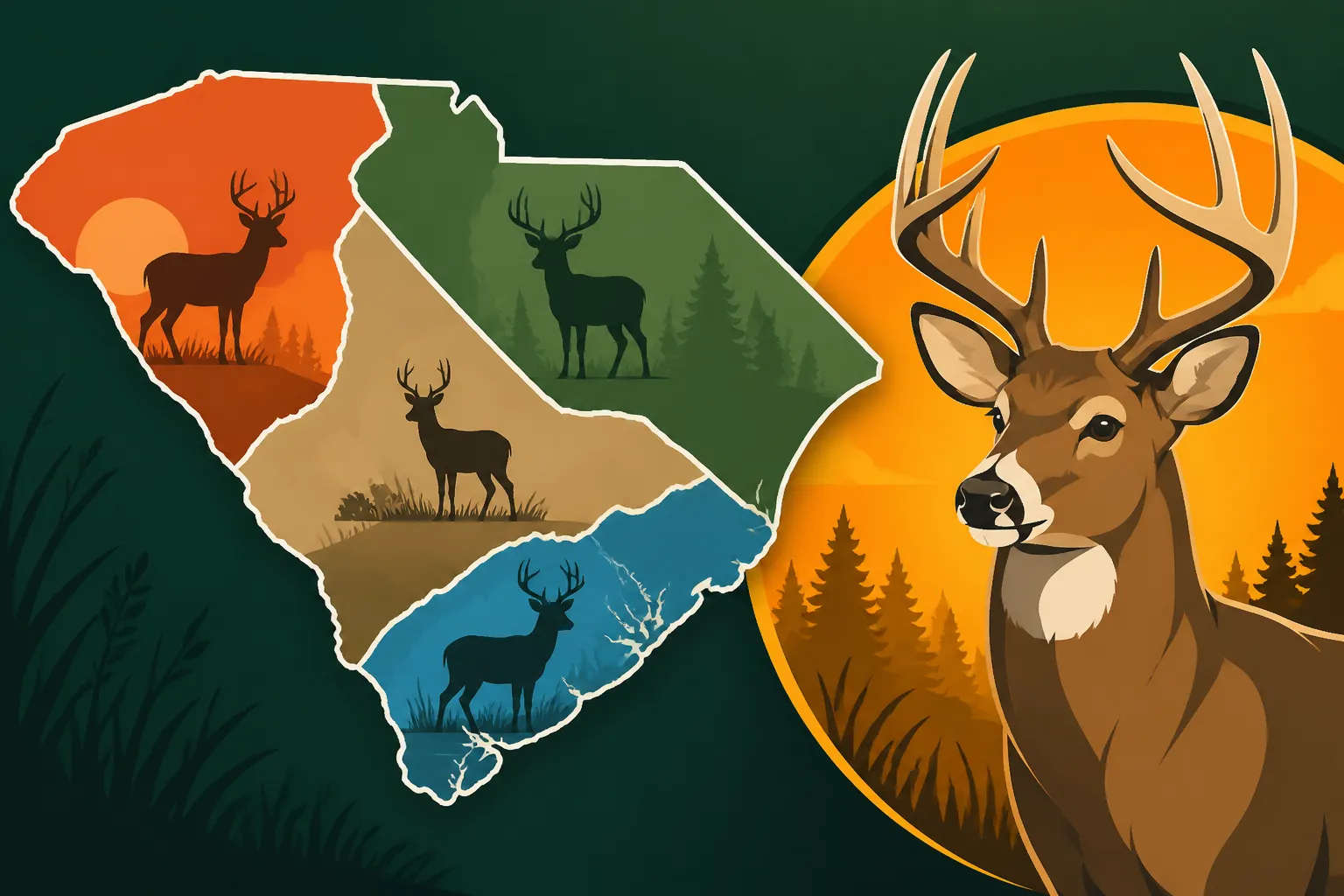
South Carolina is famously divided into four distinct game zones, each with its own deer season structure, and, crucially for our discussion, its own general rut timing. While there can be minor variations within these zones, understanding these broad patterns is key to planning your hunts effectively. It really drives home the importance of knowing South Carolina's Four Game Zones before you head afield.
Zone 4: The Coastal Plain and Earliest Rut
Zone 4 encompasses much of South Carolina's Lowcountry and coastal plain, known for its long, warm deer season. This is where you'll generally find the earliest rut activity in the state, often catching hunters by surprise.
The primary rut peak in Zone 4 typically occurs from mid-September through early October. It's not uncommon to see chasing activity ramp up as early as the last week of August or the first week of September, especially after a cool front. This early timing can be fantastic for archery hunters who are out during the initial weeks of the season. Imagine sitting in a stand on a field edge in late September, the air still carrying the hint of summer, and suddenly a mature buck comes barreling out of the woods, nose to the ground, trailing a doe. It’s an exhilarating experience that defies what many hunters expect from a typical "fall" rut. This also means that if you're trying to time your vacation for peak rut action, you'll need to think much earlier in the calendar year compared to hunters in other states or even other South Carolina zones. You can learn more about Hunting the Rut in the Coastal Zones.
For hunters utilizing primitive weapons, understanding this early rut is particularly important. South Carolina Primitive Weapons Tactics during this period might involve sitting over scrapes that are just starting to show activity or focusing on travel corridors between feeding and bedding areas where bucks are beginning to cruise. The key is to be out there early and often, especially during those cooler mornings that break the late summer heat. Don't wait for October to roll around, thinking that's when the action starts; in Zone 4, you'll have likely missed a significant chunk of it.
Zone 3: The Midlands and Mid-Season Action
Moving slightly inland into Zone 3, which covers much of the central Midlands region, the rut timing shifts a bit later than the coast but is still considered relatively early compared to the Upstate. This zone often offers a fantastic blend of habitat and deer numbers, and its rut provides excellent opportunities.
The main breeding peak in Zone 3 usually falls between late September and mid-October, with a strong push of activity in the first two weeks of October. This timing often aligns nicely with cooler weather fronts that start moving through, making for more comfortable hunting conditions and increased deer movement. Hunters in this zone might start seeing pre-rut sign like fresh rubs and scrapes by mid-September, building anticipation for the main event. If you're hunting near agricultural fields, you'll want to pay close attention to the edges of those fields, especially during the early mornings and late evenings, as bucks will be checking them for does.
The Midlands region is known for its ability to grow some impressive bucks, and hitting the rut here can be highly productive. During this period, rattling and grunting can be particularly effective. Learning about Rattling Volume in Thick Pine Cover can give you an edge, as bucks are actively seeking out other deer and are more likely to respond aggressively to calls mimicking a challenge or a breeding encounter. While the rut is still relatively early, the slightly cooler temperatures and increased daylight movement can make for a more classic rut hunting experience than the sweltering heat sometimes encountered further south. Many hunters consult platforms like GoHunt to analyze historical harvest data from this region, looking for trends that might indicate the precise timing of peak activity in specific counties or WMAs.
Zone 2: Transitional Rut in the Western Piedmont
Zone 2, located in the western Piedmont, acts as a bit of a transitional area when it comes to rut timing, often displaying a mix of influences from the earlier coastal patterns and the later Upstate trends.
In Zone 2, you can expect the rut to peak generally from mid-October through late October, often bleeding into the first week of November. This is a zone where local variations can be quite noticeable, depending on specific stocking histories. You might find pockets that lean a bit earlier or later, so scouting and local knowledge become even more critical here. The terrain in Zone 2 can be rolling hills, mixed hardwoods, and pine plantations, offering diverse hunting scenarios. Bucks during this period will be covering a lot of ground, often traveling ridge tops and draws, searching for does. Reading a Ridge for Upstate Deer can provide invaluable insights into how bucks use the topography during the rut.
This zone's rut timing often coincides with the onset of crisp, cool fall weather, making it a favorite time for many hunters. The foliage is usually turning, and the woods feel alive. Focus your efforts on pinch points, saddles, and funnel areas that connect bedding and feeding zones. Bucks will often cruise these corridors, scent-checking for receptive does. Don't overlook creek bottoms and drainages, as these provide natural travel routes for deer avoiding open areas.
Zone 1: The Mountains and Latest Rut
Zone 1 covers the mountainous Upstate region of South Carolina, and it's here that you'll encounter the latest rut timing in the entire state. This zone's deer herd, often with a genetic lineage more akin to deer found in more northern latitudes, responds to a different biological clock.
The rut in Zone 1 typically peaks from late October through mid-November, with the highest activity often occurring around the first or second week of November. This later timing means that deer activity here truly aligns with what many hunters consider "prime" rut conditions: cold mornings, frosty air, and bucks on the move throughout the day. It's not uncommon to see classic rut behavior, like bucks dogging does, during the shotgun season here, offering thrilling opportunities for both still-hunters and those on deer drives. Hunting the Latest Upstate Zone Opener can be particularly rewarding if you're targeting that late-season breeding.
Hunting the mountains requires a different approach. Focus on steep ridges, logging roads, and saddles that connect major drainages. Bucks will use these areas to travel and scent-check. Paying attention to wind and thermals on an upstate ridge is paramount, as swirling winds can easily give away your position. While hunting the peak rut anywhere is exciting, the raw, rugged beauty of the Upstate during its November rut peak offers a truly unique South Carolina hunting experience.
A Quick Look: South Carolina Rut Timing by Zone
To help visualize these different windows, here’s a simplified breakdown. Remember, these are general peaks and deer activity will be present before and after these dates.
| Game Zone | General Peak Rut Timing | Key Characteristics | Hunting Strategy Focus |
|---|---|---|---|
| Zone 4 | Mid-September to Early October | Earliest rut, often hot weather | Field edges, travel corridors, early morning sits |
| Zone 3 | Late September to Mid-October | Mid-season, good cooler temps | Scrapes, rubs, rattling, grunting |
| Zone 2 | Mid-October to Late October | Transitional, local variation | Pinch points, saddles, creek bottoms, cruising |
| Zone 1 | Late October to Mid-November | Latest rut, cold weather | Ridge tops, logging roads, thermals, drives |
How to Adjust Your Hunting Tactics for Each Rut Peak
Knowing when the rut peaks in your zone is only half the battle; the other half is adjusting your hunting tactics to capitalize on it. You can have all the GoHunt data in the world, but if you're not putting in the time with the right strategy, you're missing opportunities.
Pre-Rut: Anticipation and Early Sign
The pre-rut period, which generally precedes the peak by a couple of weeks, is all about anticipation. Bucks are feeling the urge, testosterone levels are rising, and they're starting to disperse from bachelor groups. You'll begin to see more scrapes and rubs appearing, and bucks will be more actively cruising, especially at night, scent-checking for the first does to come into estrus.
During this phase, focus on scouting and identifying those key areas. Look for fresh rubs on small trees and bushes, and pay attention to scrape lines along logging roads or field edges. These are essentially "community bulletin boards" for deer. Setting up a trail camera on a scrape line along a logging road can give you invaluable intel on which bucks are in the area and when they're moving. Bucks might not be actively chasing yet, but they're certainly leaving their calling cards and feeling territorial. Your best bet is to sit on travel corridors between bedding and feeding areas, or overlooking those fresh signposts, especially during the last hour or two of daylight.
Peak Rut: The Chase and Aggression
This is the phase every deer hunter dreams about – when bucks are actively chasing does, often seemingly oblivious to their surroundings. During the peak rut, your chances of seeing mature bucks during daylight hours dramatically increase. Bucks will be covering extensive ground, so being mobile or sitting in high-traffic areas is key.
In Zone 4 and 3, where the rut can be warmer, focus on cooler mornings and evenings, but don't rule out midday movement, especially if a cold front pushes through. In Zones 2 and 1, expect more consistent all-day movement. For instance, in the thick cover of a Francis Marion National Forest Hunting area, a buck might only offer a fleeting glimpse, so quick reactions are crucial. During this time, rattling and grunting can be incredibly effective, as bucks are prone to investigate any sounds of another buck challenging their domain or a doe in distress. Consider still-hunting or carefully moving through areas of thick cover where does might be hiding from persistent bucks. If you're on public land, don't be afraid to walk a little deeper, as many hunters tend to stick closer to access points, and the deer might be pushed further back.
Post-Rut: Exhaustion and Last Chances
After the intense activity of the peak rut, bucks are often exhausted, having lost a significant amount of body weight. While the primary breeding is over, there are always a few late-estrus does, and bucks will still be cruising for these last opportunities. This is the "second rut" or "trickle rut."
During the post-rut, deer are primarily focused on replenishing their energy reserves. This means your focus should shift heavily towards food sources. Late-season food sources for South Carolina whitetails, such as green fields, acorn flats that still have nuts, or even agricultural waste fields, become magnets for both does and bucks. The bucks might not be as active or aggressive as during the peak, but they will be moving to eat. Look for areas with dense thermal cover adjacent to food sources where deer can bed down, warm up, and then move to feed. This phase offers a great chance to fill your tags, as deer are often less wary due to their hunger and exhaustion.
Leveraging Technology and Local Knowledge
In today's hunting world, we have more tools than ever to help us understand deer movement. Combining these with good old-fashioned local knowledge can give you a significant edge in pinpointing and hunting the rut.
The Role of Mapping and Scouting Apps
Modern mapping applications like GoHunt have revolutionized how hunters scout and plan. These tools allow you to study aerial imagery, topography, and public/private land boundaries from the comfort of your home. You can identify potential pinch points, saddles, bedding areas, and travel corridors before ever setting foot in the woods. For example, if you're trying to figure out Where Francis Marion Bucks Bed, a detailed satellite map can show you dense bedding cover relative to potential food sources and water.
During the pre-rut, you can use these apps to mark fresh sign like rubs and scrapes. Over time, this data helps you develop a comprehensive picture of deer movement patterns. Many hunters use these apps to log their observations year after year, building a personal database of rut activity. This historical data, combined with real-time field observations, allows you to make more informed decisions about where and when to hunt. While they won't tell you the exact day a doe will come into estrus, they can help you understand the terrain the bucks will use when they are searching for her.
Tapping into Local Expertise and Observations
While technology is powerful, nothing beats local expertise and direct observation. Talk to other hunters in your area, especially those who have been hunting the same ground for decades. They often have an intuitive sense for when the rut is peaking based on generations of experience. Local hunting clubs and forums can also be great resources.
Pay close attention to what you're seeing in the woods yourself. Are bucks suddenly starting to make more rubs? Are you seeing small bucks dogging does, even if they aren't quite ready to breed? These subtle signs are precursors to the main event. Keeping a detailed hunting journal, noting dates, weather conditions, deer sightings, and observed behavior, can help you spot trends over several seasons. This combination of historical data from mapping apps and your personal observations, alongside conversations with seasoned local hunters, provides the most robust understanding of when and how the rut will unfold in your specific corner of South Carolina. Remember, every year is a little different, but the fundamental timing rooted in deer genetics remains relatively consistent within each zone.
Disclaimer
This article is for general informational purposes only and does not constitute professional advice. Laws, prices and regulations vary by location and change over time. Consult a qualified professional for guidance on your specific situation.