South Carolina Deer Antler Restrictions Debate
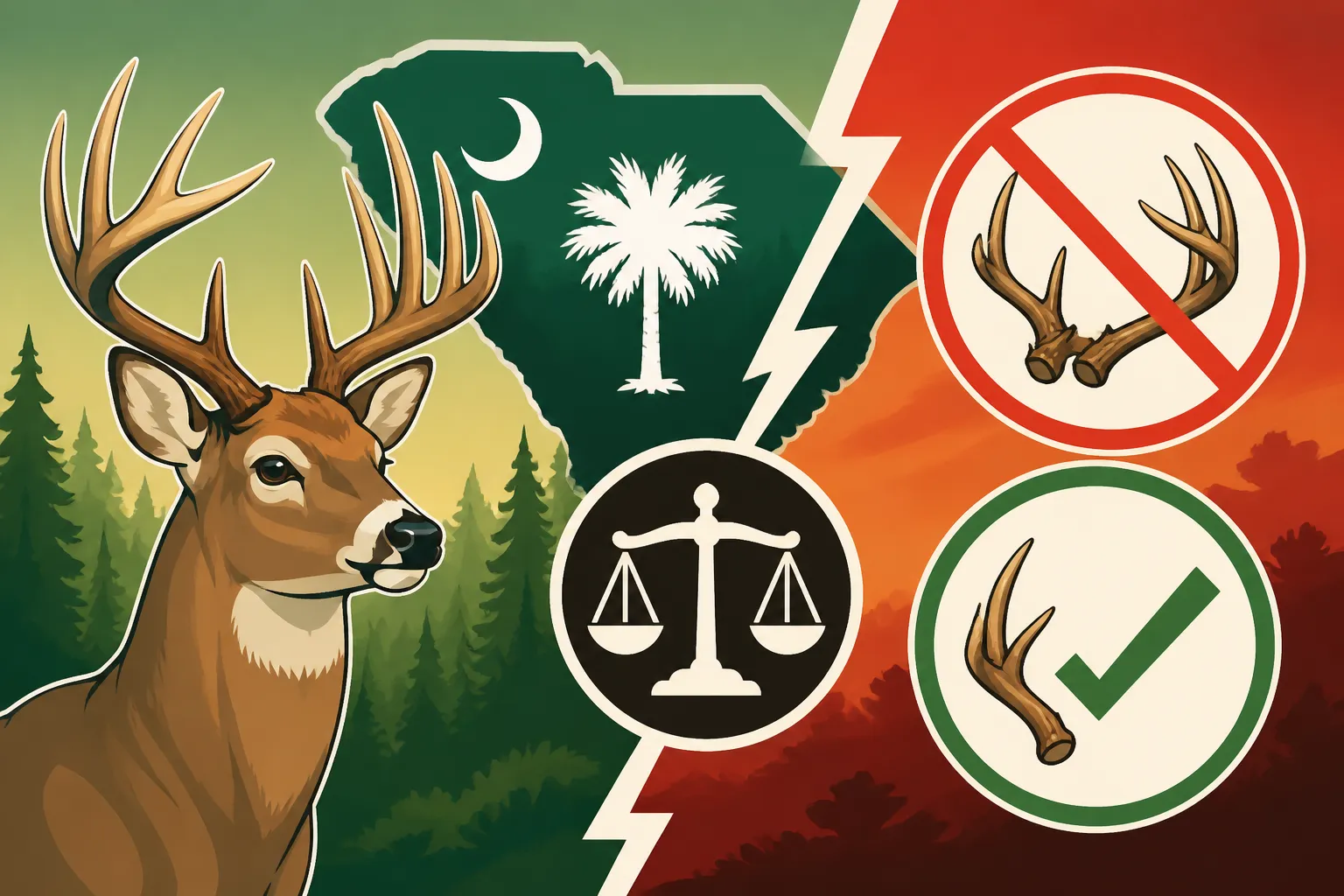
Oh, the age-old question that gets many a deer camp conversation heated: should South Carolina implement antler restrictions? It's a debate that pits different hunting philosophies against each other, with passionate arguments on all sides. This guide will dive deep into the heart of this discussion, exploring what antler restrictions actually entail, the compelling reasons why some hunters advocate for them, and the very real concerns that cause others to pump the brakes on such proposals here in the Palmetto State.
Understanding Antler Restrictions (ARs)
When we talk about antler restrictions, we're really digging into a management strategy that aims to shape the deer herd, specifically the buck segment, in a particular way. It's not just about bigger antlers; it's about what bigger antlers represent in terms of a deer's life cycle.
What Are Antler Restrictions and How Do They Work?
At its core, an antler restriction (AR) is a regulation that prevents hunters from harvesting bucks below a certain antler size threshold. This could manifest in a few different ways, depending on the specifics of the rule. You might encounter a "four points on one side" rule, meaning a buck must have at least four tines extending an inch or more from one main beam to be legal. Another common restriction is a minimum inside spread, perhaps "13 inches or wider," which requires a buck's antlers to be at least that far apart at their widest point between the main beams.
The idea behind these rules is quite simple: to protect younger bucks from harvest. Think about a typical 1.5-year-old buck, sometimes called a "yearling." These deer often sport small racks, like spikes or small forks. Under an AR, these young bucks would be off-limits, allowing them to survive another year or two, ideally growing into larger, more mature animals. So, if you're sitting in your stand in the Lowcountry, and a healthy 6-point buck walks out, but he only has three points on each side, and the regulation in your zone is four points on one side, you'd have to let him walk. It asks hunters to make a judgment call in the field, which isn't always easy, especially in the thick pine forests or dense swamps we have across South Carolina.
The Core Arguments for Implementing ARs
The push for antler restrictions comes from a desire to achieve several specific goals within the deer herd, mostly centered around what's often referred to as "quality deer management." Many hunters are increasingly interested in seeing more mature bucks, and they believe ARs are a pathway to that.
First and foremost, proponents argue that ARs lead to an improved age structure in the buck population. By protecting those 1.5-year-old and even 2.5-year-old bucks, more of them survive to reach older age classes. This means you start seeing more 3.5, 4.5, and even older bucks in the woods. When you have more older bucks, they tend to display more natural rutting behavior, and the competition for does can become more intense, creating a more dynamic hunting experience. It's about letting a deer live long enough to truly express its genetic potential, which, for a buck, often means bigger antlers.
Secondly, many believe that ARs could lead to increased hunter satisfaction. Imagine spending season after season seeing only small, young bucks. While any deer is a trophy for some, many hunters dream of encountering a truly mature animal. If ARs succeed in creating more older-aged bucks, the chances of seeing and harvesting one of these deer increase. This isn't just about the size of the rack, but the challenge and reward of pursuing a wary, experienced animal. It can transform a hunt from simply "filling the freezer" to a more focused pursuit of a specific type of animal, adding another layer of depth to the experience. For private landowners already practicing voluntary restraint or implementing their own rules, seeing ARs applied more broadly could foster a sense of collective improvement.
Finally, ARs are seen as a way to reduce hunting pressure on younger bucks. In areas with high hunter numbers and liberal regulations, young bucks can be harvested at a high rate, often before they've had a chance to breed or fully develop. By taking these young bucks out of the harvest pool, more of them are available to contribute to the breeding population, theoretically leading to a healthier and more robust overall deer herd. It's a shift from simply counting deer to counting quality deer.
The Concerns and Arguments Against ARs in South Carolina
While the benefits of antler restrictions sound appealing to many, there are equally strong, and often very practical, arguments against implementing them across South Carolina. The Palmetto State has a unique hunting culture and diverse landscapes, and what works elsewhere might not translate seamlessly here.
One of the biggest concerns often voiced is the idea of "management by antler." Critics argue that focusing solely on antler size can detract from the broader picture of deer herd health. A buck's antler size is influenced by age, nutrition, and genetics. While ARs address age, they don't magically improve the habitat or ensure a deer is getting proper nutrition. A small-racked buck in poor habitat might be 3.5 years old, but still not meet an AR. Hunters might pass on a healthy, older deer with a "less impressive" rack, while a younger deer with a genetically superior rack but less body mass gets harvested. The concern is that the emphasis shifts from hunting a healthy deer to hunting a specific antler configuration, which can feel superficial to some.
Another significant practical hurdle, especially in South Carolina, is the difficulty in field judging antlers. Our woods, particularly in the Lowcountry swamps or the dense regeneration of a clear-cut, can be incredibly thick. Visibility can be limited, especially in early morning or late evening light. It's tough enough to identify if a deer is a buck or a doe, let alone count exact points or estimate spread on a moving animal that might only offer a fleeting glimpse through a screen of palmettos or pines. A hunter could easily misjudge a buck's rack, leading to an illegal harvest and a potential fine. This adds a layer of stress to the hunt that many find unnecessary. What if you make an honest mistake and shoot a buck that turns out to have only 7 points when the rule was 8? The consequence could be a ticket, and nobody wants that. Reading a South Carolina Harvest Report shows that careful reporting is already required, and ARs could complicate this further.
Furthermore, there's a worry about increased pressure on antlerless deer. If hunters are compelled to pass on younger bucks, some might shift their focus entirely to harvesting does to fill their tags or freezers. While a robust doe harvest is generally beneficial for controlling deer populations and promoting herd health in many areas of South Carolina—indeed, our state has very liberal antlerless limits, sometimes allowing two per day in certain zones, as covered in South Carolina Statewide Antlerless Bag Limit—a sudden, forced increase could be problematic in some localized areas or lead to an imbalance if not properly managed. This could also unintentionally remove too many does, negatively impacting fawn recruitment.
Finally, a strong argument against ARs is simply the reduction in hunter opportunity. For many, especially new hunters, youth hunters, or those primarily hunting for meat, the goal is to harvest a legal buck, regardless of antler size. Implementing ARs would mean passing on many legal deer that previously would have been fair game. This could frustrate hunters, potentially leading some to give up or, worse, to poaching smaller bucks out of resentment or desperation. It impacts the accessibility of hunting, particularly for those who aren't exclusively chasing trophy-class animals. This is especially relevant in a state where South Carolina Mentored Youth Hunting Rules encourage participation.
South Carolina's Current Deer Management Philosophy
South Carolina's approach to deer management has been shaped by decades of research, hunter input, and the unique ecological characteristics of our state. It's a system that, while continually evolving, has historically taken a different path than many states when it comes to buck harvest.
Current Approach: Focus on Hunter Choice and Antlerless Harvest
Right now, South Carolina's deer management philosophy places a strong emphasis on hunter choice within very generous bag limits, particularly for antlerless deer. For residents, the statewide antlered bag limit is up to five bucks per season, though specific rules apply for non-residents as explained in South Carolina Statewide Antlered Bag Limit. But where South Carolina really stands out is the antlerless harvest. In many zones, a hunter can harvest two antlerless deer per day, giving hunters significant flexibility to manage deer numbers on their own properties or on public lands where permitted.
This approach trusts hunters to make informed decisions about what to harvest based on their individual goals and observations in the field. If a hunter wants to pass on young bucks to encourage antler growth, they are free to do so. If another hunter wants to fill their freezer with venison and is happy with a spike buck, that's also perfectly legal within the rules. The idea is that hunters, especially landowners and leaseholders, are best positioned to make localized decisions that benefit both their hunting experience and the health of the local deer herd.
Our wildlife agency, the SCDNR, also puts a significant focus on data collection. Every harvested deer, whether antlered or antlerless, must be reported through the Game Check system, which is crucial for monitoring population trends and harvest success. This system, detailed in South Carolina Deer Reporting Requirements, provides biologists with vital information without dictating what a hunter must shoot based on antler size.
Why SCDNR Has Historically Resisted Widespread ARs
The South Carolina Department of Natural Resources (SCDNR) has, for many years, taken a cautious stance on implementing widespread antler restrictions. Their reasoning is multi-faceted, rooted in biological principles, practical enforcement concerns, and an understanding of the state's diverse geography and hunting traditions.
A primary driver of the SCDNR's position is the belief that antler size is primarily influenced by three factors: age, nutrition, and genetics. Of these, nutrition is arguably the most critical and often the most limiting factor in South Carolina. Our sandy soils, particularly in the Coastal Plain and Sandhills regions, don't always produce the mineral-rich browse found in other states. While a buck needs to reach a certain age to grow impressive antlers, if it's not receiving adequate nutrition throughout its life, those antlers simply won't reach their full potential, regardless of age. SCDNR studies on South Carolina Deer Antler Growth Timeline have highlighted this connection. Implementing ARs without addressing habitat and nutrition first, in the SCDNR's view, might not achieve the desired antler growth and could merely result in more older, but still small-antlered, bucks. Their focus is often on encouraging hunters to improve habitat and manage doe populations to keep deer numbers in balance with the available food sources.
Enforcement is another major hurdle. As discussed earlier, field judging antlers in South Carolina's dense cover is incredibly difficult. Requiring game wardens to make these subjective calls, often after the fact, would be a logistical nightmare and likely lead to increased disputes and frustrated hunters. The SCDNR has historically preferred regulations that are clear, unambiguous, and relatively easy for both hunters and law enforcement to understand and adhere to.
Finally, South Carolina's diverse geography presents challenges for a one-size-fits-all approach. Deer densities, habitat types, and even the timing of the rut vary significantly across the state's four game zones, as detailed in How South Carolina's Four Zones Split the Calendar. What might be biologically sound for the fertile agriculture lands of the Pee Dee region or the mountainous terrain of the Upstate might be completely inappropriate for the vast swamps of the Lowcountry. A blanket AR could have very different, and potentially negative, impacts in different parts of the state.
Exploring the "Quality Deer Management" Concept
While statewide antler restrictions might not be the prevailing philosophy in South Carolina, the broader concept of "Quality Deer Management" (QDM) is very much alive and well, especially among private landowners and progressive hunting clubs. QDM is a more holistic approach that goes beyond just antler size.
True QDM encompasses several key principles:
- Habitat Improvement: Enhancing food sources, cover, and water through planting food plots, timber management (like prescribed burning for longleaf pine, which helps quail and deer), and creating diverse forest structures.
- Balanced Harvest: This often means harvesting a sufficient number of does to keep the deer population in balance with the habitat's carrying capacity, while also allowing younger bucks to mature. It's about maintaining a healthy South Carolina Buck-to-Doe Ratio by Region.
- Age Structure: Creating a more natural age distribution in the buck population by selectively harvesting older, mature bucks and passing on younger ones.
- Data Collection: Keeping detailed records of harvests, trail camera surveys, and observations to monitor progress and make informed management decisions.
Many private landowners in South Carolina are already implementing QDM principles on their properties. They plant clover, chicory, and winter wheat; they thin timber; and they voluntarily pass on younger bucks, encouraging their hunters to do the same. This allows them to achieve their own quality deer goals without a statewide mandate. They're seeing the benefits of letting younger deer walk, but they're doing it on their own terms, adapted to their specific parcel of land and its unique challenges and opportunities. Tools like GoHunt can be invaluable for these private land managers, providing features to track harvest data, map food plots, and analyze trends over time to fine-tune their QDM strategies. It gives them the data to see the direct results of their efforts.
For hunters on public land, while direct habitat manipulation isn't an option, they can still practice QDM principles by being selective in their buck harvest and focusing on antlerless opportunities where appropriate. It's an ethical choice that contributes to a healthier herd, even without a formal regulation.
Potential Impacts and Future Considerations for South Carolina
The debate around antler restrictions isn't just academic; it has real-world implications for hunters, deer populations, and the overall hunting culture in South Carolina. Understanding these potential impacts is crucial for any future discussions.
How ARs Could Affect Hunter Numbers and Satisfaction
If South Carolina were to adopt widespread antler restrictions, it would undoubtedly have a significant impact on hunter numbers and overall satisfaction, though the effects might be mixed. For one segment of the hunting population, those primarily focused on harvesting any legal buck for meat or simply the experience, ARs could be a deterrent. Imagine a new hunter, after years of trying, finally having a spike buck in their sights on opening day, only to realize they can't take it due to a new antler restriction. This could lead to frustration, reduced participation, or a feeling that hunting has become overly complicated. Hunters who prefer hunting South Carolina's Long Archery Season in August's heat may find passing smaller bucks even harder due to warm weather meat care issues.
On the other hand, for hunters who are specifically seeking a "trophy" or a more mature buck, ARs could be a huge draw. The promise of seeing more older-aged bucks could increase their satisfaction and make the hunting experience feel more rewarding. It might even attract hunters from out of state who are looking for that specific type of hunting opportunity. However, it's a fine line to walk, as an overemphasis on antlers could alienate a significant portion of the hunting community. Gathering feedback on hunter sentiment, perhaps through surveys or focus groups facilitated by platforms like GoHunt, would be critical before any major changes. This would allow the SCDNR to gauge the potential ripple effects on hunter participation and license sales, which directly fund conservation efforts.
Enforcement Challenges and Practicalities
Beyond the philosophical arguments, the practicalities of enforcing antler restrictions in South Carolina are a substantial concern. Our state's diverse topography, from the dense swamps and coastal plains to the rolling hills and mountains, presents unique challenges for game wardens trying to enforce such regulations.
Consider a warden encountering a hunter with a harvested buck. If there's an antler restriction based on point count or spread, the warden would need to accurately measure or count antlers, potentially under less-than-ideal field conditions. A judgment call on whether a tine is an "inch long" or if the spread truly hits "13 inches" can be subjective. This could lead to arguments, disputes, and an increase in citations that hunters perceive as unfair. Enforcement becomes even more complicated after dark or in remote areas.
Furthermore, hunters themselves would bear the responsibility of accurately field judging. As mentioned, a fleeting glimpse of a buck through heavy cover, especially in low light, makes this incredibly difficult. Hunters could unintentionally violate the law, leading to fines and a negative perception of wildlife enforcement. The SCDNR has always prioritized regulations that are clear and enforceable, and antler restrictions, by their very nature, introduce a level of ambiguity that can be problematic. This is why our system currently favors a more straightforward bag limit. How Many Antlered Deer Residents Can Take and How Many Antlerless Deer You Can Take Per Day are relatively clear guidelines.
The question also arises whether ARs would be applied uniformly. Would public lands like Francis Marion National Forest Hunting have the same rules as private lands? Or would it be zone-specific? Such complexities can create confusion and make it harder for hunters to comply.
The Ongoing Conversation and Hunter Input
The debate over antler restrictions in South Carolina is not static; it's an ongoing conversation that evolves as deer populations change, hunter demographics shift, and new management strategies emerge. It's a testament to the passion and dedication of hunters in our state that they care so deeply about the future of our deer herd.
Ultimately, decisions about deer management, including the potential for antler restrictions, rest with the SCDNR, but they are heavily influenced by hunter input. Engaging with the agency through public meetings, surveys, and direct communication is vital for hunters to voice their opinions, concerns, and suggestions. Hunters also influence policy by what they choose to do in the field, even without a regulation. The more hunters who voluntarily choose to pass on young bucks, the more they contribute to a local form of quality deer management.
The future of deer management in South Carolina will likely continue to balance the biological needs of the deer herd with the social and recreational desires of hunters. It's a delicate act. Whether that future includes widespread antler restrictions, more localized programs, or a continued emphasis on hunter choice and education, it will be shaped by the continued dialogue between hunters and wildlife professionals. Platforms like GoHunt aren't just for scouting and mapping; they're also places where hunters can connect, share their experiences, and discuss these important management topics, fostering a collective understanding and influencing the conversation around deer hunting ethics and regulations in South Carolina.
| Aspect | Arguments For Antler Restrictions | Arguments Against Antler Restrictions in SC |
|---|---|---|
| Primary Goal | Increase number of mature bucks; improve buck age structure. | Maintain hunter choice; focus on overall herd health (nutrition/doe harvest). |
| Antler Quality | More older bucks mean bigger antlers, better genetic expression. | Antler size depends heavily on age, nutrition, and genetics; ARs don't improve habitat/nutrition. |
| Hunter Satisfaction | More opportunities to see and harvest mature bucks. | Reduces opportunities for new/meat hunters; potential frustration for those who prefer any legal buck. |
| Field Judging | Encourages careful observation. | Extremely difficult in thick SC cover, low light; leads to misjudgment, potential violations. |
| Enforcement | Provides clear guidelines for buck harvest. | Difficult for game wardens to enforce accurately; increases disputes and perceived unfairness. |
| Herd Health | Reduces pressure on young bucks, potentially allowing more breeders. | Might shift pressure to antlerless deer, possibly leading to imbalances; focus should be on habitat/doe harvest. |
| Flexibility | Standardizes expectations for buck harvest. | One-size-fits-all approach may not suit SC's diverse habitats (swamp, mountain, agriculture). |
| Ethical Impact | Promotes "quality" hunting and self-restraint. | Focuses on antlers over the animal; could lead to poaching or reduced participation. |
Disclaimer
This article is for general informational purposes only and does not constitute professional advice. Laws, prices and regulations vary by location and change over time. Consult a qualified professional for guidance on your specific situation.