Crossbow Rules During South Carolina Archery Season
Navigating the specific regulations for hunting in South Carolina can feel like trying to untangle a spool of fishing line after a big blow-up on the water, especially when you start digging into the nuances of weapon types. A common point of confusion for many hunters, both seasoned and new, revolves around crossbows: are they legal during the state's archery season? It's a great question, and the good news is, yes, they are, but there are definitely some important details and specific rules you need to understand to ensure you're hunting legally and ethically. This comprehensive guide is here to help you cut through the confusion and get ready for your next hunt.
Understanding South Carolina's Archery Season Framework
South Carolina offers one of the most generous deer seasons in the nation, and the archery season plays a significant role in that extended calendar. What often surprises newcomers is just how early the season kicks off in certain parts of the state, giving bowhunters a fantastic opportunity to be in the woods long before firearms hunters join the fray. This early start, combined with the state's diverse landscapes from coastal plains to the foothills of the Upstate, makes it a prime destination for archers.
When Archery Season Kicks Off
The timing of the archery season in South Carolina isn't a one-size-fits-all deal; it varies significantly depending on which of the four game zones you plan to hunt. This regional difference can be a real head-scratcher if you're not familiar with it. For instance, if you're looking to hunt the earliest coastal zone opener, you'll find that Zone 4 kicks off in mid-August. That's right, August! This means you could be out in the heat and humidity, chasing deer with your bow or crossbow while most of the country is still waiting for autumn. On the other hand, the Upstate Zone 1 has a later start, typically opening in mid-September. This staggered approach is one of the key factors in understanding How South Carolina's Four Zones Split the Calendar and planning your hunts accordingly. Knowing exactly when and where you can hunt is the first crucial step.
What "Archery Season" Means for Weapon Choice
The term "archery season" itself can sometimes mislead folks into thinking only traditional bows or compound bows are permitted. Historically, that was often the case in many states. However, South Carolina's regulations have evolved to be more inclusive. The South Carolina Department of Natural Resources (SCDNR) defines "archery tackle" broadly enough to include modern crossbows. This is a huge benefit for many hunters, whether they have physical limitations that prevent them from drawing a compound bow, or simply prefer the different challenge and precision a crossbow offers. It opens up opportunities for more people to enjoy the woods during the prime early season, which is something we can all appreciate. Just remember, while crossbows are allowed, they are still considered part of the archery season, meaning you'll follow the same tag limits and general regulations as traditional bowhunters. You'll need to secure your South Carolina Big Game Permit Requirements regardless of your chosen archery weapon.
Navigating Specific Crossbow Regulations
While South Carolina is generally welcoming to crossbow hunters, it's not a complete free-for-all. There are specific rules and considerations you need to be aware of to ensure your equipment is legal and you're not inadvertently breaking any regulations. These aren't meant to be burdensome, but rather to maintain ethical hunting standards and ensure the safety of everyone in the field.
Minimum Draw Weight and Bolt Requirements
One of the primary concerns with any hunting weapon is its effectiveness and the humane take of game. For crossbows in South Carolina, there aren't specific, explicit minimum draw weight requirements spelled out in the regulations in the same way some states mandate for traditional bows (e.g., 40 lbs for deer). However, the general expectation is that hunters use equipment capable of ethically harvesting an animal. This means selecting a crossbow with a sufficient draw weight and producing enough kinetic energy to ensure a clean pass-through on a deer. Most commercially available hunting crossbows easily meet this unspoken standard, typically ranging from 150-200+ lbs of draw weight.
When it comes to bolts, also known as arrows, the rules are straightforward: they must be fitted with broadheads that have at least two cutting edges. Expanding broadheads are legal, as are fixed-blade broadheads, as long as they meet that minimum two-edge requirement. Mechanical broadheads are widely used and perfectly legal, but always make sure they're functioning correctly and deploying reliably before you head into the field. Avoid any broadheads that are designed to contain narcotics, tranquilizers, or any other substances, as these are strictly prohibited. These guidelines are consistent for all archery tackle, whether you're using a compound, recurve, or a crossbow.
What About Scopes and Magnification?
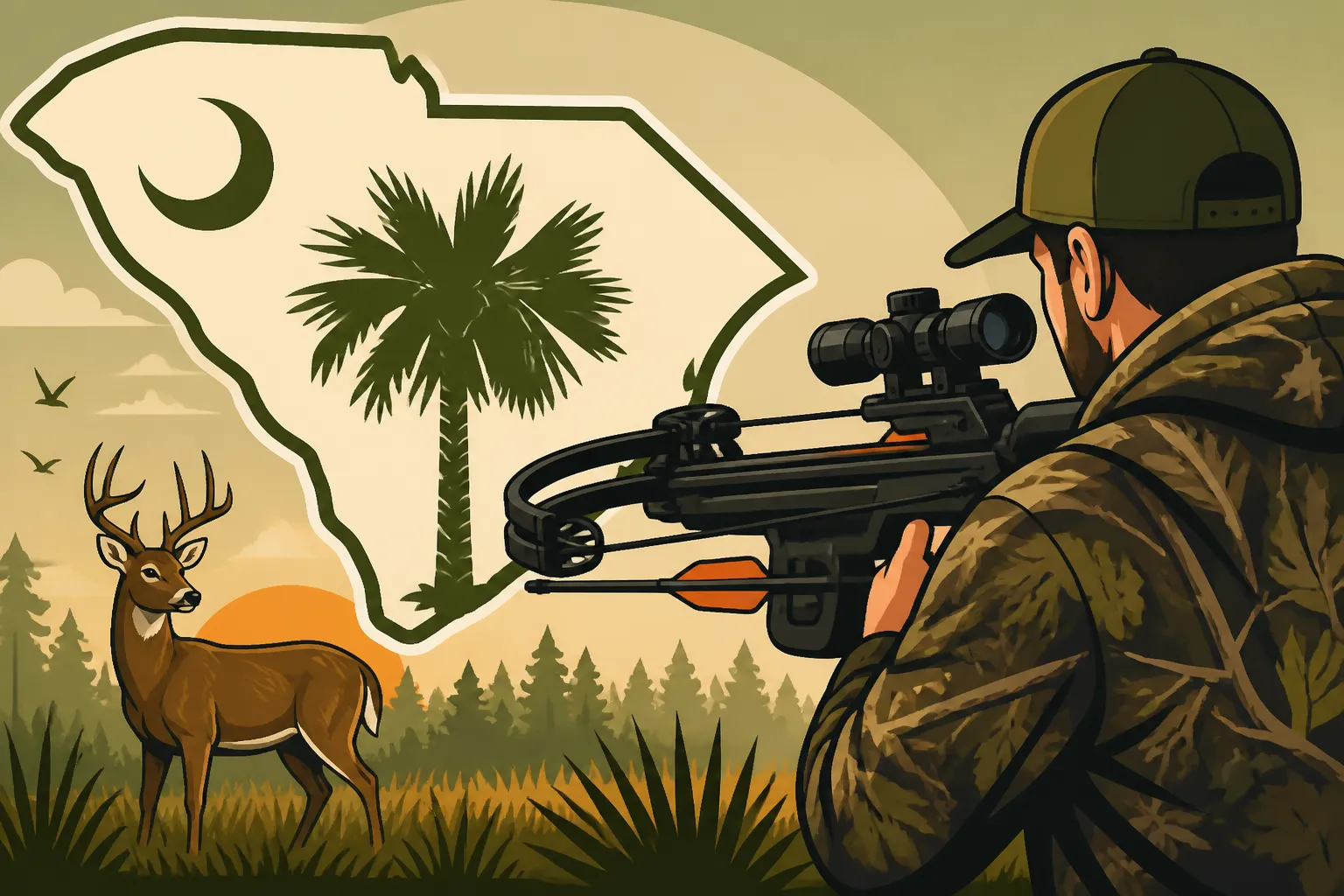
Modern crossbows often come equipped with or can be fitted with scopes, and this is completely legal during South Carolina's archery season. Unlike some states that might restrict magnified optics during primitive weapons seasons, South Carolina does not place such limitations on crossbow scopes during archery season. This is a significant advantage for many hunters, as a good scope can greatly enhance accuracy, especially at longer ranges or in low light conditions often encountered at dawn or dusk. You can use fixed-power scopes, variable-power scopes, and even illuminated reticle scopes. This flexibility allows hunters to tailor their setup to their individual preferences and the specific hunting conditions they expect to encounter, whether it's the thick brush of the Lowcountry or the more open stands of timber in the Upstate. When planning your shot, always consider Rifle Scopes for Low-Light Swamp Edges and how light conditions can impact visibility. Just be sure to practice extensively with your scoped crossbow to become proficient at various distances.
Crossbow Use on Public Lands and WMAs
Hunting on South Carolina's public lands, particularly its extensive Wildlife Management Areas (WMAs) and National Forests, is a fantastic opportunity. However, it often comes with its own set of rules and regulations that can differ slightly from private land. It's crucial to be extra diligent when planning a public land hunt, as a mistake could lead to a citation.
General WMA Crossbow Rules
For the most part, if crossbows are legal during archery season statewide, they are also legal on WMAs during those specific WMA archery seasons. However, always, and I mean always, check the specific regulations for the WMA you intend to hunt. The SCDNR website and the annual hunting regulations digest are your best friends here. Some WMAs might have unique restrictions based on their specific management goals or the sensitivity of the area. For example, some designated "archery-only" zones or specific quota hunts might have particular rules. While generally allowed, it's not unheard of for specific small, sensitive areas to have further restrictions. A great resource for checking these specifics is using the Go Outdoors SC app or their website, which often provides detailed maps and regulations for individual WMAs.
When you're out on public land, especially in places like Francis Marion National Forest, remember that other users might be present, and safety is paramount. Make sure your crossbow is decocked or uncocked when transporting it to and from your stand, and always adhere to safe hunting practices. Setting up a Treestand Setups in Francis Marion National Forest requires careful consideration of not only the deer but also your surroundings and other potential users.
National Forest Specifics
South Carolina is home to the Francis Marion and Sumter National Forests, which offer vast tracts of public hunting land. These areas are generally managed under state WMA regulations, meaning that crossbows are typically allowed during the established archery seasons within these forests. Again, the golden rule applies: verify the specific area's rules. Often, within these large national forests, certain sections might have different designations or special hunt rules.
Using tools like GoHunt or the SCDNR's map resources can be incredibly helpful for scouting and understanding boundary lines, which is critical on public land. These platforms can help you identify open hunting areas, find potential access points, and even show you previous harvest data in some cases, giving you an edge in Scouting South Carolina Public Land Before Season. They also frequently update their digital maps with WMA boundaries and regulations, making it easier than ever to ensure you're compliant. Don't forget that you'll need a South Carolina WMA Permit Requirements in addition to your base hunting license and big game permit to hunt these lands.
Why Understanding These Rules Matters
It might seem tedious to delve into the minutiae of draw weights and bolt types, but a thorough understanding of crossbow regulations during South Carolina's archery season isn't just about avoiding a fine. It's about upholding the principles of ethical hunting, ensuring safety, and contributing to the conservation efforts that make our hunting opportunities possible.
Ethical and Humane Harvest
At its core, hunting ethically means striving for a quick, humane harvest. This directly relates to using appropriate equipment. While South Carolina doesn't set a hard minimum draw weight for crossbows, understanding the kinetic energy required to ethically dispatch a deer is crucial. A crossbow that is too weak or bolts that are improperly matched can lead to wounded animals, which none of us want. Practicing with your specific setup, knowing your effective range, and ensuring your broadheads are razor-sharp are all part of the ethical hunter's responsibility. It's not just about what's legal; it's about what's right.
Avoiding Penalties and Supporting Conservation
Ignorance of the law is never an excuse, especially in hunting. Getting caught using an illegal weapon or violating season dates can result in significant fines, loss of hunting privileges, and confiscation of equipment. Beyond the personal cost, such incidents can cast a negative light on the entire hunting community, potentially jeopardizing future hunting access or opportunities. By diligently checking regulations, especially the annual updates, you're not only protecting yourself but also contributing to the positive image of hunters. Our license fees and permits, like the South Carolina Resident Big Game Permit Cost, directly fund the SCDNR's conservation programs, wildlife research, and habitat management efforts, which benefit all wildlife and outdoors enthusiasts. When we hunt responsibly, we strengthen that system.
Expanding Hunting Opportunities
The inclusion of crossbows in the general archery season is a testament to SCDNR's commitment to making hunting accessible. For hunters facing physical challenges due to age, injury, or disability, a crossbow can be a game-changer, allowing them to continue participating in the sport they love. It also provides a great entry point for new hunters who might find the learning curve for a compound bow a bit steep initially, but who can quickly gain proficiency with a crossbow. This expansion of opportunity is vital for recruiting and retaining hunters, ensuring the future of our hunting heritage. The more people who participate responsibly, the stronger our collective voice for conservation becomes.
Key Crossbow Considerations for South Carolina Hunters
| Aspect | Details for South Carolina Archery Season | Importance |
|---|---|---|
| Legal Status | Fully legal during statewide archery season and most WMA archery seasons. | Allows greater participation; check specific WMA rules. |
| Draw Weight | No explicit minimum, but choose equipment capable of humane harvest. | Ensures ethical hunting and minimizes wounded game. Most hunting crossbows (150-200+ lbs) are sufficient. |
| Broadheads | Must have at least two cutting edges; mechanical and fixed blades are allowed. | Essential for clean kills; improper broadheads can lead to animal suffering and legal issues. |
| Optics (Scopes) | Magnified scopes are fully legal and commonly used. | Enhances accuracy, especially at longer ranges or in low light, aiding ethical shot placement. |
| WMA/Public Land | Generally permitted, but always verify specific WMA regulations via SCDNR or GoHunt. | Public lands often have unique rules; failure to check can result in citations or loss of hunting privileges. |
| Blaze Orange | Not required during archery-only season, but always a smart safety choice, especially during overlaps with other seasons. | Safety first! Even when not mandated, visible clothing reduces risk, particularly if hunting during the South Carolina Deer Season Overlap With Small Game. |
| Transport | Decock or uncock your crossbow when not actively hunting (e.g., walking to stand). | Prevents accidental discharge and promotes safety for yourself and others in the woods. |
| Practice | Regular practice is crucial to know your effective range and improve accuracy. | Maximizes your chances of a clean, ethical kill and builds confidence. |
| Warm Weather Gear | Early season means heat and bugs; dress appropriately. | Comfortable, breathable Warm-Weather Clothing for South Carolina Hunters and good insect repellent are vital for staying focused and effective. |
| Rut Timing | Be aware of Hunting the Rut in the Coastal Zones or other zones for peak activity. | Understanding deer behavior helps you anticipate movement and increase success. |
| Finding Spots | Use mapping tools like GoHunt to locate suitable areas, especially on public land. | Identifying promising terrain and Finding Ground Others Walk Past can significantly improve your hunting experience. |
In conclusion, crossbows are a legitimate and effective tool for hunting during South Carolina's archery season. By understanding and adhering to the regulations, choosing appropriate gear, and practicing ethical hunting practices, you can enjoy the extended opportunities that the Palmetto State offers. Happy hunting!
Disclaimer
Please remember that hunting regulations can change. While this guide aims to provide accurate and up-to-date information, it is your responsibility as a hunter to consult the most current South Carolina Department of Natural Resources (SCDNR) regulations before heading into the field. This article is for informational purposes only and does not supersede official state hunting laws.