Duck Migration Timing Through South Carolina
One of the biggest head-scratchers for any duck hunter in the Palmetto State is trying to pinpoint exactly when those northern flights will start pouring in. It's incredibly frustrating to plan a hunt, invest time and money, only to find the marsh or impoundment eerily quiet because the bulk of the birds just haven't made it down yet. This guide is all about helping you understand the complex, ever-shifting puzzle of duck migration timing through South Carolina, so you can increase your odds of being there when the birds are.
Understanding the Factors Influencing South Carolina's Duck Migration
You'd think ducks would follow a calendar, right? If only it were that simple! The truth is, duck migration isn't a fixed schedule, and relying on last year's dates can often lead to disappointment. South Carolina sits at the southern end of the Atlantic Flyway, making us a critical wintering ground, but when those birds decide to commit to the journey south is influenced by a host of interconnected factors.
The Impact of Northern Weather Patterns
The biggest driver for ducks pushing south is often the weather up north. When bitter cold fronts sweep across the northern breeding grounds and staging areas in states like Pennsylvania, New York, and the Canadian provinces, it forces birds to move. Think about it: a duck's primary motivation is survival. If their food sources freeze over and open water disappears, they have no choice but to pack up and head for warmer climes where they can find sustenance. This means a mild fall up north can delay migration significantly, while an early deep freeze can send an influx of birds our way well before Thanksgiving. It's why hunters are constantly watching weather maps hundreds, sometimes thousands, of miles away. It's not just about what's happening over Charleston or McClellanville, but what's going on in the Dakotas or southern Ontario.
The Role of Food and Habitat Availability
Another critical, often overlooked, factor is the availability of food and suitable habitat. Ducks need calories, and lots of them, to fuel their long journeys and to survive the winter. If northern agricultural fields (corn, soybeans, rice) remain accessible and unharvested, or natural marsh vegetation is plentiful, ducks might linger longer than expected. Conversely, if early ice covers these food sources or extreme drought diminishes natural forage, they'll move on. Here in South Carolina, the quality and abundance of our wintering habitat, especially managed impoundments, coastal marshes, and agricultural fields, plays a huge role in holding birds once they arrive. A well-managed impoundment with ample food, like those you might find around the ACE Basin, can be a magnet for weary travelers. This is where scouting, even before the season, becomes paramount. Knowing what food sources are available both where the birds are coming from and where they might land gives you a distinct advantage.
Pressure on Staging Areas
Lastly, hunting pressure, both north of us and even within South Carolina, can influence when and how birds move. If ducks are getting hammered in Virginia or North Carolina, they're more likely to continue their journey south to find sanctuary. Similarly, high pressure on local public lands or heavily hunted private impoundments in South Carolina can push birds into less disturbed areas or even make them "short-stop" in states just north of us if conditions are favorable there. Ducks are smart; they're looking for food, water, and safety. Understanding this behavioral aspect is key to predicting their movements. A resource like GoHunt can sometimes provide insights into regional hunting pressure or habitat conditions that can indirectly affect migration patterns.
Typical Migration Waves: Early, Peak, and Late Season Arrivals
While specific dates are impossible to guarantee, we can generally break down the South Carolina duck migration into three distinct phases: the early season trickle, the mid-season peak, and the late-season push. Each phase brings different species and presents unique hunting opportunities and challenges.
Early Season Arrivals: Teal and Wood Ducks
When South Carolina's regular duck season kicks off, typically in late November or early December, you're primarily going to encounter our resident birds and the earliest migrants. Wood ducks are almost always present, especially in our flooded timber and beaver swamps. They breed here and many stay, though northern woodies will augment their numbers. Then there are the teal—both green-winged and blue-winged. Blue-wings are often early movers, with some pushing through even before the main season opens, during the dedicated teal season. Green-winged teal will follow, often arriving in decent numbers by late November or early December, especially after a couple of cold snaps further north.
Hunting during this early period often means focusing on smaller, more secluded water bodies. The big coastal impoundments might not be "full" of birds yet, but hidden backwater sloughs and flooded bottomlands can hold good numbers of wood ducks and early teal. You'll want to be on the lookout for Jump-Shooting South Carolina Creeks for Wood Ducks if you're targeting these resident and early migrant birds. This period is also characterized by generally warmer weather, so Warm-Weather Sitting Strategy in South Carolina is crucial to stay comfortable and effective.
Peak Migration: Mallards, Pintails, and Wigeon
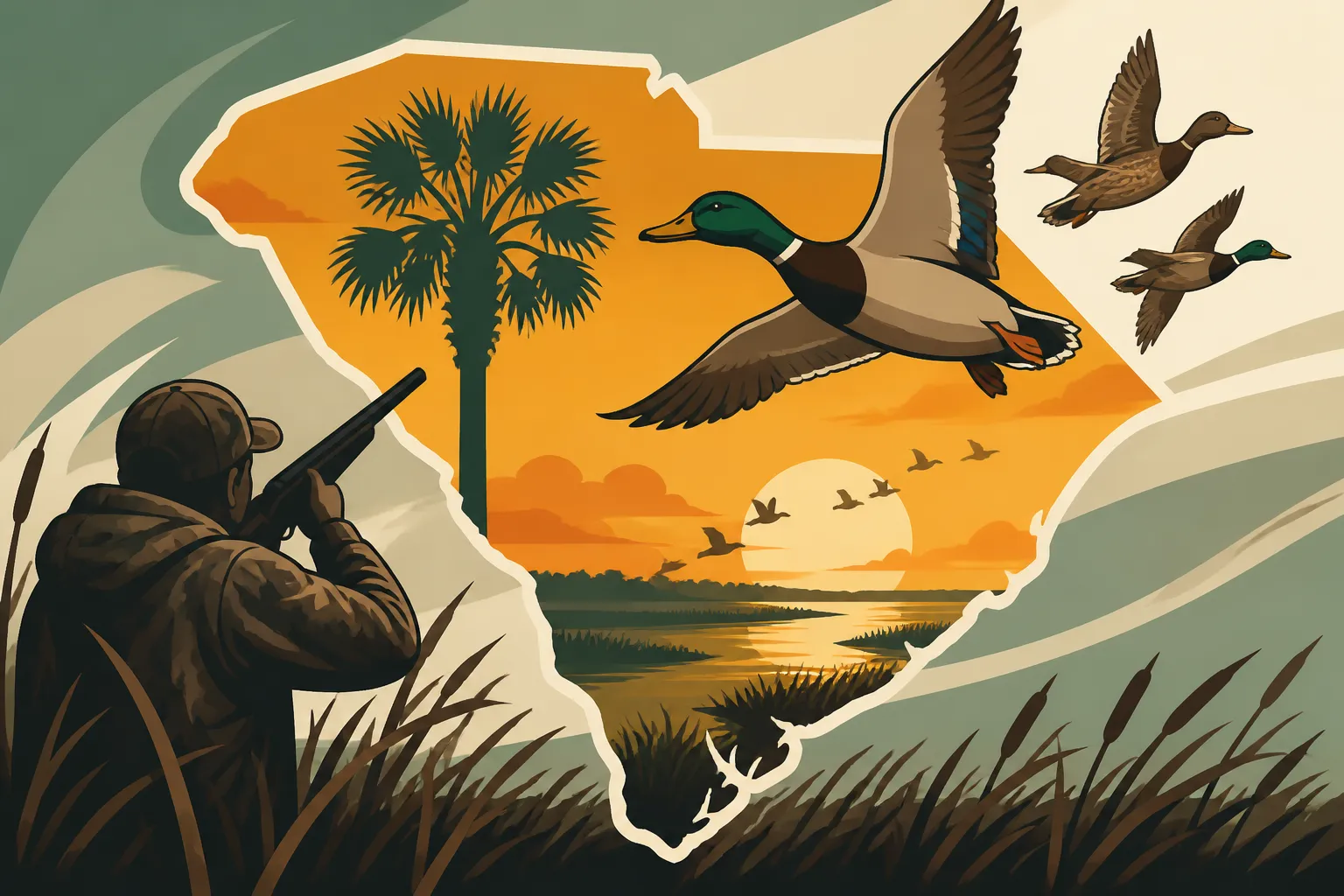
The heart of the South Carolina duck season, from mid-December through January, is typically when we see the most significant influx of northern migrants. This is the period when the bulk of the larger, more sought-after species make their way to our wintering grounds. Mallards, especially, start arriving in earnest. While South Carolina isn't known for the massive mallard numbers of the Mississippi Flyway, we get a solid push, particularly if sustained cold weather grips states north of us. Pintails, with their elegant long necks and distinctive flight patterns, often arrive alongside mallards. You'll also see more gadwall, wigeon, and shovelers during this time, often mingling in the large open waters of our coastal impoundments and national wildlife refuges.
This is prime time for hunting a variety of species, and it's when those larger, managed impoundments become truly active. You'll often find success with larger decoy spreads, and it's a great opportunity to explore different hunting areas like the ACE Basin National Wildlife Refuge Hunting or focus on tactics for Hunting Flooded Timber for Mallards. Hunters often find that monitoring broad weather patterns across the Atlantic Flyway using tools like GoHunt can help predict these peak movements.
Late Season Push: Divers and Lingering Dabblers
As January turns into February and the season winds down, you'll still find plenty of ducks in South Carolina, though their behavior might change. Sometimes, a late-season arctic blast can bring a final, fresh push of birds, including some of the hardier diver ducks like scaup (bluebills), ring-necks, and redheads, especially on larger, brackish waters. These birds might have been wintering further north, but extreme cold can force them even further south. Many of the dabblers that arrived during the peak migration will still be here, having settled into their winter routines. They've likely been pressured for weeks, making them warier and more challenging to decoy.
Hunting in the late season often requires more patience and finesse. Birds are "educated," meaning they've seen every spread and heard every call. You might need to adjust your decoy tactics, perhaps going with smaller, more natural spreads, or focusing on quieter, out-of-the-way spots. Understanding Reading a Tidal Marsh for a Morning Flight can be especially helpful, as these birds often have very specific flight paths. It's also a time when you might find opportunities for Hunting Coastal Marsh Waterfowl as birds seek refuge in less accessible areas. Always be mindful of South Carolina Duck and Goose Bag Limits and South Carolina Waterfowl Zones and Seasons as the season progresses.
Regional Differences in Duck Migration Dynamics
South Carolina isn't a monolithic landscape, and neither is its duck migration. The state's diverse geography—from the Upstate mountains to the vast Lowcountry swamps and coastal marshes—creates distinct regional differences in when and how ducks arrive, what species you'll encounter, and what tactics are most effective.
Coastal Plain and Estuarine Environments
The vast coastal plain and its extensive estuarine environments, including the Lowcountry and Pee Dee regions, are undoubtedly the prime wintering grounds for the majority of South Carolina's migratory waterfowl. Areas like the ACE Basin, the Santee Delta, and various public and private impoundments along the coast are critical stops on the Atlantic Flyway. These areas are characterized by extensive brackish and freshwater marshes, managed rice fields, and flooded timber that provide abundant food and shelter.
Ducks arriving here will often hit these major complexes first. You'll find a wide variety of species, from dabblers like mallards, pintails, and gadwall to divers like scaup and canvasbacks, depending on the specific habitat. The timing of their arrival is heavily influenced by those northern cold fronts, but once they're here, consistent habitat and relatively stable weather (compared to further north) tend to hold them. This is where you'll see large concentrations of birds. Many hunters here use layout blinds or hunt from fixed blinds over expansive spreads. Understanding South Carolina Duck Zone Rules is vital, as the regulations can differ slightly along the coast. It's also worth noting that the South Carolina Waterfowl on the Atlantic Flyway draws a significant number of birds to these specific regions.
Inland Rivers and Piedmont Impoundments
While the coast gets the lion's share of attention, inland rivers and smaller impoundments in the Piedmont and even parts of the Midlands also host migrating ducks, albeit in smaller numbers and often with a different species composition. Major river systems like the Santee, Edisto, and Pee Dee, with their associated bottomland hardwoods and oxbow lakes, attract wood ducks, green-winged teal, and occasionally mallards. These areas tend to see more of the "trickle" migration rather than the massive waves.
The timing of birds in these inland spots can be more localized, often driven by water levels from rainfall and local food availability. A sudden cold snap might push some birds inland from the coast if coastal areas are heavily pressured, or if inland food sources like acorns in flooded timber become highly attractive. Hunting these areas often involves more mobile tactics, such as jump-shooting creeks or setting up small spreads in flooded timber pockets. While perhaps not as spectacular as a prime coastal shoot, these inland hunts offer a unique and often rewarding experience for hunters willing to explore. Using detailed satellite imagery from a tool like GoHunt can help identify these smaller, overlooked pockets of habitat.
Leveraging Tools and Scouting for Optimal Timing
Knowing that duck migration isn't a set-in-stone event means that successful hunting in South Carolina requires adaptability, constant information gathering, and diligent scouting. Gone are the days of just showing up on opening morning and hoping for the best.
Utilizing Online Resources and Forecasts
In today's connected world, hunters have access to an incredible array of online resources to help track migration. Websites and apps dedicated to waterfowl migration often provide real-time updates on bird movements, weather patterns, and even hunter reports from various regions along the Atlantic Flyway. Pay close attention to migration maps that show bird concentrations and movements. Look for changes in weather forecasts in key staging states like Maryland, Delaware, or Virginia, as a significant cold front there often precedes a push of birds into South Carolina.
While these tools are invaluable, remember they offer a broad overview. They can tell you birds are moving, but not necessarily exactly where they're landing in your specific hunting spot. They are excellent for identifying general trends and timing your trips to coincide with major movements. Checking resources like the South Carolina Waterfowl Zones and Seasons can also provide key regulatory dates that influence hunter behavior and, subsequently, bird movement.
The Importance of Boots-on-the-Ground Scouting
No online tool, no matter how sophisticated, can replace good old-fashioned scouting. Once you know birds are generally moving into the region, it's time to put boots on the ground (or a boat in the water). Drive around, observe fields, check out impoundments, and listen for activity. Birds will tell you where they want to be. Look for feeding activity, loafing areas, and flight paths. Fresh droppings, tracks in the mud, and disturbed vegetation are all signs of recent use.
Scouting isn't a one-time event; it's an ongoing process. Duck habits change due to pressure, food availability, and even minor weather shifts. What was hot last week might be barren this week. Using mapping applications like GoHunt to mark potential spots, scout out access routes, and identify food sources (like flooded timber or grain fields) before the season can significantly reduce your scouting time once birds start to arrive. Remember, the best time to scout is often right before your planned hunt, or even the day before, to get the most current information on bird presence.
| Duck Species | Early Season (Late Nov-Mid Dec) | Peak Migration (Mid Dec-Jan) | Late Season (Late Jan-Feb) | Primary Habitat |
|---|---|---|---|---|
| Wood Duck | Common (residents + early migrants) | Common | Common | Flooded timber, beaver swamps, creeks |
| Green-winged Teal | Moderate | Abundant | Moderate | Shallow impoundments, marshes, mud flats |
| Blue-winged Teal | Early (often passes through) | Scarce | Scarce | Shallow impoundments, open water |
| Mallard | Scarce (some early pairs) | Abundant | Moderate | Impoundments, flooded fields, river bottoms |
| Gadwall | Moderate | Abundant | Common | Impoundments, marshes, open water |
| Wigeon | Moderate | Abundant | Moderate | Impoundments, open water, grazers on fields |
| Pintail | Scarce | Moderate | Moderate | Large impoundments, open water, shallow flats |
| Shoveler | Moderate | Moderate | Moderate | Shallow impoundments, muddy edges |
| Ring-necked Duck | Scarce | Moderate | Moderate | Deeper impoundments, large open water |
| Scaup (Bluebill) | Scarce | Moderate | Moderate | Large open water, brackish estuaries |
This table provides a general overview, but actual numbers and timing can vary dramatically based on specific weather conditions and habitat. Staying flexible and informed is your best strategy.
Waterfowl Hunting South Carolina's Coast will give you specific tactics for those prime coastal spots. You might also want to look into Mallards and Wood Ducks in the ACE Basin to understand the dynamics in one of our most important waterfowl regions. For those colder days, learning about Layout Blind Hunting Lowcountry Rice Fields can be a game-changer. Don't forget to review South Carolina Migratory Bird Certification requirements before heading out.
Disclaimer
This article is for general informational purposes only and does not constitute professional advice. Laws, prices and regulations vary by location and change over time. Consult a qualified professional for guidance on your specific situation.