South Carolina Alligator Nuisance Complaints
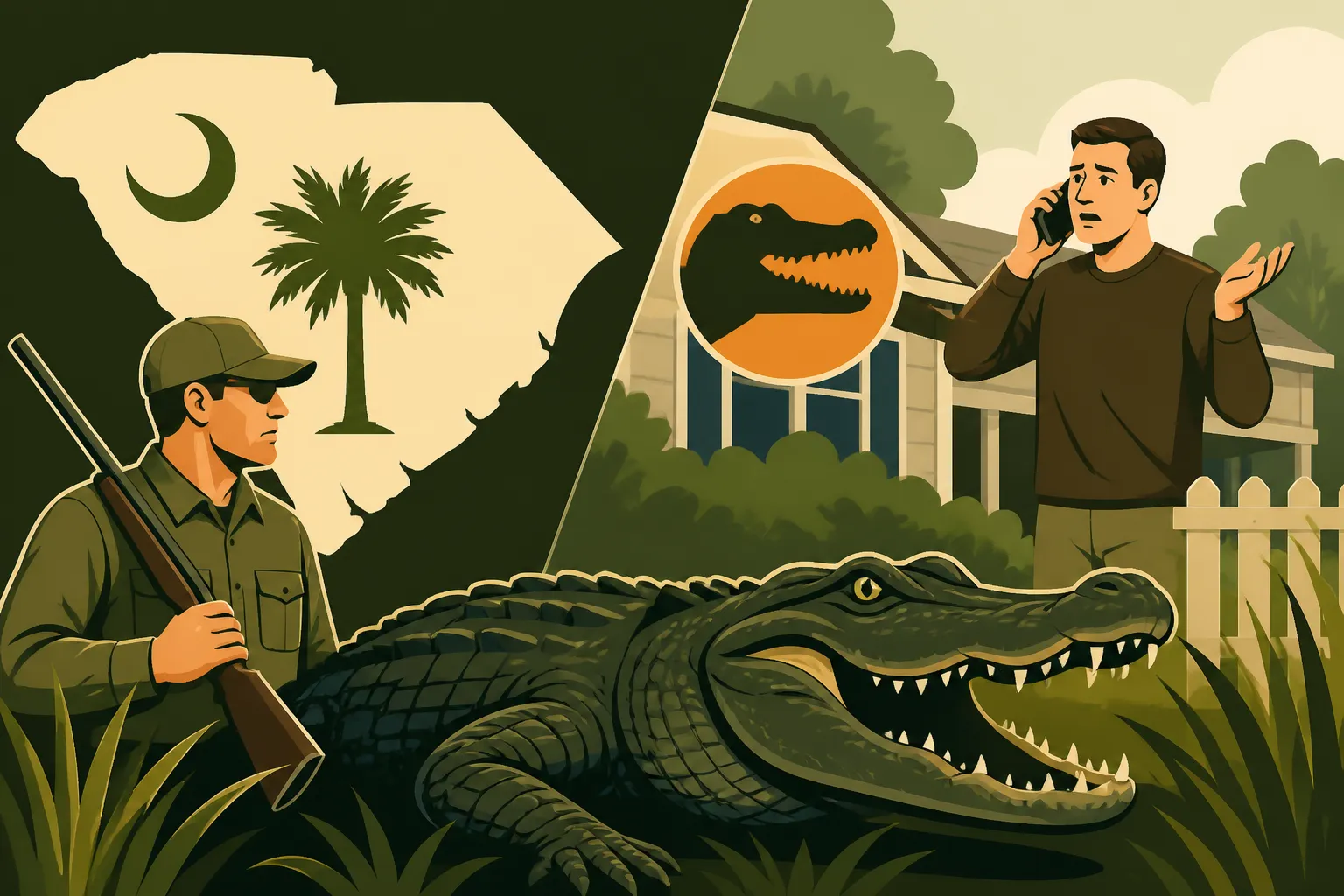
It's an unsettling feeling to spot an alligator a little too close to home, or perhaps see one that seems to have lost its natural fear of people. Living in South Carolina means sharing our beautiful landscapes and waterways with these ancient reptiles, but sometimes, that coexistence gets a little too close for comfort. This guide is here to walk you through what constitutes a genuine alligator nuisance complaint, how the system works, and, most importantly, how we can all work to prevent these situations in the first place, keeping both people and alligators safe.
Understanding Alligator Behavior and Habitat in South Carolina
Alligators are an iconic part of the South Carolina landscape, especially as you head toward the coast. They’re a testament to our wild, untamed beauty. However, understanding their natural behavior is the first step in knowing when their presence becomes problematic.
Where Alligators Call Home in the Palmetto State
You'll find American alligators thrive in warm, freshwater environments. Think slow-moving rivers, swamps, marshes, lakes, and even canals and ponds. In South Carolina, that primarily means the coastal plain, extending inland along our major river systems. From the blackwater rivers of the Lowcountry to the impoundments and smaller ponds found throughout the Midlands, if there's water and ample food, an alligator might just call it home. They love basking in the sun on muddy banks or logs, especially after a cool night, and they're incredibly well-adapted to blend into their surroundings. They're often most active during warmer months, from spring through fall, when they're feeding, breeding, and generally moving around more. For those looking to understand more about their presence, diving into data about South Carolina Alligator Population can provide a broader context.
Why Alligators Become "Nuisances"
Most alligators are shy and prefer to keep their distance from humans. A "nuisance" alligator isn't just one you see; it's one that poses a perceived threat or has become unnaturally comfortable around people. The most common reason for this shift in behavior? Human interaction, specifically feeding. When people feed alligators, even just a little, these reptiles quickly learn to associate humans with food. They lose their natural fear, start approaching boats, docks, and shorelines, and can become quite bold. This is incredibly dangerous for both the alligator and the people involved. Other factors can contribute, like territorial disputes during mating season (late spring/early summer), or a large alligator simply taking up residence in an area where human activity is high, like a residential pond or swimming area. These situations can be concerning, especially when children or pets are frequently nearby.
Distinguishing Between a Natural Sighting and a True Nuisance
This is absolutely key, and often where confusion lies. Seeing an alligator in its natural habitat – a creek, a pond, a swamp – is not a nuisance. It's just an alligator doing alligator things. If it's basking on a bank, swimming across a creek, or generally ignoring you, it's behaving naturally. The problem arises when it exhibits behavior that is out of the ordinary or overtly aggressive.
Consider a small alligator, perhaps three or four feet long, swimming in a canal. Unless it's actively trying to climb into a boat or showing aggression, it's likely just passing through or living its life. A true nuisance alligator is typically:
- Aggressive: Hissing, lunging, or charging at people or pets.
- Persistent: Repeatedly approaching people, boats, or homes without being provoked.
- Large and in a High-Traffic Area: A large alligator (generally over 6-8 feet) consistently hanging around docks, swimming areas, or residential ponds where people and pets are frequently present.
- Habituated to Humans: Showing no fear, often associated with prior feeding.
Many times, a quick glimpse of an alligator, especially a smaller one, causes alarm when it's just part of our local ecosystem. If you're out scouting public land, say Reading a Tidal Creek for Deer Movement, you're very likely to encounter them, and that's just part of the experience.
When to Report an Alligator Nuisance in South Carolina
So, you've seen an alligator, and you're genuinely concerned. Knowing when and how to report it is crucial for getting the right response from wildlife officials.
Identifying a Bona Fide Threat
Before you pick up the phone, ask yourself: Is this alligator truly a threat? As we discussed, a natural sighting isn't cause for alarm. However, if you observe any of the following, it's time to consider making a report:
- Approaching People or Pets: The alligator swims directly toward people, boats, or pets, even after being scared off once or twice. It's not just "present"; it's actively engaging.
- Aggressive Posturing: The alligator hisses, opens its mouth, lunges, or charges at you, your children, or your animals. This is a clear warning sign.
- Blocking Access: It consistently blocks access to a dock, boat ramp, or a common recreational area, showing no inclination to move even when approached reasonably.
- Leaving the Water for Yards/Homes: While rare, an alligator repeatedly showing up in someone's yard, driveway, or worse, attempting to enter a dwelling, is a definite concern.
- Eating Pets or Livestock: This is a clear and undeniable threat.
- Larger Size in a Vulnerable Area: A truly large alligator (think 8 feet or more) that has established a presence in a pond or waterway directly adjacent to homes, schools, or busy recreational spots.
It’s important to remember that alligators are apex predators, and a healthy respect for them is always warranted. A great tool like GoHunt can help you understand the terrain and typical wildlife presence in certain areas, potentially helping you assess if an encounter is unusual for that specific locale.
The Role of SCDNR in Alligator Management
The South Carolina Department of Natural Resources (SCDNR) is the primary authority responsible for managing alligators in our state. Their goal is to balance public safety with the conservation of this species. They don't just remove every alligator reported. Instead, they operate under a specific protocol to assess the situation. SCDNR's nuisance alligator program relies on trained personnel to evaluate complaints and determine the appropriate course of action. This might involve dispatching a permitted nuisance alligator control agent to investigate. Their decisions are based on the alligator's size, location, behavior, and the level of threat it poses. They are not in the business of removing alligators simply because someone is uncomfortable seeing one in its natural environment, but rather to mitigate genuine threats.
The Reporting Process: Who to Call and What to Expect
If you've identified a bona fide nuisance alligator, here's how to report it and what you can generally expect:
-
Gather Information: Before calling, be prepared to provide details:
- Location: Be as precise as possible. Street address, nearest cross-street, specific body of water, landmarks. GPS coordinates are even better if you have them.
- Alligator Size: Estimate its length. This is important for assessment.
- Alligator Behavior: Describe exactly what the alligator was doing that made you deem it a nuisance (e.g., "It lunged at my dog," "It keeps approaching my dock," "It showed no fear when I clapped my hands").
- Frequency: Is this a one-time sighting, or has it been a recurring issue?
- Your Contact Information: So SCDNR can follow up.
-
Contact SCDNR: You'll typically contact the SCDNR regional office closest to you, or their general dispatch number. They have specific lines for nuisance wildlife complaints. Do not call 911 unless it's an immediate, life-threatening emergency.
-
What to Expect:
- Initial Assessment: An SCDNR representative will take your information and perform an initial assessment over the phone.
- Dispatch Agent: If deemed a potential nuisance, a licensed nuisance alligator control agent will be dispatched to investigate. These agents are trained professionals who understand alligator behavior.
- Investigation: The agent will visit the site, observe the alligator, and interview you or other witnesses. They'll use their expertise to determine if the alligator meets the criteria for removal.
- Decision: Based on their investigation, the agent will decide whether to attempt to trap and remove the alligator. This is not always a given. They might determine it's not a true nuisance, or that it's a small alligator that will likely move on.
Here's a quick comparison of what generally warrants a report versus what doesn't:
| Situation Type | General Description | Action to Take |
|---|---|---|
| Natural Sighting | Alligator basking, swimming, or crossing a road. No aggression. | Observe from a distance. Do NOT approach or feed. |
| Small Alligator | < 4 feet long, in a pond or creek, not aggressive. | Typically left alone unless in a specific danger zone. |
| Feeding Alligators | NEVER DO THIS! Leads to habituation. It's illegal. | Stop immediately. Report others who are feeding. |
| Aggressive Behavior | Alligator hisses, lunges, chases, or shows no fear of humans. | Report to SCDNR immediately. |
| Property Intrusion | Alligator repeatedly attempts to enter a yard or home. | Report to SCDNR immediately. |
| Pet/Livestock Predation | Alligator attacks or consumes a domestic animal. | Report to SCDNR immediately. |
| Blocked Access | Large alligator consistently prevents access to docks/ramps. | Report to SCDNR. |
Remember, the goal is safety and responsible wildlife management. For information on the consequences of illegal actions related to wildlife, you might want to read about South Carolina Wildlife Violation Penalties.
What Happens After a Nuisance Alligator Complaint is Filed
Once you've made a report and SCDNR has determined it warrants further action, the process moves into a more hands-on phase. This can be a complex and often difficult decision for wildlife managers.
Assessment by Authorized Personnel
After your report, a permitted nuisance alligator control agent will visit the site. These individuals are highly experienced in alligator biology and behavior. Their job isn't to simply confirm your sighting, but to rigorously evaluate whether the alligator meets the established criteria for a nuisance. They will observe the alligator's behavior firsthand, looking for signs of habituation, aggression, or a consistent presence in an inappropriate area. They'll also consider the surrounding environment – is it a heavily populated residential area, or a remote swamp edge like you might find when Hunting Lowcountry Swamp Deer? The context is critical. They'll be asking questions like: How large is it? Has it been fed? Is it truly a danger to humans or pets, or merely a wild animal living in its natural range? Their professional assessment forms the basis for any subsequent action.
Relocation vs. Removal: The Hard Choices
This is where the choices become difficult. When an alligator is confirmed as a nuisance, there are typically two main options: relocation or removal (euthanasia).
-
Relocation: While seemingly the most humane option, relocation is often not feasible or effective for nuisance alligators. Alligators have a strong homing instinct and can travel significant distances to return to their original territory, especially large, mature ones. Moreover, simply moving a problem alligator to another location can just transfer the problem to a new area, or cause territorial disputes with alligators already established there. There are also concerns about the stress of capture and transport on the animal, and the potential for it not to thrive in an unfamiliar environment. Because of these challenges, relocation is typically reserved for smaller alligators or those in very specific, low-risk situations.
-
Removal (Euthanasia): For larger, truly aggressive, or highly habituated nuisance alligators, removal is often the only safe and responsible option. Once an alligator has lost its fear of humans due to feeding, it almost never regains it. These animals become a persistent public safety hazard. It's a tough reality, but to protect human life and property, these specific animals must be removed from the population. The meat and hide from these animals are often harvested by the licensed agents, providing a way to utilize the resource. It's a difficult but necessary part of managing human-wildlife conflict, especially with a powerful predator like an alligator.
Safety Measures and Prevention
While the authorities handle the direct management of nuisance alligators, our collective actions play the biggest role in preventing these situations. It's really about being a good steward of our environment and respecting wildlife.
- Never, Ever Feed Alligators: This cannot be stressed enough. It is illegal, it teaches alligators to associate humans with food, and it is the number one cause of nuisance alligator behavior. When you feed them, you are signing their death warrant.
- Dispose of Fish Scraps Properly: If you're fishing along a tidal creek or pond, don't throw fish carcasses or bait into the water or on the bank near where people might encounter alligators. This is essentially baiting them.
- Supervise Children and Pets: Always keep children and pets away from the edges of bodies of water where alligators might be present. Dogs, especially, can resemble natural prey to an alligator and are at high risk. For instance, if you're out camping or recreating in areas like the Francis Marion National Forest, where you might also encounter wild hogs, it's good to remember that awareness of all local wildlife is key. Knowing about South Carolina's Year-Round Feral Hogs highlights the need for constant vigilance.
- Swim in Designated Areas: Only swim in designated swimming areas, and never at dawn or dusk when alligators are most active.
- Keep Your Distance: If you see an alligator, admire it from afar. Never approach, harass, or try to provoke one.
- Mind Your Surroundings: When enjoying our beautiful waterways, perhaps Hunting Coastal Marsh Waterfowl, always be aware of your surroundings, and that includes the potential presence of alligators.
By taking these precautions, we can significantly reduce the chances of an alligator becoming a nuisance and needing to be removed. Coexistence means respecting their space and their nature.
Coexisting with Alligators and Preventing Future Conflicts
Living in South Carolina means accepting and appreciating that alligators are part of our natural world. It’s a privilege, really, to share the landscape with such magnificent creatures. However, that privilege comes with a responsibility to understand them and ensure our actions don't inadvertently create dangerous situations for ourselves or for the alligators.
Never Feed an Alligator – Ever
This is the golden rule, and it's worth repeating often. When you toss a piece of bread, a fish head, or even just a discarded hot dog bun to an alligator, you are not being kind; you are doing tremendous harm. Alligators quickly learn to associate humans with an easy meal. They lose their natural wariness and start approaching boats, docks, and shorelines. This is when they transition from being a wild animal in their habitat to a genuine nuisance, a danger to people, and an alligator that SCDNR will very likely have to remove. There are serious legal repercussions for feeding alligators in South Carolina, and for good reason. It's a critical safety issue. Whether you're using a planning tool like GoHunt for your outdoor adventures or just enjoying a picnic by the water, always keep food away from wildlife, especially alligators.
Secure Your Property and Pets
For residents living near alligator habitat, proactive measures can make a huge difference in preventing conflicts. Alligators are opportunists.
- Pets: Keep dogs and cats away from the water's edge, especially at dawn, dusk, and night when alligators are most active. Never let your pets swim in ponds or lakes known to harbor alligators. A small dog, splashing at the water's edge, looks a lot like an easy meal to a hungry alligator. This is particularly true if you have a pond on your property or a home that backs up to a creek.
- Garbage and Food Scraps: Secure all garbage cans. Don't leave pet food or uneaten human food outdoors, as it can attract other wildlife, which in turn can attract alligators looking for prey.
- Landscaping: Trim back dense vegetation near the water's edge to reduce hiding spots for alligators that might approach your property. If you're building a fence, ensure it's robust enough to deter wildlife from entering your yard, particularly if you have a pool or children's play areas nearby.
- Swimming Pools: While rare, an alligator might occasionally wander into a swimming pool. Always check your pool area before letting children or pets outdoors, especially in the early morning.
Being vigilant and taking these simple steps can greatly reduce the risk of an unwanted alligator encounter right outside your door.
General Awareness and Responsible Recreation
Enjoying South Carolina's natural beauty often means recreating near water, and that's perfectly fine, as long as you do it responsibly.
- Boating and Fishing: When out on the water, whether you're fly-fishing a blackwater creek or Hunting the ACE Basin for Waterfowl, always be aware of your surroundings. Do not harass alligators or try to catch them. If you're fishing, consider reeling in your catch quickly to prevent an alligator from associating your activity with an easy meal. Dispose of fish scraps far away from launch ramps and public areas.
- Swimming and Wading: Stick to designated swimming areas. Avoid swimming in murky waters or at night, when alligators are harder to spot and more actively hunting. If you're wading, always shuffle your feet to scare away any potential lurking creatures.
- Children: Teach children about alligator safety from a young age: never approach an alligator, never feed wildlife, and always stay a safe distance from the water's edge.
- Observe from a Distance: If you spot an alligator, appreciate it from afar. A good pair of binoculars, like those you might use for deer scouting or general wildlife viewing, can help you observe without getting too close.
- Educate Others: If you see someone feeding an alligator or engaging in unsafe behavior, politely explain the dangers. Sometimes people just don't know the serious consequences of their actions.
By fostering a culture of respect and awareness, we can minimize alligator-human conflicts and ensure these magnificent creatures continue to thrive in their natural environment, safely coexisting with our communities. After all, the wild charm of South Carolina is part of why many of us choose to live here!
Disclaimer
This article is for general informational purposes only and does not constitute professional advice. Laws, prices and regulations vary by location and change over time. Consult a qualified professional for guidance on your specific situation.