How Poult Recruitment Fell Since 1988
It's no secret that turkey hunters across South Carolina have felt the pinch in recent years. That heart-stopping gobble might seem a little more distant, and seeing those bustling broods of young poults isn't as common as it once was. If you've been wondering why you're seeing fewer young turkeys, you're not alone. This comprehensive guide is going to dig deep into the critical issue of poult recruitment in the Palmetto State, exploring how it has fallen since 1988, what's causing it, and what we, as responsible hunters and conservationists, can do about it.
Understanding Poult Recruitment and Its Importance
When we talk about "poult recruitment," we're not just throwing around fancy wildlife biology terms. This is the lifeblood of our turkey population, and understanding it is key to securing hunting opportunities for generations to come. Without strong recruitment, our flocks simply can't sustain themselves.
What is Poult Recruitment Anyway?
At its core, poult recruitment refers to the number of young turkeys, or poults, that survive from hatching to reach maturity and join the breeding population. Think of it as the success rate of the next generation. Hens lay clutches of eggs, but from that point on, it's a gauntlet. Predators are lurking, weather can be brutal, and diseases can strike. Only a fraction of those initial eggs will ever become adult birds.
A high recruitment rate means plenty of young birds are making it, ensuring a healthy, growing, and robust turkey population. Conversely, a low recruitment rate, which is what we've been observing in South Carolina for decades, means fewer young birds are surviving. This directly impacts how many birds are available to breed next year, and ultimately, how many gobblers we hear and pursue each spring. It's the engine that drives the whole system, and if that engine is sputtering, we've got a problem on our hands.
The Direct Impact on Turkey Hunting Success
For hunters, the implications of poor poult recruitment are painfully clear: fewer birds in the woods. You might find yourself walking more miles for fewer encounters, hearing fewer gobblers on the roost, and dealing with a general sense that the woods feel "empty" compared to what they once were. It makes for tougher hunts, demands more patience, and can be incredibly frustrating. Imagine scouting for weeks, pouring over maps on tools like GoHunt, only to find sparse sign because the population simply isn't there to support it.
This isn't just about the number of birds you harvest; it's about the overall experience and the long-term health of our beloved wild turkey resource. When recruitment is low, hunting pressure on the remaining adult birds can feel amplified. It creates a cycle where fewer young birds means more pressure on older birds, which can then further impact future breeding success if too many dominant gobblers are removed or if hens are overly stressed. It’s a delicate balance, and when the poult numbers drop, that balance is certainly skewed.
The Troubling Trend: South Carolina's Poult Recruitment Decline Since 1988
For many veteran hunters, the decline in turkey numbers isn't just a statistic; it's a lived experience. They remember the heydays, and they've watched the changes unfold year after year. The numbers confirm what many of us have felt in our bones.
Historical Context: A Look Back at the Numbers
South Carolina’s wild turkey restoration program in the mid-20th century was a monumental success. From critically low numbers, populations rebounded beautifully, reaching a peak in the late 1980s and early 1990s. This was a time when poult recruitment was strong, and turkeys expanded into almost every suitable habitat across the state. Hunters enjoyed abundant opportunities, and the future looked bright.
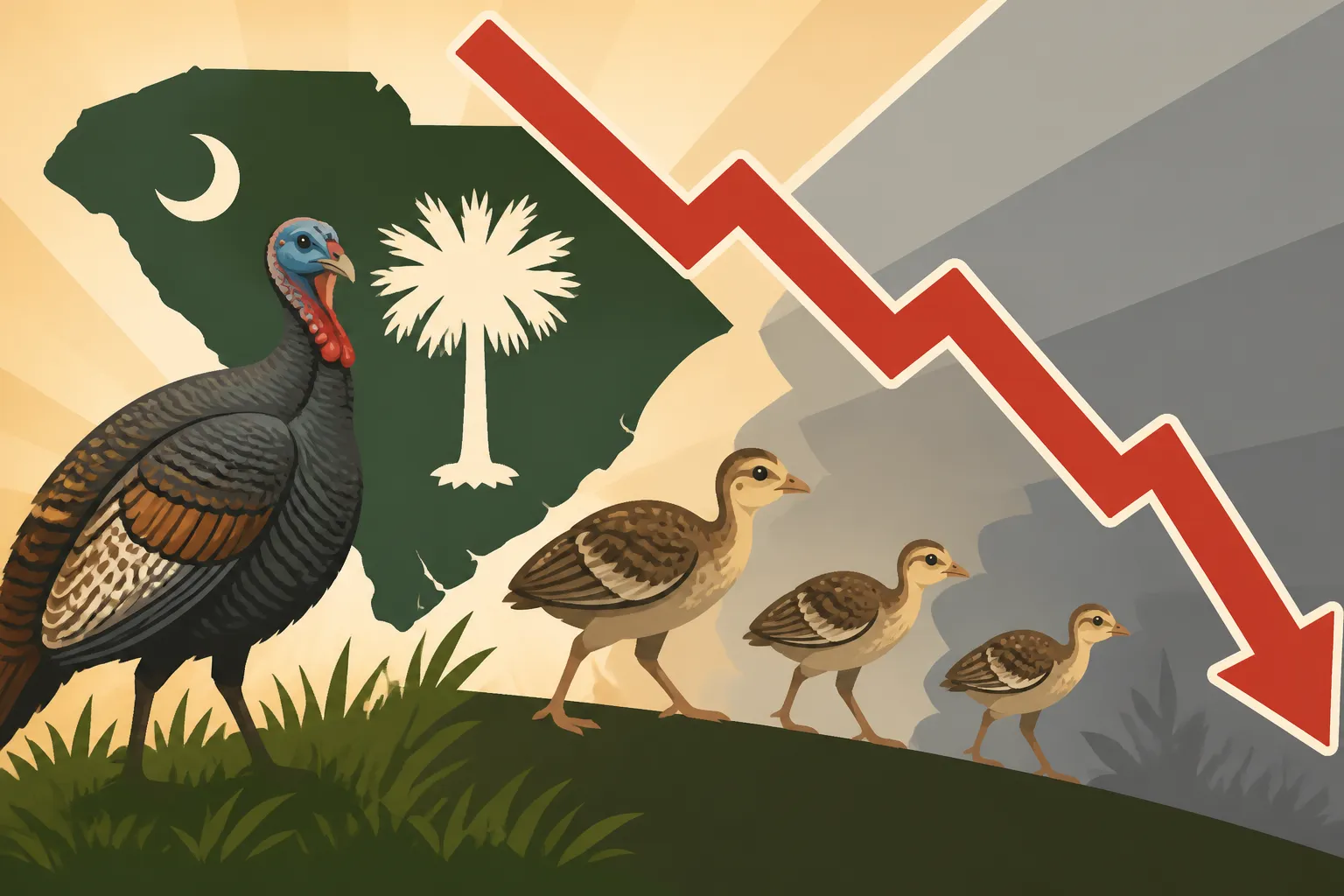
However, since roughly 1988, data has shown a consistent, often gradual, but undeniable decline in poult recruitment. The "boom" years of restoration gave way to a steady "bust" in terms of young bird survival. While the overall adult population might still seem robust in certain pockets, the lack of consistent recruitment means that these populations are aging, and there aren't enough young birds coming up behind them to replace natural mortality. It's like watching a battery slowly drain – without a consistent charge, it will eventually die. This trend is a major reason for concerns about South Carolina Turkey Population Trends and why agencies like SCDNR have had to re-evaluate management strategies.
Poult-to-Hen Ratios and What They Mean
One of the most critical metrics wildlife biologists use to gauge poult recruitment is the "poult-to-hen ratio." This ratio is exactly what it sounds like: the average number of poults observed per hen, typically during late summer brood surveys. A healthy, stable, or growing turkey population generally needs a poult-to-hen ratio of at least 2.0 to 2.5 poults per hen to maintain its numbers. Anything consistently below that indicates a declining population.
Unfortunately, South Carolina has consistently seen poult-to-hen ratios below this threshold for decades. We’re often seeing numbers closer to 1.5 or even lower in some areas. What does this mean in real terms? It means that, on average, for every hen that successfully hatches a brood, she's only raising one to two young to a point where they can survive on their own. This isn't enough to counteract natural mortality from predators, disease, or old age. Imagine a savings account where you're consistently withdrawing more than you're depositing; eventually, you run out of funds. The same principle applies to our turkey population, and it's why understanding Poult-to-Hen Ratios and What They Mean is so vital for conservation efforts.
Here's a simplified look at how poult-to-hen ratios reflect population health:
| Poult-to-Hen Ratio | Population Trend | Implications |
|---|---|---|
| 0.0 – 1.5 | Declining | Significant concern, unsustainable |
| 1.6 – 2.0 | Stagnant/Slow Decl. | Unsustainable, but slower decline |
| 2.1 – 2.5 | Stable | Healthy population maintenance |
| 2.6+ | Growing | Strong recruitment, expanding population |
Note: These are general guidelines; specific thresholds can vary by region and subspecies.
Key Factors Contributing to the Decline
It's never just one thing when it comes to complex wildlife issues, and turkey recruitment is no exception. A perfect storm of environmental changes, shifting landscapes, and increased pressures has created a challenging environment for young poults trying to make it to adulthood.
Habitat Loss and Fragmentation
South Carolina is growing, and with that growth comes development. Forests are cleared for housing, shopping centers, and new infrastructure. Agricultural practices have also changed, with larger fields and less diverse crops, reducing the "edge habitat" that turkeys thrive in. This leads to habitat loss and fragmentation, where once-expansive turkey territories are broken into smaller, isolated patches.
Turkeys need diverse habitats for different stages of their life cycle: dense cover for nesting, open woodlands for foraging, and escape cover for poults. When these critical habitats are destroyed or broken up, it becomes harder for hens to find safe nesting sites, and once hatched, poults struggle to find the insects and protective cover they need to survive. A clear-cut that's left barren for too long, or a sprawling housing development, effectively removes vital real estate for turkeys to raise their young. Understanding how to manage existing lands, such as areas mentioned in South Carolina Longleaf Pine and Quail Habitat discussions, for multi-species benefits is increasingly important.
Increased Predation Pressure
This is a hot-button topic for many hunters, and for good reason. Predation on nests and young poults is a significant factor in low recruitment. South Carolina's landscape is home to a robust population of nest and poult predators, including raccoons, opossums, snakes, and perhaps most notably, coyotes. When South Carolina Coyote Range and Density maps started showing them everywhere, it was clear things would change.
Coyotes, in particular, are incredibly efficient predators, and their populations have exploded across the state. They prey directly on nesting hens, eggs, and vulnerable poults. While predation is a natural part of any ecosystem, an imbalance can occur when predator populations are unnaturally high or when nesting habitat is degraded, making nests easier for predators to find. Imagine a hen trying to raise a brood in sparse cover, constantly under threat. This constant pressure can decimate a clutch of eggs or a newly hatched brood in a matter of days. This issue is a significant component of what we discuss in Nest Predation and South Carolina Turkey Hatches.
Weather Patterns and Their Role
South Carolina weather can be a wild card, and it plays a critical, though often overlooked, role in poult survival. Heavy, prolonged spring rains during the nesting and early hatching periods can be devastating. Newly hatched poults are very vulnerable to hypothermia. They can't regulate their body temperature well, and cold, wet conditions can kill them quickly. A hen might do everything right, successfully hatch a brood, but if a cold, soaking rain hits shortly after, her efforts can be wiped out.
Conversely, extended droughts can also impact poult survival by reducing insect availability – a critical food source for growing poults – and by drying up water sources. While we can't control the weather, recognizing its impact helps us understand the challenges turkeys face. Think about those spring days with torrential downpours; while it might just mean a delay for your hunt, for a tiny poult, it can mean the end.
Disease and Other Environmental Stressors
While less understood or publicized than habitat loss or predation, diseases and other environmental stressors can also contribute to reduced poult recruitment. Outbreaks of diseases like Avian Influenza, while often impacting waterfowl more directly, can potentially affect wild turkeys. Unknown pathogens, parasites, or even environmental contaminants can weaken hens or poults, making them more susceptible to other threats.
Monitoring wildlife health is an ongoing process, as highlighted in discussions around South Carolina Wildlife Disease Monitoring. Sometimes, subtle changes in the environment, perhaps linked to widespread pesticide use or other factors, could weaken the overall resilience of the turkey population, making it harder for poults to thrive. It’s a complex web, and every strand has an effect.
What Hunters and Conservationists Can Do
Feeling overwhelmed? Don't be. While the challenges are real, there are concrete steps we can take. As hunters, we are often the first line of defense for wildlife, and our involvement in conservation is paramount. We have a responsibility to be part of the solution.
Habitat Improvement and Management
This is arguably the most impactful area where we can make a difference. Improving and managing habitat directly addresses one of the primary drivers of poult decline. On private lands, this could mean:
- Prescribed Burns: Mimicking natural fire cycles, prescribed burns create open understories, promote new, nutritious growth, and control invasive species. They enhance foraging opportunities and make it easier for poults to navigate and find insects.
- Native Plantings: Establishing native grasses, forbs, and shrubs provides essential bugging habitat for poults and nesting cover for hens.
- Timber Management: Thoughtful timber harvests, such as thinning pine stands or creating diverse age classes in hardwoods, can create ideal turkey habitat. Longleaf pine ecosystems, for example, are fantastic for turkeys when managed correctly.
- Food Plots: While not a silver bullet, strategically placed food plots with appropriate forage can supplement natural food sources.
On public lands, supporting organizations and agencies like the SCDNR and the National Wild Turkey Federation (NWTF) is crucial. They implement large-scale habitat projects that benefit turkeys and countless other species. When you see a discussion about South Carolina Longleaf Pine and Quail Habitat, know that turkeys often benefit from the same management practices. You can also educate yourself on responsible land management by utilizing resources from organizations like GoHunt and local extension offices.
Predator Management and Control
Predator management is a sensitive topic, but it's a necessary component of a comprehensive turkey management plan, especially in areas with consistently low poult recruitment. This doesn't mean indiscriminately eliminating all predators, but rather targeted efforts to reduce populations of species like coyotes and raccoons where they are having an outsized impact on turkey nests and poults.
- Trapping: Ethical and legal trapping can effectively reduce predator numbers. If you're a landowner, consider implementing a trapping program during late winter and early spring, before hens begin nesting.
- Hunting: Hunting coyotes, particularly at night where legal on private land, can also contribute to population control.
- Habitat Improvement: Dense nesting cover itself is a form of predator management. The harder a nest is to find, the less likely it is to be predated.
It’s important to remember that predator control needs to be part of a larger strategy that includes habitat improvement. Without good habitat, simply removing predators often only provides a temporary fix, as others will quickly move in.
Supporting Research and Management Efforts
Our wildlife agencies and conservation organizations are constantly studying these issues. Supporting their work through license purchases, donations, and volunteering your time is vital. The SCDNR regularly conducts brood surveys and analyzes harvest data to understand population trends, like those found in South Carolina Turkey Brood Survey Results. Their decisions on season lengths, bag limits, and specific regulations (like Why South Carolina Ended Jake Harvest in 2025) are based on this scientific data.
Stay informed, attend public meetings, and voice your support for sound, science-based wildlife management. These experts use sophisticated tools and data to track historical data, much like the detailed reports you might find on platforms such as GoHunt. Our collective voice can ensure that resources are allocated to turkey conservation.
Adapting Hunting Strategies and Regulations
As hunters, we also need to be willing to adapt. When poult recruitment is low, it makes sense for regulations to become more conservative. This is why we've seen changes like a reduced statewide bag limit and the decision to ban the harvest of jakes (sub-adult gobblers) in South Carolina starting in 2025. These measures are designed to protect younger birds and allow more gobblers to reach maturity, ensuring they have more opportunities to breed before being harvested.
- Understanding Regulations: Familiarize yourself with South Carolina Spring Turkey Season Rules and South Carolina's Statewide Turkey Bag Limit. These aren't arbitrary rules; they're direct responses to population trends.
- Voluntary Restraint: Beyond legal limits, consider practicing voluntary restraint. If you've filled your tags early in a season where gobbling activity is low or you know recruitment has been poor, perhaps consider scaling back your efforts. The goal is to maximize Making the Most of a Two-Bird Season Limit by making ethical decisions that benefit the long-term health of the flock.
- Educate Others: Share what you've learned about poult recruitment with fellow hunters and non-hunters alike. The more people understand these complex issues, the more support there will be for effective conservation.
By working together – hunters, landowners, and wildlife professionals – we can address the decline in poult recruitment and help ensure a thriving wild turkey population in South Carolina for many springs to come. It won't be easy, but nothing worthwhile ever is.
Disclaimer
The information provided in this article is for general informational purposes only and does not constitute legal advice. Hunting regulations and wildlife management practices can change. Always consult the latest South Carolina Department of Natural Resources (SCDNR) regulations and guidelines before engaging in any hunting activities.