Why Fanning and Reaping Are Banned on WMAs
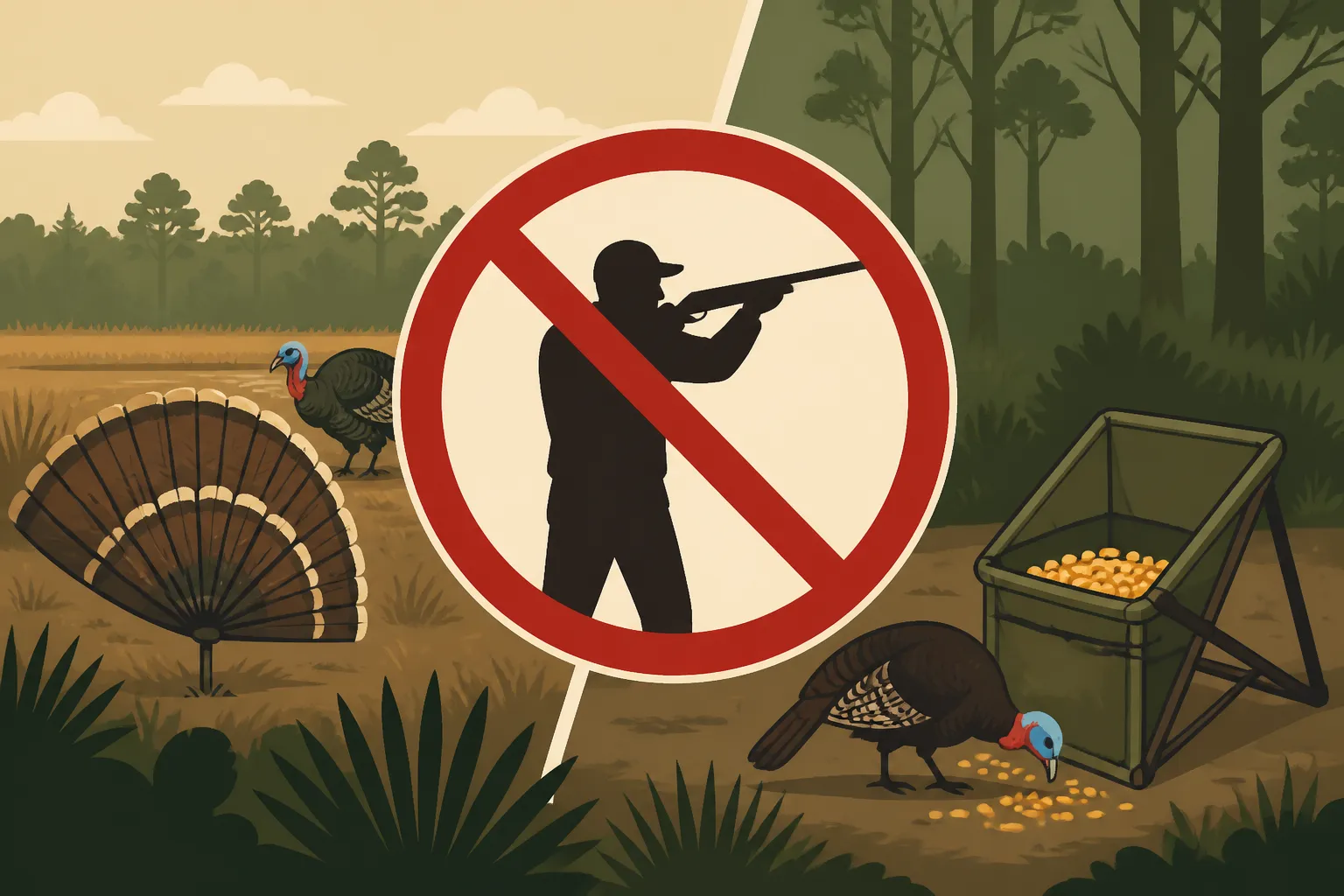
It’s a natural instinct for many turkey hunters: that rush of adrenaline when you engage a gobbler face-to-face, trying to pull him in close. For some, the tactic of fanning or reaping — using a turkey fan or full strut decoy to aggressively crawl or move towards a tom — represents the ultimate challenge and excitement. But if you’ve been hunting South Carolina’s Wildlife Management Areas (WMAs), you've likely noticed this aggressive tactic is strictly off-limits. This guide will dive deep into why fanning and reaping are banned on WMAs, focusing on the crucial safety concerns and management strategies that shape these regulations.
Understanding the Allure of Fanning and Reaping
Let's be honest, there’s something undeniably captivating about getting up close and personal with a boss gobbler. The intense interaction and the feeling of outsmarting a wary bird can be incredibly rewarding, which is why fanning and reaping gained so much popularity.
The Thrill and Effectiveness
Fanning, or reaping, typically involves a hunter concealing themselves behind a turkey fan or a full strut decoy and then slowly, cautiously moving towards a gobbler that's hung up or responding from a distance. The idea is to mimic a strutting tom or a receptive hen, drawing the actual bird into a confrontation or close inspection. When it works, it’s an absolute thrill. Imagine crawling through a field edge, the fan hiding your movements, and suddenly a red-headed tom pops up just yards away, spoiling for a fight or eager to breed. It creates incredibly close-range encounters, often leading to dramatic, high-energy hunts. Many hunters who practice it on private land swear by its effectiveness, especially on birds that might otherwise hang up at a distance. The strategy taps into the territorial and reproductive instincts of a tom, often prompting him to abandon caution and commit.
This method, while exciting, demands a hunter to be fully immersed, often focused intently on the decoy and the responding bird. This single-minded focus, combined with the low profile assumed while crawling, can put a hunter in a very vulnerable position if not in a controlled environment. The effectiveness of the technique often makes hunters eager to try it in various settings, leading to questions when they encounter restrictions on public lands.
The Ethical Debate on Private Land
Even on private land, where fanning and reaping are often permitted, there’s been an ongoing, lively debate among turkey hunters about the ethics of the practice. Some purists argue that it goes against the traditional "fair chase" principles of turkey hunting, which typically emphasize calling a bird to your static position rather than actively moving towards it under cover. They might feel it tips the scales too heavily in the hunter's favor, particularly with the aid of realistic modern decoys that can truly fool a gobbler. This perspective often comes from hunters who have spent decades perfecting their calling skills and enjoy the mental chess match of traditional setups.
On the other hand, proponents argue that it’s simply another legitimate hunting tactic, requiring skill, patience, and knowledge of turkey behavior. They might point out that stealth and concealment are foundational hunting principles, and fanning is just an advanced application of those. For them, the challenge isn't just in the setup, but in the execution, the slow crawl, the reading of the bird, and the final moments of truth. Ultimately, on private land, landowners and hunters typically set their own rules and ethical boundaries for such practices. However, when you step onto public hunting grounds like South Carolina's WMAs, the landscape of ethics and safety shifts dramatically, requiring a different set of considerations and, consequently, regulations.
The Core Reason for WMA Bans: Hunter Safety
While the thrill of fanning and reaping is undeniable, the overriding reason for its ban on South Carolina’s Wildlife Management Areas (WMAs) boils down to one critical factor: hunter safety. Public land brings a unique set of challenges, primarily due to higher hunter density and the unpredictable nature of shared spaces.
Misidentification and Accidental Shootings
The single most compelling reason behind the ban on fanning and reaping is the very real danger of misidentification leading to accidental shootings. Imagine yourself sitting in the woods on a WMA, intently focused on calling in a gobbler. You see movement through the thick underbrush, a flash of red, white, and blue, and what appears to be a turkey fan bobbing through the pines. In the heat of the moment, with adrenaline pumping and perhaps limited visibility, it is alarmingly easy to mistake that movement for a real turkey. Another hunter, low to the ground, moving behind a fan, could tragically be mistaken for the very game they are pursuing.
This isn't just a theoretical concern; tragically, such incidents have occurred in other states where fanning or reaping was permitted on public land, leading to serious injuries and even fatalities. South Carolina's wildlife authorities, along with those across the nation, prioritize preventing such accidents. The unique posture a hunter takes while fanning—often crawling on hands and knees, with a large, camouflaged fan or decoy obscuring their body shape—makes them appear incredibly similar to a strutting tom, especially at a distance or in dappled light. When multiple hunters are in the same general area, all eager for a shot, the risk escalates exponentially. It's a risk simply too high to allow on shared public resources where hunter numbers cannot be perfectly controlled or known at any given moment.
Increased Hunter Density on Public Lands
South Carolina’s WMAs are incredible resources, offering hunters access to diverse habitats across the state. However, this accessibility also means that these areas often experience higher hunter density compared to private lands. On private property, you typically know who else is hunting, where they are, and what methods they might be employing. You can coordinate and ensure safety among a known group. This control is almost entirely absent on public land. You could be hunting a section of the Francis Marion National Forest, for instance, and have no idea if another hunter is just over the next ridge or across the creek.
This higher density of unknown hunters directly amplifies the risk associated with aggressive, mobile tactics like fanning. While one hunter might be carefully fanning in a field, another hunter, unaware of the first, might be actively stalking or calling from a different direction. The chances of their paths intersecting, or one mistaking the other for game, increase dramatically with more people in the woods. Regulations are designed for the lowest common denominator of safety, aiming to protect everyone who uses these lands. The goal is to minimize any scenario where a hunter could be mistaken for a turkey, and given the popularity of public hunting grounds, eliminating fanning and reaping is a crucial step in achieving that goal. This also extends to general regulations for public land, like strict adherence to South Carolina Public Land Hunting Hours and blaze orange requirements during certain seasons, all aimed at enhancing safety in shared spaces.
Specific South Carolina WMA Regulations on Decoys
Navigating the nuances of hunting regulations can sometimes feel like trying to untangle a stubborn fishing knot. When it comes to turkey hunting on South Carolina’s Wildlife Management Areas (WMAs), understanding the specific rules around decoys, especially regarding fanning and reaping, is crucial for staying safe and legal. These aren't suggestions; they are explicit rules designed to protect every hunter enjoying the public lands.
Decoy Rules on Wildlife Management Areas
South Carolina’s Department of Natural Resources (SCDNR) is very clear about the use of aggressive decoys on WMAs. While specific wording can vary slightly year to year, the general prohibition against fanning and reaping is consistently maintained within the WMA system. Essentially, any tactic that involves a hunter actively moving while concealed behind a turkey decoy, fan, or similar prop that mimics a turkey, is strictly forbidden. This means you cannot crawl, walk, or otherwise advance towards a turkey while hidden behind a fan or full-strut decoy. The rationale, as discussed, is rooted firmly in preventing accidental shootings due to misidentification in areas with potentially high hunter concentrations.
Furthermore, general decoy usage on WMAs is often regulated to ensure static positions. For example, while you might be allowed to use stationary hen or jake decoys, these must be set up in a fixed location and the hunter must remain still, typically positioned with a solid backstop, to call birds in. The rule focuses on eliminating the possibility of a decoy, and the hunter behind it, appearing as a moving, living turkey. Always double-check the current South Carolina WMA Turkey Rules before heading out, as specific WMA zones or special hunts might have even more particular guidelines. Adhering to these regulations is not just about avoiding a citation; it's about contributing to a safer environment for everyone who ventures into the woods during turkey season. Remember, the collective safety of the hunting community on public land depends on individual responsibility and adherence to these well-thought-out rules.
How to Hunt Aggressively Without Fanning
Just because fanning and reaping are out on WMAs doesn't mean you have to abandon aggressive turkey hunting tactics altogether. You just need to adapt your approach to fit the public land safety parameters. Many successful WMA hunters employ strategies that are highly effective without compromising safety. One of the most common and thrilling methods is the "run-and-gun" tactic. This involves covering a lot of ground, listening intently for gobblers, and moving quickly to set up on a bird that responds. Instead of moving with a decoy, you move to a location, set up safely, and then call. This approach keeps you mobile and engaged without creating the dangerous visual of a moving turkey. You can learn more about how to effectively use this strategy by checking out a comprehensive guide on Run-and-Gun Turkey Tactics on Public Land.
Another highly effective aggressive tactic is focused scouting and early morning roost hunting. Before the season, use tools like GoHunt to analyze aerial photos, identify potential roosting areas, and scout for fresh sign like tracks and droppings. Come opening day, get into position well before first light, listening for those initial tree yelps and gobbling from the roost. Setting up close to a roosted bird and making the right calls as he flies down can be incredibly aggressive and effective, leading to those heart-stopping close encounters, all from a stationary, safe position. If you're interested in mastering this, consider reading up on Roost Hunting South Carolina Gobblers. Utilizing these methods, along with thorough scouting and understanding the terrain, allows you to maintain an exciting, active hunting style on WMAs while fully complying with safety regulations. A good mapping app like GoHunt can be invaluable here, helping you identify potential pinch points and less-pressured areas.
Broader Implications for Ethical Hunting Practices
The ban on fanning and reaping on South Carolina’s Wildlife Management Areas (WMAs) extends beyond immediate safety concerns, touching upon the broader principles of ethical hunting and how we share our limited public resources. It's about ensuring a quality experience for all and understanding the unique dynamics of public land.
Preserving the Hunting Experience
When regulations are put in place, especially on public land, they are often designed with the intent to preserve a positive and safe hunting experience for everyone. The prohibition of fanning and reaping contributes to this in several ways. Firstly, it reduces the likelihood of stressful or dangerous encounters between hunters. Knowing that other hunters won’t be crawling around disguised as turkeys provides a greater sense of security and allows everyone to focus on their hunt rather than constantly scanning for potentially misidentified movement. This fosters a more relaxed and enjoyable atmosphere in the woods.
Secondly, these rules help manage hunter expectations and maintain a sense of fair chase within the public sphere. While a debate exists on what constitutes fair chase on private land, on public lands, where competition for game can be higher, regulations aim to level the playing field. By disallowing tactics that could be seen as overly aggressive or give an undue advantage in a crowded environment, the SCDNR ensures that the traditional skills of calling, patience, and woodsmanship remain central to the WMA turkey hunting experience. It reinforces the idea that success on public land is often earned through diligent scouting and skilled execution of approved techniques, not through methods that carry inherent risks to others. Understanding these regulations is also part of being a responsible hunter; for example, you should always be aware of the overall South Carolina Spring Turkey Season Rules and specific South Carolina Turkey Reporting Through Game Check requirements to ensure you're participating ethically and legally.
Adapting to Public Land Realities
Moving from private land, where you might have more leeway with tactics, to a WMA often requires a significant mental shift and a willingness to adapt. The rules are different, and for good reason. Public lands are shared resources, and the hunting experience is influenced by the presence of other hunters, who may have varying skill levels and experience. Successful public land hunting often hinges on a deep understanding of these dynamics. Using tools like GoHunt to scout and understand land features, or even to gauge potential hunting pressure, becomes invaluable. For example, knowing how to interpret aerial maps or understanding game movement patterns can give you an edge without resorting to restricted tactics. Check out our guide on Scouting South Carolina Public Land Before Season for more tips on how to prepare.
Hunters on WMAs need to embrace strategies that prioritize stealth, calling ability, and patience. Instead of aggressive movement with a decoy, focus on precise setup locations, effective calling sequences, and thorough scouting to find less pressured areas. Often, the most productive WMA spots are those that require a bit more effort to reach or are overlooked by other hunters. Learning to identify these "sleeper" spots, perhaps deeper in the woods or along a less obvious travel corridor, can significantly increase your success. Our article on Hunting Pressure on South Carolina Public Land offers insights into finding those secluded gems. Ultimately, adapting to public land realities means becoming a more versatile and safety-conscious hunter, skills that will serve you well no matter where you chase gobblers in South Carolina. For full compliance, always ensure you have the necessary South Carolina WMA Permit Requirements in addition to your regular hunting license.
Fanning and Reaping: Private Land vs. WMA
Here’s a quick overview of how fanning and reaping are generally viewed and regulated on different land types in South Carolina.
| Feature | Private Land | Wildlife Management Areas (WMAs) |
|---|---|---|
| Legality | Generally permissible (check local ordinances) | Strictly Banned |
| Primary Concern | Ethical debate, personal preference | Hunter safety (misidentification, accidental shootings) |
| Hunter Density | Controlled, known individuals | Unpredictable, higher density of unknown hunters |
| Risk of MisID | Lower (known hunting parties) | High (numerous hunters, varying positions and sightlines) |
| Recommended Tactics | Hunter's choice (if legal and ethical) | Stationary calling, run-and-gun (without fanning), scouting |
| Purpose of Rule | N/A | Prevent accidents, ensure shared public safety, preserve experience |
Disclaimer
Please remember that hunting regulations can change. Always consult the most current South Carolina Department of Natural Resources (SCDNR) regulations manual or website before heading afield. This guide is intended for informational purposes only and should not be considered a substitute for official legal documents or expert advice.