South Carolina Turkey Population Trends
For many South Carolina hunters, the wild turkey isn't just a game bird; it's a cherished symbol of spring, a challenging quarry, and a source of deep satisfaction. But lately, there's been a growing concern buzzing through hunting camps and online forums: "Where have all the turkeys gone?" This guide is for those of you who've noticed fewer gobblers on the roost, or heard less enthusiastic morning choruses, and want to understand the intricate story behind South Carolina's turkey population trends. We'll dive deep into the numbers, the challenges, and what's being done to ensure the future of this incredible bird in our beloved state.
A Look Back at South Carolina's Turkey History
It’s easy to forget that the robust turkey populations we enjoyed for decades weren’t always a given. There was a time when wild turkeys were nearly extirpated from South Carolina, much like in many other states. Their comeback is one of the greatest wildlife success stories, a testament to dedicated conservation efforts.
From Near Extinction to Abundance
Imagine a South Carolina where the gobble of a wild turkey was a rare sound, almost a ghost from the past. That was the reality for much of the early to mid-20th century. Unregulated hunting in the past, coupled with extensive habitat destruction through logging and agricultural conversion, pushed these magnificent birds to the brink. It was a dire situation, and for a while, many thought the chance to hunt a truly wild South Carolina gobbler was lost forever.
However, thanks to visionary conservationists and the pioneering work of the South Carolina Department of Natural Resources (SCDNR), a massive restoration effort began. This wasn't a quick fix; it was a decades-long commitment involving trap-and-transfer programs. Turkeys from healthy populations in remote areas were carefully captured and relocated to suitable habitats across the state where they had vanished. It was slow, painstaking work, often done with cannon nets and a lot of sweat, but it paid off handsomely. By the 1980s and 90s, the population had exploded, and hunters began experiencing what many consider the golden age of turkey hunting in the Palmetto State. We saw an incredible rebound, with birds thriving in nearly every county, from the mountains to the coast.
The Recent Decline and Hunter Observations
Fast forward to today, and that celebratory mood has shifted. Over the last decade, particularly since around the mid-2010s, hunters across the state have been reporting a noticeable decline. It’s not just anecdotal; the numbers reflect it. You hear stories from folks who used to consistently fill their tags and now struggle to even find birds. That feeling of emptiness in a favorite spring woods, or the silence on a morning that should be ringing with gobblers, is a stark contrast to just a few years ago.
This decline isn't unique to South Carolina; it's a trend observed across much of the Southeast. While it might feel disheartening, understanding this recent shift is the first step toward addressing it. It's a complex issue, often attributed to a confluence of factors rather than a single smoking gun, and it's something the SCDNR monitors very closely, trying to pinpoint the primary drivers. Hunters play a crucial role in helping gather data, which is why accurate reporting is more important than ever.
Deciphering the Numbers: Data and Metrics
When we talk about the health of a wildlife population, we rely on scientific data. For South Carolina's wild turkeys, the SCDNR collects and analyzes a variety of metrics to gauge their status. These aren't just abstract figures; they tell a story about reproduction, survival, and the overall vitality of the flock.
Poult-to-Hen Ratios and What They Mean
Perhaps the most critical piece of the puzzle for turkey populations is the poult-to-hen ratio. This metric, often derived from annual summer brood surveys, tells us how many young turkeys (poults) are surviving per adult hen. Think of it as a report card on the year's reproduction and early survival. A healthy poult-to-hen ratio indicates strong recruitment – enough young birds are making it to adulthood to replace older birds and even grow the population.
Historically, South Carolina saw strong poult-to-hen ratios, often exceeding 2.0 or even 3.0 in good years. This meant that for every hen, two or three poults were making it through their first few vulnerable weeks. However, in recent years, these numbers have dipped significantly. We're now seeing ratios that are often below the crucial 2.0 threshold, and sometimes even below 1.5, which is a major red flag for population stability. When you consistently have fewer than two poults surviving per hen, your population is going to shrink, plain and simple.
The timing of these surveys is important. Usually conducted in late summer, they capture the success of nesting and the survival of broods through their most perilous early stages. Factors like cold, wet springs, which can be devastating for young poults, or high predator loads in nesting areas, directly impact these ratios. The SCDNR collects these observations from cooperators and biologists across the state, giving them a broad snapshot of the annual hatch. You can often find summaries of these trends published by the SCDNR, and organizations like GoHunt often compile or reference such data for various regions. This kind of data provides vital context for understanding South Carolina Turkey Population Trends.
Here's a simplified look at how those ratios might reflect population trends:
| Poult-to-Hen Ratio | Interpretation for Population |
|---|---|
| < 1.0 | Significant decline expected |
| 1.0 – 1.5 | Decline, struggling to sustain |
| 1.5 – 2.0 | Stable to slight decline |
| 2.0 – 2.5 | Stable to slight increase |
| > 2.5 | Healthy growth expected |
South Carolina Turkey Harvest Numbers
Another key indicator of population health is the annual harvest data. Every time a hunter checks a bird through the Game Check system, that data point contributes to a larger picture. The SCDNR aggregates these numbers, giving insights into how many birds are being taken each season, and indirectly, the overall abundance of the population.
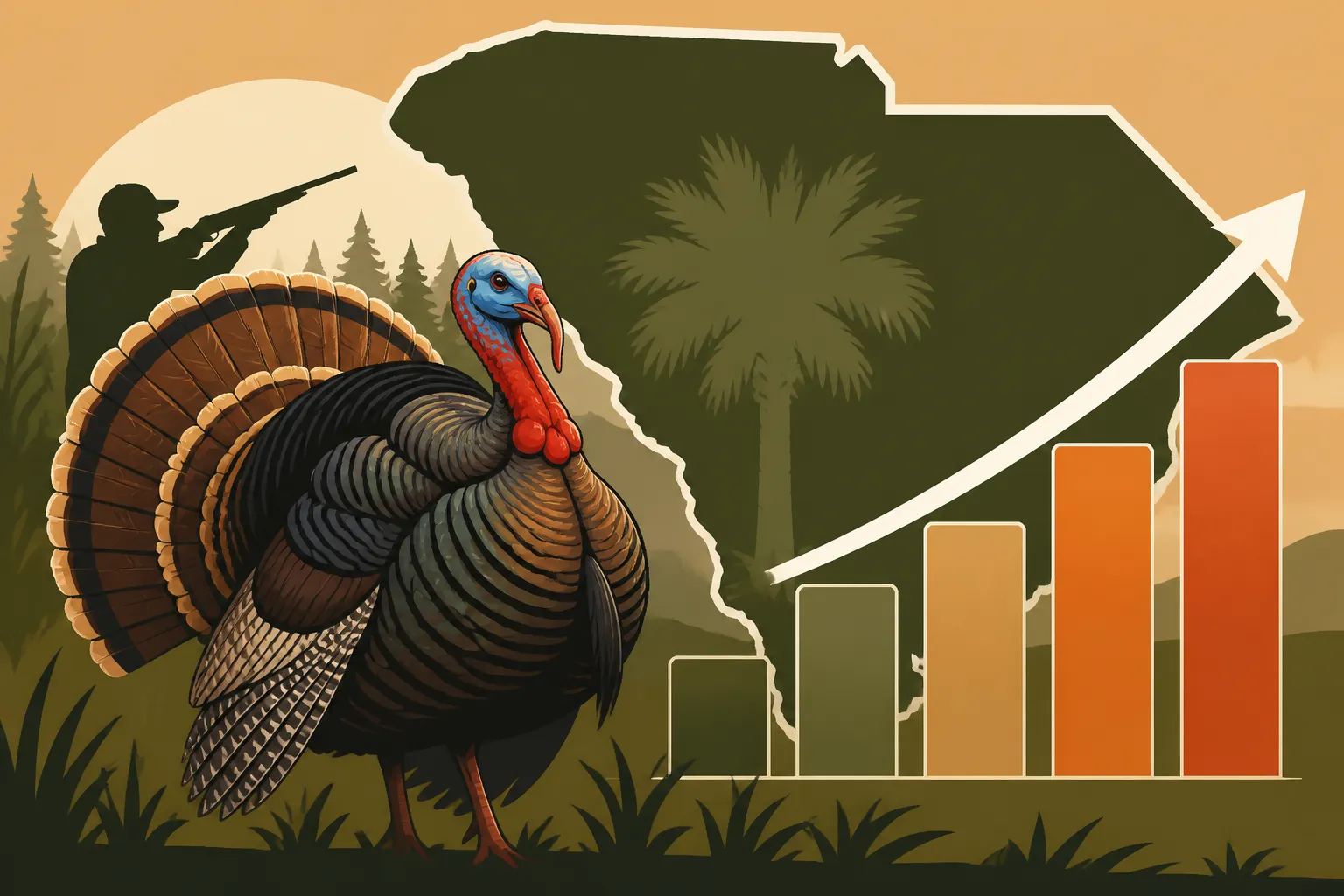
When turkey numbers were booming, harvest numbers were naturally high. Hunters were seeing more birds and filling their tags more often. This gave the impression of an endless supply. However, as poult-to-hen ratios began to drop, the harvest numbers followed suit. While hunters might still be able to find a bird, the effort required often increases, and overall success rates can decline. The South Carolina Turkey Harvest Numbers tell a compelling story when viewed over several years.
It’s important to remember that harvest numbers are not just a reflection of turkey abundance; they also reflect hunter effort and regulatory changes. For instance, if fewer hunters go out, or if bag limits are reduced, harvest numbers might dip even if the population is stable. However, when harvest numbers decline alongside poor poult-to-hen ratios and increased hunter effort, it’s a strong signal that the population itself is shrinking. The SCDNR relies heavily on hunters accurately reporting their harvest, which you can do easily via the Go Outdoors SC app or website. This allows them to make informed management decisions.
Factors Impacting Population: The Challenges
Understanding the "why" behind the decline is crucial, and it’s rarely a simple answer. Wild turkeys face a gauntlet of challenges throughout their lives, from the moment they hatch to their attempts to survive and reproduce. Many of these challenges have intensified over the past few decades.
Habitat Loss and Fragmentation
At the very core of wildlife survival is suitable habitat. Turkeys need a diverse landscape to thrive: mature forests for roosting, open woodlands and fields for feeding, thick undergrowth for nesting, and dense cover for escape. Unfortunately, South Carolina, like many rapidly developing states, has seen significant Habitat work on South Carolina WMAs change. Urban sprawl, increased road networks, and agricultural intensification all contribute to habitat loss and fragmentation.
When prime turkey habitat is broken up into smaller, isolated patches, it makes it harder for birds to move safely between critical areas like nesting cover and foraging grounds. It also reduces the overall carrying capacity of the land. Think of it from a hen’s perspective: finding a safe, secluded spot to lay eggs becomes increasingly difficult when development encroaches, or timber practices remove the necessary mid-story cover. Even subtle changes, like a shift from diverse mixed forests to monoculture pine plantations that lack crucial food sources or dense nesting areas, can have a profound impact. While efforts are made to improve habitat on public lands, the sheer scale of private land changes presents a significant hurdle for widespread turkey recovery.
Increased Predation and Its Impact
Nature is a harsh mistress, and predation is a natural part of any ecosystem. However, many wildlife biologists believe that increased predator populations, particularly opportunistic mesopredators, are playing a more significant role in turkey declines than in the past. Critters like raccoons, opossums, skunks, and foxes are notorious nest predators, feasting on turkey eggs.
More recently, the rapidly expanding coyote population in South Carolina has raised concerns. Coyotes are incredibly adaptable and can be devastating to poults and even adult hens, especially during the nesting and brooding periods. While coyotes don't specifically target turkeys, an increase in their numbers means more pressure on vulnerable turkey nests and young birds. This is a complex issue, as predator control is often contentious and difficult to implement on a large scale. However, when combined with other stressors like poor habitat, increased predation can really stack the odds against a successful turkey hatch and subsequent Nest Predation and South Carolina Turkey Hatches. It's a tough balance to manage in a state with such diverse ecosystems.
Weather and Disease Vulnerability
Wild turkeys are hardy birds, but they are still vulnerable to environmental extremes and disease. Long periods of cold, wet weather during the spring nesting and hatching period can be devastating for poult survival. Young poults, especially in their first few weeks, are highly susceptible to hypothermia and pneumonia. If they get soaked and can’t dry out, their chances of survival plummet. A string of unusually cold or rainy springs can significantly depress poult-to-hen ratios for an entire year.
Droughts can also play a role, impacting the availability of insects and soft mast, which are crucial food sources for poults and hens. Without proper nutrition, hens can enter the breeding season in poor condition, affecting their nesting success, and poults can struggle to grow and thrive.
Disease, while less commonly cited as a primary driver of widespread decline in turkeys compared to deer (like EHD), can still affect localized populations. Avian pox and other pathogens can weaken birds, making them more susceptible to predation or environmental stressors. While no major widespread turkey disease outbreaks have been reported as the main cause of the current decline in South Carolina, it's always a factor that wildlife managers keep an eye on, especially in dense populations.
Management Strategies: What's Being Done
Faced with declining turkey numbers, the SCDNR and conservation partners aren't sitting idly by. They are actively engaged in research, monitoring, and implementing management strategies designed to stabilize and hopefully reverse the downward trend. It’s a multi-faceted approach, recognizing the complexity of the issue.
Regulation Changes and Season Adjustments
One of the most direct tools wildlife agencies have is adjusting hunting regulations. The SCDNR has made significant changes in recent years to try and ease pressure on the turkey population. Perhaps the most impactful has been the reduction of the statewide bag limit. Where once hunters could take multiple gobblers, the current limit is now set at a more conservative level to reduce harvest pressure on adult birds.
A notable and somewhat controversial change has been the statewide ban on harvesting jakes, or juvenile gobblers. This decision, which went into effect recently, aims to protect young, impressionable males, giving them a better chance to survive and mature into breeding gobblers. The reasoning behind Why South Carolina Banned Jake Harvest is to allow more birds to reach at least their second year, contributing to the breeding population for longer. While some hunters found this frustrating, it reflects a serious effort by the SCDNR to prioritize population recovery.
Other adjustments might include tweaking season dates or reducing opportunities in specific zones or on certain WMAs to ensure that hunting pressure is managed responsibly. These changes are not made lightly; they are based on the data collected from brood surveys, harvest reports, and ongoing research, all aimed at fostering recovery. Understanding the South Carolina Spring Turkey Season Rules is vital for every hunter.
Habitat Improvement Initiatives
Beyond regulations, habitat management remains a cornerstone of turkey conservation. The SCDNR and other land management agencies, like the U.S. Forest Service on lands such as Francis Marion National Forest and Sumter National Forest, are actively working to improve habitat quality on public lands. This often involves prescribed burning, which mimics natural fire regimes and helps create the open, park-like understory that turkeys thrive in. Burning also promotes the growth of beneficial forbs and grasses that provide food and cover.
Timber stand improvements are also crucial, which might involve thinning dense pine plantations to allow more sunlight to reach the forest floor, encouraging the growth of native vegetation. On some WMAs, food plots are strategically planted, not just to attract game but to provide crucial nutrition during lean times. Conservation groups also play a huge role, partnering with private landowners to implement habitat practices like longleaf pine restoration, which is critical for quail but also benefits turkeys. These efforts are often long-term investments, and their positive impacts might take several years to fully materialize, but they are essential for providing the basic needs for a healthy turkey population. Organizations like the National Wild Turkey Federation (NWTF) are often key players in these collaborative habitat projects.
Research and Monitoring Programs
Good management is always based on sound science. The SCDNR continuously conducts research and monitoring programs to better understand South Carolina’s turkey population dynamics. This includes detailed studies on nesting success, poult survival rates, hen movements, and gobbler behavior. They might deploy GPS transmitters on hens to track their movements, nesting locations, and survival rates throughout the year. This kind of granular data helps pinpoint specific problem areas or periods of high mortality.
Furthermore, they maintain extensive databases of hunter harvest data, which is why accurate reporting is so critical. Every reported turkey helps build a more accurate picture of South Carolina Turkey Population Estimate. They also engage in disease surveillance and genetic studies to monitor the health and diversity of the flock. This ongoing research ensures that management decisions are not based on assumptions but on the best available scientific evidence. Organizations like GoHunt also often feature articles or reports that synthesize this research for hunters, helping to disseminate vital information.
The Hunter's Role: What You Can Do
As hunters, we are often the first to notice changes in wildlife populations, and we also have a vital role to play in their conservation. It's not just about what the state agencies do; our actions on the ground contribute significantly to the health of the resource.
Ethical Hunting Practices
Responsible and ethical hunting is paramount. This means understanding and strictly adhering to all hunting regulations, including bag limits, season dates, and legal hunting hours. Taking only the permitted number of birds ensures that the population isn't overharvested. Given the current population trends, passing on questionable shots or knowing when to hold off on a call to an educated gobbler can also be part of ethical hunting.
It also means respecting property boundaries and obtaining proper permission when hunting private land. For those hunting public land, being mindful of other hunters and minimizing disturbance is key. Embracing the challenge and the experience, rather than solely focusing on the kill, helps preserve the integrity of the sport and the future of the birds. This could involve exploring new strategies, like Run-and-Gun Turkey Tactics on Public Land or fine-tuning your Turkey Calls Worth Carrying in South Carolina.
Accurate Harvest Reporting
This cannot be stressed enough: report every turkey you harvest. Whether it’s a big tom or a jake (if allowed, though currently not), whether you kill it on private land or a WMA, every single bird must be checked through the SCDNR's Game Check system. This data is absolutely crucial for wildlife biologists. Without accurate harvest numbers, they can't get a clear picture of hunter success, population health, and the impact of their management strategies.
Think of it as your direct contribution to science. The Go Outdoors SC app makes reporting incredibly easy, often taking just a few minutes right there in the field. Even if you think your one bird doesn’t make a difference, collectively, these reports form the backbone of sound management decisions. It’s how the SCDNR measures success and identifies areas that might need more attention or different regulations. Remember, the future of turkey hunting in South Carolina literally depends on this data.
Habitat Stewardship and Support
Beyond the hunt itself, we can all contribute to habitat stewardship. If you own land, consider implementing turkey-friendly habitat practices, such as managing timber for diversity, planting native foods, or creating brush piles for cover. Even on a smaller scale, protecting natural areas and supporting conservation easements can make a difference.
For those who don't own land, joining and supporting organizations like the National Wild Turkey Federation (NWTF) or local conservation groups is incredibly impactful. These organizations often fund habitat projects, advocate for wildlife-friendly policies, and educate the public. Your membership dues or donations directly contribute to on-the-ground work that benefits turkeys and other wildlife. Attending local NWTF chapter meetings is a great way to learn more, meet fellow conservationists, and actively participate in fundraising efforts that go directly back into turkey habitat and research here in South Carolina. Supporting efforts to understand South Carolina Turkey Roost Tree Preferences can inform management decisions.
Future Outlook: A Glimmer of Hope?
The current trends for South Carolina's wild turkey population are certainly concerning, and there's no denying that hunters are noticing fewer birds. It's a challenging situation, but it's not without hope. Wildlife populations are resilient, and with concerted efforts, they can rebound.
Continued Challenges and Adaptation
We have to be realistic: many of the underlying challenges, such as habitat loss and increasing predator populations, aren't going away overnight. South Carolina continues to grow, and development pressures will likely persist. Climate patterns might continue to throw curveballs with unpredictable spring weather. This means that hunters and wildlife managers will need to continue adapting.
Hunters might need to adjust their expectations, focusing more on quality experiences than on filling multiple tags. We might see an increased emphasis on Scouting South Carolina Public Land Before Season to find unpressured birds or to identify areas with better habitat. For managers, it means a continuous cycle of research, evaluation, and adaptive management. The situation demands flexibility and a willingness to make tough decisions for the long-term health of the resource. There might be more localized closures or additional tag reductions in areas where the population is most vulnerable.
The Path to Recovery
Despite the challenges, there is a strong commitment from the SCDNR, conservation organizations, and dedicated hunters to see South Carolina’s turkey population thrive again. The changes in regulations, combined with ongoing habitat work and research, are all part of a long-term strategy for recovery. We've seen turkeys come back from the brink before, and with sustained effort, they can certainly improve their numbers again.
The key will be continued monitoring of poult-to-hen ratios and harvest data, allowing biologists to fine-tune their approach. It also hinges on the active participation of hunters in reporting their harvests and supporting conservation initiatives. By working together, embracing scientific management, and being patient, we can contribute to a healthier future for wild turkeys in South Carolina. Our passion for these incredible birds is what will drive their comeback, ensuring that future generations can experience the thrill of a spring gobble on a crisp South Carolina morning.
Disclaimer
The information provided in this guide is for informational purposes only and does not constitute legal advice. Hunting regulations in South Carolina can change, and it is the hunter's responsibility to review and comply with all current laws and regulations set forth by the South Carolina Department of Natural Resources (SCDNR) before engaging in any hunting activities. Always consult the official SCDNR website or printed regulations for the most up-to-date and accurate information.