Nest Predation and South Carolina Turkey Hatches
It's tough to witness, isn't it? The spring woods can feel quieter than they used to, and a lot of us are scratching our heads, wondering why we aren't seeing as many young turkeys running around with the hens. One of the biggest, most frustrating pieces of that puzzle often comes down to what happens to those nests before the eggs even have a chance to hatch. This guide is going to dig deep into the critical issue of nest predation and how it directly impacts South Carolina's wild turkey hatches, offering insight into what's happening and what might be done about it.
Understanding the Threat to South Carolina Turkey Nests
When we talk about the health of our wild turkey populations, especially here in South Carolina, the conversation often circles back to one key factor: successful reproduction. Hens have to lay eggs, those eggs have to hatch, and the poults that emerge need to survive long enough to join the flock. But before a single poult ever sees the light of day, those nests face an incredible gauntlet of dangers, and predation is at the very top of that list. It's a natural part of the ecosystem, absolutely, but when predation pressure becomes too intense, it can severely hinder our turkey numbers.
The Vulnerability of Ground-Nesting Turkeys
Wild turkeys are quintessential ground-nesters, and while this strategy has worked for them for millennia, it inherently puts their most vulnerable stage — the eggs and the incubating hen — directly in harm's way. A typical turkey nest is a shallow depression scraped into the leaf litter, often at the base of a tree, in a thicket, or under a fallen log. The hen then camouflages herself over a clutch of typically 10-12 eggs. This might sound clever, but it’s far from foolproof.
Think about it from a predator's perspective. That nest is essentially a stationary, high-calorie meal ticket, usually sitting undisturbed for nearly a month. The hen herself is incredibly dedicated, often only leaving the nest for short periods to feed and drink, which means she's a sitting duck, literally, for any keen-nosed or sharp-eyed predator. In areas with fragmented habitat or where suitable nesting cover is scarce, hens might be forced to nest in less secure locations, making them even more susceptible. This inherent vulnerability means that anything we can do to reduce predator access or increase nesting cover can make a huge difference in the grand scheme of South Carolina Turkey Population Trends.
Seasonal Peaks of Nest Predation
Nest predation isn't a constant threat; it surges during specific periods, primarily dictated by the turkey's breeding cycle. In South Carolina, our hens typically begin laying eggs in late March, with peak incubation usually occurring through April and into early May. This timeframe coincides directly with the heightened activity of many ground-dwelling and opportunistic predators who are also raising their young and looking for easy meals.
As the spring progresses and the woods green up, hens are on their nests for 26-28 days. This is a critical window. If a nest is destroyed early in the laying cycle, a hen might attempt a "re-nest," but these secondary clutches are often smaller and have lower success rates. The longer a hen sits, the more scent she leaves, and the more likely she is to be discovered. It’s during this period, from the first egg laid to the day of hatch, that the bulk of nest losses occur. Understanding this timing is crucial for land managers and hunters who want to implement any sort of habitat improvement or targeted predator control.
Identifying the Culprits: Common Turkey Nest Predators in South Carolina
South Carolina is home to a diverse array of wildlife, and unfortunately for our ground-nesting turkeys, many of these creatures view a clutch of turkey eggs as a readily available meal. It’s not just one or two species; it’s a whole cast of characters, each playing a role in the predation pressure felt by wild turkey populations. Pinpointing these predators helps us understand the complex challenges facing turkey hatches across the state.
Mammalian Marauders
Without a doubt, mammalian predators are some of the most significant threats to turkey nests. Their keen sense of smell allows them to locate nests even when well-hidden, and their persistence can often wear down a defensive hen.
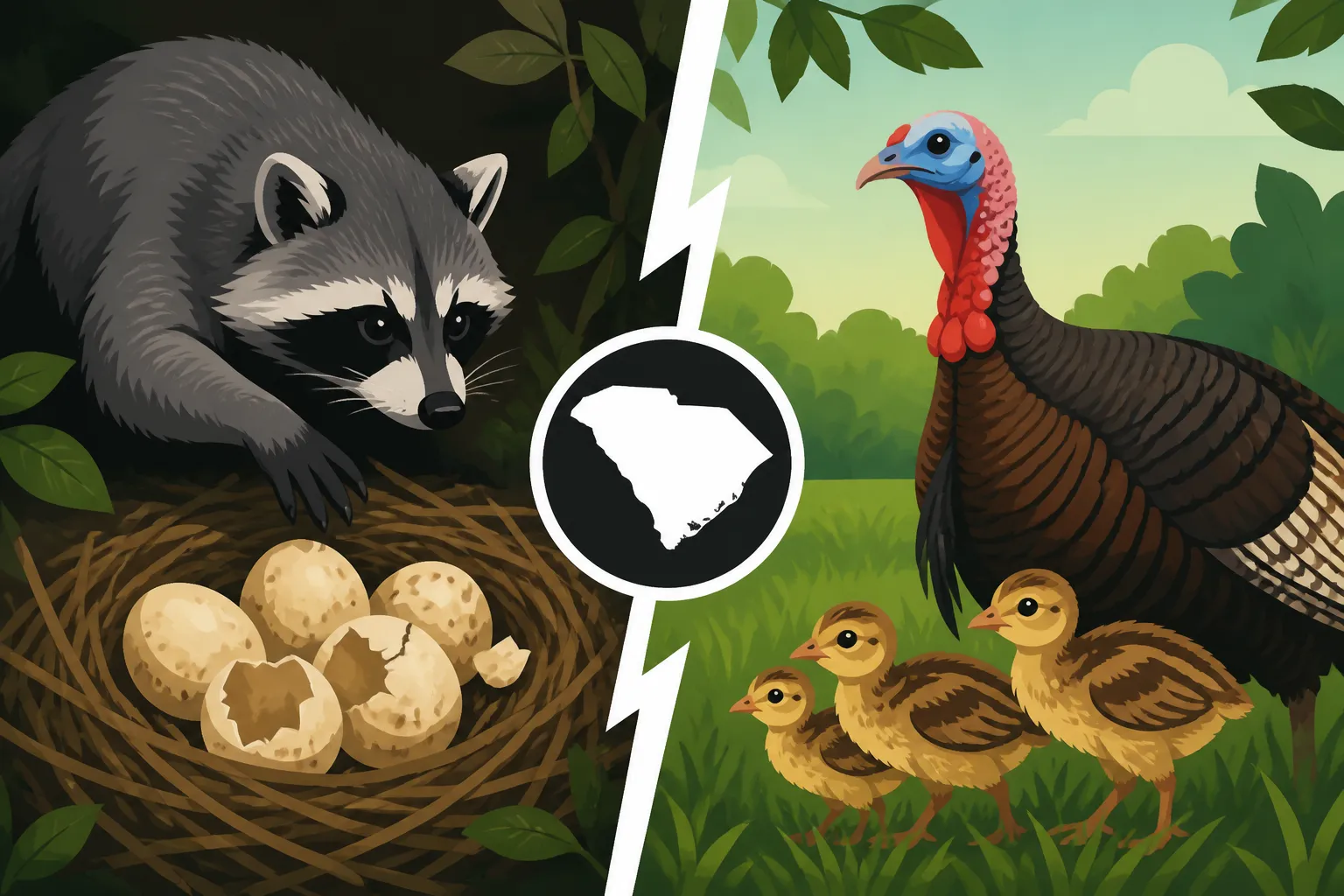
- Raccoons and Opossums: These nocturnal opportunists are perhaps the most notorious nest raiders. They are incredibly common across all of South Carolina, from the swamps of the Lowcountry to the mountains of the Upstate. Raccoons are intelligent and agile, easily locating and consuming entire clutches of eggs. Opossums, while perhaps less agile, are equally effective at cleaning out a nest. Both species peak in activity during the spring and early summer when turkey eggs are most prevalent. Their sheer numbers contribute to consistent pressure on nests year after year, and often, hunters are reporting seeing an abundance of these animals on their trail cameras.
- Coyotes and Bobcats: While often associated with preying on adult deer or small game, coyotes are also highly opportunistic nest predators. A coyote patrolling a field edge or a creek bottom will not pass up a turkey nest if it finds one. Similarly, bobcats, stealthy and efficient hunters, will take advantage of any vulnerability they detect. Though their impact might be less widespread than raccoons due to lower population densities in some areas, their efficiency can be devastating where they do find a nest. Learning more about Coyotes and Predators in South Carolina can give you a better grasp of their presence.
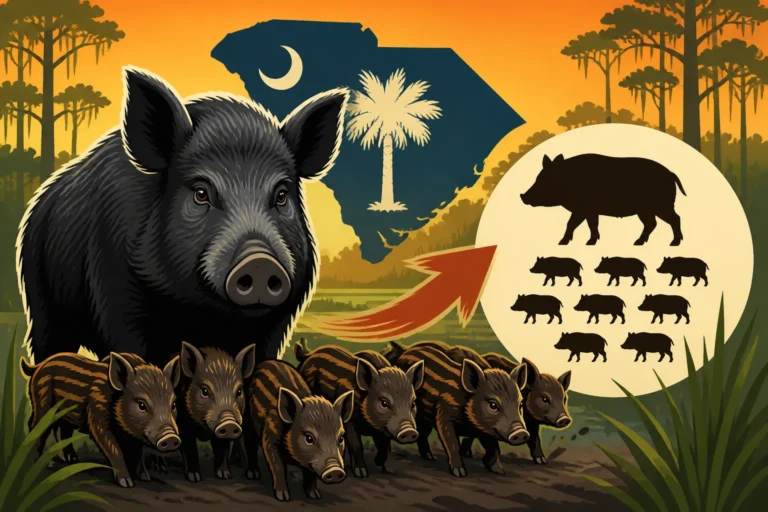
- Feral Hogs: This species is a growing concern for wildlife managers across the South, and South Carolina is no exception. Feral hogs are incredibly destructive, rooting up vast areas of ground, consuming anything edible they encounter – and that includes turkey nests. They don't just eat the eggs; they can completely destroy nesting habitat in their search for food. Their rapid reproduction and expanding range mean that the threat they pose to ground-nesting birds like turkeys is only increasing. The struggle with Feral Hogs Across South Carolina is a constant battle for many landowners.
Avian and Reptilian Raiders
It's not just mammals we have to worry about. Other animals also contribute to nest depredation, adding to the cumulative pressure.
- Crows: American crows are highly intelligent and often work in groups. They have a keen eye for exposed nests or even hens that momentarily leave their clutches. While they might not be able to tackle an entire clutch of large turkey eggs, they will certainly raid and consume what they can, especially early in the laying cycle when nests might be less camouflaged. They are widespread and often found near human habitation and agricultural fields, areas where turkeys also often nest.
- Snakes: Various snake species, particularly larger ones like black snakes and rat snakes, are efficient egg predators. They can easily swallow an entire turkey egg whole, leaving little to no trace behind. While their impact might be localized, a large snake finding a nest can result in a complete loss of the clutch. They are most active during the warmer spring and summer months, precisely when turkeys are nesting.
- Fire Ants: While perhaps not consuming entire eggs in one go, aggressive imported fire ants can be a significant problem for hatching poults. If a nest hatches and the poults are exposed to a fire ant mound nearby, the poults can be quickly overwhelmed and killed. This indirect predation can still result in a failed hatch, even if the eggs themselves weren't directly consumed by a larger predator.
Impact on South Carolina Turkey Hatches and Population Trends
The cumulative effect of nest predation across the landscape is significant. It's not just a few lost nests here and there; it’s a major factor contributing to the overall health and population stability of our wild turkeys. When nest success rates drop too low, it creates a ripple effect that impacts everything from hunter success to the long-term sustainability of the population.
Poult-to-Hen Ratios: A Telling Metric
One of the most important metrics wildlife biologists use to gauge reproductive success is the "poult-to-hen ratio." This simple figure, typically observed through summer brood surveys, tells us how many poults are surviving per hen. A healthy, growing turkey population generally needs a poult-to-hen ratio significantly above 2.0 (meaning, on average, at least two poults survive to maturity for every hen). When these numbers dip, it’s a clear red flag.
A low poult-to-hen ratio often points directly to issues with nest success, followed by early poult survival. While disease and weather can play a role, consistent low ratios across multiple years often implicate heavy nest predation. If hens are laying clutches but those clutches are being destroyed before they hatch, or shortly after, then the population simply isn't recruiting enough new birds to replace those lost to natural mortality and harvest. This is why understanding Poult-to-Hen Ratios and What They Mean is so vital for anyone invested in South Carolina's turkey future.
Long-Term Population Declines and Regional Variations
Over recent decades, many areas, including parts of South Carolina, have experienced a noticeable decline in wild turkey populations. While there's no single cause, nest predation is consistently identified as a major contributing factor in Why South Carolina Turkey Numbers Declined. If successive nesting seasons experience high rates of failure, the population's age structure starts to skew older, and fewer young birds enter the breeding pool. This can lead to a downward spiral that is difficult to reverse.
For instance, heavily fragmented landscapes with lots of edges, or areas with high densities of generalist predators like raccoons and coyotes, often see lower nest success rates. Conversely, large, contiguous tracts of well-managed habitat, particularly those with strong predator management efforts, may show more stable or even increasing turkey numbers. In South Carolina, coastal plain regions with abundant swamps and dense thickets might harbor higher predator populations than some of the more open agricultural or upland pine areas, leading to regional differences in hatch success. A tool like GoHunt's mapping features can sometimes help identify these habitat types and potential high-predator areas, allowing you to focus your scouting efforts.
Mitigation and Management Strategies for Better Turkey Hatches
While nest predation is a natural phenomenon, its impact on turkey populations can be managed through strategic efforts. It’s not about eradicating predators, which isn't feasible or desirable, but rather about creating a more balanced environment where turkeys have a better chance to succeed. This often involves a combination of habitat work and, in some cases, targeted predator removal.
Enhancing Nesting and Brood-Rearing Habitat
The first and often most effective line of defense against nest predation is creating and maintaining high-quality habitat. Turkeys need dense, concealing cover for nesting and early brood-rearing. This doesn't mean just letting the woods grow wild; it means actively managing the landscape to provide the specific structures turkeys need.
- Dense Understory Cover: Areas with thick briar patches, regenerating clearcuts, plum thickets, or dense native grasses provide crucial nesting sites that offer better concealment from both aerial and ground predators. These areas make it harder for predators to visually spot nests or for their scent trails to be easily followed. Prescribed burning, when done correctly and on a rotational basis, can stimulate the growth of these beneficial native plants and create a mosaic of cover types. This type of habitat work also benefits other species, like quail, as detailed in South Carolina Longleaf Pine and Quail Habitat.
- Brood-Rearing Habitat: Once poults hatch, they need immediate access to areas with abundant insects (their primary food source) and overhead cover to protect them from avian predators, while still allowing them to move freely on the ground. Think open woodlands with a diverse herbaceous understory or managed fields with strips of native grasses. By providing high-quality, interconnected nesting and brood-rearing habitat, we give hens and their poults a much-needed advantage. Using aerial photos and mapping tools like those found on GoHunt can help identify potential areas for habitat enhancement on your property or even on public lands when you're Scouting South Carolina Public Land Before Season.
Targeted Predator Control Efforts
While habitat is paramount, in some situations, targeted predator control can be a valuable tool to temporarily reduce pressure on turkey nests, especially in areas with extremely high predator densities. This is a sensitive topic, and it's essential to understand that it's typically a short-term solution and must be conducted legally and ethically.
- Trapping: Trapping is often the most effective method for reducing populations of mammalian nest predators like raccoons and opossums. Implementing a trapping program in late winter or early spring, just before the nesting season begins, can significantly reduce the number of individuals seeking out nests. This isn't about eradication but about reducing the immediate pressure during the critical nesting window. Such efforts often require specific permits and knowledge of trapping regulations.
- Feral Hog Management: Due to their destructive nature, consistent and aggressive removal of feral hogs is crucial for turkey populations. Trapping, snaring, and hunting year-round on private land are all methods employed to control these destructive animals. Remember, effective hog control is an ongoing battle, not a one-time event. Tools like the GoHunt app can assist in documenting hog activity and planning removal efforts.
- Understanding Predator Dynamics: It's important to recognize that predator populations fluctuate, and their impact can vary. A balanced ecosystem is ideal, but when certain generalist predator populations explode due to factors like abundant food sources (often human-subsidized) or lack of their own predators, turkeys can suffer disproportionately. Any predator control strategy should be part of a broader, well-thought-out management plan.
The Role of Hunters and Landowners
Individual hunters and landowners have a significant role to play in supporting healthy turkey hatches. Beyond just observing South Carolina Spring Turkey Season Rules and reporting harvests through South Carolina Turkey Reporting Through Game Check, active management makes a difference.
- Habitat Improvement: Whether it's planting beneficial native vegetation, creating brush piles, or engaging in prescribed burning (with proper training and permits), every small effort to enhance nesting and brood-rearing cover adds up.
- Responsible Predator Management: For landowners, this might mean setting traps for raccoons or aggressively pursuing feral hogs. For all hunters, it means being aware of predator signs and understanding the ecosystem.
- Advocacy and Education: Supporting conservation organizations that work on turkey habitat projects and educating fellow hunters and non-hunters about the challenges facing wild turkeys is vital. The more people understand the complex dynamics of nest predation and habitat needs, the more support there will be for effective management strategies.
By focusing on these proactive measures, we can work towards ensuring that more turkey nests in South Carolina lead to successful hatches and, ultimately, more gobbling in our spring woods for years to come.
Common Turkey Nest Predators in South Carolina
| Predator Species | Typical Signs of Predation | Primary Impact on Nests | Management Considerations |
|---|---|---|---|
| Raccoon | Shell fragments scattered, often carried away from nest. Tracks. Droppings. | Consumes entire clutch; common re-nester. | Trapping; habitat management for dense cover. |
| Opossum | Similar to raccoon, but often less messy. Tracks. | Consumes entire clutch. | Trapping; similar to raccoon. |
| Coyote | May scatter shells; tracks, scat. Often takes hen too. | Can take both eggs and incubating hen. | Targeted trapping/hunting; habitat diversity. |
| Bobcat | Clean kills; sometimes feathers/fur at site. Tracks. | Takes eggs; occasionally the hen. | Habitat management; less prone to trapping than other species. |
| Feral Hog | Rooted-up ground around nest site; complete destruction of nest. | Destroys nest and eggs; damages habitat. | Aggressive trapping/hunting year-round. |
| Crow | Broken, pecked eggs, usually in the open. Feathers. | Consumes eggs, often when unattended. | Habitat density; reducing open nesting areas. |
| Snake (e.g., Rat Snake) | No shell fragments; eggs disappear entirely. May find snake near nest. | Swallows eggs whole; leaves little trace. | Habitat management for dense ground cover. |
| Fire Ant | Poult mortality near ant mounds. | Kills poults shortly after hatching. | Mound treatment, especially in brood-rearing areas. |
Disclaimer
This article is for general informational purposes only and does not constitute professional advice. Laws, prices and regulations vary by location and change over time. Consult a qualified professional for guidance on your specific situation.