Blood Trailing After Dark in South Carolina
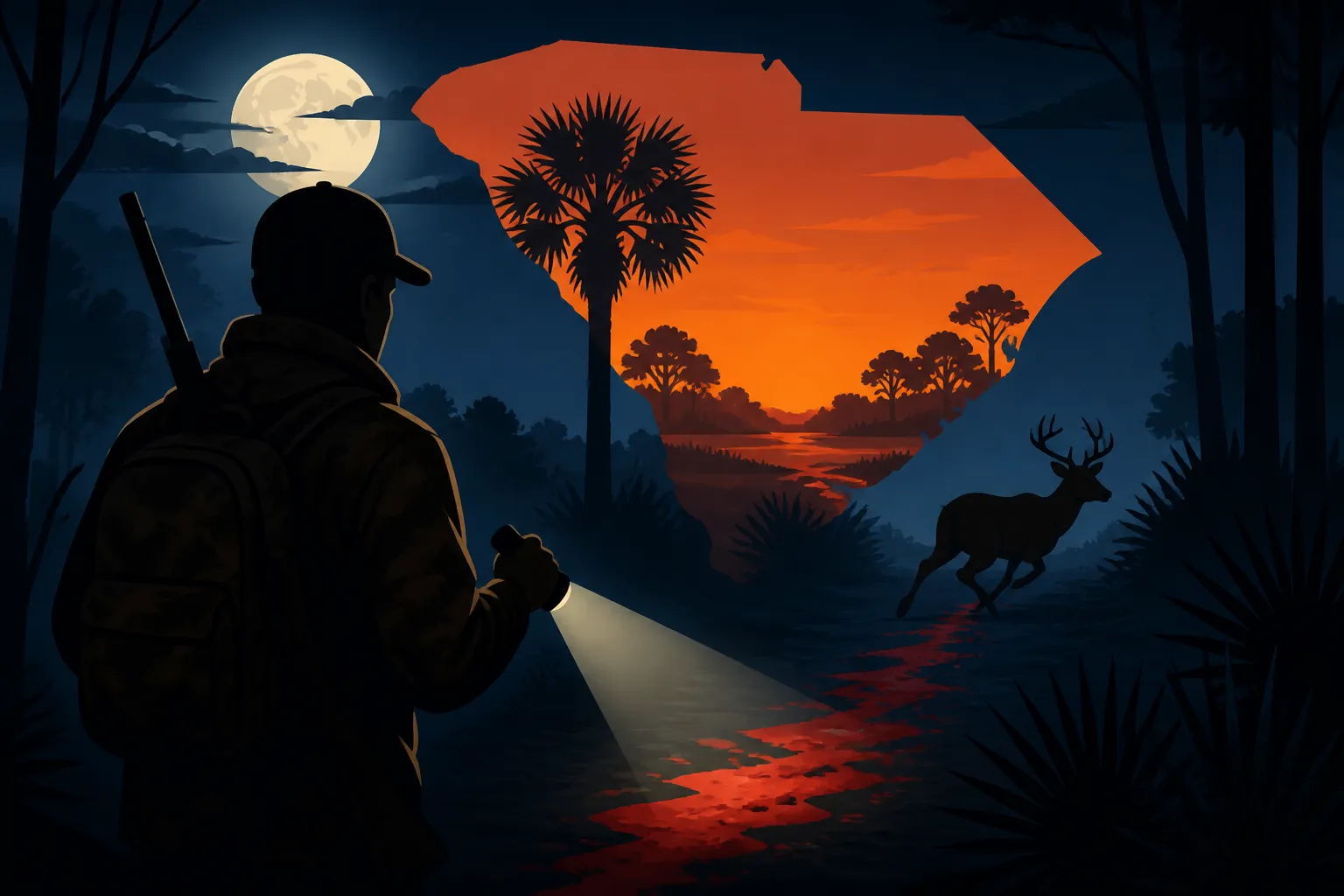
There’s almost nothing more disheartening than making what you thought was a good shot on a South Carolina whitetail, only for the deer to disappear into the fading light, leaving you questioning everything. The sun dips below the horizon, the woods go silent, and you’re left with the gut-wrenching decision: do you push the trail in the dark, or do you wait until morning, risking spoilage or scavengers? This guide is designed to walk you through the complexities, legalities, and practical steps of blood trailing a deer after dark in the diverse landscapes of the Palmetto State.
Navigating the Challenges and Legalities of Night Trailing in South Carolina
The decision to blood trail after dark isn't one to be taken lightly. It's fraught with challenges, from navigating treacherous terrain to ensuring you stay within the bounds of South Carolina's hunting regulations. Understanding both the rules and the risks is your first, most critical step.
Understanding South Carolina's Regulations for Night Trailing
South Carolina’s hunting regulations are designed to ensure ethical hunting practices and game management, and that includes specific rules around when and how you can pursue game. While hunting deer at night is strictly prohibited, the act of retrieving a legally shot animal is generally viewed differently. The South Carolina Department of Natural Resources (SCDNR) allows hunters to use a light strictly for tracking wounded game after legal shooting hours. This is a crucial distinction. Your intent must be to recover a deer that was shot during legal hunting hours, not to hunt.
It's absolutely paramount that you do not carry a firearm with the intent to harvest another animal or dispatch the wounded animal if you're out of legal shooting hours. If you anticipate needing to dispatch a deer that is still alive but wounded, you might consider bringing a partner who has a valid concealed carry permit and is only carrying a handgun for personal protection, or, better yet, rely on a permitted tracking dog handler who can sometimes dispatch the animal under their specific permit if it's wounded and suffering. Always confirm specific rules with a local game warden if you’re unsure, especially when on Wildlife Management Areas (WMAs), where rules can be more stringent. For instance, South Carolina WMA Permit Requirements can sometimes include additional restrictions not found on private land. Violating these regulations can lead to significant fines, loss of hunting privileges, and even confiscation of equipment, so tread carefully and always err on the side of caution.
Safety First: Navigating the Woods at Night
The South Carolina woods, whether it's the thick Lowcountry swamps, dense pine plantations, or the rugged Upstate mountains, transform into an entirely different beast after dark. Visibility plummets, and familiar landmarks disappear. This dramatically increases the risk of accidents.
- Trip Hazards: Hidden roots, fallen logs, old fence wire, sudden ditches, and even changes in elevation can easily lead to a stumble or fall. A twisted ankle or worse, deep in the woods at night, can quickly turn a stressful situation into a dangerous one.
- Wildlife Encounters: While deer are your target, you're not the only creature moving around. Coyotes, bobcats, and even black bears (especially in the Upstate) are active at night. More immediately, venomous snakes like rattlesnakes and copperheads are often more active during cooler nights, particularly in the warmer months. Snake boots are a wise investment if you're frequently in areas known for snakes.
- Other Hunters: While unlikely to encounter another hunter actively hunting after legal hours, there's always a chance someone else might be out recovering their own game, or perhaps engaging in illegal activity. Wearing blaze orange, even when just trailing, is a good idea to ensure you're visible if someone else is around, though it might not be legally required after hours if you're not hunting. Refer to South Carolina Blaze Orange Requirements for specific guidelines.
- Terrain Challenges: The Lowcountry’s swamps can become impassable water hazards, while the pine straw of the Sandhills can be incredibly slippery. Upstate ridges, as you might experience when Reading a Ridge for Upstate Deer, have steep drop-offs and rocky terrain that are difficult enough in daylight. Always go with at least one partner who knows your general location and has a fully charged phone. Inform someone not with you of your plans and expected return time.
Essential Gear and Preparation for a Successful Night Trail
A successful night trail isn't just about perseverance; it's about being prepared with the right tools and a clear strategy. Just as you wouldn't head into the woods for a hunt without your essential rifle setup, you shouldn't embark on a night recovery without critical gear.
Lighting Up the Trail: Headlamps and Flashlights
When the sun goes down, your eyes alone won't cut it. You need reliable, powerful light sources.
- Headlamps: These are non-negotiable. A good headlamp frees up your hands for marking the trail, holding your weapon (if you're still within legal shooting hours and only recovering), or navigating difficult terrain. Look for headlamps with at least 500-1000 lumens for good illumination. Features like a red light option can preserve your night vision, which is useful for brief moments of darkness or when checking your phone, without blowing out your natural low-light adaptation.
- Handheld Flashlights: A powerful handheld flashlight with a tight, focused beam is an excellent complement to your headlamp. It allows you to spotlight distant areas, penetrate thick brush, and identify subtle blood signs that a broader headlamp beam might miss. Many trackers swear by handheld lights in the 1500-2500+ lumen range. Streamlight and Fenix are popular brands known for their durability and intense beams.
- Battery Life and Backups: Always, always, always carry spare batteries or a portable power bank for rechargeable lights. A dead light in the middle of a deep swamp is a nightmare scenario. Consider a backup mini-flashlight in your pack as well.
Marking the Path and Staying Oriented
Even with good light, the woods can be disorienting in the dark. You'll need a system to ensure you don't lose the trail or get lost yourself.
- Trail Markers: Flagging tape is the traditional choice, but biodegradable options like toilet paper are also effective and less intrusive on public land. The key is to mark every piece of significant blood, every broken twig, or every scuff mark. Place markers frequently enough so you can always see the previous one. This methodical approach, often used when Tracking a Deer Through South Carolina Pine Straw, prevents you from losing your way if the blood trail suddenly vanishes.
- GPS and Mapping Apps: Your smartphone, equipped with a reliable mapping app, is an invaluable tool. Apps like GoHunt or onX Hunt allow you to drop waypoints every time you find blood or a significant sign. This creates a virtual breadcrumb trail that you can follow backward if needed, or use to guide you back to your starting point. These apps also display property lines and public land boundaries, which is crucial if you need to know if your trail is crossing onto land where you don't have permission. The Using the Go Outdoors SC App can also provide useful mapping information, especially for WMA boundaries. Always download offline maps before heading out, as cell service can be spotty in many parts of South Carolina, particularly in national forests like Sumter or Francis Marion.
- Traditional Navigation: While apps are fantastic, a good old-fashioned compass and a physical map are excellent backups. Knowing basic land navigation can save you if your phone dies or gets damaged. Pay attention to major features like roads, creeks, or power lines that can serve as reliable guides.
Other Must-Have Gear and Personnel
Beyond lights and navigation, a few other items can make or break your night trailing success.
- First-Aid Kit: This should be a standard part of any hunt, but it's even more critical at night. Scratches, cuts, and potential snake bites are real risks. Pack essentials like bandages, antiseptic wipes, pain relievers, and any personal medications.
- Water and Snacks: Staying hydrated and fueled is important for maintaining focus during a long, stressful night.
- Warm Clothing: Even on warm South Carolina evenings, temperatures can drop significantly after dark, especially in the late season. Having an extra layer, even a light jacket, can prevent you from getting uncomfortably cold and distracted. Consider this when planning your Warm-Weather Sitting Strategy in South Carolina.
- Knife and Small Saw: For field dressing, or clearing small branches that obstruct your path.
- A Tracking Dog (and Handler): This is perhaps the ultimate asset for night trailing, and one that is fully legal in South Carolina. There are many licensed, professional tracking dog services across the state. These dogs, often breeds like Laczys, Bavarian Mountain Hounds, or Bloodhounds, are specifically trained to follow cold blood trails, even those many hours old. Their noses can pick up scent long after human eyes give up. Hiring one significantly increases your odds of recovery. If you know you've made a questionable shot, contacting a tracking dog handler immediately is often the best course of action. They can advise you on waiting times and what steps to take or avoid before their arrival.
| Feature | Headlamp | Handheld Flashlight | Spot/Scan Light | Thermal Imager (for recovery) |
|---|---|---|---|---|
| Primary Use | Hands-free illumination, general trail | Detailed blood sign, penetrating brush | Long-distance scanning, identifying animals | Locating warm body heat (deer), tracking dogs |
| Lumen Range | 500-1500+ | 1000-3000+ | 2000-5000+ | N/A (measures heat, not visible light) |
| Beam Type | Wide flood, often with spot mode | Focused spot with some spill | Very tight, intense spot | Heat signature, can "see" through light cover |
| Battery Life | 4-10 hours (depending on mode) | 2-6 hours (depending on mode) | 1-3 hours (high power) | 4-8 hours (depending on model) |
| Pros | Hands-free, essential | Powerful, versatile, good for detailed work | Excellent for distant scanning, covering ground | Can find deer others miss, great for follow-up |
| Cons | Limited range for distant scanning | Requires one hand, can be tiring to hold | Heavy, shorter battery life, expensive | Very expensive, legal ambiguity for deer recovery |
| Recommendation | Must-have | Highly recommended | Good for larger areas/public land | Check legality, expensive, but powerful |
Note: Always verify the legality of thermal imaging for deer recovery with SCDNR directly, as laws can change and interpretations vary.
Mastering the Art of Night Trailing
Once you're geared up and ready, the actual act of blood trailing after dark requires patience, keen observation, and a systematic approach. It's a mental game as much as a physical one.
Interpreting Blood Sign Under the Cover of Darkness
Blood looks different under artificial light. It can appear black, purple, or even have a metallic sheen, especially when wet. This is where a powerful, crisp white light becomes invaluable.
- Color and Consistency: Bright red, frothy blood often indicates a lung shot, offering the best chance for a quick recovery. Darker, thicker blood without bubbles can point to a liver shot. Greenish material or stomach contents mixed with blood signals a gut shot – a scenario where backing out for at least 6-8 hours, or even until morning, is usually the best course of action. Small, watery specks suggest a muscle hit or a graze.
- Spread and Pattern: The pattern of the blood trail tells a story. Consistent drips at regular intervals mean the deer is walking. Smeared blood on both sides of the trail suggests the deer is stumbling or dragging a leg. Blood on brush at waist height can indicate an entry or exit wound high on the body, or the deer is running with its head down.
- Other Clues: Don't just focus on blood. Look for disturbed leaves, scuff marks from hooves, broken twigs, or even hair. Patches of hair can tell you where the deer was hit (dark body hair vs. white belly hair) and how deep the wound penetrated (short, broken hairs often mean a superficial hit, while long, intact hairs can indicate a deep, glancing blow). When Reading South Carolina Mud for Fresh Deer Movement, pay attention to how the mud is disturbed.
The mantra for night trailing is slow and methodical. Don't rush. Take three steps, scan the ground in front of you, mark any sign, then repeat. If you lose the trail, stop immediately. Go back to the last confirmed blood sign and search in a grid pattern. Expand your search outward in circles until you pick it up again. Rushing usually means you'll miss crucial signs and get further off track.
The Critical First Hour and When to Back Out
The decision to immediately trail or wait is often the hardest.
- Waiting is Key for Marginal Shots: If your shot felt marginal (gut, leg, or unknown), the absolute best thing you can do is back out and wait. A deer, especially one that is gut-shot, will often bed down nearby if not pushed. If you push it, it will keep running, often for miles, making recovery nearly impossible. For a suspected gut shot, waiting 6-8 hours, or ideally until morning, is usually recommended. Even for a seemingly good shot, if you hear the deer crash but then hear it get up again, give it at least an hour or two to expire or bed down. This patience is often the difference between recovery and a lost deer. This applies to both Tracking a Deer Through South Carolina Pine Straw and through heavier cover.
- Factors to Consider for Waiting:
- Weather: If rain is imminent, you might have to push the trail harder to find the deer before the rain washes away the blood.
- Temperature: In warm South Carolina weather, especially during the early archery season in August and September, spoilage is a major concern. If temperatures are above 50-60°F and you suspect a marginal shot, you’re in a tough spot. You might need to risk pushing the deer to prevent spoilage, or accept a higher risk of losing the deer if you wait. Consider using Coolers and Game Bags for a South Carolina August as soon as possible after recovery.
- Predator Activity: Coyotes are ubiquitous in South Carolina, and they're quick to scavenge. If you know there's high coyote activity in the area, this might influence your decision to wait, but the risk of pushing a deer and losing it forever often outweighs the risk of some predation.
- When to Call it a Night: If you've spent hours on a faint trail, covered significant ground, and haven't found a single new drop of blood for an extended period, it's often best to call off the search for the night. Mark your last known blood sign with GPS and plenty of flagging tape. Return at first light with fresh eyes and renewed determination. Don't let exhaustion or frustration lead to a reckless decision or getting yourself lost.
Recovering Your Deer and Post-Recovery Steps
Congratulations, you found your deer! The work isn't over yet.
- Field Dressing in the Dark: This can be challenging. A bright headlamp is essential. Work meticulously to ensure cleanliness, especially if you're on uneven ground. Get the entrails out quickly to start the cooling process. For tips, revisit Field Dressing a Deer in Warm Weather.
- Getting it Out: Whether you're in a Lowcountry swamp or on an Upstate ridge, getting a deer out in the dark is tough. If you're alone, dragging can be exhausting. A deer cart, particularly useful on relatively flat Coastal Plain ground as discussed in Deer Carts for Coastal Plain Ground, can be a lifesaver. If you have a partner, they can help with the drag or carry equipment.
- Game Check Requirements: Once the deer is recovered, you must report it to SCDNR via the Game Check system. This is a crucial step for game management and a legal requirement for all deer harvested in South Carolina. For detailed instructions, refer to South Carolina Deer Reporting Requirements. You can typically do this via the Go Outdoors SC website or app.
- Meat Care: Even after field dressing, the warm South Carolina nights can accelerate spoilage. Get the deer cooled down as quickly as possible. Hang it in a cool, well-ventilated area, or ideally, get it quartered and into coolers with ice.
Advanced Tips and Techniques for Tough Trails
Sometimes, even with the best preparation, a trail can be nearly impossible. This is where advanced tools and external help come into play.
Utilizing Technology for Recovery
While the focus is often on traditional methods, modern technology offers some powerful aids.
- Thermal Optics: Thermal imagers detect heat signatures. While generally prohibited for hunting deer, their use for recovery of legally wounded game is a developing area in state regulations. Some states explicitly allow it, others are silent. In South Carolina, the regulations around thermal for deer recovery specifically are not as clear-cut as for feral hogs (where it is allowed for hunting at night on private land). If you own one, it can potentially locate a deer that has expired or is bedded, by detecting its body heat. Always check the most current SCDNR regulations or contact a game warden to confirm legality for your specific situation. Using a thermal could potentially cut down on search time, especially in dense cover where a deer might be lying just out of sight.
- High-Lumen Spotlights: Beyond your personal headlamp and handheld, a large, powerful spotlight (like those used on boats or trucks) can be mounted on a vehicle (if accessible) or used by a stationary partner to scan large areas. This can illuminate distant cover or fields that you can't reach on foot immediately.
- Two-Way Radios: For larger search parties, or if you're working a grid pattern with partners, two-way radios (or even walkie-talkie features on some hunting apps) can maintain communication without relying on cell service. This is especially helpful if you're trying to communicate with a tracking dog handler who might be a significant distance away.
The Role of Tracking Dogs
As mentioned, tracking dogs are a game-changer for difficult trails.
- Professional Services: Many individuals and small businesses across South Carolina offer professional wounded deer tracking services. These handlers are often licensed and insured, and their dogs are highly trained. They understand the nuances of various shots, terrain, and weather conditions.
- Benefits: A good tracking dog can pick up a cold trail hours after a shot, navigate through swamps, dense briars, and across streams, and follow a faint scent that no human eye could ever detect. They are particularly effective for gut-shot deer that have bedded down. Many times, a dog will find a deer only a hundred yards or so from where the hunter gave up, simply because the deer went into impenetrable cover.
- Finding a Service: A quick online search for "South Carolina deer tracking dogs" or "wounded deer recovery SC" will usually yield a list of local handlers. It's a good idea to have a few numbers saved in your phone before opening day. Many handlers also offer advice over the phone about when to call them in and how to avoid contaminating the trail before their arrival.
Remember, blood trailing after dark in South Carolina is an intense experience, but with proper preparation, adherence to regulations, and a methodical approach, you can significantly increase your chances of a successful and ethical recovery.
Disclaimer
The information provided in this article is for general guidance and informational purposes only. Hunting regulations, laws, and best practices can change. Always consult the most current South Carolina Department of Natural Resources (SCDNR) regulations and guidelines before hunting or attempting to recover game. It is the individual hunter's responsibility to know and obey all applicable laws. We are not liable for any actions taken based on the information presented herein.