Reading South Carolina Mud for Fresh Deer Movement
Finding deer in South Carolina's diverse landscapes, from the thick Lowcountry swamps to the rolling Upstate ridges, can feel like searching for a needle in a haystack, especially when they're not actively moving. One of the most overlooked yet consistently reliable indicators of recent deer activity is the subtle language written in the mud. This comprehensive guide will teach you how to read South Carolina's varied muddy terrains to pinpoint fresh deer movement and vastly improve your scouting success.
The Subtle Language of South Carolina Mud
The ground beneath your boots, especially after a rain or near water sources, is a natural canvas recording every step a deer takes. Ignoring this valuable intel is like throwing away half your scouting map. South Carolina's soil varies dramatically, from the rich, silty loam of the Pee Dee river bottoms to the sandy compositions near the coast and the more rocky, clay-heavy soils of the mountains. Each type of mud tells a slightly different story, but all offer undeniable proof of a deer's presence, often mere hours old.
Why Mud is a Goldmine for Hunters
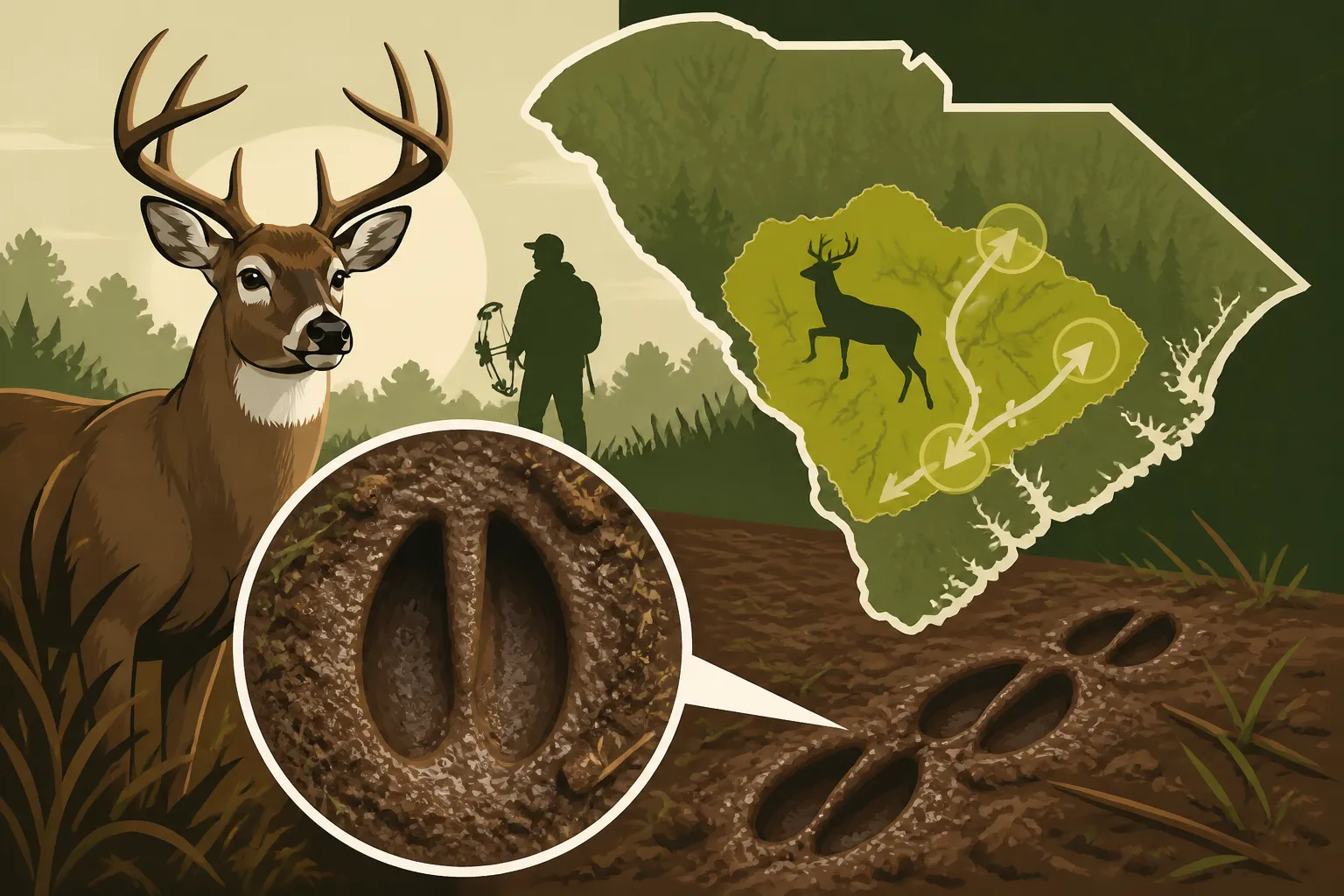
Think about it: a fresh track in soft mud is indisputable evidence. It's not a rub from last week, nor droppings from a day ago that have already hardened. A clear, crisp track pressed into moist soil signifies a deer has passed through very recently, sometimes just minutes before you arrive. This immediacy is what makes mud such a goldmine. It confirms not just presence, but current patterns. You can infer direction of travel, speed, and even get a sense of the deer's size and age based on track dimensions and depth. In areas where vegetation is thick and visibility is low, like many of our prime deer habitats, mud sign can be your most reliable eye on deer activity, revealing corridors and feeding spots you might otherwise miss.
Understanding Different Mud Types
South Carolina's soil composition dictates how well tracks are preserved and what details they reveal. Knowing these differences is key to accurate interpretation.
- Sandy Loam: Common in many parts of the Midlands and coastal plain, sandy loam holds tracks fairly well, offering clear outlines. However, it can dry out quickly, causing tracks to lose definition. A track in moist sandy loam is usually very recent. If it's starting to crumble at the edges, it's a bit older.
- Clay-Heavy Soils: Found more in the Upstate and some river bottoms, clay retains incredibly detailed prints. You can often see the distinct outline of the hoof, sometimes even a slight impression of hair around the edges if the mud was very soft and the deer was moving slowly. Clay-heavy mud also dries slowly, meaning tracks can remain visible and somewhat 'fresh' for longer periods, especially in shaded areas. This is where you might find your best, most photographic evidence of a big buck.
- Swampy Muck/Silt: Abundant in the Lowcountry, this type of mud often borders creeks, rivers, and permanent water sources. These areas are fantastic for finding sign because deer are almost guaranteed to pass through them. Tracks in deep muck will often splay out, and the dewclaws will almost always register, giving you a better idea of a deer's weight and size. However, the constant moisture can also make it harder to judge age, as tracks might remain "wet" for longer, even if they're a day or two old. You'll often be Hunting Lowcountry Swamp Deer in these conditions, so mastering this is critical.
- Roadside Ditches & Logging Roads: These human-made disturbances often collect water and form muddy sections, acting as natural logbooks for passing wildlife. The compacted soil of a logging road might not always offer deep prints, but softer patches and ditch edges will. These are invaluable travel corridors for deer, especially on public lands like Francis Marion National Forest or Sumter National Forest, providing easy-to-read strips of earth.
Deciphering Deer Tracks and Other Sign in Mud
Once you understand the canvas, it's time to learn the script. Distinguishing fresh deer tracks from older ones and identifying other associated signs is an art that comes with practice, but there are clear indicators to guide you. The goal isn't just to find a track, but to find the right track – one that informs your hunting strategy for the current season.
Key Characteristics of Fresh Deer Tracks
The real skill lies in judging the recency of a track. Here's what to look for:
- Sharp, Defined Edges: A fresh track will have crisp, clean edges, almost as if it was just stamped. As time passes, especially with exposure to sun, wind, or light rain, these edges begin to soften, crumble, or blur. Think of it like a freshly baked cookie versus one left out overnight.
- Moisture Content: If the mud inside the track is noticeably wetter or glossier than the surrounding, undisturbed mud, it's likely very fresh. This is especially true if you find it in a shaded area or early in the morning. As the track ages, the mud inside will dry at a similar rate to the surface around it.
- Lack of Debris: A brand-new track will be free of leaves, pine needles, or small twigs that haven't had time to fall into it yet. Even tiny spiderwebs stretched across the track are a sign of age.
- Dewclaw Marks: On larger, heavier deer, or when deer are moving quickly (like a bound or jump), or in deep, soft mud, the dewclaws will often register as two small, often crescent-shaped indentations behind the main hoof print. If you see deep dewclaw marks, especially on a regular gait, it indicates a larger, heavier animal. The clearer and more defined these are, the fresher the track.
- Overlapping Tracks (Rare but Key): Occasionally, you might find a deer's hind foot perfectly landing in the impression made by its front foot, a sign of a calm, walking gait. If these are fresh, it indicates relaxed movement through the area, possibly from a bedding area to a feeding location.
To put it into perspective, here's a quick comparison:
| Characteristic | Fresh Track | Older Track |
|---|---|---|
| Edges | Crisp, sharp, well-defined | Rounded, crumbled, blurred, less distinct |
| Moisture | Often wetter/shinier inside than surrounding mud | Dried to match surrounding mud, duller appearance |
| Debris | Free of leaves, twigs, spiderwebs | May contain fallen leaves, twigs, or insect activity |
| Dewclaws | Clear, distinct, especially in soft mud or turns | Less defined, might be filled with debris, or absent |
| Mud Integrity | Intact, no cracks or erosion | May show small cracks from drying, eroded by light rain |
Beyond Tracks: Other Mud Indicators
While tracks are primary, deer leave other tell-tale signs in muddy environments that enhance your scouting picture.
- Mud on Vegetation: If you find mud smeared on low-hanging branches or brush along a trail, it's a strong indicator of a deer having recently brushed past. This is especially common along creek banks or Hunting a Funnel Between Two Swamps, where deer have to squeeze through tight spots. The freshness of the mud smear, its stickiness, and whether it's still damp will tell you how recent the passage was.
- Browse and Droppings: Fresh droppings near muddy areas, especially if still soft and moist, confirm recent feeding or passing through. Combined with tracks, this paints a very clear picture. Similarly, freshly nipped browse on saplings or bushes, especially if you see the slight tearing action characteristic of deer, will reinforce that deer are actively using that muddy path. Look for these alongside primary trails.
- Rubs and Scrapes near Mud: While not directly in the mud, fresh rubs on trees near muddy trails or water crossings are powerful indicators. Bucks often mark these areas. If you find a fresh rub with wood shavings still light and moist, and a muddy track leading right to it, you've hit the jackpot. Similarly, a fresh scrape, especially one where the bare earth is still moist from being pawed and has a fresh, pungent scent, indicates a buck actively working that area. These are particularly important during Hunting the Rut in the Coastal Zones or other rut periods.
Where to Find and Apply Mud-Reading Techniques
South Carolina's varied landscape means you'll encounter mud-rich environments across all four game zones. Knowing where to focus your efforts for prime mud sign is just as important as knowing what to look for.
Prime Mud-Collecting Areas in South Carolina
Deer are creatures of habit, and their habits often lead them to or through muddy areas.
- Creek Crossings and River Bottoms: This is perhaps the most obvious and productive spot. Deer frequently cross creeks and rivers at specific points, creating well-used muddy trails on the banks. The low-lying, often shaded nature of these areas means mud stays wet longer. Focus on bends in the creek, narrow crossings, or areas where the bank is less steep. The Pee Dee River bottomlands, for example, are notorious for producing excellent mud sign.
- Swamp Edges and Transition Zones: The vast swamps of the Lowcountry, like those near the ACE Basin or Wambaw Swamp, are natural deer magnets. Deer often skirt the edges of deeper water or use slightly higher ground within the swamp. The transition zones where dry land meets wet bog are perpetually muddy and offer clear travel corridors. Learning Where Francis Marion Bucks Bed often involves understanding these watery boundaries.
- Logging Roads and Utility Cuts: As mentioned, logging roads and powerline cuts collect water in low spots and create long, linear strips of exposed earth. Deer use these for easy travel, and the mud becomes a perfect ledger. Look for muddy puddles or soft sections, especially at intersections or where the road crosses a small drain.
- Field Edges and Entry Points: After a rain, the soft earth along the edge of a planted field (soybeans, corn, clover) or a food plot will record every deer's entry and exit. These are crucial spots for evening hunts. Pay close attention to corners or narrow sections where deer are naturally funneled. You might find tracks indicating deer are using specific Entry Routes Through Standing Soybeans into feeding areas.
- Around Water Holes or Ponds: In drier periods, any remaining mud around a stock pond, slough, or natural seep will be heavily used by deer coming to drink. These "community scrape boards" for deer tracks can show you the overall population density and recent activity.
Integrating Mud Reading with Your Scouting Strategy
Mud reading isn't a standalone technique; it's a vital component of a comprehensive scouting strategy.
- Pre-Season Scouting: Before the season even opens, hit those prime mud spots. This gives you an understanding of historical travel patterns and what caliber of deer are in the area. Combine this with aerial maps using tools like GoHunt to identify potential funnels or pinch points that might naturally have muddy crossings. GoHunt's satellite imagery can help you pinpoint those low spots or drainages that hold water and, consequently, good mud.
- Post-Rain Reconnaissance: A fresh rain is your best friend. Within 12-24 hours after a significant rainfall, get out there. The mud will be soft, and any tracks you find will be incredibly fresh. This is the optimal time to confirm current deer movement.
- Day-of-Hunt Adjustments: Even on the day you hunt, a quick check of a nearby muddy crossing or field edge can inform your setup. If you find super fresh sign, you know you're in the right neighborhood. If you’re not seeing much, it might be time to consider a different location or tactic, perhaps adjusting your Warm-Weather Sitting Strategy in South Carolina to another proven travel route.
- Trail Camera Placement: Mud tells you where deer are moving. Placing a trail camera overlooking a consistently muddy game trail or crossing is almost guaranteed to get you pictures. The tracks tell you they were there; the camera tells you when and what exactly was there. Using a mapping tool like GoHunt to drop pins where you find good sign helps you track activity over time.
- Understanding Pressure: On public lands, especially during busy times, fresh boot prints in the mud can tell you if a spot has been heavily pressured. If you find human tracks overlapping deer tracks, you might need to adjust and Find Ground Others Walk Past – a crucial skill when Scouting South Carolina Public Land Before Season.
Overcoming Challenges and Maximizing Your Scouting
Like any scouting method, mud reading has its nuances and challenges. Learning to navigate these will make you an even more effective hunter.
Dealing with Environmental Factors
South Carolina's weather can be unpredictable, impacting how long mud sign lasts.
- Heavy Rain: While rain creates fresh mud, too much rain can wash away tracks entirely, or blur them beyond recognition. After a deluge, you might need to wait for the water to recede slightly and then look for areas where the ground has just started to dry to a consistency that will hold a track.
- Dry Spells: During prolonged dry periods, mud can become scarce. This is when focus shifts to the few remaining moist areas: deep creek beds, spring seeps, or around agricultural irrigation points. In these conditions, even slightly less defined tracks become more valuable because they're the only sign available. When the ground is hard, you might need to rely more on rubs, scrapes, and browse.
- Leaf Litter: In areas with heavy leaf litter, especially after oak trees drop their leaves, tracks can be obscured. You’ll need to kick around leaves in likely travel corridors or look for areas where the leaves have been visibly disturbed by a passing deer. Logging roads and field edges tend to be clearer.
Tech Tools for Tracking
Modern technology can significantly enhance your mud-reading efforts.
- Mapping Applications: GPS mapping apps like GoHunt are invaluable. Use them to mark every promising track, rub, or scrape you find. Over time, you'll build a comprehensive map of deer activity. You can differentiate between buck and doe tracks (if identifiable) and use different pins for each. This allows you to visualize travel corridors, pinpoint bedding areas relative to feeding zones, and understand how deer use the terrain. GoHunt's satellite imagery can help you identify subtle changes in elevation that might lead to muddy low spots, even from your couch.
- Weather Apps: Always check the forecast. Knowing when the next rain is coming allows you to plan your scouting trips strategically for optimal mud conditions. A good weather app can also give you wind direction, which is critical when approaching potential bedding areas you've identified through mud sign, so you don't blow your cover. Remember, Wind and Thermals on an Upstate Ridge are just as important as the tracks themselves.
- Camera Phones: Don't hesitate to take pictures of tracks and other sign. This helps you remember what you found, compare different tracks, and can even serve as a reference point for future scouting trips. Zoom in on the details, like dewclaws or edge crispness.
By combining diligent on-the-ground observation of South Carolina's mud with smart use of available technology, you'll develop an unparalleled understanding of local deer movement. This deeper insight will not only make you a more successful hunter but will also foster a profound connection to the wild places we cherish.
Disclaimer
Hunting and scouting activities carry inherent risks. Always prioritize safety, understand and adhere to all South Carolina Department of Natural Resources (SCDNR) regulations, and respect private property. This guide is for informational purposes only and does not substitute for official hunter education or direct experience in the field.