Deer Carts for Coastal Plain Ground
Dragging a deer out of the South Carolina Coastal Plain can be an absolute nightmare, turning what should be a triumphant moment into a grueling, sweat-soaked ordeal. You’ve put in the scouting, made the shot, and now you’re staring down a mile or more of thick palmettos, sandy trails, muddy cypress knees, and maybe even a creek crossing, all while the humidity hangs heavy in the air. This guide is all about finding smarter ways to get your hard-earned venison back to the truck, specifically focusing on how deer carts can be your best friend in this challenging environment.
The Unique Challenges of the Coastal Plain Drag
Let's be real: South Carolina's Coastal Plain isn't exactly known for its open, flat terrain, especially when you're hunting deer. It's a beautiful, wild place, but it demands specific strategies for game recovery. For many hunters, the thought of dragging a mature whitetail through this landscape is enough to make them reconsider their stand location.
Navigating Soft Sands and Boggy Soils
If you've spent any time hunting the Lowcountry or the Pee Dee regions, you know that the ground underfoot can change dramatically within a few hundred yards. One minute you're on relatively firm, pine-straw-covered ground, and the next you're sinking into soft, sugar-sand roads or worse, hitting a patch of boggy, mucky soil near a creek bottom. These conditions are brutal for dragging a deer directly. The deer’s hide catches on every imperfection, and its weight sinks into the soft earth, effectively creating its own brake. Even if you've done your homework on Reading a Tidal Creek for Deer Movement or found a perfect Setting Up on a Lowcountry Field Edge, the exit strategy is where many hunts go sideways.
Imagine trying to pull a 150-pound buck through a foot of loose sand. Your feet sink with every step, the deer plows a furrow, and you quickly realize you’re expending twice the energy for half the progress. Now add in the humidity that makes every movement feel like a workout, even in cooler months. This isn't just about strength; it's about physics and pure exhaustion. When the ground turns truly boggy, near those cypress swamps or rice field edges, a traditional drag is often impossible without a team of strong backs, and even then, it's a monumental struggle to keep from getting stuck.
Battling Thick Undergrowth and Downed Timber
Beyond the soil conditions, the Coastal Plain is often defined by its incredibly dense vegetation. We're talking about areas choked with saw palmettos, gallberry bushes, switch cane, and thick briar patches that seem designed to snag every piece of gear you own. Trying to drag a deer through this kind of cover means it's constantly getting caught, tangled, and requiring you to stop, lift, and redirect. It’s a slow, painstaking process that wears on your patience and your body.
Picture trying to pull a deer with antlers through a stand of chest-high palmettos. Those sharp fronds grab onto the deer's coat, the antlers become anchors, and you're fighting not just the weight but a thorny, unforgiving jungle. Even seemingly clear paths can quickly devolve into a tangle of downed pine limbs or thickets from a previous timber cut. These obstacles often force you to lift the deer over or around them, an exhausting maneuver that's almost impossible to do gracefully, especially if you're hunting alone. This is where the sheer frustration sets in, and you start wishing you had a lighter, more maneuverable solution.
Why a Deer Cart Makes Sense Here
Given the unique challenges of the Coastal Plain, it’s no wonder so many hunters turn to deer carts. They aren't a magical solution, but they significantly reduce the friction and effort involved in game recovery.
Reducing Friction and Distributing Weight
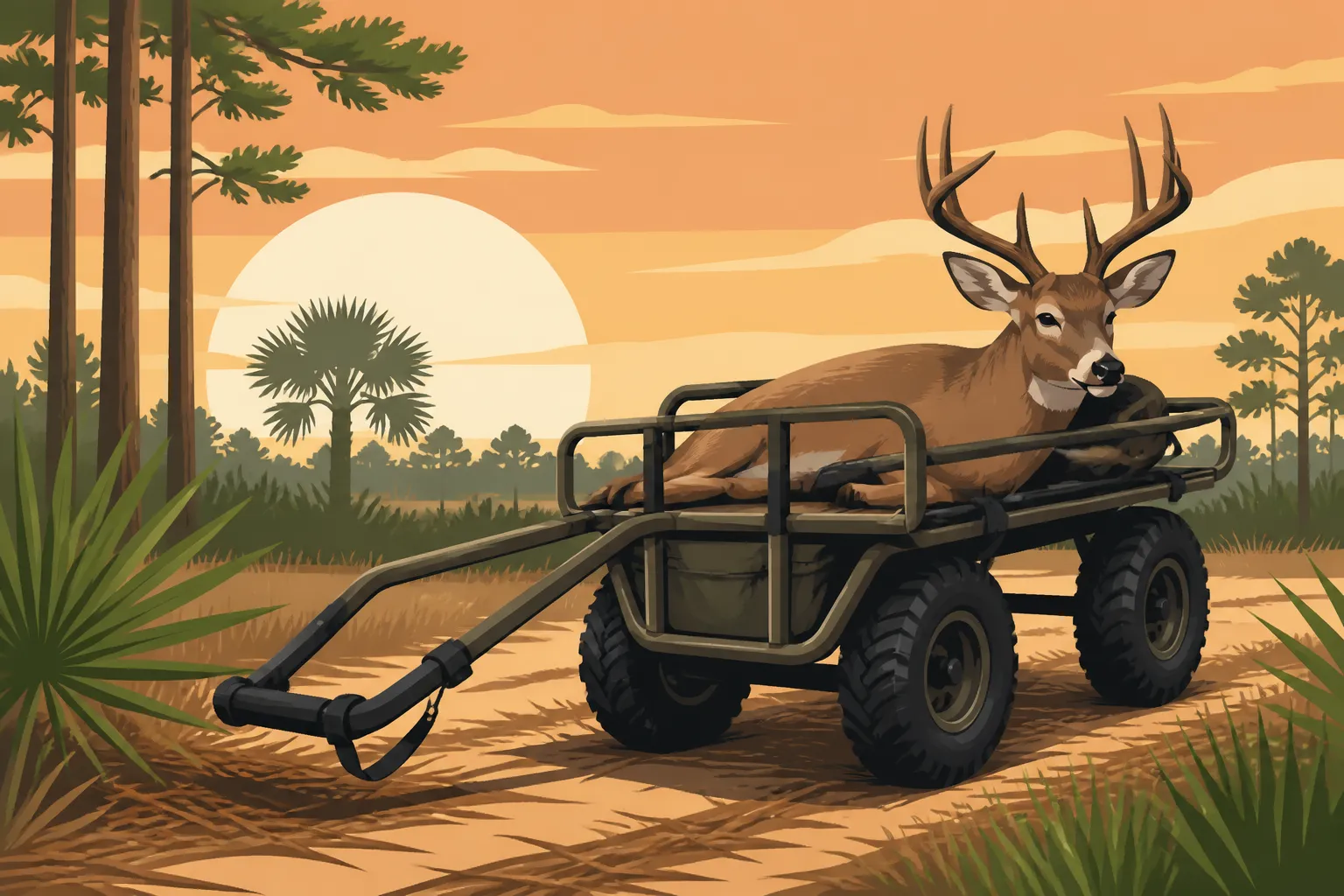
The fundamental benefit of a deer cart is simple: wheels. Instead of dragging a heavy, friction-laden carcass directly on the ground, a cart lifts the deer, placing its weight onto axles and tires. This dramatically reduces the physical effort required to move the animal, especially over those soft sands and through tangled brush. It’s the difference between pushing a box across the floor and putting it on a dolly.
When you're pulling a deer on a cart, the weight is distributed over the wheels, which roll more easily over uneven terrain than a deer's hide slides. This means you’re fighting significantly less friction, allowing you to cover ground much faster and with less energy expenditure. In a humid South Carolina August or early September hunt, where every calorie counts, this difference can be monumental. It allows you to focus your energy on navigating, not on brute force. A good cart effectively multiplies your pulling power, making a solo recovery much more feasible, even with a larger buck. When considering Hunting a Funnel Between Two Swamps or Hunting Coastal Maritime Forest Edges, having a plan for egress that includes a cart can be a game-changer.
Navigating Obstacles More Efficiently
While no cart will magically float over every obstacle, the right model designed for rough terrain can make navigating the Coastal Plain much more efficient. Instead of lifting and dragging a deer over every log or through every thicket, a cart allows you to roll over many smaller obstructions or, for larger ones, pivot and lift just the cart's end to clear it.
A cart with larger wheels and good ground clearance can often roll right over fallen limbs, roots, and smaller palmetto clumps that would completely stop a direct drag. When you encounter a significant obstruction, like a large downed tree or a deep ditch, you can often tip the cart up, lifting one end of the deer over, then pulling the other end through. This is still work, but it’s far less strenuous than manhandling the entire deer. It also protects the hide and the meat from unnecessary scrapes and dirt, which is always a plus for Field Dressing a Deer in Warm Weather. The cart acts as a leverage point, making those difficult maneuvers achievable with one or two people, where before it might have required four.
Types of Deer Carts for the Coastal Plain
When you start looking at deer carts, you'll quickly realize there's a variety of designs out there. For the specific demands of the South Carolina Coastal Plain, some types are definitely better suited than others.
Single-Wheel Carts
Single-wheel carts, often resembling a large wheelbarrow with a deer strapped on top, are designed for extreme maneuverability in tight quarters. They excel where space is at a premium, like navigating dense timber or weaving through very narrow trails.
| Feature | Pros | Cons |
|---|---|---|
| Maneuverability | Excellent for tight trails, dense brush, and weaving through trees. Can navigate very narrow gaps. | Requires constant balancing, especially with heavy loads, making it physically demanding over long distances. |
| Stability | Poor when stationary; needs to be held or propped up. Can tip easily on uneven ground if not balanced. | Good when moving, but requires skill to keep upright, particularly on side slopes. |
| Terrain | Works well on relatively smooth but narrow paths. Less ideal for very rocky or root-filled terrain. | Can get bogged down in deep sand or thick mud if the single wheel digs in. |
| Loading | Can be more awkward to load solo due to the balancing act required. | Best loaded with two people for stability. |
While a single-wheel cart might seem appealing for getting through the thickest stuff, the need for constant balancing can quickly become tiresome, especially over the longer distances common on public lands in the Coastal Plain or when moving a heavy animal. Imagine trying to keep a 150-pound deer balanced on a single wheel through a half-mile of pine straw, roots, and small palmettos; it becomes a core workout that might leave you more exhausted than a drag. However, for a hunter who consistently finds themselves deep in truly impenetrable stuff where every inch of width matters, it can be a niche solution. It’s definitely a consideration if your hunting spots are characterized by Finding Ground That Sees Fewer Hunters by being extremely dense.
Two-Wheel Carts
Two-wheel carts are by far the most popular and versatile option, and generally the best choice for most Coastal Plain hunting scenarios. They offer a good balance of capacity, stability, and maneuverability. When you're browsing for gear, perhaps even on sites like GoHunt, you'll see a lot of variation in this category.
Two-wheel carts come in various configurations, from simple frame carts to more robust designs with independent suspension. The key advantage is stability. With two wheels, the cart supports itself, allowing you to take breaks without propping it up and distributing the weight across a wider footprint. This stability is crucial when navigating uneven ground, crossing small ditches, or even just taking a breather. For the soft sands and muddy patches of the Coastal Plain, wider, larger diameter wheels on a two-wheel cart will perform significantly better, helping the cart float over the surface rather than digging in.
When you're trying to Drag a Deer Out of a Swamp, a two-wheel cart with pneumatic tires can be a lifesaver. The air-filled tires offer some shock absorption over roots and logs, and their wider profile helps prevent sinking in softer soils. The ability to push or pull from different angles also makes it easier to maneuver around larger obstacles. Most two-wheel carts are designed to fold down, making them easier to transport in the back of a truck or ATV, which is a huge plus for those long trips to the hunting grounds. For a typical South Carolina deer hunter, this is usually the sweet spot for effectiveness and practicality.
Key Features for Coastal Plain Deer Carts
Choosing the right deer cart means looking beyond just the number of wheels. Several features are particularly important for handling the unique conditions of South Carolina’s Coastal Plain.
Tire Type and Size
This is arguably the most critical feature for Coastal Plain use. The wrong tires will turn your cart into a plow through sand and mud. You want tires that provide flotation and can handle punctures.
Pneumatic (air-filled) tires are generally superior for the Coastal Plain. They offer a softer ride, absorbing bumps and roots, which helps keep the deer stable on the cart and reduces jarring. More importantly, wider, larger-diameter pneumatic tires create a bigger footprint, distributing the weight more effectively over soft ground like sand or mud. Think of it like a fat-tire mountain bike versus a road bike; the fat tires simply float better. Look for tires with an aggressive tread pattern for grip, especially if you anticipate pulling through damp or slightly muddy areas. The downside is the risk of a flat, so carrying a small repair kit or sealant is wise.
Solid rubber tires might seem appealing because they can't go flat, but they offer no shock absorption and tend to be narrower and harder, making them prone to digging into soft ground. They are better suited for very short, firm drags like across a manicured food plot to a nearby truck, not the miles of varied terrain you'll often encounter. If you choose solid tires, ensure they are still quite wide and have a decent diameter to maximize flotation. Many hunters find that for the distances and conditions common in South Carolina, the benefits of pneumatic tires far outweigh the slight risk of a flat.
Frame Material and Construction
The cart's frame needs to be sturdy enough to handle the weight of a mature buck, plus any gear you might strap alongside it, without bending or failing under stress. It also needs to withstand the knocks and scrapes of heavy use in the field.
Aluminum frames are popular for their lighter weight, which is a huge advantage when you’re already exerting yourself. A lighter cart means less total weight to pull. However, ensure the aluminum is a heavy-gauge, high-quality alloy to prevent bending. Good welds and robust joints are key. Lightweight can quickly turn into flimsy if not well-engineered.
Steel frames are typically heavier but often offer superior durability and strength, making them very robust. If you prioritize absolute toughness and don’t mind the extra few pounds, a steel frame might be your choice. Just ensure it's properly coated or painted to resist rust, which is a real concern with South Carolina’s humidity. Regardless of material, look for a frame design that cradles the deer securely and offers multiple tie-down points to keep your trophy from shifting. A cart that folds flat or disassembles easily is also a major bonus for storage and transport, especially if you have to carry it a bit before getting to your game. Packs for a Day on Public Land should also be considered to carry your essentials along with your cart.
Tie-Down Points and Securement
Having a cart is only half the battle; keeping the deer securely on the cart is the other. Without proper tie-down points, your deer will slide, shift, and potentially fall off, turning your recovery into a frustrating wrestling match.
Look for a cart with multiple sturdy attachment points along the frame. These could be welded loops, eyelets, or crossbars. The more points you have, the more options you have for securing the deer. You'll want to use high-quality straps or ropes—ratchet straps are excellent for this—to cinch the deer down tightly. Pay particular attention to securing the head and antlers, as these are often the first parts to snag on brush or shift during transport. A deer cart that includes a mesh or canvas bed can also help prevent smaller items or field-dressing tools from falling through while also providing a base to secure the deer more easily. Some hunters even add a thin piece of plywood or heavy plastic sheeting to the cart bed to create a solid platform, further preventing limbs from dragging or getting caught. Proper securement ensures your efforts aren't wasted and your venison remains clean and intact.
Smart Techniques for Using Your Deer Cart
A deer cart is a tool, and like any tool, it’s only as effective as how you use it. Mastering a few techniques can make your Coastal Plain recovery much smoother.
Loading and Balancing the Deer
Loading a heavy, awkward deer onto a cart can be a challenge, especially if you're alone. The goal is to get the deer centered and balanced to make pulling as easy as possible.
If you’re by yourself, start by positioning the cart as close to the deer as possible, ideally on slightly higher ground or angled so you can use gravity to your advantage. Roll the deer onto its side, then lift one end (usually the front, using the front legs or head for leverage) and pivot it onto the cart. Once the front is on, work your way down the body, lifting and pushing the rest of the deer onto the cart. It's often easier to get the deer’s chest and shoulders over the axle or slightly forward of it, as this helps balance the heavier front half of the animal. Make sure the antlers, if present, are positioned to minimize snagging; sometimes this means turning the head inward or lashing the antlers down. Once it's on, cinch it down tight with your straps. This is where those multiple tie-down points really shine, allowing you to secure all four legs, the neck, and the chest, preventing any unwanted movement. You don't want the deer flopping around while you're trying to navigate tricky terrain or Hunting a Ridge-Top Saddle for Rutting Bucks out of season.
Navigating Difficult Terrain
Even with the best cart, the Coastal Plain throws plenty of curveballs. Knowing how to approach different obstacles can save you a lot of grief.
When you encounter deep sand or mud, try to maintain momentum, but be ready to shift your weight or pull harder if the wheels start to sink. If one wheel bogs down, sometimes a quick lateral tug can free it. For truly boggy spots, you might need to lift and step the cart forward, one side at a time, or even temporarily remove the deer, cross the cart, and then pull the deer over. This is when the Game Carriers for Swamp Terrain can be useful for those truly impassable stretches. For downed logs or larger roots, try to roll one wheel over the obstacle first, then pivot the cart to get the second wheel over. If the obstacle is too high, you might need to lift the front of the cart to clear it, then the back. Always scout your exit route mentally if possible; an extra 50 yards of clear ground is better than 50 yards of fighting a logjam. Pay attention to your footing, especially if the ground is wet, as a slip could send both you and the cart tumbling.
Maintenance and Preparation
A deer cart is an investment, and like any hunting gear, it needs a little love to perform when you need it most. Proper maintenance and pre-hunt checks are crucial.
Before each hunting season, or even before a specific hunt where you anticipate a long recovery, check your cart thoroughly. Inspect the frame for any bends or cracks, especially at the welds. Ensure all nuts and bolts are tight. Crucially, check your tires. If they're pneumatic, inflate them to the recommended pressure. It's not a bad idea to put some tire sealant, like Slime, in them to prevent flats from thorns or sharp sticks. Also, check the wheel bearings; a little grease can go a long way in ensuring smooth rolling and preventing rust, particularly in the damp Coastal Plain environment. Replace any frayed straps or bungee cords. A small bag with a tire patch kit, a hand pump, and a basic wrench for tightening bolts can be a lifesaver in the field. When you're thinking about Warm-Weather Sitting Strategy in South Carolina, don't forget your gear needs to be ready for the heat and humidity too. A well-maintained cart won't let you down when you're a mile deep and tired.
Alternatives and Considerations
While deer carts are fantastic, they aren't the only solution, and sometimes they might not even be the best one. It’s always good to have a few other tricks up your sleeve.
Deer Sleds and Game Bags
Deer sleds, essentially heavy-duty plastic or fabric sheets designed to glide over snow or dirt, can be a decent alternative in certain Coastal Plain conditions. They work best on relatively smooth ground without too many snags, like a pine-straw-covered forest floor or across a short, open field. They greatly reduce friction compared to a direct drag and protect the deer’s hide. However, they can still hang up in thick brush or get bogged down in deep sand or heavy mud more easily than a wheeled cart. They also require more effort to pull than a cart, as there are no wheels to eliminate friction entirely.
Game bags, on the other hand, are for quartering out a deer and packing it out. If you’re hunting very remote, rugged, or swampy areas where even a cart can't go, or if you simply prefer not to drag, the gutless method and packing out your deer in game bags can be incredibly efficient. This involves field dressing and butchering the deer in place, removing the backstraps, tenderloins, and leg quarters, and then carrying them out in a robust pack. It's more work on the front end, but it can turn a multi-person drag into a solo pack-out. This method is particularly popular for Recovering a Deer From a Lowcountry Swamp or if you're miles into the Francis Marion National Forest Hunting and know you're facing a serious haul.
When a Cart Might Not Be the Best Option
There are indeed times when a deer cart might not be the most practical choice for Coastal Plain hunting. If you're hunting in truly deep, mucky swamps, areas with extensive standing water, or extremely thick, impenetrable briar patches where you literally have to crawl, a cart can become more of a hindrance than a help. In these situations, it might get stuck, tip over repeatedly, or simply be too wide to navigate the narrow paths you're forced to take.
Similarly, if your hunting property has very steep, short hills or deep ravines, a cart can be unwieldy and even dangerous. While the Coastal Plain is largely flat, there are occasional features that can challenge a cart. For example, if you're forced to cross a wide, deep ditch or a creek without a solid bank, dismantling the cart or quartering the deer might be necessary. It’s important to assess your specific hunting area and have a backup plan. Sometimes, a combination of methods—dragging with a sled through an initial rough patch, then transitioning to a cart on a clearer trail—is the most effective strategy. Remember to check out resources on Meat Care Gear for South Carolina Hunters to ensure you're equipped for any recovery method.
Disclaimer
This article is for general informational purposes only and does not constitute professional advice. Laws, prices and regulations vary by location and change over time. Consult a qualified professional for guidance on your specific situation.