Climbing Sticks for Rough Bark
If you've spent any time at all hunting South Carolina's public lands or even some of our older private timber, you know the frustration: you finally find that perfect-looking tree, the one that's exactly where you need it for the wind and the deer movement, only to realize its bark is a gnarled, rough mess. Trying to get climbing sticks to bite and hold securely on those irregular, thick-barked trees can feel like an impossible task, often leading to wobbles, loud scraping, and a general lack of confidence when you're 20 feet up. This guide is all about equipping you with the knowledge to pick the right climbing sticks and master the techniques needed to conquer even the toughest, most challenging bark situations, ensuring a safe and silent ascent every time.
The Unique Challenge of Rough Bark in South Carolina's Woods
South Carolina's diverse landscape means we encounter a huge variety of tree species, many of which present significant challenges for standard climbing stick designs. We're not always hunting those smooth, perfect pines you see in gear catalogs. We're often dealing with ancient, scarred oaks, shaggy hickories, or even some of the older, thicker-barked pines that have seen a lifetime of weather. Each type of bark brings its own set of problems for climbers.
Understanding Bark Types and Their Impact on Stability
Think about the difference between a young, relatively smooth sweetgum and an old, deeply furrowed water oak. The sweetgum offers little for a stick to grab onto, relying heavily on strap tension. The water oak, on the other hand, presents a different problem: its deep ridges and valleys can prevent the stick's attachment point from making solid, even contact with the trunk. This uneven contact is the enemy of stability. Your stick might feel tight, but if it's only biting into a few high points of bark, it's susceptible to shifting or even slipping as you apply your weight. You've probably felt that unsettling "creak" or "pop" as you climb, and it's almost always related to the stick settling on an uneven bark surface.
In the coastal plain, you might be climbing into ancient live oaks with their incredibly thick, craggy bark. Upstate, you're dealing with a mix of hardwoods, some with loose, peeling bark, others with hard, tight, but deeply fissured surfaces. Even in the Francis Marion National Forest Hunting or Sumter National Forest Hunting areas, you'll encounter everything from mature loblolly pines with their rough plates to red oaks with their distinct, vertical grooves. Each type requires a slightly different approach, but the core principle remains: how does the stick's attachment method interface with that specific bark?
The Noise Factor
Beyond stability, rough bark can be incredibly noisy. As you push your sticks up the tree, or as your weight settles on them, any scraping, grinding, or shifting against those abrasive surfaces can send a jarring sound through the woods. We all know how sensitive deer ears are, and a single loud scrape can blow your morning hunt before you even get settled. This is especially true when you're trying to hunt the South Carolina Rut by Zone and every little advantage counts. You might have found the perfect funnel, but if your setup sounds like a beaver chewing on a log, those rutting bucks are going to give you a wide berth. The goal is to be as stealthy as possible, and that starts with the tools you use for ascent.
Key Features to Look for in Climbing Sticks for Difficult Trees
When you're trying to climb a tree with rough, irregular bark in South Carolina, not just any climbing stick will do. You need to be really intentional about the design features that are going to give you maximum stability, grip, and quiet operation.
Aggressive Grip Systems
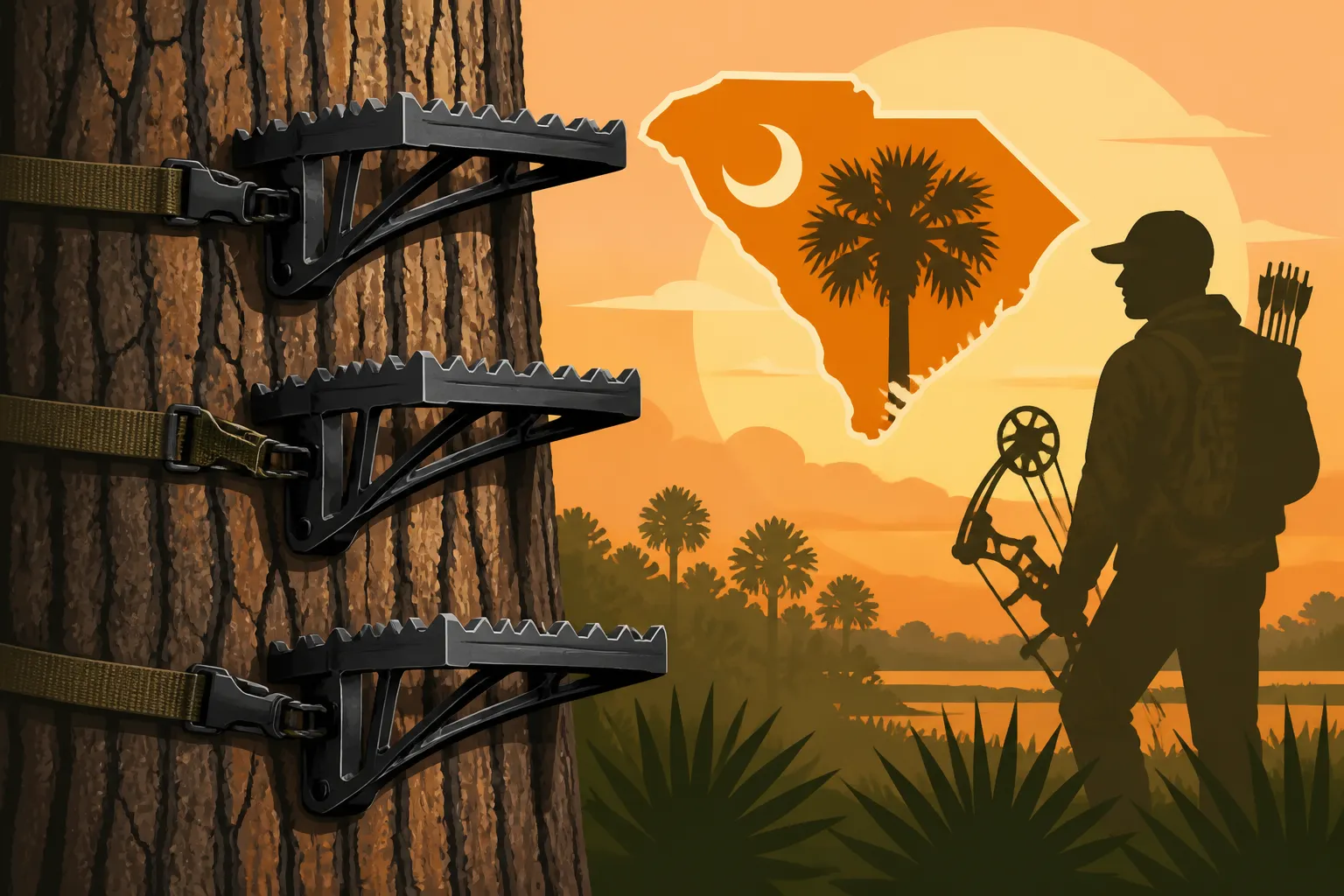
This is probably the most crucial feature. Standard climbing sticks often have a simple V-shaped or flat contact point that presses against the tree. On rough bark, these designs can struggle to get a secure purchase. Look for sticks with more aggressive grip systems. Some designs feature multiple, sharp teeth or serrations on the tree-contacting surface, designed to bite into the bark's irregularities rather than just sitting on top of them. Other sticks incorporate a more deeply contoured V-shape that cradles the trunk better, distributing pressure more evenly and allowing the strap to really pull the stick into the tree's surface.
For example, I've had much better luck on those gnarly, old lowcountry oaks with sticks that have a wider, more deeply curved tree stand-off, combined with a textured or toothed surface. This design helps the stick "wrap" around the bark more effectively, preventing lateral shifts. When you're out there, examining potential stick purchases, try to visualize how that contact point will interact with the deeply furrowed bark of a mature oak or the shaggy plates of a older pine. Does it look like it'll just sit on the high spots, or will it dig in and create multiple points of contact? A little mental exercise like this can save you a lot of headache (and potential falls) later. When researching gear, platforms like GoHunt can sometimes offer detailed user reviews specific to challenging tree types, which can be invaluable.
Robust and Secure Attachment Straps
Even the best gripping teeth are useless without a rock-solid attachment system. Flimsy straps or buckle systems that slip under pressure are a non-starter. You need straps that are wide, strong, and made from durable material that won't fray easily against rough bark. More importantly, the buckle or cam system needs to provide incredible leverage and hold.
Some popular systems use a cam buckle design that allows you to really crank down on the strap, while others might use a pull-through buckle that creates extreme tension. What's vital is that once you've tightened it, it stays tightened. There's nothing worse than getting a stick set, only to feel it loosen as you climb the next section. Pay attention to how easily the strap material slides through the buckle—you want minimal friction when tightening for maximum leverage, but then absolute lock-down once it's set. A thicker strap can also help distribute pressure over a wider area of bark, reducing the chance of digging in too aggressively in one spot and causing damage or instability. Before you even head out to find your perfect spot, make sure your Treestand Safety Gear for Wet Ground is in top shape, including those critical straps.
| Feature Type | Benefit for Rough Bark | Example Design Elements |
|---|---|---|
| Aggressive Grip | Prevents slipping and shifting on uneven surfaces | Multi-point teeth, deeply contoured V-cradle, textured rubber over-molds |
| Attachment Straps | Ensures maximum tension and prevents loosening | Wide, heavy-duty webbing, cam buckle with strong teeth, secure pull-through design |
| Step Design | Provides secure footing and aids stability during climb | Angled steps, generous foot platform, non-slip texture |
| Material/Weight | Durable and quiet operation, ease of transport | Aluminum construction, compact stacking, rubberized coatings |
Step Design and Stand-Off
While not directly related to bark grip, the design of the steps themselves and how far they stand off the tree impacts your ability to climb comfortably and safely on rough trunks. Wide, angled steps with a good non-slip texture provide more secure footing, especially when your boots might be muddy or wet from a morning dew. This secure footing reduces the chance of your foot slipping, which could cause you to put unexpected torque on the stick, potentially dislodging it from the bark.
A good stand-off, meaning how far the steps project from the tree, is also critical. Too close, and your boots might scrape against the bark, creating noise or making it hard to get a solid foothold. Too far, and it can feel unstable. A well-designed stick will have steps that give you ample clearance from the tree, allowing you to focus on your climb rather than fighting the tree's contours. When you're looking for Climbing Sticks for South Carolina Hardwoods, consider how the step design will perform on those thick, often irregularly shaped trunks.
Techniques for Secure Setup on Irregular Trunks
Having the right climbing sticks is only half the battle; knowing how to properly deploy them on challenging trees is the other. There are specific techniques that can make a huge difference in stability, security, and quietness when dealing with rough bark.
Identifying the Best Placement Points
Before you even start climbing, take a moment to eyeball the tree. Look for the most stable spots for your stick's contact points. This might mean rotating the stick slightly to find a flatter section of bark, or avoiding a particularly deep furrow or knot that would prevent even pressure. Sometimes, the "best" spot isn't perfectly centered on the side of the tree. It might be slightly off to one side where the bark is more uniform.
For example, on a deeply ridged oak, you might intentionally position the stick so its teeth straddle one of the main bark ridges, allowing the stick to settle into the natural contours. On a shaggy-barked pine, you'll want to ensure the attachment point isn't just resting on loose flakes, but is making contact with the more solid wood underneath. A tool like GoHunt can help you scout a bit beforehand, allowing you to zoom in on satellite imagery to get a better sense of tree density and potential sizes, giving you a preliminary idea of the tree types you might encounter. Scouting South Carolina Public Land Before Season is not just about finding deer sign, but also identifying climbable trees.
Achieving Maximum Strap Tension
Once you've identified your placement, achieving maximum strap tension is paramount. Don't just pull the strap until it feels "snug." You need to put your full body weight into it, pulling the cam or buckle as tight as humanly possible. On rough bark, even a small amount of slack can allow the stick to shift and settle under your weight, potentially causing noise or instability.
When using a cam buckle, I often lean into the stick while cinching the strap down, trying to "load" it as if I were climbing it already. This helps pre-tension the system. For sticks with a pull-through design, you might loop the strap around a couple of times to get extra leverage before pulling it taut. Some hunters even incorporate a small rope or ratchet strap for those really stubborn trees, though this adds time and gear. The goal is to make that stick feel like it's glued to the tree, with absolutely no give. Remember that even the best Climbing Sticks for Rough Bark rely on proper installation.
Mitigating Noise and Bark Damage
Noise is the enemy. To mitigate scraping noises, try to lift and place your sticks smoothly, avoiding jerky movements. When pushing them up the tree, guide them carefully rather than dragging them. For sticks with metal components, consider wrapping any potential contact points with felt, rubber, or even athletic tape to deaden sound. Some stick designs incorporate rubber coatings on their tree-contacting surfaces, which can help significantly.
While we want aggressive grip, we also want to minimize damage to the tree if possible. Over-tightening to the point of deeply gouging soft bark should be avoided if you can achieve stability without it. The key is to find the balance between secure grip and unnecessary damage. On extremely soft bark, sometimes placing a small piece of rubber or tough fabric between the stick and the tree can help distribute pressure and prevent gouging, while still allowing the stick to get a firm hold. This mindful approach ensures your hunting spots remain healthy for future seasons.
Maintenance and Best Practices for Longevity
Investing in high-quality climbing sticks for rough bark is smart, but those sticks will only serve you well if you take care of them. The harsh conditions of South Carolina's woods, from humidity to abrasive bark, can take a toll on your gear.
Regular Inspection and Cleaning
After every hunt, especially those in muddy or wet conditions, it's a good idea to inspect and clean your climbing sticks. Mud, grit, and sap can accumulate on the straps, buckles, and grip points. This isn't just unsightly; it can compromise performance. Grime in a cam buckle can prevent it from fully engaging, leading to slippage. Debris on the gripping teeth can reduce their bite.
A simple wipe-down with a damp cloth is usually sufficient. Pay close attention to the buckles and any moving parts, ensuring they operate smoothly. Check the straps for any signs of fraying, cuts, or excessive wear. Rough bark can be particularly abrasive, so straps are often the first component to show wear. If a strap looks compromised, replace it immediately. Never take a chance with safety when you're 20 feet off the ground. Remember to always prioritize your Treestand Safety Gear for Wet Ground checks.
Proper Storage and Transport
How you store and transport your sticks can greatly extend their lifespan. When not in use, store them in a dry, cool place away from direct sunlight. UV exposure can degrade webbing over time. Avoid storing them in a cluttered shed where they might get bent or dinged. Many climbing stick sets are designed to stack or nest together, making them compact for transport.
When carrying them into the woods, especially if you're doing a lot of Saddle Hunting in South Carolina Hardwoods and going deep, make sure they're secured to your pack. Loose sticks can bang against each other, creating noise, or worse, get caught on brush, potentially damaging them or causing you to lose your balance. Some hunters use small bungee cords or custom straps to keep their stacked sticks tightly bound. Consider wrapping any exposed metal parts that might clang together with electrical tape or camo wrap to further reduce noise during transport. This kind of attention to detail is crucial for a quiet entry and exit, whether you're heading to a pre-scouted location using your GoHunt app or just trying a new spot.
When to Replace Worn Components
Climbing sticks are designed to be durable, but components do wear out. The straps are usually the first to go. If you notice significant fraying, cuts, or if the buckle doesn't hold tension as well as it used to, it's time for a replacement strap. Many manufacturers sell replacement straps separately. Don't try to repair a damaged strap with tape or knots; it's a critical safety component.
Beyond straps, inspect the main stick body for any cracks, bends, or structural fatigue. If you drop a stick from a height, or if it takes a hard impact, even if it looks okay, carefully inspect it for hairline cracks, especially near welds or attachment points. Aluminum can bend and retain some strength, but any significant deformation is a sign that it might be compromised. Remember, these tools are what get you safely into your elevated hunting position, so their integrity is non-negotiable. Investing a little in maintenance or replacement parts is far cheaper than dealing with an accident.
When you're constantly on the move, perhaps trying out new spots or focusing on mobile hunting strategies for Portable Stands for Public Land Mobility, your gear will see more wear and tear. Stay vigilant with your checks, and those sticks will reliably serve you for many seasons to come, even on the roughest of South Carolina trees.
Disclaimer
This article is for general informational purposes only and does not constitute professional advice. Laws, prices and regulations vary by location and change over time. Consult a qualified professional for guidance on your specific situation.