Climbing Sticks for South Carolina Hardwoods
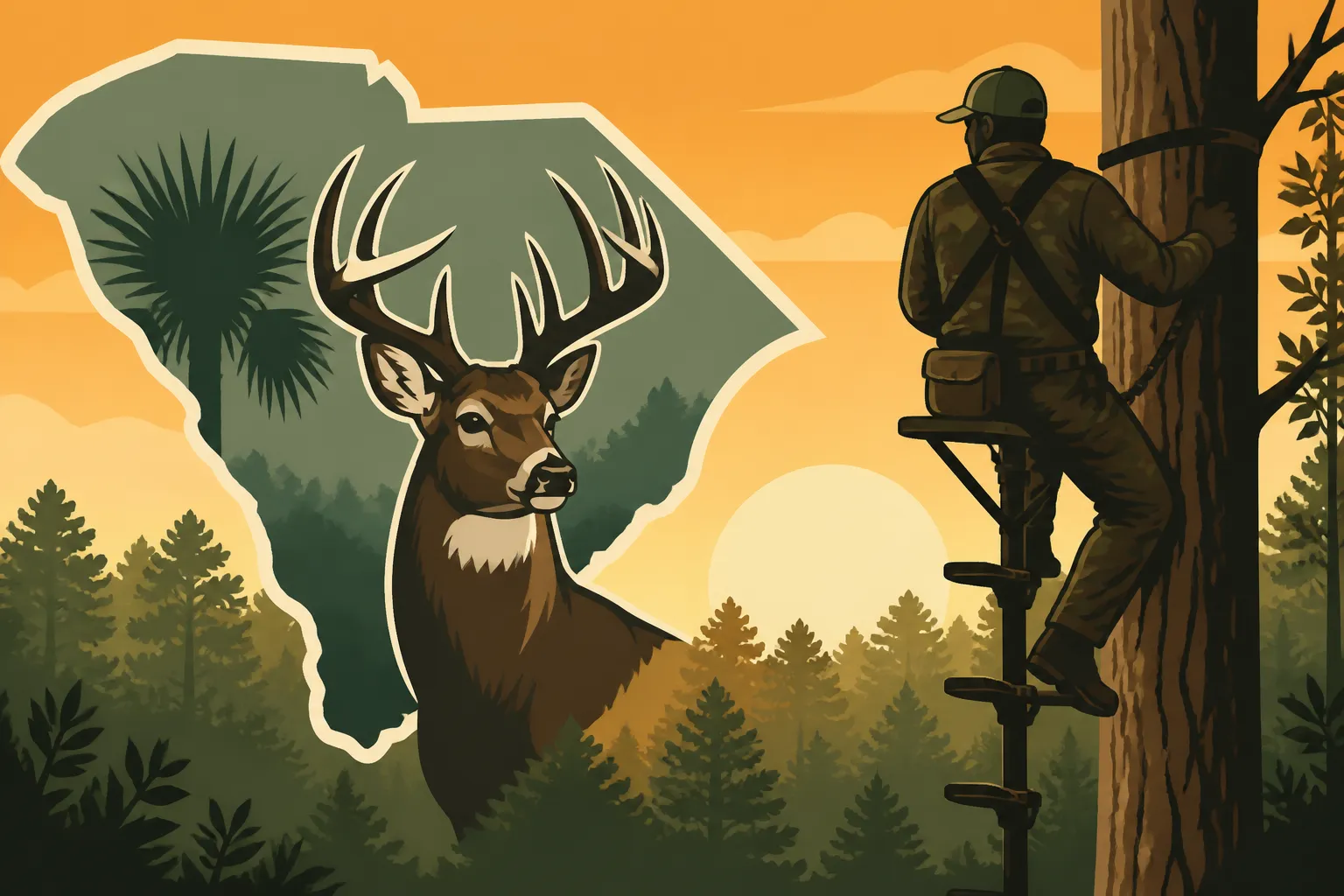
The struggle to get into your treestand quietly, efficiently, and, most importantly, safely in South Carolina's diverse hardwoods is a very real challenge. From the ancient, moss-draped oaks of the Lowcountry swamps to the rugged, slippery inclines of the Upstate mountains, finding reliable ascent can make or break your hunt. This guide is here to walk you through everything you need to know about climbing sticks, helping you choose and use them effectively to conquer any tree in the Palmetto State.
Why Climbing Sticks Are Essential in South Carolina Hardwoods
For many South Carolina hunters, particularly those venturing onto public lands or hunting varied private tracts, climbing sticks have become an indispensable part of their gear. The dynamic nature of our state's forests, combined with the need for mobility and adaptability, makes traditional ladder stands or screw-in steps often less practical. Climbing sticks offer a blend of portability, stealth, and versatility that other options just can't match.
Navigating Diverse Forest Types
South Carolina isn't just one type of woods; it's a rich tapestry of ecosystems, each presenting its own set of challenges for treestand access. You might be hunting stately, mature hardwoods in the Sumter National Forest one week, then dense, tangled bottomland thickets along a coastal river the next. Climbing sticks excel here because they adapt.
Imagine trying to install permanent screw-in steps on a massive, old-growth oak with rough, deeply furrowed bark – it's a nightmare, if not impossible, and often damaging to the tree. Ladder stands are great for permanent setups, but hauling one through a mile of dense palmettos or across a swamp to reach a prime spot is out of the question. Sticks, with their modular design, allow you to ascend various tree diameters and species. You can attach them quickly to a mature white oak in the Piedmont or a water oak deep in a Lowcountry swamp. Their segmented nature means you can adjust the height based on the tree's structure, navigating around stubborn limbs or reaching that perfect limb crotch that offers optimal concealment and shooting lanes. This adaptability is crucial when Hunting Lowcountry Swamp Deer where trees might be spread out or have irregular shapes.
Public Land Considerations
Hunting public land, whether it's a Wildlife Management Area (WMA) or one of our national forests like Francis Marion, comes with its own set of rules and logistical hurdles. Often, leaving permanent stands or even semi-permanent ladder stands overnight isn't allowed or is highly discouraged due to theft or regulation. This is where the mobility of climbing sticks truly shines.
Many public land hunters rely on a "hang and hunt" approach, meaning they carry their stand and sticks in, set up, hunt, and then pack everything out at the end of the day. This reduces your footprint, minimizes the risk of theft, and gives you incredible flexibility to adapt to changing deer movement or pressure. You're not tied to a single spot all season; instead, you can scout new areas, react to fresh sign, and set up quickly wherever the deer are. If you're Scouting South Carolina Public Land Before Season, you can identify multiple potential stand trees and have the flexibility to hunt any of them with your portable setup. This contrasts sharply with the commitment required for a permanent ladder stand, which simply isn't feasible for most public land scenarios.
The Advantage Over Other Ascent Methods
When you weigh the options for getting into a treestand, climbing sticks offer a clear advantage in many situations over older, more traditional methods. Screw-in steps, for instance, are often difficult to install in hard hardwoods, can damage trees, and are a serious fall risk if they strip out or snap. Plus, leaving them in a tree on public land is generally illegal and unethical.
Climber stands, while mobile, are limited to straight, limbless trees, which are not always available in prime South Carolina hunting spots. They can also be noisy to operate, potentially spooking game. Ladder stands, as mentioned, are heavy, cumbersome, and generally reserved for semi-permanent private land setups. Climbing sticks, by contrast, are relatively lightweight and quiet to deploy. They strap securely to the tree, often with cam buckles or heavy-duty straps, providing a solid and safe ascent. Paired with a hang-on stand or a saddle, they create a highly versatile and safe system that allows you to access a wide variety of trees silently and efficiently. For detailed setups, you might consider how Treestand Setups in Francis Marion National Forest often utilize these portable options.
Types of Climbing Sticks and Their Features
The market for climbing sticks has expanded quite a bit over the years, giving hunters a fantastic array of options tailored to different hunting styles and budgets. Understanding the distinctions between these types can help you find the perfect set for your South Carolina hunts, whether you're stalking a big buck on an Upstate ridge or hiding deep in a coastal swamp.
Single-Stick Systems
Single-stick systems are exactly what they sound like: individual sticks, usually around 20-30 inches tall, each with one or two steps, that you attach to the tree independently. These are the minimalist's choice, favored by saddle hunters or those who prize ultimate lightweight mobility above all else. The idea is to carry just enough sticks to get to your desired height, often using a "climbing method" where you leave one stick below you and retrieve it as you ascend, or simply place them high enough to reach your saddle or hang-on.
The main benefit of single sticks is their incredible packability and low weight. You can often carry four to six of these sticks, along with your stand or saddle, without feeling overly burdened on a long hike to a remote area. They also allow for immense flexibility in step spacing and placement, letting you navigate around tricky limbs or irregular bark. However, they require more individual attachment points to the tree, which can take a bit more time to set up and take down. Their small size also means you're often reaching for your next attachment, which can feel less stable for some hunters. When considering Packs for a Sumter Forest Day Hunt, the compact nature of single sticks can be a significant advantage.
Stackable and Nesting Sticks
Stackable or nesting climbing sticks are designed with efficient transport in mind. They feature an ingenious design where one stick slides into or "nests" with another, creating a compact, cohesive unit that's easy to carry. This eliminates the awkward clanking and bulk that can sometimes come with carrying individual sticks. You end up with a single, longer package that you can often strap directly to the side of your hunting pack.
These systems are fantastic for hunters who need to cover significant ground to get to their stand locations. They offer a good balance between portability and ease of setup. Once at your tree, you simply separate the sticks and attach them in sequence. While typically a bit heavier than minimalist single-stick setups due to their more robust construction and often wider steps, they provide a very stable climbing platform once deployed. Many popular climbing stick brands employ this design, making them a go-to for hunters who prioritize efficient packing for longer treks into their hunting grounds.
Sectional Sticks with Built-in Steps
Sectional sticks are perhaps the most common type you'll encounter. These are typically 2-3 foot sections, each containing multiple steps, that you connect together as you ascend. Many models feature steps that fold in for transport, then deploy outwards for climbing. The sections usually connect via sleeves or interlocking pins, creating a rigid, continuous ladder-like structure up the tree.
The primary advantage of sectional sticks is their stability and ease of climbing once they're attached. With multiple steps per section, you often feel more secure as you climb, and the overall system feels less "tippy" than individual sticks might. They're generally quicker to set up than single-stick systems because you're connecting larger sections, though they can be bulkier and heavier to carry than single sticks. The built-in steps ensure consistent spacing, which can be a comfort for those who prefer a predictable climb. They're a solid, dependable choice for hunters who need a stable, repeatable ascent system, particularly when setting up a hang-on stand for a prolonged sit. Climbing Sticks for Rough Bark might lean towards these sturdy, multi-step designs for better purchase.
| Stick Type | Primary Advantage | Portability | Setup Speed | Stability (Climbing) | Best Use Case |
|---|---|---|---|---|---|
| Single Sticks | Ultra-light & modular | Excellent | Moderate-Slow | Good | Saddle hunting, ultra-mobile, remote areas |
| Nesting/Stackable | Efficient packing | Very Good | Moderate | Very Good | Long hikes, balancing mobility & stability |
| Sectional (Multi-Step) | High stability & comfort | Moderate-Good | Fast-Moderate | Excellent | Hang-on stands, consistent climbing platform |
Choosing the Right Climbing Sticks for Your South Carolina Hunt
Selecting the perfect set of climbing sticks isn't just about picking the cheapest or the lightest option. It's about matching the gear to your specific hunting style, the terrain you'll face, and the overall experience you want to have in the South Carolina woods.
Material and Weight Considerations
Climbing sticks are primarily made from aluminum, steel, or, increasingly, carbon fiber. Each material comes with its own set of pros and cons, directly impacting the weight, durability, and cost of the sticks.
- Aluminum: This is the most common material. Aluminum sticks offer a fantastic balance of strength and light weight, making them a popular choice for mobile hunters. They are corrosion-resistant, which is a huge plus in South Carolina's humid, often wet environment, especially if you're hunting near swamps or during rainy periods. The downside is that they can be prone to bending or denting if abused, and they might be noisier than carbon fiber if you're not careful. Still, for most hunters, aluminum is a reliable workhorse.
- Steel: Steel sticks are incredibly durable and often the most budget-friendly option. However, they are significantly heavier than aluminum or carbon fiber, making them less ideal for long hikes or mobile setups. If you're setting up a semi-permanent stand on private land where weight isn't as critical, steel sticks can be a rugged choice. Just be mindful of rust in our coastal plain humidity; proper drying and storage are paramount.
- Carbon Fiber: This is the high-end option. Carbon fiber sticks are exceptionally strong, incredibly lightweight, and typically the quietest due to their inherent dampening properties. They are also highly resistant to the elements. The main drawback is the price point, which can be substantially higher than aluminum or steel. If you're a serious mobile hunter, perhaps a saddle hunter who counts every ounce, and budget isn't a primary concern, carbon fiber offers peak performance. Many hunters use apps like GoHunt to research and compare these material differences before making an investment.
Step Design and Grip
The design of the steps themselves is often overlooked but plays a huge role in both comfort and safety. You'll want steps that provide secure footing, even when wet, muddy, or icy (though ice is less common in SC, wet leaves and mud are a given).
Look for steps that are wide enough to accommodate your boot comfortably. Narrow, rounded steps can be painful on your feet after a few ascents and descents, and they offer less purchase. Aggressive texture or knurling on the step surface helps prevent slips. Some sticks feature steps with a slight upward angle or even a small lip at the end to help keep your foot in place. Others might have a larger, more open design that allows mud and debris to fall through, rather than accumulating and creating a slick surface. Think about how you'll be climbing in the dark, possibly with cold, stiff fingers, and sometimes with muddy boots. A good, ergonomic step design makes the whole process much safer and more pleasant.
Attachment Methods
How your climbing sticks attach to the tree is critical for stability and safety. The most common methods involve straps, chains, or cam buckles, each with its own benefits.
- Straps: Most modern climbing sticks use heavy-duty nylon or polyester straps, often with a cam buckle or a robust buckle system. These straps are generally very secure and easy to use, providing a tight, non-slip grip on the tree. Ensure the straps are long enough to wrap around larger diameter trees you might encounter in South Carolina's old-growth areas. Regularly inspect straps for fraying or wear, as they are a critical safety component.
- Cam Buckles: Many systems integrate cam buckles for quick, silent, and extremely secure attachment. These allow you to get a very tight cinch on the tree, minimizing any movement or wobble in the stick. They are generally preferred for their ease of use and reliability.
- Chains: While less common on lighter, mobile sticks, some heavier-duty or older models might use chains for attachment. Chains are incredibly durable and resist rodent chewing, but they can be noisy to deploy and often heavier.
- Overall Security: Regardless of the specific mechanism, the goal is a rock-solid connection to the tree. Any movement or slippage of the stick after attachment is a red flag and needs to be addressed before you put your full weight on it. You want to feel completely confident in each stick before moving to the next one, especially when facing slick bark after a morning dew or light rain.
Safety First: Essential Practices with Climbing Sticks
Hunting from an elevated position inherently carries risks, and climbing sticks are only as safe as the hunter using them. In South Carolina's often remote and sometimes rugged hunting areas, a fall can have severe consequences. Prioritizing safety through diligent inspection, proper technique, and essential gear is non-negotiable.
Pre-Season Inspection and Setup
Before you even think about heading into the woods, take the time to thoroughly inspect all your climbing gear. This isn't just a suggestion; it's a critical safety measure that could literally save your life.
- Check for Wear and Tear: Look over every climbing stick section. Are there any cracks, bends, or deformities in the metal or carbon fiber? Pay close attention to welding points or connection pins. Examine all straps, ropes, or chains for fraying, cuts, stretched areas, or signs of rodent damage. Check buckles and cam mechanisms to ensure they operate smoothly and securely lock into place.
- Functionality Test: Practice setting up your sticks in your yard or a safe, controlled environment. Do the sections connect properly? Do the steps deploy and lock securely? Are the attachment straps easy to tighten and release? This practice helps you identify any issues before you're in the dark, pre-dawn woods, trying to be silent. It also builds muscle memory, making your field setup faster and safer. This is especially important for new gear or gear that's been stored away for months. Remember, moisture and heat in South Carolina can degrade materials faster than in drier climates, so annual inspections are a must.
Proper Installation Techniques
Correct installation is the foundation of a safe climb. Rushing this step or taking shortcuts can lead to a dangerous situation.
- Choose the Right Tree: Select a live, healthy tree with a straight trunk, free of dead limbs, significant leans, or rot. Avoid trees with excessive vines or loose bark that could interfere with the stick's attachment or your footing. A good rule of thumb is to look for a tree that will allow the stick to sit flush and securely.
- Secure Each Stick: As you ascend, attach each stick section firmly to the tree before putting your full weight on it. Use the provided straps or cam buckles to cinch the stick as tightly as possible. There should be no noticeable wobble or movement. Many hunters will lean into the stick and pull down on it to confirm it's secure before stepping up. Angle the sticks slightly to account for the tree's taper, ensuring the steps remain level.
- Maintain Three Points of Contact: This fundamental climbing rule applies to sticks as well. Always keep three points of contact (two hands and one foot, or two feet and one hand) with the sticks or tree at all times. This provides stability and reduces the risk of a slip or fall. Work slowly and deliberately, especially when reaching for the next stick or your stand platform.
Using a Full-Body Harness and Lifeline
This is perhaps the single most important safety rule: never climb without a full-body harness and a lineman's belt or lifeline. A fall from a treestand, even a short one, can result in severe injury or death.
- Full-Body Harness: Always wear a properly fitted full-body harness from the moment your feet leave the ground until they are back on solid earth. This harness is designed to distribute impact forces across your entire body if you fall, preventing critical injuries. Make sure all buckles are secure and straps are snug.
- Lineman's Belt for Ascent: A lineman's belt is a game-changer for climbing sticks. It wraps around the tree and clips into your harness, allowing you to remain tethered and hands-free as you attach sticks. This dramatically increases safety and allows for more efficient setup. You simply unclip, move a stick up, re-clip, and then move your belt up the tree as you climb.
- Lifeline for Your Stand: Once you reach your stand height, you should immediately attach your harness to a tree-length lifeline or a safety strap connected directly to the tree at your stand level. This ensures you are always connected, even when transitioning from your sticks to your stand platform. Products like the ones GoHunt might review emphasize these safety features heavily. Make sure your lifeline allows for minimal slack; you don't want to free-fall any distance. Safety Harnesses and Lifelines are not optional; they are mandatory for elevated hunting.
Integrating Sticks with Your Treestand Setup
Climbing sticks are a component of a larger system. To truly maximize their effectiveness and safety, it's crucial to understand how to integrate them seamlessly with your treestand, ensuring a quiet, efficient, and comfortable hunting experience.
Optimal Stick Spacing and Placement
The way you space and place your climbing sticks can make a huge difference in your ascent and descent. It's not just about getting to height; it's about doing so easily and quietly.
- Consistent Spacing: Aim for consistent spacing between sticks, typically a comfortable step length for you. This creates a natural, rhythmic climb. Many hunters measure their sticks' spacing so they can quickly eyeball it in the dark. In South Carolina, where the ground can be uneven, getting that first stick placement correct is vital. Sometimes, the first stick needs to be placed higher to clear brush or obstacles on the ground, so plan accordingly.
- Staggering for Stability: For added stability and to allow for better foot placement, consider staggering your sticks slightly around the tree trunk. Instead of a straight line up, offset them left and right. This can also help you navigate around small limbs or bark irregularities that might otherwise interfere with a straight climb.
- Reaching the Stand: Pay particular attention to the top stick's placement relative to your treestand platform. You want the last step to be at a height that allows you to easily and safely step onto your stand platform without excessive stretching or awkward maneuvering. A common mistake is placing the top stick too low, making the transition onto the stand difficult and potentially noisy. Practicing this transition at home is a good idea.
Combining with Different Stand Types
Climbing sticks are incredibly versatile and can be used effectively with various types of treestands, from hang-ons to tree saddles.
- Hang-on Stands: This is the most common pairing. You typically carry your hang-on stand and your climbing sticks to your chosen tree. First, you hang the stick sections, then you hoist and hang your stand. With a lineman's belt, you can stay safely attached while performing both tasks. The modularity of sticks means you can adjust your stand height or location quickly, making it ideal for mobile setups or for reacting to changing conditions. For example, if you're Hanging a Stand on a Sumter Forest Ridge, you'll want a system that's light enough to carry but sturdy enough for a long sit.
- Tree Saddles: Saddle hunting has exploded in popularity for its ultralight, minimalist approach, and climbing sticks are the primary means of ascent. Saddle hunters often use a smaller number of sticks, sometimes just two or three longer ones, to get to a comfortable height to "set their bridge" (the tether connecting them to the tree). The sticks provide the necessary steps to access the tree, and the saddle then allows them to maneuver around the trunk, using the tree for cover. This combination offers unparalleled mobility and stealth.
- Ladder Stands: While less common, climbing sticks can sometimes be used in conjunction with ladder stands, perhaps to add a few extra feet of height or to create a more secure pathway if the ground around the ladder base is uneven or muddy. However, their primary benefit is for mobile, hang-on, or saddle hunting setups.
Stealth and Accessibility
Hunting in South Carolina often means dealing with keen deer and turkey senses, so stealth is paramount. Climbing sticks contribute significantly to a quiet approach and exit.
- Quiet Deployment: Modern climbing sticks are designed to minimize noise. Straps are generally quieter than chains, and cam buckles can be operated silently with practice. When deploying, take care not to clank sticks together or scrape them loudly against the tree bark. Some hunters add silent strips or tape to metal-on-metal contact points.
- Clear Entry/Exit Routes: Beyond just getting up the tree, think about your entry and exit. Ensure your sticks are placed in a way that allows you to climb and descend without brushing against noisy branches, rustling leaves, or spooking game on the ground. A clear path up and down the tree is not only safer but also quieter. Use the natural cover around the tree to your advantage, making your approach and departure as inconspicuous as possible. In areas where you might be Hunting a Clear-Cut Regrowth Edge, careful placement will help you avoid making noise on brittle underbrush.
- Minimizing Scent: During setup, especially when handling sticks and straps, try to minimize the transfer of human scent to the tree. Wear gloves and use scent-free practices where possible. While scent control is a broader topic, keeping your gear clean and handling it minimally contributes to a stealthier hunt. For late-season deer, you might consider your Warm-Weather Sitting Strategy in South Carolina which often involves scent control from the moment you leave the truck.
Maintenance and Storage for Longevity
Your climbing sticks are a significant investment, both financially and in terms of your safety. Proper care and storage will ensure they remain reliable hunt after hunt, season after season, especially in the challenging environment of South Carolina. Neglecting them can lead to premature wear, component failure, and potentially dangerous situations.
Cleaning and Drying After Use
South Carolina's hunting seasons often feature humidity, rain, and mud, all of which can take a toll on your gear. Taking a few moments to clean and dry your sticks after each use can significantly extend their lifespan.
- Remove Debris: After a hunt, especially if you've been in muddy bottomlands or through a pine thicket, your sticks will likely be coated in dirt, mud, pine straw, and possibly even some sap. Use a stiff brush or a damp cloth to wipe down all surfaces, paying special attention to the steps and any interlocking mechanisms. Get into all the nooks and crannies where debris can accumulate.
- Thorough Drying: This is perhaps the most critical step in our humid climate. Moisture is the enemy of metal and fabric. After cleaning, hang your climbing sticks in a well-ventilated area to air dry completely. Never store them wet. If possible, bring them indoors to a garage or shed where they can dry out thoroughly, especially any fabric straps. Trapped moisture can lead to rust on steel components, mildew on nylon straps, and overall degradation of materials. A quick wipe-down and dry-out can prevent these issues.
Inspecting for Wear and Tear
Regular, detailed inspection goes hand-in-hand with cleaning. You should perform a quick check after every hunt and a more thorough inspection before the start of each season.
- Structural Integrity: Look for any signs of metal fatigue, such as cracks, bends, or deep scratches on aluminum or steel components. Pay close attention to welds, rivets, and pivot points. If you see anything that looks suspicious, contact the manufacturer or replace the affected component immediately. Carbon fiber sticks should be inspected for delamination or severe impacts.
- Strap and Buckle Condition: The straps are your primary connection to the tree, so their condition is paramount. Check for fraying, cuts, sun damage (UV exposure weakens nylon), or signs of rodent chewing. Ensure that all buckles, cam levers, and other fastening hardware engage correctly and hold securely. If a strap or buckle is compromised, replace it; don't try to "make do." Many manufacturers offer replacement strap kits, and it's a small price to pay for safety.
- Step Security: Verify that all steps are firmly attached to the stick body and do not wobble or show signs of loosening. If they fold, ensure they lock securely in both the open and closed positions. Any play in a step can be a serious safety hazard during climbing.
Proper Storage Practices
Where and how you store your climbing sticks during the off-season can also impact their longevity. You want to protect them from environmental damage and make sure they're ready to go when hunting season rolls around again.
- Dry, Cool Location: Store your sticks in a dry, cool place, away from direct sunlight and extreme temperature fluctuations. Garages, sheds, or basements are often suitable, provided they aren't prone to excessive dampness. Avoid leaving them exposed to the elements outdoors, as this will accelerate wear and tear.
- Organized Storage: Keep your sticks organized. Many stackable or nesting designs naturally form a compact unit. If you have single sticks, consider bundling them together to prevent them from getting lost or damaged. Storing them neatly also makes it easier to retrieve them when you're ready for your next scouting trip or hunt.
- Pest Protection: In South Carolina, pests like mice and other rodents can chew through nylon straps, causing critical damage. If storing in an area known for rodents, consider placing your sticks in a sealed tote or hanging them out of reach. Incorporating this into your off-season routine ensures your gear is always reliable.
By following these maintenance and storage tips, your climbing sticks will serve you safely and effectively for many seasons to come, helping you access those prime South Carolina hardwoods year after year.
Disclaimer
This article is for general informational purposes only and does not constitute professional advice. Laws, prices and regulations vary by location and change over time. Consult a qualified professional for guidance on your specific situation.