Treestand Setups in Francis Marion National Forest
Hunting deer in the Francis Marion National Forest presents a truly unique set of challenges, from navigating dense lowcountry swamps to understanding the subtle movements of deer in vast pine flatwoods. It's easy to feel overwhelmed trying to find the perfect spot for a treestand amidst all that wild country. This comprehensive guide will walk you through everything you need to know about effectively setting up your treestand to increase your chances of success in this iconic South Carolina wilderness.
Understanding Francis Marion's Unique Habitat
The Francis Marion National Forest is unlike many other hunting grounds, and its distinctive ecosystem profoundly influences deer behavior and, by extension, where you should consider placing your treestand. Ignoring these environmental factors is a surefire way to come home empty-handed.
Lowcountry Swamp and Pine Flatwoods
Much of the Francis Marion is characterized by a mosaic of lowcountry swamp and sprawling pine flatwoods. This isn't your typical hardwood ridge country, and expecting deer to behave the same way they might in the Upstate would be a mistake. The swamps, often dominated by cypress and tupelo, serve as vital sanctuaries and travel corridors, especially when adjacent to higher ground. Deer will often utilize the fringes of these swamps for bedding and movement, finding refuge in the thick cover and access to water. The pine flatwoods, on the other hand, can feel featureless at first glance, but they contain subtle drains, thickets, and patches of hardwood hammocks that act as magnets for deer looking for browse and cover. Learning to "read" these often-overlooked features is critical.
Navigating these distinct terrains requires specific considerations for stand placement. In the swamps, you'll often find deer trails running along the drier edges, sometimes slightly elevated hummocks, or even through areas that are just shallow enough to wade. For the pine flatwoods, look for transitions where the canopy changes, where younger pine growth offers dense bedding cover, or where small pockets of oaks provide a seasonal food source. A good aerial map, perhaps utilizing a tool like GoHunt, can help you identify these transitions and elevation changes before you even set foot in the woods, saving you valuable scouting time. Remember that the deer in Francis Marion are experts at disappearing into this cover, so being situated on a travel corridor is often more productive than hoping to spot them in open timber.
Seasonal Water Fluctuations and Their Impact
One of the most significant environmental factors influencing deer movement in the Francis Marion is the dramatic seasonal fluctuation of water levels. From heavy spring rains to dry summer droughts, and then the inevitable deluges of hurricane season, the landscape is constantly changing. What might be dry, accessible ground in September could be under several feet of water by October. This directly impacts deer travel routes, bedding areas, and access to food sources.
Successful hunters in the Francis Marion learn to adapt to these water changes. When water levels are high, deer are pushed to higher ground, concentrating them in smaller, drier pockets. These bottleneck areas become prime locations for treestands. Conversely, during dry spells, deer might spread out more, but water sources themselves become magnets, drawing deer to specific creeks, ponds, or even low-lying areas that retain moisture longer. Understanding these patterns, often through years of observation or diligent scouting, is key. Keep an eye on local weather patterns and river gauges if you're hunting near major waterways, as a rising or falling tide can literally open or close access points for both you and the deer.
Food Sources and Deer Movement Patterns
Food availability dictates deer movement as much as cover and water, and Francis Marion offers a diverse but often scattered buffet. Unlike areas with widespread agriculture, natural browse, acorns, and other mast crops are the primary drivers here. White oak and live oak acorns, when they drop, can draw deer from a wide area, especially the live oaks which often hold their acorns longer into the season. You'll find deer shifting their patterns dramatically to capitalize on these food sources.
Beyond acorns, deer in the Francis Marion browse on a variety of plants, including muscadine vines, greenbrier, and various herbaceous plants found in openings or along swamp edges. Scouting for these specific food sources is paramount. Look for fresh browse lines, disturbed ground where deer have been rooting around, or droppings. Knowing when and where these food sources are available will help you pinpoint those crucial travel routes between bedding areas and feeding grounds. Sometimes, deer will utilize small, almost hidden patches of desirable browse that may only cover a few square yards, but if it's a consistent food source, it can be a hotspot. These are the kinds of spots that can pay off big, especially when other hunters are focusing on larger, more obvious areas. To find these spots, consider studying Where Francis Marion Bucks Bed and Reading a Tidal Creek for Deer Movement.
Choosing the Right Treestand for the Forest
The diverse and often challenging terrain of the Francis Marion National Forest means that not all treestands are created equal. Your choice of equipment can make or break your hunt, impacting not just your comfort, but also your ability to access prime locations and stay safe.
Climbing Stands vs. Hang-on Stands
Deciding between a climbing stand and a hang-on stand is a perennial debate for any hunter, but in the Francis Marion, the terrain often dictates the answer. Climbing stands offer unparalleled mobility and are fantastic for hunters who like to scout on the fly and adjust their location based on fresh sign. They're quick to set up and take down, making them ideal for run-and-gun tactics. However, their major limitation in Francis Marion is the availability of suitable trees—you need a relatively straight, limbless tree to climb, which can be surprisingly hard to find in some areas, especially in the gnarlier swamp edges or areas of mixed growth.
Hang-on stands, while requiring more setup time with separate climbing sticks or steps, offer much greater versatility in tree selection. You can set them in crooked trees, trees with lower limbs, or even in areas with smaller diameter trees by using multiple attachment points. This flexibility is a huge advantage in the varied timber of the Francis Marion, allowing you to get into those tighter, more productive spots that a climber simply can't reach. The downside is the extra gear and the potentially louder setup if you're not careful. If you plan to leave a stand for multiple hunts, or want to get into a very specific tree that isn't climber-friendly, a hang-on is usually the better choice. Remember to check the official Treestand Rules on South Carolina Public Land to ensure your setup complies with regulations, as public lands often have restrictions on how long stands can be left up.
Saddle Hunting for Ultimate Mobility
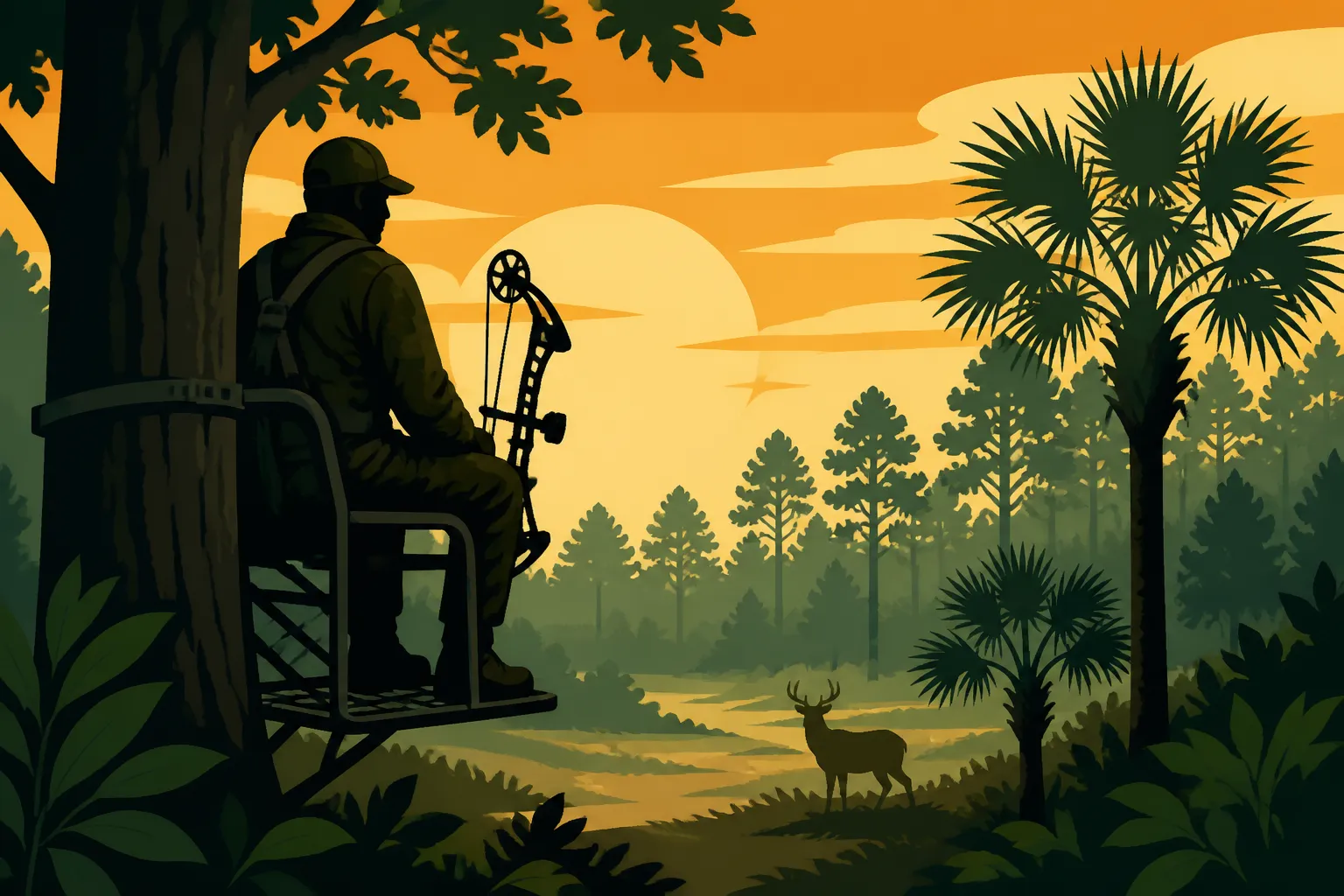
For the ultimate in lightweight, mobile hunting in the Francis Marion, saddle hunting has become an increasingly popular option. A hunting saddle isn't a stand in the traditional sense; instead, it's a harness-like system that allows you to lean against the tree, offering 360-degree shooting angles and incredible concealment. The primary advantage in Francis Marion's dense cover is the minimal bulk and weight. You can hike deeper into remote areas with less effort, and the setup is incredibly stealthy, often allowing you to wrap around the back side of a tree, staying completely out of a deer's line of sight.
Saddles also excel in situations where traditional stands might be too bulky or conspicuous. You can set up in trees that are difficult for climbers or hang-ons, such as those with heavy limb cover, or smaller diameter trees that might not support a full stand. The learning curve for saddle hunting can be a bit steeper, and comfort levels vary, but for the serious public land hunter who prioritizes stealth and mobility, especially when Hunting Pressure on South Carolina Public Land is high, a saddle can be a game-changer. It allows you to become one with the tree, offering a level of concealment that's hard to beat.
Ground Blinds as an Alternative
While treestands are often the go-to, don't overlook the effectiveness of ground blinds in the Francis Marion, especially in certain situations. Ground blinds, whether pop-up models or natural brush blinds you construct, offer excellent concealment and can be a fantastic option when suitable trees are scarce, in extremely thick cover, or for hunters with mobility limitations. They're particularly effective along field edges, pinch points between swamps and uplands, or near dense bedding areas where you expect close-range encounters.
The key to successful ground blind hunting in Francis Marion is meticulous brushing in. A pop-up blind stuck out in the open is a red flag. Take the time to weave in natural vegetation, break up its outline, and make it disappear into the surroundings. Natural blinds built from downed limbs, palmetto fronds, and Spanish moss can be incredibly effective and leave no trace when you're done. Just be aware of the Ground Blind Rules on South Carolina WMAs, as some public lands have specific regulations regarding their use and construction. Ground blinds can also be a lifesaver during the warmer, wetter early season, offering protection from the elements and the relentless South Carolina mosquitoes.
Strategic Placement for Success
Once you've decided on your method of elevated hunting, the real work begins: strategic placement. In a vast forest like Francis Marion, throwing a dart at a map won't cut it. Every decision, from scouting to entry, impacts your chances of success.
Scouting for Key Features
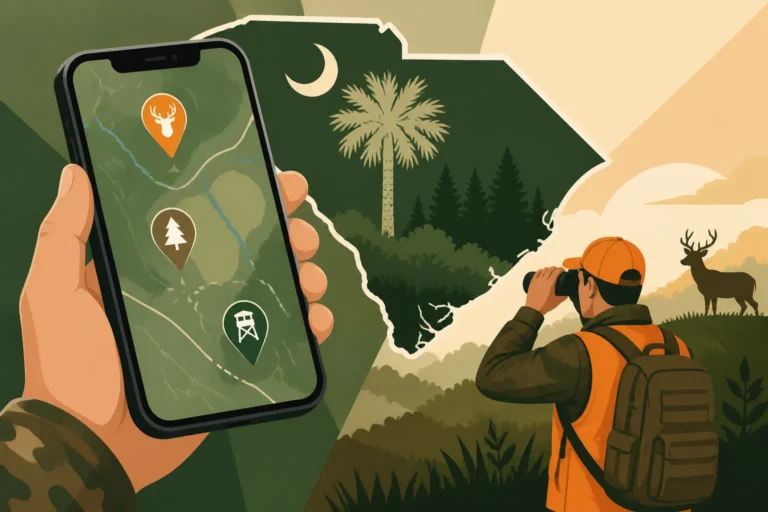
Effective treestand placement starts long before opening day with diligent scouting. Francis Marion is huge, so you need to narrow your focus by identifying key features that concentrate deer movement. Look for natural funnels, such as narrow strips of high ground between two swampy areas, or places where a dense thicket forces deer into a specific travel lane. Creek crossings, old logging roads, and subtle changes in elevation that create pinch points are all prime candidates. You can use mapping apps like GoHunt to mark potential hot spots and plan your routes.
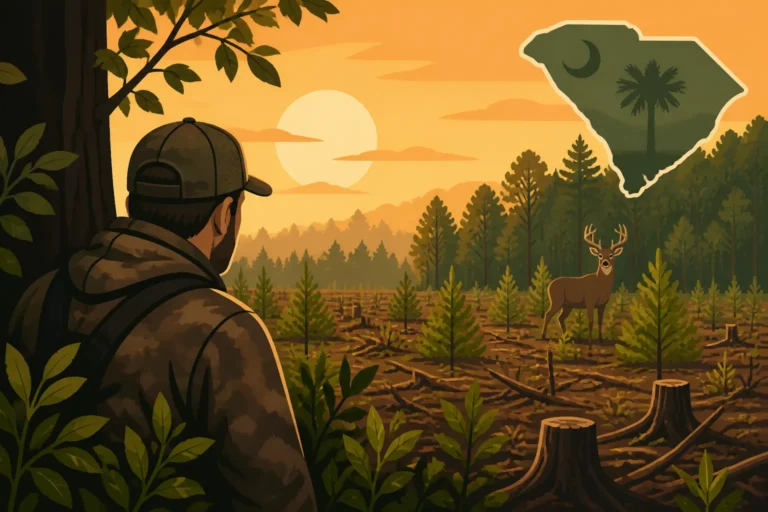
Don't just look for obvious trails; often, the best spots are subtle. Check for rub lines and scrape lines, especially as the rut approaches. Look for fresh tracks in soft ground or along creek banks. Pay attention to changes in vegetation – an area with a lot of green browse or dropping acorns will attract deer. Even old, forgotten clear-cuts or areas impacted by prescribed burns can create new growth that acts as a food source or bedding cover. Remember, deer are creatures of habit, and finding those consistent patterns through careful scouting is the cornerstone of successful stand placement. For deeper insights into locating deer, try learning Scouting South Carolina Public Land Before Season.
Entry and Exit Routes
This is perhaps the most overlooked, yet most critical, aspect of treestand placement, especially in a heavily hunted area like Francis Marion. You can have the perfect stand location with fresh sign everywhere, but if your entry and exit spook deer, your efforts are wasted. You need a route that allows you to get to and from your stand without being detected by deer. This means using natural cover, walking into the wind, and avoiding known bedding or feeding areas during your approach.
Consider the time of day you'll be hunting. For a morning hunt, you'll need to approach in the dark, and an open field edge or a noisy patch of palmettos will likely blow your chances. A route along a dry creek bed or through dense pines might be quieter. For an evening hunt, your exit is just as important. Think about how deer will be moving after dark and choose a path that doesn't intersect their post-feeding travel. Sometimes, taking a much longer, more circuitous route is worth the effort to ensure you remain undetected. This discipline is vital for sustained success, especially when you're Hunting a Funnel Between Two Swamps where deer traffic is high.
Playing the Wind and Thermals
In the humid, often still air of the lowcountry, understanding and utilizing the wind and thermals is absolutely non-negotiable. Deer rely heavily on their sense of smell, and even a slight shift in wind direction can alert them to your presence. Always position your stand downwind or crosswind of where you expect deer to approach or pass through. This often means having multiple stand locations for different wind directions, or being willing to move your stand if conditions change.
Thermals are less about broad wind patterns and more about localized air currents driven by temperature changes. In the morning, as the air warms, thermals tend to rise up slopes and out of low-lying areas. In the evening, as the air cools, thermals drop down slopes and into bottoms. While Francis Marion isn't known for drastic elevation changes, subtle depressions, creek bottoms, and swamp edges will have noticeable thermal activity. For instance, Wind and Thermals on an Upstate Ridge might be more pronounced, but even in flatter lowcountry, understanding how cooling air settles into a drain or how warming air lifts off a pine island can give you a critical edge. Combine wind and thermal knowledge with diligent scent control, utilizing sprays and odor-absorbing clothing, to minimize your footprint.
| Treestand Type | Pros | Cons | Ideal Francis Marion Scenario |
|---|---|---|---|
| Climbing Stand | Highly mobile, quick setup/takedown | Requires straight, limbless trees; limited tree choice in varied timber | Run-and-gun hunting in areas with abundant, uniform pine timber |
| Hang-on Stand | Versatile tree choice (crooked, limbed trees); stable; good for fixed sets | Requires separate climbing sticks/steps; more gear to carry; slower setup | Hunting specific, unique trees in thick cover or along swamp edges where mobility is still desired |
| Saddle Hunt | Ultra-light, highly mobile, 360-degree shooting; excellent concealment | Steeper learning curve; comfort varies; not for everyone | Deep penetration into remote areas; stealth is paramount; heavily pressured public land |
| Ground Blind | Excellent concealment; comfortable; good for limited mobility; weather protection | Less visibility/shooting lanes; requires meticulous brushing in; limited to ground level | Along field edges, thick bedding areas, pinch points; when suitable trees are absent |
Safety First: Essential Practices
Hunting from an elevated position inherently carries risks, and in the wild, often remote reaches of the Francis Marion National Forest, safety isn't just a suggestion—it's paramount. A fall here can have severe consequences, far from immediate help.
Harnesses and Lifelines Are Non-Negotiable
This cannot be stressed enough: always wear a full-body harness, and use a lifeline or safety rope from the moment your feet leave the ground until you are back on solid earth. Tree stand falls are the leading cause of serious injury and death in deer hunting. Many hunters think it won't happen to them, but even experienced hunters can have an accident. A missed step, a slippery branch, a faulty strap – it only takes a second. Brands like Hunter Safety System make comfortable, easy-to-use harnesses that integrate seamlessly with your hunting clothing.
A good lifeline system allows you to remain tethered to the tree even while ascending and descending. It's that critical connection that prevents a free fall. Take the time to properly install your harness and lifeline every single time. It might feel like an extra step, but it's an investment in your life and well-being. No deer is worth a broken back or worse. This isn't just a personal safety issue; it's a responsibility to your family and fellow hunters.
Tree Selection and Inspection
The foundation of any safe treestand setup is the tree itself. Before you even think about climbing, thoroughly inspect the tree you intend to use. Look for dead limbs that could break, signs of rot or decay (especially around the base or where branches meet the trunk), and loose bark. Avoid trees that look unhealthy or have significant leans. In the lowcountry, strong winds and saturated ground can sometimes weaken trees, so be extra diligent after severe weather.
Once you've selected a healthy tree, consider its species. Some trees have softer wood or weaker bark that isn't ideal for climbers or stand attachments. Ensure the tree is sturdy enough to support your weight plus the stand, and that there are no hidden hazards like wasp nests or thorny vines that could cause problems during ascent or descent. Always test your climbing sticks or ladder sections for stability before committing your full weight. This meticulous inspection takes only a few minutes but can prevent a lifetime of regret.
Emergency Preparedness
Hunting in the Francis Marion means you're often in remote areas with limited cell service. Therefore, being prepared for an emergency is crucial. Always carry a fully charged cell phone (even if service is spotty, you might find a signal on higher ground, and it's essential for 911 calls). A small, audible whistle can help attract attention if you're injured. A basic first-aid kit, containing bandages, antiseptic wipes, pain relievers, and any personal medications, should always be in your pack.
Consider carrying a personal locator beacon (PLB) or a satellite messenger device like a Garmin inReach, especially if you routinely hunt alone or deep in the backcountry. These devices can send an SOS signal with your exact GPS coordinates to emergency services, even without cell service. Inform someone of your hunting location and your expected return time, and stick to that plan. If you're going into deep swamp areas, even a small, personal floatation device could be a lifesaver. These extra precautions might seem excessive, but in the wilderness, they are simply good common sense. You'll find more useful items on this topic in Packs for a Sumter Forest Day Hunt, many of which apply just as well to the Francis Marion.
Managing Pressure and Adapting Tactics
The Francis Marion National Forest is a popular destination for public land hunters, and with that popularity comes pressure. Learning to manage this, and adapting your tactics accordingly, is crucial for consistent success.
Dealing with Public Land Hunter Pressure
It's an unfortunate reality that public lands, especially those easily accessible, can see significant hunter pressure, particularly during opening weekends and peak rut periods. This pressure can drastically alter deer behavior, pushing them into thicker cover, making them more nocturnal, and generally harder to pattern. The key isn't to get frustrated, but to understand and adapt. Often, the deer that are pressured become masters of evading hunters.
One effective strategy is to hunt areas that other hunters avoid. This usually means going deeper, away from main roads and trails, or hunting in more challenging terrain like deep swamp edges or dense, impenetrable thickets. Most hunters won't walk more than a mile or two from their vehicle. If you're willing to put in the effort to go further, you significantly increase your chances of finding unpressured deer. Also, consider hunting during weekdays when pressure is typically lower, or during the late season when many hunters have packed it in. Utilizing mapping tools, such as the GoHunt app with its public land layers, can help you identify remote pockets or difficult access points that might hold less pressured deer.
Hunting Remote Areas
To truly get away from the crowds and find undisturbed deer, you'll need to focus on hunting remote areas within the Francis Marion. This means being prepared for longer walks, more challenging navigation, and potentially staying out longer. Look for sections of the forest that are landlocked by private property, have extensive swamps, or require wading to access. These natural barriers often act as deterrents for the casual hunter, creating sanctuaries for deer.
When hunting these remote spots, packing light but smart is essential. Consider a minimalist approach to your gear, perhaps favoring a saddle hunting setup over a bulky hang-on. Bring plenty of water, navigation tools (GPS and a compass, in addition to your phone), and extra layers of Warm-Weather Clothing for South Carolina Hunters, as the weather can change quickly, and you’ll be exerting yourself. These remote forays often require a higher level of fitness and self-reliance, but the reward of finding unpressured deer that behave naturally is well worth the effort.
Post-Season Scouting for Next Year
The hunting season might end, but the work for next year's success should just be beginning. Post-season scouting is arguably even more valuable than pre-season scouting because you can see the landscape without obstruction and observe lingering deer sign from the entire season. This is the time to identify new bedding areas, discover travel corridors that might have been hidden by foliage, and pinpoint fresh rub lines or scrape activity that indicates where bucks were active.
Walk creek beds, explore dense thickets, and search for shed antlers, which can tell you a lot about the quality of deer in an area. Pay attention to how the land funnels deer, especially when water levels are low. With the leaves off the trees, visibility is at its best, allowing you to see further and identify subtle terrain features that might be overlooked during the green season. Document everything with photos and waypoints on your mapping app. This continuous cycle of learning and adaptation, year after year, is what truly builds success in a dynamic environment like the Francis Marion National Forest. Make a note to revisit areas, such as those you identified in Where Francis Marion Bucks Bed or when Hunting Lowcountry Swamp Deer.
Disclaimer
Hunting is an inherently dangerous activity. Always prioritize safety, understand and follow all South Carolina Department of Natural Resources (SCDNR) regulations, and obtain appropriate licenses and permits before heading afield. The information provided here is for educational purposes only and should not replace professional guidance or personal judgment.