Hunting a Clear-Cut Regrowth Edge
Hunting deer in South Carolina can often feel like a puzzle, especially when those wily whitetails disappear into the densest cover imaginable. Many hunters struggle to pinpoint where deer spend their daylight hours, often walking right past prime bedding and feeding areas without realizing it. This guide will walk you through how to effectively hunt the overlooked and often incredibly productive clear-cut regrowth edges, turning those seemingly impenetrable thickets into your next successful hunting grounds.
Understanding Clear-Cut Regrowth Edges
Clear-cuts, particularly those that have begun to regrow, are far more than just torn-up timberland; they are dynamic ecosystems that attract and hold deer. For a hunter, understanding what makes these areas so special is the first step toward unlocking their potential. It's about recognizing the pattern of nature's recovery and how deer exploit it.
What Makes These Edges Attractive to Deer?
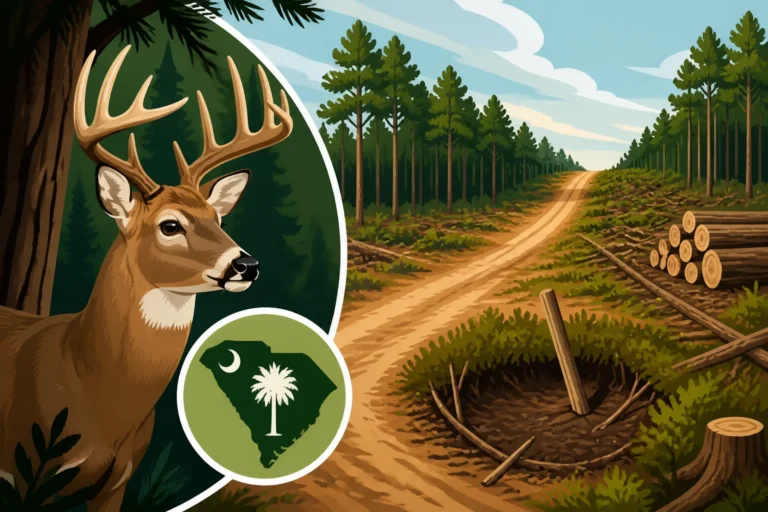
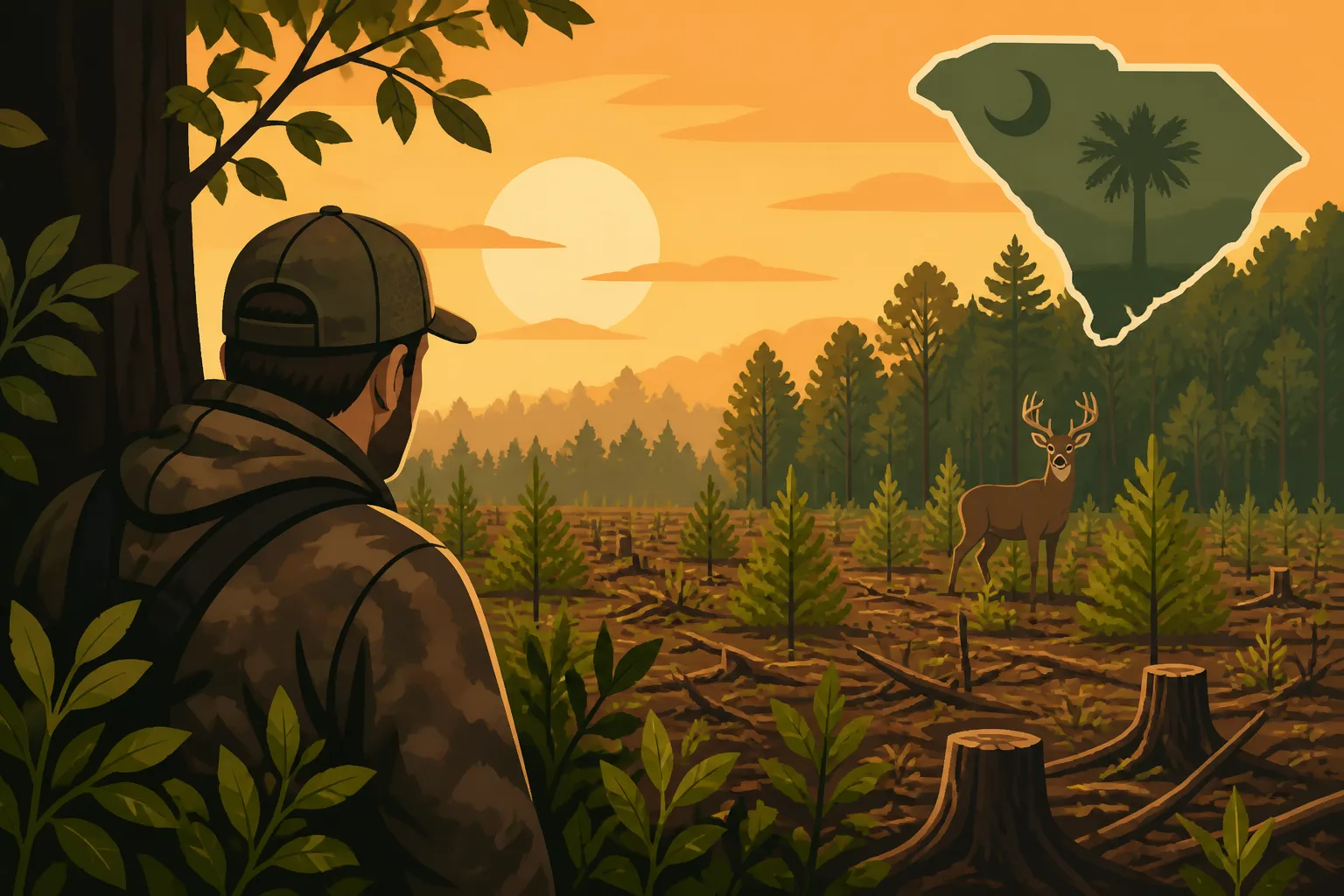
Imagine a landscape where everything is neatly manicured, then suddenly, a section of forest is leveled. Initially, it might look desolate, but almost immediately, the process of regrowth begins. Sunlight, once blocked by a dense canopy, now floods the forest floor, stimulating a burst of new vegetation. This often creates a smorgasbord of browse for deer. We're talking about young saplings, briars, and various herbaceous plants that sprout up, offering high-quality forage that was previously unavailable. Deer will gravitate to these buffet lines, especially if they’re adjacent to established timber.
Beyond food, the primary draw of a clear-cut regrowth edge is the incredible security cover it provides. As young pines, oaks, and underbrush begin to mature, they create an incredibly dense environment, often too thick for humans to navigate easily, but perfect for deer seeking refuge from predators and hunters. A deer can disappear into a few acres of dense regrowth and feel perfectly safe, often bedding down just a few yards in from the edge, soaking up the sun and munching on fresh browse. This combination of readily available food and impenetrable cover creates an irresistible sanctuary, making these edges prime locations for deer activity, particularly during daylight hours.
Identifying Productive Clear-Cuts in South Carolina
Not all clear-cuts are created equal, and knowing which ones to focus on can save you a lot of time and effort. The age of the clear-cut is a crucial factor. Immediately after logging, a clear-cut might offer some immediate browse from disturbed soil, but it typically lacks the security cover deer crave. The sweet spot is usually a clear-cut that's 3 to 7 years old, where the regrowth is thick enough to offer excellent concealment but still young enough to provide abundant, palatable browse. Anything older than that might start to thin out or grow beyond a deer's reach, reducing its attractiveness.
The size and shape of the clear-cut also play a role. A massive, perfectly square clear-cut might have deer scattered throughout, making them harder to pattern. However, a smaller, irregularly shaped clear-cut, especially one with fingers or points extending into mature timber, creates natural travel corridors and pinch points that are goldmines for hunters. Pay close attention to how the clear-cut interacts with its surroundings. Is it bordered by a hardwood bottom, a creek, or an agricultural field? These transition zones, where two distinct habitats meet, are always high-traffic areas for deer. Using tools like the Go Outdoors SC app or aerial imagery on platforms like GoHunt can help you spot these features and understand South Carolina's Four Game Zones where these clear-cuts are most prevalent. Look for areas where different cover types funnel deer movement, such as a narrow strip of mature timber between two sections of regrowth.
Scouting Strategies for Clear-Cut Regrowth
Effective scouting is the bedrock of successful hunting, and clear-cuts demand a slightly different approach than open timber. You need to be methodical, patient, and willing to get a little bit uncomfortable to uncover the secrets these thick areas hold.
Reading Sign in Dense Regrowth
Walking into a dense clear-cut can feel like stepping into a green wall, but even in the thickest sections, deer leave breadcrumbs. Start by circling the perimeter, looking for entry and exit points where deer transition from the clear-cut into surrounding timber or fields. These will often be well-worn trails, sometimes only visible as slight depressions in the pine straw or matted-down vegetation. Once you identify these primary travel routes, you can begin to carefully penetrate the edge, looking for more specific sign.
Inside the clear-cut, focus on areas of slightly less dense cover or natural openings, however small. Here, you'll want to find fresh tracks, droppings, and most importantly, browse lines. Deer will clip off tender shoots and leaves, leaving behind tell-tale signs of their feeding activity. The more recent and abundant the browse, the more consistently deer are using that particular spot. Also, keep an eye out for rub lines and scrapes, especially during the pre-rut and rut. While less common deep inside the densest regrowth, bucks will create these signposts along the slightly more open edges or internal lanes, indicating their presence and travel patterns. Remember that Finding Sign in Big Sumter Forest Timber can apply just as well here, though you might be looking at smaller trees and thicker brush.
Using Technology for Effective Scouting
In today's hunting world, technology is your best friend, especially when deciphering complex landscapes like clear-cuts. Aerial maps, available through apps like GoHunt or other mapping platforms, are invaluable. Before you even set foot in the woods, you can identify potential clear-cuts, analyze their age (sometimes visible by tree size or color variation), and trace the edges. Look for transition areas, pinch points, and corridors created by the clear-cut's shape or adjacent terrain features like creek beds or logging roads. Reading Aerial Photos for Upstate Deer can provide an excellent foundation for this type of digital scouting, regardless of your zone.
Once you’ve identified promising areas on the map, use your GPS or smartphone app to mark potential stand locations, bedding areas, and travel routes. This digital blueprint saves immense time on the ground, allowing you to focus your physical scouting efforts on verifying sign and finding precise spots. Trail cameras are another powerful tool. Place them on well-used trails entering or exiting the clear-cut, or along any internal lanes you discover. They can provide invaluable intelligence on deer movement patterns, timing, and even help you inventory the bucks using the area, without repeatedly disturbing the sensitive edges. This combination of digital and on-the-ground intelligence is key to unraveling the mysteries of clear-cut deer movements.
Effective Hunting Tactics for Regrowth Edges
Once you've done your homework and identified a promising clear-cut edge, it's time to put a plan into action. The tactics you employ will depend on several factors, including the specific layout of the clear-cut, the wind, and your personal hunting style.
Stand Placement and Approach
Choosing the right stand location is paramount when hunting clear-cut edges. The primary objective is to intercept deer as they move between the dense cover of the clear-cut and adjacent food sources or bedding areas. Look for pinch points or funnels along the edge, such as where a thick briar patch narrows down to a single travel lane, or where a slight rise in elevation offers a natural path. A mature oak just inside the timber line, overlooking the clear-cut, can be a perfect spot. Remember the importance of playing the wind; deer will almost always approach a food source or bedding area with the wind in their favor, using their nose to detect danger. Set your stand up so your scent blows away from expected deer travel.
Your approach to the stand is equally critical. These areas are often sensitive, and bumping deer on your way in can ruin a hunt. Plan a quiet entry route that avoids known bedding areas and doesn't cross major deer trails. This might mean walking a longer path or utilizing natural terrain features like ditches or creek beds for concealment. Consider a slightly elevated position, either in a Treestand Setups in Francis Marion National Forest or a well-brushed-in ground blind, to give you a better view over the dense regrowth and maximize your shot lanes. Quiet, calculated movement is your best friend when getting into position without alerting wary whitetails.
Still-Hunting and Drives Along the Edge
Still-hunting the edge of a clear-cut can be incredibly effective, especially if you're hunting solo or with a small group. This involves moving slowly, taking a few steps, then pausing for several minutes to scan the thick cover. Deer often move through these areas at a snail's pace, constantly stopping to browse or assess their surroundings. By still-hunting, you're mimicking their natural movement, making yourself less conspicuous. Focus on moving into the wind or with a crosswind to keep your scent from alerting deer ahead of you. Keep an eye out for flicking ears, a horizontal backline, or any unnatural movement in the brush. The key is patience; you're not trying to cover ground quickly but rather to locate an unsuspecting deer before it sees you.
For larger groups, conducting a small, controlled deer drive along a clear-cut edge can be very productive. This is particularly useful in areas where deer are known to bed deep within the thick stuff during daylight. Designate one or two "drivers" to slowly push through a section of the clear-cut, while "posters" are positioned along the downwind edge or at known exit points. The drivers should move methodically, making just enough noise to encourage deer to move, but not run. The posters must be absolutely still and silent, ready for a quick shot. Communication between the group is vital to ensure safety and effectiveness. Remember, ethical deer drives focus on gently nudging deer towards prepared ambush points, not a frantic chase, and understanding Deer Drives With Three or Four Hunters can ensure a safe and successful outing.
Calling and Decoying Strategies
Deer calls can be surprisingly effective around clear-cut regrowth edges, especially during the rut. A soft tending grunt or a doe bleat can pique the curiosity of a buck cruising the perimeter looking for hot does. Since visibility is often limited, calls can draw a deer just those extra few yards into a shootable lane. Don't be afraid to experiment with rattling antlers, particularly in dense cover where the sound doesn't carry as far. The confined space can make a rattling sequence sound very realistic, as if two bucks are sparring just out of sight. Remember that Rattling and Grunting in South Carolina techniques often need to be adjusted for the specific cover density.
While less common in extremely dense clear-cuts, a well-placed decoy on a more open edge can draw a cautious buck out into the open. If you have a clear-cut that borders a field or a more open timber stand, positioning a doe decoy (or a buck decoy during the peak rut) within view of a known travel corridor can be a game-changer. Ensure the decoy is set up so any approaching deer will present a broadside shot, and always consider your scent control to avoid spooking an animal that circles downwind to investigate. A combination of calling and strategic decoy placement can convince a wary deer that the coast is clear, or that a rival is encroaching, leading them directly into your trap.
Overcoming Common Challenges
Hunting clear-cut regrowth edges, while highly rewarding, isn't without its difficulties. The very nature of the thick cover that attracts deer also presents significant challenges for hunters. Being prepared for these obstacles is key to success and ethical hunting.
Visibility and Shot Opportunities
One of the biggest frustrations when hunting clear-cuts is the limited visibility. You might hear deer moving all around you, but getting a clear, ethical shot can be nearly impossible due to the dense vegetation. This is where strategic stand placement truly shines. Instead of setting up deep within the thickest part, position yourself on the edge of the clear-cut, or where a slight opening, logging road, or creek bed offers a longer line of sight. Utilizing an elevated stand, whether it's a ladder stand, climber, or even a saddle hunting setup, can significantly improve your sightlines over the top of the initial growth.
Sometimes, you might need to do a little pre-season work, with proper permission, to create shooting lanes. This involves carefully trimming small branches or saplings that obstruct vital areas around your stand. However, be judicious; you want to open up just enough for a clear shot, without removing too much cover that would make your stand obvious or deter deer. The goal is to maximize your chances when a deer does step into a shooting window, which might only be for a few seconds. Staying alert and being ready to draw or shoulder your weapon quickly are essential. Even a well-placed Using a Ground Blind on South Carolina Public Land can be set up to maximize the best shooting lanes available.
Deer Recovery in Thick Cover
Recovering a deer shot in dense clear-cut regrowth can be incredibly difficult and stressful. The same thick cover that offers security to deer can become an impenetrable maze when you're trying to follow a blood trail. Before the hunt, mentally prepare for a challenging recovery. When you take a shot, mark the exact spot where the deer was standing, and where you last saw it, with extreme precision. A piece of flagging tape, a brightly colored hat, or even using your GPS to drop a waypoint can be invaluable.
Give the deer ample time to expire, especially if the shot wasn't perfect. Waiting an hour or more, particularly in warm South Carolina weather, is often wise before beginning your track. When you do start, move slowly and methodically, looking for any speck of blood, disturbed leaves, or broken branches. Having a good tracking light is essential, even during daylight, as the dense canopy can make the ground incredibly dark. If the trail becomes too sparse, expand your search in concentric circles around the last confirmed sign. If you lose the trail completely, call in a friend with a tracking dog if legally allowed in your area; they can make all the difference. Patience, perseverance, and methodical searching are your best assets when Blood Trailing After Dark in South Carolina or through a clear-cut jungle.
Comparative Hunting Methods for Clear-Cut Edges
Different hunting methods offer unique advantages and disadvantages when targeting deer along clear-cut regrowth edges. Choosing the right approach depends on factors like the specific clear-cut, your hunting style, and whether you're hunting solo or with a group.
| Hunting Method | Pros | Cons | Ideal Scenario |
|---|---|---|---|
| Elevated Stand | Improved visibility; scent dispersal; good overview. | Limited mobility; requires careful entry/exit; can be exposed. | Larger clear-cuts, known travel corridors, long sits. |
| Ground Blind | Excellent concealment; mobility; weather protection. | Very limited visibility; scent can pool; requires brushing in. | Smaller openings, field edges, tight quarters. |
| Still-Hunting | Highly mobile; adaptable to changing conditions. | Requires extreme patience and skill; low shot opportunities. | Scouting new areas, cautious deer, solo hunts. |
| Deer Drives | Effective for moving bedded deer; covers ground. | Requires multiple hunters; can be noisy; safety concerns. | Thick bedding areas, pushing deer to specific exits. |
Disclaimer
Hunting is an inherently dangerous activity. Always prioritize safety, follow all local and state regulations, and obtain proper licenses and permits before heading into the field. This guide is for informational purposes only and does not substitute for personal research, experience, or professional instruction. Be aware of your surroundings, understand your equipment, and always practice ethical hunting.