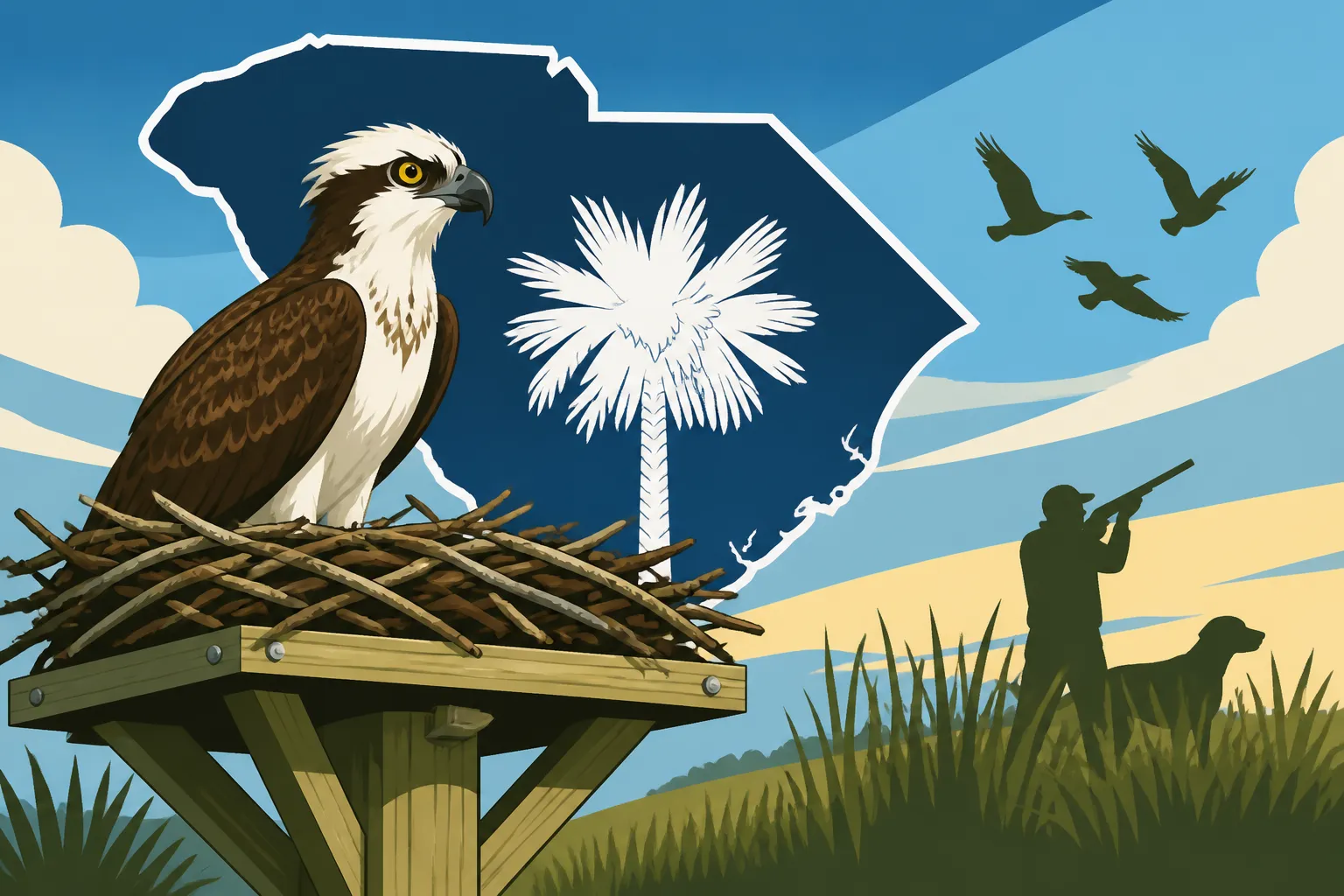
South Carolina Osprey Nesting Platforms
There's a special kind of magic that comes with spotting an osprey, those magnificent "fish hawks," soaring over a South Carolina waterway, then plummeting to snatch a fish right from the surface. But like many wild creatures, they face challenges in finding safe, suitable places to raise their young, often resorting to precarious spots like power poles. This guide dives deep into why osprey nesting platforms are so crucial here in our state and how you can contribute to their thriving presence.
The Enduring Appeal of Ospreys and the Need for Nesting Platforms in South Carolina
Ospreys are truly fascinating birds, a beacon of wildness along our abundant coastlines, rivers, and lakes. They're unique raptors, perfectly adapted to their fish-eating diet, often seen carrying their catch head-first back to a nest. But beyond their impressive hunting skills, their presence speaks volumes about the health of our aquatic ecosystems. A healthy osprey population often means a healthy fish population and clean water, things all South Carolinians, whether we're anglers, birdwatchers, or just enjoying a quiet evening by the river, can appreciate.
Why Ospreys Need Our Help with Nesting Sites
For ospreys, finding the perfect nesting spot isn't always easy. They prefer large, sturdy structures that offer an unobstructed view of their hunting grounds and are relatively safe from ground predators. Historically, this might have meant the top of a dead tree or a robust cypress, but human development has changed the landscape quite a bit. Many of these natural snags are gone, or they're in areas that are now too close to human activity, leading ospreys to increasingly choose man-made structures.
Think about it: an osprey flying over the Cooper River or out in the ACE Basin is constantly scouting. They see a power pole, a cell tower, or even a channel marker, and it looks like a tall, safe spot. Unfortunately, these locations, while seemingly ideal from a bird's perspective, can be incredibly dangerous. Nests on power poles can cause power outages and put the birds at risk of electrocution. This is where dedicated nesting platforms come in—they offer a safe, elevated alternative, steering ospreys away from hazards and providing them with a stable foundation to raise their families. It's a proactive way to ensure these beautiful birds continue to grace our skies. You can often see these efforts paying off in places like coastal marshes, which are also vital for South Carolina Waterfowl on the Atlantic Flyway.
Ideal Osprey Habitat in South Carolina
South Carolina offers a diverse range of habitats that ospreys adore, largely thanks to our extensive coastline, numerous rivers, and vast network of freshwater lakes. From the tidal creeks and salt marshes of the Lowcountry to the large impoundments of the Midlands and even some of the broader rivers in the Upstate, you'll find ospreys wherever there's abundant shallow water for fishing. They particularly thrive in areas where they can easily spot fish from above, which is why open waters adjacent to forested areas or marshlands are prime locations.
Consider the expansive tidelands around McClellanville or the vast waters of Lake Marion; these are classic osprey strongholds. They need that access to clear water for hunting, and a secure, elevated perch from which to survey their territory and build a substantial nest. A common frustration many wildlife enthusiasts share is seeing these magnificent birds trying to nest in less-than-ideal spots. Understanding their natural preferences for open sightlines and proximity to water is key when considering where to place a platform. Resources like GoHunt, with its detailed satellite imagery, can be incredibly helpful in identifying potential areas with good water access and reduced human disturbance, though remember to always verify land ownership and permissions. Just as we monitor for issues like South Carolina Wildlife Disease Monitoring, we also keep an eye on habitat health for species like the osprey.
Strategic Placement and Construction of Osprey Nesting Platforms
Deciding to install an osprey nesting platform is a wonderful step toward local conservation, but it’s not something to jump into without a bit of planning. The success of your platform hinges on two critical factors: where you put it and how well it's built. Ospreys are particular, and getting it right means providing a home they'll actually use, rather than just another unused structure in the landscape.
Choosing the Right Location for Success
The old adage "location, location, location" definitely applies to osprey platforms. You want to mimic their natural preferences as much as possible, while also addressing the safety concerns that platforms are designed to mitigate. Ideally, a platform should be:
- Near Open Water: This is non-negotiable. Ospreys are fish eaters, so being within a quarter-mile of a reliable fishing spot—a large lake, a wide river, or a productive tidal creek—is crucial. They need that easy access to food for themselves and their hungry chicks. Think about the productive waters where you might find South Carolina Alligator Population thriving; those are often good osprey areas too.
- Highly Visible and Unobstructed: Ospreys are keen observers. They need a clear flight path to and from the nest and an expansive view of their hunting grounds. Avoid placing platforms too close to dense tree lines that could block their line of sight or offer perches for potential predators like great horned owls or raccoons.
- Away from Human Disturbance: While platforms are often placed near human activity to draw birds away from power lines, excessive disturbance can still deter them. A balance is key. If you're putting it on private land, think about a spot that's visible from your home but not directly in a high-traffic area. On public lands, consider areas that see less foot traffic, perhaps in a quiet cove or a less-frequented part of a larger WMA.
- Safe from Predators: Ensure the pole is smooth and tall enough (at least 20 feet) to deter climbing predators like raccoons or snakes. Adding a predator guard (a metal cone or sheet metal around the pole) about 8-10 feet off the ground is a highly recommended addition.
Before you even start digging a post hole, it's wise to spend some time observing the area. Are ospreys already flying through? Are there any natural snags they use as perches? Sometimes, tools like GoHunt can help you analyze the terrain and water features, pinpointing areas with good water access and open fields of view, but nothing beats on-the-ground scouting.
Building a Sturdy and Safe Platform Structure
Once you've nailed down the perfect spot, it's time to build. A typical osprey platform consists of a tall, sturdy pole and a nest-supporting platform at the top. Longevity and safety are paramount here.
Pole Selection and Installation
The foundation of your platform is the pole. It needs to withstand strong winds, curious birds, and the weight of a large nest (which can become surprisingly heavy over years of additions).
- Material: Pressure-treated lumber (at least 6×6 inches for robust support) or a sturdy metal pole (like a utility pole or thick galvanized pipe) are your best bets. Untreated wood will rot too quickly, making it a hazard.
- Height: Aim for at least 20-25 feet above the ground. This height provides safety from ground predators and good visibility for the birds. A taller pole is generally better, but make sure it’s still manageable for installation.
- Installation: The pole needs to be buried deep enough to be stable. A good rule of thumb is to bury at least 10% of the pole's total length plus an extra two feet, so for a 25-foot pole, you'd want at least 4.5 to 5 feet in the ground, set in concrete for maximum stability. Make sure it's perfectly plumb!
Platform Design and Materials
The actual nesting platform needs to be strong, durable, and offer a good base for the osprey to build its nest.
- Dimensions: A square platform of about 30-36 inches per side is ideal. This provides enough room for a large nest and growing chicks without being overly cumbersome to build.
- Materials: Use weather-resistant wood like pressure-treated lumber (2x4s or 2x6s) for the frame, securely bolted together. The base of the platform can be a durable, rot-resistant mesh, like heavy-gauge hardware cloth, or even an old wooden pallet, as long as it's securely attached and won't sag.
- Nest Starter: To encourage immediate use, it’s a good practice to place a few sticks or a shallow basket of natural nesting material on the platform. This gives the ospreys a head start and makes the site more appealing. Think of it as a "model home" for them.
- Drainage: Ensure the platform has good drainage so water doesn't pool in the nest, which can lead to mold or unhealthy conditions for chicks. Mesh or spaced slats work well for this.
Here’s a simple table summarizing common platform component choices:
| Component | Recommended Materials | Key Considerations |
|---|---|---|
| Support Pole | Pressure-treated 6×6 lumber or steel utility pole | Height (20-25 ft above ground), buried depth (4.5-5 ft), concrete setting |
| Platform Frame | Pressure-treated 2x4s or 2x6s | Square (30-36 inches per side), securely bolted |
| Platform Base | Heavy-gauge hardware cloth, durable plastic mesh, or slatted wood | Good drainage, securely fastened, can support heavy nest |
| Predator Guard | Galvanized sheet metal, aluminum flashing (cone shape) | Placed 8-10 ft off ground, smooth surface to prevent climbing |
| Nest Starter | A few sturdy sticks, shallow wicker basket | Encourages initial use, provides a base for their own nest building |
Installation is often the most challenging part, requiring multiple people, heavy equipment, or creative solutions like hinge-plate designs that allow the pole to be raised after assembly. Always prioritize safety during installation, especially when working with tall poles and heavy materials.
Maintaining Your Osprey Platform for Long-Term Success
Building and installing an osprey platform is a fantastic achievement, but it's not a "set it and forget it" kind of project. To ensure your platform continues to be a safe and productive home for these magnificent birds for years to come, some regular maintenance and monitoring are essential. Just as we monitor for wildlife population trends like South Carolina Deer Population Estimate, we also track the success of conservation efforts.
Annual Inspections and Repairs
Osprey nests, while impressive structures built by the birds, are exposed to the elements year-round. South Carolina's weather, with its humid summers, occasional tropical storms, and winter winds, can take a toll on both the nest and the platform itself.
- Pre-Season Check (Late Winter/Early Spring): The best time to inspect is typically in late winter or very early spring, before ospreys return to their nesting grounds (which usually starts around March in South Carolina). Look for any signs of structural weakness:
- Pole Stability: Is the pole still standing straight? Are there any signs of rot at the base (for wooden poles) or rust (for metal)? If the pole is leaning, it might need to be reinforced or reset.
- Platform Integrity: Check all bolted connections. Are any boards loose, cracked, or rotting? The last thing you want is the platform collapsing with chicks in it. Replace any compromised components promptly.
- Predator Guard: Has the predator guard shifted or been damaged? Is it still smooth and effective at deterring climbers? Repair or re-secure as needed.
- Nest Condition: While you generally don't want to disturb an active nest, if the platform has been unused for a season or the nest has become excessively large and appears unstable, you might consider carefully removing some old material during the off-season. Ospreys add to their nests year after year, and they can become enormous and heavy, potentially stressing the platform. However, be cautious and confirm no birds are present or about to return. Knowing when South Carolina Turkey Roost Tree Preferences are established can give you an idea of how territorial birds can be; ospreys are no different.
Dealing with Unwanted Tenants
Sometimes, an osprey platform can attract other species, and while we appreciate all wildlife, some can be problematic for nesting ospreys.
- Non-Osprey Nests: Other birds, such as great horned owls or geese, might try to use the platform. Great horned owls, in particular, can be a serious threat to osprey chicks. If you find a non-osprey nest on the platform before ospreys arrive or before the other species has laid eggs, you can usually remove it. However, once eggs are laid, federal and state laws protect most native bird nests, and you cannot disturb them. This is where early season monitoring is crucial.
- Wasps and Other Insects: Inspect for wasp nests or other insect infestations on the underside of the platform. These can be a nuisance for the nesting birds and should be safely removed during the off-season if discovered.
- Human Interference: Unfortunately, sometimes people can disturb platforms. Ensure the platform is not easily accessible to unauthorized individuals. If you notice any vandalism or signs of disturbance, report it to local wildlife authorities.
Consistent, thoughtful maintenance ensures that your osprey nesting platform remains a safe, welcoming, and effective contribution to our local wildlife. It's an investment in the future of these magnificent birds, allowing them to thrive and enchant us all as they patrol our beautiful South Carolina waterways. Engaging with community groups or wildlife agencies can also provide valuable insights and support for maintaining these vital structures.
Disclaimer
This article is for general informational purposes only and does not constitute professional advice. Laws, prices and regulations vary by location and change over time. Consult a qualified professional for guidance on your specific situation.