Why South Carolina Turkey Numbers Declined
If you've spent any time chasing longbeards in the Palmetto State over the last decade or two, you've probably noticed it: the woods just don't gobble like they used to. That thrilling spring chorus seems a little quieter, the encounters a bit scarcer. It's a frustrating reality for many of us who love the challenge and tradition of spring turkey hunting in South Carolina. This isn't just a feeling; it's a trend, and understanding why our wild turkey numbers have declined is crucial for their future.
A Look Back at South Carolina's Turkey Success Story
It’s easy to get discouraged when you’re not hearing many gobblers, but it's important to remember just how far turkeys in South Carolina have come. Their story is actually one of the greatest conservation triumphs in North America, and understanding that history helps us grasp the current challenges.
The Restoration Era: From Rarity to Abundance
Imagine a South Carolina with virtually no wild turkeys. That was the reality for much of the early to mid-20th century. Unregulated market hunting and widespread habitat destruction pushed wild turkeys to the brink of extinction across most of their historic range, including right here in our state. By the 1930s, estimates suggested there were only about 50,000 wild turkeys left in the entire country, with very few scattered, isolated pockets remaining in South Carolina.
But dedicated conservationists and wildlife agencies, primarily the South Carolina Department of Natural Resources (SCDNR), stepped in. They spearheaded an ambitious "trap-and-transfer" program. This wasn't some fancy high-tech operation; it involved meticulously live-trapping wild turkeys from those few surviving populations, often using rocket nets, and then physically moving them to suitable, unoccupied habitats across the state. This method was incredibly effective because these were wild turkeys, already adapted to surviving in the challenging Southern environment. They reproduced rapidly, and within a few decades, populations exploded. It was a remarkable success, turning a near-extinct species into a thriving game animal. Anyone who hunted in the 80s and 90s will tell you stories of woods literally teeming with birds. We literally went from a point where you were lucky to see one to a time where it felt like you couldn't walk into a woodlot without hearing a gobble. This period of growth is a testament to what focused conservation efforts can achieve.
The Peak and Plateau: What Changed?
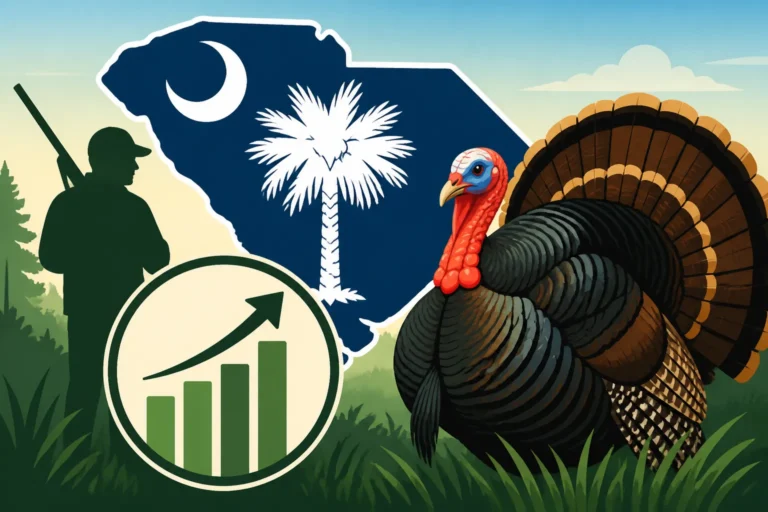
By the late 1990s and early 2000s, South Carolina's turkey population was considered healthy and robust, with birds in nearly every county. The population peaked, and for a while, it felt like a golden age for turkey hunters. Harvest numbers were high, and the woods felt alive with spring sounds. However, around the mid-2000s, things started to shift. The exponential growth began to slow, and the population numbers plateaued. For a time, this plateau was seen as natural – a population reaching its carrying capacity within the available habitat. You can track this pretty well by looking at the official South Carolina Turkey Population Trends.
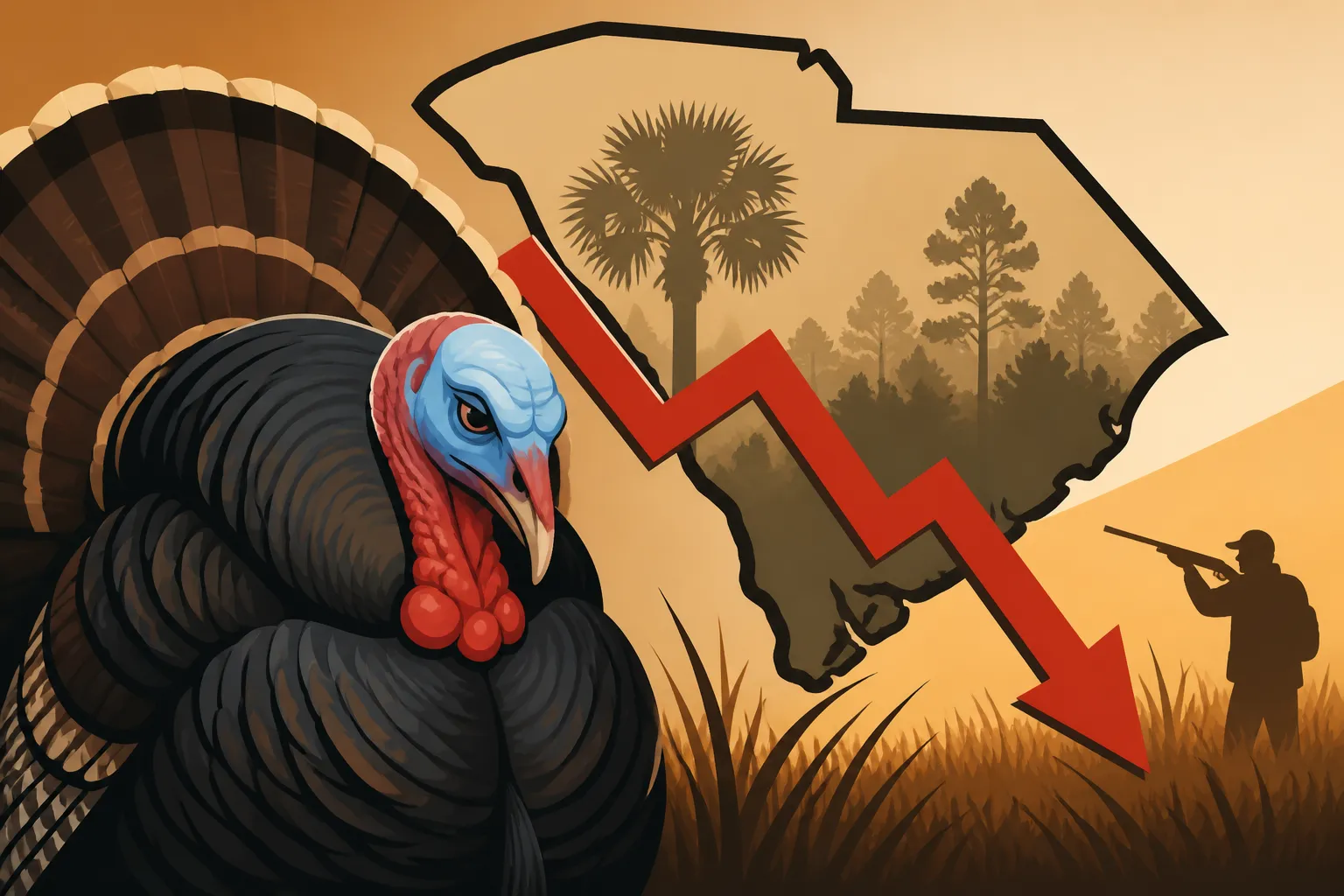
But then, the plateau started to dip. What was once seen as a stable population began a slow, steady decline in many areas. It wasn't a sudden crash, but rather a creeping realization that the numbers weren't just stable; they were noticeably lower, especially in regions that were once hotspots. This subtle shift was often hard to pinpoint for individual hunters. Maybe you had a bad year, or the weather wasn't right. But over time, as multiple "bad" years stacked up, it became clear this was more than just a fluctuation. It prompted serious questions among hunters, biologists, and wildlife managers: what factors were at play, pulling the rug out from under our once-thriving turkey populations? This wasn't just about hunter success rates; it was about the overall health and resilience of the turkey population itself.
The Shifting Landscape: Habitat Loss and Degradation
One of the most significant, yet often overlooked, drivers of turkey population decline is the relentless march of habitat change. Turkeys, like all wildlife, depend on specific habitats for survival, and unfortunately, much of South Carolina's landscape has changed dramatically.
The Impact of Development and Urbanization
South Carolina is growing, and fast. With growth comes development, and development almost always means the loss of natural habitat. As cities like Charleston, Columbia, Greenville, and Myrtle Beach expand, formerly wild areas are converted into housing developments, shopping centers, and infrastructure. This doesn't just reduce the total acreage available to turkeys; it fragments what remains. A large, contiguous tract of forest that once offered ideal nesting and roosting sites becomes a patchwork of small, isolated woodlots separated by roads and subdivisions.
Imagine a hen trying to nest in a small patch of woods surrounded by new homes. Her nest is far more vulnerable to domestic predators like cats and dogs, and the constant human activity creates stress. Poult survival also takes a hit. Young turkeys need vast, insect-rich open understories to thrive, but these spaces are often the first to disappear to development or become too dangerous with increased traffic. It’s not just the direct loss of land; it’s the disruption of ecological processes and the creation of "edge habitats" that often favor predators, leaving turkeys at a disadvantage. For instance, areas around Goose Creek or Summerville, once prime turkey country, now see increased human presence, making it harder for birds to find undisturbed areas for reproduction.
Changes in Forest Management Practices
Beyond outright development, even the way we manage our forests has a profound impact. Historically, South Carolina was home to vast tracts of longleaf pine savannahs and mature hardwood forests. These habitats offered excellent turkey cover: open understories from frequent fires, diverse mast production from oaks and hickories, and dense thickets for roosting. However, modern forestry practices, often driven by economic factors, have shifted.
We see shorter timber rotation cycles, meaning trees are harvested before they reach full maturity, particularly hardwood species that provide crucial mast crops like acorns. A young pine plantation, while eventually growing into mature timber, offers very little in terms of turkey habitat in its early stages. It’s often too dense for birds to move through easily and lacks the diverse plant life that supports the insects poults rely on. Furthermore, the practice of prescribed burning, essential for maintaining open understories and promoting new growth that turkeys feed on, has become less frequent or less widespread in some areas due to liability concerns or the proximity of development. This leads to overgrown, brushy understories that are difficult for turkeys to navigate and reduce nesting success, as well as impacting insect populations. This shift in forest management doesn't just affect turkeys; it's a major reason for the decline of other ground-nesting birds like How Managed Pine Could Restore South Carolina Quail. The kind of habitat turkeys thrive in—a mosaic of open woodlands, old fields, and dense cover—is simply becoming less common.
Predation Pressure: A Growing Threat to Young Turkeys
While habitat loss sets the stage, increased predation pressure is often cited as a major, immediate cause for the decline in South Carolina turkey numbers, especially impacting the survival of nests and poults.
The Rise of Mesopredators and Feral Hogs
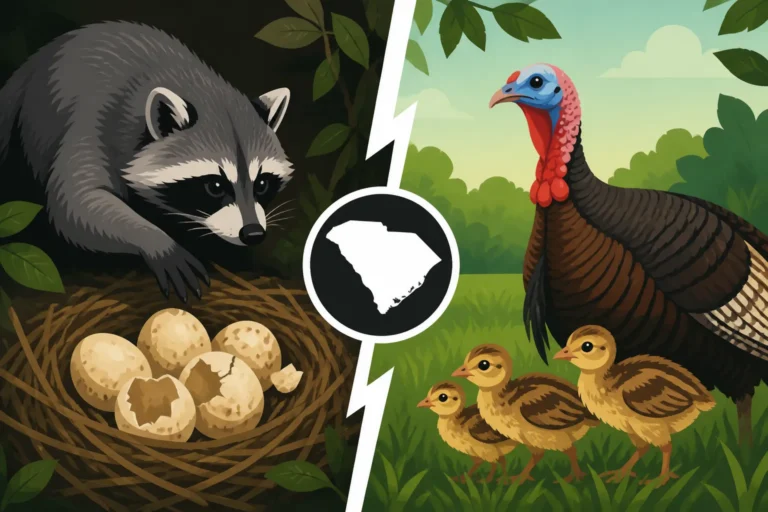
Over the last few decades, South Carolina has seen a significant increase in populations of what biologists call "mesopredators." These are medium-sized predators like raccoons, opossums, skunks, and foxes. While these animals have always been part of the ecosystem, their populations have often boomed due to a decrease in larger predators (like wolves, which are now largely absent from the state, though efforts were made at South Carolina Red Wolf Recovery Program History historically) and an abundance of food sources, including human refuse. These mesopredators are expert nest raiders, easily locating and destroying turkey nests, consuming eggs before they have a chance to hatch.
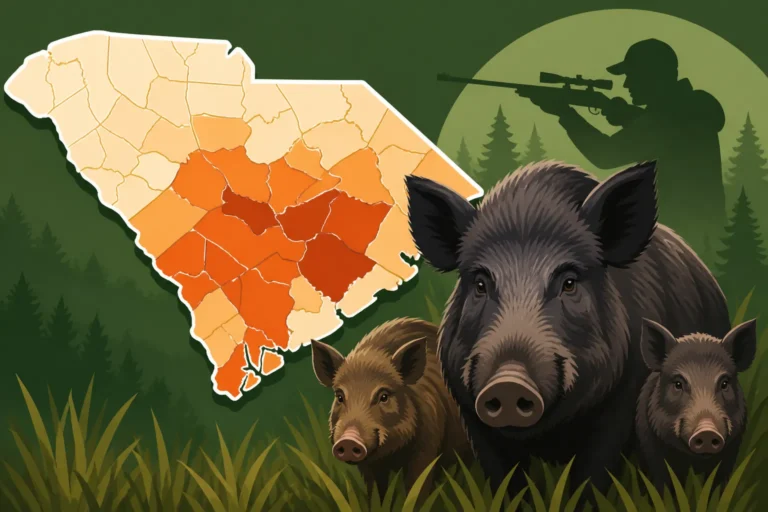
Even more significant is the explosion of the feral hog population. Feral hogs are an ecological nightmare. They are prolific breeders, destructive foragers, and incredibly adaptable. They directly compete with turkeys for food sources like acorns and insects, but more critically, they are voracious predators of turkey nests and even young poults. A sounder of hogs can systematically root up and destroy every turkey nest in an area, leaving little chance for reproduction. Their spread across the state is well-documented, and you can see how extensive it is by looking at maps of South Carolina Feral Swine Genetics and Origin. Their impact is not isolated; they are found in nearly every county, from the Lowcountry swamps to the Upstate foothills, and their constant rooting also degrades the very habitat that turkeys need for nesting and foraging, making the problem even worse.
Nest and Poult Predation Rates
The numbers tell a stark story: a vast majority of turkey nests fail due to predation. Biologists estimate that in many areas, 70-80% or more of turkey nests are predated. Even if a hen successfully hatches a clutch, the poults face an incredibly dangerous first few weeks of life. They are tiny, vulnerable, and a tempting meal for a wide array of predators. Hawks, owls, snakes, bobcats, foxes, coyotes, and even raccoons will readily take young poults. You can delve deeper into this specific issue with the post on Nest Predation and South Carolina Turkey Hatches.
The issue is compounded by the declining quality of nesting and brooding habitat. Where once there might have been dense, expansive cover for hens to hide their nests and for poults to forage safely, now there are often smaller, more fragmented patches. This makes nests and poults easier for predators to find. When poult-to-hen ratios are consistently low – meaning fewer young birds survive to adulthood for every hen – the population simply cannot sustain itself over the long term. If a hen has to re-nest multiple times because her first few attempts are predated, she expends valuable energy and time, reducing the likelihood of a successful hatch even if she eventually succeeds. This constant pressure on the reproductive cycle is a primary reason for the observed population declines.
Hunter Impact and Management Decisions
While hunters are often the most passionate advocates for turkey conservation, our actions and the regulations governing our seasons also play a role in population dynamics. It's a delicate balance to manage a resource that we both cherish and harvest.
Harvest Rates and Bag Limits
For many years, South Carolina enjoyed a relatively liberal turkey season with a statewide bag limit that allowed for significant harvest. When populations were booming, this was sustainable, as the reproductive rate could easily outpace the harvest rate. However, as poult survival began to decline and the overall population started to shrink, those same harvest rates became less sustainable. If fewer young birds are entering the population each year, harvesting adult birds at the same rate will inevitably lead to further decline.
The SCDNR has been closely monitoring South Carolina Turkey Harvest Numbers for years, and these figures are crucial for understanding the impact of hunter pressure. While hunters are typically responsible, localized overharvest can occur, especially on public lands or smaller private tracts that receive heavy pressure. The goal of management is to ensure that enough gobblers survive to breed, and that the overall harvest doesn't tip the balance toward long-term decline. This has led to critical discussions about potential reductions in bag limits or changes to season structure, all aimed at giving the population a better chance to rebound. It’s a complex issue, as hunters naturally want to maximize their opportunities, but conservation must always come first.
The Debate Over Jake Harvest and Season Structure
One of the most significant and debated management decisions in recent years has been the prohibition of harvesting jakes. The SCDNR implemented this change, which goes into full effect in 2025, after careful consideration of scientific data. You can read more about it in Why South Carolina Ended Jake Harvest in 2025. The reasoning is straightforward: jakes are juvenile gobblers, typically one year old, that haven't yet had a chance to breed. By allowing jake harvest, we are essentially removing future breeders from the population before they contribute to the gene pool. When poult recruitment is strong, taking a few jakes might not significantly impact the population. However, when poult-to-hen ratios are low, every male bird becomes more critical for ensuring future breeding success. The decision to protect jakes is an effort to bolster the adult gobbler population, allowing more males to reach breeding age and hopefully increase the number of successful breeding attempts.
Another aspect of season structure that's often discussed is the timing and length of the season. South Carolina's spring turkey season is traditionally long compared to some other states. There have been discussions about the impact of early season openers on hens (accidental harvest or disturbance) and the overall pressure throughout the breeding cycle. Management decisions, such as The No-Harvest Window Before April 10 or the early WMA closures, are attempts to fine-tune the season to provide protection during critical periods. The goal is to maximize the opportunity for hens to breed successfully and for poults to survive, even if it means adjusting hunter opportunities. These decisions are never easy and often generate strong opinions, but they are driven by the biological realities of turkey reproduction.
Environmental Factors and Disease Challenges
Beyond the direct human impacts of habitat and harvest, environmental conditions and the prevalence of disease also contribute to the complex picture of declining turkey numbers. These factors are often less visible but can have a profound effect on population health.
Fluctuations in Weather and Its Effect on Broods
Wild turkeys are incredibly resilient, but they are not immune to the whims of Mother Nature. The weather, particularly during the critical nesting and brooding periods, can significantly impact poult survival. Cold, wet springs, for example, can be devastating for newly hatched poults. Young turkeys are highly susceptible to hypothermia, and prolonged periods of rain and low temperatures can lead to high mortality rates, even if the nest hatched successfully. Poults rely heavily on insects for their first few weeks of life, which provide essential protein for rapid growth.
Conversely, severe droughts can also harm poult survival. A lack of rain can reduce insect populations, making it harder for hens to find enough food for their broods. Dry conditions also make ground vegetation sparser, offering less cover from aerial predators like hawks and owls. While a single bad weather year might not cripple a population, a series of challenging springs can prevent the recruitment of young birds necessary to replace older birds that die off. This directly impacts the Poult-to-Hen Ratios and What They Mean for the next season's breeding population. When a population is already under pressure from other factors, adverse weather events can exacerbate the decline, making recovery even more difficult.
Disease Prevalence and Its Unseen Toll
Just like any wildlife population, wild turkeys are susceptible to various diseases, and while mass die-offs are rare, chronic disease can weaken populations over time. Common turkey diseases found in South Carolina include Avian Pox, Lymphoproliferative Disease (LPDV), and Histomoniasis (blackhead disease). Avian Pox manifests as wart-like lesions, particularly around the head, and while it's often not fatal, severe cases can impair a bird's ability to feed or see, making them more vulnerable to predators or starvation. LPDV is a viral disease that can cause tumors in various organs, weakening the bird and impacting its overall health and reproductive capacity. Blackhead disease, caused by a protozoan parasite, primarily affects the liver and can be particularly deadly to young birds.
These diseases, even if they don't cause widespread mortality events, can subtly reduce the fitness of individual birds, making them less likely to survive through winter, less successful at breeding, or more susceptible to predation. A population already stressed by habitat loss and predation becomes even more vulnerable to the cumulative effects of disease. The SCDNR actively monitors wildlife health, and you can learn more about their efforts in South Carolina Wildlife Disease Monitoring. Understanding the prevalence and impact of these diseases is an ongoing challenge, as wild turkeys are masters of camouflage, and sick birds often hide away, making it difficult to assess the true toll disease takes on the overall population.
What Does the Data Tell Us?
For all the anecdotal evidence and field observations, the scientific data provides the clearest picture of what's happening with South Carolina's wild turkeys. Biologists spend countless hours collecting and analyzing information to guide management decisions, and their findings are critical.
Analyzing Poult-to-Hen Ratios
One of the most important metrics wildlife biologists track is the poult-to-hen (P-H) ratio. This ratio represents the number of poults that survive to a certain age (typically around 6-8 weeks) for every adult hen. It's a direct indicator of reproductive success and recruitment into the population. A high P-H ratio indicates a healthy breeding season with good poult survival, suggesting the population is stable or growing. A consistently low P-H ratio, however, is a red flag, signaling that not enough young birds are making it to adulthood to replace the existing population or allow for growth.
Historically, South Carolina saw strong P-H ratios, particularly during the restoration and boom periods. However, beginning in the late 1990s and continuing through the 2000s and 2010s, the statewide P-H ratio has shown a concerning decline. This trend is a major reason why the SCDNR initiated studies and management changes. The data clearly shows that fewer young turkeys are surviving to join the breeding population, which inevitably leads to a shrinking overall population. The post on How Poult Recruitment Fell Since 1988 provides a detailed look at this specific trend. Without adequate poult recruitment, even if adult survival remains steady, the population will decline.
To illustrate this trend, consider the following simplified data representing typical poult-to-hen ratios during different periods in South Carolina:
| Period | Average Poult-to-Hen Ratio (at 6-8 weeks) | Interpretation |
|---|---|---|
| 1990s | 3.0 – 4.5 | Excellent recruitment, population growing rapidly |
| Early 2000s | 2.5 – 3.5 | Good recruitment, population stable/slow growth |
| Late 2000s | 1.8 – 2.5 | Borderline recruitment, population stagnating |
| 2010s-Present | 1.0 – 1.8 | Insufficient recruitment, population declining |
Note: These are illustrative ranges based on trends, actual numbers vary by zone and year.
A ratio below 2.0 generally indicates a declining population because it's not enough to replace birds lost to natural mortality and harvest. This table clearly shows the concerning shift over time.
South Carolina Turkey Population Trends
The long-term analysis of various data points, including P-H ratios, hunter harvest reports, and trapping data, confirms that South Carolina's wild turkey population has indeed been in a downward trend since its peak in the early 2000s. While some regions might fare better than others, the statewide picture is one of concern. You can dig into the specifics of these numbers and how they've changed over time through the South Carolina Turkey Population Trends page.
Biologists use this information to create population models, which help them predict future trends and evaluate the effectiveness of different management strategies. This is where tools like GoHunt, which helps hunters access and interpret crucial wildlife data for their state, can be incredibly valuable for understanding the bigger picture. Hunters are vital partners in this data collection, as accurate and timely reporting of harvests through the Game Check system provides invaluable information to the SCDNR. Without this data, management decisions would be based on guesswork rather than scientific evidence. The goal is to identify the primary limiting factors and implement strategies that can reverse the decline, ensuring healthy turkey populations for future generations to enjoy. This might involve more aggressive predator management, targeted habitat improvements, or further adjustments to hunting regulations.
Disclaimer
Please remember that hunting regulations and wildlife populations are subject to change. Always consult the most current South Carolina Department of Natural Resources (SCDNR) regulations before planning any hunting activity. This content is for informational purposes and should not be considered legal advice.