South Carolina Buck-to-Doe Ratio by Region
It's a common frustration for many South Carolina deer hunters: you hit the woods, you see plenty of does, maybe a fawn or two, but those elusive bucks? They seem to vanish after opening week, or the rut just doesn't feel as intense as it "should" be. This guide dives deep into a critical factor influencing your hunting success and the overall health of our deer herds: the buck-to-doe ratio, and how it varies significantly across different regions of our beautiful state.
Understanding the Buck-to-Doe Ratio and Why It Matters
The buck-to-doe ratio, in simple terms, is the number of antlered bucks for every doe in a given deer population. For instance, a 1:3 ratio means there's one buck for every three does. It’s a seemingly simple number, but its implications for deer herd dynamics, hunting quality, and even the health of individual animals are profound. Many hunters focus solely on buck size or antler points, but understanding this fundamental ratio can completely change how you approach your season.
What is a "Healthy" Ratio?
Wildlife biologists generally aim for a more balanced ratio, often cited as anywhere from 1:1 to 1:3. A truly optimal ratio, one that promotes robust rutting activity and a healthy age structure in the buck population, might fall closer to 1:1 or 1:2. When a herd becomes too doe-heavy, say 1:5 or even 1:10, a cascade of issues can arise. You might notice a less intense, drawn-out rut, as bucks have too many receptive does to cover. This can lead to later fawning dates, increased stress on does, and potentially smaller body weights and antler growth for bucks, as they expend energy chasing an overwhelming number of females. It really boils down to ensuring bucks don't burn themselves out too quickly and that competition drives them to seek out does more aggressively, which is what hunters want to see!
Impact on Hunting Strategy and Success
For us hunters, a skewed buck-to-doe ratio can be the difference between a frustrating season and a truly memorable one. Imagine trying to hunt the rut in an area where bucks are simply overwhelmed by does. Instead of concentrated activity and aggressive behavior, you might see bucks breeding does sporadically over a longer period, making them harder to pattern. Your rattling and grunting calls might not be as effective because the local bucks don't feel the same competitive pressure. Conversely, in an area with a more balanced ratio, the rut is often more compressed and intense. Bucks are more active, more responsive to calls, and more willing to expose themselves as they fiercely compete for breeding opportunities. Knowing the general ratio in your hunting area can profoundly influence when you hunt, what tactics you employ, and even where you choose to set up your stand. You might use mapping tools like GoHunt to analyze land features and identify potential travel corridors where a buck might be funneled even in a doe-heavy area.
Regional Differences in South Carolina's Buck-to-Doe Ratios
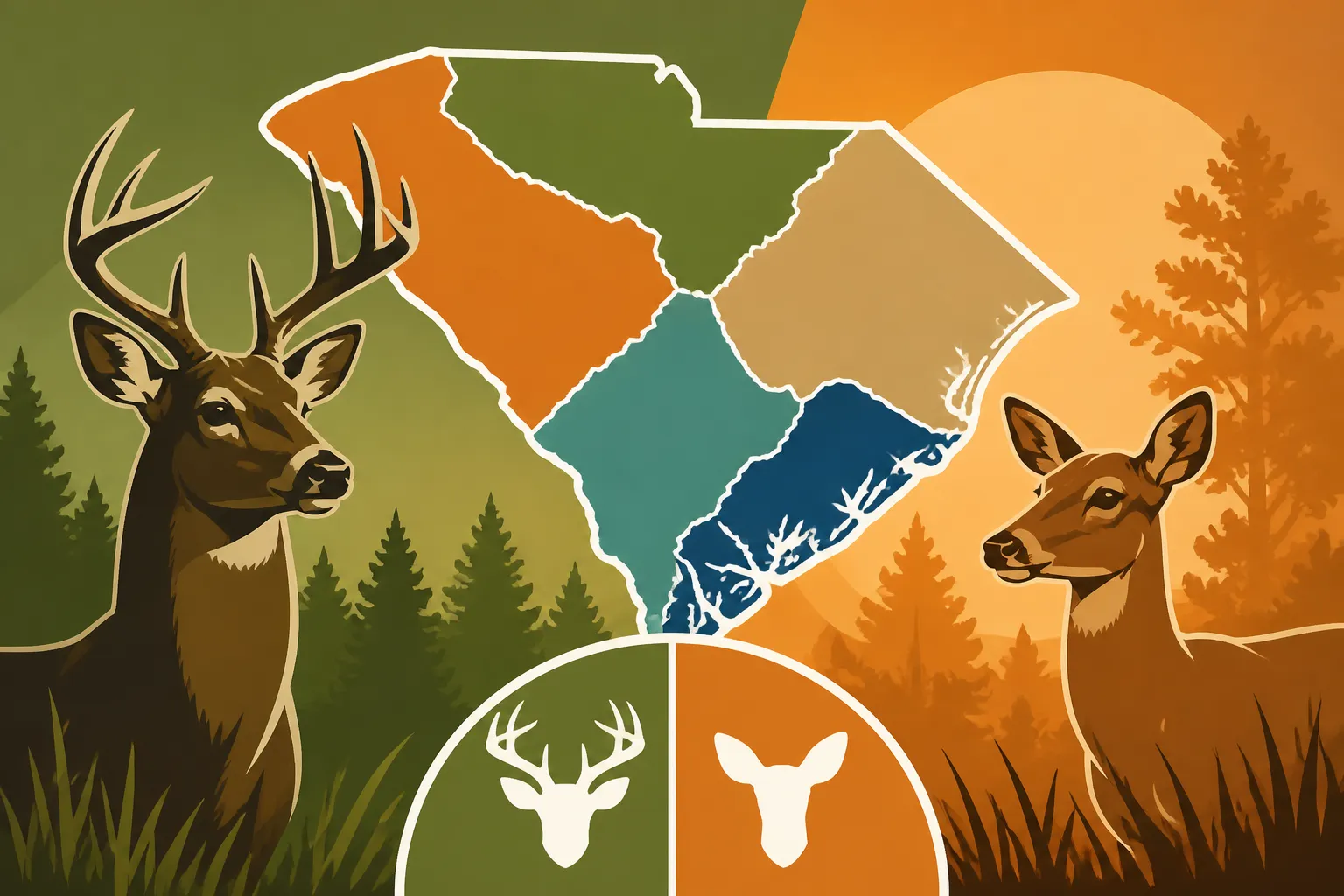
South Carolina is a geographically diverse state, and with that diversity comes significant differences in deer habitat, hunting pressure, and management strategies. This means that a buck-to-doe ratio that's typical for the Upstate might be completely unheard of in the Coastal Plain, and vice-versa. Understanding South Carolina's Four Game Zones is essential here, as these zones often correlate with distinct regional characteristics in the deer herd.
The Upstate Perspective (Zone 1)
Head into the mountains and foothills of the Upstate (Game Zone 1), and you'll often find a deer population that tends to be more balanced in its buck-to-doe ratio. Why is this? Several factors contribute. The rugged terrain, with its steep ridges and dense forests, can naturally limit overall deer density compared to the fertile lowlands. Hunting pressure, while certainly present, is often different here, with more still-hunting and less extensive deer drive culture than in some other parts of the state. Additionally, the habitat structure itself, often characterized by mature hardwoods, provides good cover and food sources but perhaps less of the widespread agricultural bounty that can support extremely high doe numbers. Many hunters in areas like the Sumter National Forest report seeing good buck activity throughout the rut, suggesting a healthier balance. Using a tool like GoHunt can help you pick apart the topography to find those hidden pockets where bucks might feel secure and rutting activity might be more intense.
The Midlands Mix (Zones 2 & 3)
As you move into the rolling hills and agricultural lands of the Midlands (Game Zones 2 and 3), the buck-to-doe ratio can become a bit more variable. These zones are a blend of large timber tracts, pine plantations, and significant agricultural fields like corn, soybeans, and peanuts. This varied habitat can support a robust deer population, and ratios might lean slightly more towards does than in the Upstate, but often not to the extreme levels seen on the coast. In areas with less hunting pressure on antlerless deer, ratios might be higher, while private land managed for quality deer can achieve excellent balance. Hunters often find that Why the Midlands Grows Big Bucks is directly tied to managing the herd for a healthier age structure and a more balanced ratio. The Midlands offers a fascinating blend, where careful management on private lands can create truly exceptional hunting opportunities.
The Coastal Plain Challenge (Zone 4)
Now, let's talk about the Coastal Plain (Game Zone 4), particularly the heart of the Lowcountry. This region is famous for its extremely long deer season and traditionally high harvest of antlerless deer, but ironically, it’s also where hunters often face the most significant challenges with buck-to-doe ratios. It's not uncommon for some areas here to have ratios as skewed as 1:5, 1:7, or even higher, meaning many more does than bucks. This can be incredibly frustrating. The rut, which typically occurs earlier in these zones, can feel drawn out and less predictable. You might see a buck chasing a doe here and there, but that intense, all-day seeking behavior and fighting among bucks is often diminished because the male deer simply don't have to work as hard to find a receptive female. The expansive swamps, dense cover, and abundant food sources (both natural and agricultural) can support incredibly high deer densities, but without specific antlerless harvest strategies that aim for a more balanced ratio, the population can quickly become heavily skewed towards does. This often means bucks don't need to compete as hard, leading to less visible rut activity for hunters.
Factors Influencing Local Ratios and What Hunters Can Do
Understanding the buck-to-doe ratio is just the first step; knowing why it is what it is, and what can be done, empowers hunters to be more effective and contribute to herd health. The decisions made by hunters, whether individually or as part of a club, have a direct impact.
Hunting Pressure and Harvest Strategies
The single biggest factor influencing buck-to-doe ratios is hunting pressure and, specifically, antlerless harvest. In South Carolina, with its very generous South Carolina Statewide Antlerless Bag Limit, hunters have the tools to manage herd numbers. If hunters consistently harvest only bucks, or predominantly young bucks, and leave a high number of does, the ratio will naturally become skewed. Conversely, strategic antlerless harvest can help bring the ratio into better balance. On private lands, this is a direct management decision. On public lands and WMAs, the regulations are set by the state to try and achieve specific management goals, but even then, hunter participation dictates the outcome. Hunting clubs that prioritize taking a certain number of does per buck harvested often see healthier ratios, a more intense rut, and ultimately, better quality bucks over time.
Habitat and Food Sources
The quality and quantity of habitat and food sources also play a significant role. Areas with rich agricultural fields, abundant mast crops like acorns, and plenty of thick cover can support a very large deer population. While this sounds great, if these areas also have limited hunting pressure on does, the population can explode, quickly leading to a heavily doe-skewed ratio. Bucks will thrive on abundant food, but if the doe numbers are too high, the competition for resources can still become a factor, potentially impacting overall herd health and individual deer quality. Conversely, areas with poorer habitat or more fragmented food sources might naturally support lower deer densities, which can sometimes lead to more naturally balanced ratios, even without intensive management. Consider using GoHunt to analyze aerial photos and identify key food sources and cover types in your area.
Using Data to Inform Your Hunt
So, how do you know the buck-to-doe ratio for your specific hunting ground? While the SCDNR provides general reports and Deer Density by South Carolina Zone, getting hyper-local data can be challenging. However, keen observation is your best friend. Keep meticulous records of your sightings: how many bucks versus does did you see? What was the intensity of rut activity? Did you see many fawns with individual does, indicating a healthy reproductive rate? Over a few seasons, these observations can paint a picture. Additionally, post-season game cameras can provide invaluable insight. Look at your photos – what percentage of the deer captured are bucks versus does? How many mature bucks are you seeing compared to younger ones? Analyzing this data can help you adapt your hunting strategy. Tools like GoHunt can further enhance this by providing satellite imagery and property boundaries, helping you understand how habitat and neighboring properties might influence deer movement and ratios.
Strategies for Hunting in Different Ratio Environments
No matter where you hunt in South Carolina, understanding the buck-to-doe ratio in your area can help you refine your tactics. It's about adapting to the hand you're dealt and making the most of your time in the field.
Hunting Doe-Heavy Areas
When you're hunting in a region known for a high doe-to-buck ratio, like many parts of the Coastal Plain, your strategy needs to shift. Rather than focusing heavily on aggressive Rattling and Grunting in South Carolina early in the rut (when bucks might be less competitive due to an abundance of does), you might want to prioritize scouting and targeting prime food sources. Bucks will still seek out does, and does will always be drawn to food. Identify pinch points, funnels, and transition areas between bedding and feeding that does frequent. If you find where the does are, eventually a buck will show up, even if it's not a mature one. Later in the season, after the primary rut, a secondary rut can sometimes occur. During this time, the buck-to-doe ratio might feel more balanced as some does come into estrus again, and bucks become more desperate. This can be a good time to try calling.
Hunting More Balanced Ratios
In areas with a more balanced buck-to-doe ratio, like some parts of the Upstate or well-managed private lands in the Midlands, the hunting experience can be quite different. Here, the rut tends to be more defined and intense. Bucks are often more competitive, leading to more aggressive behavior, more visible rub lines and scrapes, and a higher likelihood of responding to calls. Your strategy can lean more heavily into identifying natural travel corridors, historical rutting areas, and areas with strong buck sign. Knowing Hunting the South Carolina Rut by Zone can be incredibly helpful here, as you can target peak breeding times with confidence, knowing that bucks will be actively seeking and fighting. This is where those aggressive calling sequences, rattling, and even decoy use can be particularly effective. It allows you to anticipate buck movement driven by the urge to find and breed does, and to fend off rival bucks.
| Region | Typical Buck-to-Doe Ratio | Rut Intensity | Hunting Strategy Focus |
|---|---|---|---|
| Upstate | Balanced (1:2 to 1:3) | Often Intense/Defined | Rut-focused, calling, buck sign, travel corridors |
| Midlands | Variable (1:2 to 1:4) | Moderate to Intense | Food/cover, adapt to local pressure, calling |
| Coastal Plain | Skewed (1:4 to 1:7+) | Drawn-out/Less Intense | Doe bedding/feeding, patience, late-rut calling |
Ultimately, whether you're chasing deer in the thick swamps of the Lowcountry or the steep ridges of the Upstate, understanding the buck-to-doe ratio in your hunting ground is a powerful piece of information. It allows you to adjust your expectations, fine-tune your strategies, and become a more effective and ethical hunter, contributing to the overall health of South Carolina's magnificent deer herd.
Disclaimer
This article is for general informational purposes only and does not constitute professional advice. Laws, prices and regulations vary by location and change over time. Consult a qualified professional for guidance on your specific situation.